These Florida Plants Make A Corner Lot Look Expensive From Two Streets Without The Cost To Match
Corner lots are unfair in the best possible way. Two full sides of exposure. Twice the visibility of a standard yard. Every driver, jogger, and neighbor gets a front-row view whether you invited them or not.
That kind of real estate either works for you or works against you, and the difference usually comes down to what you planted out there.
Florida has a lineup of native and Florida-friendly plants that solve this problem in a very satisfying way.
They are tough enough to handle the heat, low-maintenance enough to survive a busy schedule, and visually striking enough to look like a landscape designer’s work from half a block away.
They just require knowing which ones to choose.
Structure, color, texture, year-round polish. It is all achievable with the right plants in the right spots. Want to see what a corner lot can actually look like when the plant selection is working in your favor?
1. Plant Coontie For Clean Structure
There is something impressive about a plant that has been growing in Florida for thousands of years and still looks like it belongs on a high-end landscape plan.
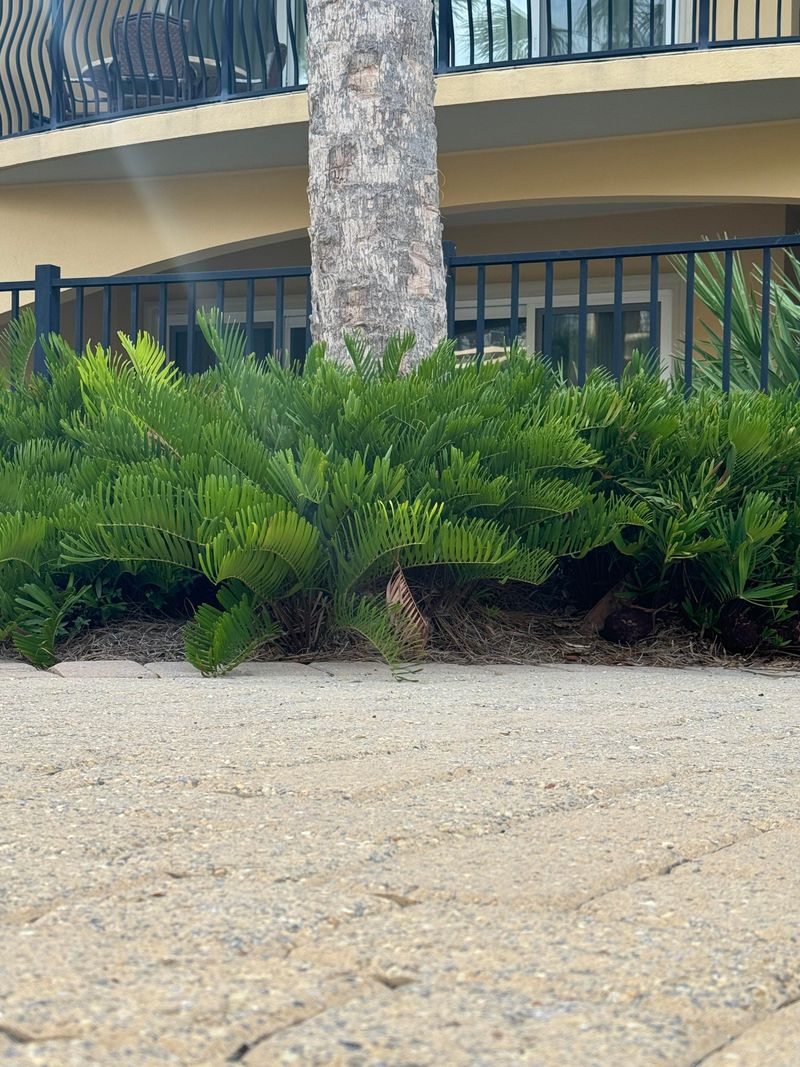
Coontie is exactly that plant. It is the only cycad native to North America, and it brings a clean, sculptural quality to a corner lot that is genuinely hard to fake with anything else at this price point.
Coontie grows in a tidy, low mound of dark green, arching fronds that stay sharp year-round without regular pruning.
It tops out at about two to three feet tall and wide, which makes it perfect for anchoring corners, edging walkways, or filling spots where you want structure without bulk.
It never looks overgrown or messy. That kind of reliability is worth a lot in a corner bed that gets viewed from every direction.
From two streets away, a row of coontie plants along a corner bed reads as polished and intentional.
That visual structure is what separates a thoughtful landscape from a random one. Pair it with a clean mulch edge and it looks like a designer made the call.
Coontie is extremely drought-tolerant once established, thrives in full sun to full shade, and handles Florida’s sandy soils without complaint.
It is also the host plant for the Atala butterfly, which adds a wildlife bonus that most purely ornamental plants cannot offer. Nursery prices typically run between five and fifteen dollars at a native plant nursery.
Best structural bargain in Florida landscaping. Thousands of years of Florida track record. Still looks like it was installed last week. Coontie has earned its spot in the corner bed and it knows it.
2. Use Muhly Grass For Street Movement
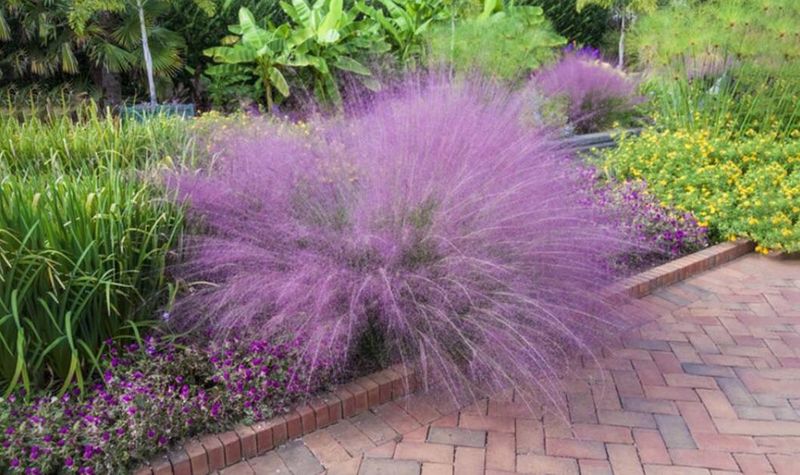
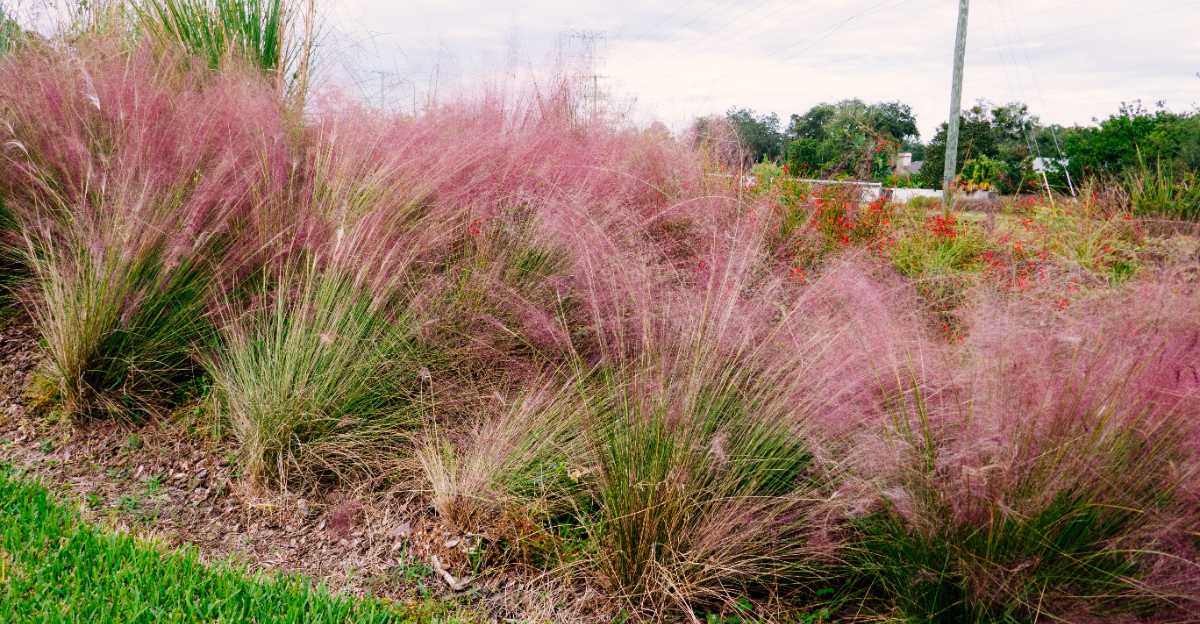
A cool October morning, a light breeze rolling through your corner lot, and clouds of soft pink and purple plumes swaying in the light.
That is what muhly grass delivers every single fall without any effort from you. Few plants create that kind of visual drama from across a street, and none of them do it as easily.
Your Florida Garden Changes Every Week. Your Plan Should Too.
Gardening in Florida changes quickly throughout the season. Every Friday you’ll receive a simple weekly plan showing exactly what to plant, prune, fertilize, harvest, and protect so you never miss the right timing.
Muhly grass is a Florida native that forms graceful clumps of fine-textured, blue-green blades all year long. In late summer and fall, it sends up feathery plumes that shift color depending on the light.
Morning sun turns them golden pink. Evening light makes them almost purple. Either way, they catch attention from both directions on a corner lot in a way that solid shrubs simply cannot replicate.
The movement factor is what really sets muhly grass apart for two-sided visibility.
Even on a calm day, the fine blades catch the slightest breeze and create a living, breathing quality that static plantings cannot match.
Mass planting in groups of three to five gives the most impact. Single specimens look good. A mass planting looks like a decision.
Muhly grass is highly drought-tolerant, thrives in full sun, and requires almost no maintenance beyond an occasional trim in late winter.
It handles Florida heat and sandy soil without trouble. Plants are widely available at garden centers for roughly five to twelve dollars each, making a full corner planting surprisingly affordable for the seasonal drama it delivers.
Muhly grass peaks in fall when most of the garden is winding down. That timing alone is worth something.
Your corner lot gets its best moment precisely when the neighborhood is starting to look tired. Good instincts, muhly grass.
3. Add Firebush For Expensive Color
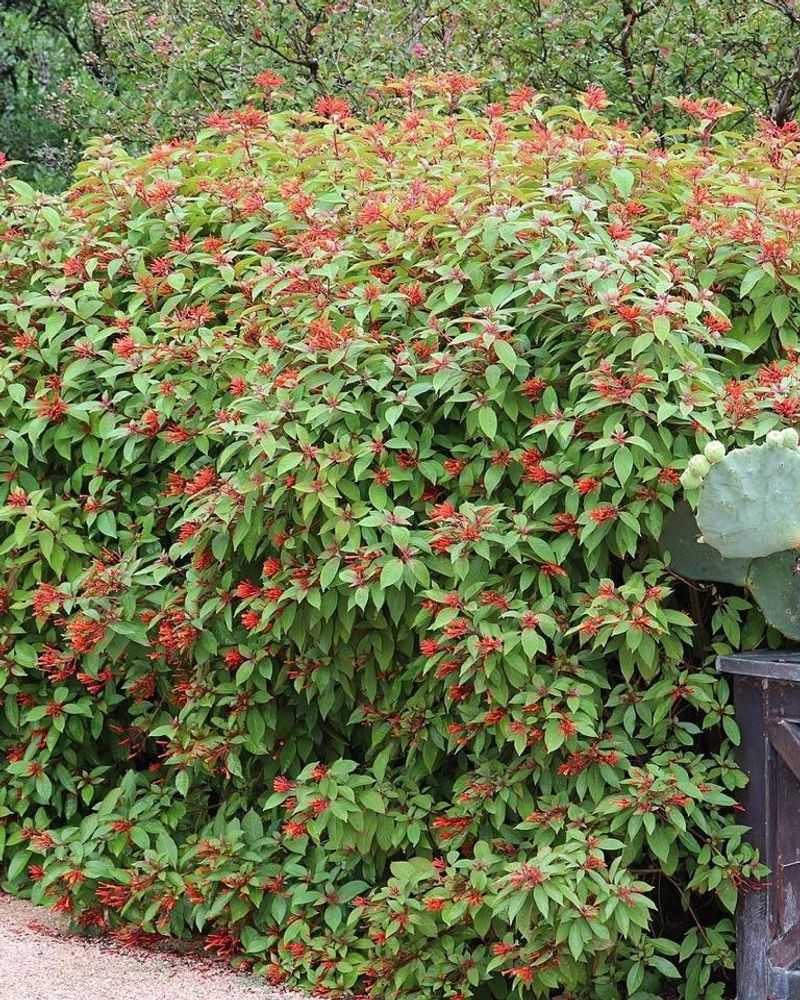
Firebush is the plant that makes people slow their cars down.
The clusters of tubular orange-red flowers are almost unreasonably vivid, and they keep coming from spring straight through fall with very little encouragement.
No other Florida-friendly shrub delivers that kind of sustained, high-visibility color while asking so little of the person maintaining it.
It grows into a rounded shrub reaching four to eight feet tall depending on the variety and how much you prune it.
The native Florida form tends toward the larger end, while the dwarf variety stays compact at two to four feet, which works well for corner lot plantings where you want bold color without blocking sightlines.
Either way, the foliage carries a warm reddish-green tint that looks rich even when the plant is between bloom cycles.
From two streets away, firebush in full bloom is impossible to miss. The orange-red color pops against green lawns, white fences, and beige stucco with equal enthusiasm.
Hummingbirds and butterflies visit constantly during bloom season, which adds wildlife movement on top of the color impact.
Firebush is extremely heat-tolerant, drought-tolerant once established, and thrives in full sun to partial shade. It handles Florida humidity and sandy soils without special care.
Firebush in full bloom on a corner lot is essentially a free advertisement for the property.
The neighbors will notice. The hummingbirds will definitely notice. Everyone benefits except the person who planted plain green shrubs next door.
4. Choose Simpson’s Stopper For Evergreen Polish
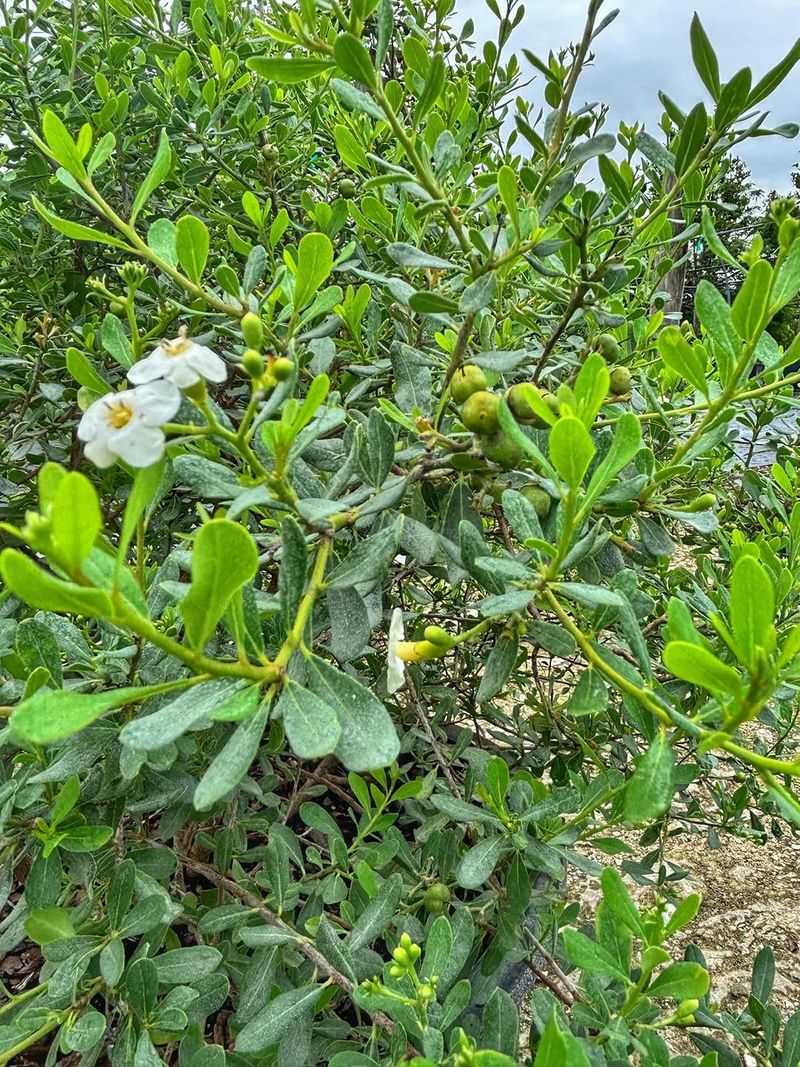
Simpson’s Stopper has a refined, finished quality that most people associate with expensive, high-maintenance plants.
The glossy dark green leaves catch light as though they have been polished. Small red berries dot the plant like natural ornaments throughout the year.
White flower clusters appear in waves and carry a light fragrance that drifts across the yard on warm mornings. The whole effect reads as carefully curated. The actual maintenance requirement is minimal.
This Florida native grows into a dense, multi-stemmed shrub or small tree reaching six to fifteen feet tall.
For corner lot use, regular light pruning keeps it at a tidy, manageable size that works as a living privacy screen or a refined anchor plant.
The year-round evergreen foliage means the corner looks polished in every season, not just when something is actively blooming. That consistency is exactly what a high-visibility lot needs.
From across two streets, the dense, glossy canopy reads as lush and well-established even on a relatively young plant. The red berries attract birds throughout the year, which adds life and movement to the bed at every angle.
Simpson’s Stopper is drought-tolerant once established, thrives in full sun to partial shade, and handles both coastal conditions and inland Florida heat well.
It grows in sandy or well-drained soils without complaint. Smaller nursery plants typically cost between ten and twenty-five dollars, making it a smart investment for long-term corner lot structure.
A plant that looks expensive, asks very little, and attracts birds year-round. Simpson’s Stopper is very aware of its value and charges accordingly.
A few dollars is still a deal for what it delivers over a decade of corner lot visibility.
5. Use Dwarf Yaupon Holly For Formal Lines
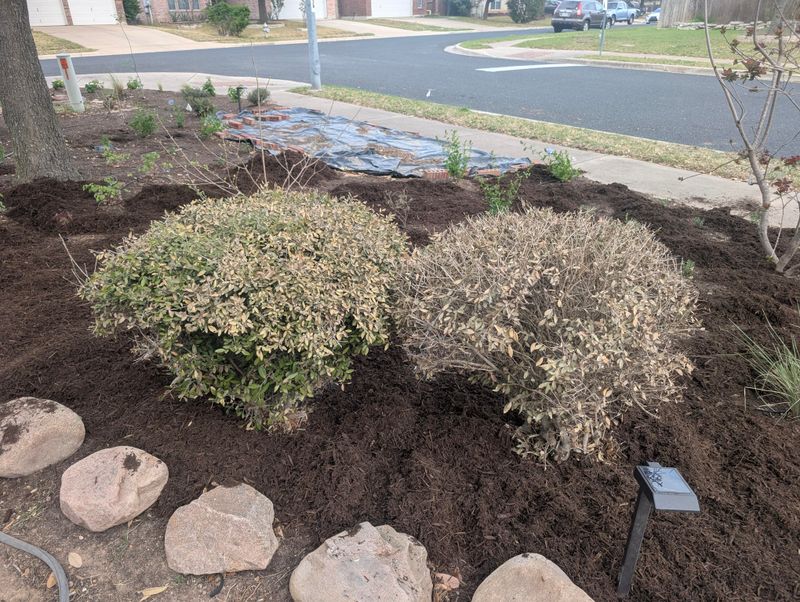
Some plants just know how to behave, and dwarf yaupon holly is at the top of that list.
It grows into a naturally compact, dense mound that holds its shape with very little coaxing, which makes it one of the easiest plants to use when you want a formal, structured look without committing to weekly trimming sessions in Florida heat.
The plant practically arrives pre-styled.
Dwarf yaupon holly stays between two and four feet tall and wide. The tiny dark green leaves are densely packed along the stems, giving the plant a fine-textured, almost velvety appearance from a distance.
That texture reads clearly from two streets away because it creates a clean, defined mass that anchors a corner bed without looking fussy or overdone. It is the landscaping equivalent of a well-tailored suit: structured, reliable, always appropriate.
Repetition is the design move here.
Three or five plants spaced evenly along a corner bed edge create a visual rhythm that looks intentional and polished without requiring anyone to plan it out beyond the initial spacing decision.
The repetition does the design work automatically.
Dwarf yaupon holly is extremely drought-tolerant, heat-tolerant, and adaptable to a wide range of Florida soil types.
It handles full sun to partial shade and resists pests and diseases consistently. Nursery prices typically run eight to twenty dollars per plant, making it easy to buy multiples for a layered corner lot design that holds up year-round.
Formal lines, zero drama, and a reputation for never causing problems. Dwarf yaupon holly is the most reliable employee in the corner bed, shows up every day, and never asks for recognition. Appreciate it anyway.
6. Add Silver Saw Palmetto For Drama
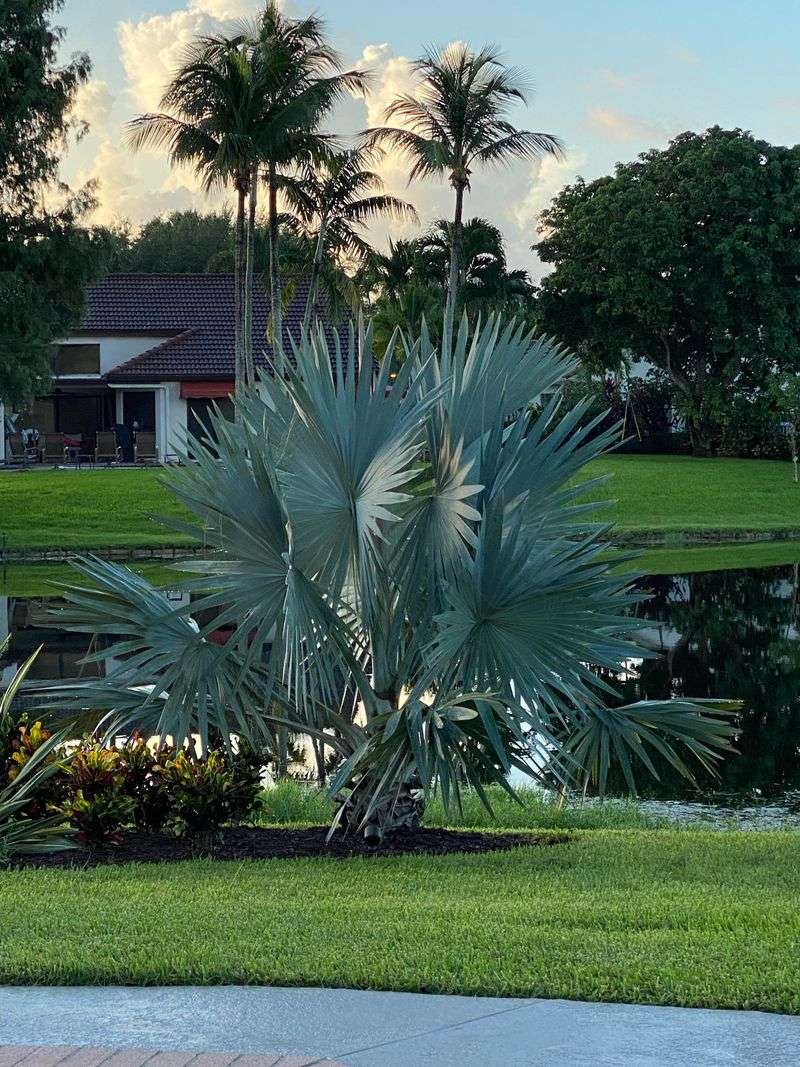
Not every plant on a corner lot needs to blend in.
Sometimes a single statement piece that makes people do a double-take from half a block away is exactly what the design needs, and silver saw palmetto was built specifically for that role.
Those large fan-shaped fronds in a striking silver-blue color look like something a landscape architect sourced specifically for a high-end project. The actual price tag tells a different story.
Silver saw palmetto is a naturally occurring color form of the native saw palmetto that produces fronds with a distinctive silver or blue-gray tint.
The effect is almost architectural. Each frond fans out with bold geometric lines that create visual impact from every approach angle.
On a corner lot with exposure from two streets, that sculptural quality reads powerfully from both directions simultaneously.
A single silver saw palmetto planted at the actual corner point creates a focal anchor that draws the eye from both streets at once.
Surround it with lower-growing plants like coontie or muhly grass and the contrast in height, color, and texture makes the entire bed look professionally composed.
Saw palmetto is one of Florida’s most adaptable natives, tolerating drought, poor sandy soils, salt spray, and full sun without complaint.
It grows slowly, which keeps maintenance minimal. Silver forms are available through Florida native plant nurseries at roughly fifteen to forty dollars depending on size, and they are worth hunting for specifically.
One plant at the corner point. The whole bed looks designed around it. Silver saw palmetto does not share the spotlight, but it earns the one it takes.
7. Plant Fakahatchee Grass For Texture
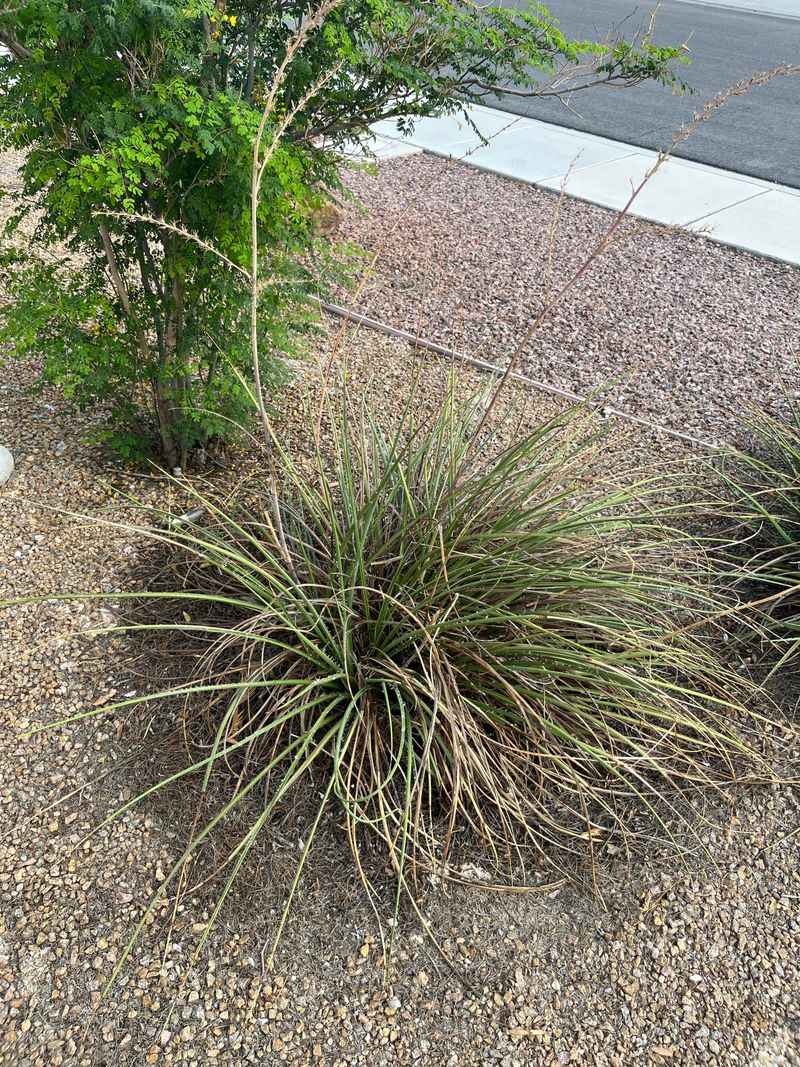
Fakahatchee grass fills a corner bed with real presence, not the kind that requires height or aggressive color but the kind that comes from scale and texture working together.
Unlike some ornamental grasses that look thin and unconvincing in their first season, fakahatchee grass develops into substantial, fountain-like clumps fairly quickly.
The corner lot starts looking established and lush within one to two seasons rather than sparse and optimistic.
This Florida native grows in graceful arching clumps reaching two to four feet tall.
The bright green blades have a soft, flowing quality that moves beautifully in the breeze and creates a layered texture that reads well from a distance.
Mass planting five to seven clumps in a sweeping curve generates the kind of bold, organic shape that looks like it cost real money to design even when the math says otherwise.
Scale is one of fakahatchee grass’s biggest assets on a larger corner bed. Smaller ornamental plants can get lost in a wide open bed.
Fakahatchee grass fills that space confidently without overwhelming it. Position it as a mid-layer behind sunshine mimosa groundcover and in front of taller anchor plants like silver saw palmetto for a layered design that works from every angle and every distance.
Fakahatchee grass thrives in full sun to partial shade, tolerates drought once established, and grows in a wide range of Florida soils with minimal fuss.
Beyond dividing large clumps every few years, it requires almost nothing. Nursery prices generally run five to fifteen dollars per plant, making large mass plantings very budget-friendly for the visual weight they carry.
Five to seven clumps, a sweeping curve, and a corner bed that suddenly looks like someone made a real plan for it. Fakahatchee grass takes up space with genuine confidence. The corner bed needed exactly that energy.