These Georgia Trees Produce Bird Food Through Summer When Most Other Sources Have Stopped
Hang a bird feeder and birds will come. Many Georgia gardeners know that part.
But there is a gap in the yard that a feeder cannot fill, a stretch from late spring through summer when natural food sources thin out and birds are working harder than ever to feed themselves and their young.
The birds are still there. They are just hungry, and your yard may not be offering much.
Native trees change that equation in a way no feeder can match. The right tree in the right spot produces fruit, seeds, and insect habitat across the exact months when everything else has gone quiet.
Some start as early as May. Some are still going in October. Together, they can turn your yard into a reliable food source from the first heat of summer right through fall migration.
The trees on this list are real Georgia natives. They belong here, and the birds know it. Want to see what shows up when you plant one?
1. Red Mulberry
Before most other trees have even thought about fruiting, the red mulberry is already drawing a crowd.
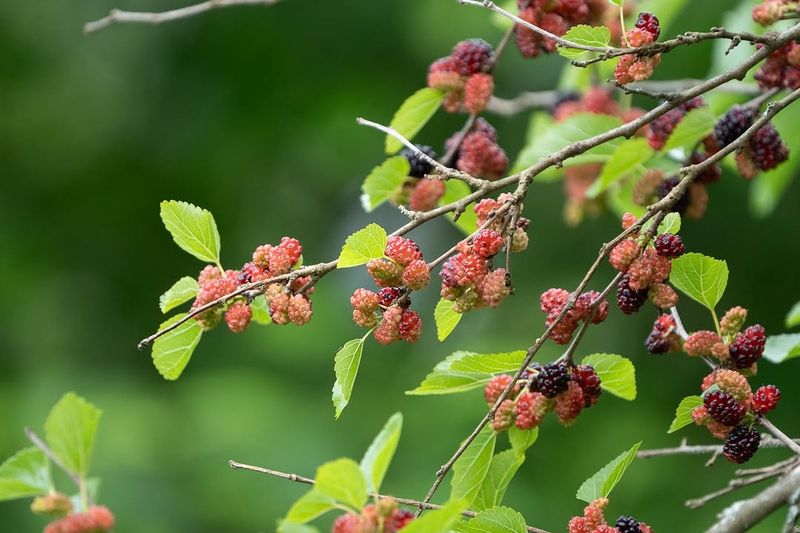
Robins, catbirds, orioles, and cedar waxwings arrive the moment those dark purple berries start to ripen, which in Georgia usually happens from late May into June.
The tree does not ease into the season. It opens the buffet and steps back.
Red mulberry is a true Georgia native, found naturally along stream edges and woodland borders across the state.
It grows quickly, often reaching 20 to 40 feet, and it starts producing fruit at a relatively young age compared to most other hardwoods.
For gardeners who want fast bird results from a native tree, mulberry is hard to beat on both counts.
The berries ripen over several weeks rather than all at once, which stretches the feeding window and keeps birds returning regularly.
Fruit that drops to the ground feeds ground foragers like towhees and thrushes who are perfectly happy to work below the action above.
One practical note worth planning around: plant the tree away from patios and walkways. Birds eat enthusiastically, and the droppings that follow tend to be vividly stained.
Give it full sun to partial shade and average soil moisture. Once established, it needs very little from you.
Red mulberry rewards patience with one of the earliest and most reliable bird food crops in the state. Plant it once, step back, and let the birds handle the rest. They will find it faster than you expect.
2. Serviceberry
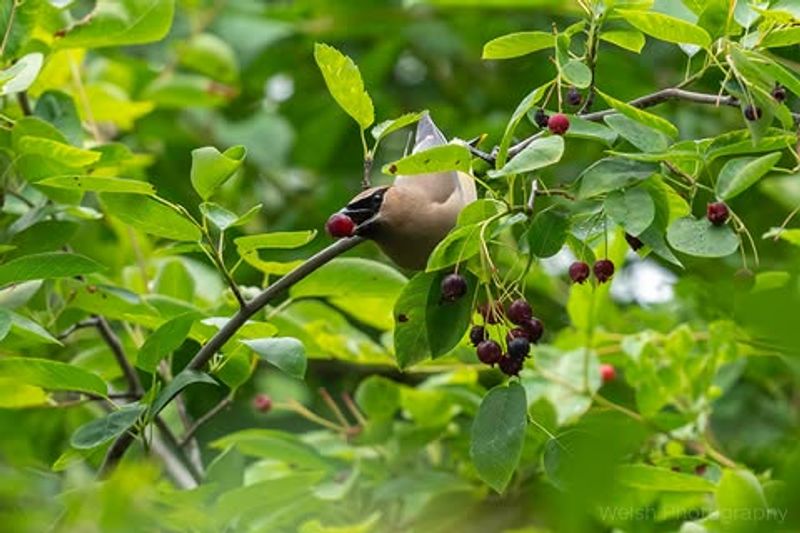
Few trees get songbirds more excited than serviceberry in early summer.
The small blueberry-like fruits ripen just as cedar waxwings, scarlet tanagers, and wood thrushes are actively feeding and raising young.
Timing is everything in the bird world, and serviceberry consistently delivers in June when it matters most.
Also known as Amelanchier, serviceberry is a native small tree that fits comfortably into yards of almost any size. It typically tops out between 15 and 25 feet, making it manageable for most home landscapes.
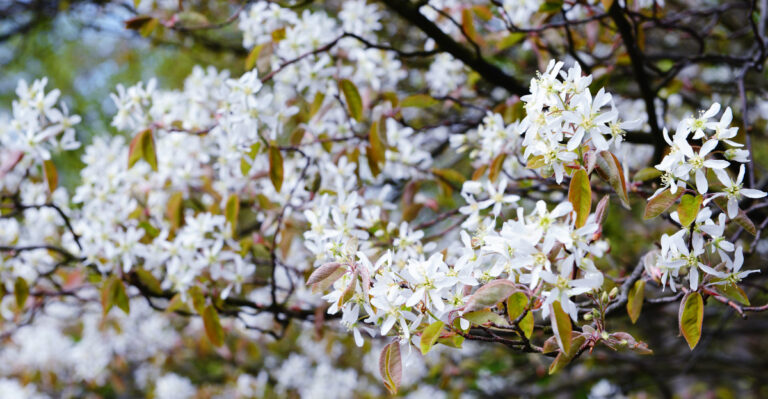
It also offers gorgeous white spring flowers before the fruit appears, giving you two seasons of strong visual interest from a single tree without any extra effort.
Your Georgia Garden Changes Every Week. Your Plan Should Too.
Gardening in Georgia changes quickly throughout the season. Every Friday you’ll receive a simple weekly plan showing exactly what to plant, prune, fertilize, harvest, and protect so you never miss the right timing.
Georgia has several native serviceberry species, with downy serviceberry well suited to the state’s climate and soils.
It prefers moist, well-drained ground and performs nicely in partial shade, making it a smart choice under taller canopy trees or along woodland edges where many ornamentals struggle to perform.
The fruit disappears fast, sometimes within days of ripening, because bird demand is genuinely that high. Planting more than one tree extends the harvest slightly and gives a better window for watching the feeding activity.
Serviceberry also supports over 100 caterpillar species, adding protein-rich insect food for birds raising nestlings alongside the fruit.
One tree is a good start. Two trees is a proper event. The birds will vote with their wings, and they tend to vote early and often when serviceberry is involved.
3. Black Cherry
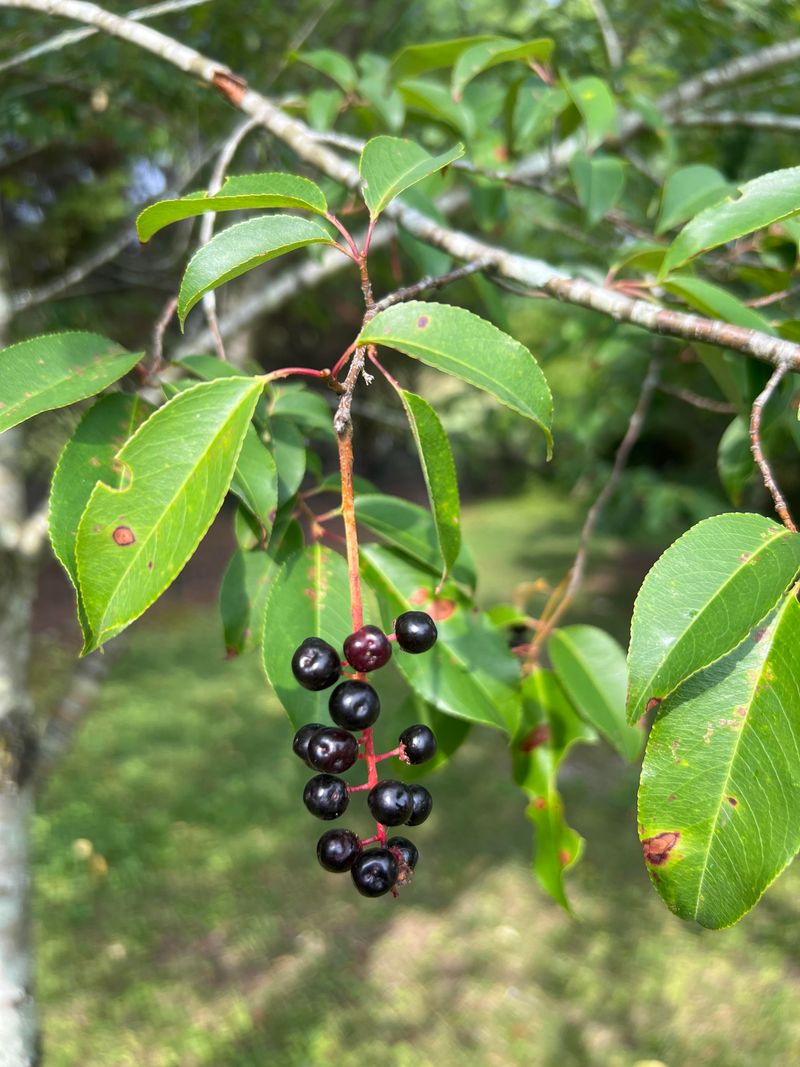
Walk past a black cherry tree in July and you might hear it before you see it.
The rustling of leaves, the buzzing of insects, the calls of a dozen bird species all converge on this one native tree when its fruit is ripe.
Black cherry is one of the most wildlife-productive trees in the entire eastern United States, and Georgia summers prove that point every single year.
The small dark fruits ripen from July into August across most of the state, giving birds a critical food source right in the middle of summer when other options are genuinely slim.
Bluebirds, woodpeckers, flickers, great crested flycatchers, and thrushes feed heavily on black cherry. Even raptors use the tree as a hunting perch while smaller birds feast below, which makes for some genuinely dramatic backyard viewing.
Beyond the fruit, black cherry hosts more than 450 caterpillar and moth species, making it one of the most insect-supportive native trees in North America.
That insect activity alone draws warblers, vireos, and other insect-eating birds throughout the growing season, long before and after the fruit window opens.
Black cherry grows tall, sometimes reaching 60 to 80 feet in good conditions, so it works best in larger yards or along property borders.
It adapts to a wide range of soils and grows readily once established. Plant it in a sunny spot and give it a few years to hit its stride.
Once it starts fruiting, the birds will find it on their own. No advertising required. Black cherry handles its own marketing very effectively.
4. Hackberry
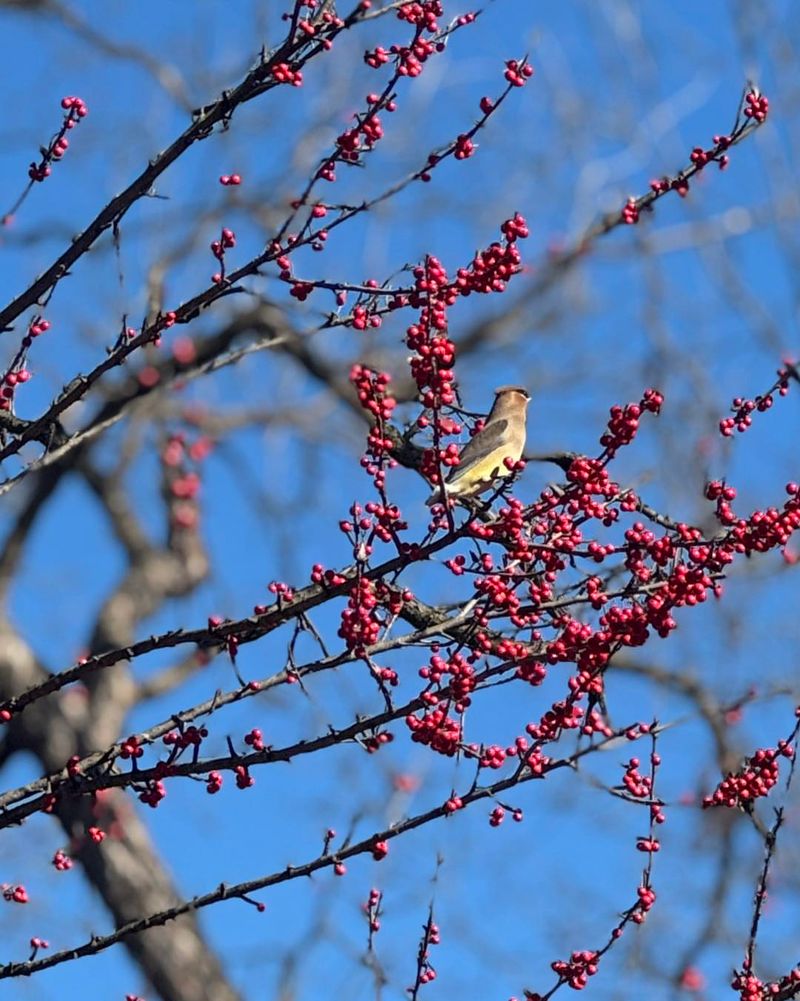
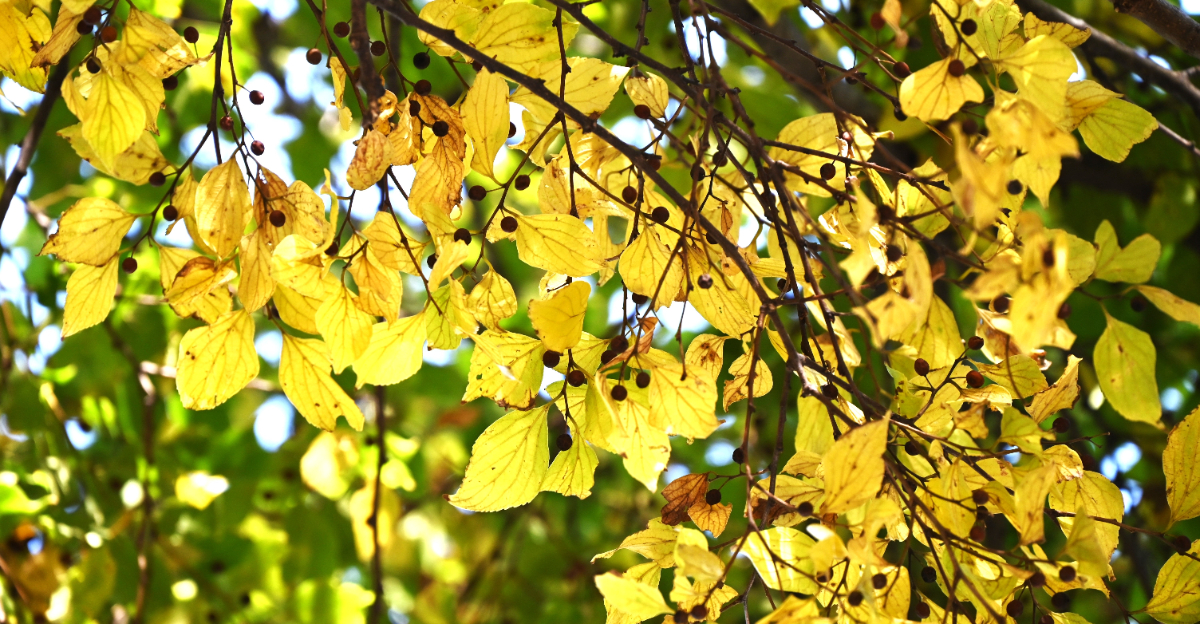
Many people walk right past a hackberry tree without a second glance. The bark is warty, the leaves are unremarkable, and it rarely wins any landscape design awards.
None of that matters to the birds. Come late summer and fall, hackberry becomes one of the most visited trees in any Georgia yard or woodland edge, and the activity level is hard to miss once you know what to look for.
The small round fruits start green and ripen through orange, red, and eventually deep purple from late summer into fall.
Northern mockingbirds, yellow-rumped warblers, hermit thrushes, and American robins rely heavily on hackberry during migration and the late season push.
The fruits are high in sugar and fat, exactly the fuel birds need for long flights or cooling nights ahead.
Hackberry also hosts a surprising number of butterfly and moth larvae, including the hackberry emperor butterfly, which is named specifically for this tree.
That insect activity adds a layer of feeding value for birds that prefer live prey alongside their fruit course.
The tree is remarkably tough. It tolerates poor soil, drought, compacted ground, and urban conditions better than nearly any other native tree.
Plant it in full sun for best fruit production, though it handles partial shade without complaint. Hackberry grows at a moderate pace and rarely needs pruning or special care once established.
Low effort, high reward, and the birds love it unconditionally regardless of its looks. Hackberry is living proof that personality matters more than appearance. The warblers agree.
5. Flowering Dogwood
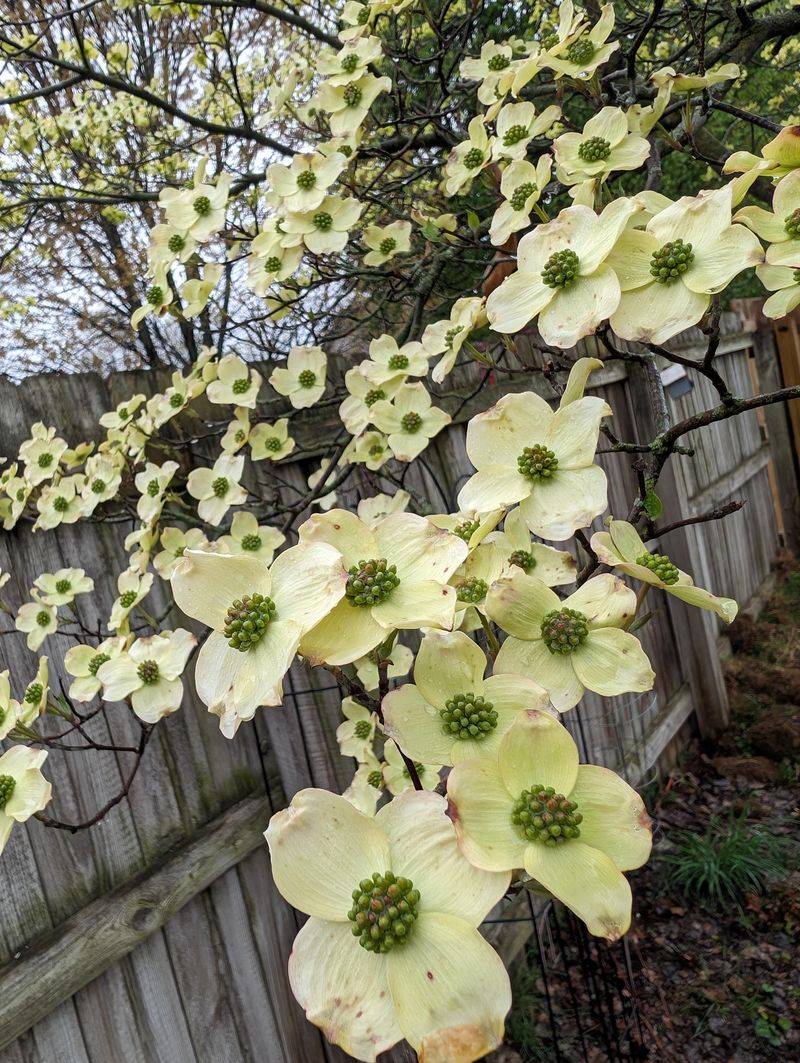
Everybody knows flowering dogwood for its spring bloom. The white or pink flowers are iconic, and Georgia yards are full of them.
But the real gift this tree gives to birds arrives months later, quietly, while most people are focused on other things in the garden.
By late summer, those flowers have transformed into clusters of shiny bright red oval berries that practically glow against the green foliage.
Red-eyed vireos, wood thrushes, gray catbirds, and pileated woodpeckers are among the 36 or more bird species documented feeding on dogwood fruit.
The berries ripen from August into October, providing a critical late-season food source right as migratory birds pass through and need to refuel fast.
Fat content in dogwood berries is notably high, which makes them especially valuable for birds building energy reserves before long journeys.
The tree essentially serves as a fuel stop on one of the busiest migration corridors in North America, and the birds treat it accordingly.
Cornus florida prefers well-drained, slightly acidic soil and does best with afternoon shade in the hotter parts of Georgia.
Avoid low spots where water pools. Dogwood also provides strong nesting structure and shelter throughout the growing season, adding habitat value well beyond the fruit alone.
Planting one near a window gives you a front-row seat to some of the most active bird feeding of the entire year. The spring flowers are beautiful. The August bird traffic is arguably better. Plant it and let both seasons make their case.
6. American Persimmon
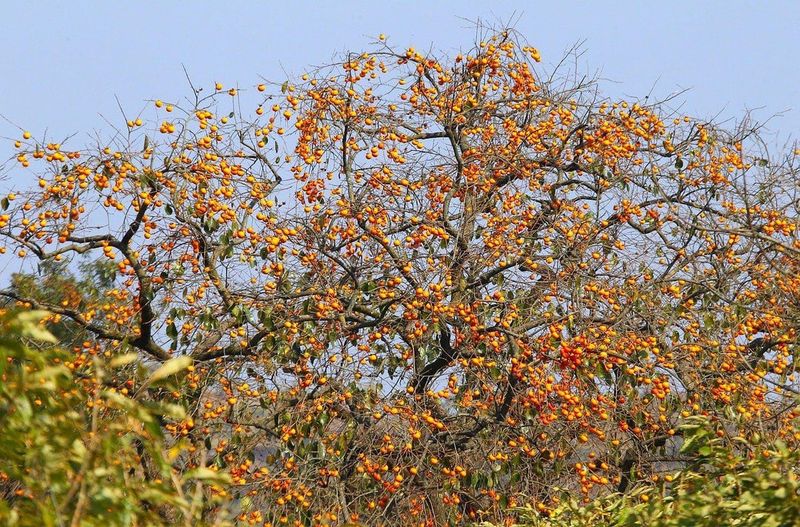
There is a particular kind of backyard moment that happens when a persimmon tree finally lets go of its fruit.
One morning in late August or September, the small orange globes begin to soften and drop, and within hours the ground beneath the tree is alive.
Bluebirds, mockingbirds, robins, cedar waxwings, and even wild turkeys show up to stake their claim.
American persimmon is one of the most underplanted native trees in Georgia, which is genuinely hard to explain given what it delivers.
The fruit ripens from late summer through fall, with some trees beginning to drop early fruit in August, stretching the feeding season well beyond what most gardeners expect from a single tree.
The tree is native throughout Georgia and grows across a wide range of soil types, from dry upland sites to moist bottomlands.
It handles heat and drought with real toughness once established. Female trees produce the fruit, and planting a male alongside tends to improve fruit set and overall production across the season.
Persimmon fruit is loaded with sugars and calories, making it a premium late-season energy source for birds heading into fall migration or bracing for cooler weather.
The tree also supports moth and butterfly larvae through summer, adding insect feeding value long before the fruit appears.
For a low-maintenance native tree with serious wildlife credentials, American persimmon is genuinely hard to beat.
Plant it, mostly ignore it, and let the bluebirds discover it on their own. The morning you first see that activity under the tree is a very good morning.
7. Southern Magnolia
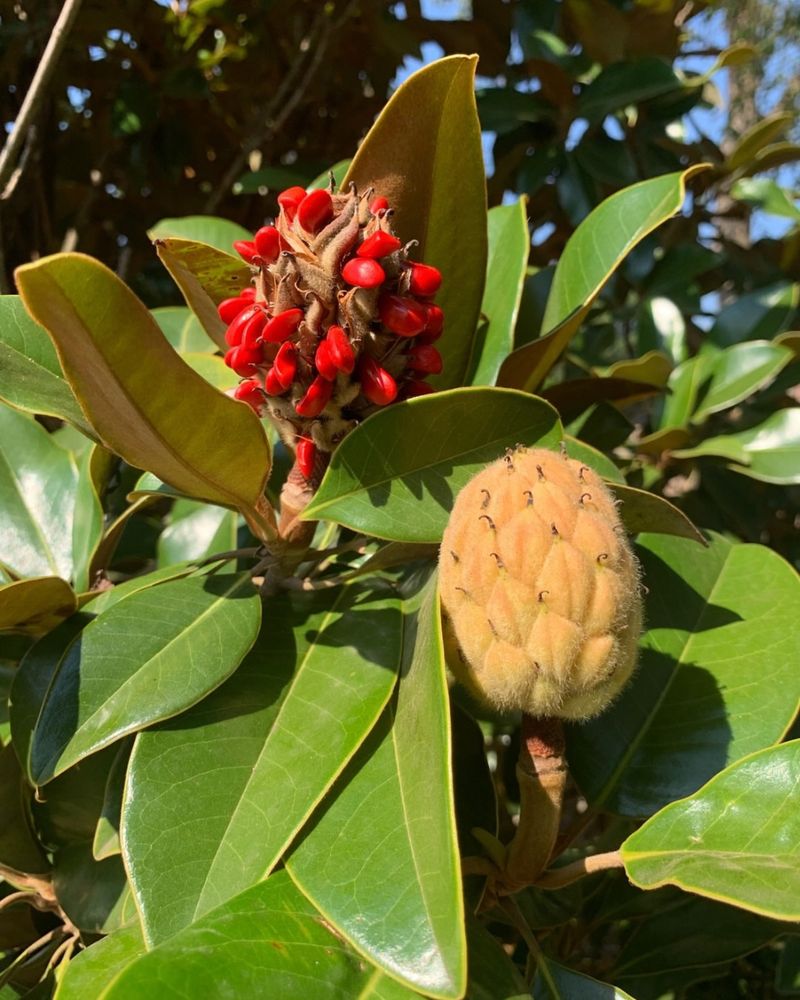
Southern magnolia is one of the most iconic trees in Georgia, and almost everyone plants it for the flowers or the evergreen structure.
What most people miss is what happens in late summer, when the large cone-like structures crack open to reveal brilliant red seeds dangling on thin threads. It is striking to look at, and birds notice immediately.
Wood thrushes, eastern towhees, red-eyed vireos, and wild turkeys are among the birds recorded feeding on magnolia seeds.
The seeds are rich in fat, making them a valuable food source during late summer when birds are building reserves.
Seed release typically runs from August through October in Georgia, lining up well with the start of fall migration activity.
Magnolia grandiflora grows large, often reaching 60 to 80 feet at maturity, so it works best in spacious yards where the broad canopy has room to spread.
The dense evergreen foliage provides year-round shelter and nesting cover, which adds habitat value that extends well beyond the seed window each fall.
One underappreciated benefit is the insect life beneath the canopy.
The leaf litter breaks down slowly and creates a microhabitat where ground-feeding birds scratch and probe for beetles, ants, and other invertebrates throughout the year. The feeding value runs deeper than most people realize.
Planting a southern magnolia is a long-term investment that pays wildlife dividends for decades. The flowers are the reason most people plant it.
The birds stay for everything else. Let them show you what this tree is actually capable of.