The Native Oregon Vine That Outperforms Wisteria Without The Invasive Risk Or Aggressive Roots
Wisteria can look dreamy in bloom, but Oregon gardeners know it can also become a lot to manage. Thick stems, heavy growth, and pushy roots are not always a good match for smaller yards or fences.
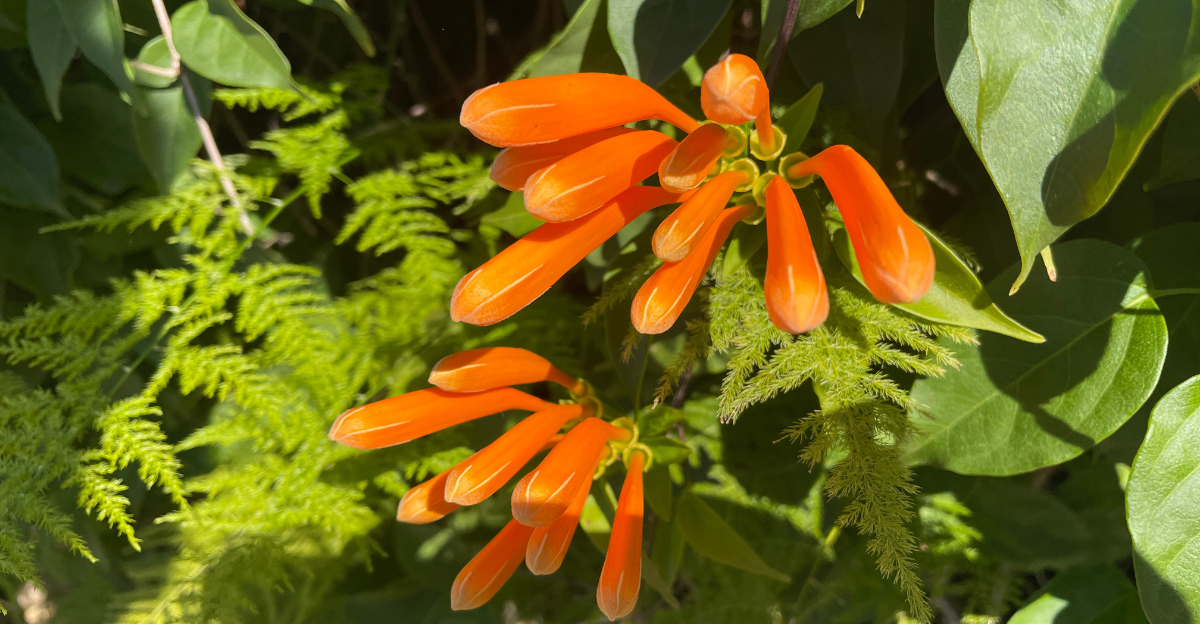
A native vine can give you the climbing beauty without the same worry. Orange trumpet vine brings bright blooms, quick coverage, and a more natural fit for the region.
It can soften a trellis or fence while giving hummingbirds a reason to visit. The effect is bold, but the plant feels less risky than wisteria when placed well.
It still needs support and a little guidance as it grows. But for gardeners who want color, movement, and native charm, orange trumpet vine is a standout worth knowing.
1. Orange Honeysuckle Gives Oregon Gardens A Native Vine With Real Color
Not every garden vine earns its place, but orange honeysuckle does from the moment it starts blooming.
Native to the Pacific Northwest and parts of western North America, this vine has been growing wild along forest edges and stream banks for centuries.
It belongs here, and that shows in how easily it settles into a garden.
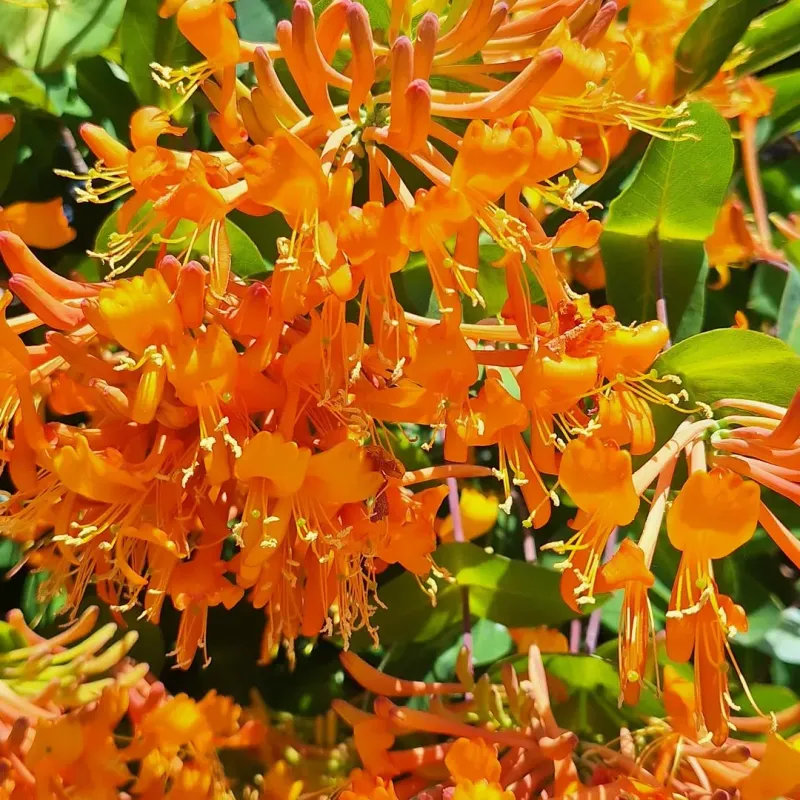
The color it brings is genuinely striking. The flowers are a warm, saturated orange that catches the eye from across the yard.
Unlike some native plants that bloom subtly, this one makes a real statement on a trellis, fence, or arbor. Gardeners who have only seen it in the wild are often surprised by how bold it looks up close.
What makes it especially valuable for gardens in Oregon is that it does not need much help to perform well. It is adapted to local soils, local rainfall patterns, and local summers.
Once it gets established, it mostly takes care of itself. That kind of reliability is hard to find in a showy flowering vine.
Most plants that look this good require a lot of work to keep them looking that way. Orange honeysuckle skips most of that fuss and still delivers a display that rivals anything you would find at a garden center.
2. Its Trumpet Flowers Are Prettier Than Gardeners Expect
There is a quiet surprise waiting for anyone who plants orange honeysuckle for the first time. The flowers are not just orange.
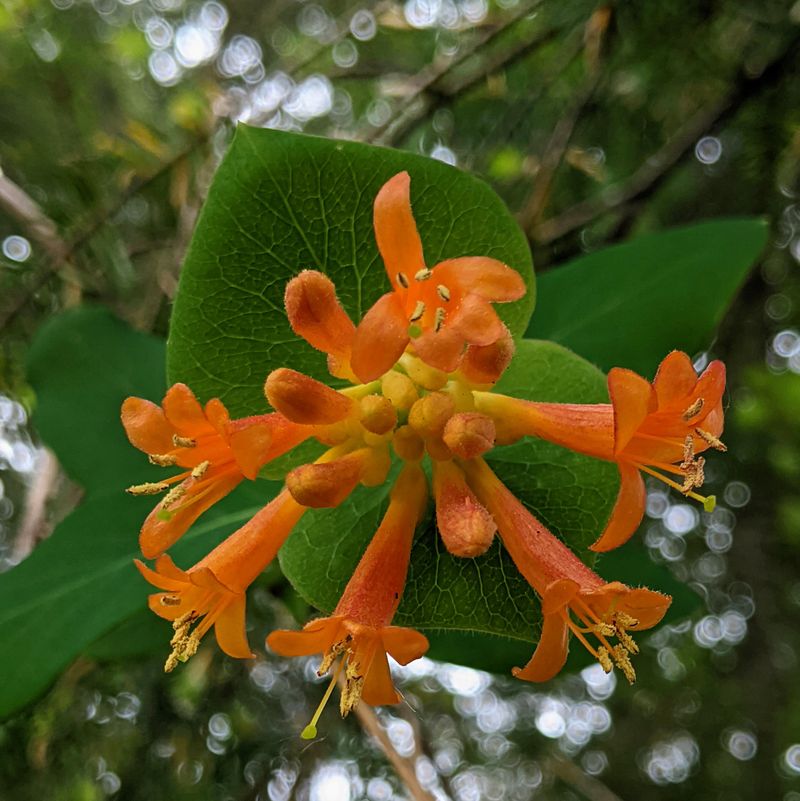
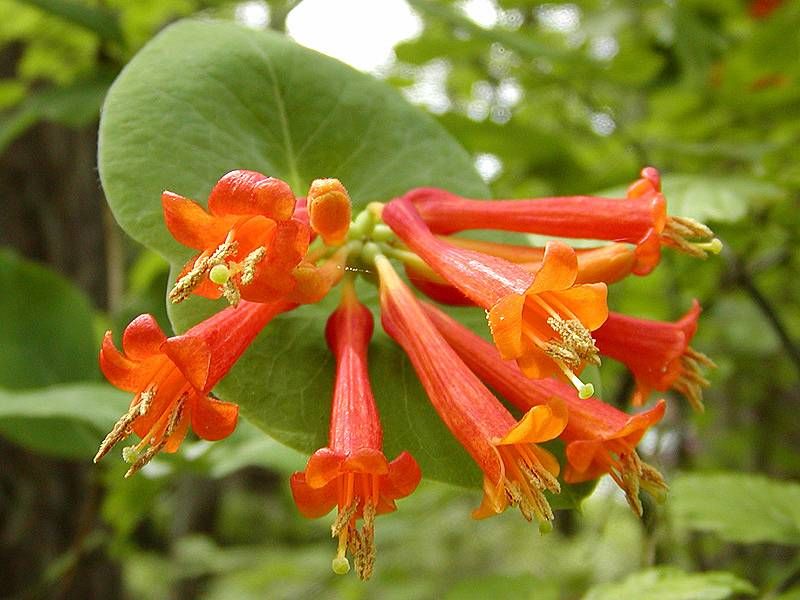
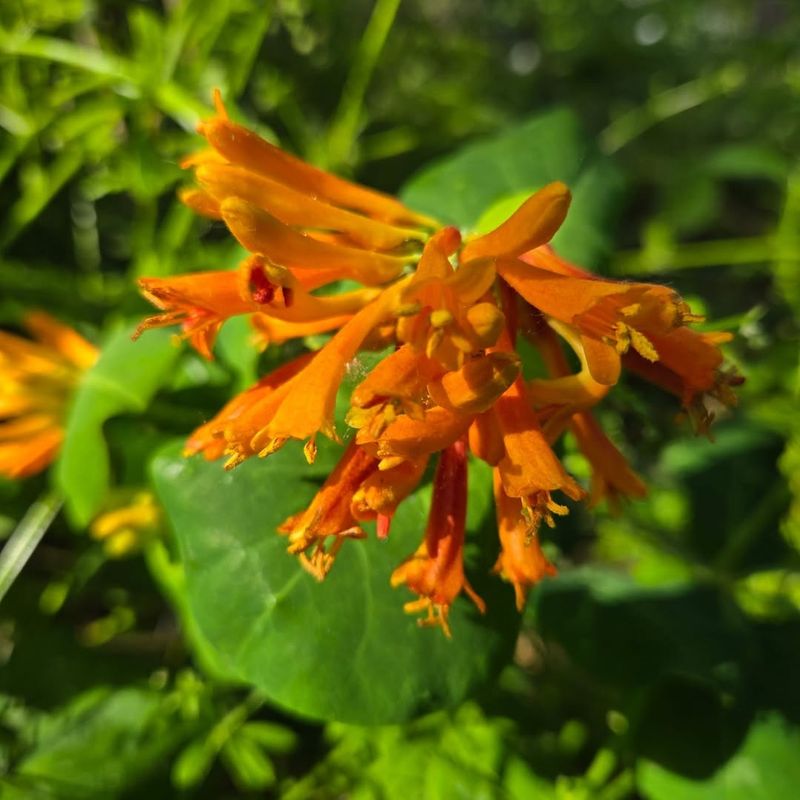
They are a deep, warm, almost coral-orange with a slight flush of yellow inside the tube. Clusters of them appear at the ends of the stems, fanning out in a way that looks almost arranged on purpose.
Each flower is narrow and tubular, shaped perfectly for hummingbirds that need to reach the nectar inside.
Up close, the texture is smooth and slightly waxy, which makes the color look even richer in sunlight.
When a cluster is fully open, the effect on a trellis or fence post is genuinely beautiful. Many gardeners who grow it say they underestimated how good it would look before they saw it in full bloom.
The foliage adds to the overall appeal. The leaves are rounded and a clean blue-green color, which creates a nice contrast against the orange flowers.
Your Oregon Garden Changes Every Week. Your Plan Should Too.
Gardening in Oregon changes quickly throughout the season. Every Friday you’ll receive a simple weekly plan showing exactly what to plant, prune, fertilize, harvest, and protect so you never miss the right timing.
Some of the upper leaf pairs fuse together around the stem, forming a small cup shape that gives the plant a distinctive, recognizable look.
Even when the vine is not in bloom, the foliage is attractive enough to justify its space on a structure.
That combination of good-looking leaves and exceptional flowers makes this vine a strong visual performer across multiple seasons in the garden.
3. This Native Vine Brings Hummingbirds To Arbors And Fences
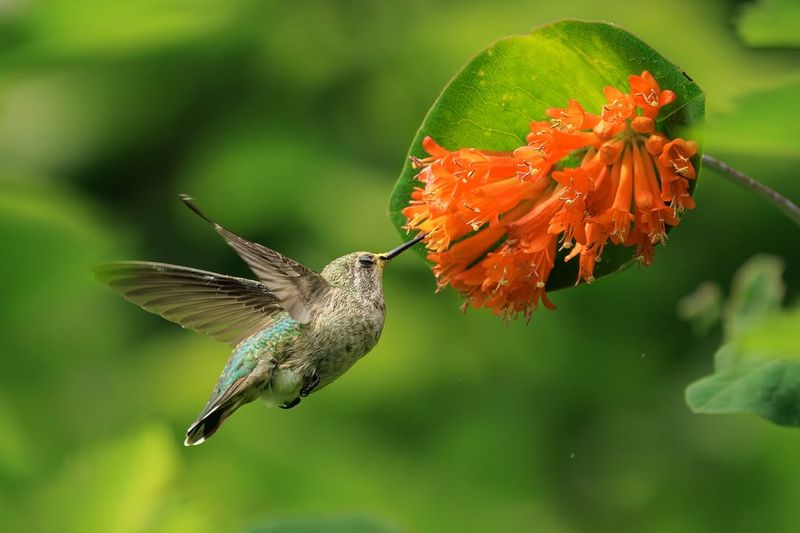
Few things in an Oregon garden are as exciting as watching a hummingbird work its way through a cluster of flowers. Orange honeysuckle is one of the best plants you can grow to make that happen regularly.
The tubular flower shape and nectar-rich blooms are practically designed for hummingbirds, and the birds seem to know it.
Rufous hummingbirds, which migrate through this region in large numbers each spring, rely heavily on native flowering plants as fuel stops.
Anna’s hummingbirds, which stay in the Pacific Northwest year-round, also visit orange honeysuckle during its late-spring bloom period.
Planting this vine near a window, patio, or sitting area gives you a front-row seat to that activity. It happens reliably, season after season, without any extra effort on your part.
Beyond hummingbirds, the flowers also attract native bees and butterflies that can reach the nectar.
The vine becomes a small hub of wildlife activity during bloom time, which adds life and movement to an otherwise quiet corner of the yard.
Later in the season, the berries attract birds looking for late-summer food. So the wildlife value does not stop when the flowers fade.
Planting one vine near a fence or arbor can turn an ordinary garden structure into a genuine wildlife destination that rewards you with sightings throughout the growing season.
4. Orange Honeysuckle Climbs Without The Wisteria Headache
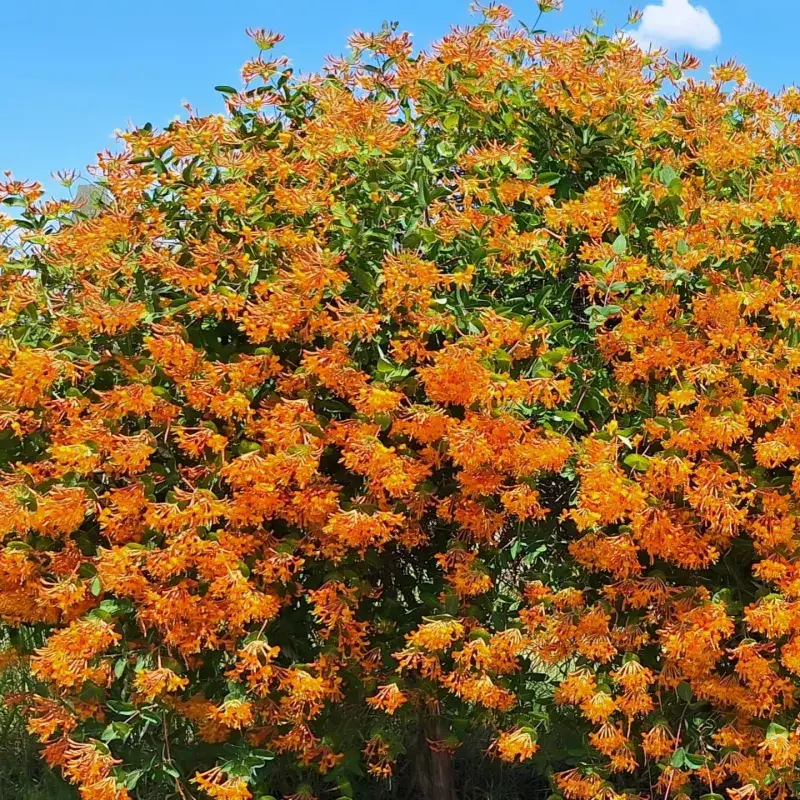
Wisteria has a reputation for beauty, but it also has a reputation for being a garden bully. It wraps around structures so tightly it can damage wood and metal.
Its roots spread far beyond the planting site and can crack pavement, invade drainage systems, and pop up as unwanted sprouts many feet from the original plant. Removing established wisteria is a serious project that can take years.
Orange honeysuckle climbs in a much gentler way. It twines around supports without crushing them.
The stems are flexible and manageable, and the vine stays at a size that most gardeners can keep up with easily.
It does not send out underground runners that surface as surprise sprouts in the lawn or flower beds.
What you plant is what you get, and it stays where you put it.
For homeowners who have dealt with invasive vines before, this kind of predictable behavior is genuinely refreshing.
You can train it up a fence, let it ramble across an arbor, or guide it along a garden wall without worrying about what it is doing underground.
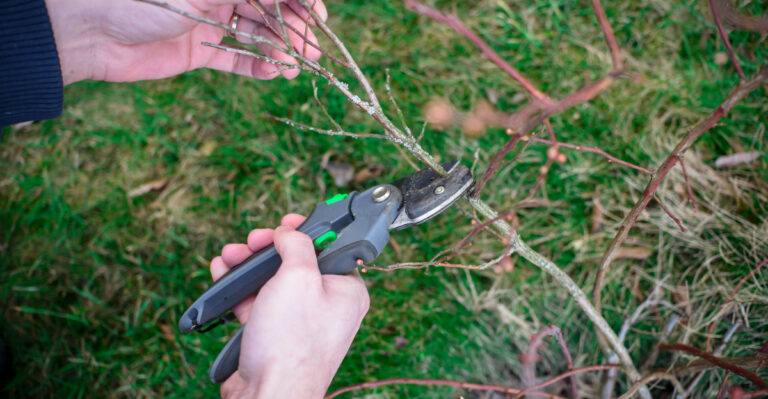
Pruning is simple when needed, and the plant responds well without becoming a maintenance problem. Choosing orange honeysuckle over wisteria is not a compromise.
It is an upgrade that saves time, protects your garden structures, and keeps the yard looking the way you planned it.
5. It Offers A Softer Alternative To Heavy Wisteria Vines
Wisteria is a heavy vine. Its woody stems can grow as thick as a small tree trunk over time, and the weight it puts on structures is substantial.
Pergolas, trellises, and fences built without reinforcement in mind can buckle or warp under a mature wisteria plant. That is a real cost many gardeners do not consider when they first plant it.
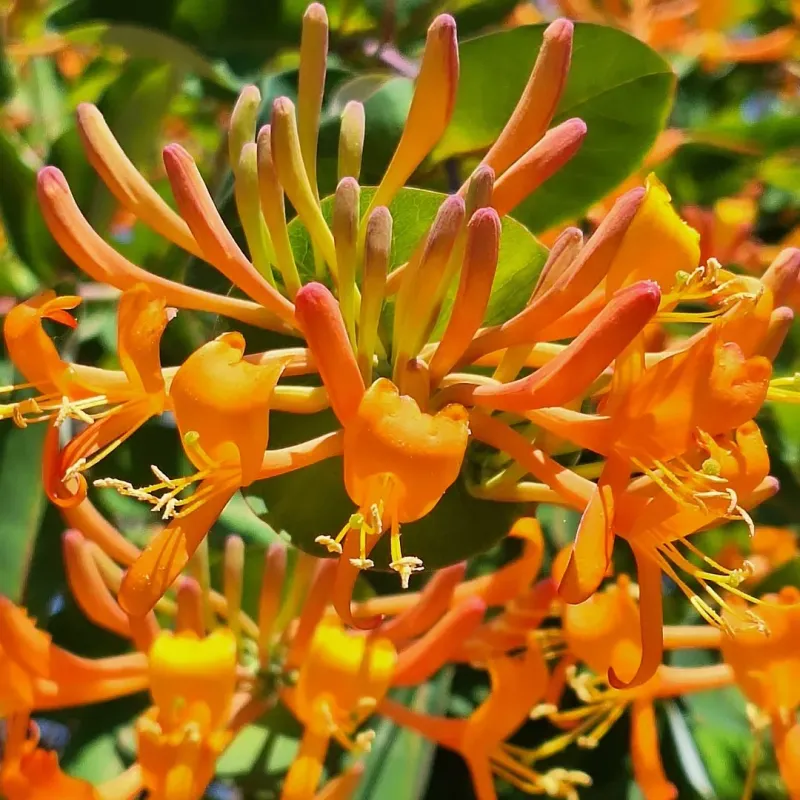
Orange honeysuckle has a lighter, more graceful presence. The stems stay slender and flexible even as the plant matures.
It drapes over structures rather than gripping them in a vice, which means the wood or metal underneath stays in better shape over the years.
A simple cedar trellis or bamboo support is enough to hold it without any worry about structural damage down the road.
The visual effect is also different in a way that many gardeners prefer. Wisteria creates a heavy, dense canopy that can feel overwhelming in a small yard.
Orange honeysuckle gives you coverage and color without blocking light or making a space feel closed in. The rounded leaves let filtered light through, and the open flower clusters add color without bulk.
For smaller gardens or areas where you want a vine that enhances rather than dominates, this native plant offers exactly the right balance of presence and restraint. It is a vine that works with your garden rather than against it.
6. The Late-Spring Flowers Make A Trellis Feel Alive
Late spring is one of the most energetic times in any Oregon garden. Everything is growing fast, color is building across the yard, and the days are getting long enough to actually enjoy being outside.
Orange honeysuckle blooms right in the middle of this season, usually from May into June depending on the location and elevation.
When the flowers open on a trellis or fence, the effect is immediate and cheerful. The clusters of orange tubes stand out against the blue-green leaves in a way that feels bold but not overwhelming.
On a plain wooden structure, the vine turns something functional into a real garden feature. Even a basic fence post becomes interesting when this vine is climbing it in full bloom.
The bloom period lasts several weeks, which gives you a good stretch of color without it feeling like it disappears too quickly.
After the flowers fade, the foliage remains attractive and the vine continues to fill in its support structure.
Then, as summer moves along, the berries begin to develop and offer a second wave of visual interest. So the trellis never really goes back to looking empty after you plant this vine.
It earns its place on the structure through multiple seasons, not just the few weeks it is in bloom. That extended value is one of the strongest reasons to choose it over shorter-season flowering vines.
7. Summer Berries Add Another Season Of Interest
Most flowering vines offer one big season of interest and then fade into the background. Orange honeysuckle does something more.
After the spring flowers are finished, the vine sets small clusters of berries that ripen through the summer months. They are translucent, orange to red in color, and they hang in tight little groups where the flowers were.
Birds love them. Thrushes, waxwings, and other berry-eating birds will visit the vine when the fruit is ripe, giving Oregon gardeners another reason to sit outside and watch the activity.
The berries are not edible for people, but for wildlife, they are a valuable late-summer food source.
Adding a plant that feeds birds twice in one season, once with nectar and once with fruit, is a smart way to support local wildlife without planting multiple species.
From a purely visual standpoint, the berries also keep the vine looking interesting during the long stretch between bloom time and fall. A vine that has nothing going on in July and August can start to feel like wasted space.
These clusters of color change that entirely. They catch the light and add a jewel-like quality to the foliage that most people do not expect from a native plant.
If you are building a four-season garden, or even a three-season one, orange honeysuckle earns its spot well beyond the spring bloom that first attracts most gardeners to it.
8. Orange Honeysuckle Works Best With A Simple Support
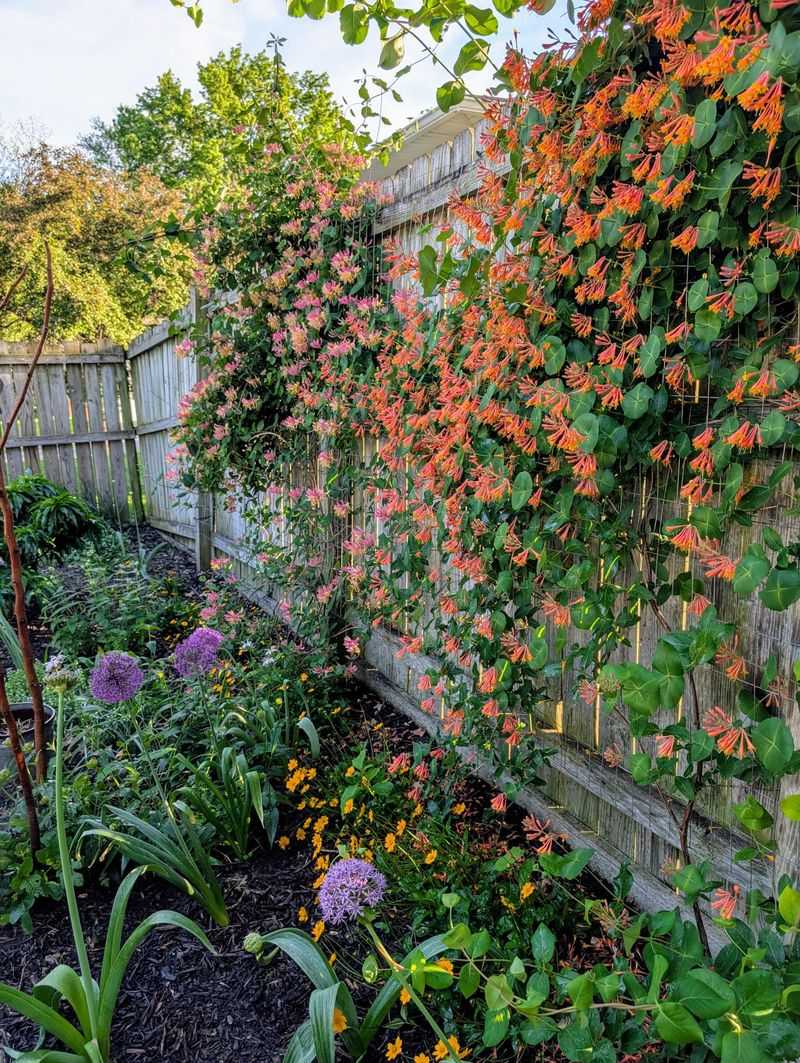
One of the best things about growing this vine is that it does not demand an elaborate structure.
A basic cedar trellis, a section of wire fence, a bamboo teepee, or even a few wooden stakes connected with twine will do the job.
The vine is a natural twiner, which means it wraps its stems around whatever you give it and works its way upward on its own.
You do not need to tie every stem or fuss over its direction constantly. Guide it gently when it is young, and it will figure out the rest.
The stems are flexible enough to redirect without snapping, so adjusting the direction of growth is easy in the first season.
Once it finds its support, it holds on reliably and continues climbing without much intervention.
For gardeners who are not ready to invest in a large pergola or custom arbor, this is genuinely good news. A ten-dollar trellis from a hardware store will support a young plant perfectly well.
As the vine grows, you can upgrade the structure if you want, but many gardeners find that a simple support stays exactly right for the size this vine reaches.
It tops out at around fifteen to twenty feet in good conditions, which is substantial enough to cover a fence panel or fill a garden arch without ever becoming unmanageable. Simple support, real results, and no structural drama along the way.
9. Plant It Where It Can Climb Without Smothering Small Plants
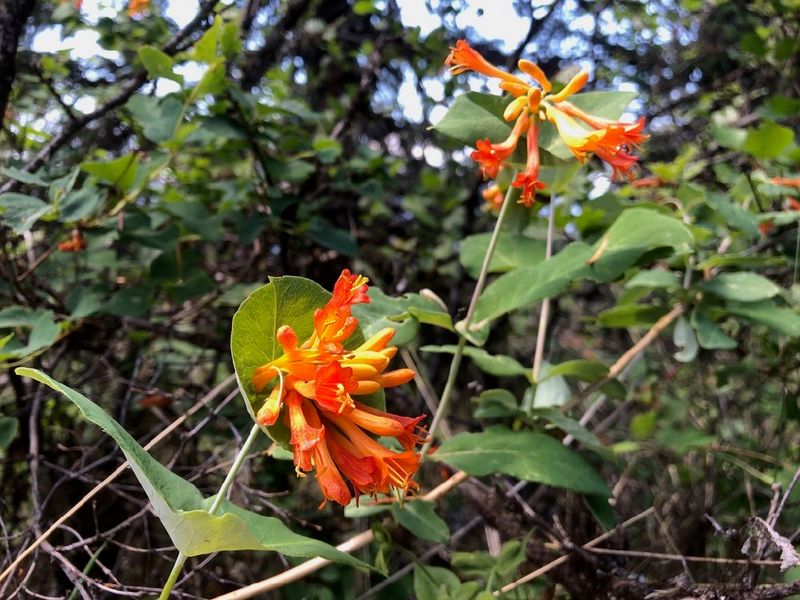
Every vine needs a little room to do its thing, and orange honeysuckle is no different. It is not aggressive like English ivy or wisteria, but it is still a climber that will reach for whatever is nearby.
Planting it next to small, delicate perennials without any structure to guide it upward can lead to the vine flopping over and shading out its neighbors.
The fix is simple. Give it a vertical support from the start, and plant smaller companions a few feet away.
Along a fence line, this vine is perfectly happy to stay on the fence and leave the garden bed in front of it alone.
On a trellis or post, it goes up rather than out, which makes it easy to combine with lower-growing native plants like Oregon grape, native ferns, or camas without any competition for space.
Pairing it thoughtfully with other native plants also creates a more complete habitat garden. The vine handles the vertical layer, while shorter natives fill in below.
Hummingbirds and bees that visit the honeysuckle will also explore the nearby plants, spreading the wildlife activity throughout the bed.
Good placement from the beginning prevents any problems and sets the vine up for long-term success.
A little planning at planting time means you will spend far less time managing it later, and the whole garden will look more intentional and balanced as a result.