What It Means When A Great Blue Heron Visits Your Connecticut Garden
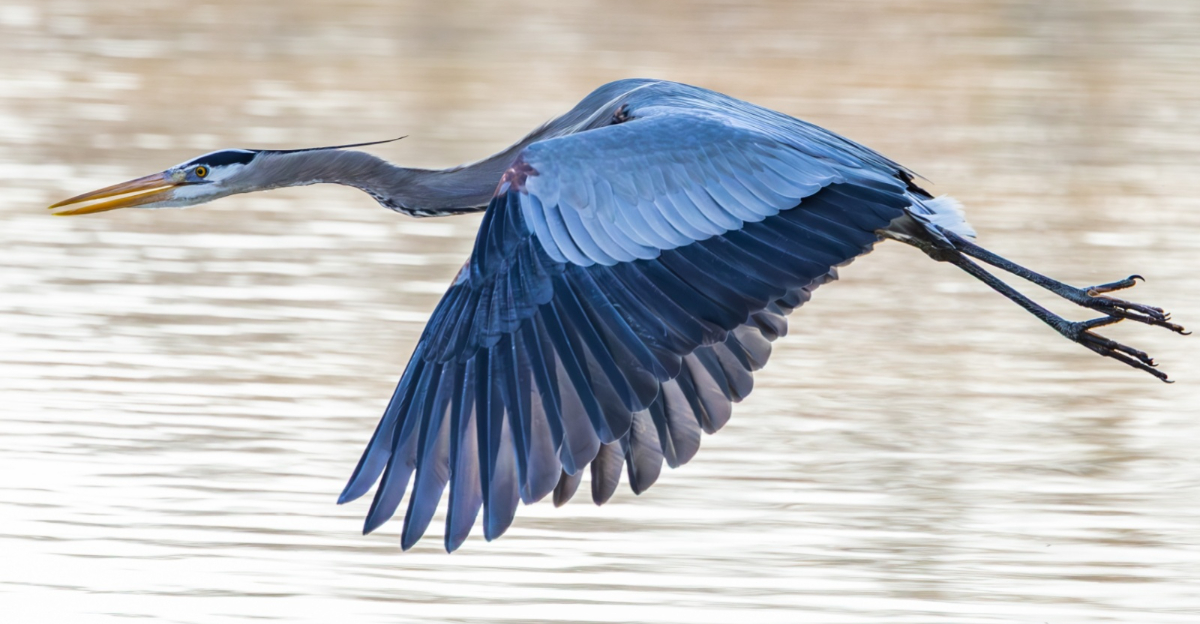
A great blue heron does not visit your yard by chance. This bird is one of Connecticut’s most selective and instinct-driven wild creatures.
When it lands, it has already made a careful, deliberate calculation. The land offered exactly what it needed to find. Fewer yards across the entire region ever do. What does that say about you?
Herons carry an authority that feels older than the landscape they move through. Watching one stand motionless in your yard is not common.
Across Connecticut, very few properties draw this kind of sustained attention from the wild. Yours just did.
Behind those sharp, ancient eyes is a standard that cannot be faked or forced. Your yard earned a place in a world most people only ever glimpse.
Silence follows a heron the way deep certainty follows a closing door. Great blue herons are not guests. They are proof that something rare still exists.
Water Nearby Is Clean Enough To Support Fish And Frogs
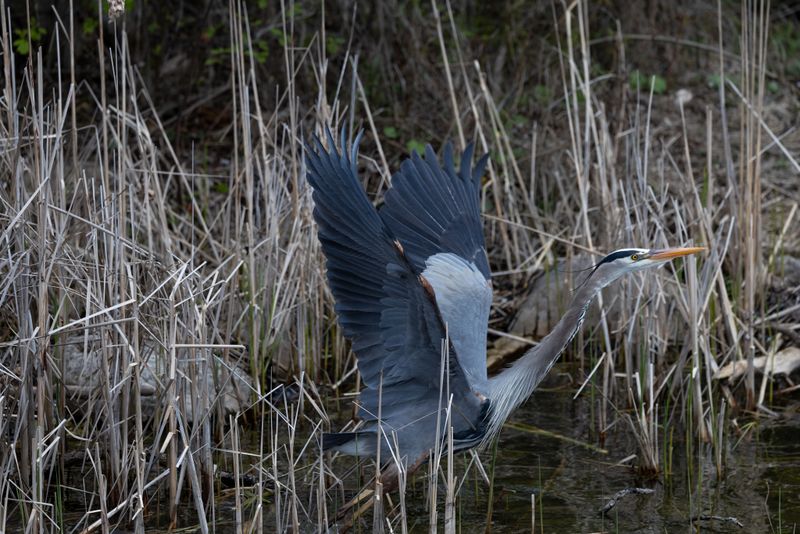
Clean water does not just happen by accident. When a great blue heron shows up near your garden, one of the first things it signals is that a nearby water source is healthy enough to hold actual prey.
Herons are precision hunters. They wade into shallow water and spear fish or frogs with that long, dagger-shaped bill in under a second.
If the water were murky, choked with algae, or loaded with toxins, the fish and frogs would not survive there. No prey means no heron, plain and simple.
Clear water supports oxygen levels that amphibians and small fish need to thrive. A heron scouting your area means it has already located food, which means the water nearby passed a serious test.
Think of the heron as a living water-quality inspector with wings. It checked the pond, the stream, or the drainage ditch near your yard and gave it a passing grade.
That is genuinely good news for your neighborhood. Healthy water ecosystems filter pollutants, support biodiversity, and even improve air quality over time.
Seeing this bird means your local waterways are doing their job. Take a moment to appreciate the quiet work happening just beyond your fence line.
A Functioning Wetland Or Marsh Is Likely Within A Mile
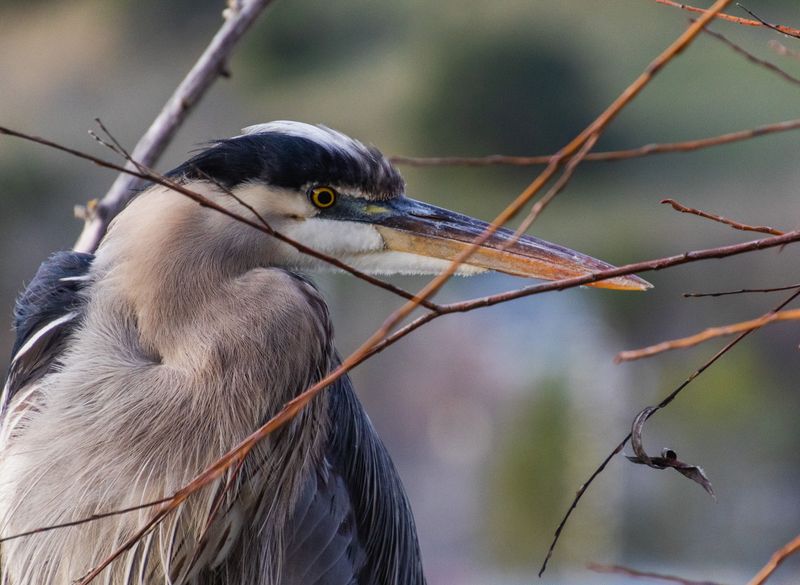
Wetlands are one of the most productive and overlooked parts of any local ecosystem. When a great blue heron is spotted near your garden, there is a strong chance a healthy marsh or wetland sits within a few miles of your home.
Herons need wetlands the way chefs need a kitchen. They nest, roost, and hunt in these wet, wild spaces that most people drive past without a second glance.
Wetlands act as natural sponges, absorbing floodwater and filtering runoff before it reaches rivers and drinking supplies. A functioning one nearby is genuinely something to celebrate.
Many wetland areas in the Northeast have shrunk over the past century due to development and continue to face pressure today. The fact that one still thrives close to your neighborhood is a quiet ecological victory.
Your Connecticut Garden Changes Every Week. Your Plan Should Too.
Gardening in Connecticut changes quickly throughout the season. Every Friday you’ll receive a simple weekly plan showing exactly what to plant, prune, fertilize, harvest, and protect so you never miss the right timing.
Herons often travel up to a mile or two from their roosting sites to hunt. If yours is spending time near your garden, you are sitting in prime heron territory, which means prime wetland territory too.
Look at a satellite map of your area and you might spot it, a green or blue patch tucked between neighborhoods or behind a shopping center. That patch is doing enormous work for local wildlife.
Your garden is part of a bigger living system than you might have imagined. That heron just connected the dots for you.
Local Food Chain Of Insects, Amphibians, And Small Fish Is Healthy
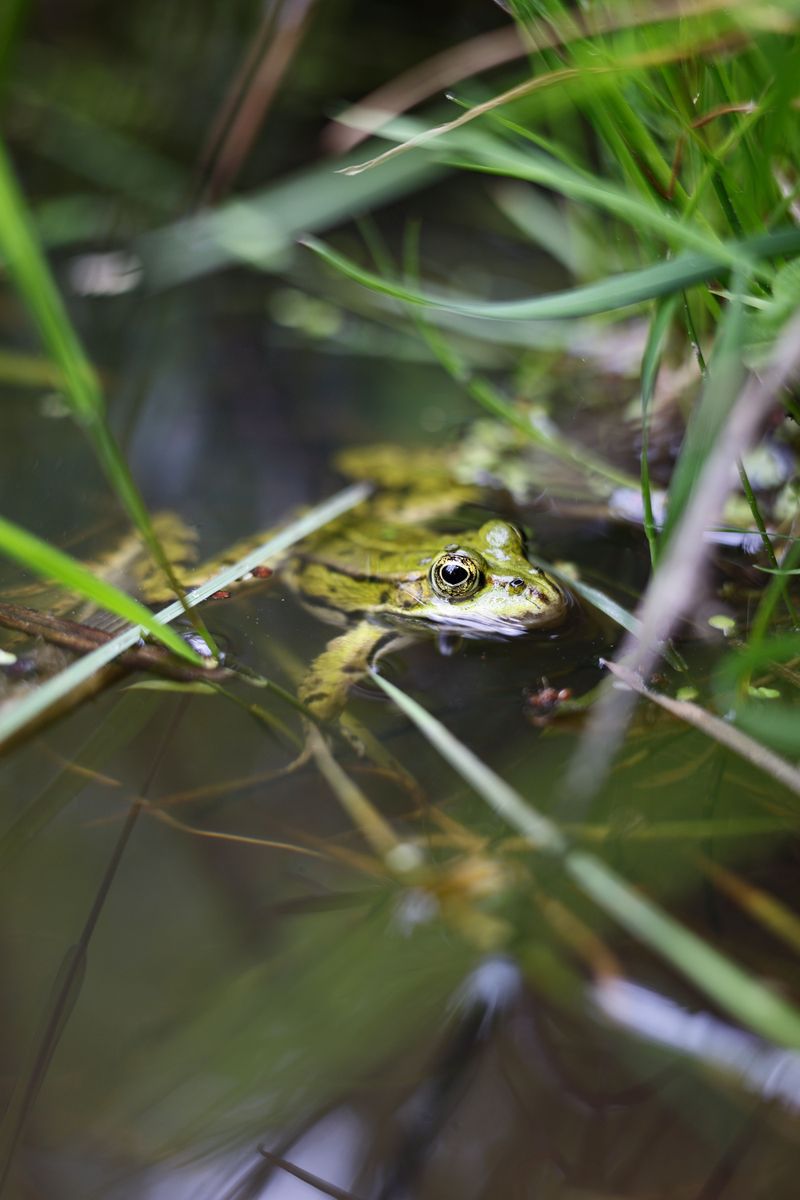
A great blue heron is not a picky eater, but it is a smart one. It hunts frogs, fish, insects, small snakes, and even the occasional vole.
Seeing one near your garden means all of those creatures are present in meaningful numbers.
Food chains are fragile things. Remove one layer and the whole structure wobbles, which is why a heron at the top of a local food web is such a reassuring sight.
Frogs need healthy insect populations to survive. Insects need healthy plants and clean soil to breed. Small fish need oxygenated water and aquatic vegetation to multiply.
When all of those pieces are in place, a heron shows up because the buffet is open. Your yard sits inside a working, layered ecosystem, not just a patch of mowed grass.
Backyard ponds, rain gardens, and native plantings all contribute to this food chain. Even a small water feature can attract dragonflies, frogs, and eventually, a curious heron scouting for a meal.
The presence of multiple prey species also signals low chemical interference in the soil and water nearby. Pesticides and herbicides tend to collapse insect populations fast, and that collapse ripples upward.
Your garden is feeding something bigger than itself. That tall, patient bird is proof the whole system is humming along.
Chemical Runoff And Pesticide Use In The Area Is Low
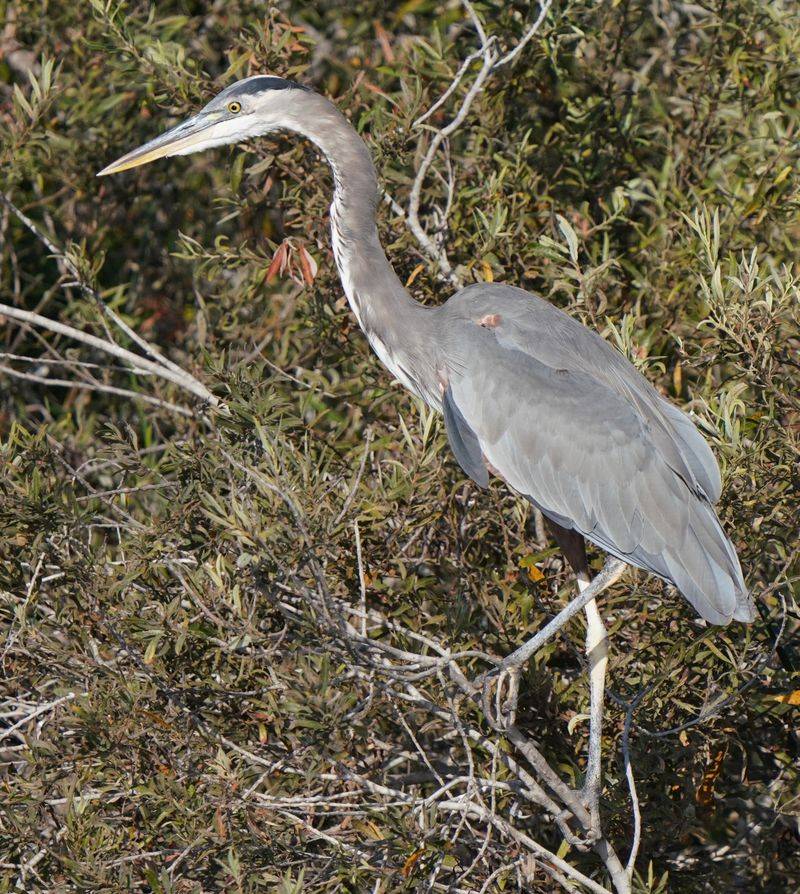
Herons are canaries in the coal mine when it comes to chemical contamination. They sit near the top of the food chain, which means toxins from pesticides and runoff accumulate in their bodies over time.
Areas with heavy pesticide use tend to see heron populations decline or disappear entirely. The fact that one is visiting your garden suggests the chemical load in your local environment is relatively low.
Lawn chemicals, fertilizer runoff, and road salt all affect aquatic life. When those levels climb, frogs vanish, fish populations crash, and herons move on to cleaner hunting grounds.
Your neighborhood appears to be in a sweet spot. Whether that is due to conscious choices by local homeowners or just good geographic luck, the result is a healthier local environment.
If you have already switched to organic lawn care or reduced your pesticide use, this heron is a sign those choices are making a difference.
Native plants, compost-based fertilizers, and hand-weeding all contribute to cleaner soil and water.
Encouraging neighbors to reduce chemical use can extend this effect across an entire block or watershed.
One person going organic helps; a whole street doing it creates a measurable shift across the local watershed.
A heron choosing your garden means nature trusts your little corner of the world. That trust is worth protecting with every gardening decision you make going forward.
Old-Growth Tree Canopy Exists Somewhere Close
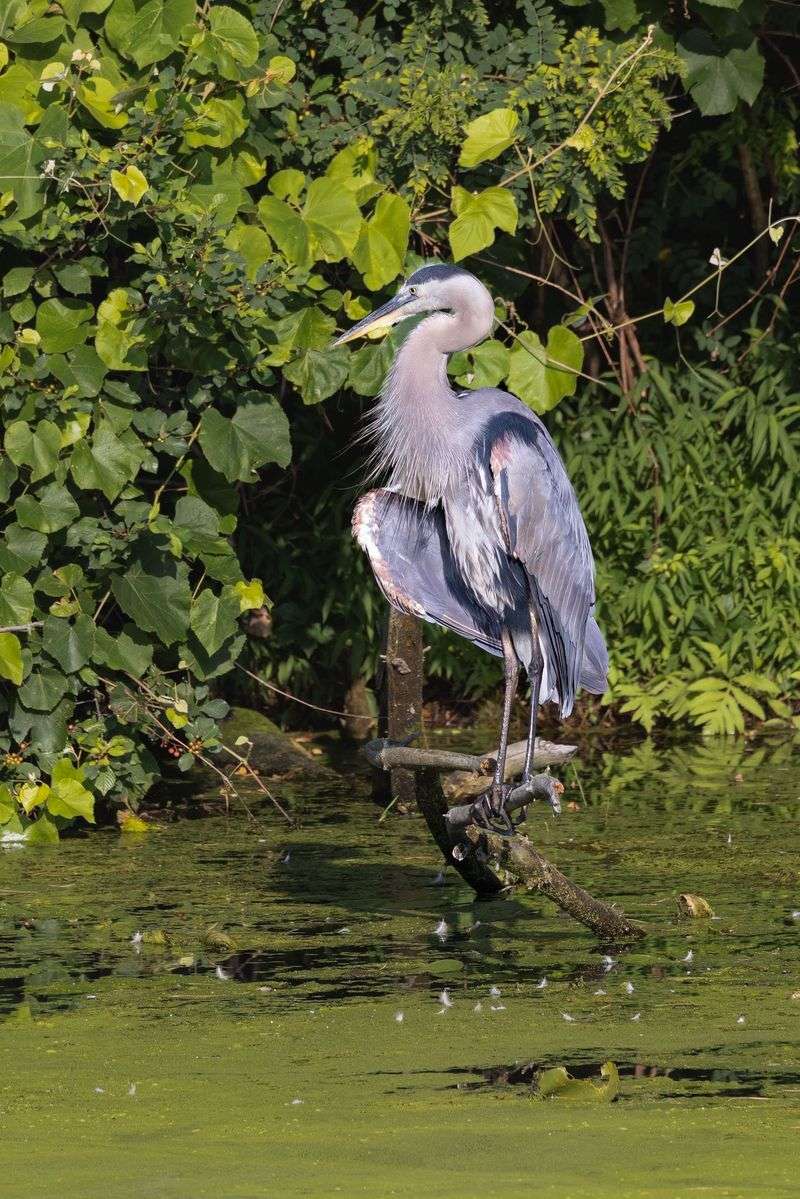
Great blue herons love tall trees for a very specific reason: they nest in them. These birds build enormous stick nests called rookeries, and they prefer the highest, sturdiest branches they can find.
Spotting a heron near your garden often means a stand of mature trees exists somewhere nearby, possibly a woodlot, a park, or a preserved forest edge within flying distance.
Old-growth canopy takes decades to develop. Trees with trunks wider than your arm span provide the structural support herons need to raise their young safely above ground-level threats.
The Northeast still has pockets of mature woodland scattered between developed areas. Herons tend to cluster their rookeries in these patches, sometimes returning to the same trees for generations.
If you have noticed large, noisy bird nests high in leafless trees nearby in late winter, you may have stumbled upon a heron rookery without realizing it. Those nests can be enormous, nearly the size of a small mattress.
Mature trees also support the insects and small animals that feed the broader food chain herons depend on. Old canopy and healthy wetlands often go hand in hand in the same landscape.
Preserving even a small grove of mature trees in your area keeps this chain intact. Your visiting heron may have hatched in one of those treetops not far from where you are standing.
Your Garden May Sit Along An Active Atlantic Flyway Corridor
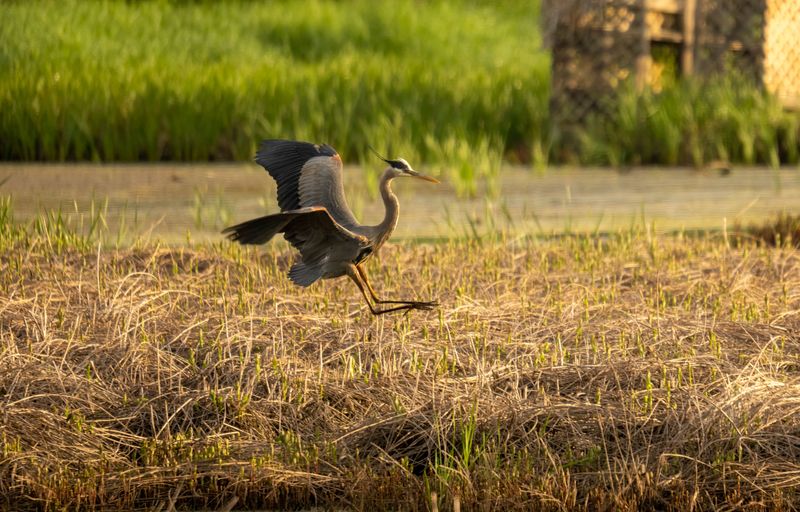
The Atlantic Flyway is one of North America’s major bird migration highways, and it runs straight through the heart of New England.
If a great blue heron has landed in your garden, your yard may sit inside this ancient aerial corridor.
Millions of birds follow this route each spring and fall, using coastlines, river valleys, and open landscapes as navigation guides. Your garden might be a rest stop on a journey spanning thousands of miles.
Herons are not strictly migratory in the way warblers are, but they do shift locations seasonally in search of open water and food. A visiting heron in autumn or early spring may be moving through rather than settling in.
Being inside an active flyway means your garden has geographic value beyond your property line.
Birds respond to consistent habitat features year after year, and a yard that offers food and water tends to attract repeat visitors.
Native plants, water features, and reduced outdoor lighting all make flyway gardens more hospitable to passing birds.
Even a shallow dish of water can mean the difference between a bird resting safely or pushing on exhausted. Gardeners along the flyway have a real opportunity to support wildlife at a landscape scale.
Small choices in your backyard connect to a much larger story of survival and movement. Your garden is a waypoint in one of nature’s most ancient and well-travelled annual routes.
Local Wildlife Is Adapting And Holding Its Ground
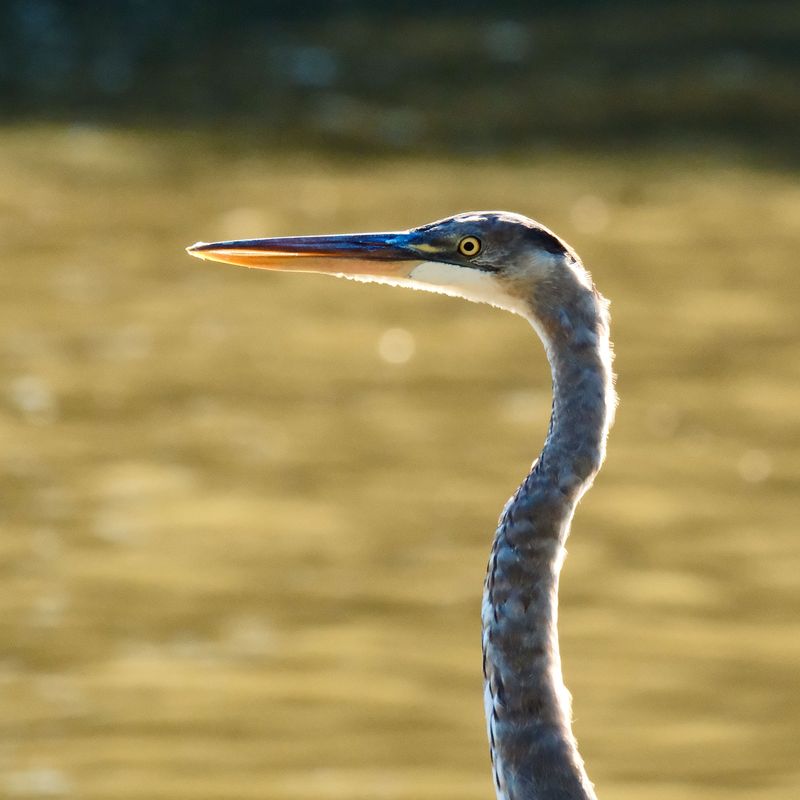
Here is something worth sitting with: a great blue heron choosing to hunt near a human home is a sign of resilience. These birds have learned to navigate a landscape shaped by roads, fences, and lawnmowers.
Wildlife that adapts to suburban environments without losing its wild nature is a conservation success story. A heron visit to your Connecticut garden is part of that story.
Urban sprawl has squeezed habitat for decades. The fact that herons are still finding food, water, and nesting space near populated areas means something is working in their favor.
Backyard ponds, rain gardens, and wildlife-friendly landscaping have quietly stitched together habitat corridors across suburban neighborhoods. Homeowners who plant native species and avoid chemical treatments are part of this shift.
Herons are also bold enough to scout new territory when their traditional hunting spots dry up or freeze over. Seeing one in your yard may mean it is expanding its range and finding your garden a worthy addition to its circuit.
That kind of behavioral flexibility is what allows a species to survive alongside human development. Not every animal can do it, which makes the heron’s presence even more meaningful.
A great blue heron visiting your Connecticut garden is nature’s way of saying the neighborhood still works. Protect what you have, and it will keep coming back.