These 7 Flowering Plants Outlast Marigolds In Florida Summer Gardens
Marigolds are not bad plants. They are just not Florida summer plants.
Almost every June, the same thing happens. The marigolds that looked cheerful in April start sulking. The humidity gets to them. The afternoon storms get to them.
By July, they are soggy, barely blooming, and leaving obvious gaps in beds that were supposed to look full all season.
Florida summers are genuinely extreme, and the flowers that handle them best are not the ones most people reach for first.
The ones that thrive here were built for this specific combination of heat, rain, and relentless sun. Some of them bloom harder in July than they did in May.
Some bring hummingbirds. Some light up the driest, sandiest spots in the yard that most flowers simply refuse to touch.
None of them are secret plants. You can find most of them at any Florida garden center. The trick is knowing which ones to choose before the summer heat makes the decision for you.
Ready to see what actually works out there?
1. Zinnias
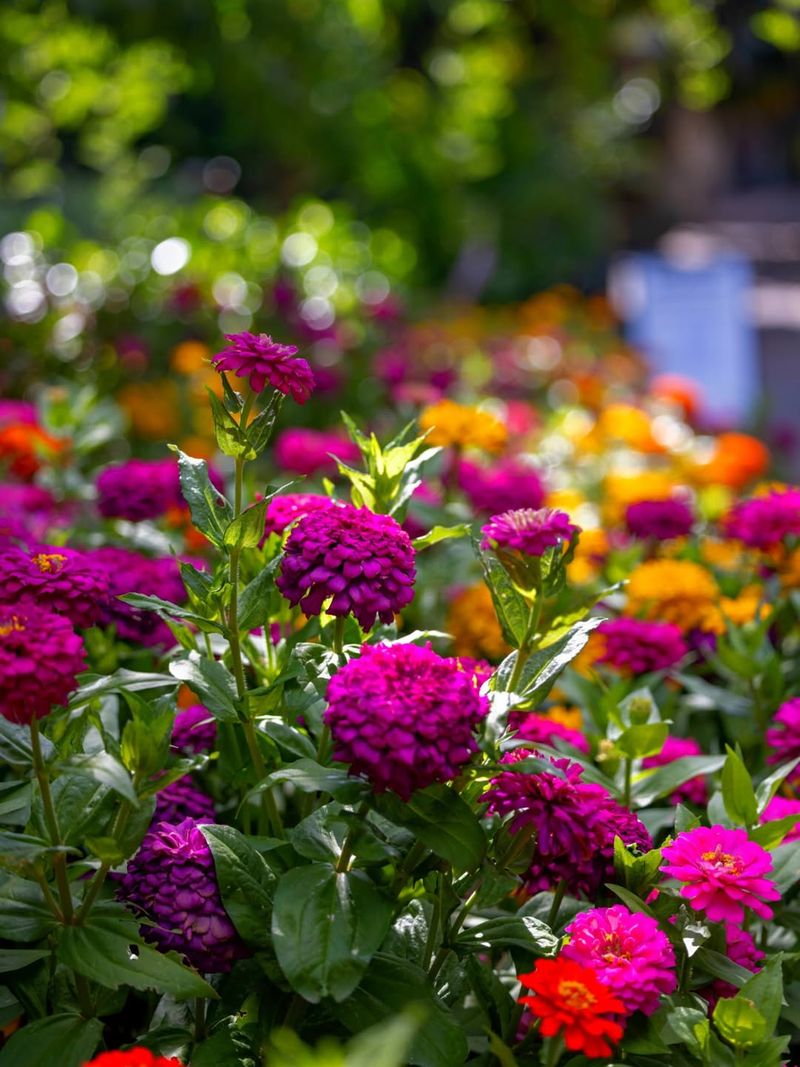
A Florida July afternoon is exactly when zinnias hit their stride.
While other flowers slow down or stop entirely in the heat, zinnias open wider, bloom harder, and put on a color display that stops people mid-stride.
They are warm-season annuals that love full sun and high temperatures, which makes the middle of a Florida summer their favorite time of year rather than their least favorite.
Zinnias bloom in nearly every color imaginable, from cherry red and coral orange to soft lavender and creamy white.
They grow quickly from seed, often reaching bloom stage in six to eight weeks, and they keep producing flowers through Florida’s hottest and most humid months without the sagging. Heat is not a challenge for zinnias. It is fuel.
They handle sandy, well-drained soil without needing rich fertilizer, and they perform best in full sun with water delivered at the base rather than overhead.
Overhead watering in Florida’s humidity can invite powdery mildew, especially during stretches of overcast, wet weather. Keeping the foliage dry is a simple habit that keeps the plants looking sharp all season.
Trimming spent flowers encourages more blooms, though zinnias keep producing even if you skip that step.
Butterflies are drawn to them in impressive numbers throughout summer, which adds wildlife activity to the color show. Plant them in full sun beds, borders, or large containers.
Zinnias in a Florida summer garden are not just holding their own. They are actively showing off. The marigolds that used to occupy the same space would find that deeply unfair, if they were still around to notice.
2. Pentas
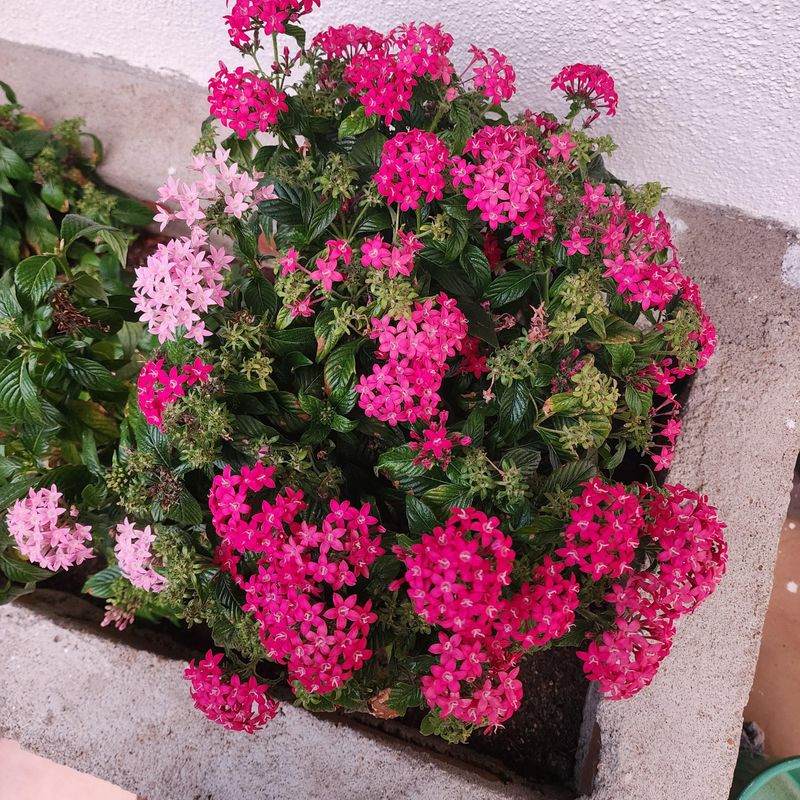
Once temperatures climb into the upper eighties and stay there, pentas shifts into high gear.
Tight clusters of star-shaped flowers appear continuously above the foliage, and unlike marigolds that slow down in the heat, pentas responds to summer conditions by producing more.
It is one of the most reliably cheerful plants a Florida summer garden can have, and it earns that reputation by performing exactly when everything else is making excuses.
Your Florida Garden Changes Every Week. Your Plan Should Too.
Gardening in Florida changes quickly throughout the season. Every Friday you’ll receive a simple weekly plan showing exactly what to plant, prune, fertilize, harvest, and protect so you never miss the right timing.
Also called Egyptian star flower, pentas behaves as a tropical perennial in Florida’s warmer zones, meaning it can return year after year rather than finishing with the season.
It blooms in shades of red, pink, white, and lavender, with each flower cluster sitting like a bright bouquet above the leaves.
The bloom period runs from spring through the first cool snap of fall, which in most of Florida means October at the earliest.
Pentas thrives in full sun to partial shade, giving it more flexibility than strictly sun-dependent flowers.
It grows well in containers, raised beds, and traditional borders, and sandy soil is not a problem as long as watering stays consistent during dry stretches.
Florida’s afternoon storms handle much of that work during the peak summer months.
Butterflies flock to pentas consistently, and hummingbirds visit the red varieties with notable regularity. Planting in masses produces the strongest color impact and turns the garden into active pollinator territory throughout the season.
A single plant is nice. A mass planting is an event.
Pentas does not take summer off. It takes summer as an opportunity. That attitude is exactly what a Florida garden bed needs from June through September, and pentas delivers it without being asked twice.
3. Angelonia
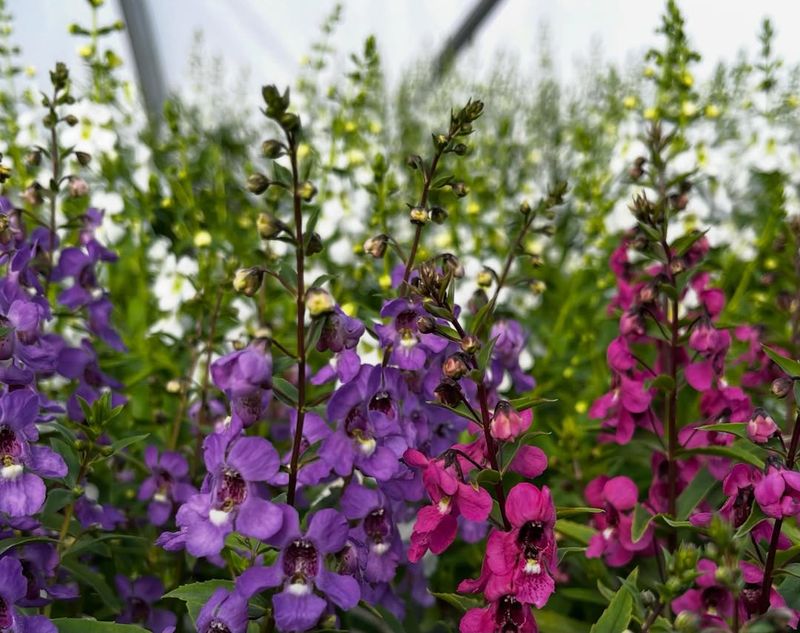
Gardeners who love snapdragons but have watched them wilt and collapse in Florida heat should meet angelonia.
Sometimes called summer snapdragon, it sends up tall slender spikes covered in small orchid-like flowers that hold their shape and color even when temperatures push past ninety degrees.
Where snapdragons retreat from the Florida summer, angelonia treats it as a comfortable operating temperature.
The vertical growth habit makes angelonia genuinely useful in mixed beds. While low-growing plants spread across the ground, angelonia rises up and adds structure to the planting.
It reaches twelve to twenty-four inches tall depending on the variety and works well as a backdrop plant, a centerpiece in container arrangements, or a mid-border vertical element that gives the bed a layered look from the street.
It blooms in shades of purple, pink, white, and bicolor combinations, and the flowers carry a faint grape-like fragrance that is a pleasant bonus on a breezy evening.
Full sun and well-drained soil suit it best, and it handles Florida’s sandy conditions without any special amendments or attention.
Angelonia is drought-tolerant once established, needs no deadheading to continue blooming, and resists most common pests without intervention.
Plant it alongside vinca or pentas for a layered, colorful bed that holds its full appearance from June through October without requiring regular maintenance to stay that way.
Angelonia looks like a plant that requires effort. It does not.
That gap between appearance and actual maintenance demand is one of its best qualities, and Florida summer heat is the condition under which that gap becomes most obvious and most appreciated.
4. Vinca
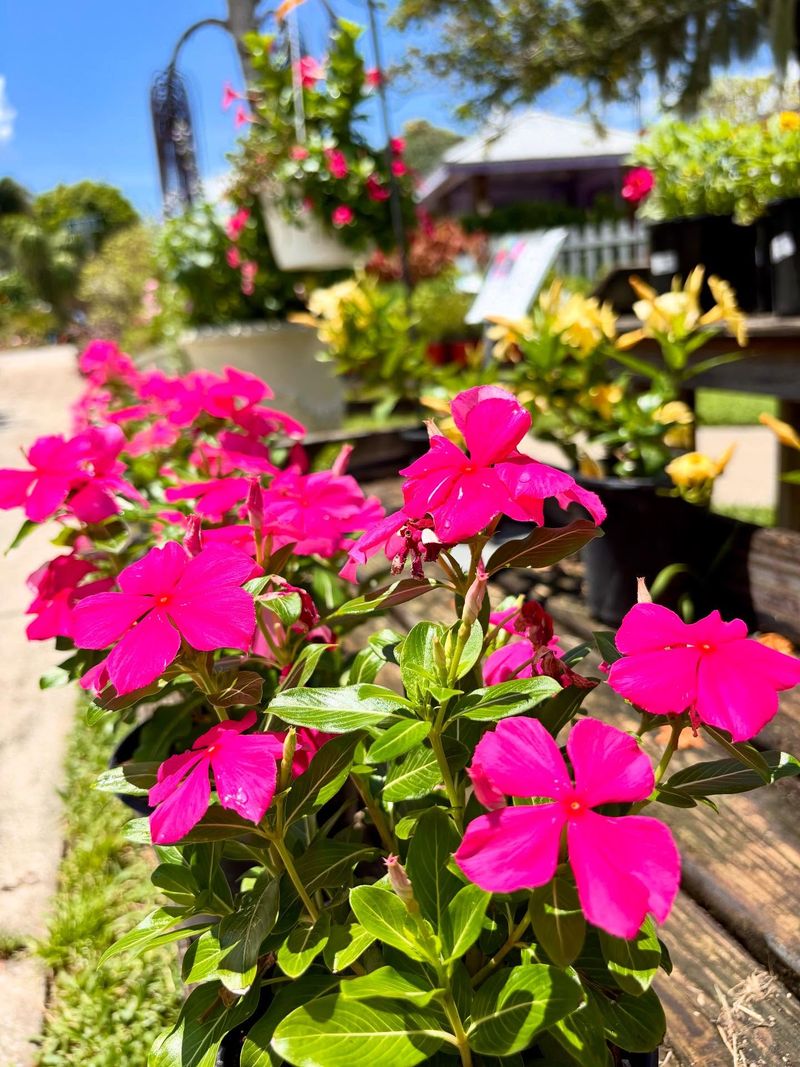
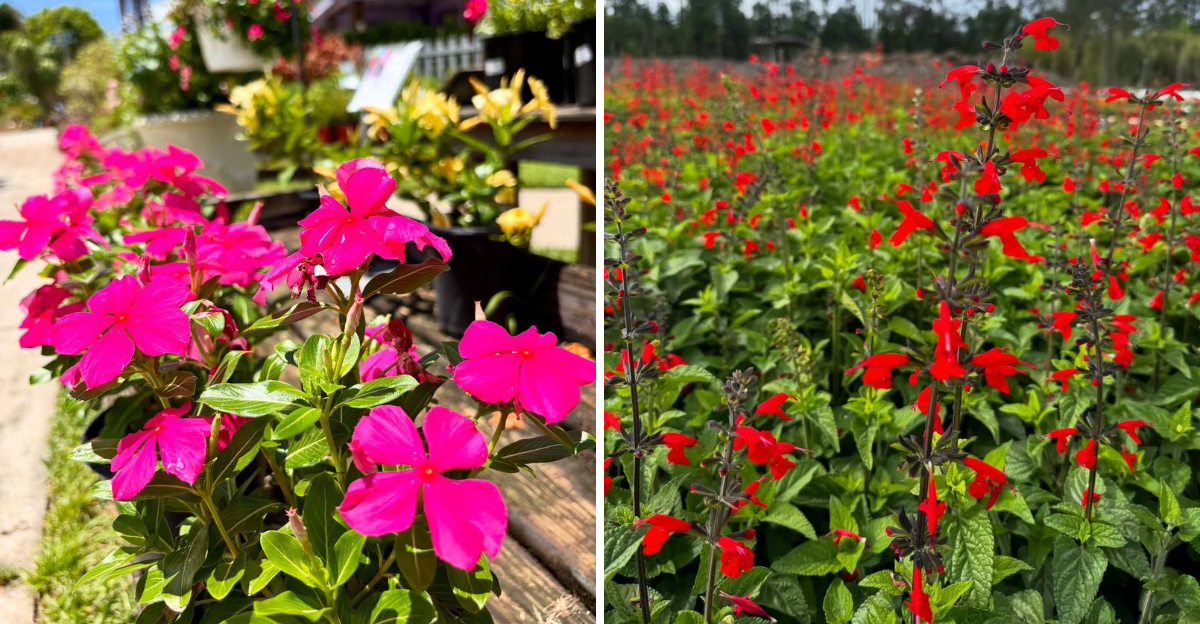
Walk through almost any Florida neighborhood in July and you will find vinca holding strong in beds where other flowers gave up weeks ago.
Also known as catharanthus or periwinkle, this plant was practically designed for the Florida summer experience.
Heat, humidity, blazing sun, and sandy soil are all conditions it handles without complaint or any visible effort, which makes it one of the most dependable warm-season choices available.
Vinca grows as a low, mounding annual in Florida, reaching ten to eighteen inches tall.
The flowers are round and flat, like colorful pinwheels, coming in shades of pink, red, white, coral, and purple, often with a contrasting center eye that adds detail at close range.
The glossy dark green leaves make the blooms pop even harder against bright summer light, and the combination stays visually sharp from across the street.
One of the clearest advantages vinca has over marigolds is its ability to keep blooming through Florida’s hottest and wettest months without getting soggy or rotting out from heavy rain.
Well-drained soil is the one requirement. Low spots where water pools after storms are the one situation to avoid.
Vinca rarely needs deadheading. New blooms push through on their own, keeping the plant tidy and colorful all season without intervention.
Heat-tolerant varieties are widely available at Florida garden centers and perform noticeably better in summer than standard catalog varieties bred for cooler climates.
Vinca in a Florida July is a plant doing exactly what it was built for, in exactly the conditions it prefers.
That alignment between plant and environment is what good summer gardening looks like, and vinca makes it look effortless because, for it, it genuinely is.
5. Portulaca
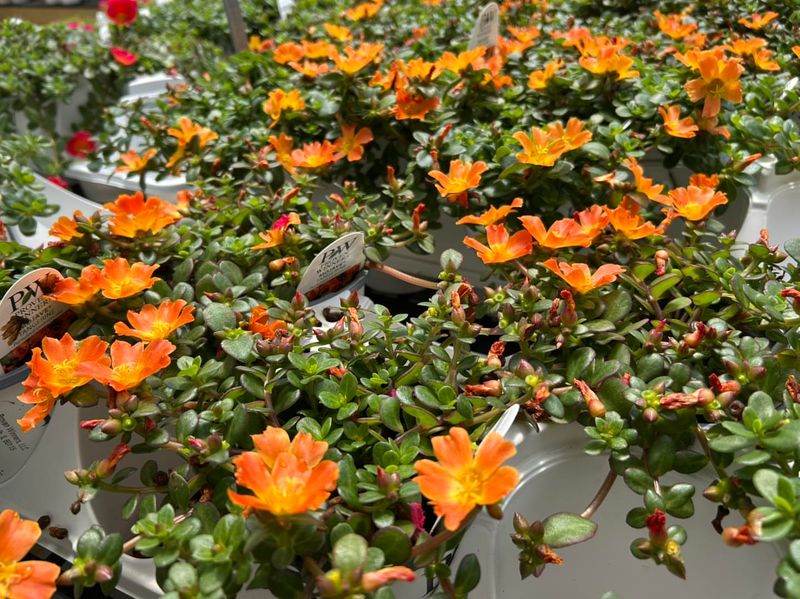
Every Florida yard has that one spot that seems almost too hot to grow anything.
The strip along a south-facing wall, the edge of a sun-baked patio, the dry border running alongside a concrete driveway that reflects heat back up all afternoon.
That is exactly where portulaca belongs, and it does not just survive there. It genuinely thrives in conditions that eliminate almost every other option.
Sometimes called moss rose, portulaca produces tissue-paper-thin flowers in electric shades of red, orange, yellow, pink, magenta, and white.
The blooms open fully in direct sunlight and tend to close on cloudy days or in the evening, which is just part of the plant’s personality.
The fleshy, succulent-like leaves store moisture, which is how portulaca manages to perform in dry, sandy soil with very little irrigation. It built its own water storage system so you would not have to.
For Florida gardeners working with water restrictions or genuinely dry microclimates, portulaca is one of the smarter choices available.
It needs only occasional watering once established and actually performs better when the soil dries out between sessions. Overwatering causes more problems than drought ever will for this plant.
Portulaca spreads as it grows, making it an excellent ground cover for sunny edges, rock gardens, and containers. It reaches four to eight inches tall and spreads up to twelve inches wide.
In many Florida gardens it reseeds itself, so you may find a pleasant volunteer patch of color appearing the following season without planting anything at all.
Portulaca in a hot, dry edge is a plant that looked at the worst possible growing conditions and said yes, this works for me.
That attitude is either very inspiring or slightly unnerving. Either way, the flowers are excellent.
6. Scarlet Salvia
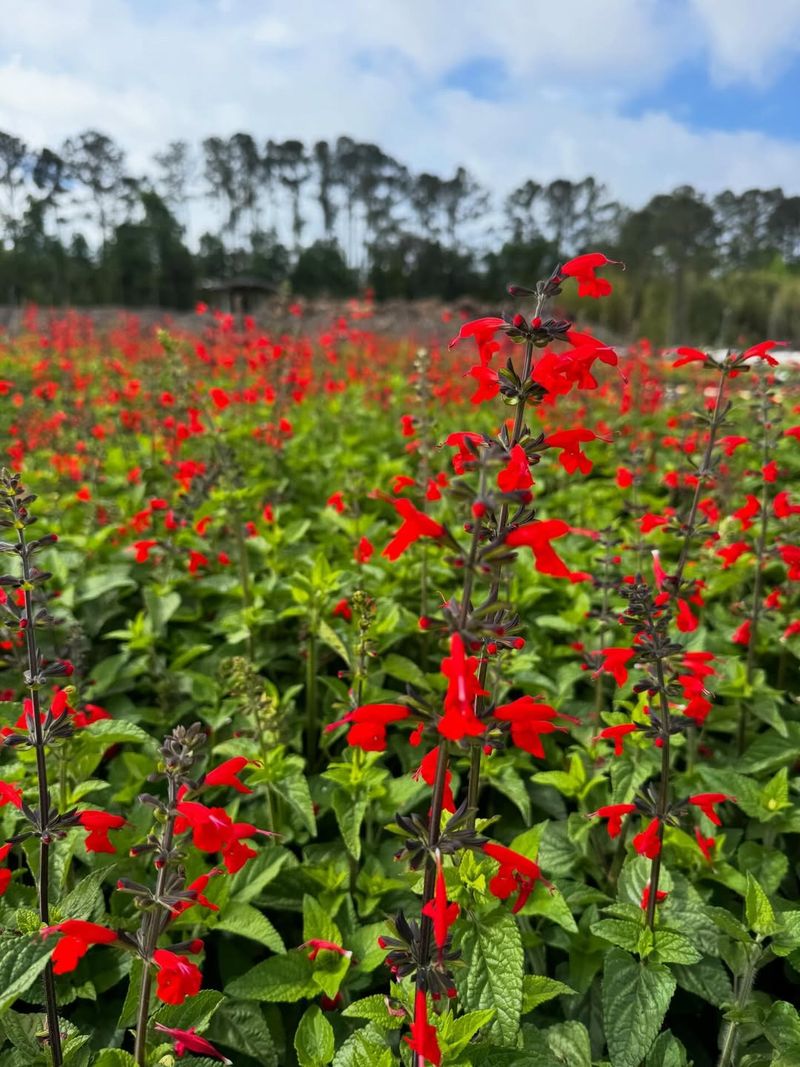
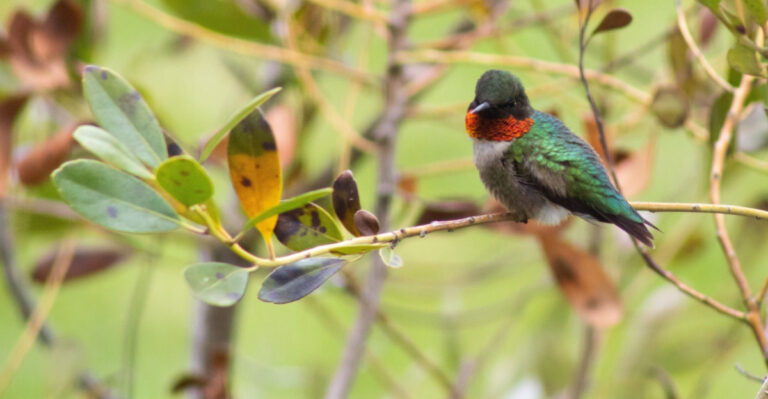
Hummingbirds have strong opinions about which gardens are worth visiting, and scarlet salvia is consistently at the top of their list.
The vivid red tubular flowers are shaped as though they were designed specifically for a hummingbird’s long curved bill.
Once a patch of scarlet salvia establishes itself in a Florida yard, the regular visitors become part of the daily garden routine from early summer through fall.
Scarlet salvia grows as an annual in most of Florida but behaves as a short-lived perennial in the warmest southern zones.
It sends up tall, upright spikes of intense red blooms above dark green foliage, creating a strong vertical accent that reads from a distance and up close.
The color is genuinely striking, especially in groups of five or more plants where the mass of red becomes visible from well across the yard.
It performs best in full sun to partial shade, giving it a slight edge over strictly sun-dependent flowers in gardens with afternoon shade from trees or structures.
It handles Florida’s heat and humidity reliably, blooming through the summer without the seasonal slowdown that affects less heat-adapted plants.
Beyond hummingbirds, scarlet salvia attracts butterflies and other beneficial insects throughout its bloom season.
It works well in traditional beds, cottage-style plantings, and large containers on sunny porches. Pairing it with white or purple flowers creates a color combination that holds visual interest all season from every angle.
Scarlet salvia planted in a Florida summer garden is essentially a standing invitation to every hummingbird in the neighborhood.
They will RSVP with their presence, and they will not be subtle about it. The garden gets the color show. The hummingbirds get lunch. Everyone benefits from this arrangement.
7. Blanket Flower
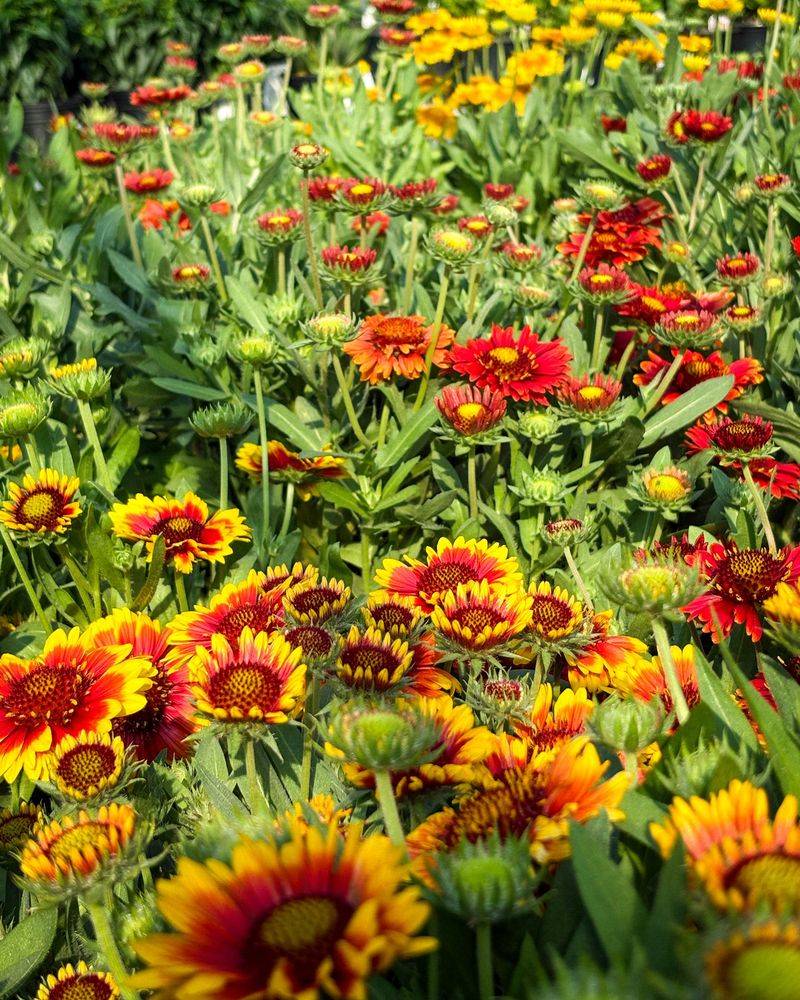
Sandy soil stops a lot of plants cold. Blanket flower sees it as a preferred address.
Native to much of North America and well-adapted to Florida’s coastal and inland sandy conditions, blanket flower brings a warm burst of color to spots where other plants struggle to get a foothold.
It does it without amendments, fertilizer, or any special attention from the person who planted it.
The daisy-like flowers feature petals in combinations of red, orange, yellow, and burgundy, often with a contrasting center, and they appear prolifically from spring through fall.
The plant reaches twelve to eighteen inches tall and spreads into loose, cheerful clumps that look naturally at home in the landscape rather than planted and maintained.
That unstudied quality is part of its appeal in gardens aiming for a relaxed, naturalistic look.
Florida’s sandy coastal soils, which challenge many ornamental plants, are actually close to ideal for blanket flower.
It does not need rich amendments and performs better in poor, dry, well-drained conditions than in heavily fertilized beds.
Less intervention consistently produces better results, which is a welcome dynamic in a high-maintenance Florida garden season.
Bees, butterflies, and beneficial insects visit blanket flower regularly throughout the season.
As a Florida native, it fits naturally into water-conscious landscape plans and reseeds freely in many conditions, meaning the planting often expands without any effort from you.
Plant it in full sun along dry borders, rock gardens, or naturalistic beds.
Blanket flower in a sandy Florida bed is a plant that asked for the hard assignment and then made it look easy. It does not need good soil.
It needs the kind of challenging conditions most other plants avoid. If your yard has a sandy, sun-baked spot you have given up on, blanket flower has not given up on it at all.