The 8 Best Herbs To Grow In 5 Gallon Buckets In Arizona Heat
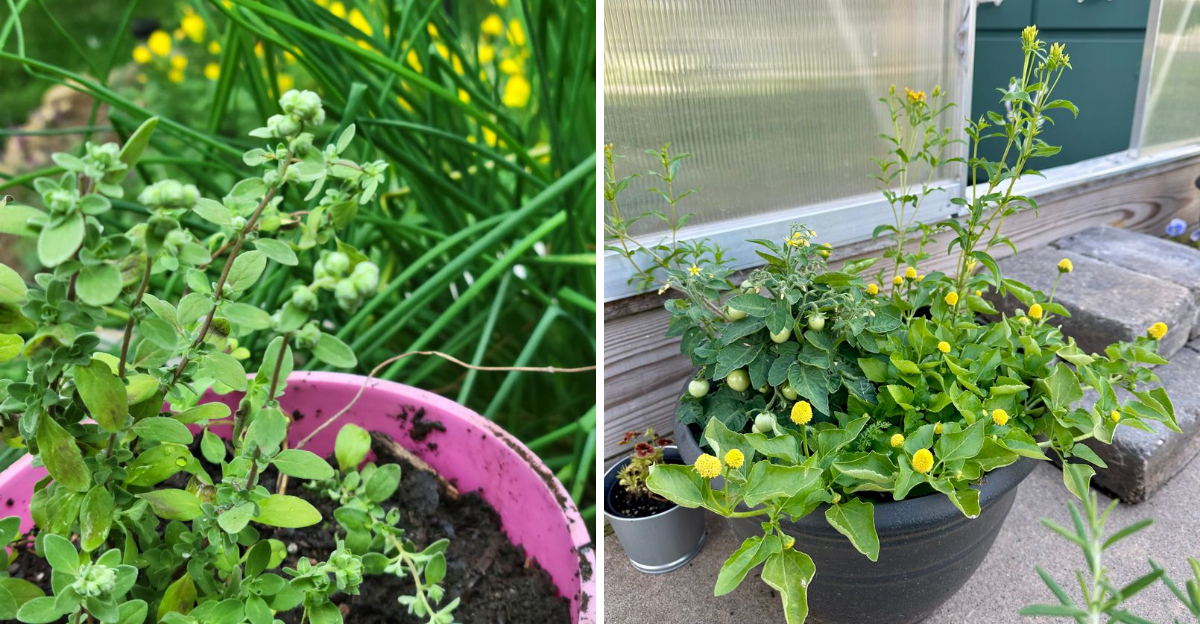
Container gardening is a lifesaver during an Arizona summer. A few buckets can turn a patio, driveway, or small backyard into a useful growing space.
Herbs are especially popular because they do not need much room and can be picked whenever dinner needs a little extra flavor. That kind of convenience matters when nobody wants to deal with a difficult garden in serious heat.
The hard part is choosing herbs that will not fade fast when temperatures stay high. Some plants look great in spring, then struggle once the hottest weeks arrive.
Others handle container life much better and keep growing with the right care. That is where 5 gallon buckets can make a real difference.
They are simple, affordable, and easy to move when the sun gets too intense.
With the right herbs, even a small bucket garden can stay productive through summer heat.
1. Basil Produces Well In Large Containers
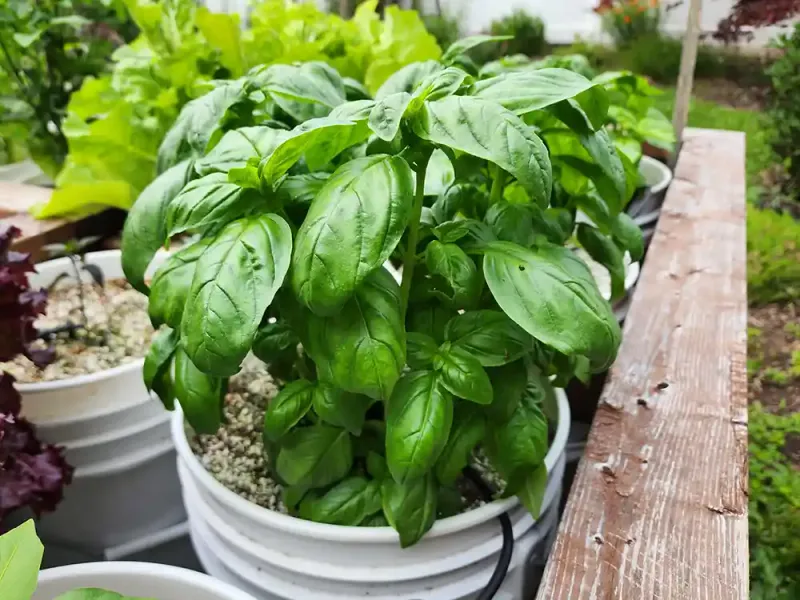
Basil absolutely loves heat, and that works in your favor when growing it in containers in the desert Southwest. A 5 gallon bucket gives the roots plenty of space to stretch out, which directly supports bigger leaf production.
More root room means more plant, and more plant means more basil for your kitchen.
Water is the one thing you need to stay on top of. Buckets dry out faster than in-ground beds, especially when temps climb past 100 degrees.
Check the soil daily and water deeply when the top inch feels dry to the touch.
Pick a spot with morning sun and afternoon shade. Direct afternoon sun in peak summer can scorch the leaves and push the plant toward early bolting.
A little protection goes a long way toward keeping leaves tender and flavorful.
Pinch off flower buds as soon as they appear. Once basil bolts, leaf production slows down significantly.
Staying on top of pinching keeps the plant bushy and productive for weeks longer.
Sweet basil, Thai basil, and Genovese basil all perform well in containers. Thai basil tends to handle heat a bit better than sweet basil, so it is worth growing both and comparing results.
Start seeds indoors in late winter and transplant after your last frost date for the best head start on the season.
2. Rosemary Handles Heat And Dry Conditions
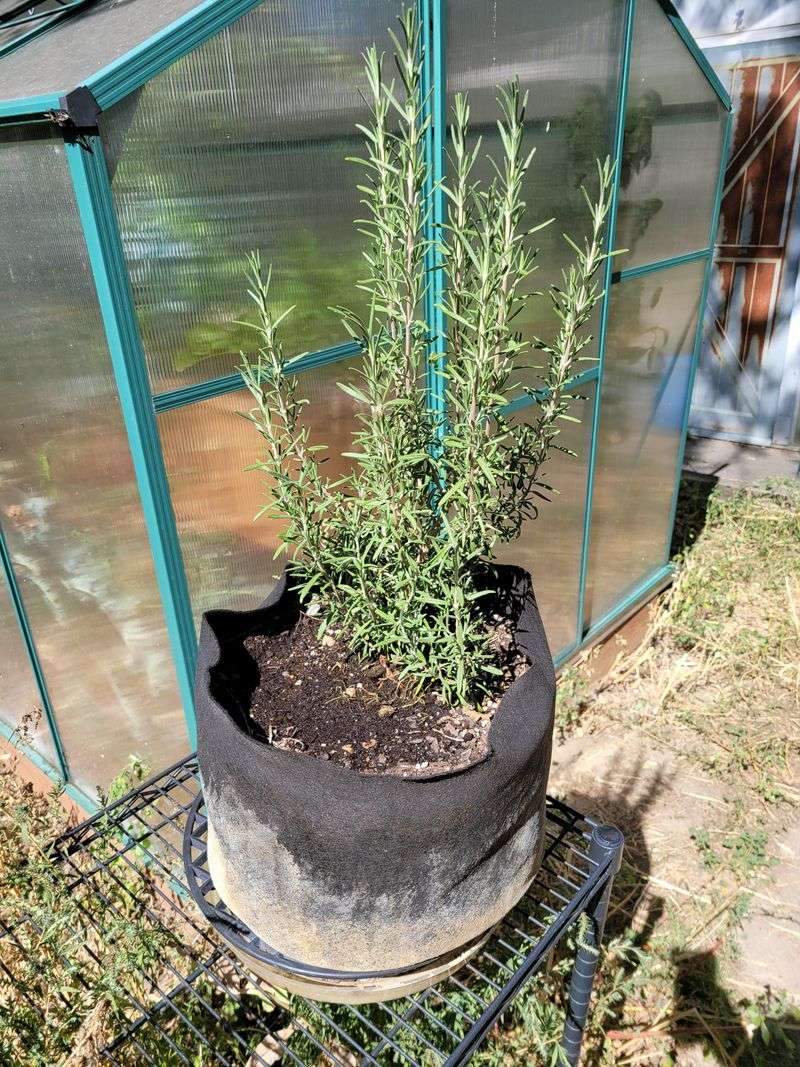
Rosemary was practically built for dry, hot climates. Native to the Mediterranean, it thrives in the same punishing conditions that challenge most other herbs.
In a 5 gallon bucket, it actually does better than in heavy clay soils because drainage is sharp and consistent.
Root rot is the biggest risk with rosemary in containers. Always use a fast-draining potting mix and make sure your bucket has multiple drainage holes.
Water deeply, then let the soil dry out almost completely before watering again.
Full sun is ideal. Rosemary wants as much direct light as possible and will reward you with dense, fragrant growth.
Placing the bucket against a south-facing wall works really well in hot desert environments.
Pruning keeps the plant from getting too woody and leggy. Trim it back by about one-third after it flowers, and it will push out fresh, tender growth quickly.
Your Arizona Garden Changes Every Week. Your Plan Should Too.
Gardening in Arizona changes quickly throughout the season. Every Friday you’ll receive a simple weekly plan showing exactly what to plant, prune, fertilize, harvest, and protect so you never miss the right timing.
Regular light harvesting also encourages bushiness over height.
Rosemary grows slowly at first, so do not expect huge harvests in the first few months. Once established, though, it becomes one of the lowest-maintenance herbs you can grow.
It tolerates missed waterings better than almost any other herb on this list, which makes it a smart choice for busy gardeners or anyone new to container herb growing in a hot, dry region.
3. Thyme Thrives In Fast Draining Potting Mix
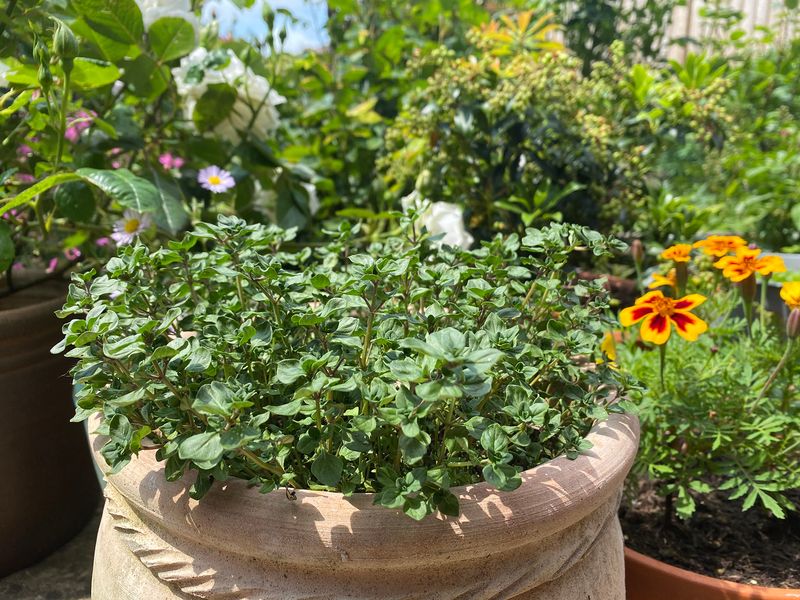
Compact, tough, and surprisingly productive, thyme punches well above its size in a 5 gallon bucket. Its shallow root system does not need a ton of depth, but the extra soil volume in a larger bucket keeps moisture levels more stable between waterings.
That stability matters a lot when daytime highs stay above 100 degrees for weeks at a stretch.
Drainage is non-negotiable with thyme. Soggy roots will shut the plant down fast.
Mix perlite or coarse sand into your potting mix at roughly a 30 percent ratio to keep water moving through the bucket efficiently.
Full sun placement is best. Thyme gets more aromatic and flavorful when it experiences some stress from heat and dry conditions.
Shading it too much tends to produce weak, watery-tasting leaves with less essential oil concentration.
Water deeply but infrequently. Let the top two inches of soil dry completely before watering again.
Thyme is a true drought-tolerant herb once it gets settled into its container.
English thyme and lemon thyme are both excellent choices for hot climates. Lemon thyme adds a bright citrus note that works beautifully in cooking and teas.
Harvest by snipping the top few inches of stems regularly. This keeps the plant from going woody too quickly and encourages a steady flush of new, tender growth throughout the growing season.
4. Oregano Performs Well Through Hot Summers
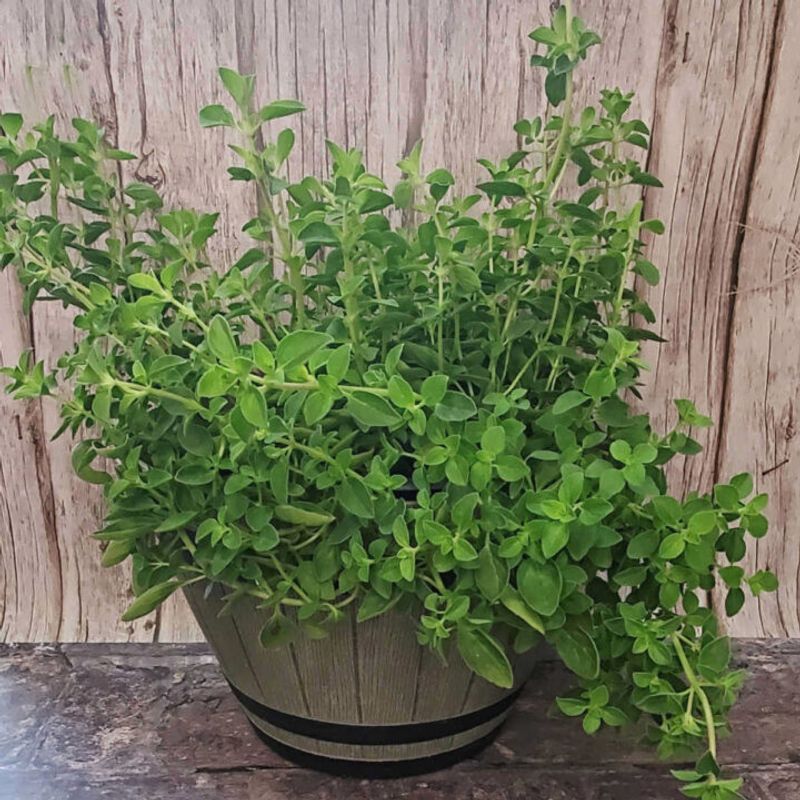
Oregano is one of the toughest herbs you can put in a bucket. It handles heat, tolerates some neglect, and keeps producing through long, brutal summers without much fuss.
Hot, dry conditions actually concentrate the essential oils in the leaves, which means your oregano will smell and taste stronger than anything you buy at a grocery store.
Greek oregano is widely considered the best variety for culinary use and heat tolerance. Italian oregano also performs well but tends to have a slightly milder flavor profile.
Both settle into container life easily and spread into full, attractive mounds over time.
Water consistently but avoid overwatering. Oregano can handle some dryness between waterings, but it does not like completely bone-dry soil for extended periods.
Check the bucket every couple of days during peak summer heat and water when the top inch or two feels dry.
Give it full sun for at least six hours daily. Less sun produces leggy stems and weaker flavor.
Position the bucket where it gets strong morning light and some protection from the harshest late afternoon sun if temperatures regularly exceed 108 degrees in your specific location.
Trim oregano back by half when it starts flowering. This redirects the plant’s energy back into leaf production.
After a good trim, it rebounds quickly and often produces even more vigorously than before, giving you steady harvests well into fall.
5. Sage Tolerates Strong Sun Once Established
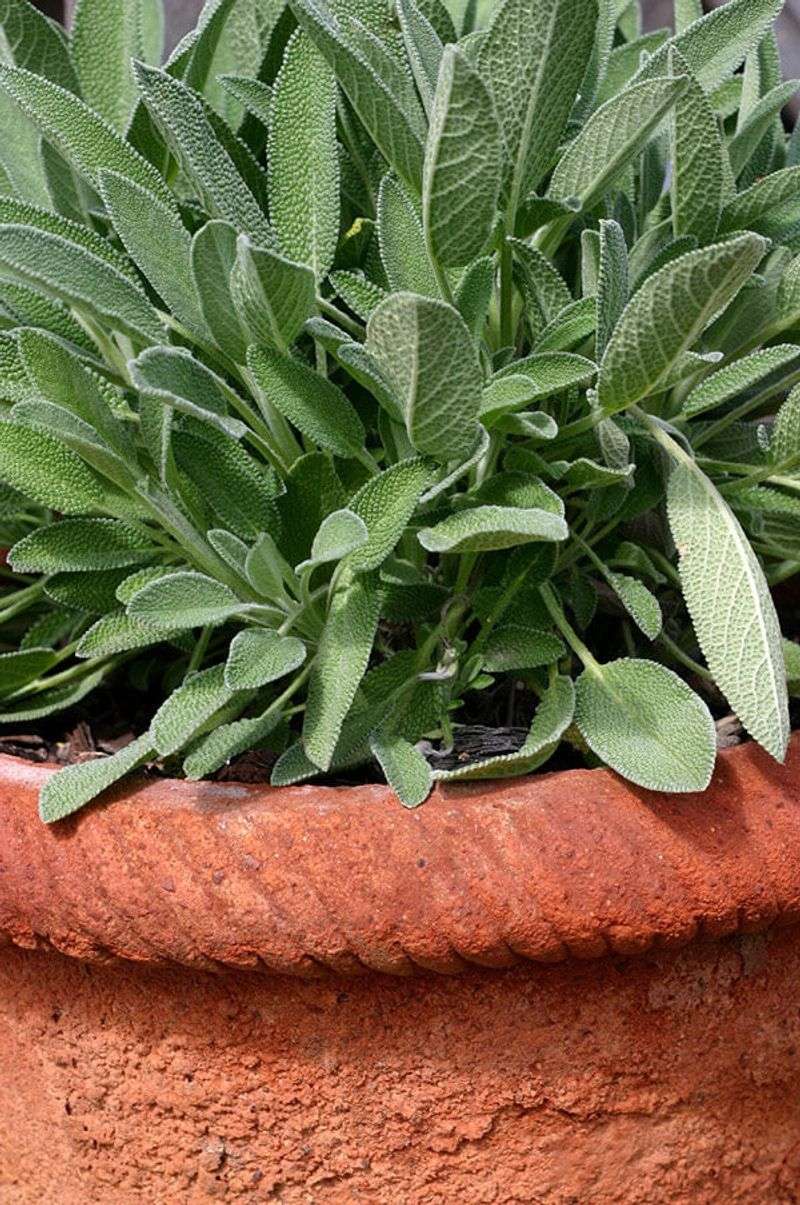
Sage has a rugged, silvery look that fits right into a desert garden aesthetic. Beyond appearances, it is genuinely tough once it gets established in a container.
The first few weeks after transplanting are the most critical, so consistent watering during that early phase sets the plant up for long-term success.
After establishment, sage becomes quite drought tolerant. Cut back watering frequency gradually as the plant matures.
Overwatering mature sage leads to root problems faster than almost any other issue you will encounter with this herb.
Use a gritty, well-draining potting mix. Adding perlite or pumice to a standard potting mix improves drainage significantly.
Sage roots want air as much as they want moisture, and compacted wet soil works against the plant’s natural preferences.
Full sun placement brings out the best in sage. Six to eight hours of direct light produces compact, fragrant, flavorful leaves.
Plants that sit in too much shade tend to grow tall and floppy without much aromatic intensity.
Common sage and purple sage both work well in hot, dry conditions. Purple sage adds a nice visual element to a container garden while performing just as reliably as the standard green variety.
Harvest by cutting stems just above a leaf node to encourage branching. Regular harvesting prevents the plant from going fully woody too quickly and keeps it producing usable leaves well into the cooler fall months when cooking with fresh herbs becomes especially satisfying.
6. Lemongrass Produces Strong Growth In Heat
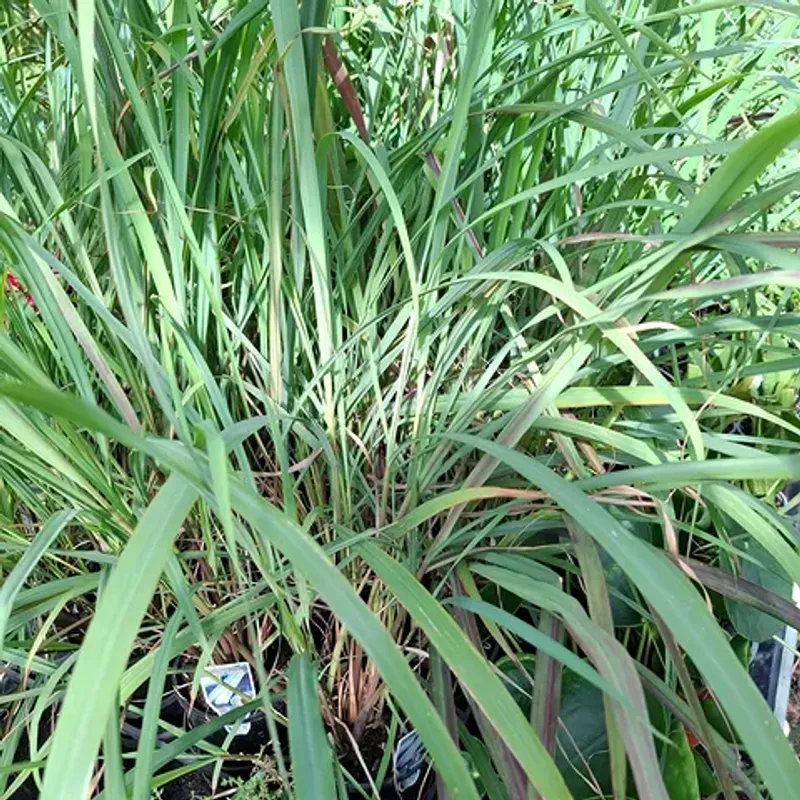
Few herbs respond to desert heat as enthusiastically as lemongrass. Give it sun, warmth, and water and it will reward you with impressive, fast growth that fills a 5 gallon bucket completely by midsummer.
Stalks can reach three feet or taller in a single season under the right conditions.
Water is the key variable with lemongrass. Unlike most drought-tolerant herbs, lemongrass is thirsty and needs consistent moisture to keep growing vigorously.
In peak summer, daily watering may be necessary to prevent the leaf tips from browning and the stalks from thinning out.
Full sun is ideal. Lemongrass originates from tropical regions and genuinely thrives in intense heat and bright light.
Partial shade slows growth noticeably and reduces the intensity of the citrus fragrance that makes this herb so appealing.
Fertilize lightly every few weeks during the growing season. A balanced liquid fertilizer works well and keeps the plant pushing out new stalks steadily.
Avoid heavy fertilizer doses, which can cause rapid leafy growth with reduced flavor concentration.
Harvest outer stalks by cutting them at the base once they reach at least half an inch in diameter. Leaving the inner stalks intact allows the plant to continue producing.
Lemongrass is widely used in Southeast Asian cooking, teas, and homemade sauces. It is one of the most visually dramatic herbs you can grow in a container, and it earns its spot on any sunny patio or deck in a hot desert region.
7. Marjoram Handles Hot Dry Conditions Well
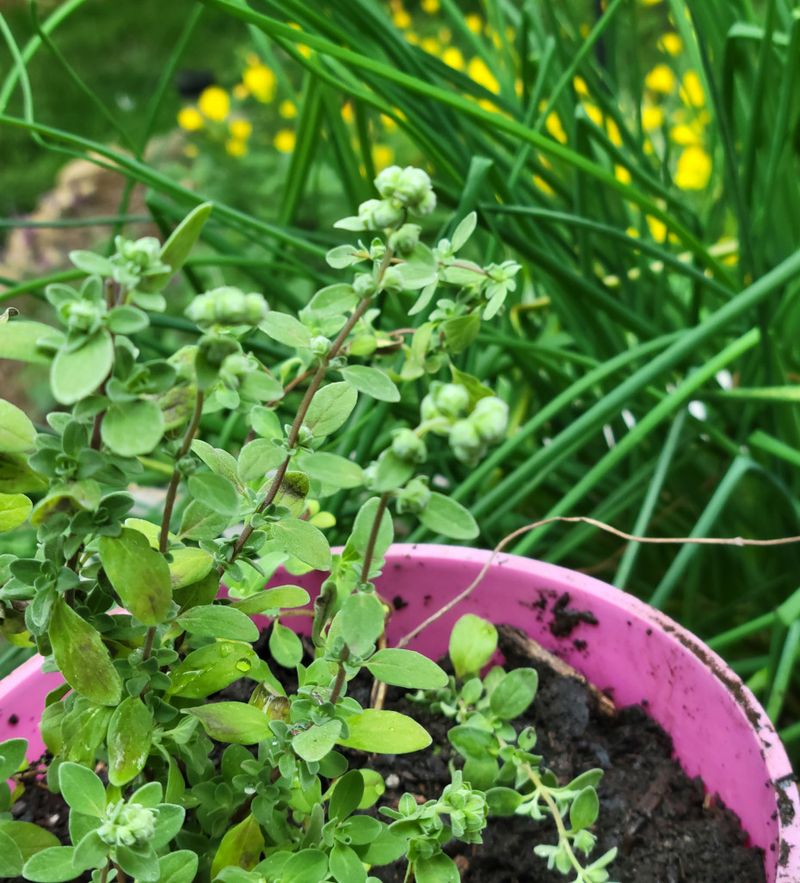
Marjoram does not get nearly the attention it deserves in container herb gardens. Closely related to oregano but with a sweeter, more delicate flavor, it handles heat and dry conditions with quiet reliability.
A 5 gallon bucket suits it perfectly, giving roots enough room without holding excess moisture that could cause problems.
Start with a good quality potting mix that drains quickly. Marjoram wants its roots to breathe between waterings.
Mixing in a handful of perlite or coarse sand helps keep the texture open and prevents compaction over time.
Water when the top inch of soil dries out. During peak summer heat, that might mean watering every day or every other day depending on how much direct sun the bucket receives.
Feel the soil rather than watering on a fixed schedule for the best results.
Full sun placement produces the most flavorful leaves. Marjoram grown in partial shade tends to stretch toward light and produce thinner, less fragrant foliage.
Six or more hours of direct sun daily is the target for strong, compact growth.
Pinch off flower buds regularly to extend the harvest window. Once marjoram flowers, the leaves become slightly more bitter and production starts to taper off.
Keeping up with pinching throughout the summer keeps the plant in a productive vegetative state.
Fresh marjoram works beautifully in pasta sauces, roasted vegetables, and egg dishes, making it a genuinely useful addition to any home herb collection in a hot, dry climate.
8. Mexican Tarragon Performs Well In Summer Heat
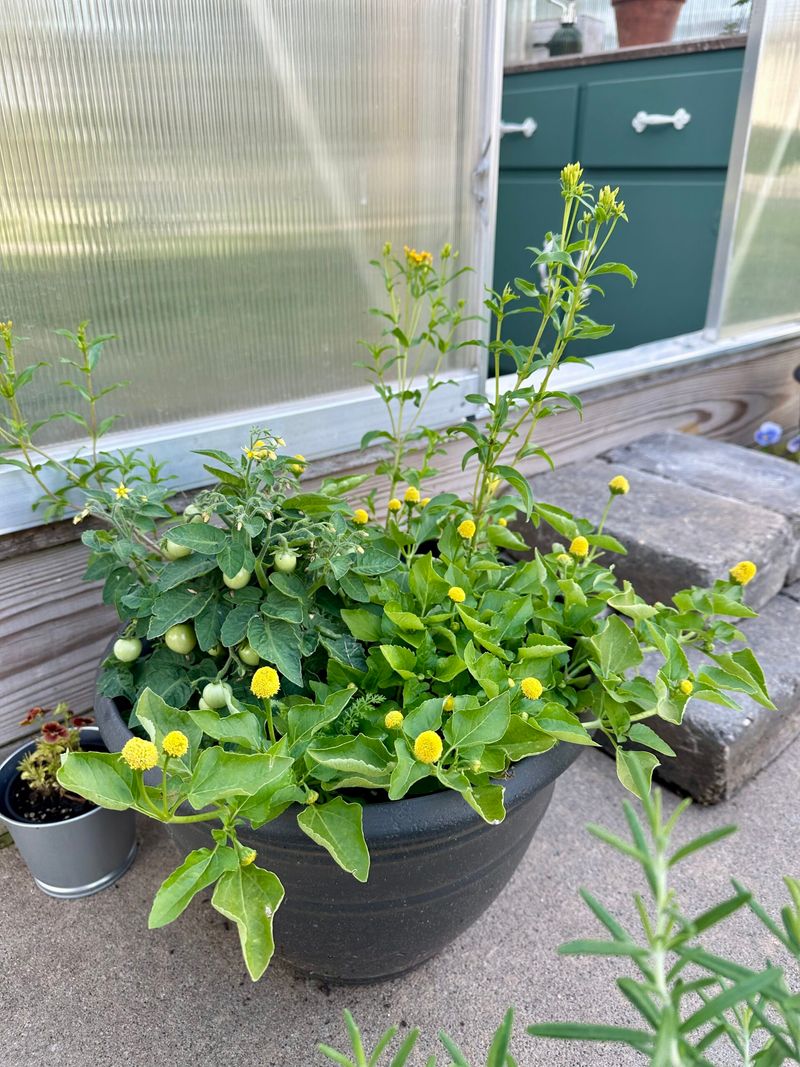
Standard French tarragon struggles badly in intense summer heat, but Mexican tarragon is a completely different story. Also called Mexican mint marigold, it thrives in hot conditions where French tarragon would quickly fail.
Container growing suits it well, and a 5 gallon bucket provides just enough root space to support strong seasonal growth.
Mexican tarragon actually blooms in late summer and fall, producing cheerful yellow flowers that attract pollinators.
Leaves carry a flavor very similar to French tarragon with a slight anise note, making it an excellent culinary substitute in hot desert regions where French tarragon simply will not perform reliably.
Water regularly but allow the soil to partially dry between waterings. Consistent moisture without waterlogging keeps the plant healthy and productive.
Check the bucket soil every day or two during the hottest weeks of summer to stay ahead of moisture loss.
Full sun to light afternoon shade works best. Too much afternoon shade reduces flowering and slightly diminishes leaf flavor intensity.
Placing the bucket where it gets strong morning light and filtered afternoon shade is a practical compromise during peak summer months.
Harvest leaves throughout the season by snipping stems just above a leaf node. Regular harvesting encourages branching and keeps the plant compact.
Mexican tarragon is a smart, underused choice for any desert herb garden. Its heat tolerance, attractive flowers, and genuine culinary value make it one of the most rewarding container herbs available for growers in hot, dry climates like Arizona.