7 Michigan Lawn Grub Signs Gardeners Mistake For Drought Stress
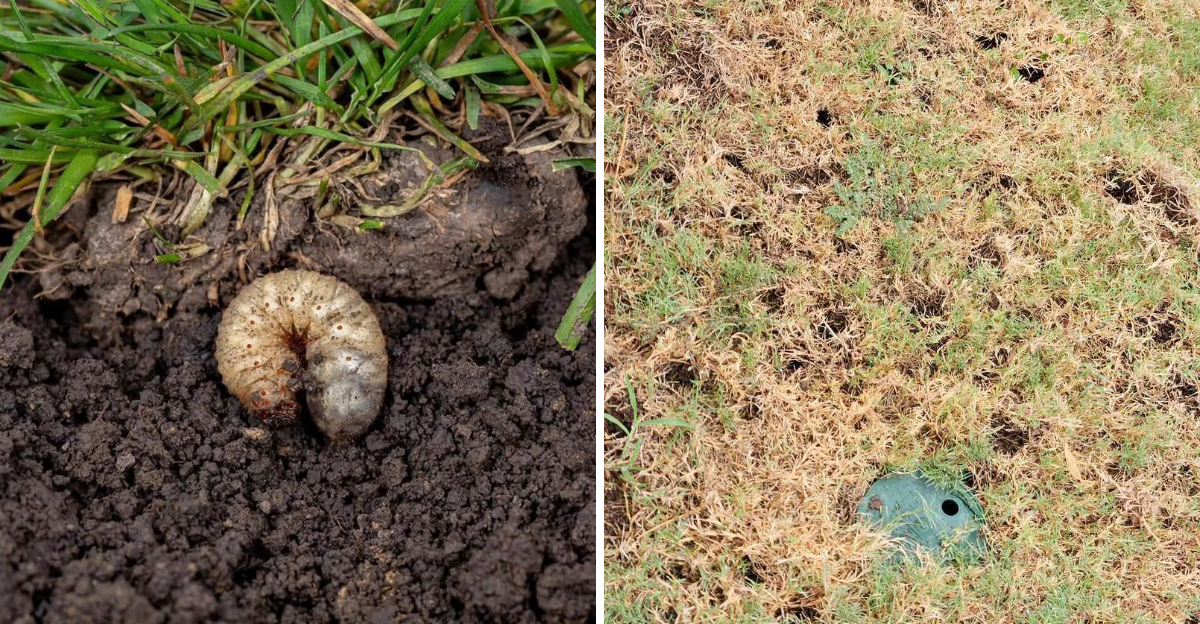
Brown patches appear in late summer, and the first assumption is almost always the same: not enough rain. That assumption costs homeowners time, money, and perfectly good turf every single season.
Japanese beetle and European chafer grubs are among the most common culprits in Michigan, and grub damage gets misread as drought stress consistently right up until the turf simply stops recovering.
The tricky part is that both problems look nearly identical from the surface, and the response to each one is completely different.
Watering a grub problem makes nothing better. It just runs up the water bill while the feeding continues underground.
Before reaching for the sprinkler or blaming the weather, take a closer look at what the lawn is actually communicating. Seven clues are the ones Michigan gardeners most consistently overlook.
1. Brown Patches Stay After Rain
Rain fell last night and the rest of the yard responded. Green returned, the grass perked up, and everything looked recovered.
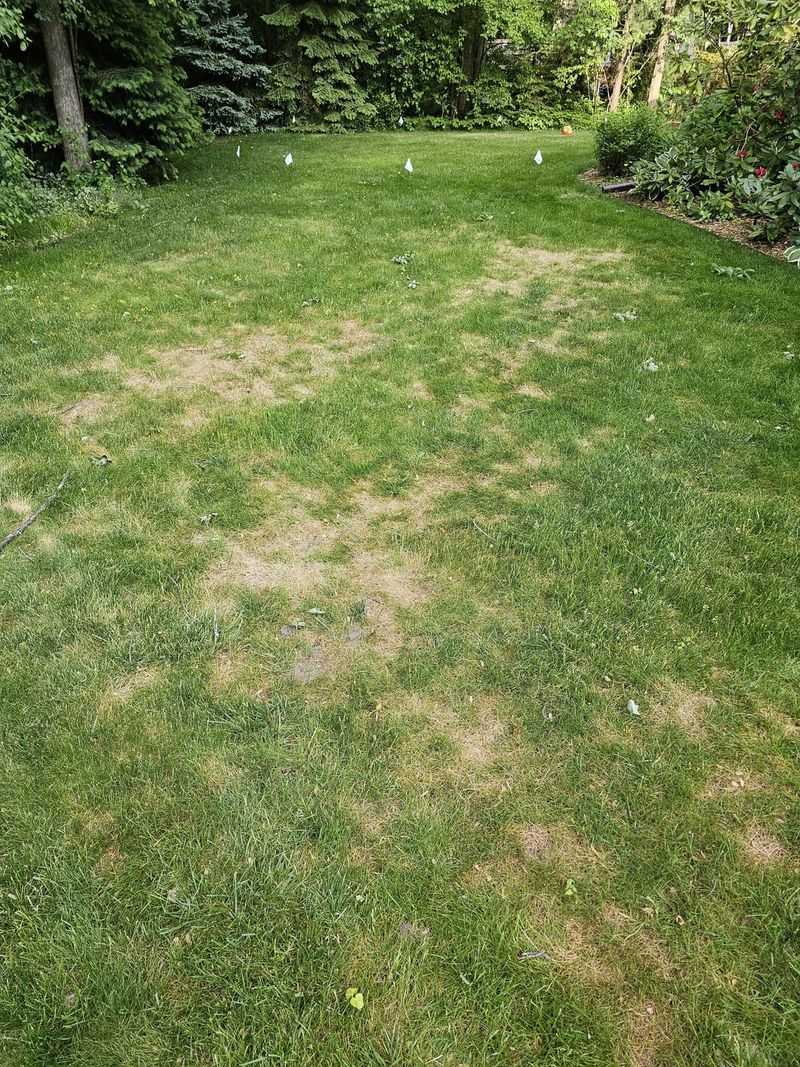
One section stayed flat and brown, completely unresponsive, as if the rain never reached it at all. That stubborn patch is one of the strongest early signals that grubs may be the actual problem.
Drought-stressed turf is resilient in a specific way. When moisture returns, it typically greens up within a few days because the root system is still intact and functional.
Grass that has had its roots severed by grubs cannot make that recovery. The blades have nothing left to pull water from, so they stay brown regardless of how much rain falls on the surface.
Grub-damaged turf often looks identical to drought stress through most of the summer, and the key difference only becomes visible right after a good soaking rain.
Healthy drought-stressed grass bounces back. Grub-damaged grass stays flat and unresponsive because the roots feeding those blades are already gone.
The shape of the brown area provides another clue worth noting. Drought stress tends to follow patterns linked to soil type, slope, or sun exposure.
Grub damage typically appears in irregular, spreading patches that do not follow any recognizable pattern across the yard.
Brown that keeps spreading even after several rainy days is a serious signal worth investigating before water gets wasted on a problem that watering alone cannot address.
2. Turf Lifts Like Loose Carpet
Grab a handful of brown grass and pull firmly. Healthy turf, even stressed turf, resists.
If the lawn peels back like a welcome mat with nothing underneath holding it in place, that is one of the most definitive grub signs available without any tools at all.
Grubs feed directly on turfgrass roots just below the soil surface. Once enough roots are gone, the grass has no anchor remaining.
The turf layer essentially floats on top of the soil, and it can be rolled back like a rug. Underneath sits bare, loose earth instead of the dense root mat that should be there.
This is a completely different situation from drought stress. Dry grass may look terrible above the surface, but the roots are still attached and still functional.
Your Michigan Garden Changes Every Week. Your Plan Should Too.
Gardening in Michigan changes quickly throughout the season. Every Friday you’ll receive a simple weekly plan showing exactly what to plant, prune, fertilize, harvest, and protect so you never miss the right timing.
Pulling on drought-stressed turf meets resistance because the root system is intact. Grub-damaged turf offers almost no resistance at all.
Some Michigan homeowners describe peeling back a section and finding it almost satisfying until the full implication of what they are seeing registers.
The loose carpet test is one of the fastest and most reliable ways to distinguish these two problems from each other. No tools required, no waiting for any results.
A quick tug tells you immediately whether roots are present or already gone. If the turf rolls back cleanly, the diagnosis is already pointing in a clear direction before any digging has started.
3. Roots Look Short And Ragged
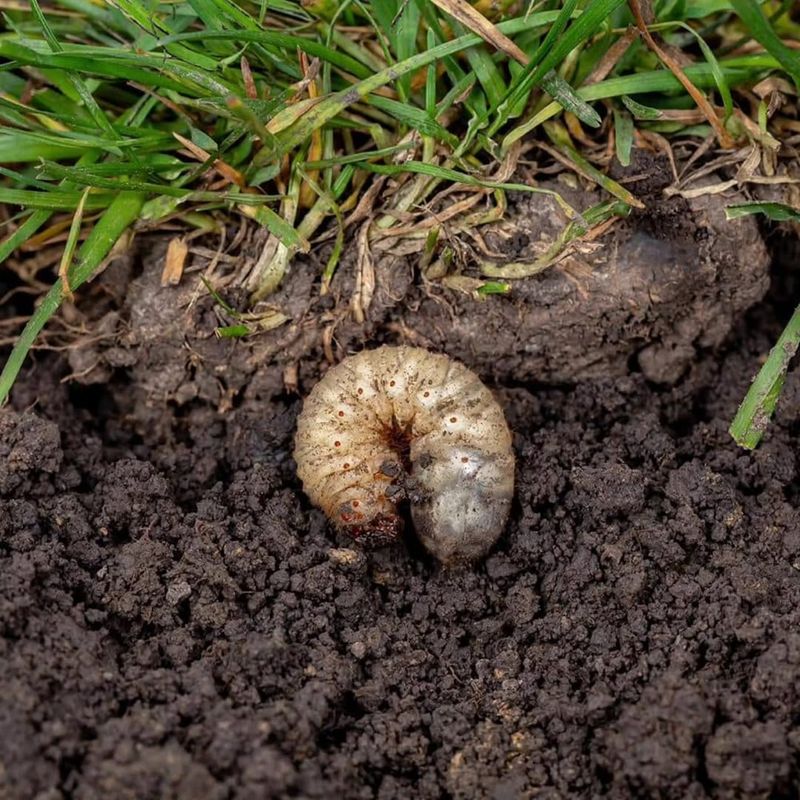
Many gardeners never look below the soil line, which is exactly where grubs do their most consequential work.
A quick inspection of the root zone tells a story that the surface never could. Short, ragged, chewed-off roots are a clear indication that something has been feeding underground while everything above looked like a weather problem.
Healthy turfgrass roots in Michigan should extend at least two to three inches into the soil, often longer in well-maintained lawns.
When grubs are actively feeding, those roots get chewed off close to the crown of the plant. What remains are stubby, frayed root ends that look torn rather than naturally tapered.
Drought stress also shortens roots over time, but the appearance is different. Drought-affected roots tend to be thin and dry, tapering gradually as the plant conserves energy.
Grub-damaged roots look physically broken, with ragged ends where tissue was chewed through. That distinction is visible to the naked eye once someone knows what to look for.
Checking is straightforward. A hand trowel or even a sturdy butter knife lifts a small plug of turf from a damaged area.
Shake the soil loose gently and spread the roots out for examination. Compare what the damaged area shows against a plug from a healthy section of the same lawn.
The difference between intact roots and grub-damaged ones is usually obvious immediately and confirms or rules out the grub diagnosis without guesswork.
4. Skunks Dig At Night
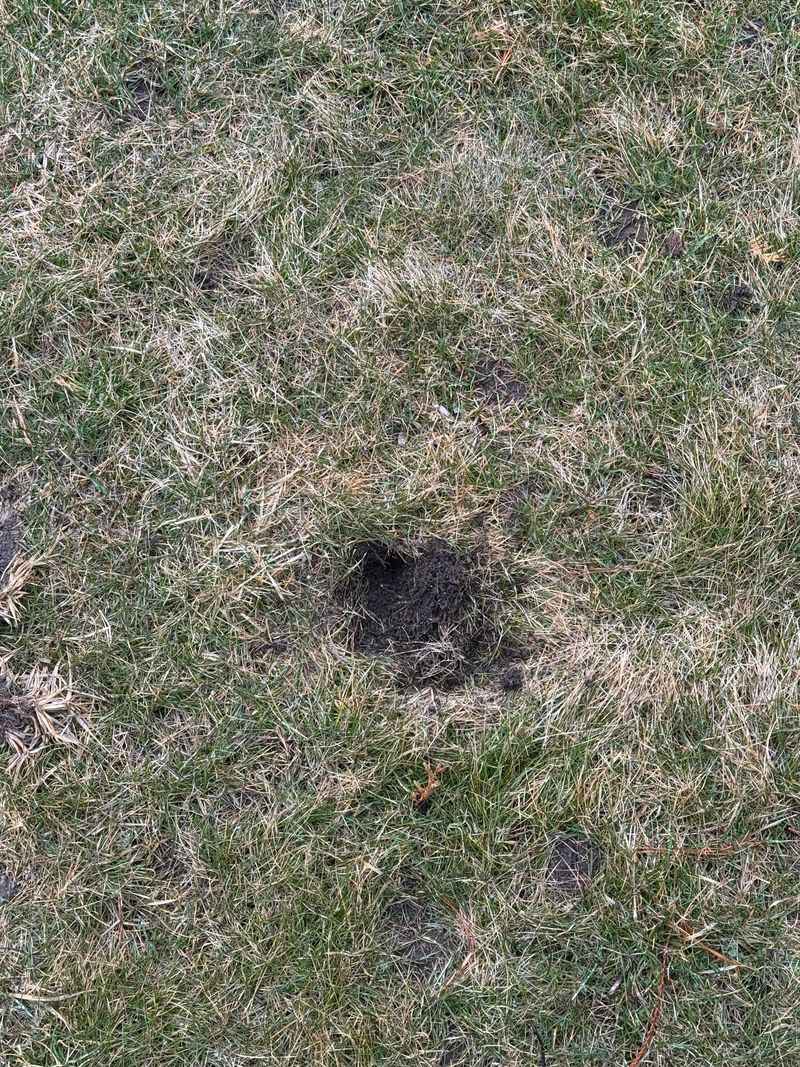
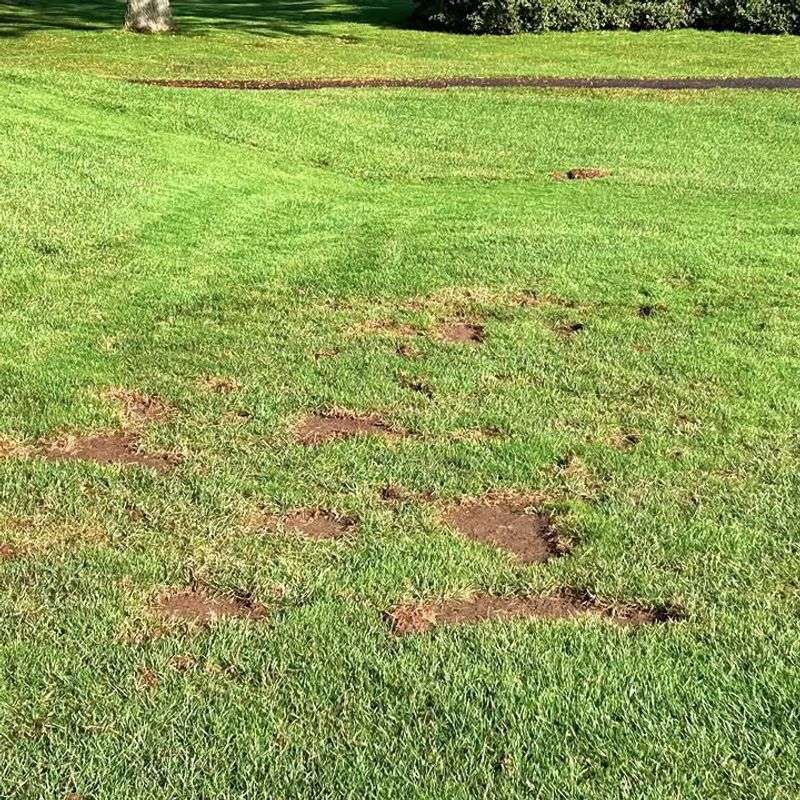
Walk outside on a morning with coffee in hand to find the lawn looking like something ran a treasure hunt through it overnight.
Small holes and overturned chunks of turf scattered across the yard are a reliable sign that a skunk visited, and skunks do not dig randomly.
They follow their nose directly to grubs with a precision that no gardener can match with a trowel.
Skunks detect grubs several inches below the soil surface and dig in short, shallow bursts, flipping over small sections of turf to reach what is underneath.
The holes are typically two to four inches wide and do not go particularly deep, which separates skunk activity from raccoon damage that tends to be more dramatic and widespread.
Michigan homeowners often focus on the surface disruption without recognizing that what attracted the animal in the first place is the real issue.
Addressing the digging without addressing the grub population means skunks return the next night and every subsequent night until the food source is gone.
The animals are doing the garden a service by flagging a serious underground problem that might have gone unnoticed for another several weeks.
Raccoons and moles also pursue grubs in Michigan lawns, so any unexplained nighttime digging warrants a daytime follow-up inspection.
Check the loosened soil in the dug-up areas for grubs. The skunk may have already done most of the excavation work.
Occasionally the most useful lawn diagnostic tool available is a hungry animal that showed up without being invited.
5. Starlings Gather On The Lawn
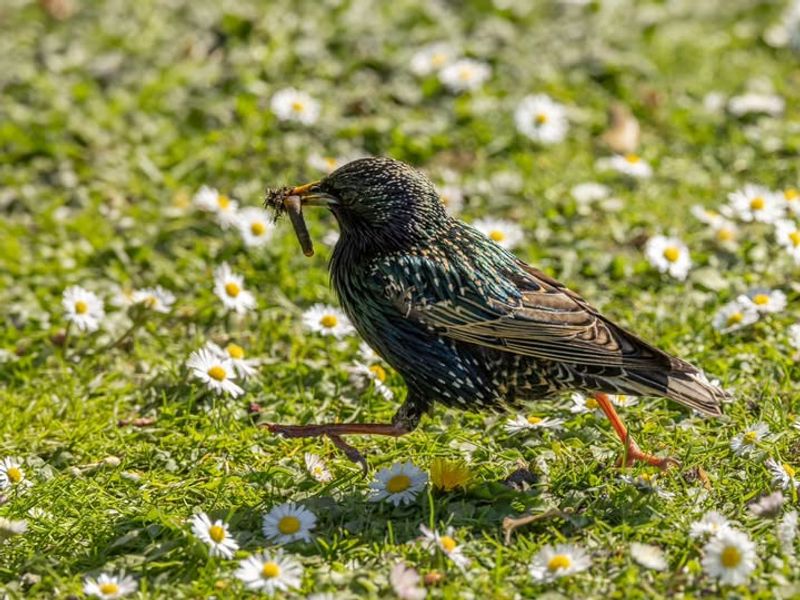
A single robin moving across the lawn is pleasant to watch.
A flock of starlings systematically stabbing the turf with their beaks is a different kind of signal entirely, and it is one of the most consistently overlooked grub indicators in Michigan yards.
European starlings are skilled grub hunters that use a behavior called open-bill probing, spreading their bills apart underground to locate and extract grubs.
A group of starlings working methodically across a section of lawn is essentially running a free grub survey. They do not gather in that pattern without a food source worth pursuing below the surface.
Other birds also indicate grub activity. Crows, robins, and flickers will all probe grub-infested turf.
Starlings tend to gather in the largest concentrations and are among the most consistent indicators in Michigan lawns during late summer.
Their presence alone does not confirm a damaging grub population, but it is a strong enough signal to justify a hands-on soil inspection before dismissing it.
Ten or more grubs per square foot generally represents the threshold where damage becomes significant in most Michigan turfgrass situations.
Bird activity does not confirm that level on its own, but a lawn suddenly popular with probing birds deserves closer attention. Watch where the birds concentrate their activity and mark that location.
That is the right starting point for digging the first test plug and counting what is actually present in the soil below the surface.
6. Damage Peaks In Late Summer
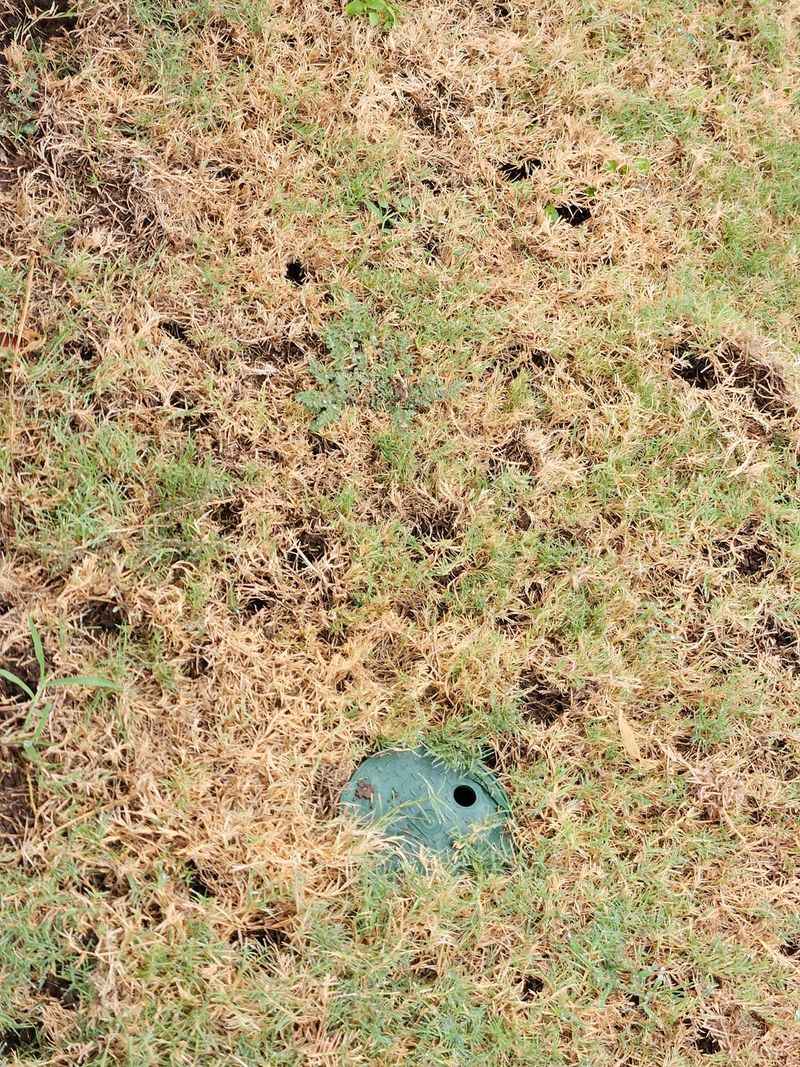
Late July through September is when Michigan lawns take their hardest grub pressure.
That timing aligns almost perfectly with the hottest, driest stretch of summer, which is exactly why so many gardeners blame the weather and never investigate any further.
Japanese beetle and European chafer grubs hatch from eggs laid in midsummer and spend their early weeks feeding aggressively on grass roots just below the soil surface.
They are small but numerous, and their collective feeding can sever the root system across a large lawn section within just a few weeks.
By the time damage becomes visible on the surface, the feeding has typically been underway for a month already.
The frustrating overlap is that August in Michigan can bring genuine dry spells that look exactly like classic drought stress.
Brown patches appear, turf looks depleted, and the instinct is to water more.
Grub-damaged turf will not respond to irrigation the way drought-stressed turf does because the roots needed to absorb that water are already gone. The extra moisture sits at the surface doing nothing useful.
Timing is one of the most practical diagnostic tools available. Drought stress can appear any time conditions turn dry.
Grub damage that shows up specifically in late summer and continues spreading after rainfall is following the natural feeding schedule of the pest rather than the weather pattern.
Recognizing that sequence saves weeks of chasing a moisture problem that was never actually about moisture.
7. A One Foot Test Shows The Grubs
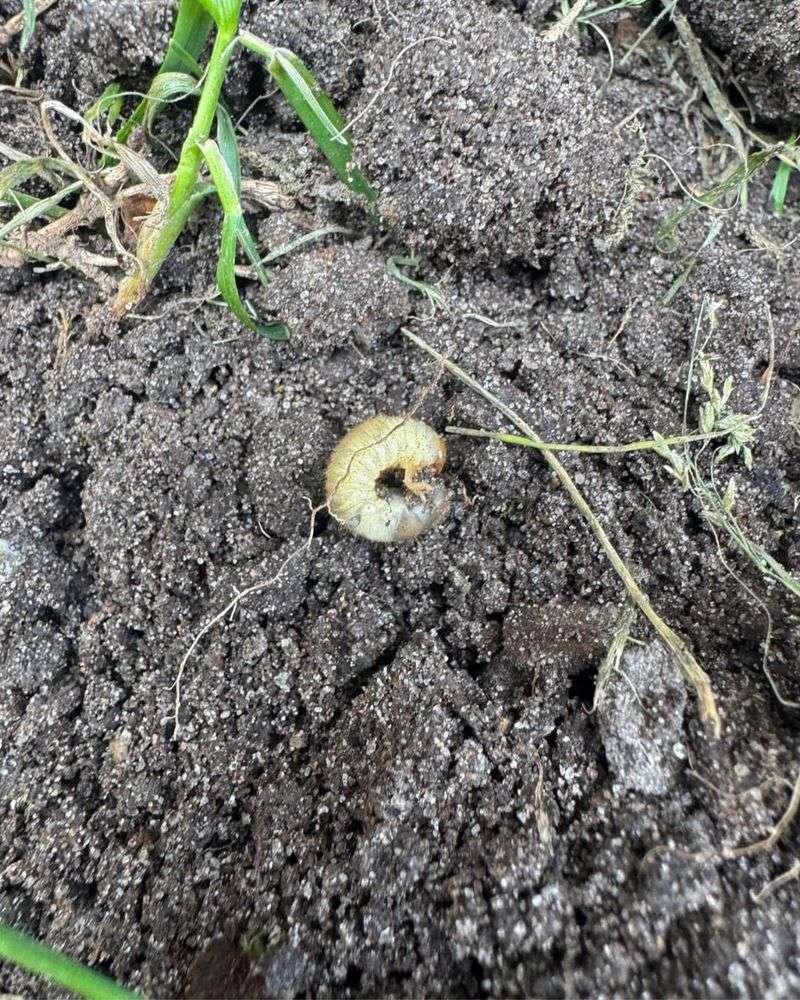
Every clue on this list leads to one final step, and that step matters more than all the others combined.
Cutting out a square foot of turf and counting what is found is the gold standard for grub diagnosis, and it costs nothing beyond a few minutes and a shovel.
Use a sharp spade or garden knife to cut three sides of a one-foot square in a damaged area of the lawn. Slide the spade under the turf about three inches deep and peel the section back.
Sift through the loose soil by hand and count every white, C-shaped grub found in that plug. Repeating the test in two or three spots provides a more accurate picture of the overall population across the affected area.
Thresholds matter for making the right treatment decision. Finding ten or more grubs per square foot in a mixed stand of Kentucky bluegrass and perennial ryegrass generally justifies treatment.
Fewer than five grubs per square foot in otherwise healthy turf may not require any chemical intervention at all.
Knowing the actual number prevents unnecessary pesticide applications and saves real money on products that the situation may not require.
The grubs found will be creamy white with a tan or brown head and a distinctive C-shaped body. They are easy to spot once the soil is loosened and spread out.
Replacing the turf plug after counting allows the tested area to recover more easily than leaving it open.
Running this test before treating, after treating, and any time the lawn sends unexplained signals provides the honest information that lawn care decisions should actually be based on.
One square foot of honest data beats an entire season of guessing every single time.