If You See This Caterpillar On Pennsylvania Plants This Summer, Remove It Immediately
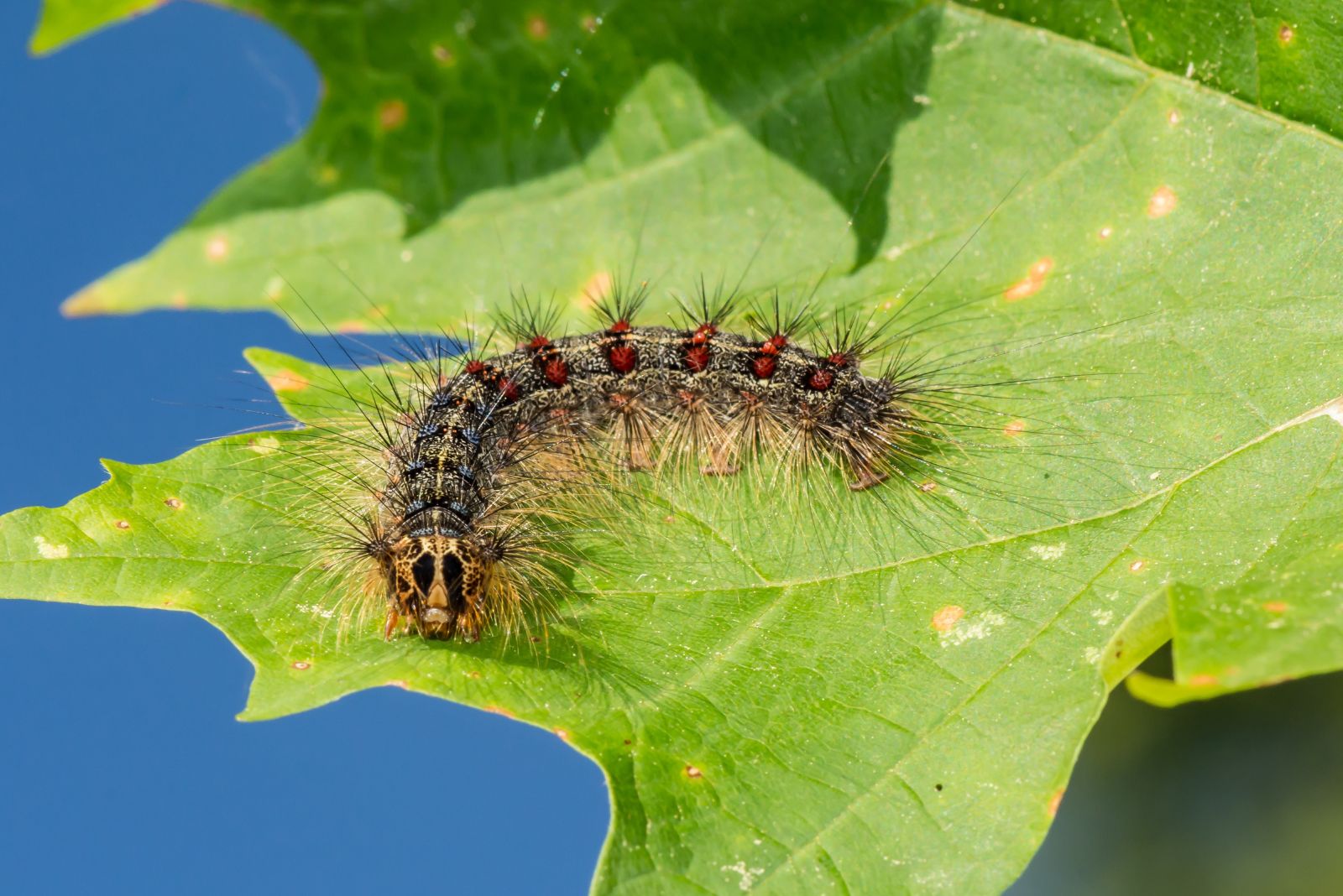
Most caterpillars you come across in a Pennsylvania garden are completely harmless. Some are even worth encouraging, especially if they’re going to turn into butterflies or beneficial moths.
But every once in a while, a caterpillar shows up that you absolutely do not want anywhere near your plants. This is one of them.
If you spot this particular caterpillar on your plants this summer, do not leave it there. It might look interesting or even a little impressive up close.
But behind that appearance is one seriously destructive feeding machine. This caterpillar can work through plant foliage at an alarming rate, and where there’s one, there are almost always more nearby.
Left unchecked, an infestation can strip plants down to bare stems in a surprisingly short amount of time.
Pennsylvania gardeners have been reporting more sightings this summer, which means now is exactly the right time to know what you’re looking at before it shows up in your garden.
Meet The Spongy Moth Caterpillar
You might not think a fuzzy caterpillar could cause serious trouble, but the spongy moth caterpillar is no ordinary garden visitor.
Scientifically known as Lymantria dispar, this pest has become one of the most destructive insects in Pennsylvania.
It has been spreading steadily across the northeastern United States for decades, and Pennsylvania sits right in the middle of its favorite territory.
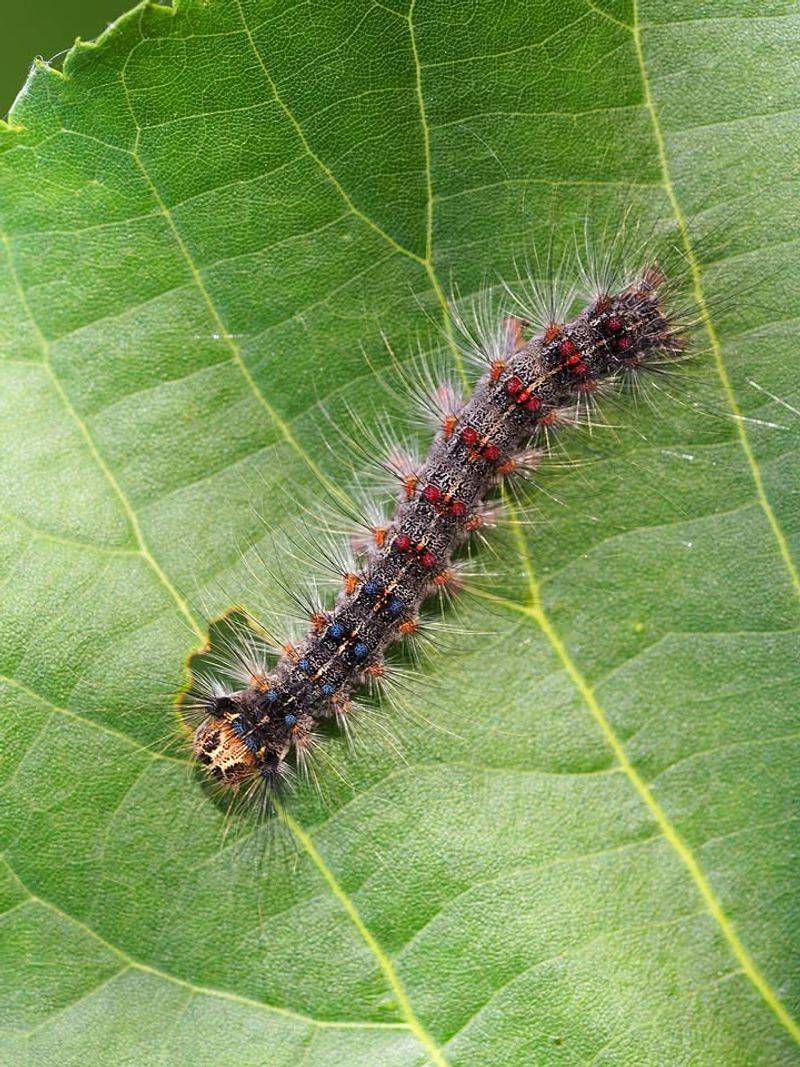
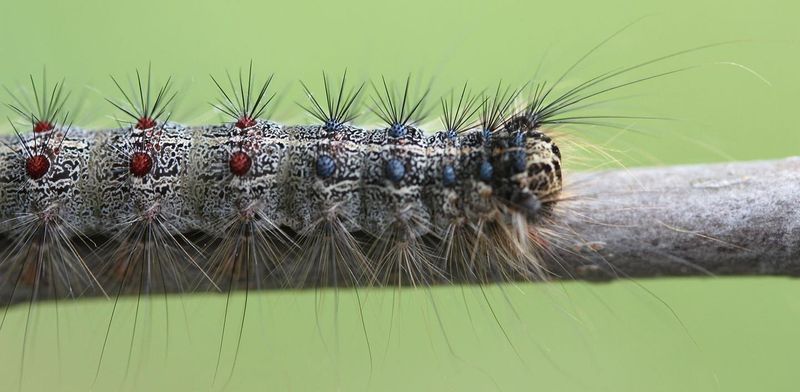
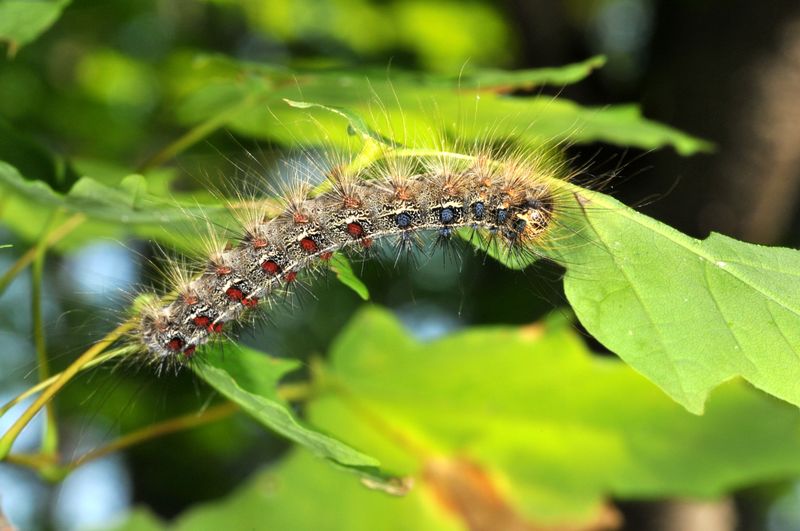
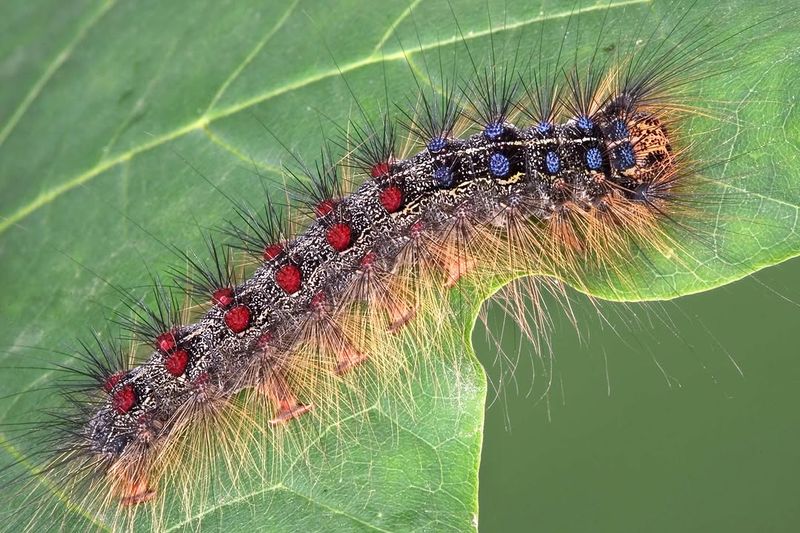
Spotting one is actually pretty straightforward once you know what to look for. The caterpillar has a long, hairy body covered in tufts of bristly hair.
Along its back, you will notice two distinct rows of spots. The spots closest to its head are blue, and the ones farther back are red.
That blue-and-red pattern is the clearest sign that you are dealing with a spongy moth caterpillar and not a harmless species.
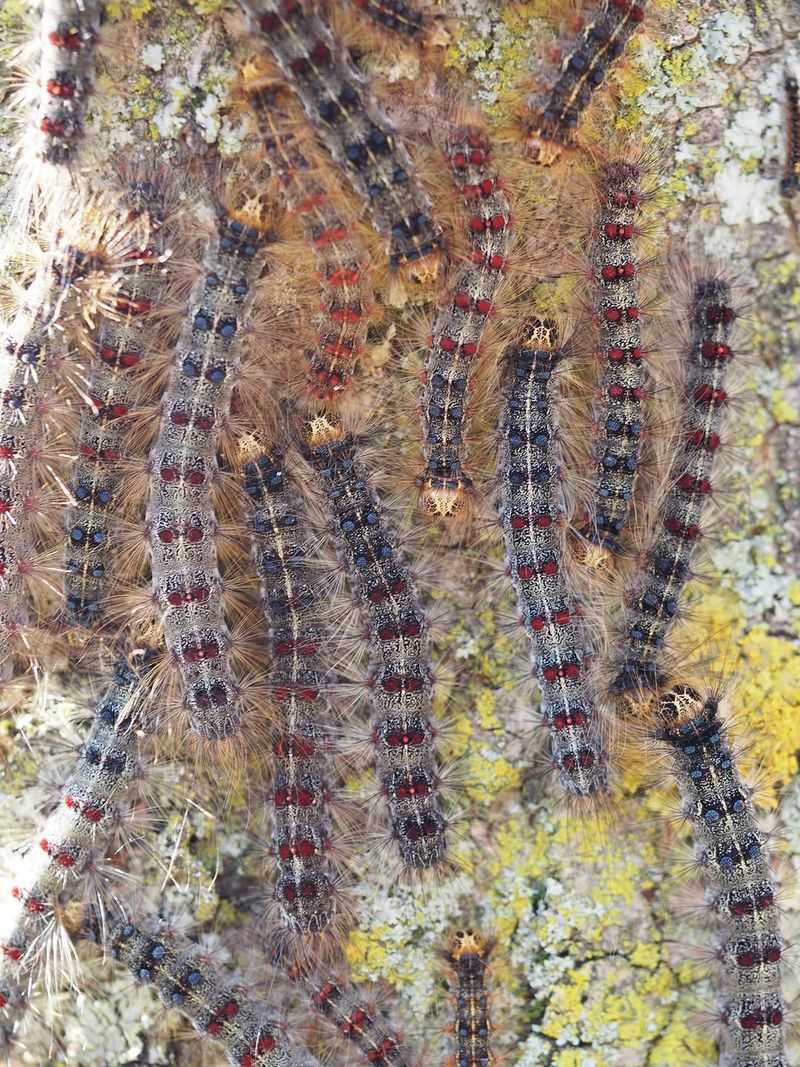
Young caterpillars are small and dark, sometimes just a few millimeters long when they first hatch in spring. As they grow through the weeks, they can reach up to two and a half inches in length.
They feed during the day and can often be found resting on tree trunks or the undersides of leaves. Many people mistake them for other fuzzy caterpillars, so always check for that signature spot pattern.
Getting familiar with this insect early in the season gives you a real advantage. The sooner you recognize it, the faster you can respond and protect your yard from the damage that follows.
Why It Is A Serious Threat To Your Plants
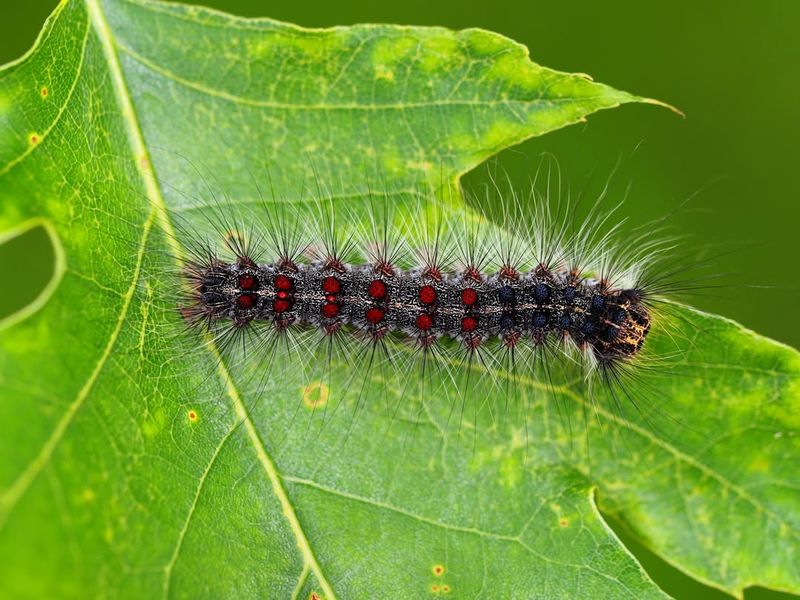
Few insects can strip a tree bare as quickly as the spongy moth caterpillar. These hungry feeders target a wide range of trees and shrubs, but they especially love oaks.
Maples, birches, aspens, and many popular ornamental plants are also on their menu. When a large group of caterpillars moves through a yard, they can remove every single leaf from a full-grown tree in a matter of weeks.
Losing all its leaves once is hard on a tree, but most healthy trees can bounce back after a single defoliation. The real danger comes when it happens year after year.
Your Pennsylvania Garden Changes Every Week. Your Plan Should Too.
Gardening in Pennsylvania changes quickly throughout the season. Every Friday you’ll receive a simple weekly plan showing exactly what to plant, prune, fertilize, harvest, and protect so you never miss the right timing.
Repeated defoliation drains the tree of its energy reserves. Without leaves, a tree cannot make food through photosynthesis, and it slowly becomes weaker with each passing season.
A weakened tree is much more likely to be attacked by bark beetles, fungal diseases, and other secondary pests that would not normally be a problem.
Shrubs and smaller ornamental plants face an even tougher time recovering. Unlike large trees, they have fewer resources to draw from when they lose their leaves.
Some smaller plants may not recover at all after a heavy infestation. Flower gardens near infested trees can also suffer because the caterpillars will move to nearby plants once they run out of leaves to eat.
Understanding just how much damage these caterpillars can do is a strong reason to take action the moment you spot them. Protecting your plants now saves you a lot of heartache and expense later in the season.
Rapid Reproduction Makes Things Worse Fast
One of the scariest things about spongy moths is how quickly their population can grow. A single female moth can lay between 100 and 1,000 eggs in one season.
She deposits them in a compact, tan-colored mass that looks a bit like a piece of dried foam or felt stuck to the bark. These egg masses are easy to miss if you are not specifically looking for them.
The eggs are incredibly tough. They survive cold winters without any problem and hatch in late April or early May when temperatures start to warm up.
Once the eggs hatch, hundreds of tiny caterpillars begin feeding almost immediately. Wind can actually carry young caterpillars on silk threads to new trees and new yards, which is one of the main ways infestations spread so fast across neighborhoods and regions.
Population explosions happen in cycles, and when conditions are right, the numbers can become truly overwhelming. Entire forests in Pennsylvania have been stripped bare during peak outbreak years.
Homeowners who ignore a small infestation one season can find themselves dealing with a massive problem the next. That is why it is so important to break the cycle early.
Removing egg masses before they hatch is one of the most effective things you can do. Checking tree trunks, fences, outdoor furniture, and even vehicles for those fuzzy tan egg clusters during late fall and early spring can make a huge difference.
Catching the problem before the caterpillars even hatch gives your yard the best possible chance of staying protected.
Early Detection Is The Key To Staying Ahead
Catching a spongy moth infestation early is genuinely the best thing you can do for your yard. The window for action runs from late spring through midsummer, which is when the caterpillars are actively feeding.
During this time, you should be walking through your yard regularly and keeping a close eye on your trees and plants.
Look for chewed or missing leaves, dark droppings on the ground below trees, and of course the caterpillars themselves on trunks and branches.
Early-stage caterpillars are small and harder to spot, but that is actually the best time to find them. A small infestation is much easier to manage than a large one.
Pay special attention to oak trees, which are the caterpillar’s top choice, but do not ignore maples, fruit trees, or any ornamental shrubs nearby.
Check the undersides of leaves and the rough bark of tree trunks, where caterpillars like to hide during the hottest parts of the day.
Using a flashlight during evening checks can also help you find caterpillars that are more active at night. Keep a simple journal or take photos on your phone to track where you are finding them and how many.
This helps you see whether the population is growing or shrinking over time. Sharing what you find with your neighbors is also a smart move.
Spongy moth caterpillars do not respect property lines, and a coordinated neighborhood response is far more effective than one household working alone. The earlier everyone gets involved, the better the outcome for the whole community.
Safe And Effective Removal And Control Methods
Getting rid of spongy moth caterpillars does not require harsh chemicals or expensive equipment. Handpicking is one of the simplest and most satisfying methods.
Put on a pair of gardening gloves, pick the caterpillars off the leaves and trunks, and drop them into a bucket of soapy water.
Leave them in the bucket for at least 24 hours to make sure they cannot escape. Then dispose of the contents in a sealed bag in your trash.
For larger infestations, a biological pesticide called Bacillus thuringiensis, or Bt, is one of the best options available. Bt is a naturally occurring soil bacteria that targets caterpillars specifically without harming birds, bees, pets, or people.
You can find it at most garden centers and apply it as a spray directly to the leaves the caterpillars are eating. Timing matters with Bt because it works best on young, small caterpillars in early spring.
Once caterpillars get larger, Bt becomes less effective. Burlap banding is another clever trick worth trying. Wrap a strip of burlap around the trunk of a tree about chest height.
During the day, caterpillars crawl down from the canopy and hide under the burlap to rest. Check the band every afternoon, collect the caterpillars hiding underneath, and drop them into your soapy water bucket.
Removing egg masses in fall and early spring using a stiff brush or scraper is also highly effective. Scrape them into a container of soapy water rather than just knocking them to the ground, where they could still hatch and restart the cycle.
Prevention And Smart Yard Management All Year
Keeping spongy moth caterpillars from becoming a repeat problem takes a little planning throughout the year. Healthy trees are far more resilient than stressed ones, so good basic tree care goes a long way.
Water your trees deeply during dry spells, especially in summer. Add a layer of mulch around the base of each tree to hold moisture in the soil and keep the roots cool.
Healthy, well-watered trees recover from partial defoliation much more easily than trees that are already under stress.
Nature has its own set of helpers that can keep caterpillar numbers in check. Birds like cuckoos, robins, and blue jays actively eat spongy moth caterpillars.
Putting up bird feeders and birdhouses around your yard encourages these natural predators to stick around. Ground beetles and parasitic wasps also help control caterpillar populations.
Planting native flowers and shrubs that support beneficial insects creates a more balanced yard ecosystem that naturally resists pest outbreaks.
One often-overlooked prevention tip involves being careful about what you move in and out of your yard. Spongy moth egg masses can hitch a ride on firewood, outdoor furniture, camping gear, and even vehicles.
Before moving any of these items from one location to another, check them carefully for the tan, fuzzy egg clusters. Reporting large infestations to the Pennsylvania Department of Agriculture is also a good idea.
State programs sometimes offer free treatment for heavily affected areas. Staying informed, staying observant, and making smart choices year-round is the most reliable way to protect your yard for the long haul.