A Roadrunner May Have Claimed Your Texas Yard If You Notice These Signs
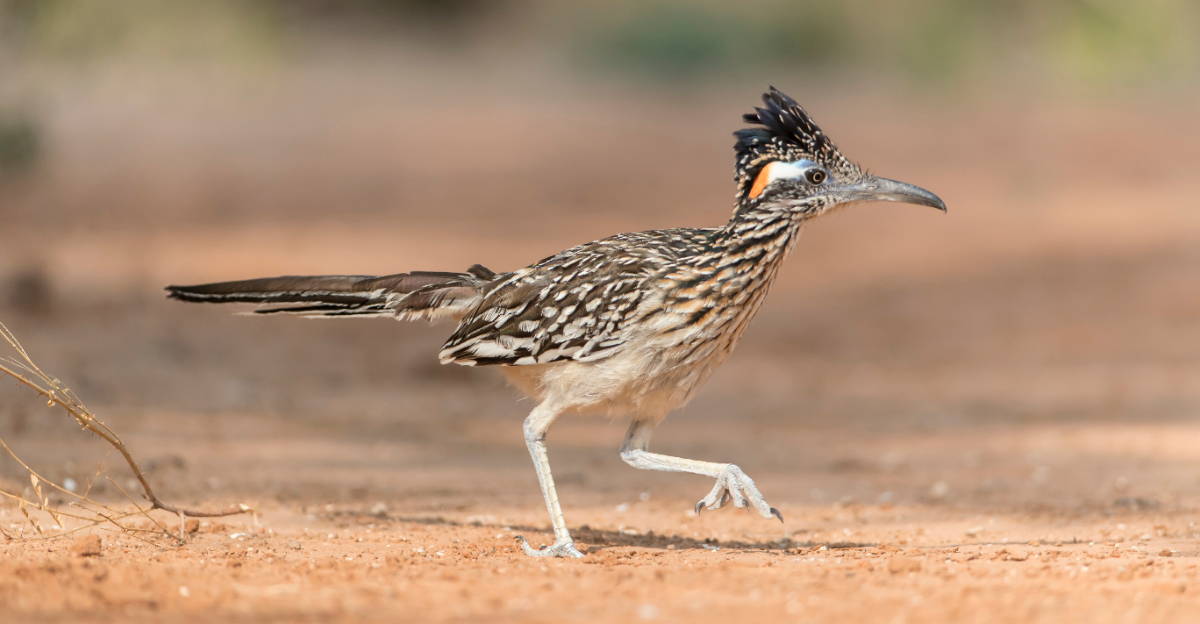
A flash of brown and white darts across the fence line, gone before you can fully process what you just saw.
Maybe it started with that strange clucking sound that definitely did not come from your neighbor’s house, or a quick glimpse of something moving low and fast through the yard at sunrise.
If you live in Texas, there is a good chance a greater roadrunner has quietly decided your yard is its territory, and it has probably been claiming it for longer than you realize.
These bold, fast, and surprisingly savvy birds are a beloved part of Texas wildlife, known for their distinctive crest, their confident stride, and their tendency to treat backyards like personal hunting grounds.
Learning to spot their habits is one of the coolest things a backyard nature lover can do, and once you know what to look for, the signs become impossible to miss.
Eight specific behaviors reveal whether a roadrunner has settled into your yard for good, from patrol routes to nesting season activity.
1. Daily Patrols Follow The Same Route
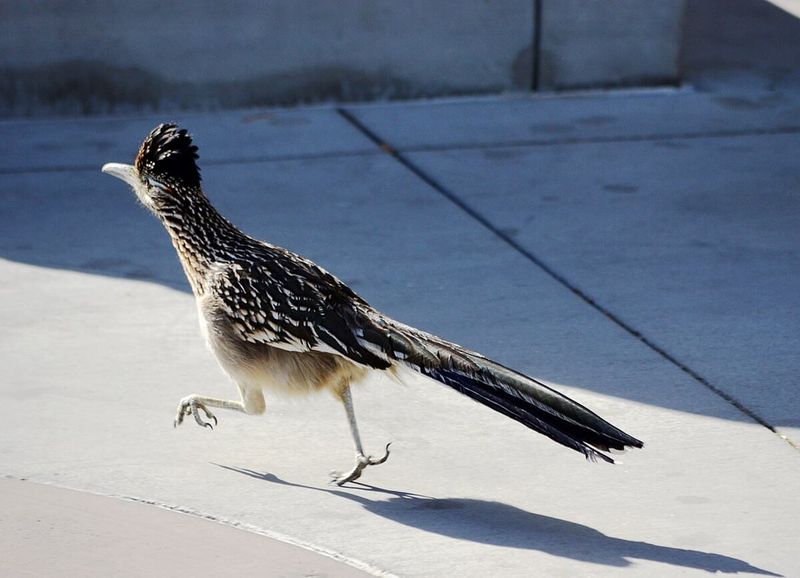
Every morning, like clockwork, something zips along the same stretch of your yard.
You catch it once, then twice, then realize it always follows the exact same path. That is not a coincidence. That is a roadrunner doing what roadrunners do best, and it is one of the clearest signs one has claimed your space.
Greater roadrunners are creatures of habit.
According to Texas Parks and Wildlife, they establish and defend home territories that can stretch up to a quarter mile.
Within that territory, they create reliable patrol routes they repeat daily. These routes help them monitor prey activity, check for threats, and reinforce their claim on the space.
Watch for movement along fence lines, the base of shrubs, or the edge of your driveway.
The bird moves fast and low, head bobbing forward with each step. It rarely slows down unless something catches its eye.
If you start seeing the same flash of brown and white in the same spot around the same time each morning, trust your gut. You have a regular visitor who has turned your yard into a personal hunting circuit.
Keeping a simple log of where and when you spot the bird can help you map its route.
You might be surprised how consistent the pattern really is. Roadrunners are serious about their schedules, almost like they punched a time card at sunrise.
2. Fence Posts Become Lookout Spots
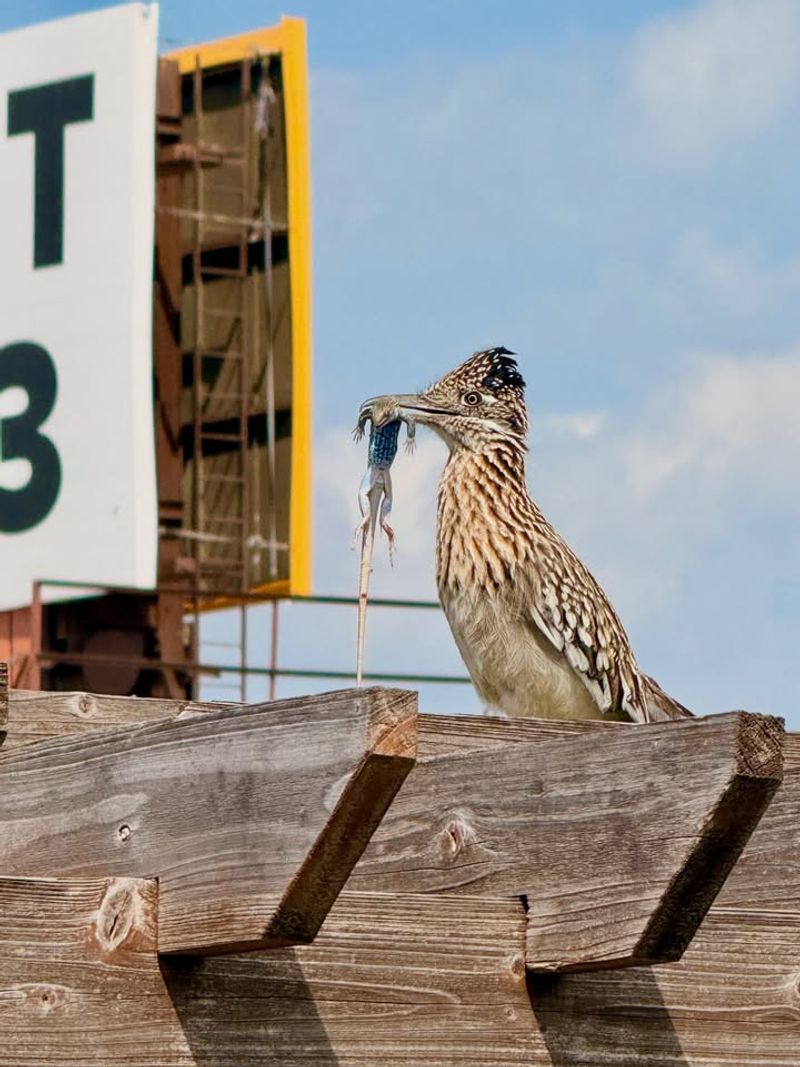
Not everything a roadrunner does happens at ground level.
Every now and then, this bird likes to get a bird’s-eye view of its territory, and your fence posts are prime real estate for exactly that purpose.
Roadrunners are predominantly ground birds, but they absolutely use elevated perches for scanning.
A fence post, a low tree branch, a garden wall, or even a stacked pile of firewood can become a regular lookout spot.
From up there, the bird watches for prey movement below and keeps tabs on anything approaching from a distance.
Your Texas Garden Changes Every Week. Your Plan Should Too.
Gardening in Texas changes quickly throughout the season. Every Friday you’ll receive a simple weekly plan showing exactly what to plant, prune, fertilize, harvest, and protect so you never miss the right timing.
Texas A&M AgriLife wildlife resources note that roadrunners rely heavily on visual hunting, making elevated scanning a key part of their daily strategy.
If you notice a bird sitting very still on your fence post and staring intensely at the ground or nearby brush, pay attention.
Roadrunners have a distinctive crest of feathers on their head that rises when they are alert or excited.
Their long tail often tilts upward slightly as they scan. They can hold that perch position for several minutes before dropping back down to chase something.
The giveaway is repetition.
One visit to a fence post means nothing. But if the same post gets used regularly, especially in the morning when lizards and insects are warming up, you have found a roadrunner lookout station.
That post has officially been claimed as part of a very serious surveillance operation.
3. Lizards Start Getting Extra Attention
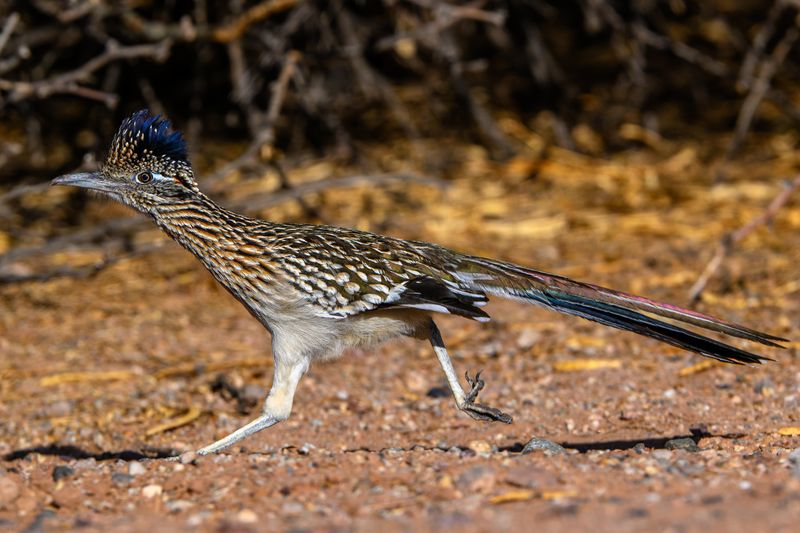
Suddenly, the lizards in your yard seem nervous.
They dart faster, hide sooner, and vanish before you even get close. That shift in behavior is worth noticing, because it usually means something higher up the food chain has moved into the neighborhood.
Roadrunners are skilled hunters, and lizards are one of their favorite targets across Texas.
They are fast enough to chase down even quick-moving species like Texas spiny lizards and fence lizards. The hunting technique is calculated and patient.
The roadrunner will freeze, watch, then explode into a sprint when the moment is right. It is genuinely impressive to watch, even if the lizard population might disagree.
You might notice the roadrunner crouching low near sunny rocks, garden borders, or open patches where lizards like to bask.
Its body gets very still, almost like a statue, before it moves. That stillness is the hunting mode kicking in.
According to wildlife behavior research, roadrunners use both speed and strategy to corner prey, sometimes working along walls or fences to limit escape routes.
If your yard has a healthy lizard population, it is naturally attractive to roadrunners looking for a reliable meal.
Do not be alarmed by the hunting behavior. It is completely natural and part of how this bird keeps itself fed. A yard that supports lizards is essentially a roadrunner restaurant with a five-star rating and an open reservation.
4. Dust Baths Appear In Open Soil
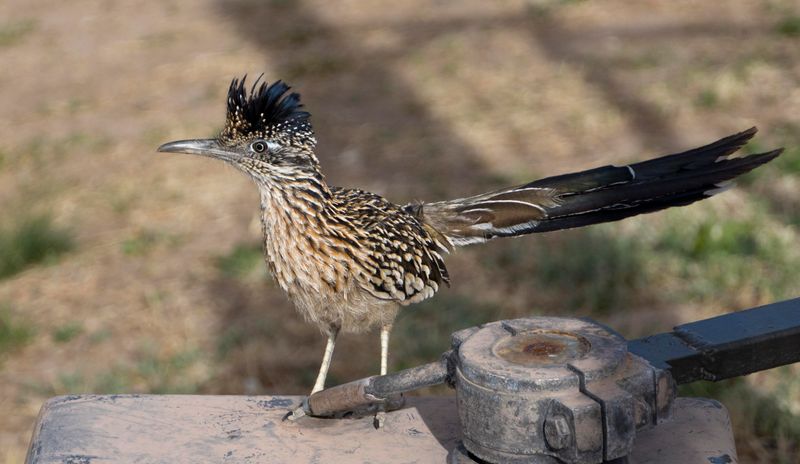
Bare patches of dry soil in your yard might look like a gardening problem, but they could actually be something much more interesting.
If you spot a shallow, bowl-shaped depression in an open sunny area, a roadrunner may be using it as a personal spa.
Dust bathing is a real and important behavior for many birds, including roadrunners.
They crouch into loose, dry soil and flutter their wings to work the dust through their feathers. This helps control parasites like mites and lice, and it also helps with feather conditioning.
Texas summers are hot and dry, which makes the state basically perfect roadrunner dust bath territory.
The spots they choose are usually open and sunny, away from heavy plant cover. Look for areas near the base of a fence, along a garden bed edge, or in a patch of bare ground that gets full afternoon sun.
The depression left behind is usually shallow and slightly rounded, almost like a small bowl scraped into the soil. You might also find feathers or tracks nearby.
If you see a bird rolling around in the dirt with its wings spread and its eyes half-closed, do not panic. It is not in distress. It is actually having a great time.
Roadrunners that feel comfortable enough to dust bathe in your yard have decided it is a safe, familiar space worth sticking around in, and that is a solid sign of a settled, territory-owning bird.
5. Low Cover Gets Regular Visits
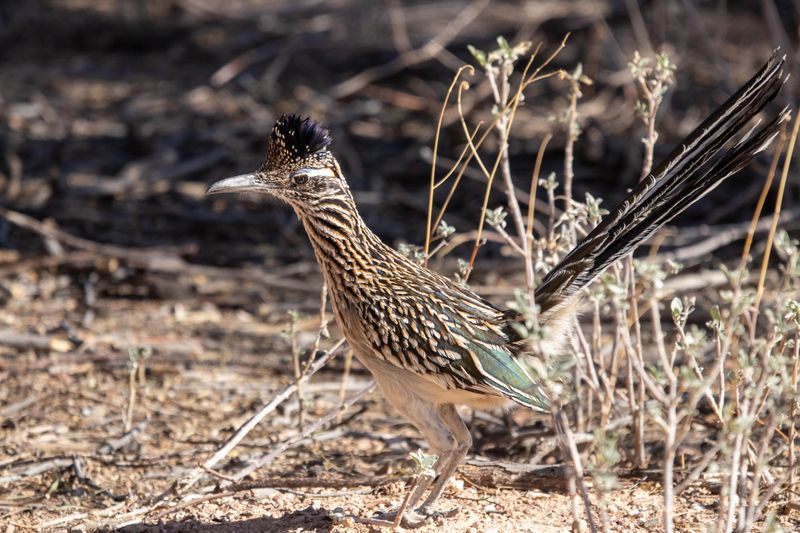
Thick shrubs, brushy corners, and overgrown edges might not look like much to a homeowner, but to a roadrunner, that kind of low cover is basically a five-star hunting ground.
If certain shrubby spots in your yard keep getting visited, there is a reason for it.
Roadrunners prefer environments that mix open ground with low, dense vegetation nearby.
The open ground gives them room to run and chase prey. The low cover provides shade, ambush points, and resting spots between hunting runs.
Texas Parks and Wildlife notes that greater roadrunners thrive in scrubby brush, open woodland edges, and semi-arid landscapes, which describes a lot of Texas yards perfectly.
Watch the edges of your yard, especially where grass meets a shrub bed or a brushy fence line.
Roadrunners move along these edges with purpose, pausing to peer into the undergrowth and then slipping inside for a moment before emerging again.
They are not wandering randomly. Every move is calculated, checking for insects, small rodents, or other prey tucked into the vegetation.
You might notice crushed or flattened areas at the base of certain shrubs where the bird rests or crouches during the heat of the day.
Consistent foot traffic through the same brushy gap is another clue.
If a particular corner of your yard looks like something keeps walking the same path through it, that worn trail is basically a roadrunner’s personal highway through prime hunting cover.
6. Quick Calls Break The Quiet
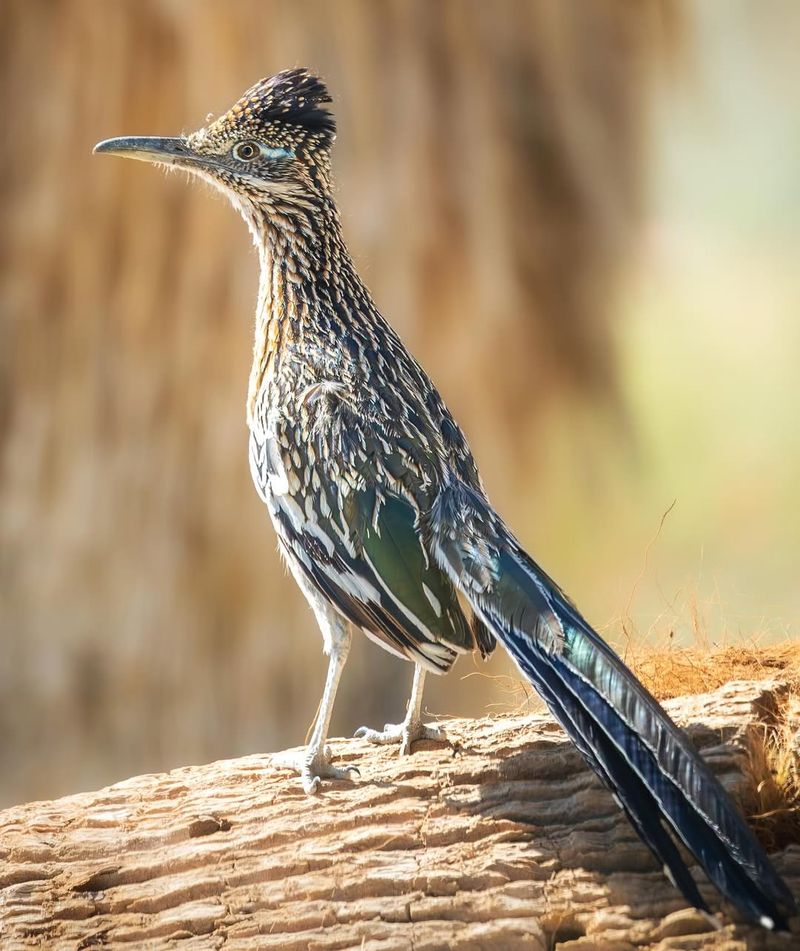
You are sitting outside enjoying the quiet of a Texas morning when a strange sound cuts through the air.
It is low, cooing, and a little mournful, almost like a dove mixed with something prehistoric. That sound might be coming from a roadrunner announcing its presence to the whole neighborhood.
Greater roadrunners have a surprisingly varied vocal range.
Their most recognized call is a descending series of low, dove-like coos that carry surprisingly well across open spaces.
They also produce a rapid clacking sound made by snapping their beaks together, which serves as a territorial warning. Cornell Lab of Ornithology describes the roadrunner’s calls as distinctive and often heard before the bird is seen.
The coo call is most common during breeding season in spring and early summer, but roadrunners can vocalize year-round when defending territory.
If you hear that low, repetitive cooing from a fence line, tree branch, or rooftop edge, stop and look carefully.
The bird is usually not far from where the sound originates, and it tends to call from an elevated or open spot where the sound carries best.
Beak clacking is a shorter, sharper sound and often signals that the bird feels threatened or is warning off a rival.
Hearing either sound regularly in your yard is a strong indicator that a roadrunner considers the area home turf. Sometimes the best clue is not what you see at all, but what you hear before sunrise.
7. Nesting Material Moves Through The Yard
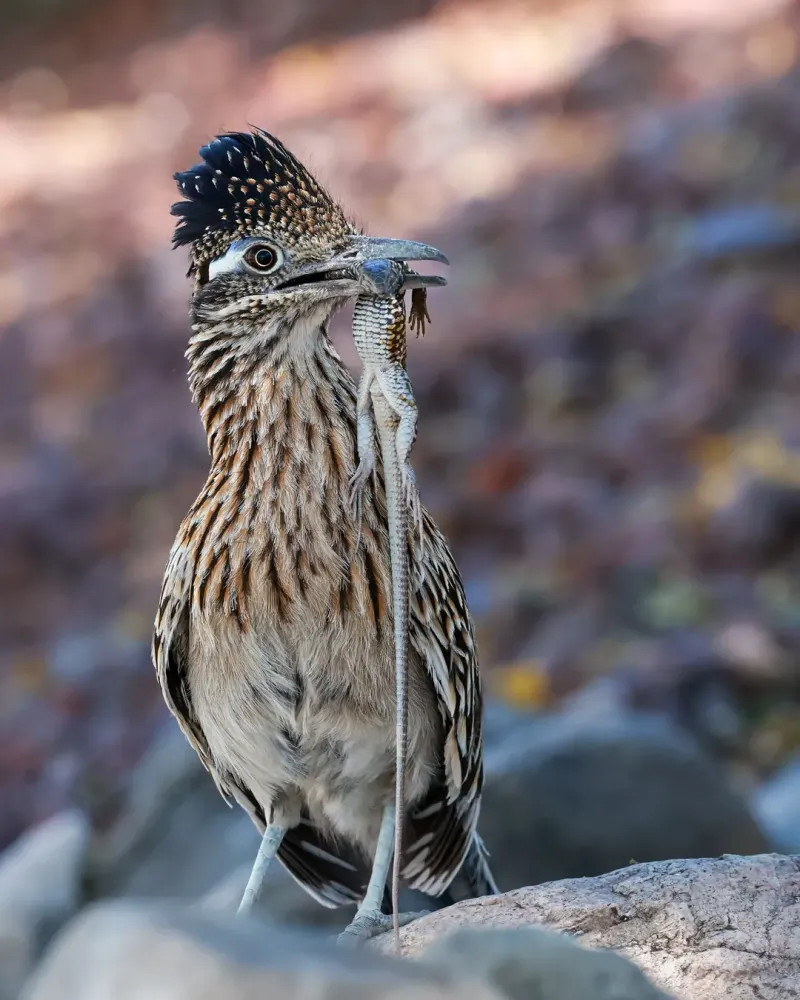
Spring in Texas brings a lot of things: bluebonnets, warmer mornings, and roadrunners on a serious mission.
If you start spotting a roadrunner trotting through your yard with sticks, grasses, or small twigs clamped in its beak, nesting season has officially arrived.
Greater roadrunners typically build their nests in low thorny shrubs, cactus clumps, or dense brush, usually between two and twelve feet off the ground.
Both the male and female participate in nest construction. The male often brings materials as part of courtship, presenting sticks and other items to the female as a display of his dedication.
Texas Parks and Wildlife confirms that nesting season generally runs from spring through early summer across most of the state.
You might not find the actual nest in your yard, since roadrunners tend to place them in well-hidden spots with good cover.
But you might see the bird making repeated trips carrying materials in the direction of a particular shrub, mesquite thicket, or overgrown corner. The same path, traveled multiple times in a morning, usually means a nest is being built nearby.
Seeing this behavior means the roadrunner is not just passing through.
It has decided your yard or the area immediately surrounding it is safe enough to raise a family. Give it space and resist the urge to investigate the nest directly, since disturbance can cause the birds to abandon the site.
8. The Bird Stays Calm Around Boundaries
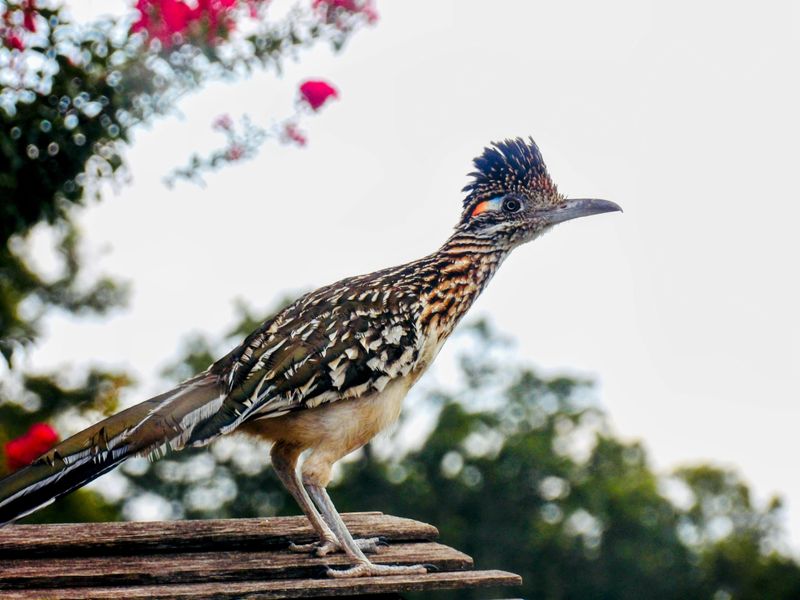
Wild birds that feel threatened run away fast and do not come back.
So when a roadrunner keeps showing up in your yard and barely flinches when you step outside, that calm, unhurried attitude is telling you something important about how it views the space.
A roadrunner that has claimed territory behaves differently than one just passing through.
It moves with confidence along familiar boundaries like fences, walls, and garden edges. It may pause, look in your direction, and then simply continue what it was doing.
That relaxed body language, crest held low, tail moving steadily, stride unhurried, indicates a bird that knows this place and feels secure in it.
Wildlife behaviorists note that territorial birds develop what is sometimes called site familiarity, meaning they learn the layout of their space so well that they can assess threats more accurately.
A roadrunner that has been patrolling your yard for weeks knows your routines almost as well as you do. It has figured out when you come outside, where you tend to stand, and how close is too close.
Respect that boundary it has drawn.
Watching from a window or sitting quietly at a distance gives you the best view without pushing the bird out of its comfort zone.
The golden rule of roadrunner watching is simple: if the bird stops what it is doing and stares at you, you are too close.