What Texas Gardeners Should Do When Tomato Leaves Start Curling
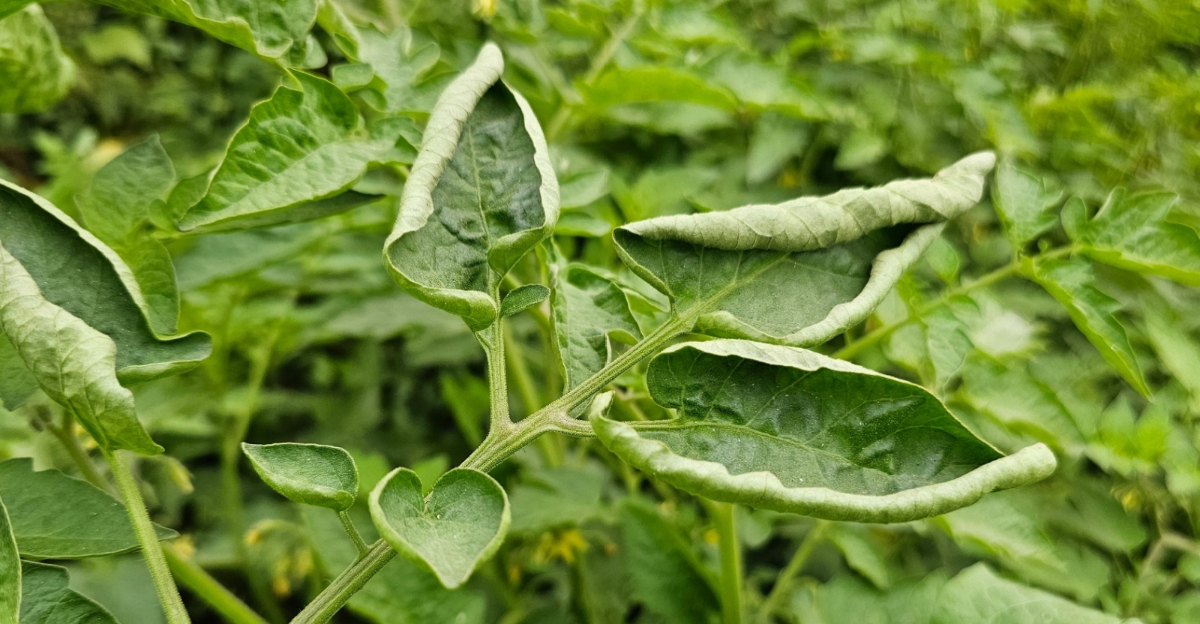
You head out to check on your Texas tomatoes, everything looks promising, and then you notice it. The leaves are curling.
Cue the mild panic.
Curling tomato leaves have a way of sending gardeners straight into problem-solving mode, especially when those plants are loaded with fruit and the summer heat is already making everything feel more urgent than it probably needs to be.
Here’s the thing though: leaf curling is a symptom, not a diagnosis, and jumping to conclusions before figuring out the actual cause can send you in completely the wrong direction.
Texas summers bring intense sun, hot wind, and unpredictable watering conditions that put real pressure on tomato plants in all kinds of ways.
Before you reach for a spray bottle or start making drastic decisions, slow down and take a close look at what those leaves are actually trying to tell you.
1. Check Whether The Leaves Are Rolling Upward Or Twisting
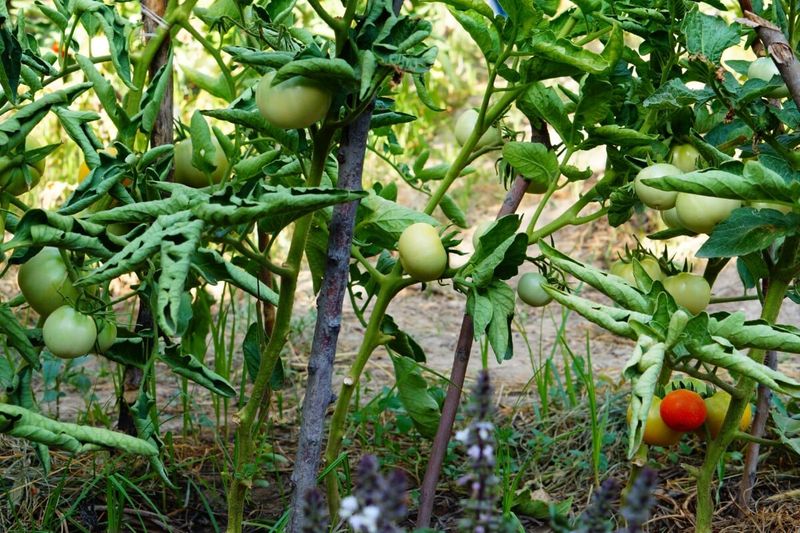
After a long, hot afternoon in a Texas garden, it can be hard to tell whether curled tomato leaves are a sign of trouble or just a plant doing its best to cope with the heat. The direction and shape of the curl actually carries a lot of information.
Leaves that roll upward along their length, forming a gentle tube shape, are often responding to heat, water loss, or bright sun exposure. This type of rolling is commonly called physiological leaf roll, and it tends to show up on lower or middle leaves first.
Leaves that twist, pucker, curl downward, or take on an unusual cupped shape are often pointing to something different. Herbicide injury, viral infection, and broad mite feeding can each cause this kind of distortion.
The texture of the leaf matters too. Smooth, firm leaves that simply roll upward are less concerning than leaves that feel rough, look blistered, or have edges that curl inward unevenly.
Before drawing any conclusions, check a few plants across your garden and note whether the curling is happening on new growth, old growth, or both. Uniform rolling on older leaves after a hot Texas afternoon often clears up by morning.
Twisting or cupping that stays visible at sunrise and spreads to new leaves warrants a closer look. Starting with the shape and direction of the curl gives you a solid foundation for figuring out what step to take next.
2. Look For Heat, Wind, And Dry-Soil Stress
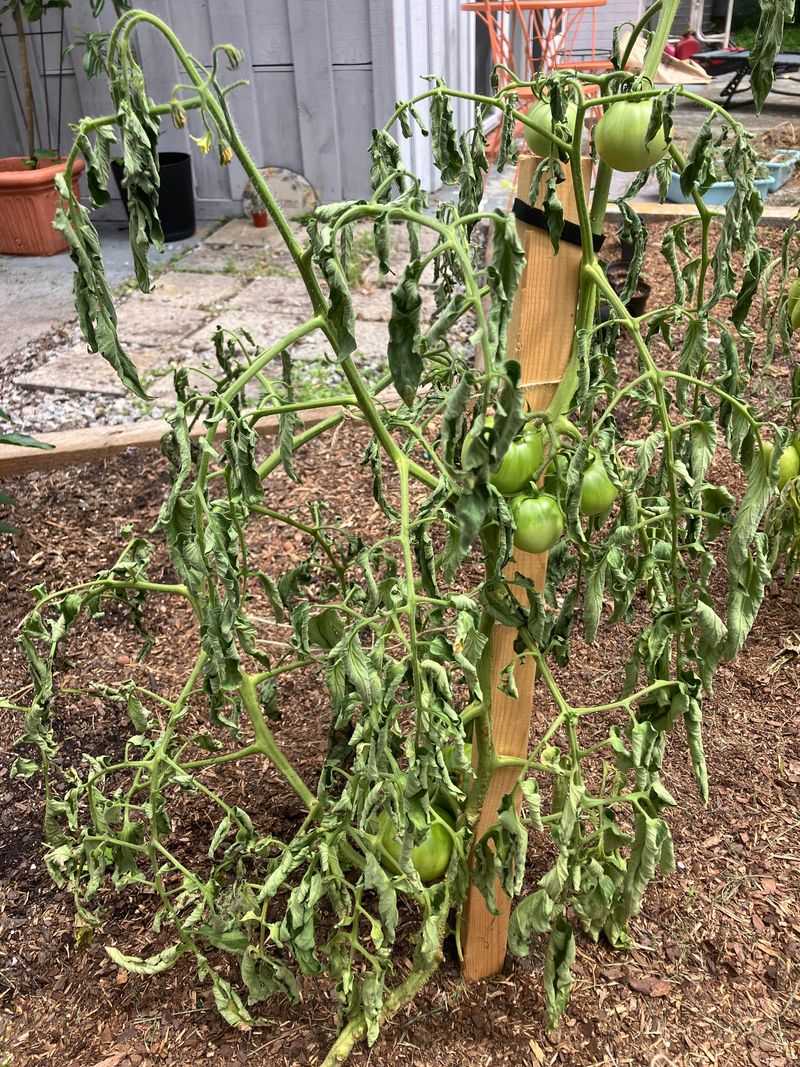
On a blazing Texas afternoon when the thermometer climbs past 95 degrees and a dry south wind kicks up across the garden, tomato leaves will often curl as a natural response.
The plant is essentially trying to reduce the surface area exposed to heat and moisture loss.
This is not a disease. It is a built-in survival response that many tomato varieties use when conditions push them hard.
Soil that dries out unevenly between waterings can trigger the same response. When roots struggle to pull enough water to meet the demand from hot, windy air above ground, the leaves start to curl before wilting becomes visible.
Your Texas Garden Changes Every Week. Your Plan Should Too.
Gardening in Texas changes quickly throughout the season. Every Friday you’ll receive a simple weekly plan showing exactly what to plant, prune, fertilize, harvest, and protect so you never miss the right timing.
Gardeners in Texas often see this pattern during the transition from late spring into early summer, when temperatures rise quickly and soil moisture drops faster than expected.
Checking soil moisture a few inches below the surface is a reliable first step. If the soil feels dry at two to three inches deep and the curling showed up during or after a stretch of hot, windy days, environmental stress is a reasonable explanation.
Container-grown tomatoes and raised beds in Texas tend to dry out faster than in-ground gardens, so they may show stress curling more often.
Watching whether the leaves uncurl by the following morning is one of the simplest ways to confirm that heat and wind, rather than disease or pests, are driving the problem.
3. Water Consistently And Mulch The Root Zone
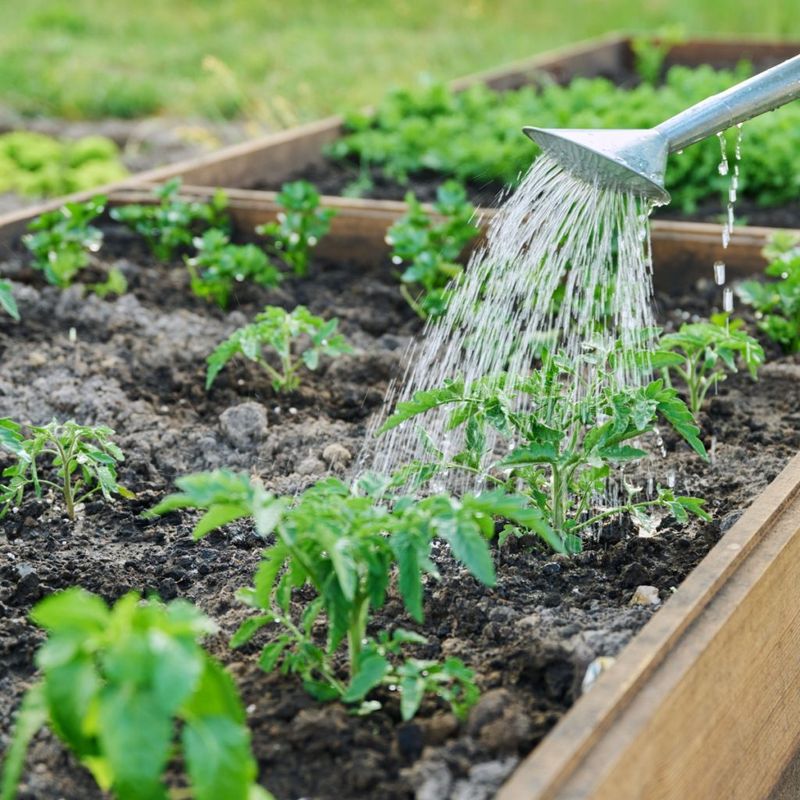
Uneven watering is one of the most common reasons tomato leaves curl in Texas home gardens, and it is also one of the most correctable.
When plants receive a large amount of water after a dry stretch, and then dry out again before the next watering, the roots and leaves go through cycles of stress that show up as curling, cracking fruit, and sluggish growth.
Keeping moisture levels steady matters more than watering on a fixed schedule.
Mulch plays a major role in helping with this. A layer of straw, wood chips, or shredded leaves spread two to four inches deep around the base of each plant slows down evaporation from the soil surface.
In Texas, where summer sun can bake bare soil quickly, mulch can be the difference between a plant that holds steady and one that curls and struggles through every hot spell.
Keeping mulch pulled slightly away from the main stem helps prevent moisture buildup right at the base.
Soaker hoses and drip irrigation work well for delivering water directly to the root zone without wetting the foliage.
Watering deeply and less frequently encourages roots to grow deeper into the soil, which helps plants access moisture more reliably during dry spells.
Shallow, frequent watering tends to keep roots near the surface where they dry out faster. Building a consistent watering routine, backed up by good mulch coverage, gives Texas tomatoes a much steadier environment to grow in.
4. Avoid Heavy Pruning During Hot Weather
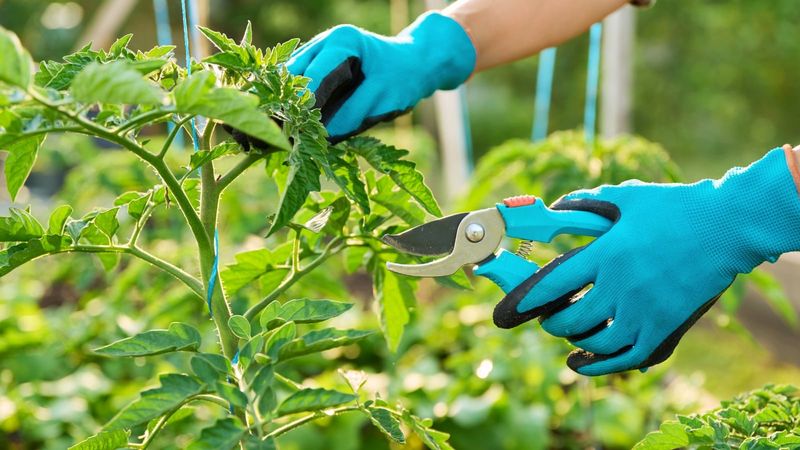
Tomato plants loaded with fruit and growing vigorously through a Texas summer may look like they need a trim, but cutting back large amounts of foliage during hot weather can actually make leaf curling worse. Leaves do more than produce energy.
They also shade the stems and fruit, help regulate the plant’s temperature, and reduce the amount of moisture lost through the surface of the plant. Removing too much at once puts the remaining leaves under sudden, increased stress.
When a significant portion of the canopy is removed during a heat wave, the plant responds by pulling water more aggressively through whatever leaves remain.
This can trigger noticeable curling on the leaves left behind, especially the newer ones near the top of the plant.
Some gardeners mistake this post-pruning curl for a pest problem or disease, when the plant is actually just adjusting to the sudden change in leaf coverage.
Light maintenance pruning, such as removing a few suckers or damaged leaves, is generally fine. The concern is with heavy cutbacks done during the hottest part of the Texas growing season.
If pruning feels necessary, doing it during a cooler stretch of weather or early in the morning gives the plant a better chance to recover without added stress.
Spacing out pruning sessions over several days rather than doing it all at once also reduces the shock to the plant and helps keep curling to a minimum.
5. Inspect For Herbicide Drift Or Contaminated Compost
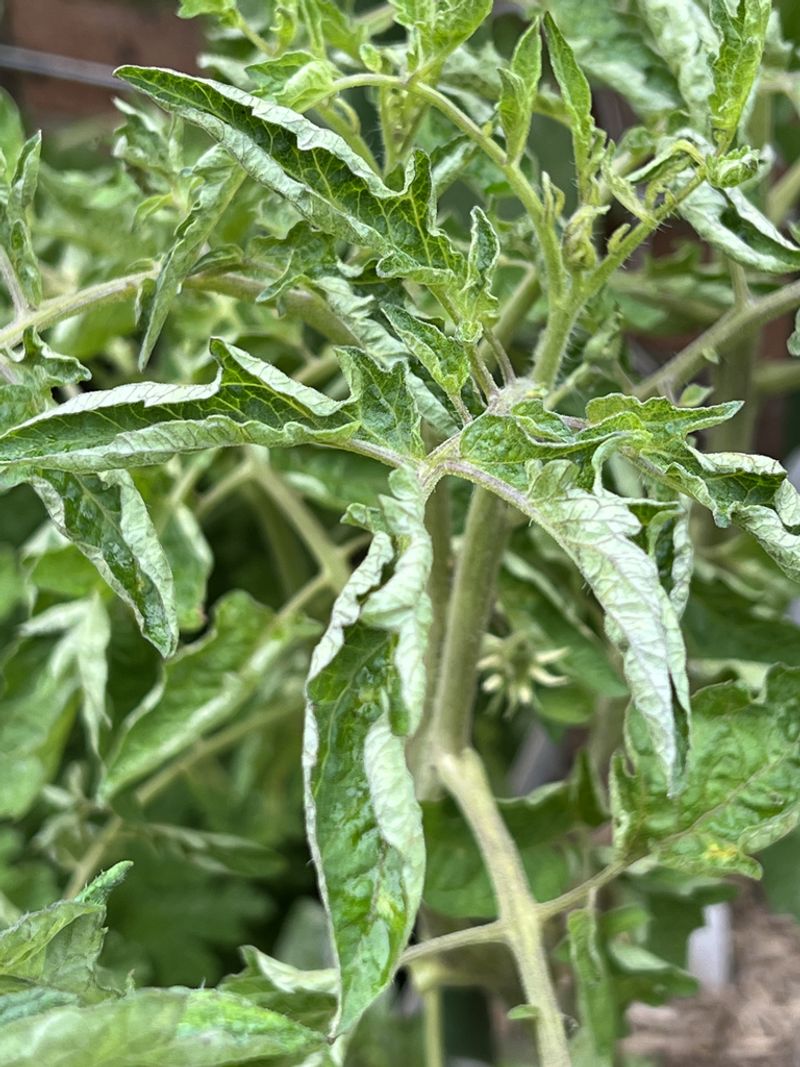
Tomatoes are among the most sensitive vegetables when it comes to herbicide exposure. Even small amounts of certain herbicides drifting through the air on a windy Texas day can cause leaves to cup, twist, curl downward, or take on a strappy, fern-like appearance.
This type of damage can look similar to a virus at first glance, which is why checking the history of nearby herbicide applications matters before assuming the worst.
Broadleaf herbicides used on lawns, pastures, and roadsides are a common source of drift damage in Texas neighborhoods and rural properties.
If a neighbor recently treated a lawn or if a road crew applied herbicides nearby on a windy day, the timing can help connect the dots.
Herbicide injury from drift usually appears within a few days of the application and tends to affect the newest, most actively growing leaves first.
Contaminated compost is another source worth checking.
Compost made from grass clippings treated with persistent broadleaf herbicides can carry residue that affects tomatoes and other garden vegetables months after the herbicide was first applied.
If you added new compost or amended the soil before symptoms appeared, that material may be worth investigating.
Switching to a different compost source and testing by growing a bean or tomato seedling in the suspect material can help confirm or rule out contamination.
Herbicide injury does not spread from plant to plant, which can help separate it from viral causes.
6. Check New Growth For Broad Mites Or Virus Symptoms
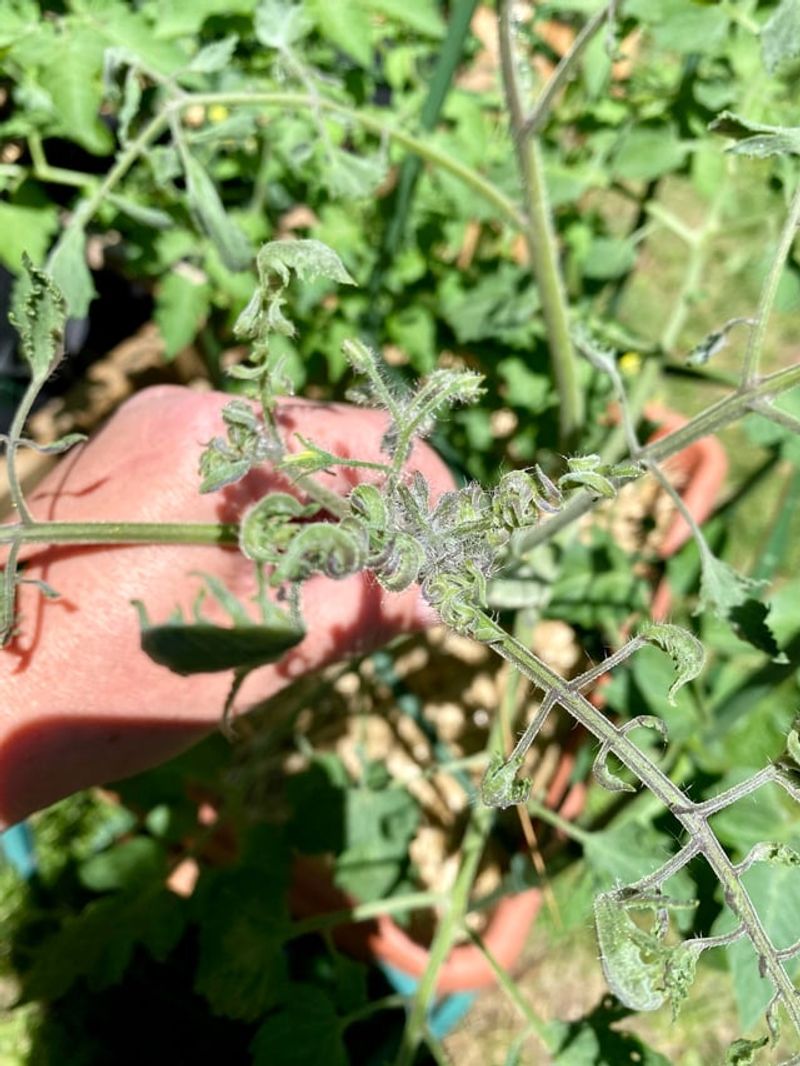
Broad mites are tiny enough that most gardeners cannot see them without a hand lens, but the damage they leave behind on new tomato growth is hard to miss once you know what to look for.
New leaves that emerge looking twisted, bronzed, blistered, or abnormally small are a common sign of broad mite feeding.
The mites tend to concentrate on the newest, most tender growth at the tips of branches, which is why the damage shows up at the top of the plant first.
Texas summers provide warm, humid conditions that some mite populations find favorable, and infestations can develop quickly once established.
Checking new growth with a hand lens, looking for tiny, pale mites and unusual leaf texture, is a practical way to investigate before assuming the cause is something else.
Broad mite damage often looks worse than typical heat stress curling because the leaves are actually distorted at the cellular level rather than simply rolling in response to temperature.
Virus symptoms can appear alongside or independently of mite feeding. Tomato plants infected with certain viruses may show curling, puckering, or cupped new leaves that look similar to broad mite damage at first.
The key difference is that broad mite damage tends to show a bronze or rusty discoloration on the underside of leaves, while viral symptoms are more likely to include color changes like yellowing or mosaic patterns.
Examining both the top and underside of new leaves gives a clearer picture of what might be happening.
7. Look For Yellowing, Stunting, Or Mosaic Patterns
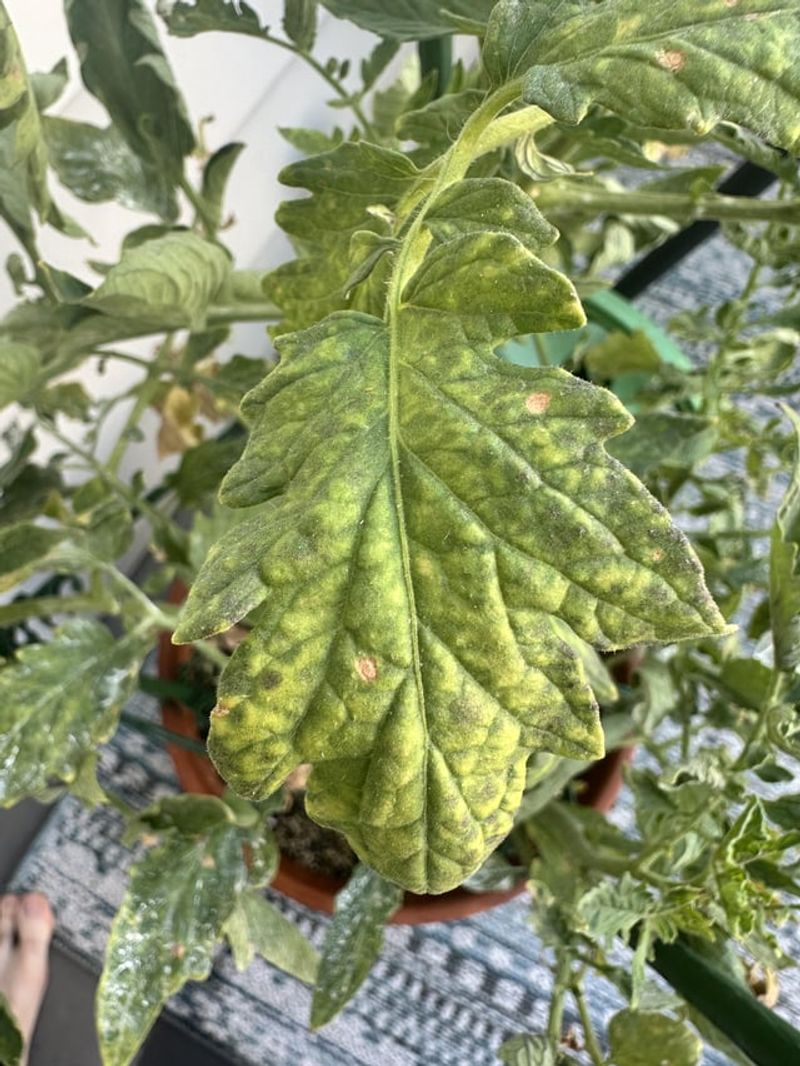
Yellowing that spreads unevenly across a leaf, mixed with patches of darker green in a blotchy or mosaic-like pattern, is one of the clearest visual signals that a tomato plant may be dealing with a viral infection.
Several viruses that affect tomatoes in Texas can cause this combination of symptoms along with leaf curl, stunted growth, and reduced fruit production.
The mosaic pattern itself, where the leaf looks like it has irregular islands of yellow and green, is a useful distinguishing feature.
Stunting is another sign worth watching for.
Plants infected with certain viruses may stop growing at the expected pace, produce smaller-than-normal leaves, or develop a generally compact and unhealthy appearance even when watering and fertilizing are consistent.
When curling shows up alongside stunting and mosaic discoloration at the same time, the combination points more strongly toward a viral cause than toward heat stress or watering issues alone.
Aphids and thrips are among the insects that spread certain tomato viruses in Texas gardens, so managing those pest populations can help reduce the chance of viral spread to healthy nearby plants.
There is no treatment that reverses a viral infection once a plant is affected, but removing heavily infected plants and controlling the insects that carry viruses can help protect the rest of the garden.
Washing hands and tools after handling infected plants also reduces the chance of spreading certain viruses through contact during regular garden maintenance.
8. Protect Future Plants With Better Site And Spray Awareness
Once you have worked through a season of curling tomato leaves and traced the cause back to heat, herbicide exposure, pests, or uneven watering, the experience becomes a useful guide for setting up future plantings more thoughtfully.
Site selection matters more than many Texas gardeners realize at the start.
Placing tomatoes in a spot with good morning sun but some afternoon shade can reduce the intensity of heat stress during the hottest weeks of summer.
Spray awareness is equally worth building into your gardening routine.
Knowing when neighbors plan to treat their lawns, staying informed about roadside herbicide schedules in your area, and avoiding the use of any herbicide products near your vegetable garden on windy days can significantly reduce the chance of drift damage.
Even products labeled as safe for use near gardens can cause problems if conditions carry them into the wrong area.
Choosing tomato varieties known to handle Texas heat with some resilience, starting plants at the right time for your region, and rotating where you plant each season to reduce soil-borne issues all contribute to stronger results over time.
Keeping a simple garden journal to track symptoms and timing adds another layer of useful information that pays off across multiple growing seasons.
No single step eliminates every risk, but combining good site planning, consistent watering habits, mulch, and thoughtful spray awareness builds a much stronger garden environment overall.
Together those habits give tomato plants a noticeably better chance of staying healthy through the long Texas growing season.