Florida Vines That Climb Through Summer Without Taking Over The Yard
Florida summers sort out the vines worth planting from the ones that end up on the ground by August.
The heat rolls in hard, the humidity sticks around, and most plants are struggling by July while the wrong vine has already swallowed your fence and started eyeing the neighbor’s yard.
But the right climbing vine can thrive through all of that.
Florida gardeners have more native and well-behaved vine options than many people realize, and the best ones do something genuinely impressive: they bloom through the hottest months, feed wildlife the whole time, and still leave you with a fence rather than a jungle.
The trick is knowing which vines play nicely with Florida’s climate and which ones will make you regret everything by October.
Eight vines on this list bring color, wildlife value, and summer toughness to Florida gardens without becoming a full-time project to manage.
Some attract hummingbirds. Some feed butterfly caterpillars. One produces blue flowers so rare in Florida gardens that people stop and ask what it is.
Ready to find out which one belongs in your yard?
1. Coral Honeysuckle Stays Polite In Heat
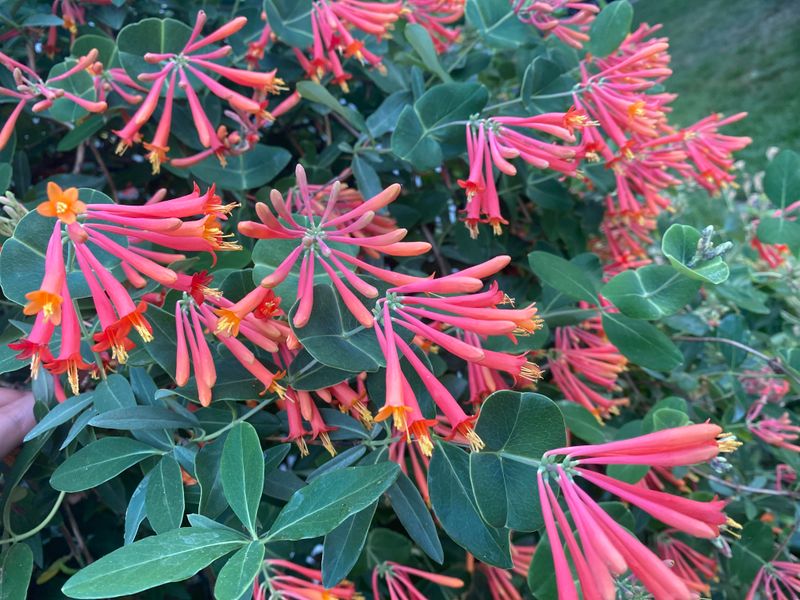
Hummingbirds practically throw a party every time coral honeysuckle blooms.
This native vine, known scientifically as Lonicera sempervirens, is one of the most rewarding climbers you can grow in Florida. Unlike its invasive Japanese cousin, coral honeysuckle stays manageable and well-behaved even through the most brutal summer heat.
The flowers are long, tubular, and blazing red-orange, making them irresistible to ruby-throated hummingbirds and several species of native bees.
Blooms can show up from spring through fall, which gives your garden a steady pop of color for months. Even when it is not flowering, the semi-evergreen foliage keeps fences and trellises looking full and lush through the seasons.
Coral honeysuckle grows well in full sun to partial shade and handles Florida’s sandy soils without much fuss.
It prefers some support, like a trellis, fence, or arbor, and will twine its way up without digging into wood or mortar the way aggressive vines do. That makes it much easier to manage and remove if ever needed.
Pruning once or twice a year keeps it tidy and encourages fresh growth.
It is drought-tolerant once established, which is a significant bonus for Florida gardeners who do not want to babysit their irrigation system all summer long.
Plant it in a spot with decent drainage, give it something to climb, and this vine will reward you season after season with very little drama.
2. Carolina Jessamine Brings Evergreen Coverage
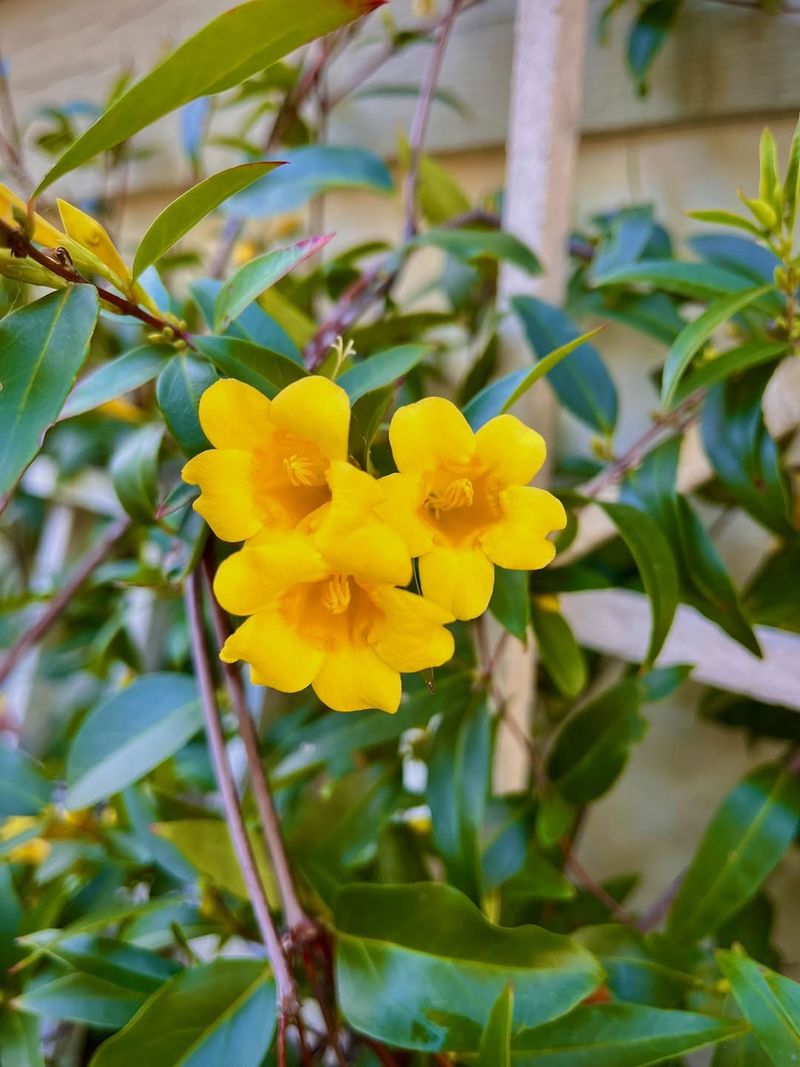
Some vines go bare and boring when summer shifts into fall, but Carolina jessamine is not one of them.
Gelsemium sempervirens holds its glossy green leaves year-round, making it one of the best options for gardeners who want consistent fence coverage without seasonal gaps.
The cheerful yellow flowers that arrive in late winter and early spring are a bonus that feels almost too good to be true.
This vine handles Florida heat with ease.
It grows in full sun or partial shade, tolerates a range of soil types, and once established, it does not need much water to stay healthy.
Your Florida Garden Changes Every Week. Your Plan Should Too.
Gardening in Florida changes quickly throughout the season. Every Friday you’ll receive a simple weekly plan showing exactly what to plant, prune, fertilize, harvest, and protect so you never miss the right timing.
That kind of low-demand personality makes it a practical pick for busy homeowners who still want a beautiful yard.
One thing every gardener needs to know before planting: every part of Carolina jessamine is toxic if consumed.
That means placing it thoughtfully matters. Fences away from play areas, high trellises, or spots where children and pets do not roam are the smarter choices. This is not a vine to tuck beside a vegetable garden or a dog run.
Growth rate is moderate, and regular pruning after the bloom cycle keeps it from getting too shaggy.
It is listed as a reliable native ornamental for Florida landscapes. With the right placement and a little seasonal trimming, Carolina jessamine delivers evergreen elegance without turning into a maintenance nightmare through the long Florida summer.
3. Maypop Passionflower Feeds Butterflies
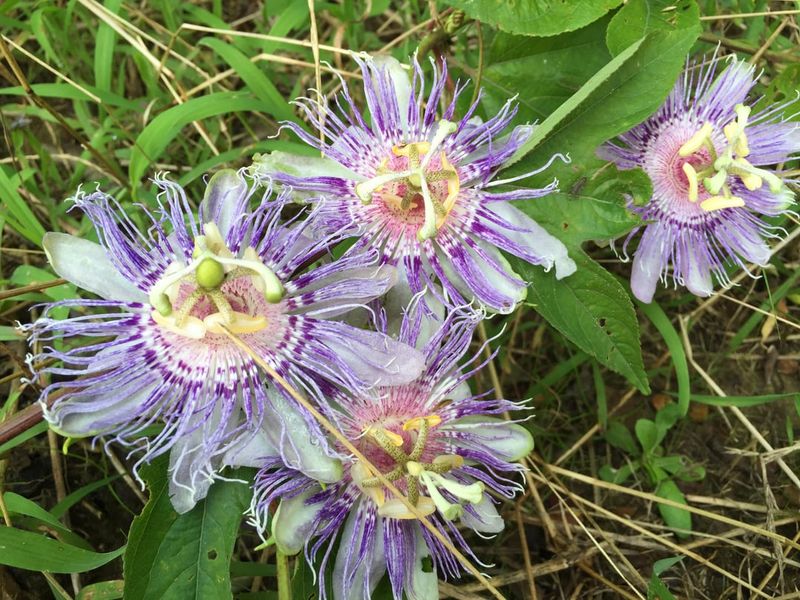
Walk past a maypop vine in full bloom and you might actually stop and stare.
The flowers of Passiflora incarnata are wildly ornate, with layered purple and white petals surrounding a crown of fringed filaments that looks like something from a science fiction film.
But beyond the looks, this native vine does serious ecological work in Florida gardens.
Maypop is the host plant for both Gulf fritillary and zebra longwing butterflies, two of Florida’s most beloved native species.
Caterpillars munch on the leaves, which might look alarming at first, but the plant bounces back quickly. Watching those caterpillars transform into brilliant orange or striped butterflies makes every chewed leaf completely worth it.
This vine spreads through underground runners, which means it can pop up a few feet away from where you originally planted it.
That spreading habit is worth planning for. Give it a dedicated spot with room to roam, or install a simple root barrier to keep it contained. A sturdy fence or trellis gives it the vertical support it craves.
Maypop thrives in full sun and well-drained soil across most of Florida.
It is well-adapted to Florida’s summer conditions and supports a broader range of native wildlife than most ornamental vines on the market.
It does need occasional trimming to stay where you want it, but the butterfly activity it brings to your yard makes that small effort completely worthwhile.
4. Crossvine Climbs With Summer Strength
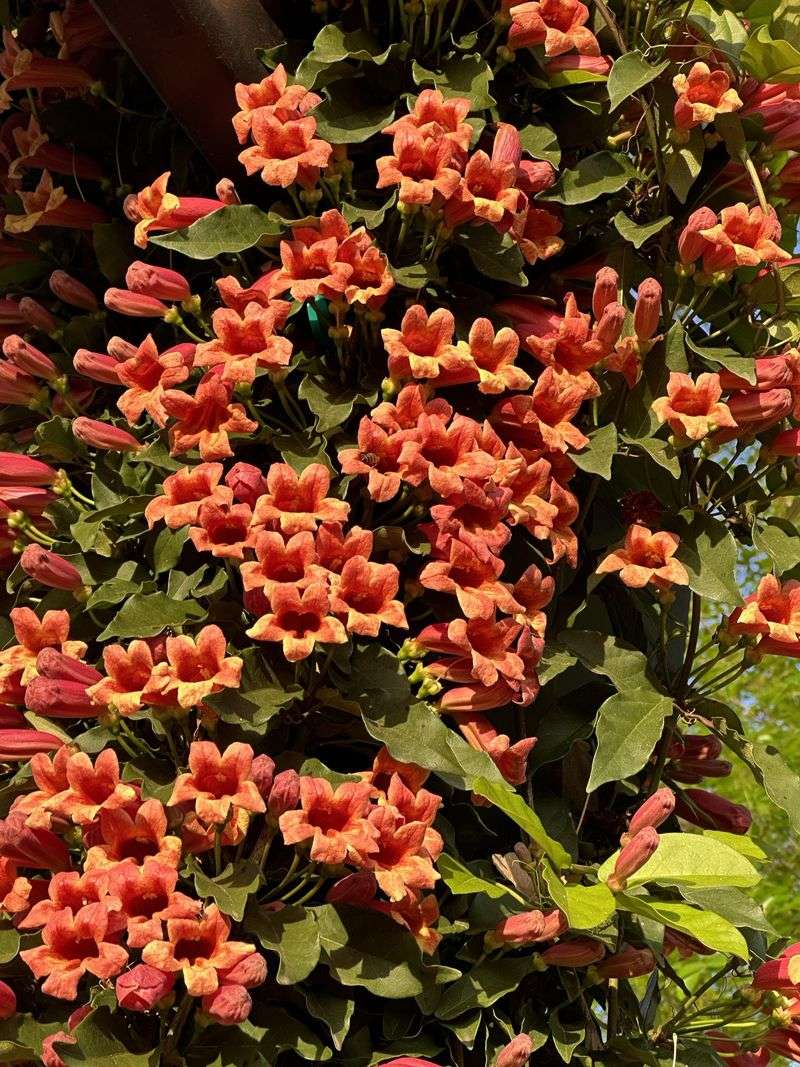
Not every vine can handle a Florida summer on a south-facing fence, but crossvine was practically built for it.
Bignonia capreolata is a native climber that grips surfaces with tenacious little adhesive discs, letting it scale fences, arbors, and brick walls without needing ties or training.
It is tough, reliable, and surprisingly attractive for a plant that does not ask for much in return.
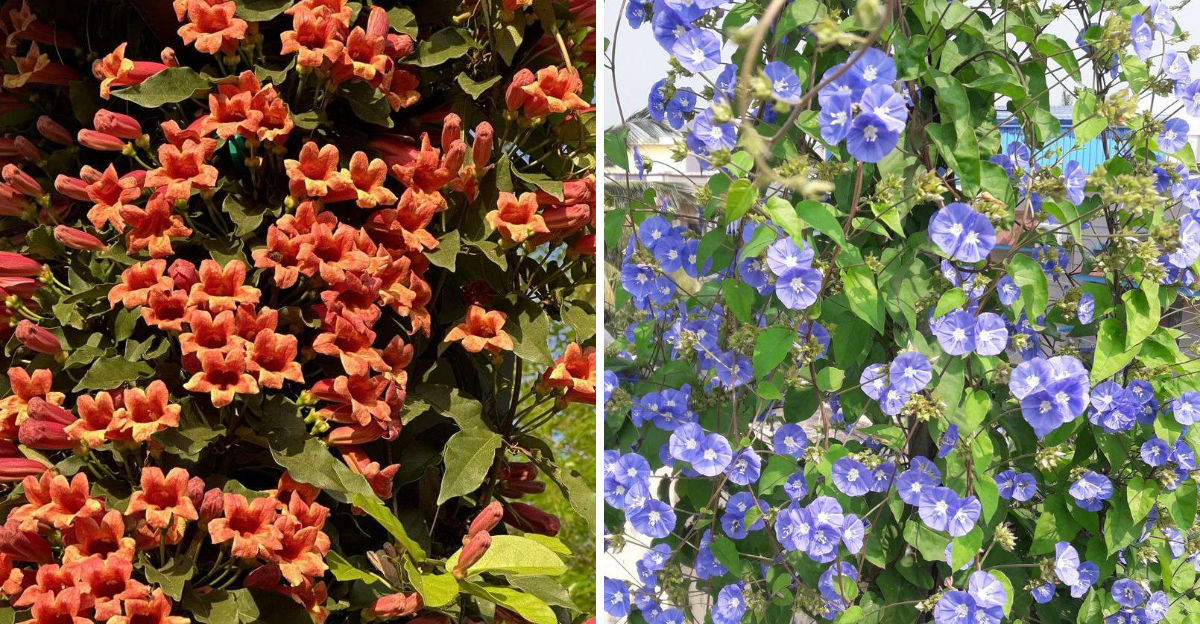
The trumpet-shaped blooms arrive in spring and range from burnt orange to deep red with yellow throats, drawing in hummingbirds and native bees with impressive efficiency.
Even after the bloom season fades, the semi-evergreen foliage keeps things looking full. In cooler weather, the leaves often shift to a reddish-purple tone that adds unexpected seasonal interest to a fence or wall.
Crossvine gets its name from the cross-shaped pattern visible when you cut the stem crosswise.
That small botanical detail has made it a conversation piece for gardeners who appreciate plants with a little personality.
It grows vigorously but is not nearly as aggressive as some non-native climbers, making it a much smarter choice for Florida yards with limited space.
Full sun to partial shade works well, and established plants handle drought without complaint.
It is recommended as a sturdy native option for covering large structures like pergolas and privacy fences.
Prune it back after flowering to keep the growth tidy and encourage denser coverage, and this vine will not disappoint.
5. Corkystem Passionflower Keeps Things Lighter
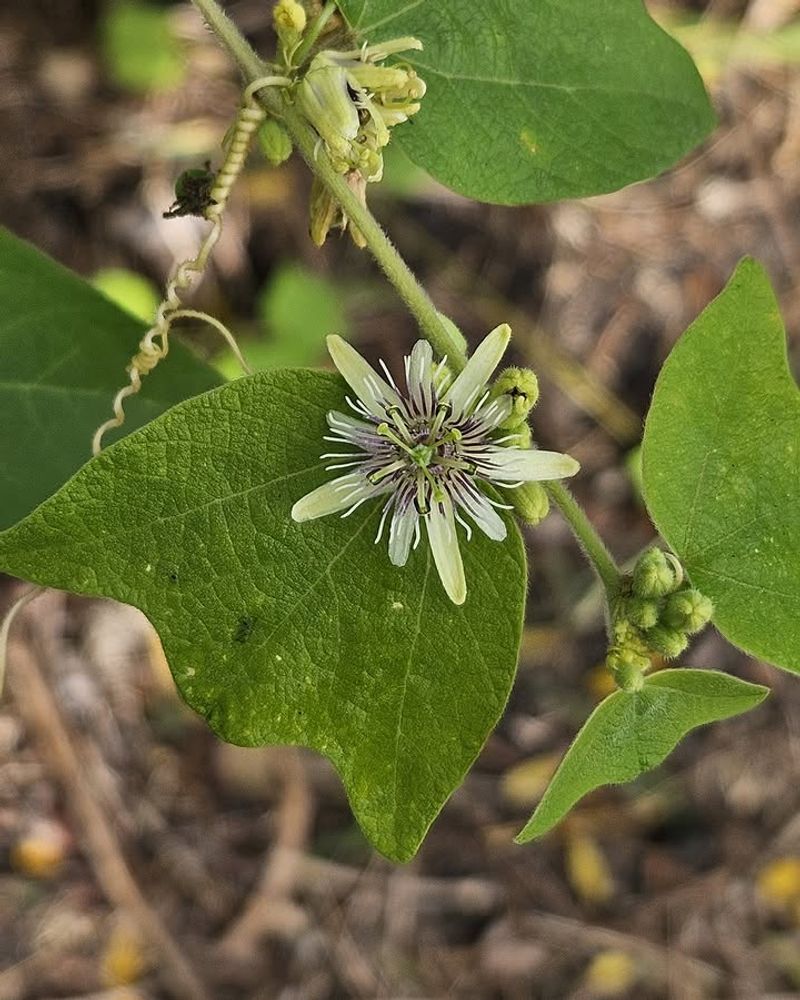
Not every gardener wants a vine that commands attention from across the street.
Sometimes a softer, more subtle climber is exactly what a space needs, and that is where corkystem passionflower earns its spot.
Passiflora suberosa is a native Florida vine with a quieter personality than its showier passionflower cousins, but its ecological value is anything but understated.
The flowers are small and greenish-yellow, easy to overlook unless you know what to look for.
What matters more is what those flowers and leaves attract.
Corkystem passionflower serves as a host plant for Gulf fritillary, zebra longwing, and Julia heliconian butterflies, making it a powerhouse for butterfly gardeners who want to support multiple species with one plant.
The vine stays relatively compact compared to maypop, which makes it a better fit for smaller trellises, chain-link fences, or spots where you want coverage without bulk.
Its corky, textured stems give it an interesting look up close, even when it is not in bloom. Small dark berries follow the flowers and attract birds, adding another layer of wildlife value that shows up long after the bloom season ends.
Corkystem passionflower grows in full sun to partial shade and tolerates a range of Florida soil conditions.
It does spread, so occasional trimming keeps it from wandering too far.
For gardeners who want butterfly magic without a big, bold vine taking over the fence, this one is a smart, understated pick that overdelivers.
6. Skyblue Clustervine Softens Hot Fences
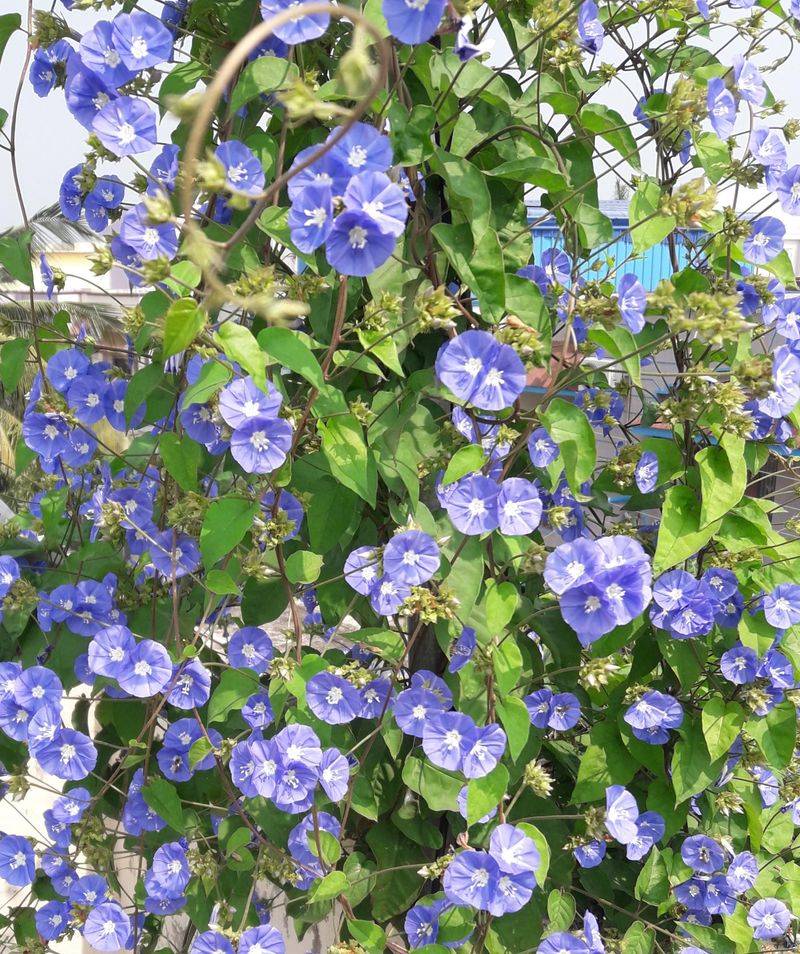
Blue flowers are genuinely rare in the Florida garden world, which makes skyblue clustervine feel like a hidden gem worth talking about.
Jacquemontia pentanthos produces clusters of small, vivid sky-blue blooms that stand out beautifully against green foliage and blend naturally with the bright Florida sky.
For gardeners tired of the usual orange-and-red palette, this vine is a refreshing change of pace.
Native to South Florida and the Caribbean, skyblue clustervine thrives in warm, sunny conditions and handles coastal heat without flinching.
It grows well along chain-link fences, low walls, and trellises, providing soft, airy coverage rather than the dense wall of green that some larger vines create.
That lighter look works especially well in smaller yards where you want screening without feeling closed in.
The blooms attract native bees and other pollinators, which adds ecological value beyond the ornamental appeal.
Flowers appear reliably through summer and into fall, giving you months of that distinctive blue color when most other plants are just trying to survive the heat. It is not a heavy grower, which means you get coverage without constant cutting back.
Skyblue clustervine prefers full sun and well-drained soil. It is more cold-sensitive than some other vines on this list, so it performs best in Central and South Florida.
For a warm fence that needs a soft, colorful touch without aggressive growth, this vine brings exactly the right energy, and a blue fence is always going to turn heads.
7. American Wisteria Gives A Gentler Show
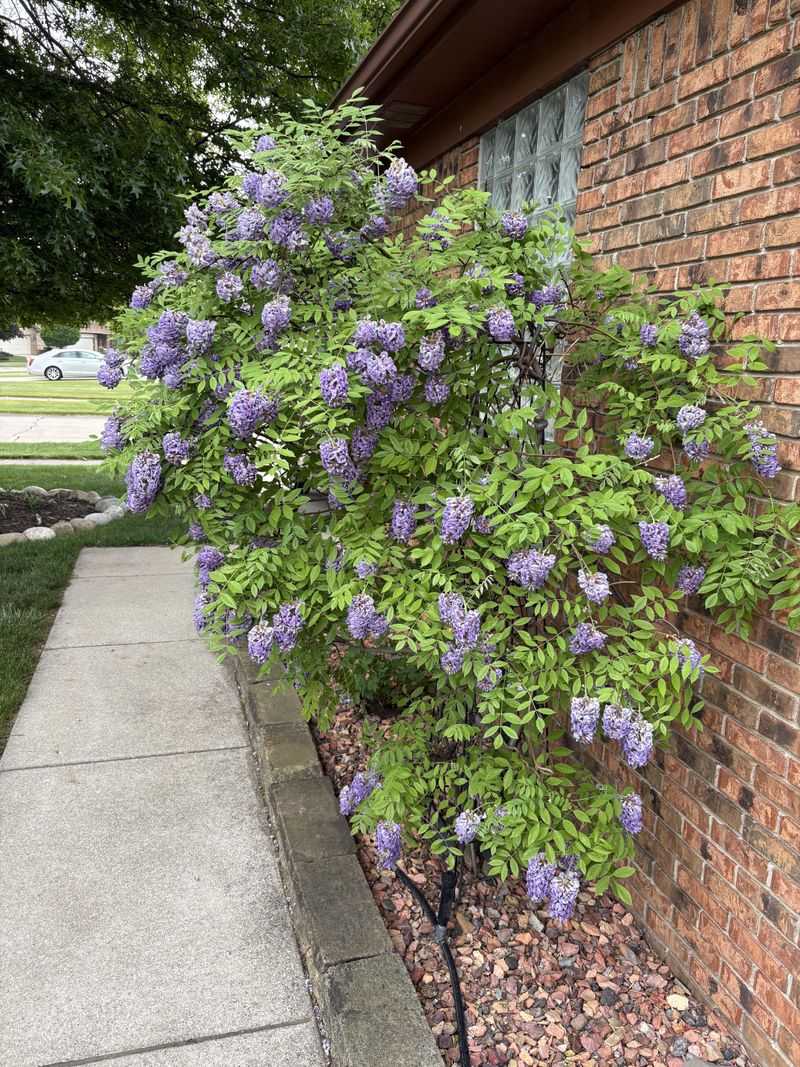
Wisteria has a reputation problem, and honestly, it is earned.
Asian wisteria species have escaped cultivation across the South and become serious landscape bullies, strangling trees and engulfing structures with alarming speed.
But American wisteria, Wisteria frutescens, plays by completely different rules, and Florida gardeners who want that romantic cascading bloom can have it without the regret.
Native to the southeastern United States, American wisteria produces gorgeous clusters of fragrant lavender to purple flowers in spring, with occasional repeat blooms through summer.
The clusters are shorter than Asian varieties, but the effect is still stunning. Hummingbirds and native bees visit the flowers regularly, adding wildlife activity to the visual appeal throughout the bloom season.
Growth is vigorous but manageable with regular pruning.
Unlike its invasive relatives, American wisteria will not climb into your oak tree and pull it apart. It does need a strong support structure, though. Pergolas, heavy-duty trellises, and sturdy arbors handle its weight far better than lightweight wire fencing.
Full sun brings the best bloom production, and well-drained soil keeps the roots happy.
Prune after flowering and again in late summer to keep the shape controlled and encourage next season’s blooms.
American wisteria is recommended over Asian species for Florida gardens specifically because of its more restrained growth.
For a vine that delivers old-fashioned floral drama without ecological consequences, American wisteria is the sensible choice, and your fence will thank you for not planting the other kind.
8. Yellow Passionflower Fits Smaller Spaces
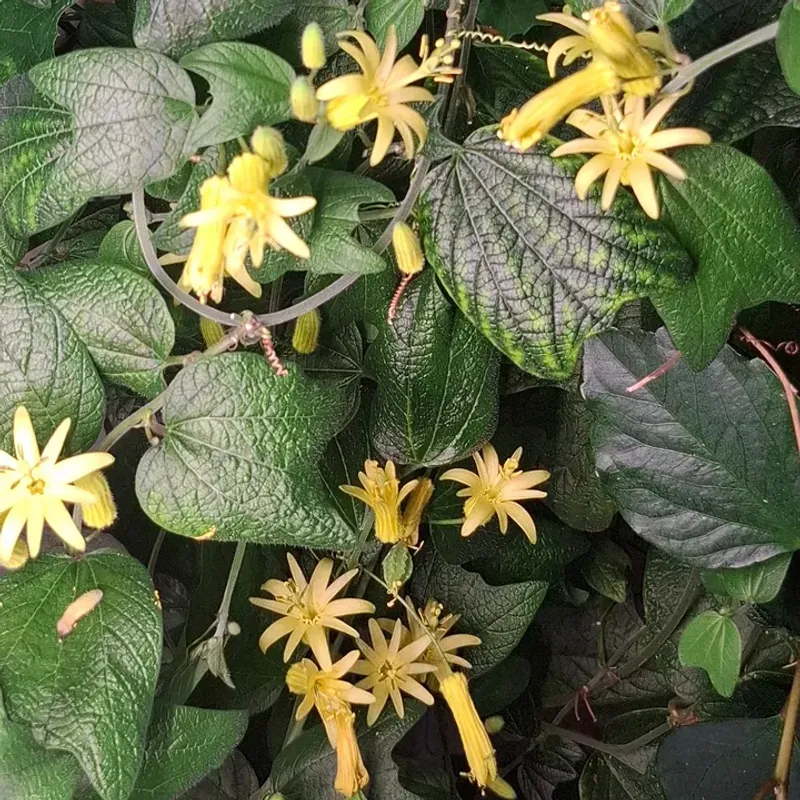
Gardening in a smaller yard often means making trade-offs, but yellow passionflower proves you do not have to sacrifice wildlife value just because your space is limited.
Passiflora lutea is the most delicate-looking member of the passionflower family found in Florida, with small pale yellow-green blooms that have a quiet, almost understated elegance compared to the showstopper purple of maypop.
The vine stays relatively slim and lightweight, making it a natural fit for small trellises, mailbox posts, porch railings, or compact fence sections where a heavier vine would feel overwhelming.
Despite its petite stature, it still serves as a host plant for Gulf fritillary and zebra longwing butterflies, delivering the same caterpillar-to-butterfly magic that larger passionflowers provide.
Yellow passionflower tolerates partial shade better than most other passionflower species, which opens up planting spots that full-sun vines simply cannot use.
Shaded fence corners, spots under tree canopies, and north-facing trellises become viable options. That shade tolerance makes it one of the more flexible native vines for Florida homeowners working with tricky light conditions.
It is native to much of Florida and well-suited to the state’s climate and soils.
It grows at a moderate pace and rarely needs aggressive pruning to stay in check. Small dark berries follow the flowers and attract songbirds through fall.
For gardeners who want butterfly support, bird activity, and trellis coverage in a tighter space, yellow passionflower fits the bill without ever asking for too much room.