What Happens To Your Summer Insect Problem When Florida Anoles Move In
Florida summers bring heat, humidity, and a whole lot of bugs.
Mosquitoes, gnats, moths, and roaches seem to appear out of nowhere once the temperatures climb, and many homeowners respond by reaching for a spray bottle or calling a pest service.
But something else is already working on the problem, and most people walk right past it every morning.
Those small lizards darting across your patio, bobbing their heads on the fence rail, and pressing flat against the wall near your porch light at night are not just decorating your yard.
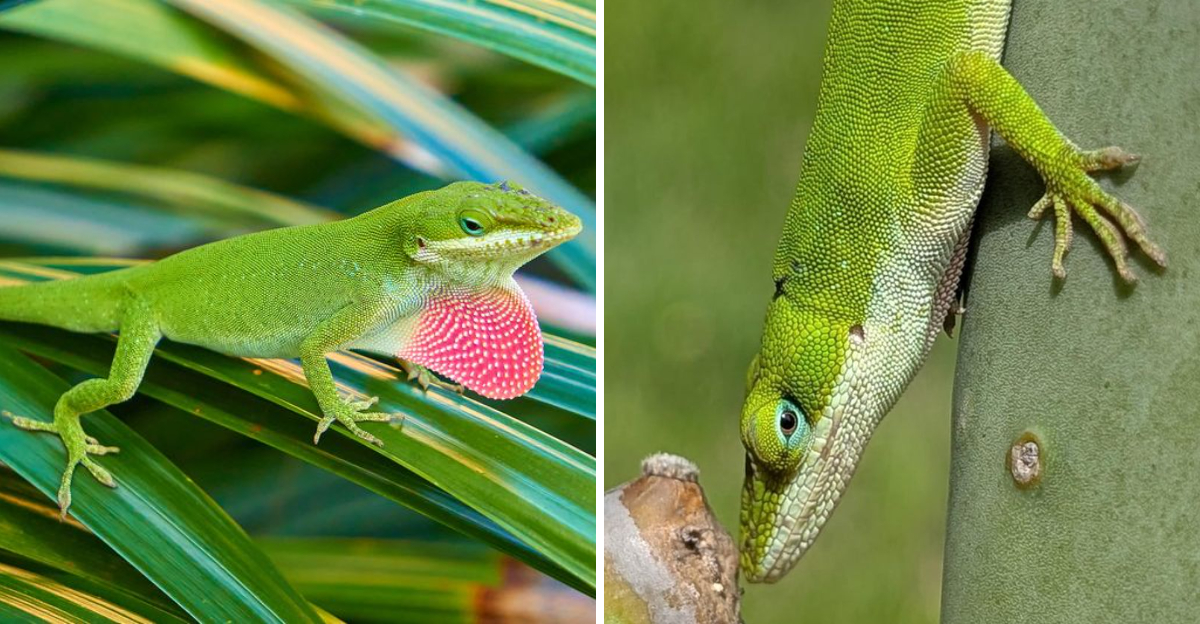
Florida anoles, both the native green anole and the very common brown anole, are running a natural pest patrol that operates every single day without any help from you.
Understanding what they actually do, which bugs they target, and what your yard needs to keep them around changes how you think about sharing outdoor space with them entirely.
Eight things happen to your summer insect problem when Florida anoles move in, and most of them are considerably more useful than they look from the porch.
1. Tiny Hunters Start Patrolling The Patio
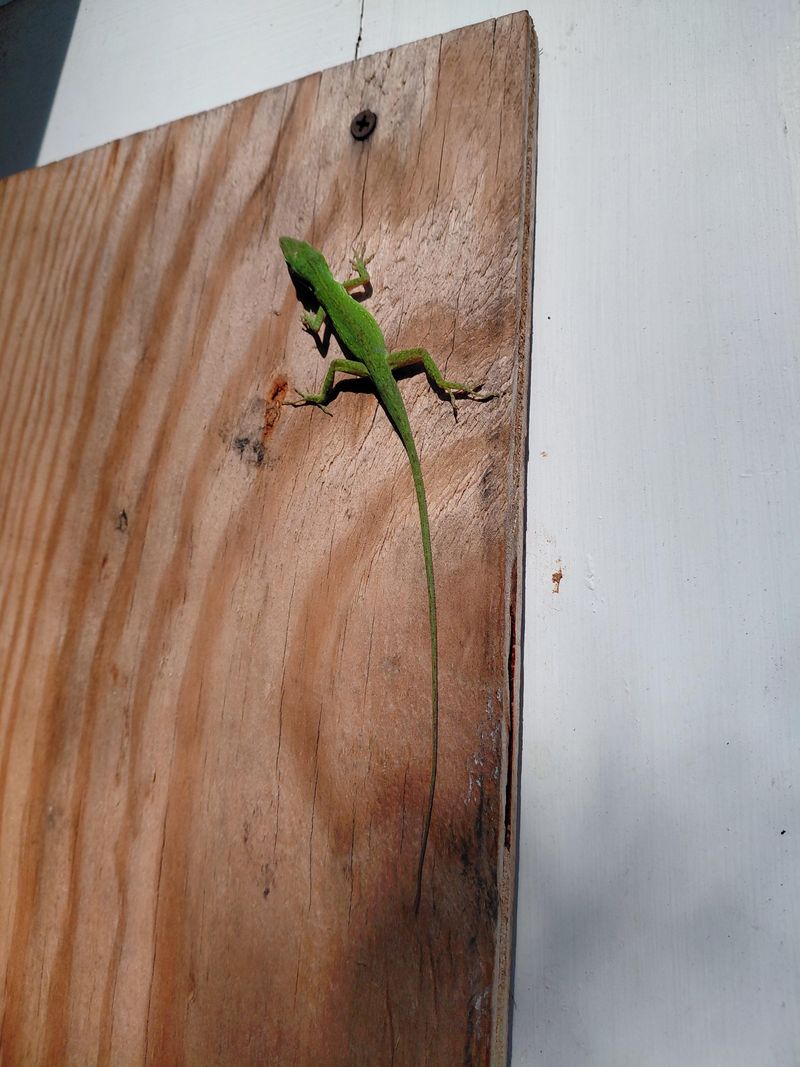
Watch a patio long enough on a warm Florida morning and you will spot it.
A small lizard freezing mid-step, eyes locked on something moving near the garden edge. Anoles are visual hunters.
They scan surfaces constantly, looking for movement, and a patio offers exactly the kind of open ground where small insects become easy targets.
Brown anoles especially love low surfaces like pavers, concrete edges, and fence rails.
They hold still, wait, then sprint. Green anoles tend to work slightly higher up, hunting along walls, wooden rails, and the sides of planter boxes. Together, they cover a surprising range of territory across a single yard.
What they eat on the patio includes small beetles, flies, spiders, and any soft-bodied insect that wanders into their line of sight.
According to University of Florida IFAS Extension, anoles are generalist predators, meaning they go after whatever small invertebrate crosses their path.
They will not clear every bug from your patio, but their daily presence adds steady, natural pressure on the insect population.
The more comfortable they feel in your yard, the more ground they cover, and the more insects they encounter along the way. A self-refueling pest patrol that runs entirely on sunshine is not a bad deal.
2. Small Flies Become Easy Targets
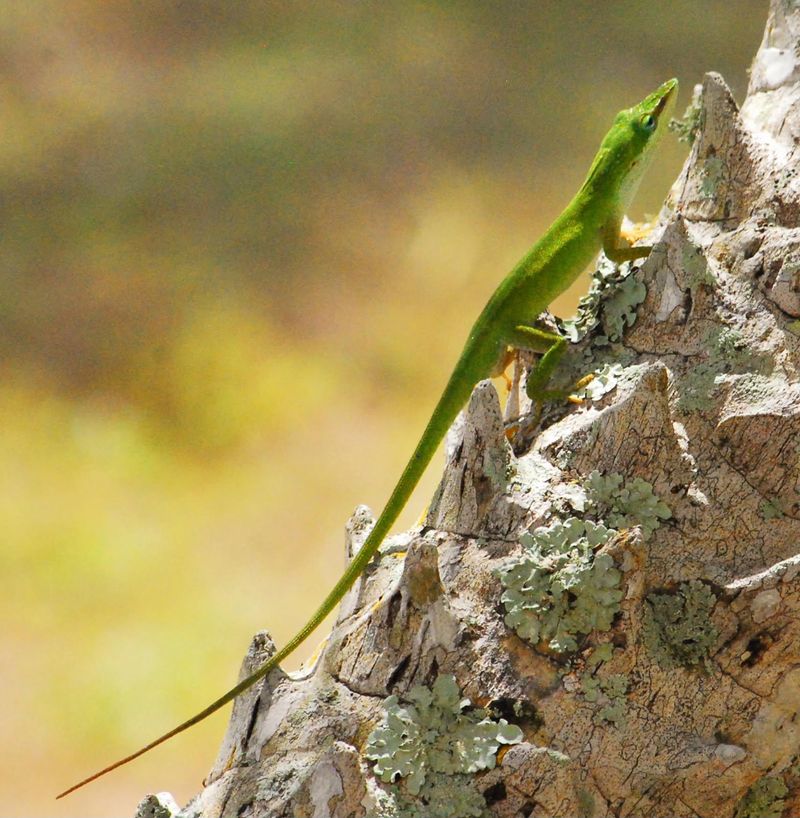
Gnats hovering near potted plants, fruit flies drifting around the compost bin, tiny midges floating in slow circles near the porch screen.
These small flying insects are annoying to people, but to an anole, they look like lunch. Small flies are among the most accessible prey for anoles because they move predictably and tend to land on surfaces where lizards already patrol.
Anoles do not chase insects through the air the way a bird might.
Instead, they wait near spots where flies congregate, then snatch them the moment they land. Garden edges, the sides of containers, and the undersides of leaves are all prime locations.
Your Florida Garden Changes Every Week. Your Plan Should Too.
Gardening in Florida changes quickly throughout the season. Every Friday you’ll receive a simple weekly plan showing exactly what to plant, prune, fertilize, harvest, and protect so you never miss the right timing.
Brown anoles, which are extremely common throughout Florida, are especially active in these lower zones where fungus gnats and small flies tend to cluster around moist soil.
Research from the Florida Museum notes that anoles consume a wide variety of arthropods, and small flies fit comfortably into their diet.
While a single anole will not resolve a serious gnat infestation, a yard with several active anoles will see regular, ongoing predation on these insects throughout the day.
Over a full Florida summer, that steady hunting adds up.
Pair anole activity with good cultural practices like avoiding overwatering and removing decaying organic matter, and small fly pressure in the garden can become noticeably more manageable without reaching for a spray bottle.
3. Moths Get Picked Off At Night
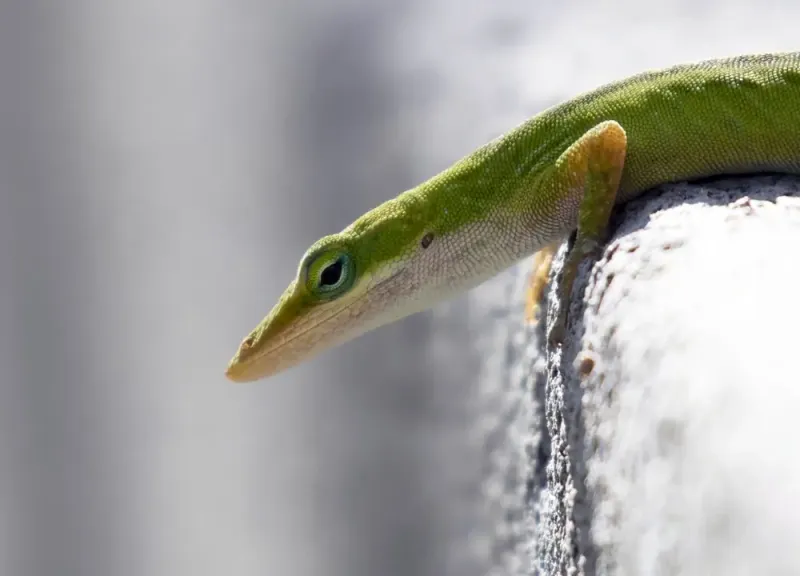
Porch lights in Florida on a summer night are basically an all-you-can-eat situation for anything that hunts insects.
Moths, small beetles, and dozens of other flying bugs spiral around the glow, bump into the wall, and land just long enough to become a meal.
Anoles have figured this out, and many homeowners notice their lizards hanging near lights well into the evening hours.
This behavior is more common with brown anoles, which are active during the day but will opportunistically hunt in lit areas after dark.
Green anoles are more strictly diurnal, meaning they prefer daytime activity, but they sometimes show up near lights in the early evening before retreating to sleep.
Both species benefit from the way artificial light concentrates insects in one predictable spot.
Moths can be garden pests in their caterpillar stage, so anoles that snag adult moths near porch lights are providing a small but real benefit to nearby plants.
Every adult moth that does not complete its lifecycle means fewer eggs laid on your tomatoes or ornamentals.
If you want to encourage this behavior, keep lights on structures near shrubs or garden beds where anoles already feel comfortable.
Reducing broad-spectrum pesticide use in the area also keeps the anole population healthy enough to take advantage of the evening insect activity that lights create.
4. Roaches Lose Some Hiding Confidence
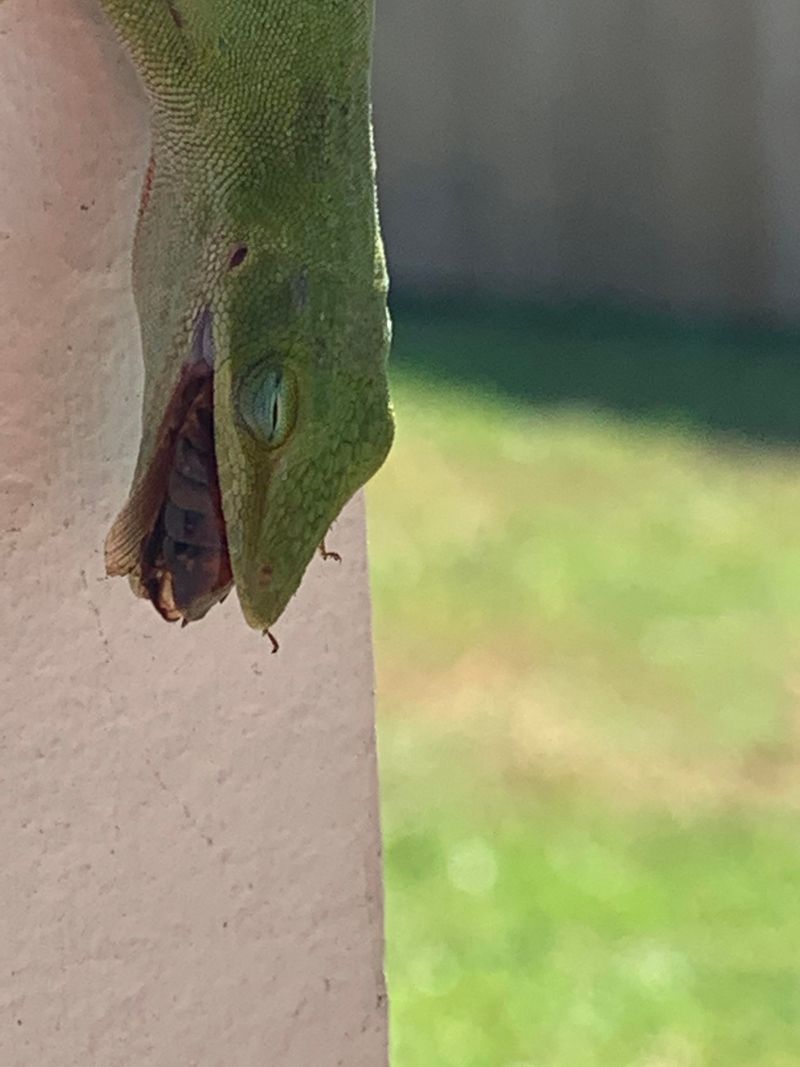
Nobody wants to talk about roaches, but in Florida, they are part of summer life.
Small roaches, especially young ones that have not yet grown large, occasionally end up on the menu when an anole spots them in the open.
This is one of those claims worth handling carefully, because anoles are not roach specialists and they will not address a roach problem on their own.
What the science actually supports is that anoles are opportunistic feeders.
If a small roach crosses a surface where an anole is actively hunting, there is a reasonable chance it gets eaten.
University of Florida IFAS Extension confirms that anoles consume a wide range of small invertebrates, and roaches fall within that range when the size is right. Large adult roaches are generally too big for most anoles to handle.
Think of this as a mild deterrent rather than a solution.
Anoles patrolling garden beds, fence lines, and shaded areas near the house create an environment where young roaches face at least some natural pressure. That is genuinely useful, even if it falls far short of actual roach control.
For real roach management, you still need to remove harborage, seal entry points, and address moisture problems.
Anoles are a helpful layer in the overall picture, but they work best as one part of a larger, sensible approach to keeping pests from getting too comfortable around your home.
5. Ant Trails Get Extra Pressure
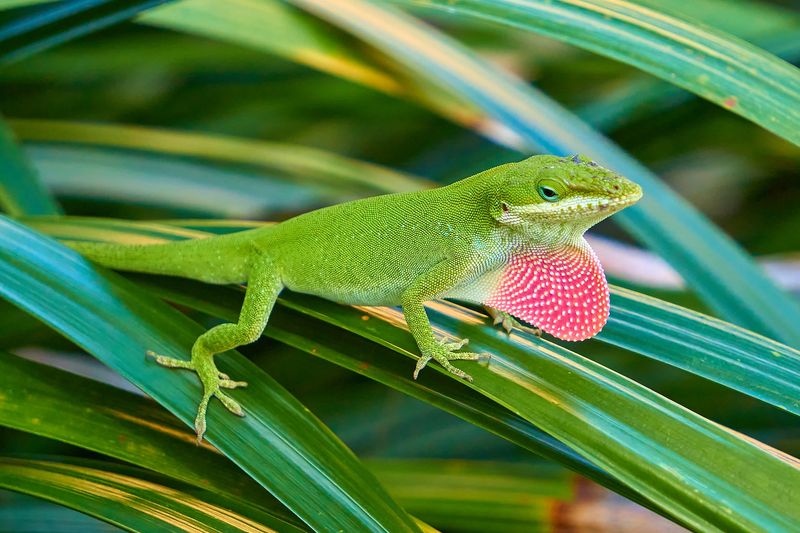
Ants are everywhere in Florida, and some species create real headaches for gardeners and homeowners.
You might wonder whether the anoles darting around your yard are doing anything about those trails moving along the fence rail or the edge of the planter.
The honest answer is: sometimes, a little, but not nearly enough to replace real ant management.
Anoles do eat ants.
Studies on anole diet show that ants appear regularly in stomach content analyses, which means these lizards do snack on them when they cross paths.
However, ant colonies are enormous, highly organized, and capable of replacing individual losses faster than any lizard could keep up with. An anole picking off a few ants from a trail is like pulling a few drops from a full bucket.
Where anole activity around ants becomes more meaningful is in combination with other pressures.
If you are already managing fire ants or ghost ants with appropriate baits and you have active anoles working the same zones, the overall insect pressure in that area stays more consistently disrupted.
Anoles are also more likely to eat ants when other prey is less available, so their ant consumption tends to increase in drier periods when flying insects are less abundant.
Do not count on lizards to handle an ant infestation, but do appreciate that they are adding at least some natural pressure to the system throughout the summer months.
6. Caterpillars Face More Leaf Patrol
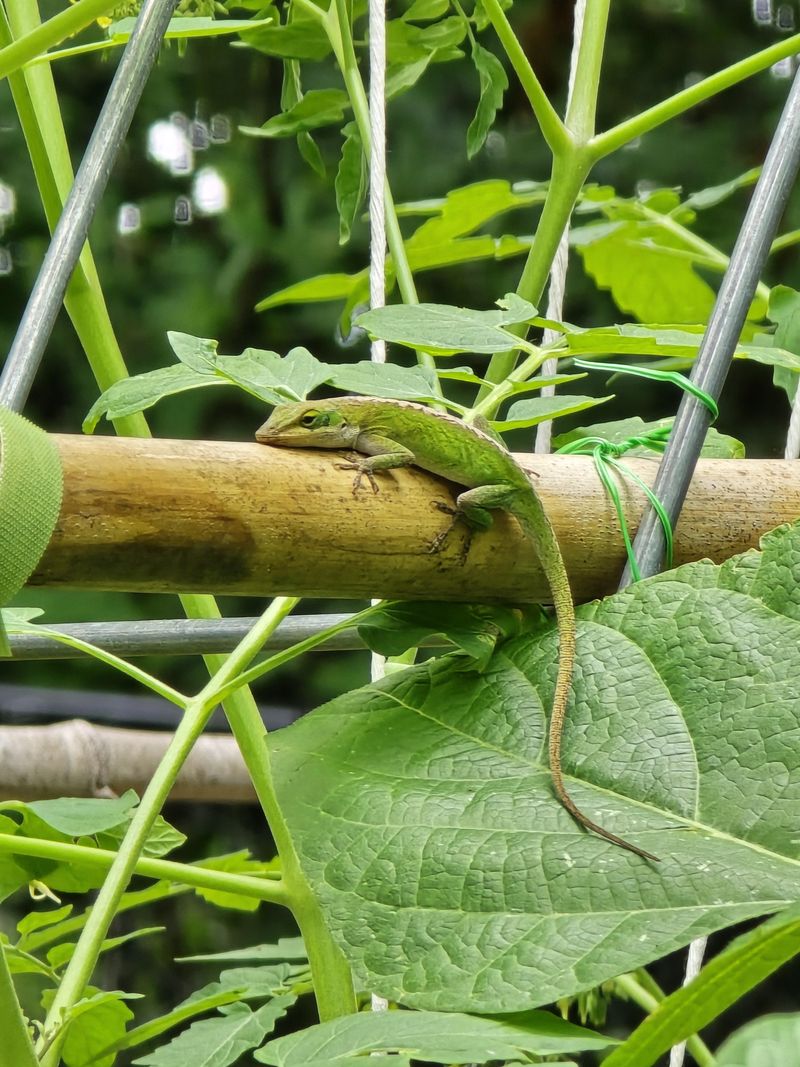
Soft-bodied insects are a favorite food category for anoles, and caterpillars fit that description perfectly.
Small, slow-moving, and often found right on the surface of leaves, young caterpillars are exactly the kind of prey that anoles encounter during their regular patrols through garden shrubs and vegetable beds.
This is where anoles can provide genuinely useful pressure on garden pests.
Green anoles, in particular, spend a lot of time in shrubs, vines, and leafy vegetation. That puts them right in the habitat where caterpillars feed.
A green anole working through a pepper plant or a row of ornamental shrubs will encounter and eat small caterpillars that gardeners would otherwise have to remove by hand.
Brown anoles tend to hunt lower, closer to the ground and on stems, which means they encounter caterpillars that have dropped from plants or that feed near the soil line.
Florida Museum herpetology resources confirm that anoles consume a variety of soft-bodied arthropods, and caterpillars are a natural part of that diet.
You will not see anoles eliminate a full caterpillar outbreak, especially from species like hornworms that grow quickly and become too large to eat.
But for early-stage infestations of smaller caterpillar species, a yard with healthy anole activity can see noticeably less leaf damage over time.
Encouraging anoles to stay in your garden shrubs is one of the simplest, most low-effort forms of biological pest management available to Florida homeowners.
7. Porch Lights Turn Into Hunting Zones
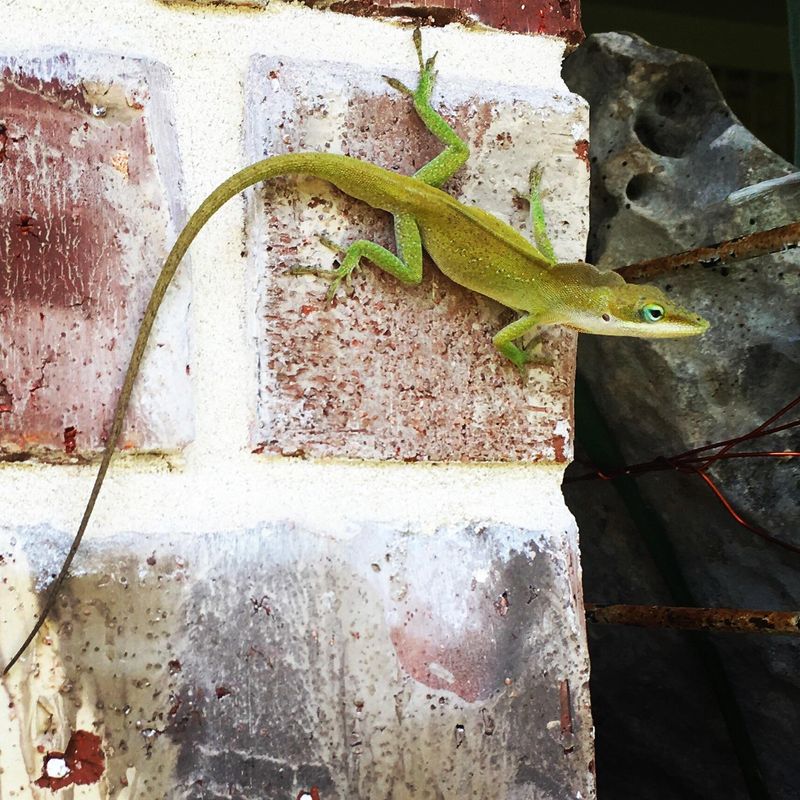
Step outside on a Florida summer night, look at the wall next to your porch light, and there is a decent chance you will spot at least one anole pressed flat against the surface.
This is not a coincidence. Insects are drawn to light, and anoles have learned that staying near lights means a reliable stream of prey coming directly to them. It is one of the more efficient foraging strategies in the reptile world.
The insects that gather around porch lights include moths, small beetles, crane flies, and dozens of other species that are active after dark.
Some of these insects are nuisances. Others are garden pests in an earlier life stage.
When an anole stations itself near that light and picks them off one by one, it is reducing the local insect population in a way that costs you nothing and requires zero effort on your part.
You can make this hunting zone more effective by positioning lights near garden beds or shrub borders where anoles already live.
Lights mounted on walls with some texture, like stucco or wood siding, give anoles better grip and more confidence to stay in position.
Reducing or eliminating pesticide use around these areas keeps the lizard population healthy and active.
Over a full Florida summer, the cumulative effect of nightly hunting near porch lights can meaningfully reduce the number of flying insects that otherwise drift into your living space or lay eggs in nearby plants.
8. A Yard With Anoles Signals Something Bigger
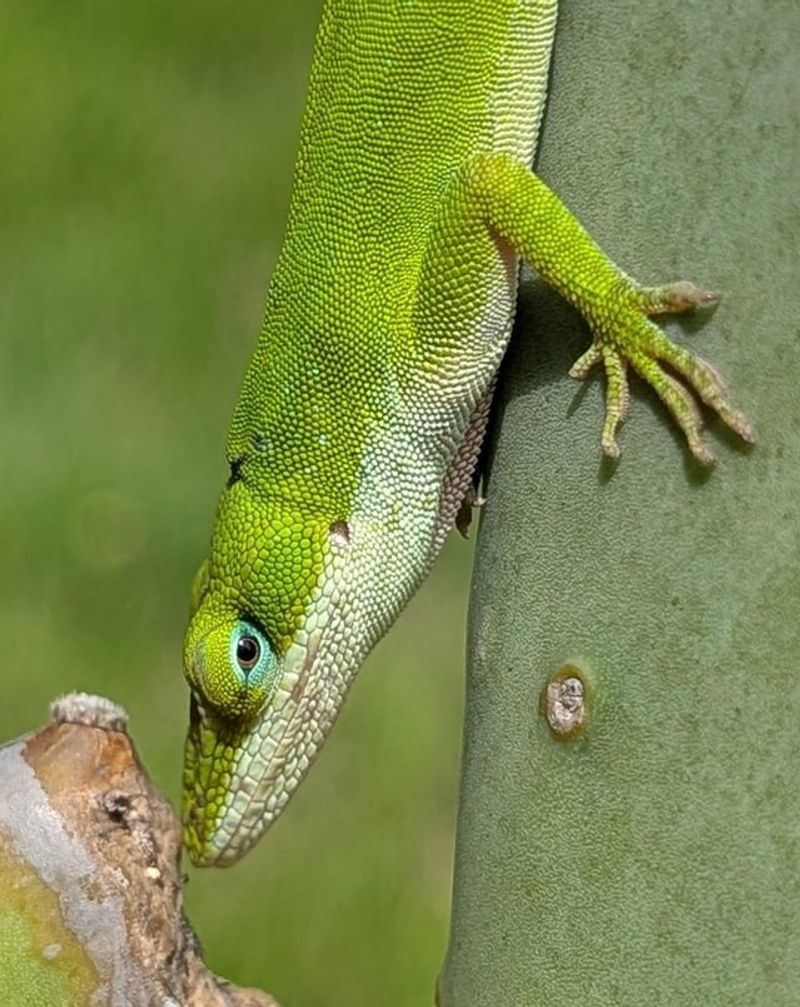
Here is something worth sitting with for a moment: a yard that supports a healthy anole population is not just a yard with fewer gnats and caterpillars.
It is a yard that has crossed a threshold into something more ecologically functional, and that shift has consequences that ripple outward in ways many homeowners never connect back to the lizards on their fence.
Anoles are prey as well as predators.
Kestrels, shrikes, larger lizards, and various snake species all hunt anoles. When anoles are present in good numbers, they attract a broader range of wildlife that enriches the yard’s food web in ways that plants and water features alone cannot achieve.
A yard with anoles is a yard interesting enough to visit for multiple reasons.
Their presence also reflects the absence of something harmful. Active, visible anoles mean the insect population in your yard is healthy enough to support them.
It means broad-spectrum pesticide use is low enough that they are surviving. It means there is enough plant structure to provide cover and hunting territory. Every one of those conditions is independently good for your garden.
Florida is losing natural habitat at a significant pace, and residential yards have become some of the most important wildlife corridors in the state.
A homeowner who creates conditions that support anoles is doing something that matters beyond the property line.
Your yard does not have to be a nature preserve to make a real difference. It just has to be welcoming enough for a small lizard to decide it is worth staying in, and the rest follows naturally from there.