What Texas Coast Gardeners Should Do To Protect Fruit Trees Before Hurricane Season Peaks
Gulf Coast gardeners in Texas know that feeling well.
One minute it is a perfectly pleasant summer morning, and the next you are checking the National Hurricane Center website every twenty minutes because something is organizing in the Gulf and it looks like it means business.
When a storm system starts tracking toward the Texas coast, there is always a mental checklist that kicks in, and fruit trees deserve a spot on it.
A backyard citrus, a young peach, or a container lemon on the patio can face real risks from high winds, heavy rain, saturated soil, and flying debris.
Weak limbs, dense canopies, and loose pots have a way of becoming much bigger problems once a major storm is in the forecast. Getting ahead of those risks before hurricane season peaks is one of the smarter moves a Texas gardener can make.
1. Inspect Fruit Trees Before Storms Are In The Forecast
A citrus tree leaning slightly near a fence might not look alarming on a calm afternoon, but that lean could become a serious problem when Gulf winds pick up during hurricane season.
Getting out to inspect fruit trees before any storm is in the forecast gives Texas gardeners a clear head and enough time to act thoughtfully rather than rush.
Start by walking slowly around each tree and looking at the trunk base, main branches, and branch unions. Watch for cracks, splits, soft or sunken bark, mushroom growth near the roots, and any branches that seem poorly attached or hanging at odd angles.
These are signs that a tree may already be under stress before a single storm arrives.
Check whether the tree is leaning more than it was last season, and press gently on any suspicious areas to feel for softness that might suggest decay inside.
Young trees, recently planted citrus, and fruit trees in sandy coastal soil deserve extra attention because their root systems may not yet be deep or wide enough to handle wind-driven soil movement.
Early inspection is about knowing what you have so you can make smarter decisions before the weather turns.
2. Remove Weak, Broken, Or Poorly Attached Limbs
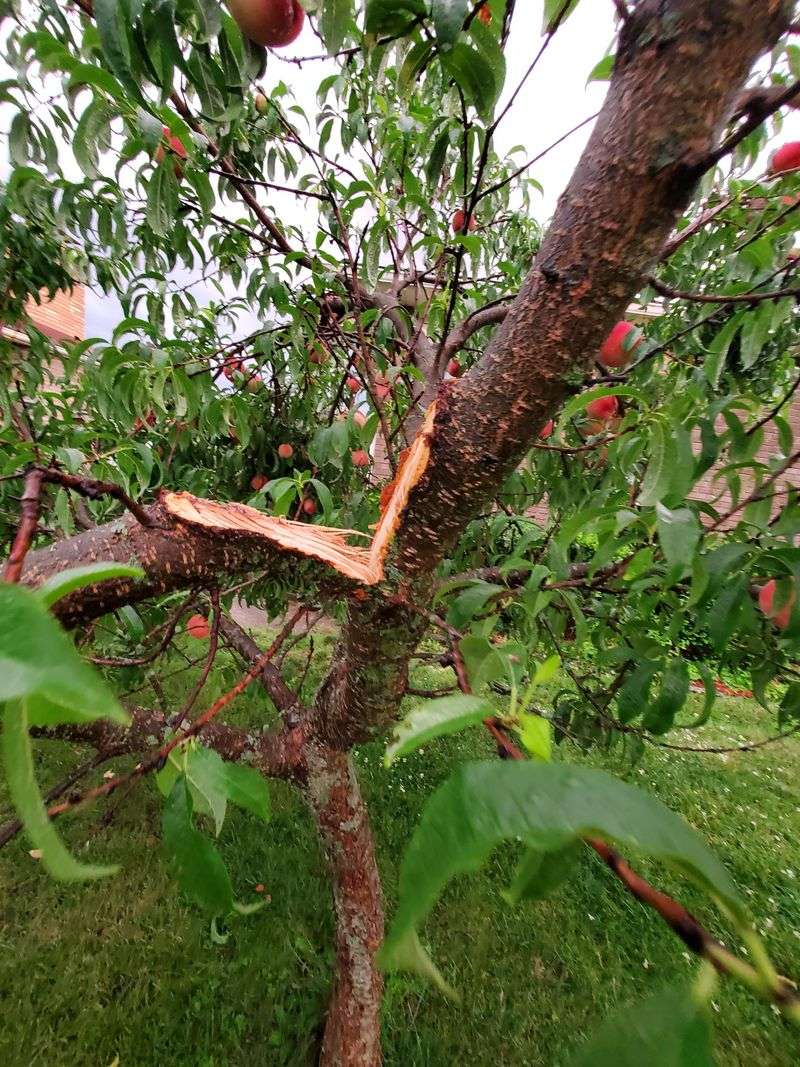
A peach branch loaded with fruit and already showing a long crack along its base is not a branch that will survive a tropical storm, and it does not need to.
Removing weak, broken, or poorly attached limbs before hurricane season peaks is one of the most practical things a Texas fruit-tree gardener can do to reduce avoidable storm damage.
Poorly attached branches, sometimes called included bark unions, are spots where two branches grow so tightly together that bark gets trapped between them. That trapped bark weakens the joint over time, and strong Gulf winds can snap those connections quickly.
Look for V-shaped unions rather than U-shaped ones, as V-shaped connections tend to be weaker and more likely to fail under load.
Use clean, sharp pruning tools and make cuts just outside the branch collar, which is the slightly swollen area where a branch meets the trunk or a larger limb.
Your Texas Garden Changes Every Week. Your Plan Should Too.
Gardening in Texas changes quickly throughout the season. Every Friday you’ll receive a simple weekly plan showing exactly what to plant, prune, fertilize, harvest, and protect so you never miss the right timing.
Avoid cutting flush with the trunk or leaving long stubs, as both approaches slow the tree’s natural wound response.
For large limbs or branches near power lines, calling a certified arborist is a safer choice than attempting the work yourself. Removing problem limbs early gives cut areas time to begin closing before storms arrive.
3. Thin Dense Canopies Without Over-Pruning
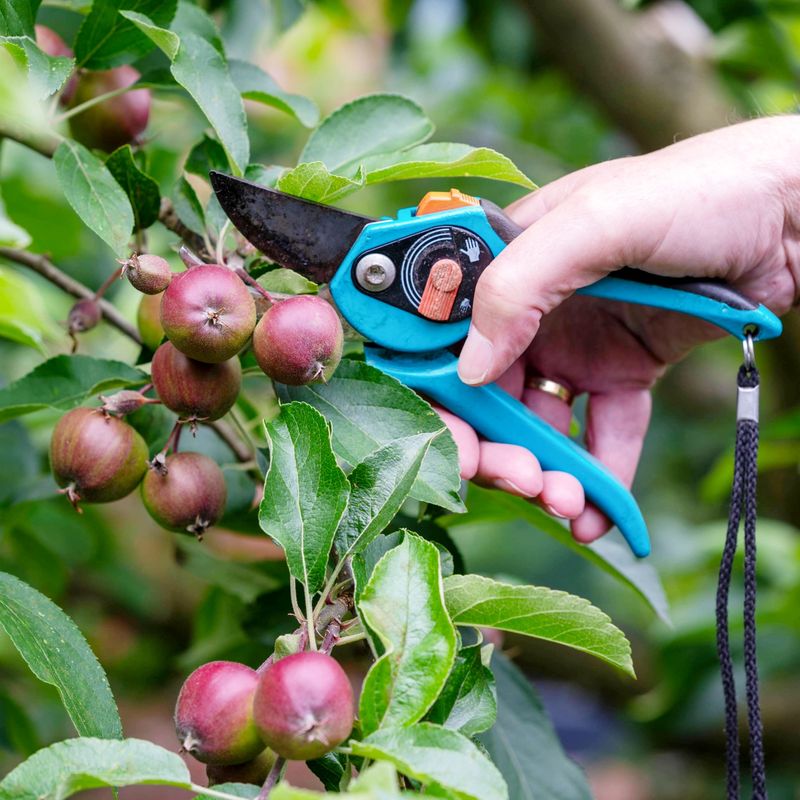
A dense canopy catching coastal gusts acts something like a sail, and fruit trees with tightly packed interior growth give wind very little room to pass through.
Thinning the canopy selectively before hurricane season can help reduce wind resistance without stripping a tree of the foliage it needs to stay healthy and productive.
The goal is to open the interior of the tree so air can move through more freely, not to remove every crossing branch or reduce the tree to bare scaffolding.
Focus on removing branches that are rubbing against each other, growing straight down or straight up without purpose, or crowding the center so densely that light cannot reach the interior.
Texas citrus and fig trees often develop thick canopies quickly in the warm Gulf Coast climate, so this kind of selective thinning tends to be an annual task rather than a one-time fix.
Avoid removing more than about one quarter of the canopy in a single season, as heavy pruning can stress the tree and trigger a flush of weak regrowth that is even more vulnerable to wind.
Spread the work across the canopy evenly rather than cutting heavily on one side.
A lightly thinned tree handles coastal gusts better than one that has been aggressively cut back right before a storm rolls in.
4. Stake Young Trees Before Winds Arrive
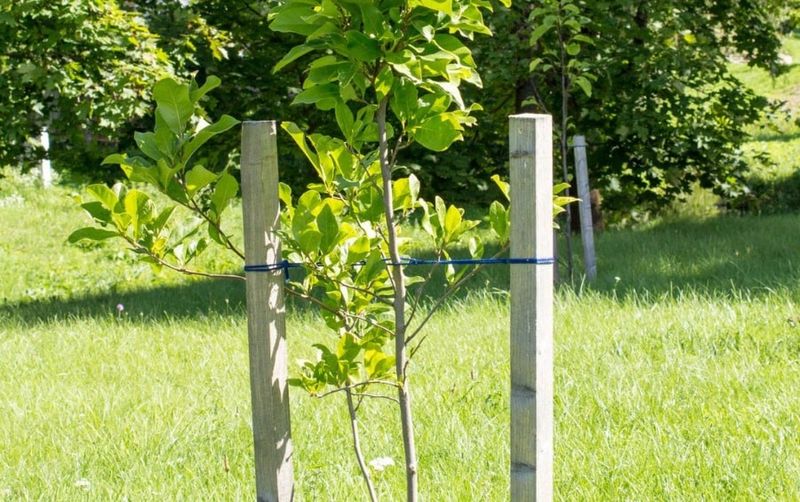
Watch a young tree move in coastal wind and you start to understand why staking matters before hurricane season peaks.
Newly planted fruit trees, including young citrus, peaches, and figs in Texas Gulf Coast yards, often lack the root depth needed to stay anchored when strong tropical winds push through the area.
Staking is most useful for trees planted within the last one to two years, particularly those in sandy or loose coastal soil where roots have not yet spread widely.
Use two stakes placed on opposite sides of the tree, set firmly into the ground outside the root ball rather than through it.
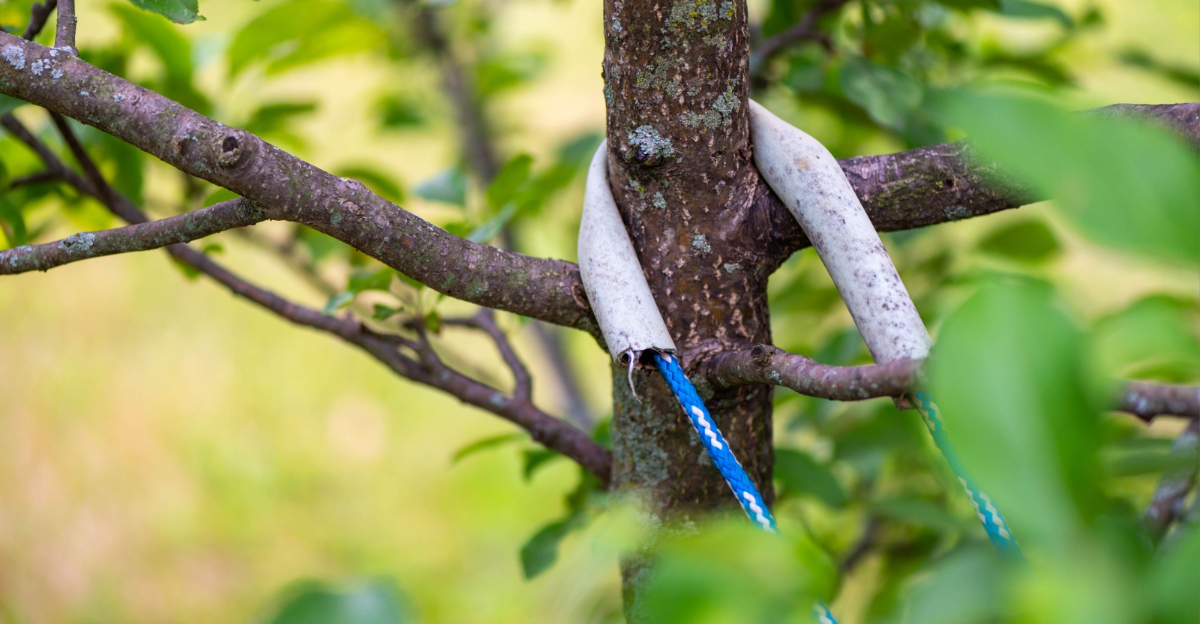
Attach the tree to the stakes using soft, flexible ties that hold the trunk without cutting into the bark.
The tie should allow the trunk to flex slightly rather than holding it completely rigid. Some movement actually encourages the trunk to develop strength, so the goal is support rather than total immobility.
Check that stakes are seated deeply enough to resist the pulling force of wind without wobbling. Stakes that are too short or set too shallowly can lever against the root ball during strong gusts and cause more harm than good.
Remove stakes once the tree has established enough root spread to stand steadily on its own, which often takes one to two growing seasons in Texas coastal conditions.
5. Check Ties So They Do Not Girdle Trunks
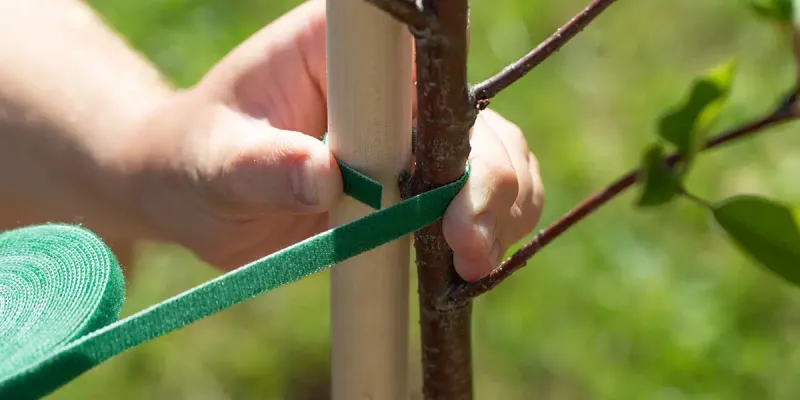
Staking a young tree and then forgetting about the ties is one of the more common mistakes in Texas coastal fruit-tree care.
Ties that were installed loosely during planting can tighten considerably as a trunk grows wider through the season, and a tie that has started cutting into bark is already doing damage that weakens the tree before any storm arrives.
Walk up to each staked tree and slide a finger between the tie and the trunk. There should be enough space to move your finger without forcing it.
If the tie feels snug or has already begun pressing into the bark and leaving a groove, loosen or replace it right away.
Constricted trunks have a harder time moving water and nutrients efficiently, and that stress reduces a tree’s ability to respond well to wind load and saturated soil during a storm event.
Replace any wire, zip ties, or rigid materials that were used to secure the tree to stakes, as these materials do not flex with the trunk and tend to cause girdling faster than softer options.
Nylon webbing, canvas strips, or commercial tree ties designed to stretch slightly are better choices for Gulf Coast conditions where trees grow quickly and ties need to be checked more than once per season.
Mark your calendar so the check does not get skipped during busy summer months.
6. Harvest Heavy Fruit Before A Major Storm
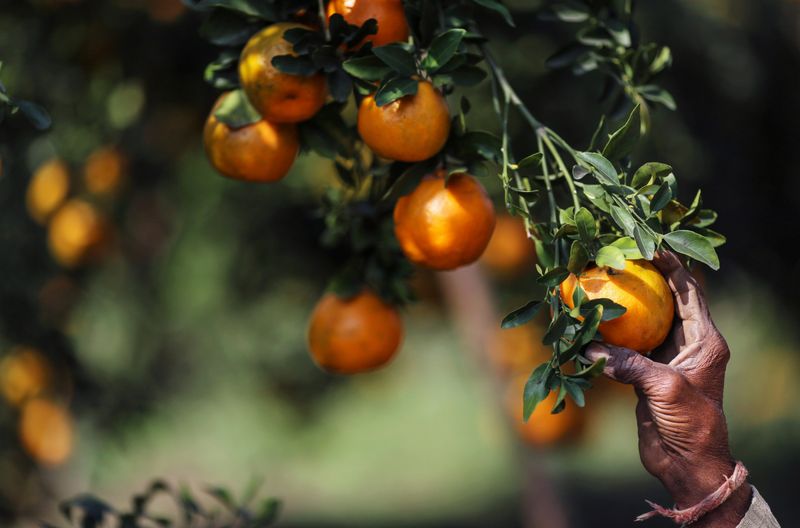
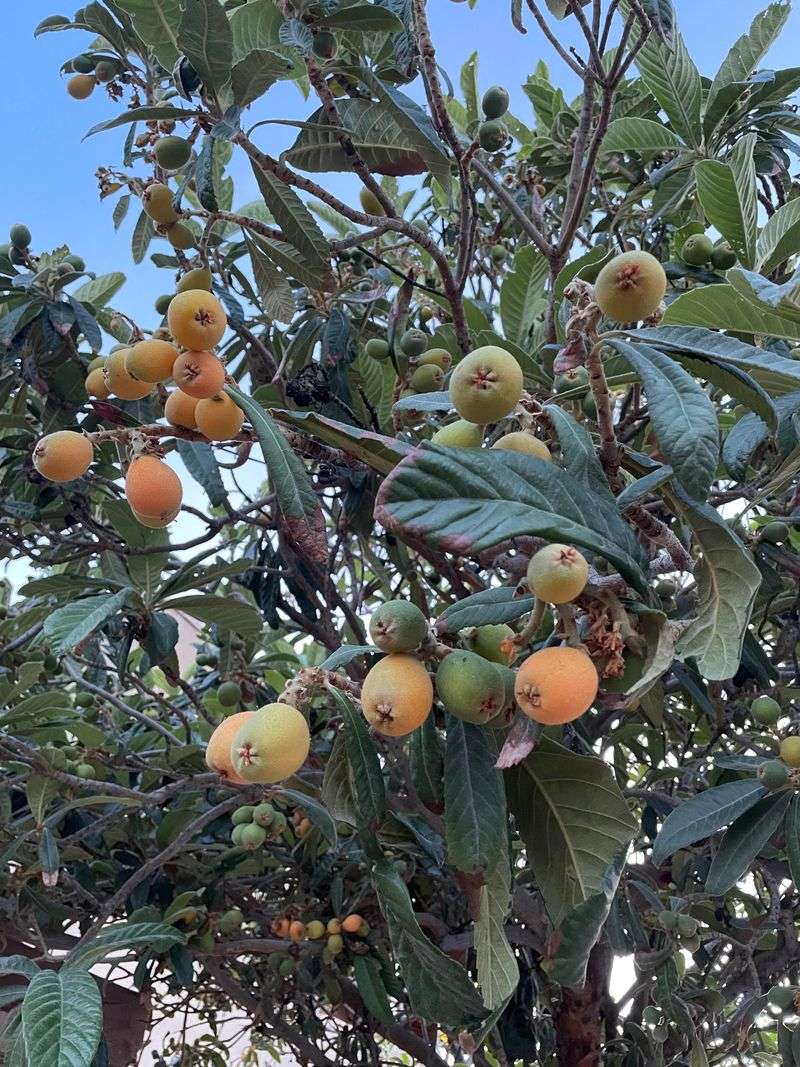
When a storm forecast starts forming in the Gulf and a Texas citrus tree is loaded with heavy fruit, that fruit becomes extra weight the tree does not need to carry through high winds and rain.
Harvesting what is ready, or close to ready, before a major storm arrives is one of the simplest and most rewarding steps a Gulf Coast gardener can take.
Heavy fruit clusters add significant weight to branches that are already being pushed and pulled by strong winds.
Branches that might hold up under normal conditions can snap under the combined stress of wind load and fruit weight, especially if soil has become saturated and root anchorage is reduced.
Picking mature or near-mature fruit before the storm removes that extra stress from the tree and puts the harvest in your hands rather than on the ground after the storm passes.
Fruit that is not yet ripe can still be harvested and ripened indoors for some varieties, or used green in recipes if waiting is not an option.
Citrus, figs, and peaches all respond differently to early harvesting, so it helps to know the variety and its typical ripening window before deciding what to pick.
Even removing a portion of the heaviest clusters can meaningfully reduce the load on vulnerable branches during a storm. Do not wait until the storm is hours away to start picking.
7. Move Container Citrus And Patio Fruit Trees
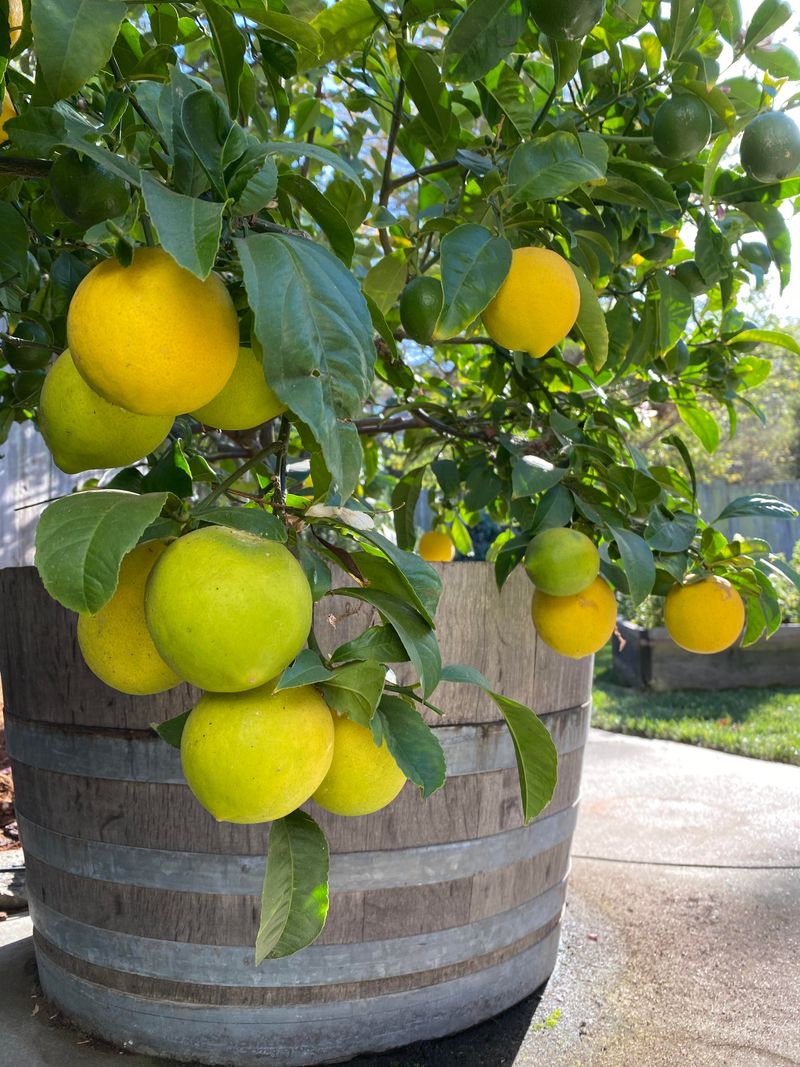
A potted lemon tree sitting on a sunny Texas patio can become a fast-moving projectile once tropical-force winds arrive, and the pot itself can roll, tip, and shatter against fences, windows, or other garden structures.
Moving container citrus and patio fruit trees to a sheltered location before a major storm is one of the most direct ways to protect both the plant and the property around it.
Ideally, move containers into a garage, shed, or interior space where they will be shielded from wind and flying debris.
If indoor space is limited, grouping containers together in a corner or against a solid wall can offer some protection, though it is less reliable than full enclosure during a strong storm.
Heavy containers can be moved more safely using a hand truck or wheeled plant dolly, which reduces the risk of back strain and dropped pots.
Water the trees well a day or two before moving them so the root ball is stable and the soil is not bone dry, but avoid overwatering right before a storm since overly wet soil in a tipped container can suffocate roots.
Once the storm has passed and conditions are safe, return the trees to their outdoor spots gradually rather than immediately placing them back in full sun after time spent in a shaded or enclosed space.
Texas Gulf Coast summers are intense, and a sudden return to full exposure can stress recently sheltered trees.
8. Clear Loose Pots, Tools, And Trellises Nearby
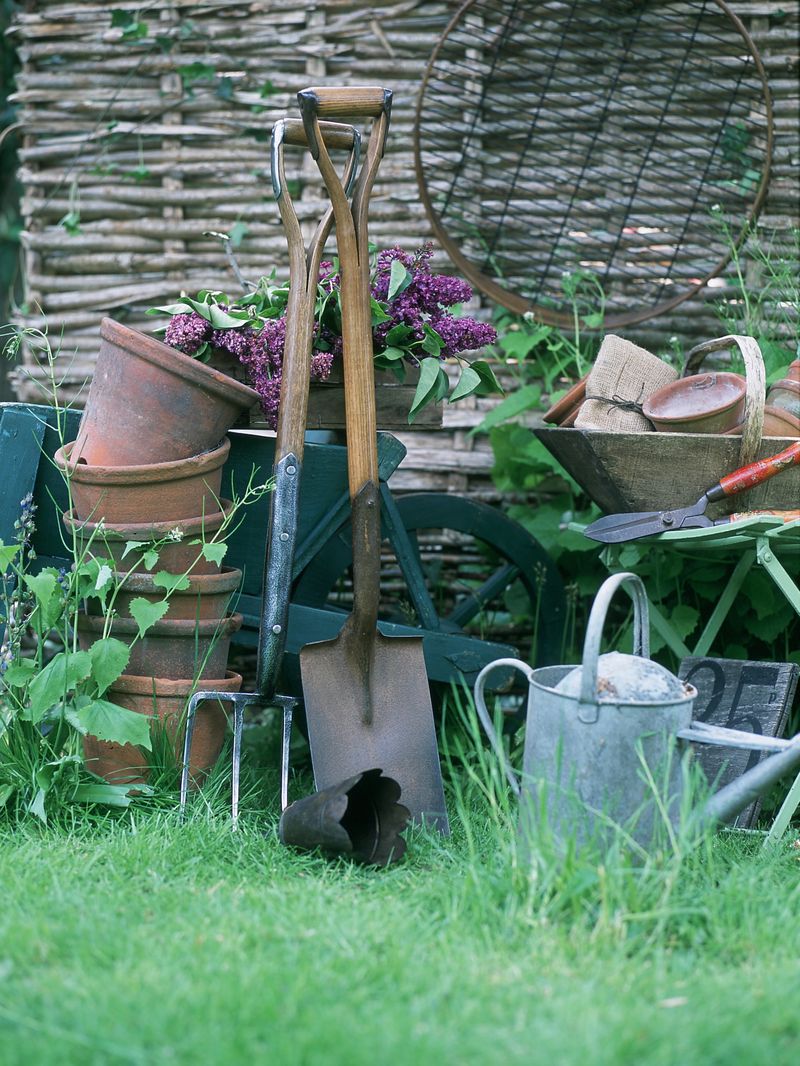
Loose garden tools near a fruit tree are easy to overlook when preparing for a storm, but they become genuine hazards once strong winds arrive.
Empty pots, hand trowels, wooden trellises, wire cages, and even garden hoses left near fruit trees can be picked up by wind and thrown into trunks, branches, windows, or neighboring yards during a tropical storm or hurricane.
Walk the area around each fruit tree and clear anything that is not anchored or too heavy to move in strong wind. Stack empty pots inside a garage or shed and store hand tools in a closed container or bring them indoors.
Wooden trellises and wire frames used to support climbing plants near fruit trees should be laid flat, tied down, or moved inside if they cannot be secured firmly to a wall or fence.
Pay attention to items that might seem too heavy to blow far but can still roll or tip into a tree trunk with enough force to damage bark. Ceramic pots, wheelbarrows left near trees, and garden carts with loose items inside all fall into this category.
Clearing the area around fruit trees is quick work that takes maybe thirty minutes across most Texas Gulf Coast yards, and it can prevent the kind of bark and root damage that takes seasons to recover from.
A tidy yard around your trees is a safer yard when a storm rolls through.
9. Improve Drainage Around Root Zones
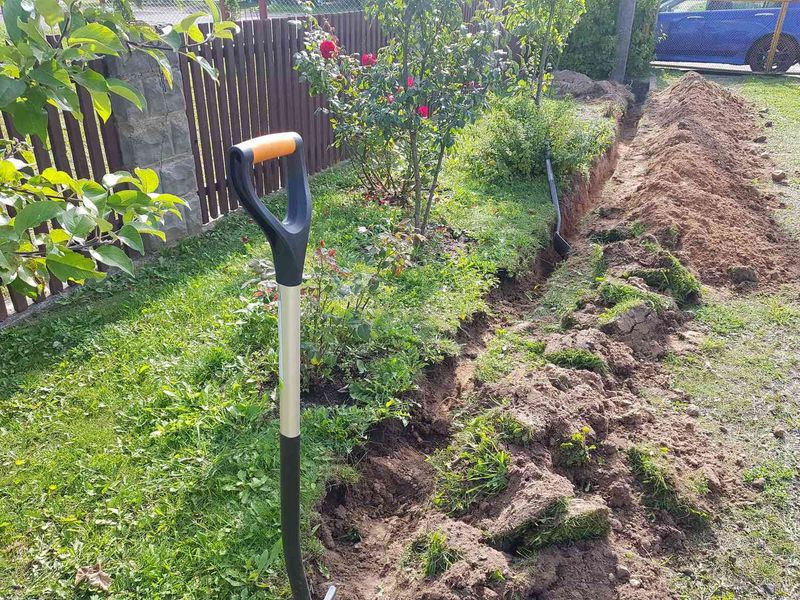
Standing water around the roots of a fruit tree after a major storm is one of the more damaging outcomes Gulf Coast gardeners deal with, and the problem often starts long before the storm arrives.
Texas coastal soils, especially in low-lying yards and areas near bayous or retention ponds, can hold water for extended periods after heavy rainfall, and prolonged saturation stresses root systems significantly.
Before hurricane season peaks, check how water currently moves through your yard after a heavy rain. Walk the yard after a typical summer thunderstorm and look for spots where water pools near fruit trees for more than an hour or two.
Those areas are worth addressing before a tropical storm drops several inches of rain in a short window and leaves roots sitting in standing water for days.
Simple improvements like loosening compacted soil with a garden fork, creating shallow channels or swales that direct water away from the root zone, or building up the soil grade slightly around the base of the tree can all help water move more efficiently.
Raised beds and mounded planting areas tend to drain better than flat ground in heavy Gulf Coast rain events.
Avoid digging deeply near the trunk, as cutting roots close to the base of the tree reduces its stability in wind.
Small, thoughtful drainage adjustments made before the storm season peaks can make a real difference in how well a fruit tree comes through a wet storm event.
10. Mulch Properly Without Piling Against Trunks
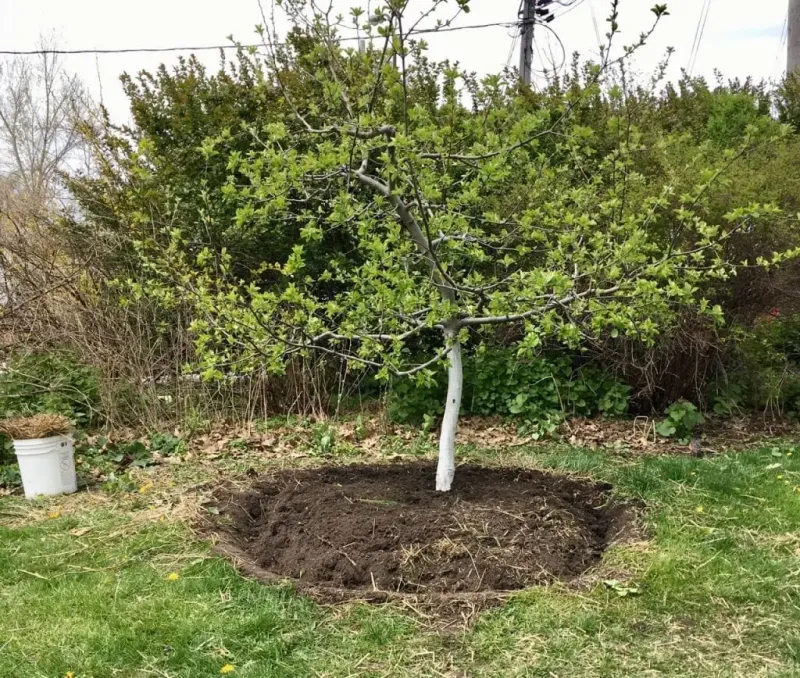
Mulch piled too high around a fruit tree trunk is a problem that shows up in Texas yards more often than most gardeners realize, and it tends to get worse when well-meaning gardeners add more mulch right before storm season without thinking about placement.
A thick volcano of mulch pressed against the bark traps moisture, encourages fungal growth, and can weaken the bark at the base of the trunk over time.
Proper mulching before hurricane season involves spreading wood chips, shredded bark, or similar organic material two to four inches deep across the root zone.
Start a few inches away from the trunk and extend the layer out toward the drip line of the canopy for the best results.
That gap between the mulch and the trunk allows air to circulate and keeps the bark dry enough to resist fungal issues that become more common in wet, humid Gulf Coast conditions after a storm.
Good mulch placement also helps the soil retain moisture more evenly during the dry stretches that sometimes follow a hurricane, moderates soil temperature, and reduces weed competition that can stress fruit trees during their recovery period.
Avoid using plastic sheeting under mulch in Texas coastal yards, as it blocks drainage and can contribute to the waterlogging problems that already affect many low-lying Gulf Coast properties.
Refreshing mulch before hurricane season peaks is a straightforward task that supports root health through both the storm event and the recovery period that follows.