The Best Fire-Smart Plants For California Mailbox And Curbside Beds
Mailbox beds have a weirdly important job in California. They need to look polished, survive street heat, and not turn into a crispy fire-season mistake.
That tiny curbside strip may seem harmless, but it sits in a tough spot with reflected heat, dry wind, and plenty of neglect.
The best fire-smart planting choices can make it feel intentional without adding extra risk near the road or home.
Think clean structure, tidy spacing, low litter, and plants that do not act like kindling every summer. A curbside bed can still have color, texture, and serious neighborhood charm.
It just needs to be designed like fire season is invited to judge it.
1. Pink Muhly Grass Gives Curbs A Soft Designer Look
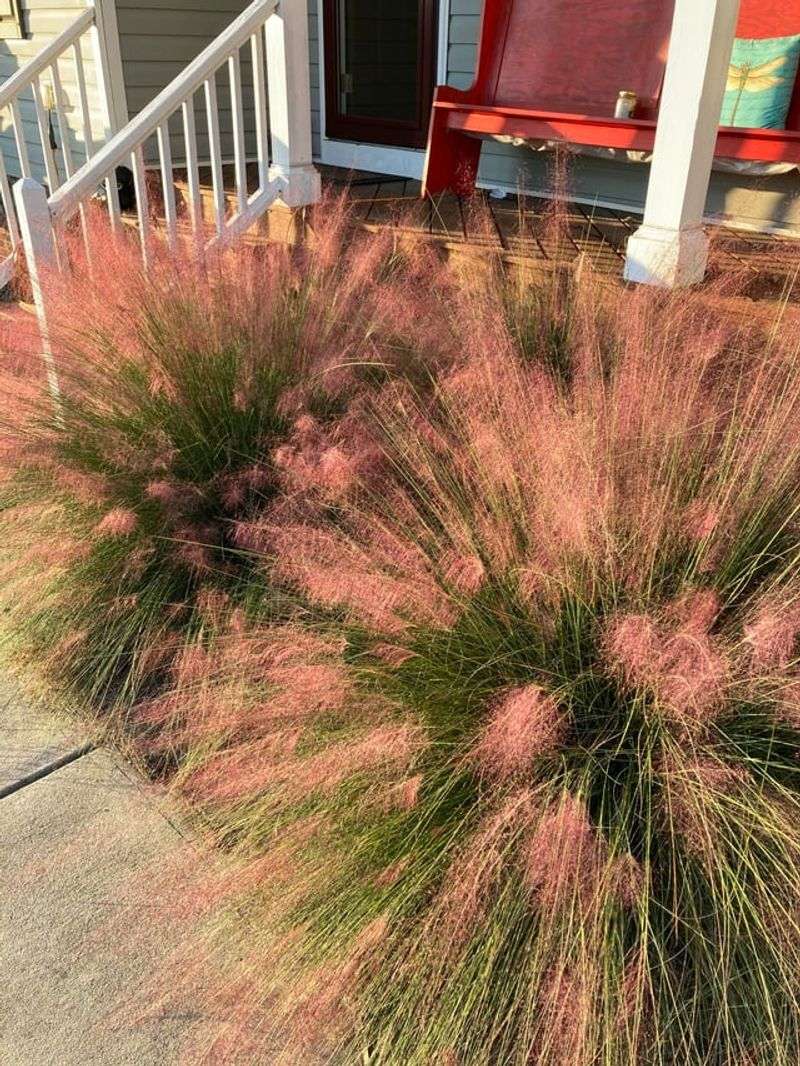
Few plants pull off the trick of looking both wild and polished at the same time, but Pink Muhly Grass does it effortlessly. Those soft, cloud-like pink plumes appear in fall just when most other plants start to fade.
It is the kind of plant that makes neighbors slow down and ask what it is.
Pink Muhly Grass is a warm-season ornamental grass that stays low and tidy most of the year. It grows in a neat mound of fine green blades, then erupts into a haze of rosy pink in September and October.
The plumes catch the light beautifully in the late afternoon sun.
From a fire-safety standpoint, this grass has a lot going for it. It holds less dry material than many other ornamental grasses.
Keeping it trimmed back in late winter helps reduce any buildup of old growth.
It handles heat and reflected light from pavement without much trouble. Once established, it needs very little water, making it a smart pick for a curbside strip where irrigation can be tricky.
It also does well in poor or sandy soil.
Plant it in full sun for the best plume display. Space plants about two to three feet apart so each one has room to fill out.
Pink Muhly Grass is a showstopper that earns its spot at the curb every single fall.
2. Coral Bells Add Color Without Getting Shrubby
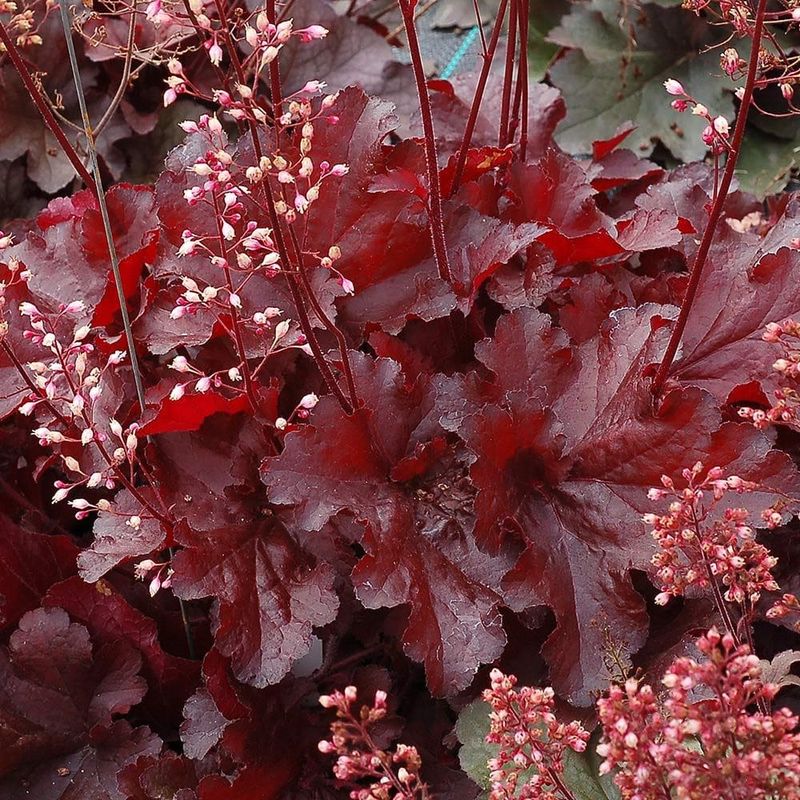
Not every great curbside plant needs to put on a big floral show. Sometimes, it is all about the leaves.
Coral Bells, also known as Heuchera, brings rich, jewel-toned foliage in shades of burgundy, bronze, caramel, and lime green that look stunning all year long.
What makes Coral Bells stand out in a fire-smart landscape is its low, compact growth habit. It never gets tall or shrubby, which means there is less plant material close to the ground where fire can travel quickly.
The leaves stay fleshy and hold some moisture, which also helps slow ignition.
Slender stems rise above the foliage in spring and summer, carrying tiny bell-shaped flowers that hummingbirds absolutely love. The blooms come in shades of pink, red, white, and coral, adding another layer of visual interest to the curbside bed.
Coral Bells prefer partial shade but can handle morning sun with some afternoon protection in hotter inland areas. Near the coast or in cooler northern zones, they can take more direct sun.
Your California Garden Changes Every Week. Your Plan Should Too.
Gardening in California changes quickly throughout the season. Every Friday you’ll receive a simple weekly plan showing exactly what to plant, prune, fertilize, harvest, and protect so you never miss the right timing.
They do well with moderate watering and good drainage.
Pair them with ornamental grasses or low-growing groundcovers for a layered look. They are easy to divide and replant, which means one purchase can turn into many plants over time.
For a mailbox bed that stays colorful and tidy, Coral Bells is a reliable and beautiful choice.
3. Desert Spoon Makes A Sculptural Mailbox Accent
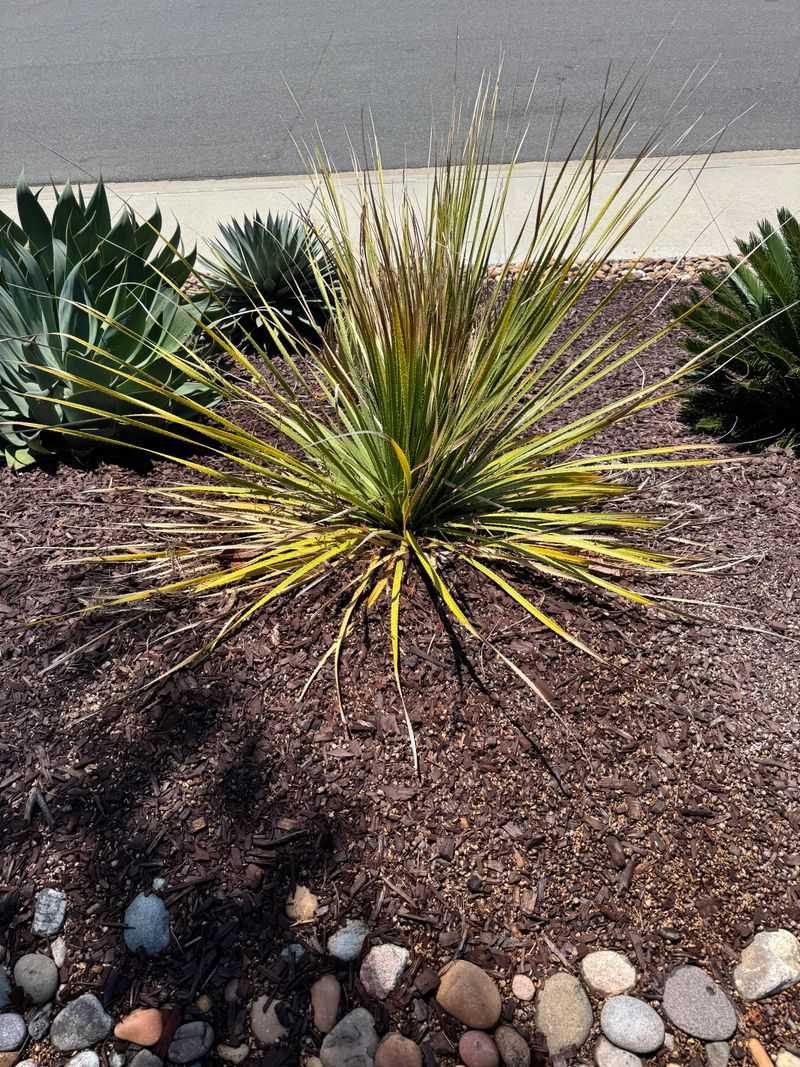
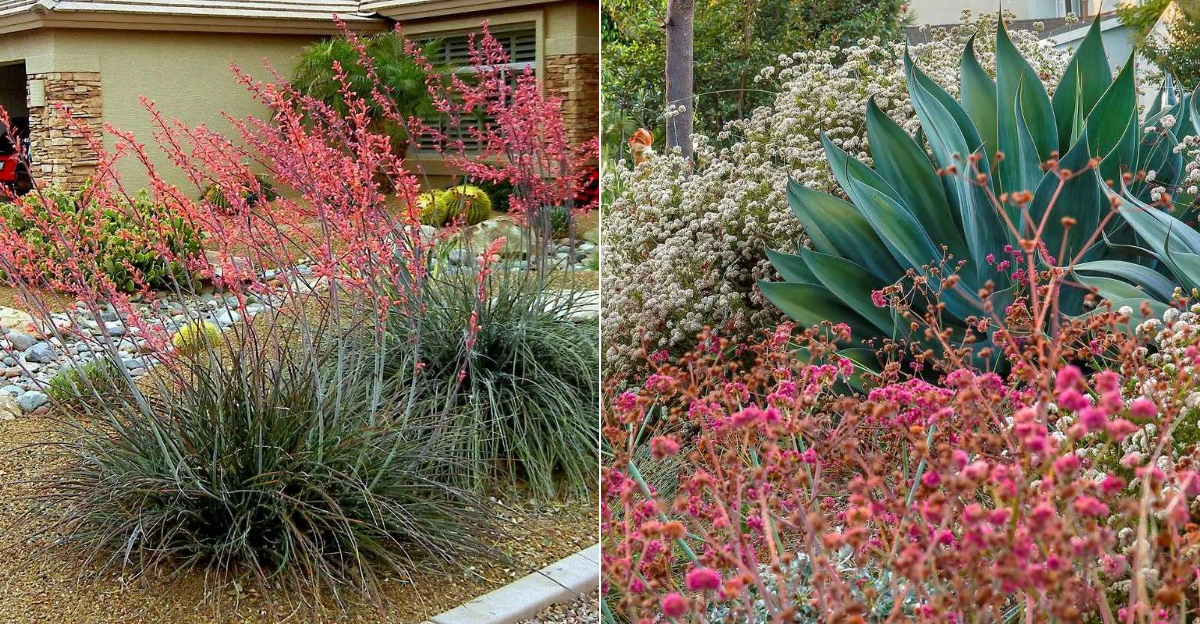
Bold, dramatic, and undeniably eye-catching, Desert Spoon is the kind of plant that looks like it belongs in a gallery. Its stiff, blue-gray leaves fan out in a perfect rosette from the base, creating a striking sculptural form that needs zero fussing to look great.
Botanically known as Dasylirion wheeleri, this plant is native to the Chihuahuan Desert but thrives across much of California in hot, dry conditions. It is extremely drought-tolerant once established and almost completely unbothered by poor, rocky soil.
That makes it ideal for a curbside strip where conditions can be harsh.
From a fire-resistance standpoint, Desert Spoon has real advantages. The leaves contain significant moisture, and the plant produces very little dry, combustible material compared to many shrubs.
It does not shed leaves constantly, which reduces litter buildup around the base.
Did you know that mature Desert Spoon plants can send up a tall flower spike reaching up to fifteen feet? That spike is dramatic and draws a lot of attention.
However, it only happens once every several years, so most of the time the plant stays compact and low.
Plant it in full sun with excellent drainage. Give it space to spread, since mature plants can reach four to five feet wide.
Near a mailbox, a single Desert Spoon creates a bold focal point that signals a thoughtful, fire-aware landscape design. It is tough, beautiful, and practically carefree.
4. Red Yucca Blooms Without Looking Thirsty
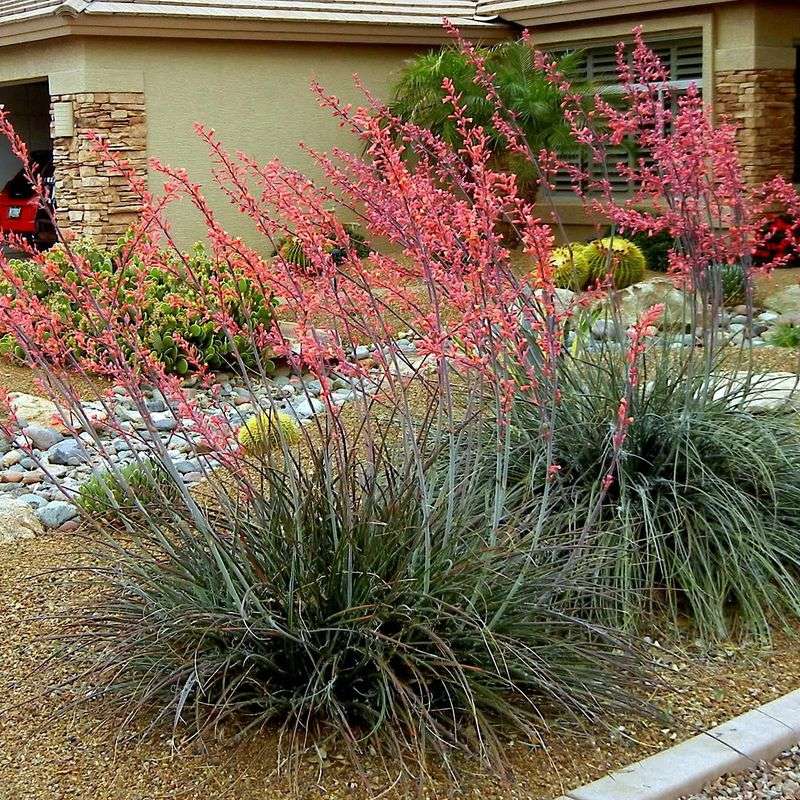
There is something almost cheerful about Red Yucca, even in the driest stretch of summer. While other plants look stressed and crispy by August, this plant sends up tall wands of coral-pink tubular flowers that hummingbirds cannot resist.
It looks completely at ease in the heat.
Despite the name, Red Yucca is not a true yucca. It is actually Hesperaloe parviflora, a native of Texas and northern Mexico.
The leaves are soft and grass-like with curling white fibers along the edges, giving it a relaxed, graceful look that works well in curbside beds without looking sharp or dangerous.
Fire-smart gardeners appreciate Red Yucca for several reasons. The succulent-like leaves hold moisture well.
The plant stays low and does not create a lot of dry, flammable material near the ground. It also does not produce significant leaf litter, which is a plus in fire-prone areas.
Full sun and well-drained soil are all it needs to thrive. Once established, it can survive on rainfall alone in most parts of California, though occasional deep watering during extreme heat helps it bloom more.
It grows slowly and rarely needs pruning or dividing.
Flower spikes can reach four to five feet tall and bloom from late spring through fall. Plant Red Yucca along the curb or near the mailbox for a low-maintenance display that looks lush and colorful even in tough conditions.
5. Red Buckwheat Blooms Without Needing Rich Soil
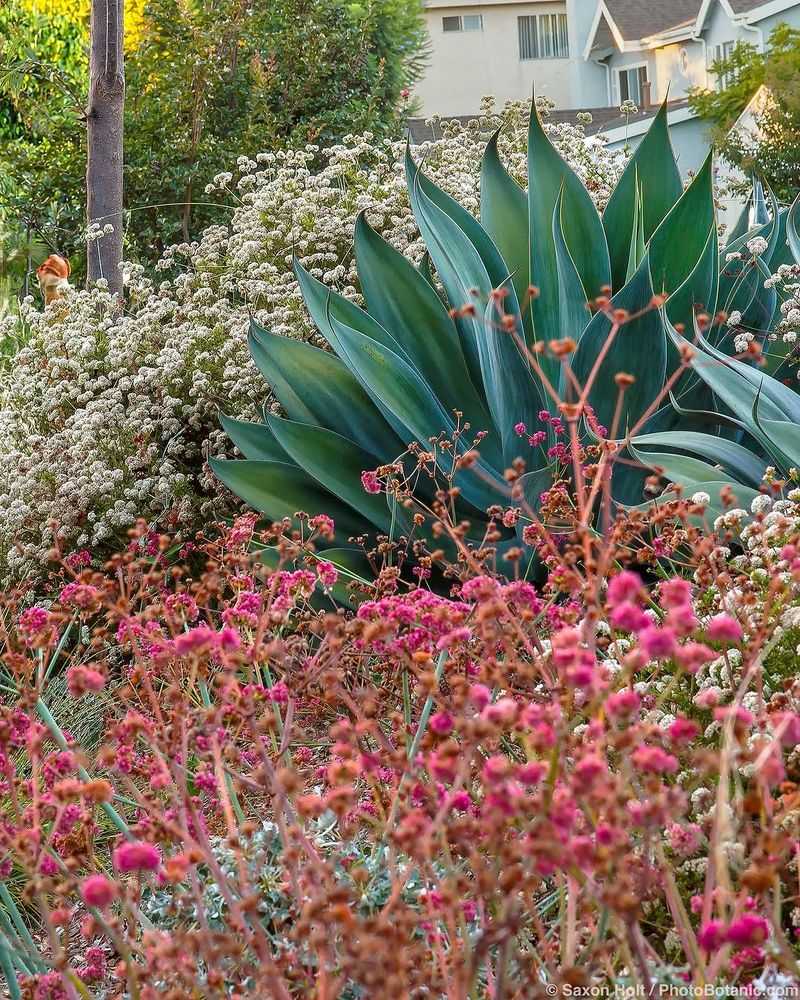
Rocky, sandy, nutrient-poor soil is not a problem for Red Buckwheat. In fact, it seems to prefer it.
Eriogonum grande var. rubescens is a native wildflower that thrives in the exact conditions that make most garden plants struggle. It is perfectly suited for a curbside strip where soil quality is rarely ideal.
The blooms are a deep rosy-red and appear in rounded clusters that sit above the low, gray-green foliage. They show up in late spring and often continue through summer, attracting a wide range of native bees and butterflies.
The dried flower heads also add winter interest, turning rust-colored and holding their shape for months.
From a fire-safety perspective, Red Buckwheat is an excellent choice. It stays low, usually under two feet tall.
The foliage is not dense or oily, and the plant does not accumulate a lot of withered material at its base when maintained properly. Cutting it back lightly after bloom keeps it tidy and fire-smart.
Water deeply but infrequently once it is established. Overwatering is the most common mistake with this plant, especially in heavy or clay soils.
It prefers full sun and excellent drainage.
Red Buckwheat is also a host plant for several native butterfly species, which makes it a meaningful addition to any pollinator-friendly landscape. Plant it in groups of three or five for a natural, flowing look along the curb that feels right at home in California.
6. Apricot Mallow Brings Warm Color To Hot Edges
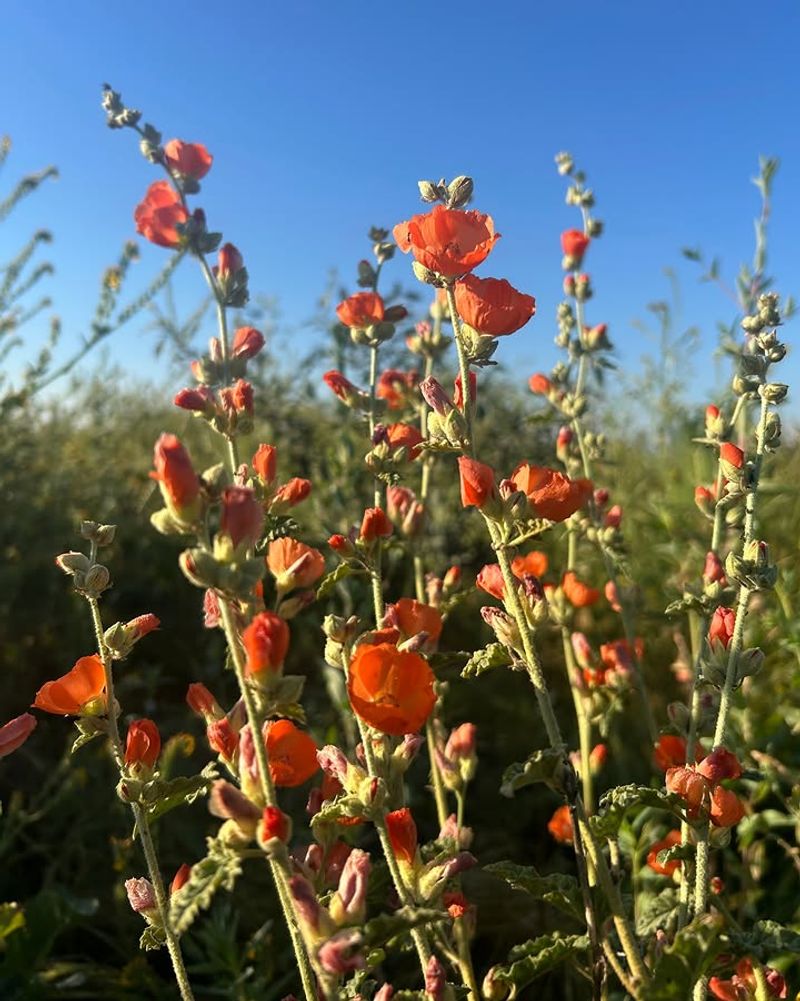
Warm, peachy blooms on a tough-as-nails plant sounds almost too good to be true, but Apricot Mallow delivers exactly that. Sphaeralcea ambigua is a native of the Mojave and Sonoran deserts, which means it was built for heat, drought, and rocky ground.
The curb is practically its natural habitat.
The flowers are a soft apricot-orange color, shaped like small hollyhocks, and they cover the plant from spring well into summer. In mild-winter areas of California, it may even bloom year-round with occasional watering.
The gray-green foliage has a slightly fuzzy texture that helps reflect sunlight and reduce water loss.
Fire-resistance is one of its strongest qualities. The foliage contains low levels of volatile oils, which means it does not ignite as easily as many other flowering shrubs.
It also stays relatively compact, rarely exceeding three feet in height, which limits the amount of fuel near ground level.
Plant it in full sun and well-drained soil. Once established, it needs almost no supplemental water.
In fact, too much water can cause it to get leggy and floppy. Cutting it back by about one-third after the main bloom flush encourages fresh, compact new growth.
Apricot Mallow looks fantastic paired with blue or purple flowers like desert sage. The warm and cool color contrast near a mailbox creates a welcoming, vibrant curbside display that holds up through even the hottest summer months without much help from the gardener.
7. California Aster Keeps Late Color Coming
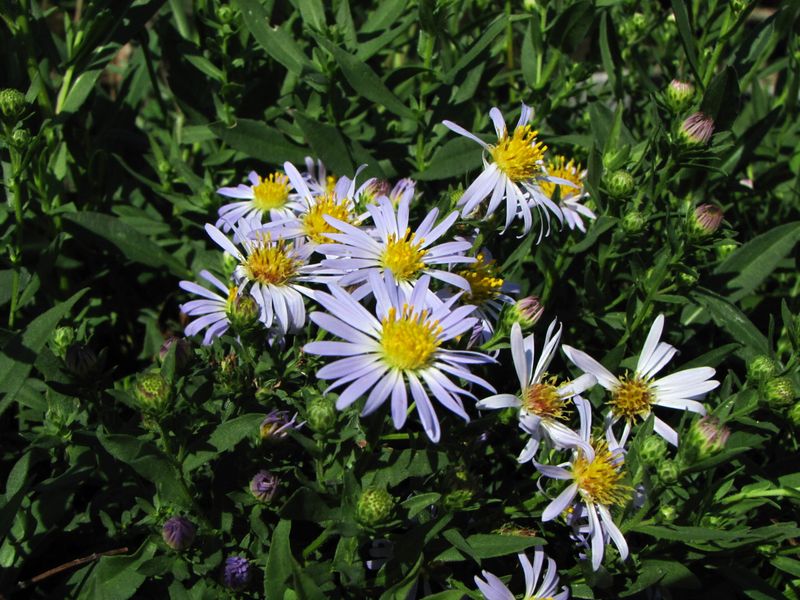
When most of the garden starts winding down in fall, California Aster is just getting started. Symphyotrichum chilense sends up a cheerful flush of lavender-purple daisy-like blooms right when pollinators need late-season nectar the most.
It is a plant that earns real appreciation in October and November.
Native to coastal and inland areas, this aster is well-adapted to a wide range of conditions. It handles clay soil, occasional drought, and periods of neglect without much drama.
That resilience makes it a practical and attractive choice for a curbside bed that does not always get regular attention.
From a fire-smart perspective, California Aster has a few things working in its favor. It stays relatively low and spreading rather than building up dense woody stems.
Cutting it back hard in late winter removes old growth and reduces fuel load heading into fire season.
It spreads slowly by underground runners, which can fill in a strip nicely over time. If it spreads too much, simply dig out the outer edges and replant or share with neighbors.
It is easy to manage and very forgiving.
Give it full sun to partial shade and moderate water while it gets established. After that, it can handle dry spells well, especially in coastal zones.
Pair it with ornamental grasses or low-growing sages for a layered curbside planting that looks natural, colorful, and unmistakably connected to the landscape of California.
8. Seaside Daisy Adds Color Without Getting Woody
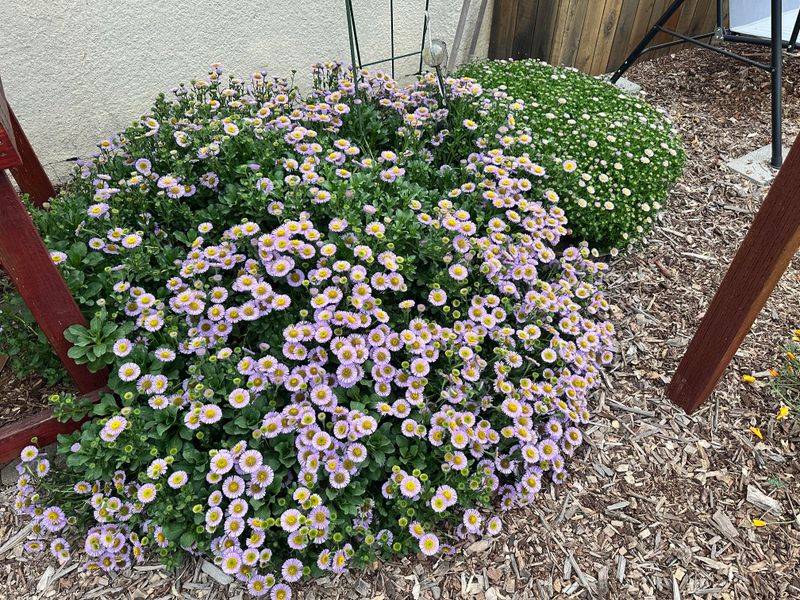
Compact, cheerful, and almost always in bloom, Seaside Daisy is one of the most reliable groundcovers you can plant along the curb. Erigeron glaucus is a coastal native that naturally grows along bluffs and beaches, which means wind, salt air, and dry spells are no problem at all.
The flowers are small lavender-purple daisies with bright yellow centers, and they keep coming from spring through fall with very little encouragement. The foliage stays low and dense, forming a soft mat that spreads gradually to fill in bare spots along a curbside strip.
It looks tidy without much trimming.
Fire-safety is where Seaside Daisy really stands out among groundcovers. It does not build up woody stems or dry thatch like some other spreading plants.
The foliage stays fleshy and somewhat moisture-retaining, which slows ignition. Keeping it well-watered during the driest months adds another layer of protection.
It performs well in full sun along the coast and in partial shade in hotter inland areas. Too much heat and reflected light from pavement can stress it, so a little afternoon shade in warm inland zones is helpful.
It pairs beautifully with ornamental grasses and low-growing sages.
One of the best things about Seaside Daisy is how little it asks for in return. Water it occasionally, trim back any tired-looking stems after a big bloom flush, and it will reward you with color month after month.
For a mailbox bed that always looks inviting, this native daisy is hard to beat.