Plant These Heat-Loving Texas Succulents In July And Enjoy Year Round Color With Little Watering
If there was ever a perfect month to plant succulents in Texas, July might actually be it. While most plants are struggling to keep up with the heat, succulents are settling in like they own the place.
These are plants that were designed for exactly these conditions, and getting them established during the hottest stretch of the year is not the challenge it might sound like.
The right succulents in the right spot require almost nothing from you once they’re in the ground.
No daily watering, no constant monitoring, no crossing your fingers every time the forecast shows another week without rain. Just steady, reliable color that holds through summer, fall, winter, and back into spring again.
Year round interest with a fraction of the effort that most other plants demand. And in a Texas summer where water bills already feel punishing, that kind of drought tolerance is genuinely valuable.
Here are the heat loving Texas succulents worth planting this July for effortless year round color.
1. Red Yucca
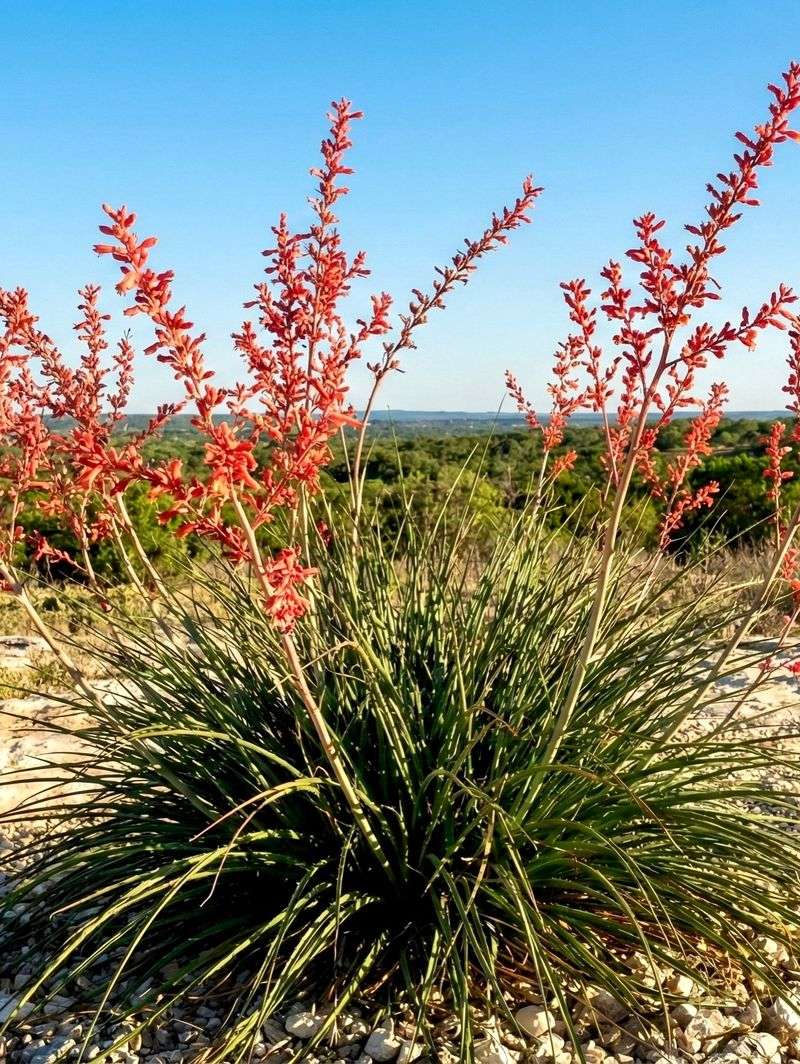
Hummingbirds cannot resist this plant. Red Yucca, also called Hesperaloe parviflora, is one of the most beloved succulents in Texas, and once you see it blooming in July, it is easy to understand why.
Those tall, arching spikes covered in coral-red tubular flowers shoot up like fireworks from a clump of narrow, grass-like foliage. The blooms can last from late spring all the way through fall, giving you months of color with almost no effort on your part.
What makes Red Yucca so special is how well it handles Texas summers. While other plants wilt and struggle, Red Yucca looks completely unbothered.
It grows in full sun and thrives in rocky, sandy, or clay-heavy soils that most plants would hate. You do not need to amend the soil much at all. Just plant it somewhere with good drainage and step back.
Watering is simple once it is established. During the first few weeks, water it every few days to help the roots settle in.
After that, rainfall alone is usually enough to keep it healthy. Even in a dry summer, a deep watering every two to three weeks is plenty.
Red Yucca stays evergreen through winter in most of Texas, meaning your garden keeps some structure and green color even in January. The foliage forms a tidy, fountain-like mound that looks polished year round.
It works beautifully along driveways, in rock gardens, or as a bold accent near a front door. Plant a few together and the effect is even more dramatic. This is a plant that earns its spot every single month of the year.
2. Texas Prickly Pear
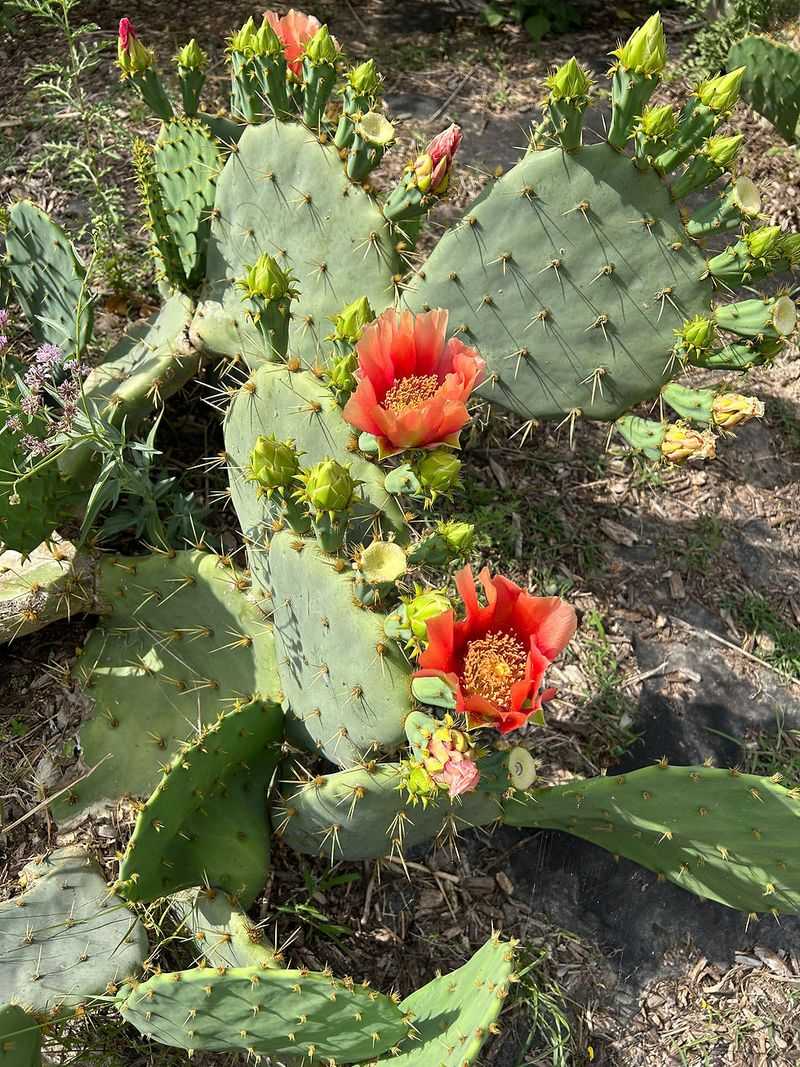
There is something undeniably bold about a Prickly Pear cactus. It does not blend into the background.
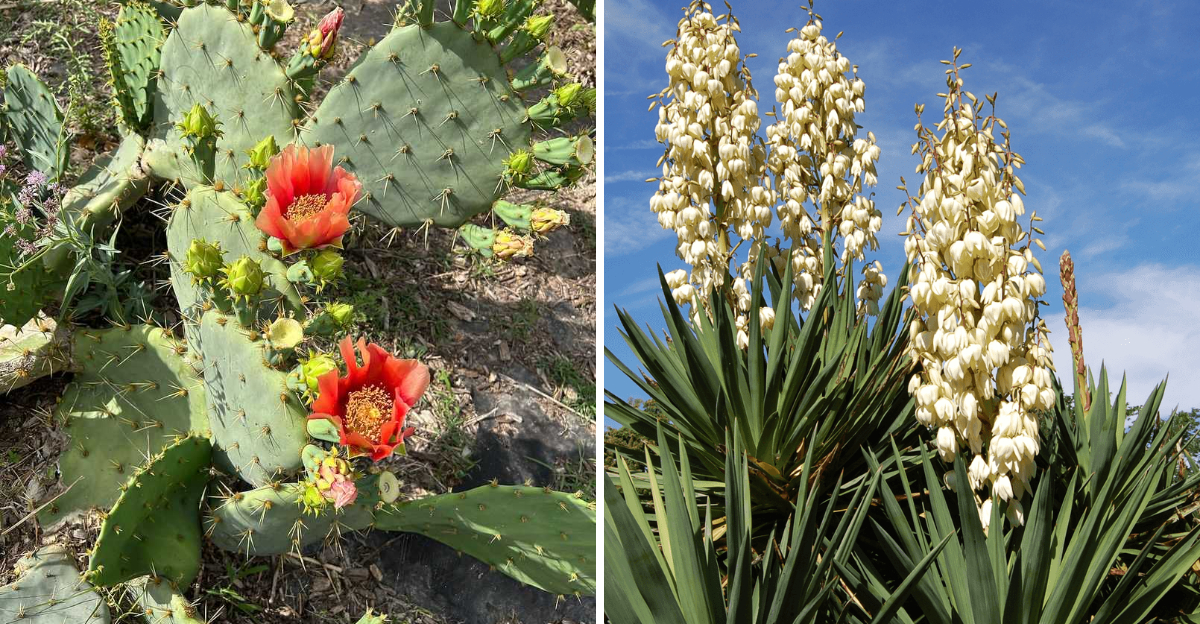
Texas Prickly Pear, known scientifically as Opuntia engelmannii, commands attention with its wide, flat pads stacked like green paddles, its cheerful yellow or orange flowers in spring, and its deep red or purple fruit that shows up in late summer.
Your Texas Garden Changes Every Week. Your Plan Should Too.
Gardening in Texas changes quickly throughout the season. Every Friday you’ll receive a simple weekly plan showing exactly what to plant, prune, fertilize, harvest, and protect so you never miss the right timing.
Few plants pack that much visual interest into one package. For Texas gardeners, Prickly Pear is one of the most reliable plants you can choose. It handles extreme heat, long droughts, and poor soil without skipping a beat.
Planting it in July is actually smart because the warm soil helps the roots establish quickly. Just wear thick gloves when handling it, because those spines are no joke.
Plant it in a spot with full sun and soil that drains well, and you are basically done. Once established, this cactus needs almost no supplemental watering. Rain does the job for most of the year.
In an unusually dry stretch, one deep watering per month is more than enough. Overwatering is actually the biggest mistake people make with Prickly Pear.
Too much moisture causes the pads to rot from the inside out, which is the one thing you want to avoid.
The fruit, called tunas, are edible and can be used to make jelly, syrup, or juice. Birds and wildlife love them too.
Prickly Pear also works as a natural barrier along fence lines or property edges because nothing wants to push through those spines. It is rugged, useful, and genuinely stunning when it flowers. Texas gardens feel more authentic with at least one growing in them.
3. Texas Sotol
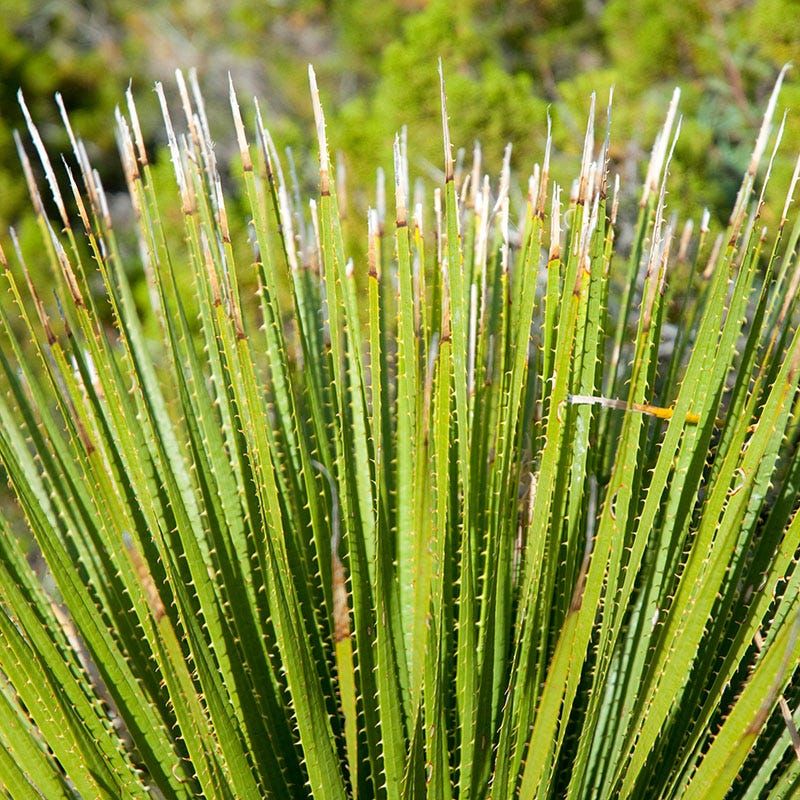
Walk through the Big Bend region of West Texas and you will see Sotol everywhere. It grows on rocky slopes and open hillsides like it owns the place, which in a way, it does.
Texas Sotol, or Dasylirion texanum, is a dramatic rosette plant with long, narrow leaves that have tiny serrated teeth along the edges. The leaves arch outward in all directions, creating a spiky, sphere-like shape that looks almost architectural.
Sotol is a slow grower, but patience pays off. Over time, it develops a thick trunk-like base and eventually sends up a towering flower stalk that can reach twelve feet or more.
The stalk is covered in thousands of tiny cream-colored flowers that attract bees, butterflies, and other pollinators. After the stalk fades, the plant keeps growing and can produce another one in future years.
It is a show that is absolutely worth waiting for. In the garden, Sotol fits beautifully into rock gardens, xeriscapes, and dry native-style borders. It pairs well with boulders, gravel mulch, and low-growing groundcovers.
Plant it in full sun with fast-draining soil for the best results. Sandy or rocky soil is ideal. Clay-heavy soil can cause problems unless you mix in gravel or coarse sand to improve drainage before planting.
Watering is minimal once established. During the first season, water deeply every week or two to encourage root growth.
After that, Sotol handles Texas droughts without much help at all. It stays evergreen through winter and rarely needs pruning.
If older leaves brown at the tips, you can trim them back, but the plant looks just fine left alone. This is a true Texas original.
4. Whale’s Tongue Agave
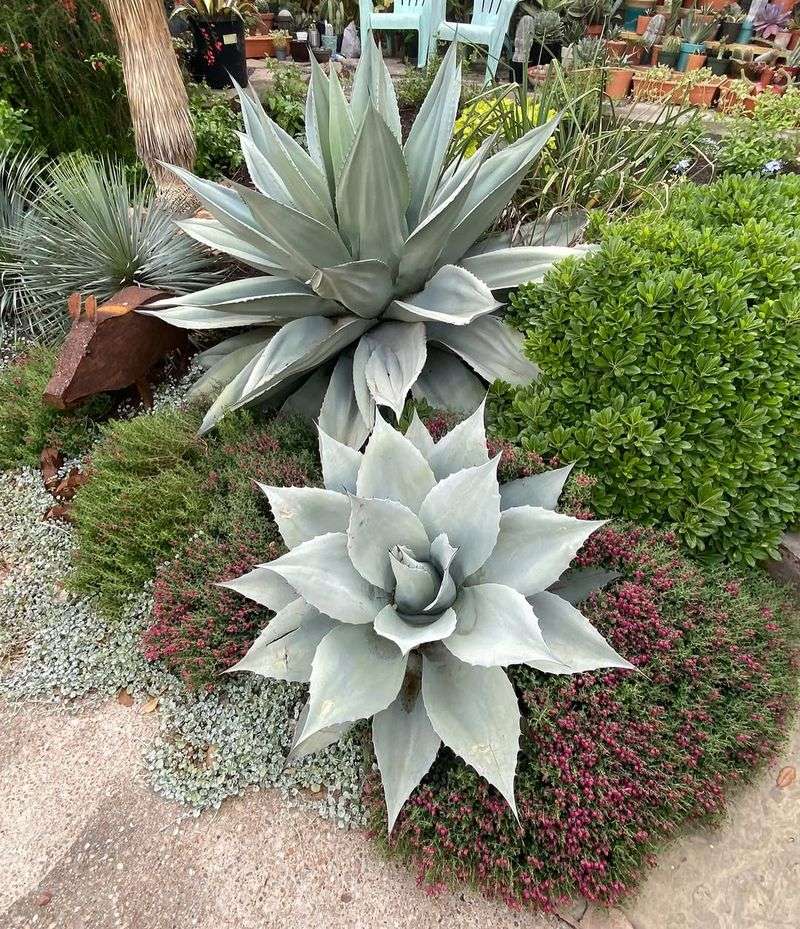
If you want one plant that makes people stop and stare, Whale’s Tongue Agave is it. Agave ovatifolia earns its common name honestly.
The leaves are wide, thick, and gently cupped, with a blue-gray color that glows in full sunlight.
Each leaf ends in a single dark spine, and the whole plant forms a perfectly symmetrical rosette that looks like it was sculpted rather than grown. It is one of the most visually striking agaves available for Texas gardens.
Unlike some agaves that spread with offset plants or grow too large for smaller spaces, Whale’s Tongue Agave stays relatively tidy.
A mature plant typically reaches about four to five feet tall and six feet wide, which is large enough to anchor a landscape bed but not so large that it takes over the yard.
It works especially well as a centerpiece in a gravel garden, surrounded by smaller plants that complement its bold color and shape.
Planting in July works well because warm soil encourages fast root establishment. Choose a spot with full sun and excellent drainage.
Raised beds, rocky slopes, and sandy soil are all great options. If your soil holds water after rain, mix in coarse gravel before planting.
Water the plant thoroughly after planting, then let the soil dry out completely before watering again.
Once established, this agave is incredibly tough. It handles Texas heat without any shade protection and survives freezes down to about zero degrees Fahrenheit, making it one of the most cold-hardy agaves available.
Fertilizer is rarely needed. Just give it sun, sharp drainage, and room to spread out. In return, it will look spectacular for many years without asking for much at all.
5. Soft-Leaf Yucca
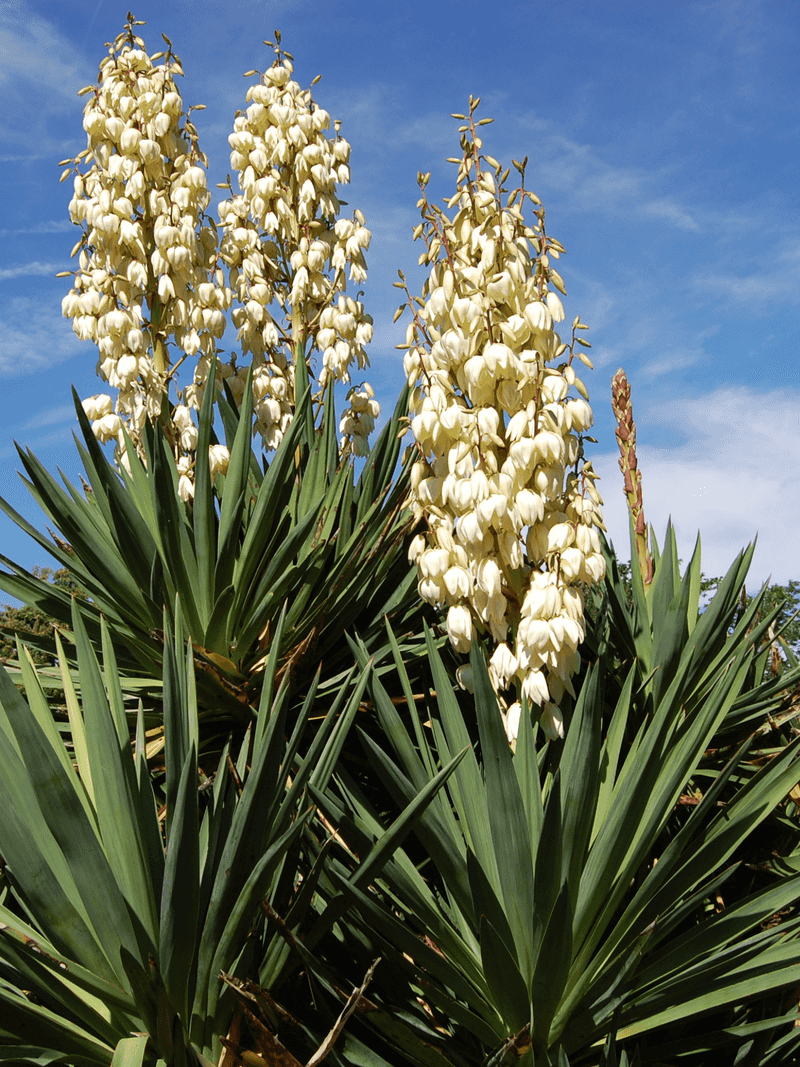
Not every succulent needs to look intimidating. Soft-Leaf Yucca, known as Yucca recurvifolia, brings the drought-tolerance and evergreen structure of a classic yucca without the sharp, poking leaves that make some people nervous about planting yuccas near walkways or patios.
The leaves are long, blue-green, and gently arching, with tips that are soft enough to brush past without getting jabbed. It is a friendlier-looking plant that still brings serious toughness to the landscape.
Soft-Leaf Yucca works beautifully in spots where you want structure and year-round greenery without an overly wild or harsh appearance.
It looks polished near front doors, along driveways, and in mixed borders where it can anchor the design without overwhelming neighboring plants.
In summer, it sends up tall white flower spikes that add vertical interest and attract bees and butterflies. The flowers have a faint sweet fragrance that you can catch on a warm evening breeze.
Planting in July gives the roots a full warm season to settle in before winter. Choose a location with full sun to light shade and well-draining soil.
Soft-Leaf Yucca tolerates clay better than many succulents, but it still performs best when drainage is decent. Water it well at planting time, then reduce watering gradually over the first few weeks as the plant adjusts to its new spot.
Maintenance is refreshingly low. Remove older leaves that brown at the base by pulling them downward firmly.
The plant rarely needs pruning beyond that. It stays green and tidy through winter without any special protection.
Over time, it may produce offsets around the base, which you can leave in place for a fuller look or carefully remove and replant elsewhere. Either way, it earns its keep every season.
6. Twist-Leaf Yucca
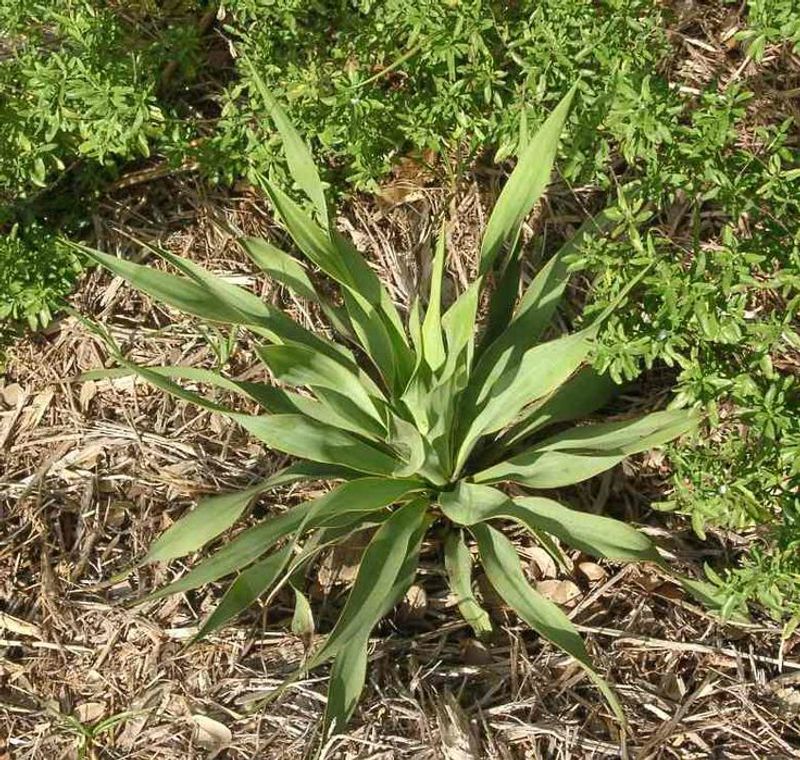
There is a certain playfulness to Twist-Leaf Yucca that sets it apart from its more rigid yucca cousins.
Yucca rupicola, which is native to the Texas Hill Country, grows with narrow leaves that curl and twist in different directions, giving the plant a loose, spirited look that adds movement and texture to dry garden beds.
Even on a still day, the plant seems to have energy. It is small, quirky, and completely at home in the rocky, thin-soiled landscapes of central Texas.
Twist-Leaf Yucca is an excellent choice for gardeners working with challenging spots. Rocky slopes, gravel beds, and dry native-style borders are where it truly shines.
It stays compact, usually reaching about two to three feet tall, which makes it easy to work into smaller spaces or use as a repeating element along a garden edge.
Plant several together and the twisting foliage creates a dynamic, layered look that feels natural and unforced.
In late spring or early summer, Twist-Leaf Yucca sends up a tall flower stalk covered in creamy white, bell-shaped blooms. The flowers attract native bees and yucca moths, which have a fascinating relationship with yuccas that dates back thousands of years.
The moth pollinates the flower and lays eggs inside, and the larvae feed on some of the seeds. It is one of nature’s most interesting partnerships.
Planting in July is perfectly fine for this tough native. Water it well for the first few weeks, then back off as the roots take hold.
Full sun and fast-draining soil are the two things it truly needs. Once established, it rarely needs supplemental watering and handles both drought and freezing temperatures without any extra care. It is a small plant with a big personality.