These Texas Yard Mistakes Make Powdery Mildew Worse No Matter What You Try
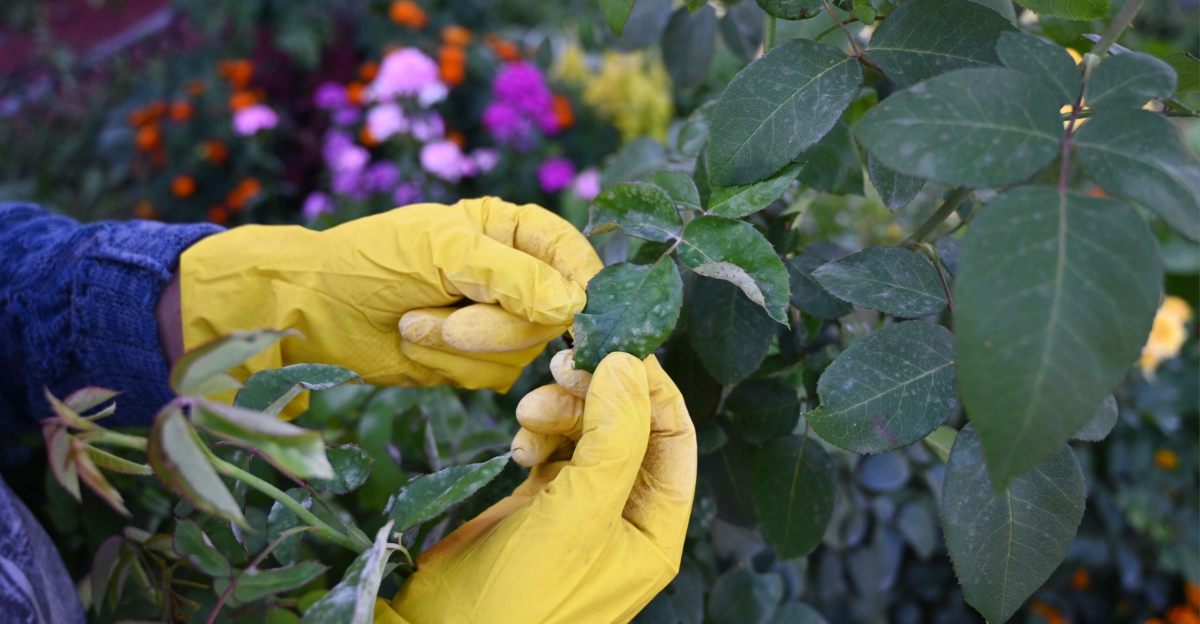
You treated it. You sprayed it. You felt pretty good about the situation.
And then a week later those white dusty patches are back on your plant leaves like nothing ever happened.
If that cycle sounds painfully familiar, welcome to the powdery mildew experience in a Texas yard, and you are definitely not alone in the frustration. This particular fungal problem has a reputation for stubbornness that is honestly well earned.
But here is the part that catches most gardeners off guard: the treatments are only part of the equation.
Many common yard habits are quietly making the conditions more favorable for powdery mildew to keep coming back, from crowded plants and dense shrubs to certain watering routines and heavy nitrogen fertilizer use.
Figuring out what is actually encouraging it in your specific yard is where real control starts.
1. Crowding Plants Until Air Cannot Move
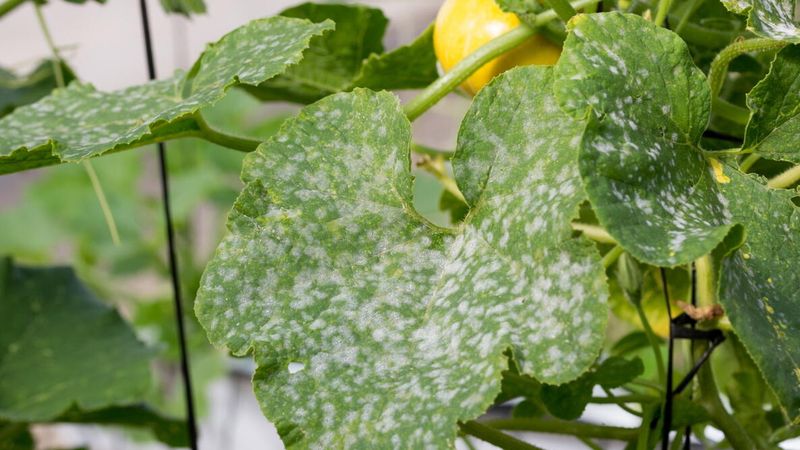
White patches spreading across tightly packed flower beds are one of the clearest signs that crowding is working against you.
When plants grow so close together that their leaves overlap, air movement slows down between them, and that stagnant, humid pocket near the foliage is exactly where powdery mildew thrives.
Texas summers may feel dry in the afternoon heat, but early mornings and evenings can bring enough humidity to encourage fungal growth when airflow is poor.
Zinnias, roses, squash, and bee balm are all popular in Texas yards, and all of them tend to struggle with mildew when they are packed in too tightly. Spacing guidelines on plant tags are not just suggestions.
They reflect how much room a plant actually needs to stay healthy and allow air to pass through freely.
Before planting a new bed or filling in gaps with more transplants, take a step back and think about what the space will look like in midsummer when everything has filled out.
Thinning existing plants by removing a few from a crowded row can improve airflow noticeably.
Even pulling out a few competing stems from inside a bushy plant helps. Good spacing is one of the simplest adjustments a Texas gardener can make, and it often matters more than any spray applied after mildew has already appeared across the leaves.
2. Planting Mildew-Prone Favorites In Too Much Shade
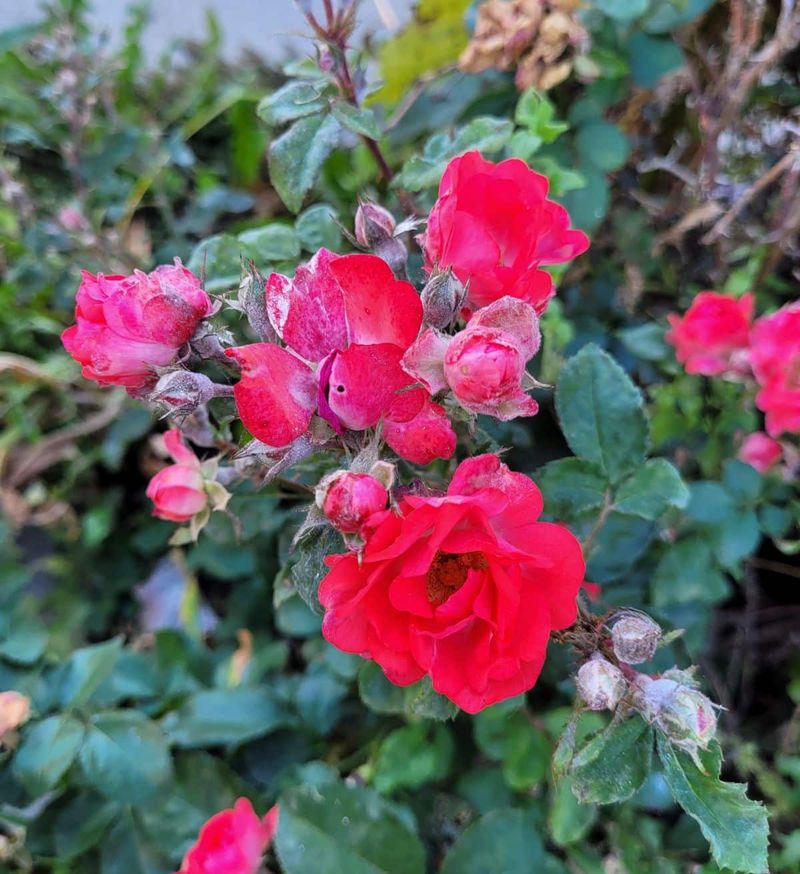
Roses sitting in the shadow of a large oak tree, or crape myrtles tucked against a shaded fence, may look like they are getting a break from the Texas heat, but shade can actually make powdery mildew worse on plants that prefer more sunlight.
Many mildew-prone ornamentals need several hours of direct sun each day to dry off morning moisture and keep their foliage in good condition.
Shade slows down that drying process, leaving leaf surfaces damp longer and creating conditions where fungal spores can take hold more easily. Crape myrtles, roses, zinnias, and squash are all examples of plants that perform better with good sun exposure.
Placing them in spots that receive only a few hours of filtered light often leads to weaker growth and more frequent disease problems.
Your Texas Garden Changes Every Week. Your Plan Should Too.
Gardening in Texas changes quickly throughout the season. Every Friday you’ll receive a simple weekly plan showing exactly what to plant, prune, fertilize, harvest, and protect so you never miss the right timing.
In Texas, shaded beds near fences, patios, or large trees can stay noticeably cooler and hold more moisture than open sunny areas.
That combination of reduced air movement, lingering moisture, and lower light can make mildew-prone plants much harder to keep healthy.
Before planting, observe how much direct sun a spot receives during the middle of the day.
Moving a plant to a sunnier location, or choosing a more shade-tolerant variety for that shaded spot, can reduce how often powdery mildew shows up without requiring any additional treatments on the leaves themselves.
3. Watering In Ways That Raise Humidity Around Leaves
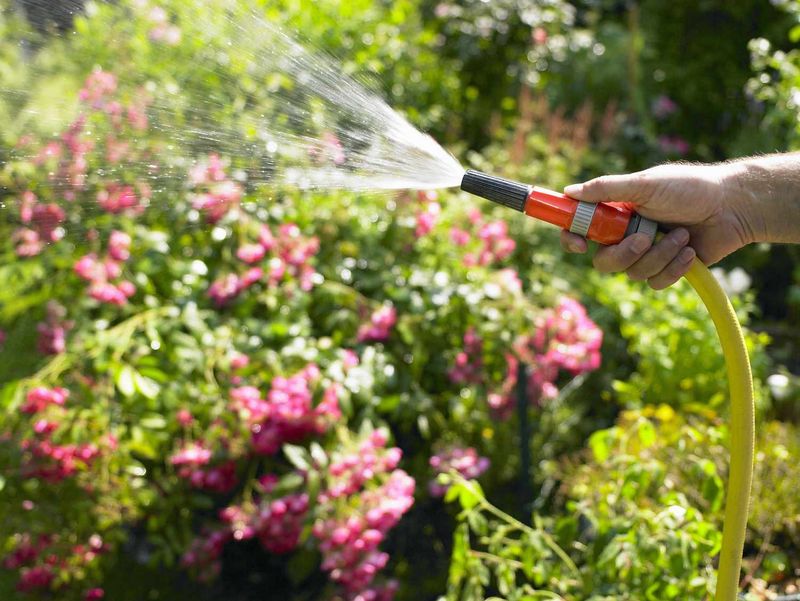
Sprinklers that spray across the tops of leaves rather than soaking the soil around plant roots are quietly raising the humidity right where powdery mildew wants it.
Watering late in the afternoon or evening makes the situation worse because wet foliage going into a warm Texas night does not dry quickly, and that prolonged moisture on leaf surfaces can encourage fungal growth.
Powdery mildew does not actually need standing water to spread, but high humidity around leaf surfaces and warm temperatures create conditions that favor it.
Overhead irrigation that repeatedly wets foliage, especially in crowded beds or shaded areas, can make plants more vulnerable over time.
Drip irrigation and soaker hoses deliver water directly to the root zone, which keeps foliage much drier and reduces the humidity pocket that forms around leaves when sprinklers are used overhead.
Watering in the morning rather than the evening is a simple habit that helps a lot. Morning watering gives any moisture that lands on leaves time to dry off before temperatures drop at night.
Checking your irrigation setup to see whether heads are spraying onto foliage unnecessarily is worth the effort.
In Texas, where summer nights can stay warm and humid, small changes to how and when you water can make a real difference in how often powdery mildew appears across your ornamentals and vegetables.
4. Letting Dense Shrubs Stay Too Thick Inside
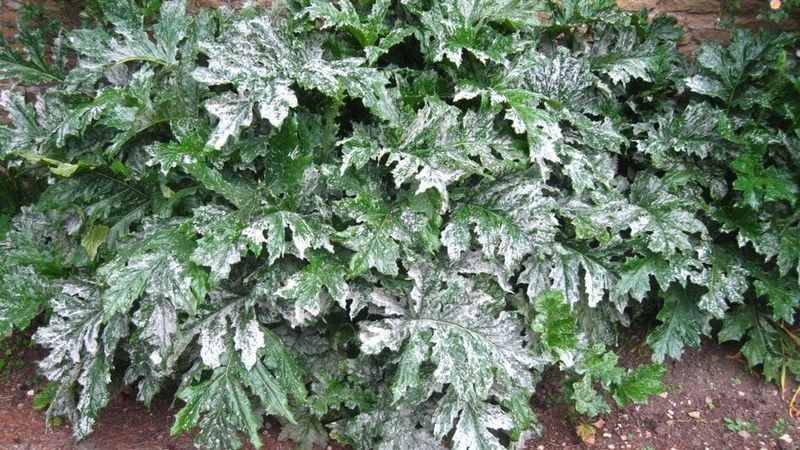
A shrub that has not been thinned in several years builds up a dense interior where old stems cross each other, leaves pile up, and air barely moves at all.
That crowded interior becomes a humid pocket that holds moisture long after the rest of the yard has dried out, and powdery mildew can establish itself deep inside the plant where it is hard to even notice until it spreads outward.
Foundation plantings, hedges along fences, and ornamental shrubs near patios in Texas yards often grow thick over time without regular thinning.
Selective pruning that opens up the inside of a shrub improves airflow through the canopy and reduces the conditions that encourage fungal problems.
Removing crossing branches and old woody stems from the interior lets light and air reach the center of the plant more effectively.
The timing of pruning matters too. Heavy pruning that pushes a flush of soft new growth right before humid weather can leave tender leaves more vulnerable to mildew.
Light thinning done thoughtfully and at the right time of year helps maintain good structure without triggering excessive regrowth.
In Texas, where shrubs like wax myrtle, ligustrum, and ornamental roses can grow dense quickly, thinning works best as a regular maintenance habit rather than something saved for when things get out of hand.
Keeping interior spaces consistently open can help prevent powdery mildew from building up and returning season after season.
5. Feeding Too Much Nitrogen In Summer
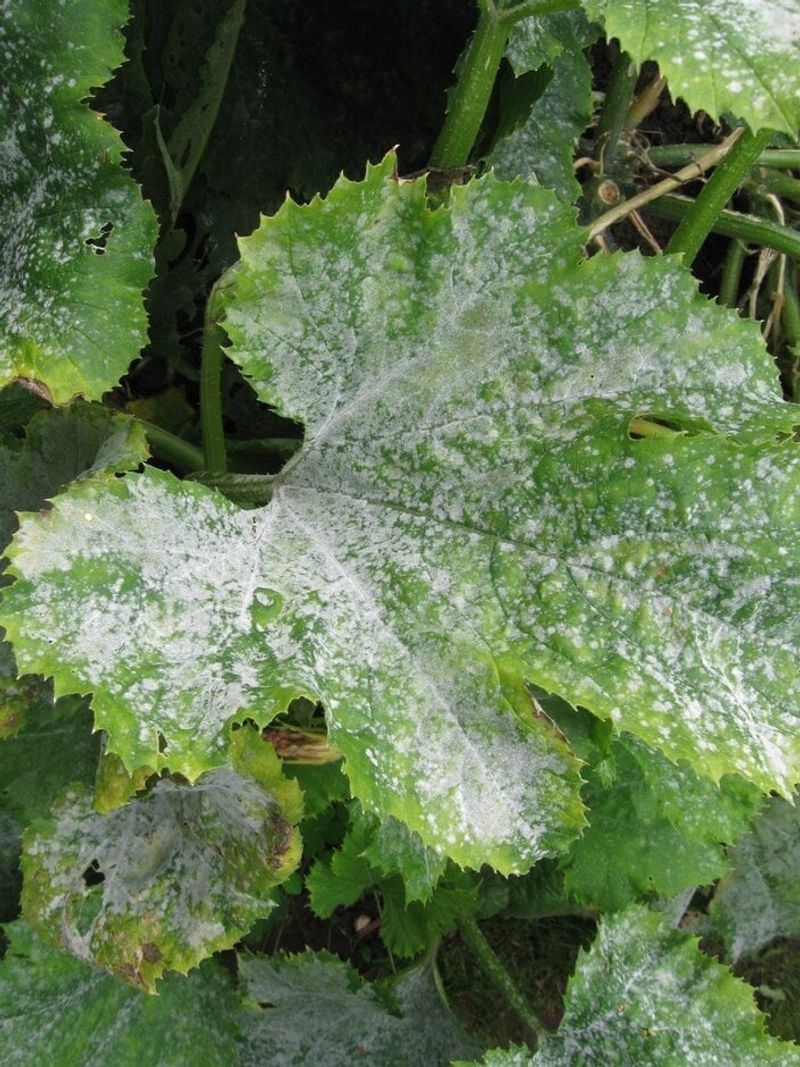
Lush, soft new growth after a heavy feeding looks encouraging at first, but that tender green flush is exactly what powdery mildew tends to colonize most aggressively.
Nitrogen fertilizer pushes rapid vegetative growth, and the new leaves that emerge quickly are softer, thinner, and more susceptible to fungal infection than mature foliage that has had time to develop fully.
In Texas, applying heavy doses of nitrogen to roses, ornamentals, or vegetables during the warm, humid months of late spring and summer can create a cycle where the plant keeps pushing out vulnerable new growth right when disease pressure is high.
Slowing down the feeding schedule during periods when powdery mildew is already active gives existing growth time to mature and harden off a bit before new leaves emerge.
Balanced fertilizers with lower nitrogen ratios, or slow-release formulations that feed plants gradually rather than all at once, are often a better fit for Texas summer conditions.
Soil testing can help you understand what your plants actually need rather than applying fertilizer on a fixed schedule regardless of conditions.
Feeding plants well is important, but timing and rate matter just as much as the product you choose.
Keeping nitrogen inputs moderate during the months when powdery mildew pressure is highest can reduce how much tender, vulnerable growth your plants push out during that window.
6. Ignoring Infected Leaves And Garden Debris
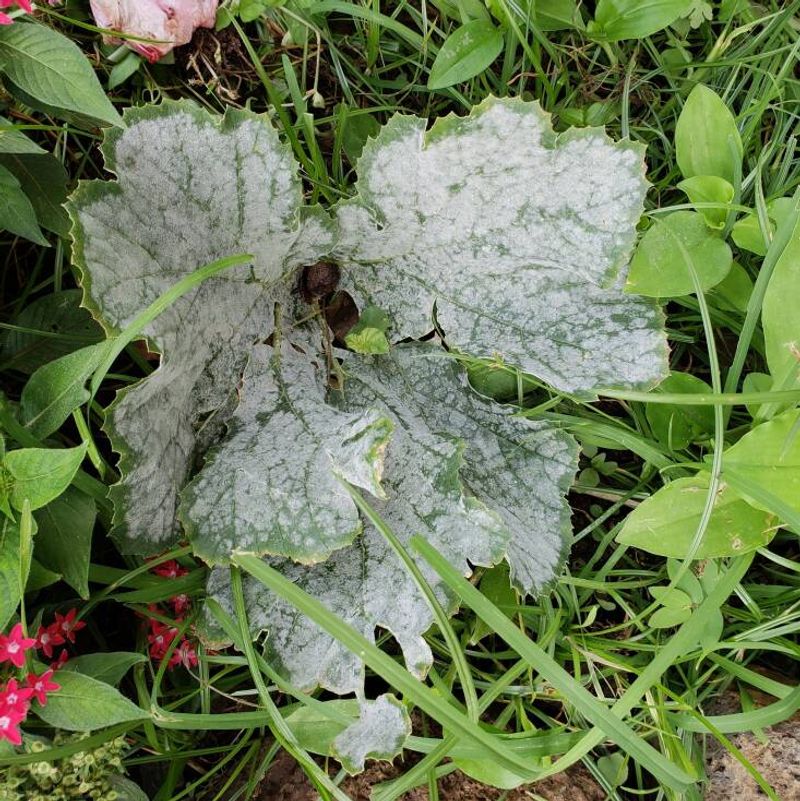
Old leaves coated in white powder sitting at the base of your plants are not just an eyesore.
They hold fungal spores that can spread to healthy foliage when wind moves through the bed, when irrigation splashes water across the soil, or when new growth emerges close to the debris on the ground.
Leaving infected material in place gives powdery mildew a reservoir to keep cycling from season to season.
Removing infected leaves from the plant and picking up fallen debris from the soil around your roses, squash, zinnias, or other susceptible plants is a straightforward habit that can reduce how much inoculum is sitting in your beds.
Bagging the material rather than composting it is the safer option, since home compost piles may not reach temperatures high enough to break down fungal material reliably.
Garden cleanup should not stop at just pulling leaves. Clearing out old stems, spent flowers, and crowded growth at the base of plants all help reduce the humid, shaded pockets where spores linger.
In Texas, where growing seasons are long and plants stay active well into fall, keeping beds tidy throughout the season rather than doing one big cleanup in winter means less accumulated infected material building up over time.
Pairing cleanup with better spacing and airflow makes it a much more effective part of your overall approach to managing powdery mildew in the yard.
7. Choosing Susceptible Varieties Again And Again
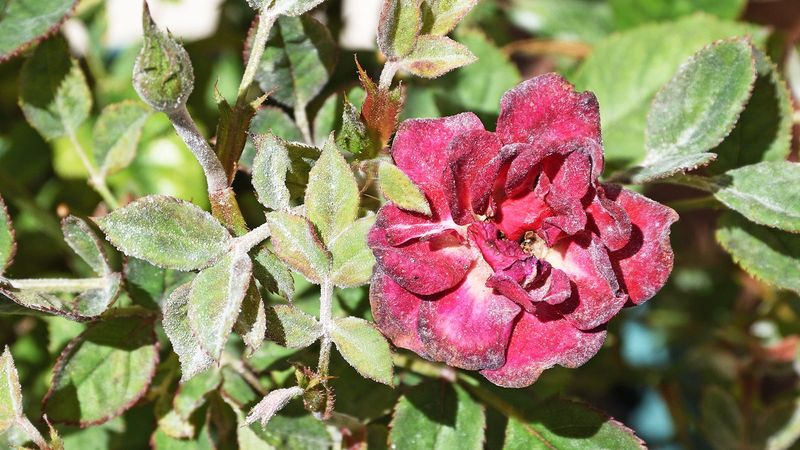
Replanting the same rose variety that struggled with mildew last year, or choosing the same squash cultivar that turned white by midsummer, is one of the most common ways Texas gardeners end up fighting the same battle repeatedly.
Some varieties are simply more prone to powdery mildew than others, and no amount of treatment fully compensates for a plant that is genetically more susceptible to the disease.
Plant breeders have developed many disease-resistant varieties of roses, crape myrtles, zinnias, squash, and other commonly grown plants.
These selections are not immune to every problem, but they tend to show significantly less mildew under similar growing conditions compared to older or more susceptible cultivars.
Checking variety descriptions when shopping, looking for labels that mention disease resistance, and reading university extension recommendations for Texas-adapted plants can point you toward better options.
Switching varieties does not mean giving up your favorite plants entirely. Many beloved garden flowers and vegetables now have improved cultivars that carry the same look and appeal with better disease tolerance.
In Texas, where warm nights and periodic humidity create conditions that favor powdery mildew on vulnerable plants, choosing resistant varieties is one of the most practical long-term strategies available.
Pairing resistant varieties with good spacing, proper sun placement, and sensible watering habits gives your plants a much stronger foundation than relying on treatment alone after mildew has already arrived.
8. Treating Symptoms Without Fixing The Yard Conditions
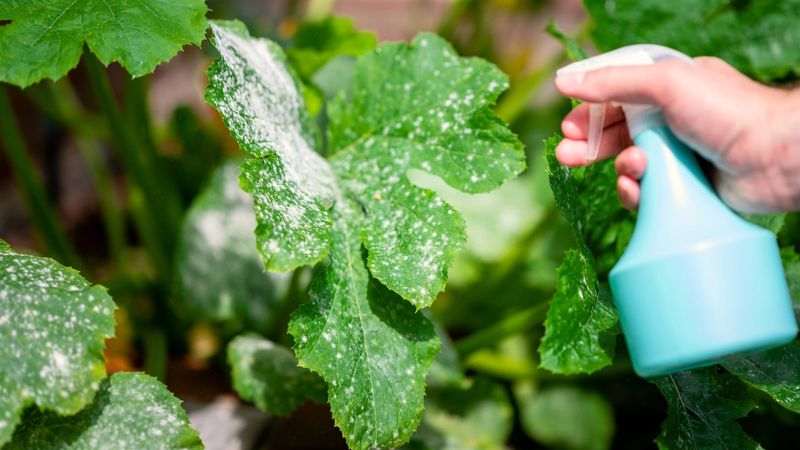
Reaching for a spray the moment white patches appear is a completely understandable reaction, but it only addresses part of the situation.
If crowded spacing, shaded placement, overhead irrigation, and dense shrubs stay exactly as they are, the conditions encouraging powdery mildew remain in place regardless of what gets applied to the leaves.
Treatments may reduce visible symptoms temporarily, but without addressing what is making the environment favorable for fungal growth, the problem tends to return.
Powdery mildew management works best when it combines cultural practices with any treatments rather than relying on sprays alone.
Improving airflow through better spacing and pruning, adjusting irrigation to reduce unnecessary foliage moisture, and moving susceptible plants to sunnier spots when possible all address underlying conditions rather than just surface symptoms.
Switching to less vulnerable varieties takes that approach one step further by removing some of the vulnerability from the equation entirely.
In Texas yards where the same beds struggle with mildew year after year, it is worth stepping back and asking what the conditions in that specific spot are doing to encourage the disease.
Is the area shaded most of the day? Are the plants packed together? Does the irrigation wet the foliage regularly in the evening? Is the soil pushing heavy growth from excess fertilizer?
Answering those questions honestly and making at least one or two changes to the actual yard setup often does more to reduce long-term mildew pressure than any single product applied to the visible white patches on the leaves.