This Is What Texas Mandevilla Needs Before The Heat Gets Brutal
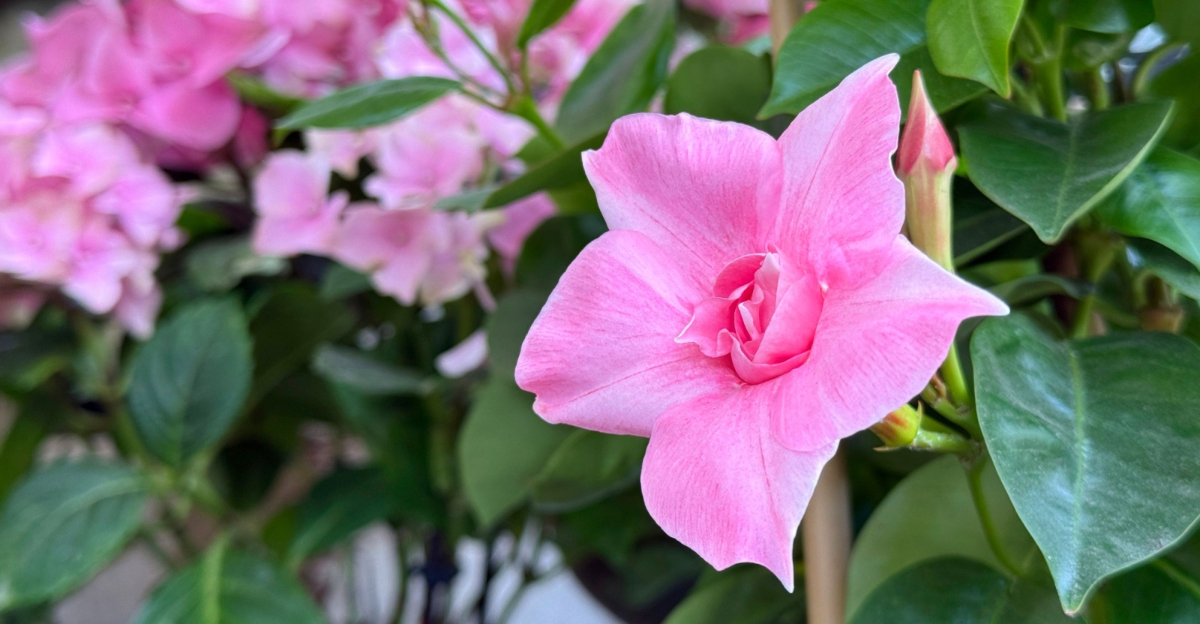
There is something about a mandevilla in full bloom that makes a Texas patio look like it belongs in a magazine.
Those bold pink, red, and white flowers climbing up a trellis or spilling out of a container are genuinely hard to walk past without stopping for a second look.
But here’s the part the pretty nursery photos don’t warn you about: Texas summers are a lot, and tropical-looking plants feel every bit of that intensity.
Intense sun, fast-drying pots, scorching pavement heat, and dry stretches that seem to go on forever can put real stress on your mandevilla before you even realize something is wrong.
The good news is that getting a few key things right before the worst heat arrives makes an enormous difference.
Good drainage, steady moisture, the right light, and a solid support structure are really all this showstopper needs to perform all season long.
1. A Large Container With Room For Roots
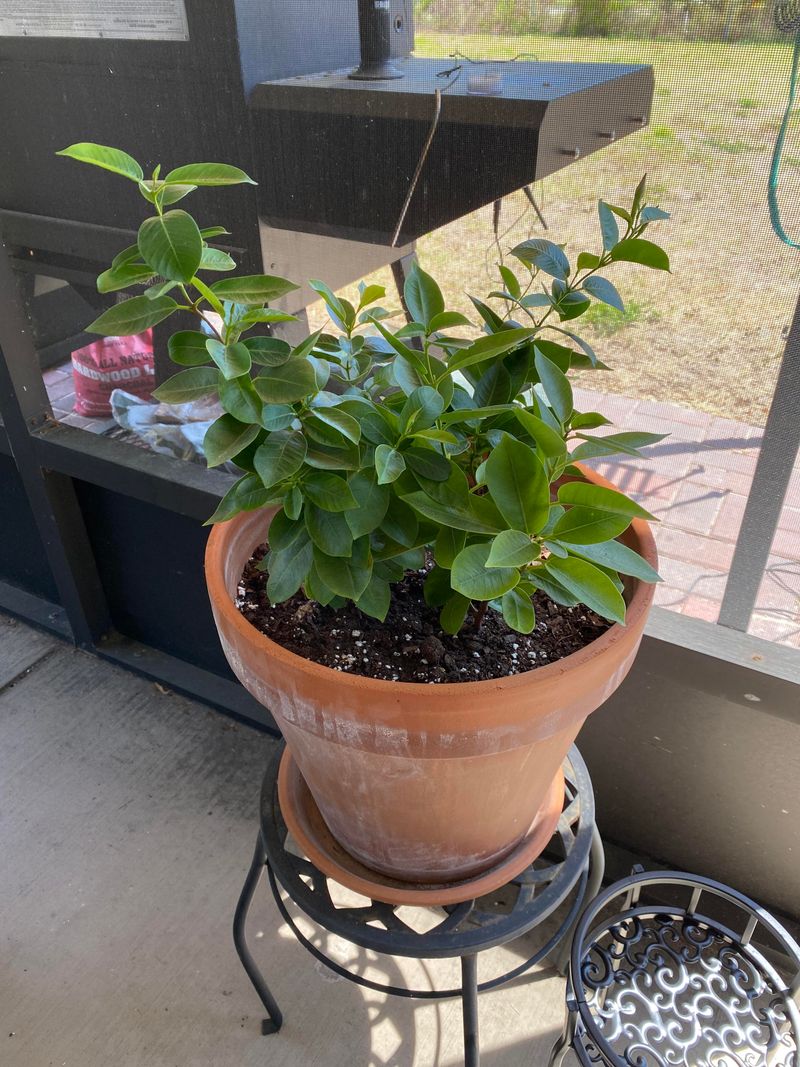
Hot Texas patios can be brutal on container plants that are squeezed into pots too small for their roots. When a mandevilla is root-bound, it dries out faster, struggles to absorb nutrients, and has less buffer against extreme heat.
Choosing a container that gives the roots real room to spread is one of the most useful things you can do before summer fully sets in.
A pot in the 12- to 16-inch range, or even larger, works well for most vining mandevilla varieties. Bigger containers hold more soil volume, which means they retain moisture longer between waterings.
That extra moisture buffer becomes especially valuable during Texas dry spells when pots on sunny patios or paved surfaces can heat up quickly and lose water fast.
Look for containers with good drainage holes at the bottom. Terra cotta is breathable and classic, but it dries out faster than resin or glazed ceramic, which can be a consideration in Texas heat.
Lightweight resin containers are popular for balconies and upper-story porches where weight matters. Whatever material you choose, size and drainage are the two things worth prioritizing before summer gets serious.
2. A Well-Drained Potting Mix
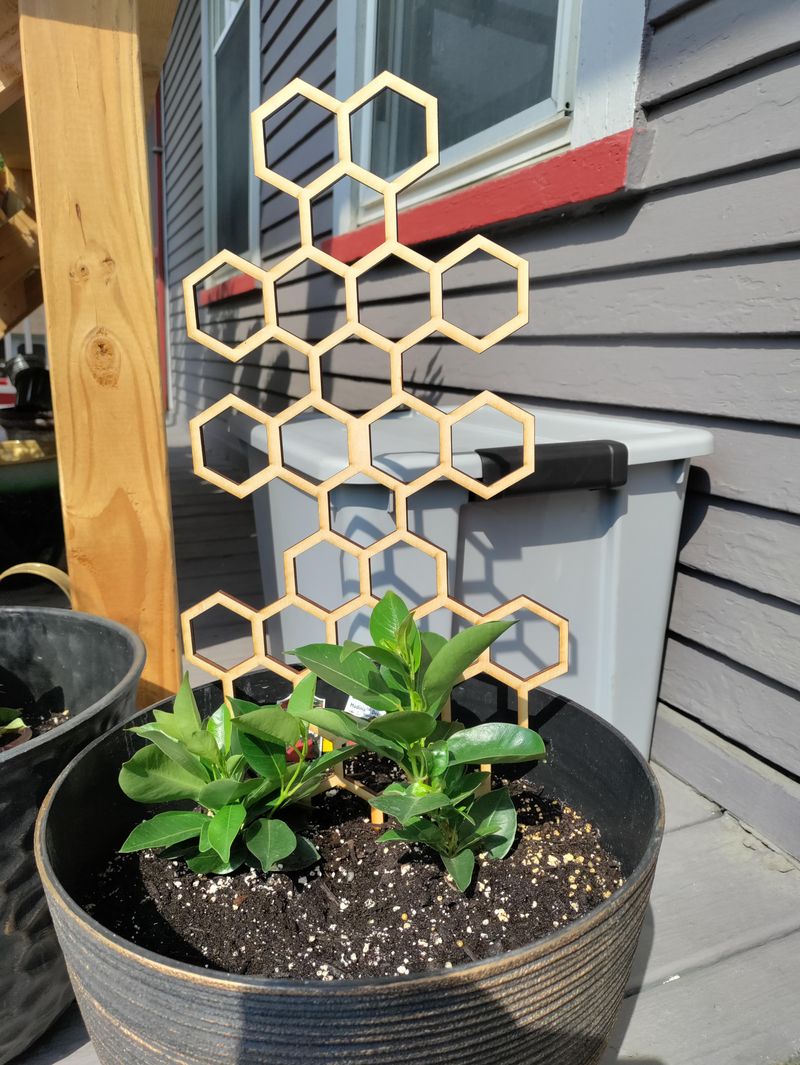
Soggy roots and Texas heat are a combination that rarely ends well for container mandevilla.
Even though this plant likes consistent moisture, it does not want to sit in waterlogged soil, especially during the warmest months when root stress can build up quickly.
Starting with the right potting mix before summer heat arrives sets the plant up for a much more stable season.
A high-quality, well-draining potting mix designed for containers works better than garden soil, which tends to compact in pots and drain poorly.
Many Texas gardeners add a small amount of perlite or coarse sand to improve drainage further, especially if the base mix feels dense or holds water longer than expected.
The goal is a mix that stays evenly moist but never feels soggy or heavy after watering.
Avoid using garden soil straight from the ground in containers. It compacts quickly, drains poorly, and can introduce pests or pathogens that stress container plants.
Your Texas Garden Changes Every Week. Your Plan Should Too.
Gardening in Texas changes quickly throughout the season. Every Friday you’ll receive a simple weekly plan showing exactly what to plant, prune, fertilize, harvest, and protect so you never miss the right timing.
Refreshing the potting mix at the start of the growing season, or at least loosening the top layer and adding fresh mix, can give roots a healthier environment heading into the hottest stretch of the Texas summer.
3. Morning Sun With Some Afternoon Shade
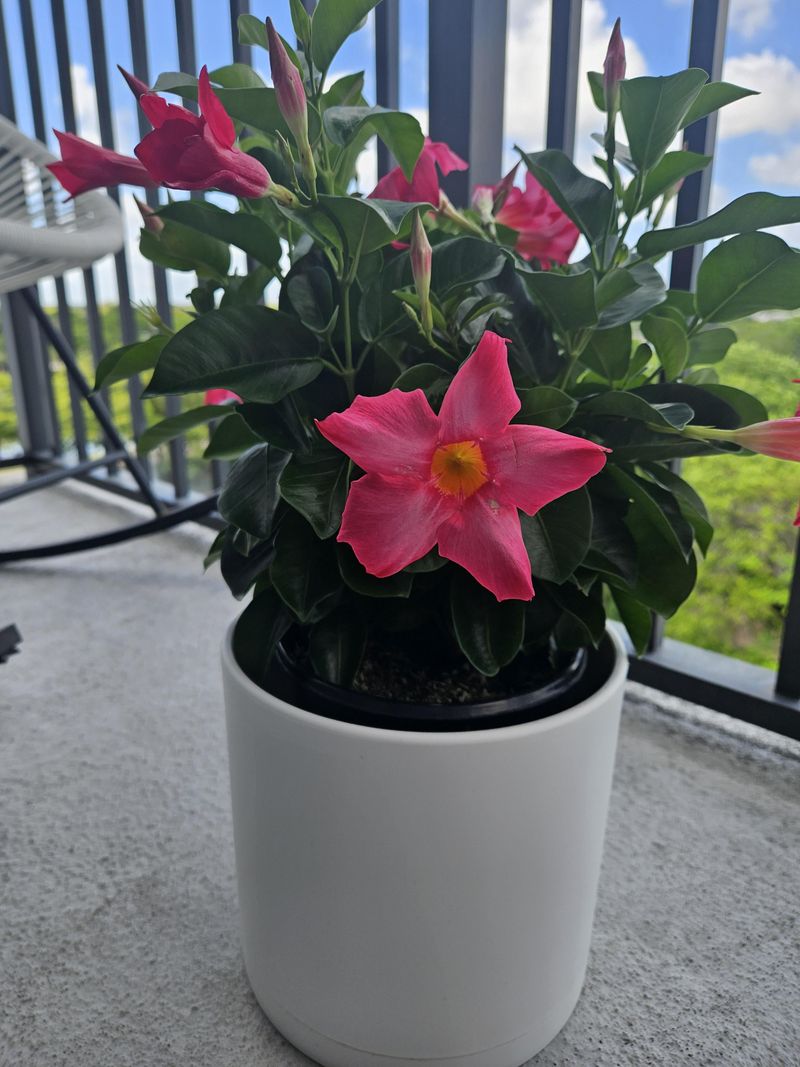
Bright morning light streaming onto a Texas porch can be exactly what mandevilla needs to produce those bold, showy blooms. This plant genuinely enjoys sun and warmth, which is part of why it tends to do well in Texas container gardens during the warmer months.
Getting the light balance right before summer peaks, though, can help the plant handle the season with less stress.
Full morning sun paired with some protection from the harshest afternoon rays is a setup many Texas gardeners find works well for container-grown mandevilla.
Afternoon sun in Texas during July and August can be intense enough to dry out pots within hours and heat foliage to stressful temperatures, especially on west-facing patios or open balconies with no overhead cover.
A spot that gets roughly six hours of morning sun, then transitions to filtered light or open shade in the afternoon, can support good bloom production while keeping the plant from overheating.
South-facing and east-facing patios often offer this kind of natural light balance.
If your space only offers full sun all day, providing some shade cloth or positioning the container near a partial overhead structure during the hottest weeks can help maintain plant health through the summer.
4. Regular Water Before The Pot Dries Too Far
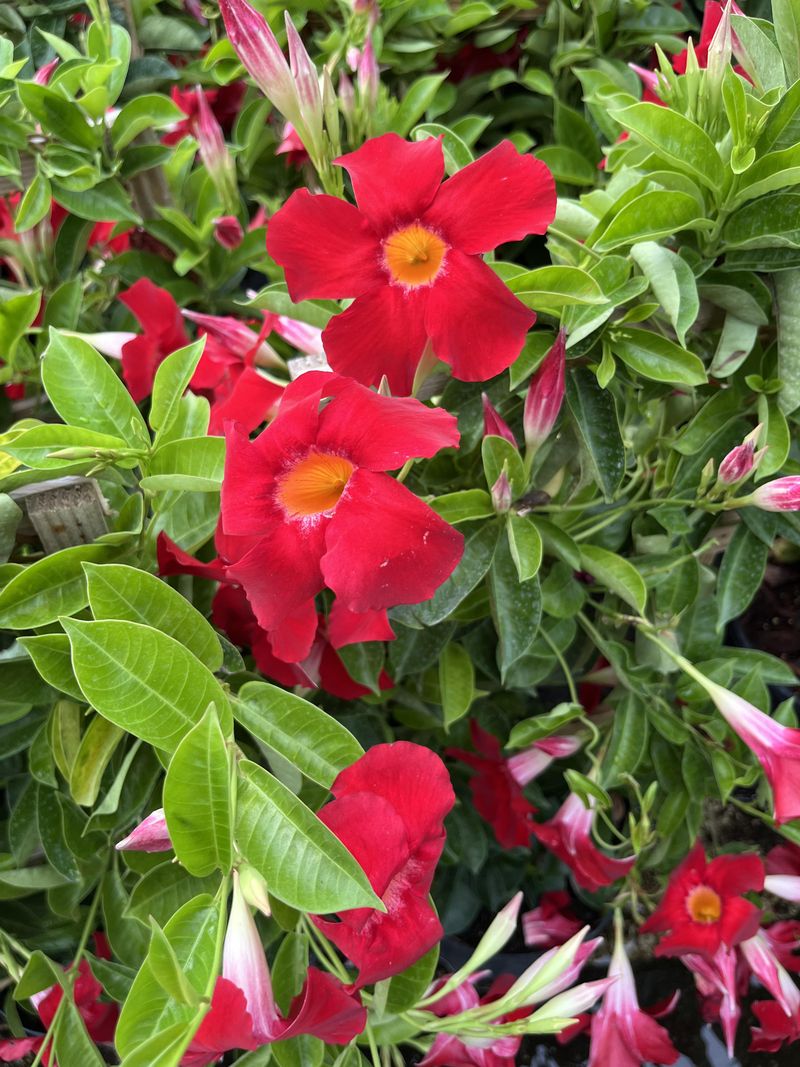
Container plants on Texas patios can go from moist to bone-dry surprisingly fast when temperatures climb and the wind picks up.
Mandevilla is tolerant of warmth, but letting the potting mix dry out completely and repeatedly can cause leaf drop, bud drop, and overall decline that is hard to reverse once summer heat is at its worst.
Checking soil moisture regularly before the pot dries too far is a simple habit that pays off.
A good general approach is to water when the top inch or two of soil feels dry to the touch. During cooler spring weather, that might mean watering every few days.
As Texas heat intensifies, you may find yourself watering daily or even twice daily for smaller pots in full sun. Pot size, material, plant size, wind exposure, and air temperature all influence how quickly the soil dries.
Water deeply each time so moisture reaches the lower root zone rather than just wetting the surface. Let the water drain freely from the pot’s drainage holes to prevent salt buildup and ensure roots are evenly hydrated.
Avoid shallow, frequent sips of water that only wet the top layer. Consistent, thorough watering adjusted to current conditions is what keeps container mandevilla healthy through the season.
5. Light Fertilizer During Active Growth
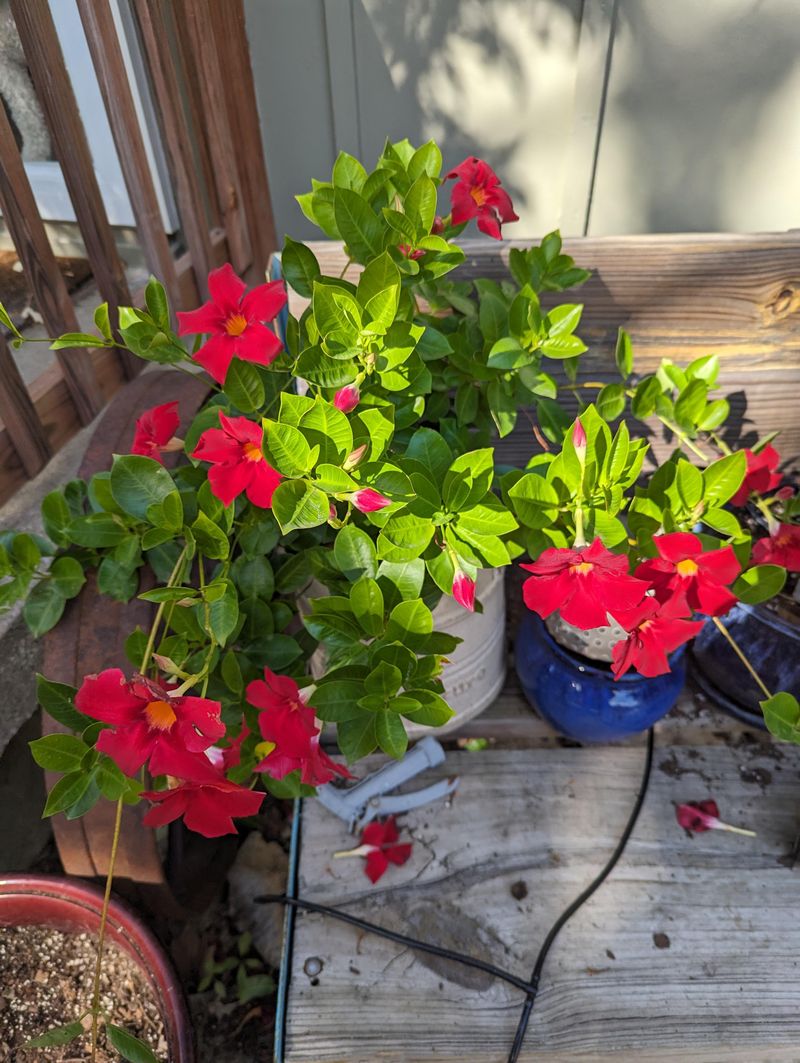
One thing that surprises some gardeners is how much a container plant depends on regular fertilizer compared to plants growing in the ground.
Nutrients in potting mix get used up and washed out with every watering, so container-grown mandevilla benefits from steady, light feeding during active growth to keep blooms coming and foliage looking healthy.
A balanced, water-soluble fertilizer or a slow-release granular product formulated for flowering container plants can work well for mandevilla during the growing season.
Some gardeners prefer a fertilizer with a slightly higher phosphorus content to encourage blooming.
The key word in either case is light. Over-fertilizing, especially with nitrogen-heavy products, can push lots of leafy growth while reducing flower production.
During the hottest stretches of Texas summer, it can be worth pulling back on fertilizer slightly if the plant appears stressed, is wilting regularly, or has stopped putting out new growth. Feeding a stressed plant can sometimes add more pressure than it helps.
Resume regular light feeding once conditions ease or the plant shows signs of recovery.
Spring and early summer, when mandevilla is actively growing and temperatures are still manageable, are generally the most productive times to fertilize consistently.
6. A Trellis Or Support For Vining Types
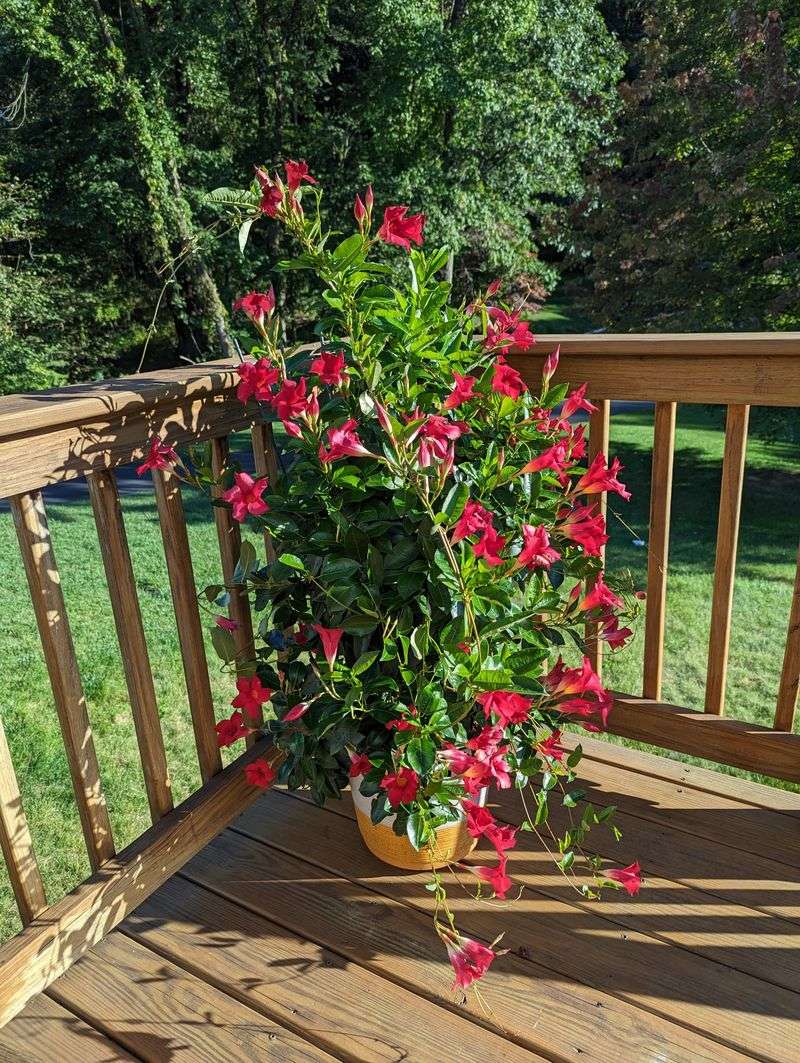
Climbing mandevilla varieties are natural scramblers, and without something to grab onto, those long vining stems can tangle, flop over, or get damaged in Texas wind and afternoon storms.
Setting up a trellis or support structure before the plant really takes off in spring gives the vines a clear path to climb and keeps the overall look tidy and intentional through the growing season.
A variety of support options work well in containers. Metal obelisks, bamboo stakes tied together at the top, wire cages, or small wooden trellises can all be placed directly in the pot.
For mandevilla growing near a fence, porch railing, or pergola post, the plant can be guided to climb the existing structure with soft ties or garden clips. The stems twine naturally as they grow, so they do not need much encouragement once they find a surface to grip.
Check the support occasionally as the plant grows through the season. Stems can become heavy with foliage and blooms, and a support that worked fine in spring may need reinforcing by midsummer.
Tying longer stems loosely to the trellis rather than letting them hang free helps the plant hold its shape during strong Texas storms and keeps the display looking full and upright rather than sprawling.
7. A Patio Spot With Warmth And Shelter
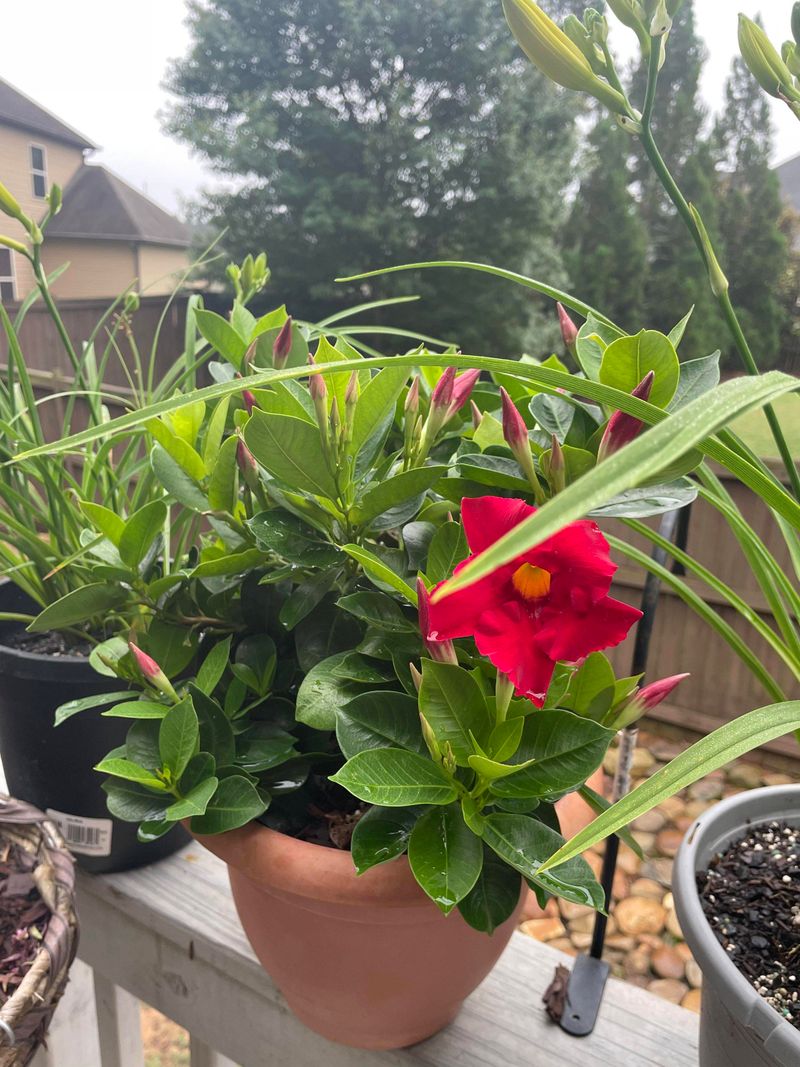
Placement matters more than many gardeners realize when it comes to keeping container mandevilla comfortable through a Texas summer.
A spot that offers warmth, some wind protection, and a bit of shelter from the most intense afternoon exposure can support the plant through heat that would otherwise take a toll on foliage and blooms.
Walls, fences, and overhead structures like pergolas or patio covers can all create microclimates that are slightly more sheltered than open garden spaces.
A corner of a covered porch, a spot near a south-facing wall that radiates warmth at night, or a position under a pergola that filters midday sun can all work well for mandevilla in Texas.
These spots tend to stay warmer at night and offer some buffer against drying winds.
Good airflow still matters, so avoid spots that are completely enclosed with no air movement. Stagnant air can encourage fungal issues and make it harder for the plant to manage heat.
The goal is a spot that feels warm and protected without being completely shut off from air circulation.
Spending a little time observing how sun, shade, and wind move through your outdoor space before settling on a final location can help you find that balance before summer heat peaks.
8. A Quick Pest Check Before Summer Stress Builds
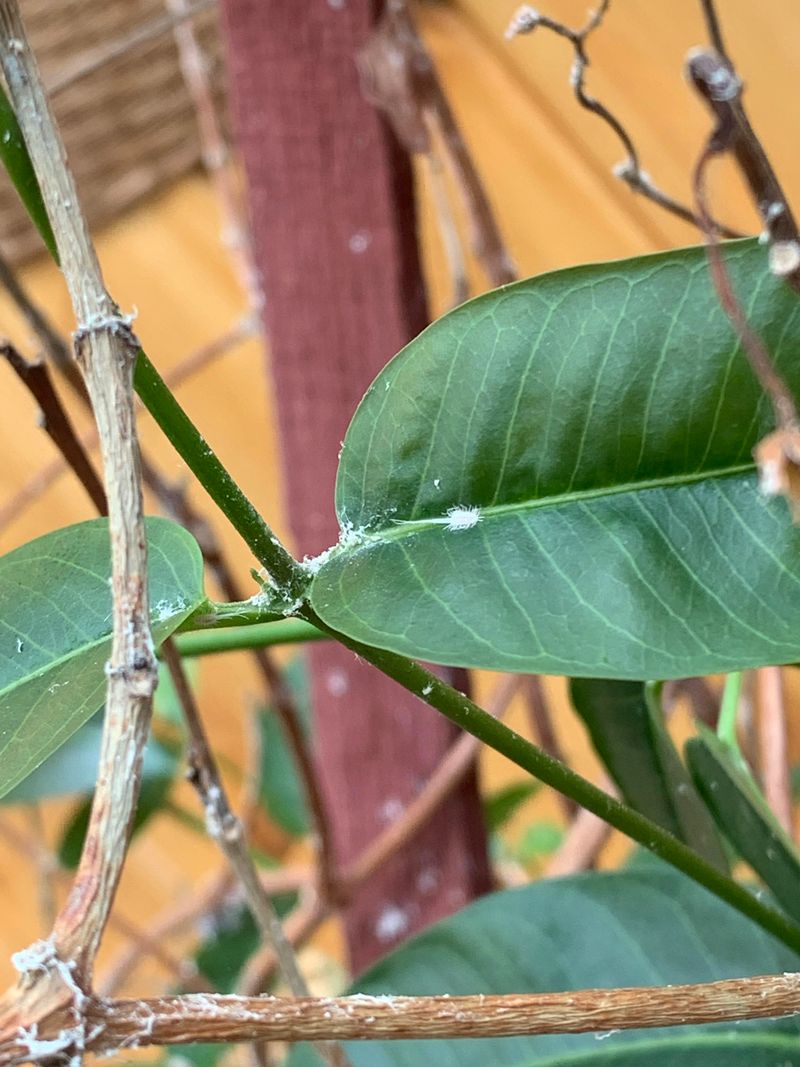
Summer stress has a way of making pest problems worse on container plants.
Mandevilla grown on Texas patios can attract spider mites, aphids, and scale insects, and these pests tend to multiply faster when plants are already dealing with heat, irregular watering, or crowded conditions.
Catching a small pest population before summer intensity builds is much easier than managing a heavy infestation mid-July.
Spider mites are among the most common issues for mandevilla in hot, dry Texas conditions. They tend to show up as fine stippling on the leaves or tiny webbing on the undersides of foliage.
Aphids cluster on new growth and can cause curling or distorted leaves. Scale insects appear as small, waxy bumps on stems and can be easy to miss until populations grow large enough to cause visible damage.
A simple visual check every week or two, focusing on leaf undersides, stem joints, and new growth tips, can catch problems early. A strong spray of water can dislodge aphids and reduce mite populations.
Insecticidal soap or neem oil can help with more persistent issues, though applications should be made during cooler parts of the day to reduce the chance of leaf sensitivity.
Keeping the plant well-watered and healthy is one of the best natural defenses against pest buildup.
9. Realistic Expectations For Texas Heat
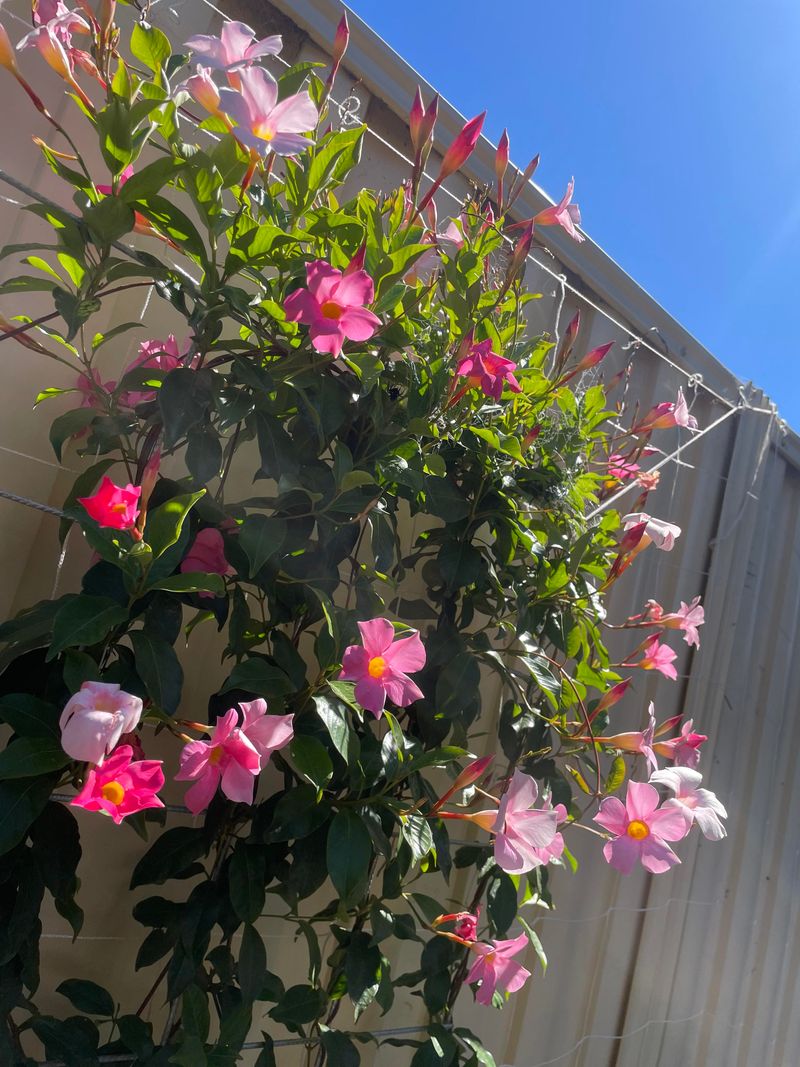
Even a well-cared-for mandevilla may slow down during the most intense weeks of a Texas summer.
Extreme heat, especially when overnight temperatures stay warm and daytime highs push well above 100 degrees, can cause the plant to pause bloom production, drop some leaves, or simply look less vigorous than it did in spring.
That kind of response is normal and does not necessarily mean something has gone wrong.
Going in with realistic expectations helps you respond calmly rather than over-correcting.
Gardeners sometimes add extra fertilizer or change the watering schedule dramatically when they see a slowdown, but those changes can sometimes add more stress than they relieve.
Maintaining consistent care, watching soil moisture closely, and providing whatever shade relief is practical are often the most helpful responses during peak heat.
Mandevilla typically rebounds when temperatures ease in late summer and early fall. New growth often appears, and bloom production can pick back up as conditions become more manageable.
Texas falls can be genuinely pleasant for container gardens, and mandevilla often looks better in September and October than it did in August.
Treating the midsummer slowdown as a temporary pause rather than a failure makes it easier to stay patient and keep the plant on track for a strong finish to the season.