The Only Oregon Native Plant You Need If You Want Hummingbirds In Your Garden All Season Long
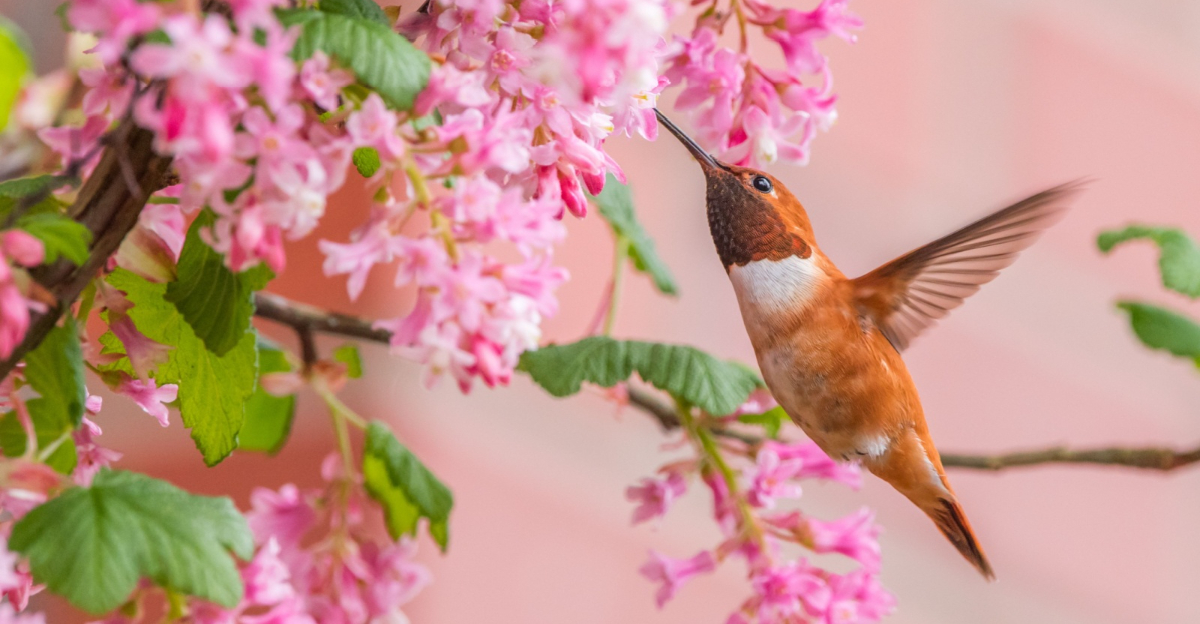
If there is one native shrub that Oregon hummingbird enthusiasts consistently recommend above everything else, red-flowering currant is almost always the first name that comes up.
And honestly, the timing alone makes a compelling case.
This plant bursts into those gorgeous drooping clusters of pink to red flowers right when rufous hummingbirds are moving through Oregon in early spring, hungry after migration and actively searching for reliable nectar sources.
It is the kind of plant and pollinator timing that feels almost too perfectly matched to be accidental.
One thing worth being upfront about though: no single native plant carries hummingbirds through every month of the season on its own.
Red-flowering currant is one of the strongest early-season anchors you can put in the ground, and it gives you an excellent foundation to build a broader hummingbird-friendly planting around.
1. Red-Flowering Currant Brings Hummingbirds Early
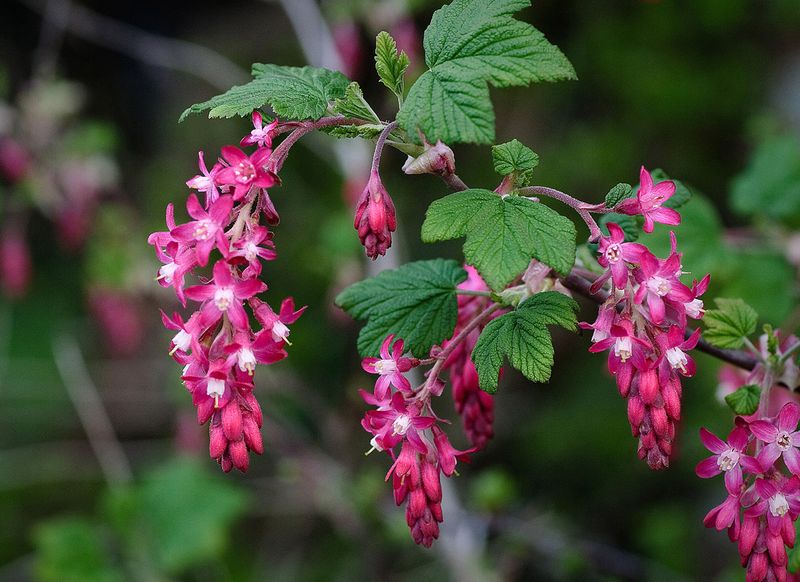
Red-flowering currant is one of the first native shrubs many Oregon gardeners should consider when they want hummingbirds near the house.
Its flower clusters arrive in spring, often before the big rush of summer perennials, which makes it valuable at a time when nectar can be harder to find in a new garden.
OSU Extension identifies red-flowering currant as a Pacific Northwest native that attracts hummingbirds and also serves as an important early-season nectar source for butterflies. That early timing is the real strength of the plant.
It does not have to bloom for months to matter. It simply needs to show up when hummingbirds are active and many garden beds are still waking up.
In western Oregon, it can fit nicely into a mixed border, woodland edge, or informal shrub planting. Give it enough room to grow into its natural shape, and avoid tucking it into a tiny spot where it will need constant trimming.
The best use is as an early anchor in a longer nectar plan, not as the only hummingbird plant in the yard. Paired with later bloomers, it can help start the season with real purpose.
2. The Native Shrub Hummingbirds Notice First
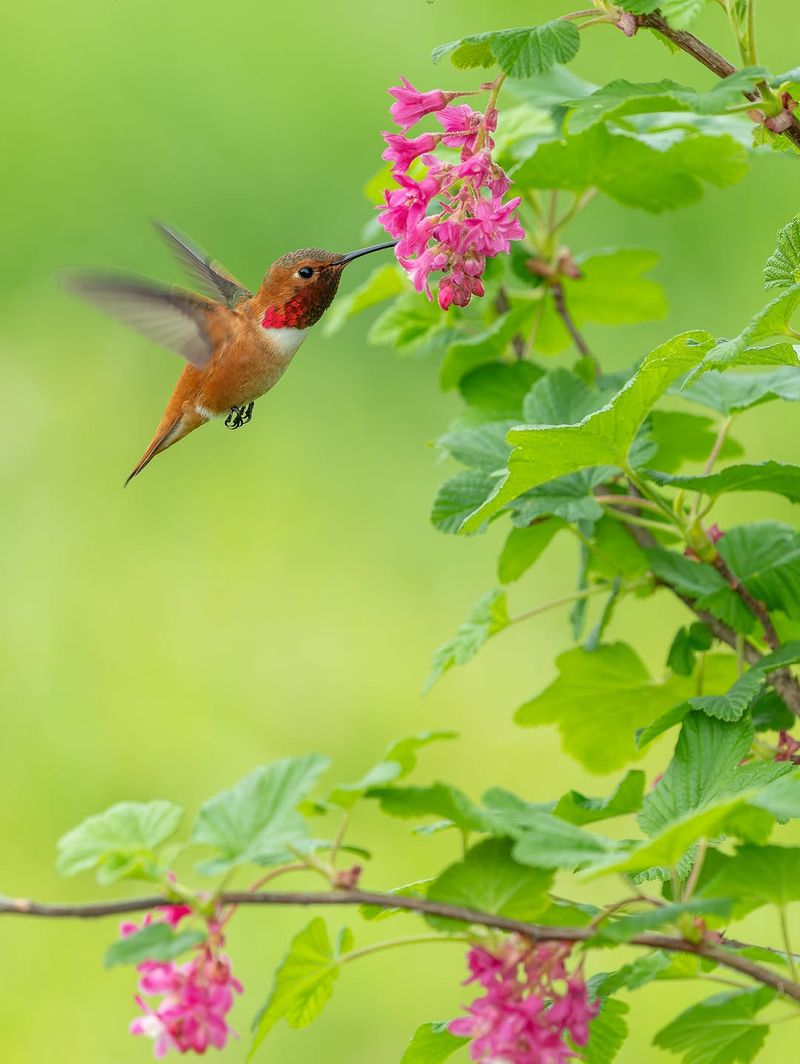
A flash of movement near pink flower clusters can make red-flowering currant feel like the shrub that announces hummingbird season. That impression has a practical reason behind it.
Rufous hummingbirds are common and widespread in much of western Oregon, according to Oregon Department of Fish and Wildlife, and they are active yard birds during the season when many early native shrubs are blooming.
Red-flowering currant fits that window well because it offers visible, nectar-bearing flowers on a woody plant that stands above low spring growth.
This makes it easier for hummingbirds to locate than tiny flowers hidden deep in a mixed bed. For homeowners, the shrub also brings structure.
It gives the garden height, cover, and a natural look even when the flowers are not the main feature. Plant it where it can get the light and soil conditions it needs, and where it has space to mature without being squeezed by paths or foundations.
It is not a guaranteed hummingbird stop, because birds respond to the whole surrounding habitat, but it is a smart first native shrub for Oregon gardeners who want to make the yard more inviting.
Your Oregon Garden Changes Every Week. Your Plan Should Too.
Gardening in Oregon changes quickly throughout the season. Every Friday you’ll receive a simple weekly plan showing exactly what to plant, prune, fertilize, harvest, and protect so you never miss the right timing.
3. Spring Blooms Make This Plant A Hummingbird Magnet
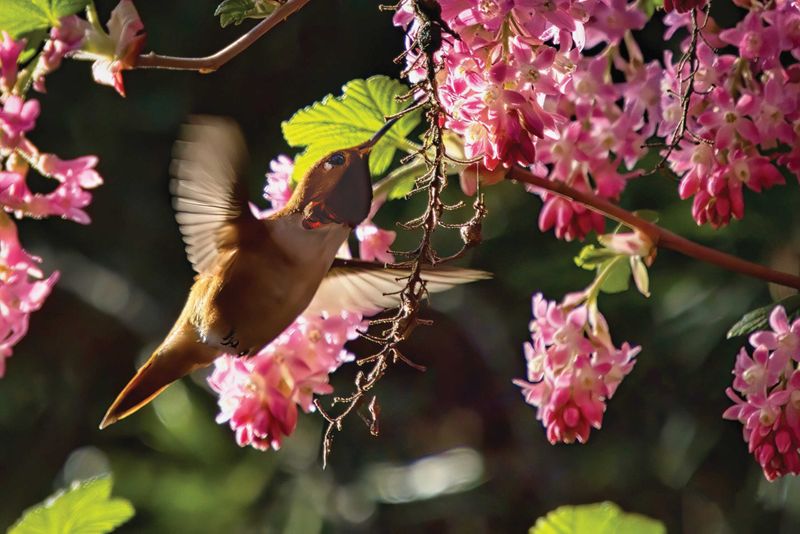
Spring bloom is what gives red-flowering currant its special place in a hummingbird garden.
Many gardeners think first about summer flowers, but hummingbirds also need early nectar sources as they move through the landscape, establish territories, and search for reliable feeding spots.
OSU’s native plant guide specifically shows native plants providing habitat and food for birds, including a rufous hummingbird taking nectar from red-flowering currant. That is a strong reason to treat this shrub as more than a pretty spring accent.
It belongs in the working part of the garden, where plants provide food, shelter, and seasonal continuity.
The flower clusters also make the plant easy to appreciate from a window or patio, especially if it is placed where morning or afternoon light catches the blooms.
The key is not to oversell it. Red-flowering currant is attractive to hummingbirds, but no plant acts like a switch that brings birds to every yard.
Nearby trees, safe cover, other nectar sources, pesticide choices, and neighborhood habitat all matter. Still, as early native shrubs go, this one earns its reputation.
It gives Oregon gardens a useful spring nectar source with real ornamental value.
4. Red Flowers Offer Early Nectar In Oregon Gardens
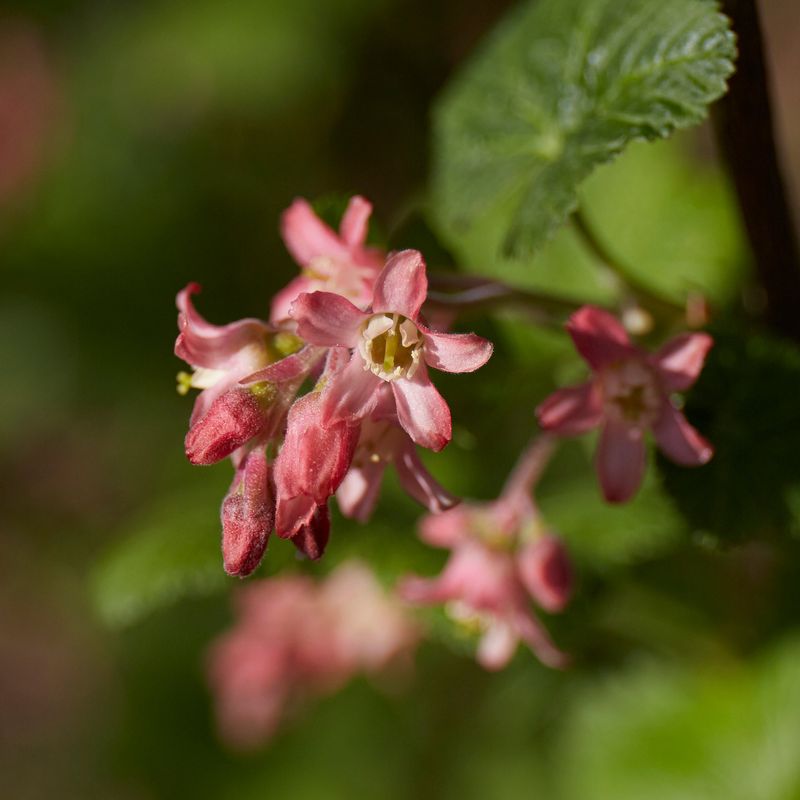
Red and pink blooms tend to catch a gardener’s eye, and they can also fit the way many hummingbird plants are noticed in the landscape.
Red-flowering currant produces hanging clusters of pink to reddish flowers, depending on the plant and selection, and those blooms are part of why it is so often recommended for wildlife-friendly Oregon gardens.
OSU lists flowering currant as a waterwise shrub that attracts hummingbirds and butterflies, describing it as a large shrub with dark pink flower clusters and full to partial sun needs.
That makes it useful in places where a gardener wants beauty, drought-aware planting, and wildlife value in one shrub.
It is still important to match it to the site. A plant struggling in poor placement may not flower well, and fewer flowers means less nectar.
In many Oregon home landscapes, red-flowering currant works well along fence lines, mixed hedges, sunny woodland edges, or the back of a pollinator border. It can be paired with lower perennials so the shrub does not stand alone after bloom.
Think of it as the early nectar layer in a garden that keeps changing through the season. Its red-toned flowers open the show, but they should not be expected to carry the whole year.
5. This Shrub Starts The Hummingbird Season Strong
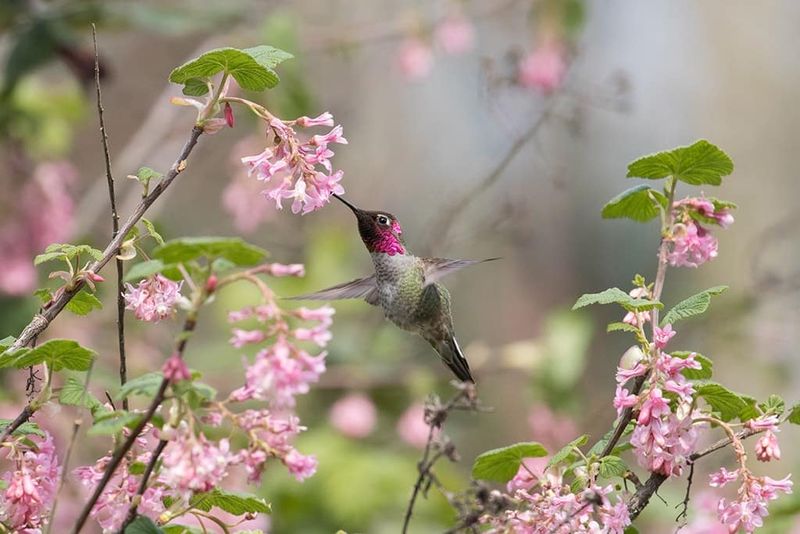
A garden that starts feeding hummingbirds early is usually more useful than one that waits for midsummer color. Red-flowering currant helps fill that early role because it blooms on a shrub, not just on a short-lived bedding plant or small patch of spring flowers.
Shrubs are valuable because they create visible feeding stations and give birds places to perch nearby. OSU pollinator guidance recommends providing flowers from early spring to late fall, using a variety of colors, shapes, and sizes, and including larger plants for shelter.
Red-flowering currant fits the first part of that plan especially well. It gives Oregon gardeners a strong spring beginning, then leaves room for other plants to take over later.
That is the best way to understand the “only plant” idea in the title. It is a strong first plant, not a complete hummingbird garden by itself.
After bloom, the shrub still contributes structure and habitat, but nectar availability shifts elsewhere. Gardeners who build around that rhythm usually get better results than those who rely on one plant to do everything.
Start with red-flowering currant, then add later bloomers so the garden keeps offering something useful after the currant flowers fade.
6. Rufous Hummingbirds Love Red-Flowering Currant
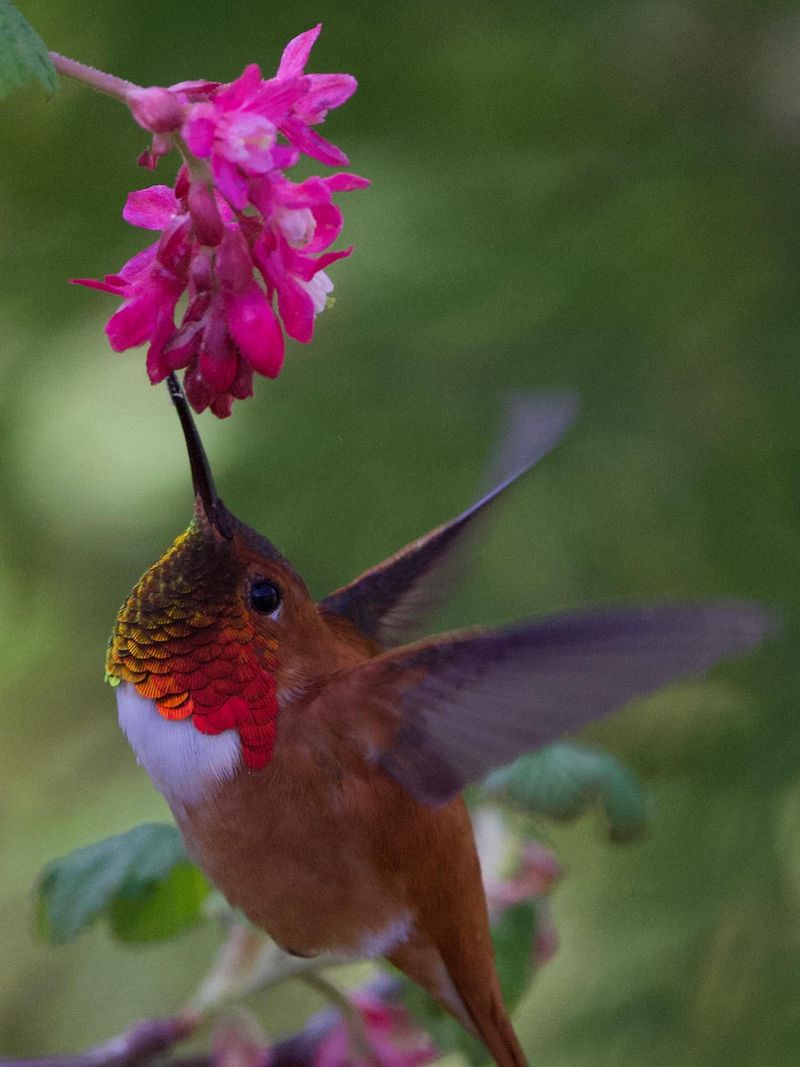
Rufous hummingbirds are a big part of why red-flowering currant feels so connected to Oregon gardens.
ODFW describes the rufous hummingbird as the most common and widespread hummingbird in Oregon, especially as a common transient and breeder through much of western Oregon.
OSU’s native plant guide also uses red-flowering currant as an example of a native plant providing food for birds, with a rufous hummingbird shown taking nectar from the flowers.
That pairing is useful for gardeners because it connects plant choice to a real local bird, not a vague idea of “wildlife value.”
Red-flowering currant can help support the early-season feeding needs of rufous hummingbirds in gardens that also offer cover and later bloom.
It should still be planted thoughtfully. A shrub placed in a harsh, cramped, or overly shaded spot may not perform the way the gardener hopes.
Give it enough light, room, and care during establishment, especially during dry Oregon summers. Once settled, it can become a dependable spring feature.
The plant will not make rufous hummingbirds appear on command, but it gives them a reason to investigate the garden when the timing and habitat are right.
7. Why One Plant Cannot Feed Hummingbirds All Season
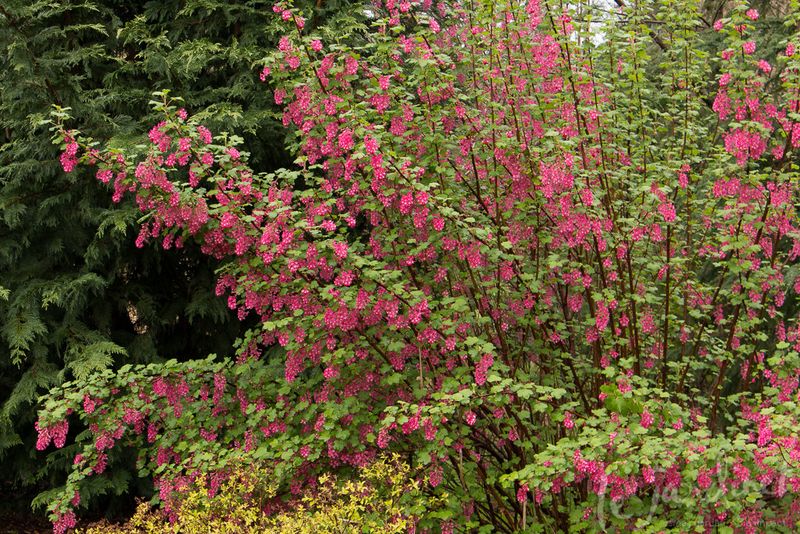
One shrub cannot cover every hummingbird need from spring into fall, even if it is a very good shrub.
Red-flowering currant has a strong early bloom window, but hummingbirds keep moving, feeding, nesting, defending territories, and searching for nectar after those flowers are finished.
OSU pollinator guidance recommends flowers from early spring to late fall, plus a variety of flower colors, shapes, and sizes. That advice matters because a healthy hummingbird garden is built like a calendar.
Red-flowering currant can start the calendar, but other plants need to fill the later pages. It is also worth remembering that hummingbirds do not live on nectar alone.
They also feed on tiny insects and need safe cover, perches, and a landscape that is not overloaded with broad pest-control sprays.
In Oregon, where Anna’s hummingbirds may be seen year-round and rufous hummingbirds are seasonal visitors, the best garden design depends on local conditions and timing.
The title is useful as a hook, but the article should be honest: red-flowering currant is the native plant to start with, not the only plant a thoughtful gardener should grow. A sequence of bloom is what keeps the garden useful.
8. Pair This Shrub With Later Blooming Natives
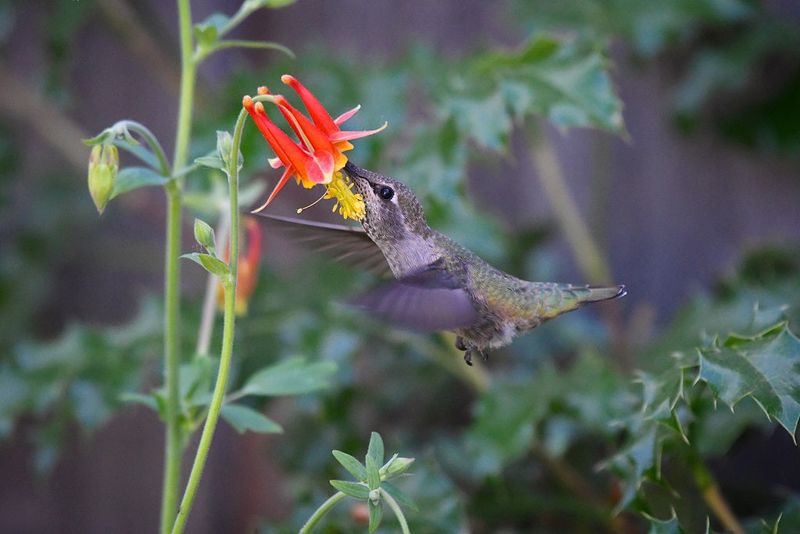
Red-flowering currant becomes more powerful when it is part of a longer bloom sequence. Once its spring flowers are finished, Oregon gardeners can keep the nectar season going with plants that bloom later and suit the same general wildlife-friendly style.
Western red columbine is one good example because OSU lists western columbine as a native option that attracts hummingbirds. Native honeysuckle and penstemons can also play a role where they fit the region, exposure, and soil.
The point is not to pack every possible hummingbird plant into one bed. It is to avoid leaving a long gap after the currant finishes flowering.
A mixed planting might include red-flowering currant as the spring shrub, columbine or penstemon for later color, and other native shrubs or perennials for shelter, seed, berries, or insect habitat.
This approach feels more natural than a single-species planting, and it gives birds more reasons to return.
It also spreads garden interest across the year, so the bed does not look finished after one spring display. For best results, choose plants that match the actual site.
A dry, sunny border needs different companions than a cool woodland edge. The right sequence is local, practical, and easier to maintain.
9. Plant Red-Flowering Currant Where You Can Watch It
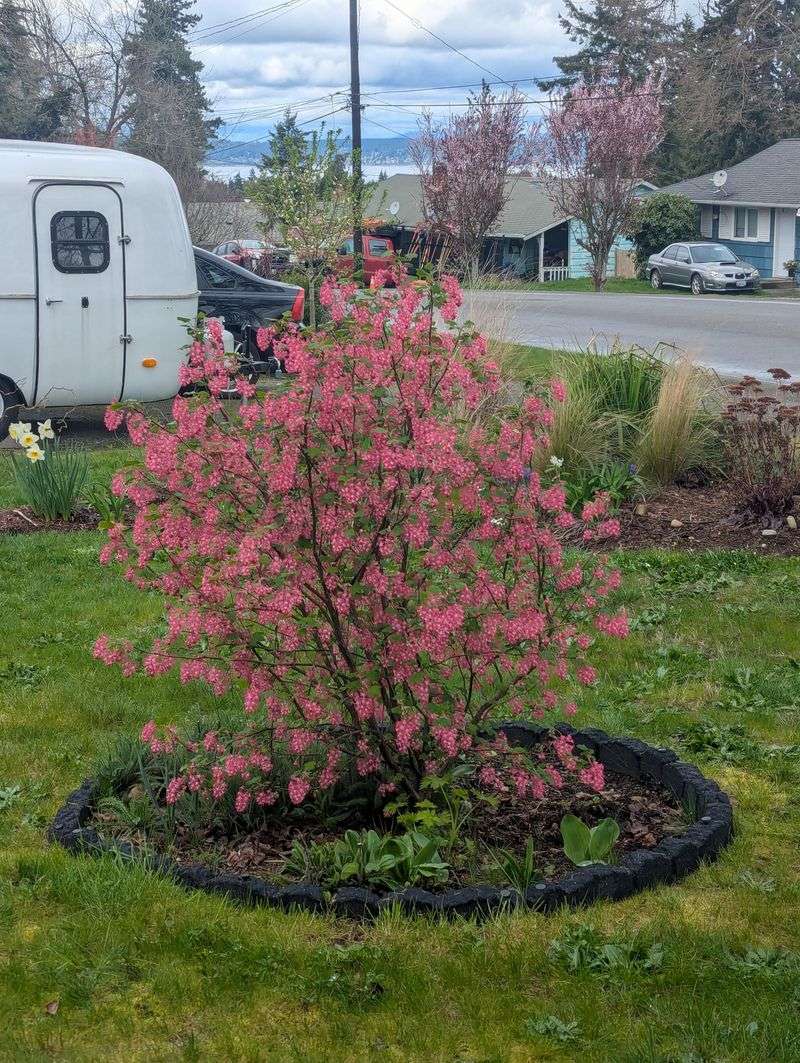
A hummingbird plant is more rewarding when it is placed where people can actually see it. Red-flowering currant works well near a kitchen window, patio, side path, or front-yard border, as long as the site also suits the plant.
It should not be jammed into a tiny foundation strip just for visibility. OSU describes flowering currant as a shrub that can reach a substantial size, so homeowners should give it room to grow into its shape.
A spot with full sun to part sun can support better flowering in many gardens, while a little afternoon protection may help in hotter inland areas. Think about the background too.
Dark evergreen foliage, a fence, or a quiet hedge can make the pink flower clusters stand out, which makes hummingbird visits easier to notice.
Avoid placing feeders or busy activity directly in the middle of the shrub, since birds often prefer a bit of space and cover.
The best viewing spot is close enough for enjoyment but not so exposed that the plant becomes stressed or constantly disturbed. In an Oregon garden, red-flowering currant can be both a wildlife plant and a daily pleasure when the placement is thoughtful.
10. Give Hummingbirds Shelter Along With Nectar
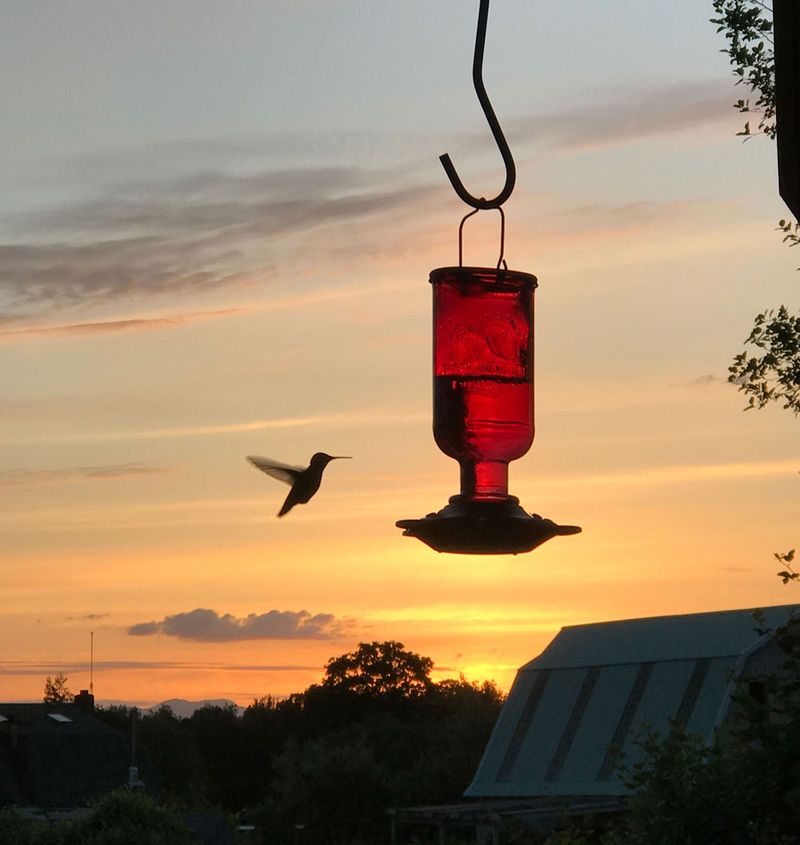
Nectar is only part of what makes a garden useful to hummingbirds. Shelter, perches, and layered planting matter too.
OSU pollinator guidance specifically recommends including some larger plants to provide shelter, and red-flowering currant helps because it is a shrub rather than a low flower.
Its branches can be part of a layered border with small trees, taller shrubs, and later-blooming perennials.
That structure gives hummingbirds places to pause, watch, and move through the garden without being exposed the entire time. A mixed planting also supports insects, which are part of a hummingbird’s diet and are especially important when birds need protein.
Keep the garden as gentle as possible by avoiding unnecessary broad pesticide use around flowering plants and nesting habitat. Water features can also help the wider wildlife value of the yard, though they do not replace nectar plants.
Red-flowering currant is a strong start because it combines spring flowers with woody cover, but it works best when the rest of the garden supports the same idea. Oregon gardeners who want hummingbirds should think beyond one bloom.
A layered, seasonal garden gives these birds food, cover, and reasons to keep checking back.