Michigan Gardeners, These Onion Top Signs Mean It’s Time To Stop Watering
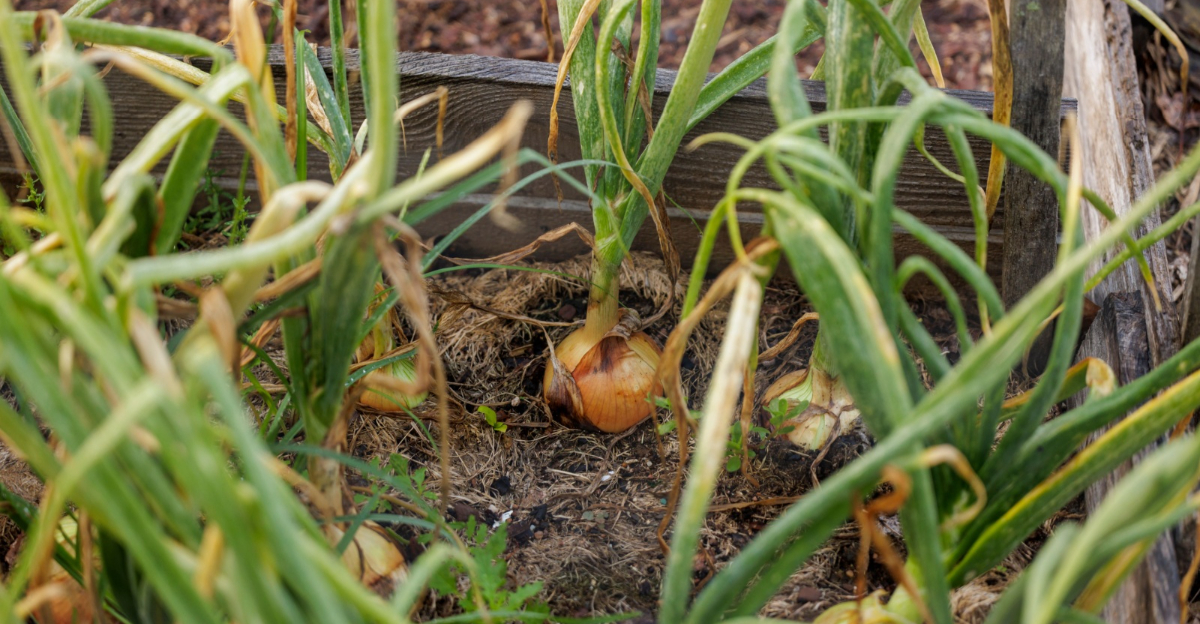
Onions are not dramatic vegetables for most of the season, and then late summer arrives and suddenly they have a lot to say.
Tops falling over, leaves yellowing, necks softening, bulbs swelling just below the soil surface – the Michigan onion bed becomes a surprisingly busy place to read once harvest time gets close.
The problem is that not every signal means the same thing, and confusing a stressed onion with a mature one, or missing the actual harvest window while waiting for more obvious signs, can cost a whole season’s worth of storage onions in a single week.
Knowing what the plant is actually communicating, and what to do about it, is one of those small pieces of vegetable gardening knowledge that pays off every single year.
1. Tops Are Falling Over Naturally
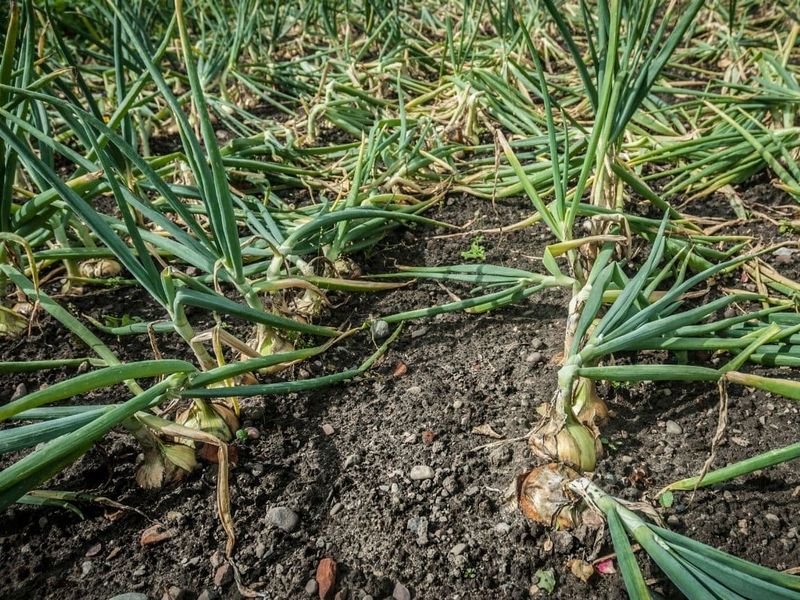
Walking through a Michigan vegetable bed in late July or early August and noticing your onion tops drooping toward the ground is one of the most encouraging signs a home gardener can spot.
When the tops fall over on their own without any wind, heavy rain, or accidental damage, it usually means the plant is shifting its energy away from leaf growth and toward the bulb below the soil.
This natural toppling happens because the neck of the plant softens as the onion matures. The green tops can no longer hold themselves upright, so they lean and eventually lie flat.
This is different from tops that fall because of storm damage or drought stress, which can happen at any stage of growth.
In Michigan gardens, this signal tends to show up in mid to late summer depending on the variety and when you planted. Sandy soils in western Michigan may push onions toward maturity a bit earlier than heavy clay soils farther north.
When you see tops falling naturally on bulb onions that have already sized up well, that is a good moment to slow your watering schedule and let the soil begin to dry.
Avoid stopping water abruptly if only a few tops have gone down, since not every onion in a row matures at exactly the same pace.
2. Half The Tops Have Gone Down
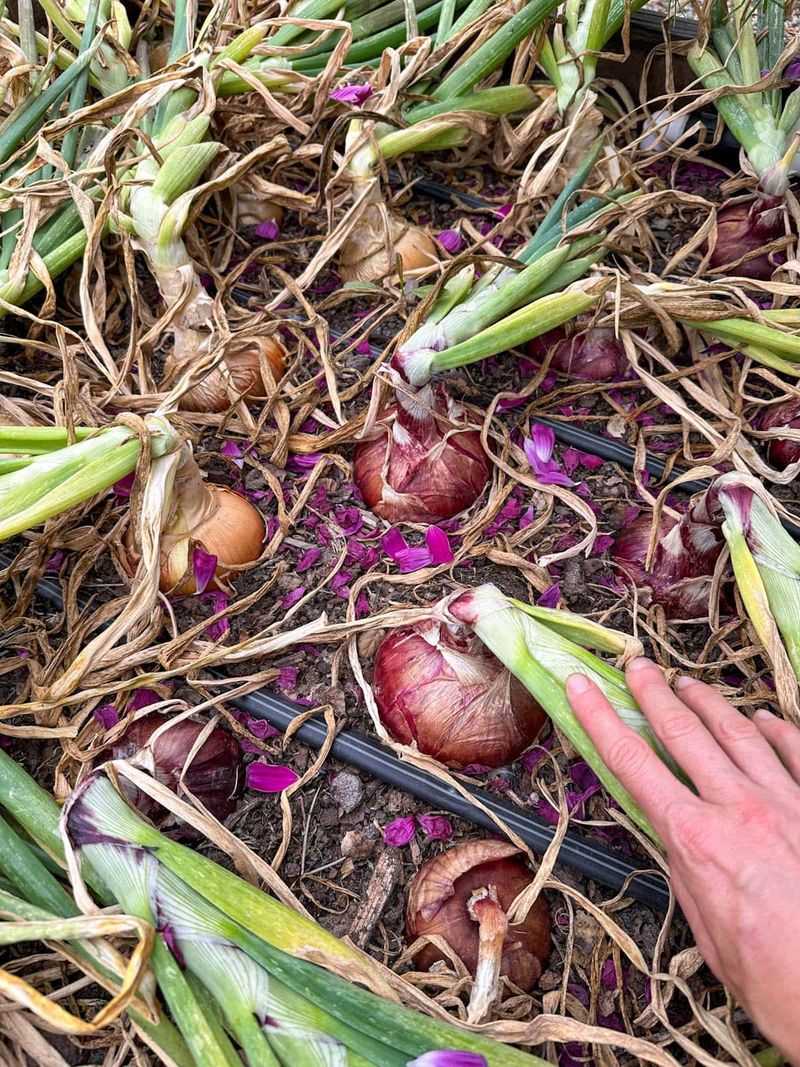
There is an old rule of thumb among vegetable gardeners that once about half the tops in an onion row have fallen over, the crop is close to ready.
Seeing that tipping point in your Michigan garden bed is a practical signal that the majority of bulbs are finishing up their development and that continued heavy watering may do more harm than good at this stage.
When roughly half the tops are down, the remaining upright plants are usually not far behind. Keeping the soil soaking wet at this point can encourage the outer skin layers to stay soft and can make onions harder to cure properly once you pull them.
Slightly drier soil conditions in the final stretch of growth help the papery wrapper skins form, which is exactly what storage onions need.
Michigan gardeners growing in raised beds or containers may notice this tipping point arrive a little faster than those growing in traditional in-ground rows, since raised beds tend to drain and warm up more quickly.
Your Michigan Garden Changes Every Week. Your Plan Should Too.
Gardening in Michigan changes quickly throughout the season. Every Friday you’ll receive a simple weekly plan showing exactly what to plant, prune, fertilize, harvest, and protect so you never miss the right timing.
Pay attention to your specific growing conditions rather than following a rigid calendar date.
Once half the tops are down, consider cutting back on watering significantly and plan your harvest window for about a week to ten days later, depending on how the weather looks and how the remaining tops are progressing across your garden space.
3. Tops Are Drying Out
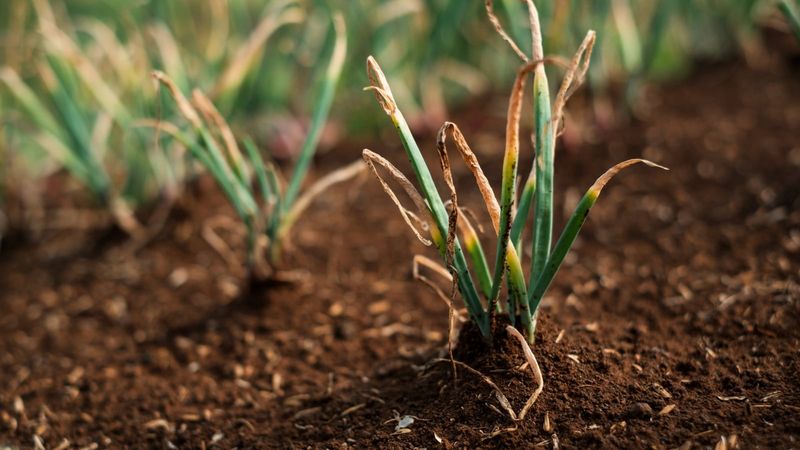
Dry, papery, straw-colored tops are a clear message from your onion plants that they are winding down for the season.
When the foliage starts losing its green color and takes on that crinkled, dried-out look from the tip downward, it signals that the plant is pulling its remaining moisture and nutrients into the bulb below ground.
This drying process is completely normal for maturing bulb onions. It is not a sign of disease or neglect.
At this stage, the goal shifts from encouraging leafy growth to letting the bulb finish maturing in drier soil. In fact, seeing it happen evenly across the tops of your plants is a reassuring sign that things are going according to plan.
The key is to distinguish natural drying from drought stress, which can cause tops to dry out prematurely even when bulbs are still small and underdeveloped.
In Michigan, late summer heat combined with naturally drier August conditions can speed up this drying process. Gardeners growing in sandy soils near the western lakeshore may see tops dry out faster than those in cooler northern Michigan sites with heavier soils.
Once the tops are genuinely drying from natural maturity rather than heat stress, pulling back on irrigation makes good sense.
Adding more water at this point does not help the bulbs grow larger and can actually soften the outer wrapper skins, which reduces how well the onions store after curing.
4. Tops Are Turning Yellow Or Brown
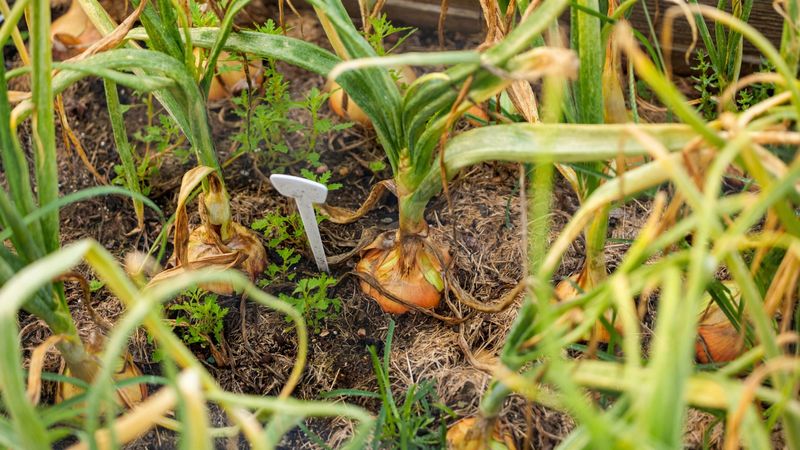
Yellowing and browning onion tops can make a gardener nervous at first glance, but when it happens across a row of bulb onions that are already well-sized, it is most often a sign of natural maturity rather than a problem to fix.
The color shift usually starts at the tips and works its way down the leaf over several days.
The reason tops change color is that the plant stops producing chlorophyll as it finishes its growth cycle. Energy is redirected into the bulb, and the leaves begin to break down.
This is a healthy and expected part of the onion life cycle for storage varieties grown in Michigan home gardens.
That said, yellowing can also be caused by overwatering, fungal issues, or nutrient deficiencies, so it helps to look at the whole picture.
If your bulbs are a good size, the necks feel soft, and other tops in the row are also going down, the yellowing is almost certainly a maturity cue.
If the bulbs are still small and only a few plants are yellowing while the rest look healthy and green, something else may be going on worth investigating.
For maturing onions in Michigan raised beds or in-ground rows, yellow and brown tops paired with other harvest signals are a clear invitation to ease off the hose and prepare for harvest day.
5. Necks Are Softening Above Bulbs
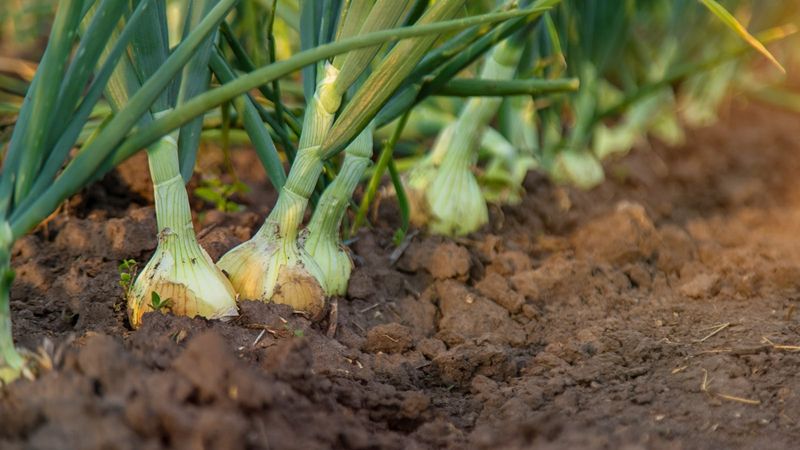
Reaching down to the base of an onion plant and feeling a soft, slightly spongy neck just above the bulb is one of the most reliable signs that harvest time is approaching.
The neck is the narrow part of the stem between the green tops and the rounded bulb sitting in the soil, and when it softens, the plant is telling you it is nearly done.
A firm, rigid neck means the plant is still actively growing and sending water and nutrients up through the stem. A softening neck means that flow has slowed considerably.
At that point, continuing to add water to the soil offers little benefit and may actually encourage the neck tissue to stay wet longer than ideal, which can create conditions for rot during curing.
Michigan gardeners can check neck softness by gently pressing with two fingers just above the bulb. You are not looking for a completely collapsed neck, just a noticeable loss of firmness compared to earlier in the season.
Soft necks combined with fallen tops and yellowing foliage form a reliable three-part signal that your bulb onions are close to ready.
Gardeners in Michigan who grow storage onions in clay soils may find that necks soften a bit later than those in faster-draining sandy soils, so checking multiple plants across your row gives you the most accurate picture before pulling anything.
6. Bulbs Have Reached Good Size
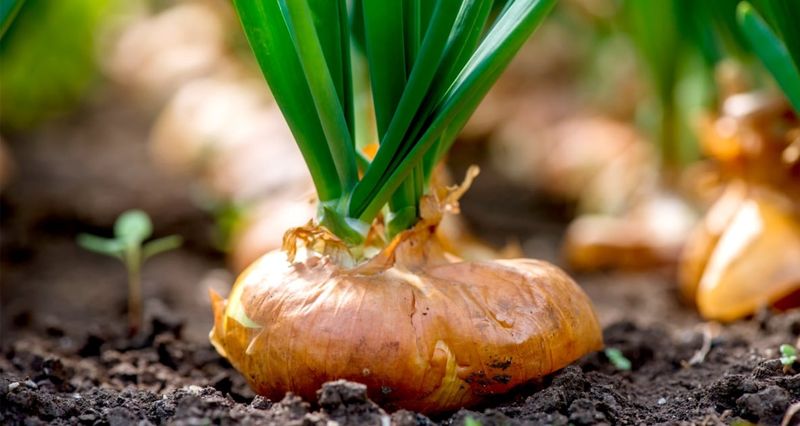
Sometimes the most straightforward signal is the one right in front of you: the bulbs themselves. Gently brushing aside a little soil at the base of a few plants to peek at bulb size is a quick and practical check that Michigan gardeners can do without disturbing the crop.
Bulb onions are ready to stop receiving heavy irrigation once they have reached a size appropriate for the variety you planted. Some varieties naturally produce smaller bulbs, while others are bred to grow large.
Knowing your variety helps you judge whether the bulbs you see are at their expected size or still have more developing to do.
If the bulbs look plump, the shoulders are pushing up slightly through the soil surface, and the outer skins are beginning to feel papery, those are encouraging signs.
Continuing to water heavily once bulbs have reached their expected size can push moisture into the neck and outer layers, which makes the onions harder to cure and more likely to soften in storage.
Michigan gardens with heavier clay soils hold moisture longer, so gardeners in those areas may need to cut back on water even a little earlier than those gardening in sandier ground.
Raised bed growers often have more control over moisture levels, which makes it easier to dial back irrigation precisely when bulb size and other maturity signals line up together before harvest day arrives.
7. Dry Weather Is In The Forecast
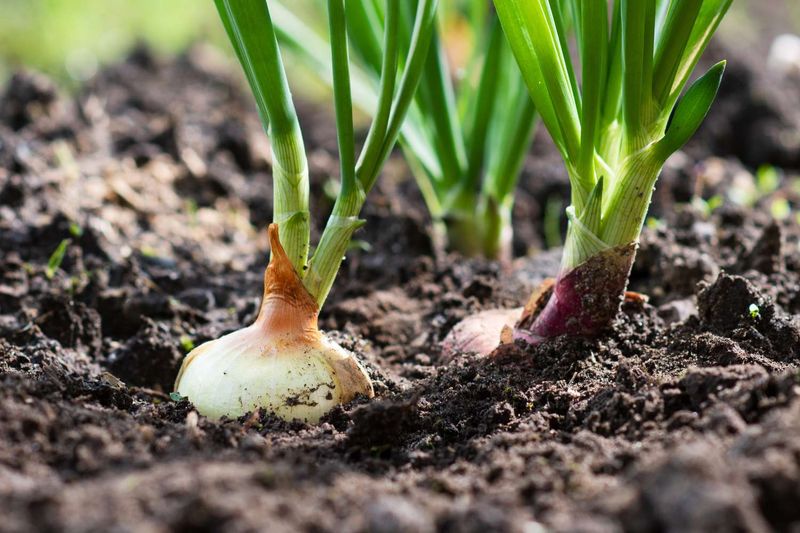
Checking the weather forecast before making any watering decision is a habit that pays off in the vegetable garden, and it matters especially when your onions are close to harvest.
If Michigan is heading into a stretch of dry, sunny days with no rain in the near forecast, that dry period can do a lot of the work for you in the final stage of onion maturation.
Dry weather naturally reduces soil moisture, which is exactly what maturing bulb onions need as they finish up. The drier conditions help the outer skins cure and tighten while the necks dry down.
Watering during a dry forecast when your onions are already showing maturity signs is simply adding moisture the plants no longer need and the soil does not need either at that point.
Michigan summers can be unpredictable, with some regions seeing late-season rain while others bake under dry August heat. Gardeners in northern Michigan may deal with cooler, wetter conditions later in the season than those in the southern Lower Peninsula.
Watching your local forecast closely during the final two to three weeks before your expected harvest date helps you time your last watering thoughtfully.
If dry days are coming and your onion tops are already showing multiple maturity signals, there is little reason to run the hose.
Let the natural dry-down work in your favor and plan your harvest accordingly.
8. Storage Onions Are Near Harvest
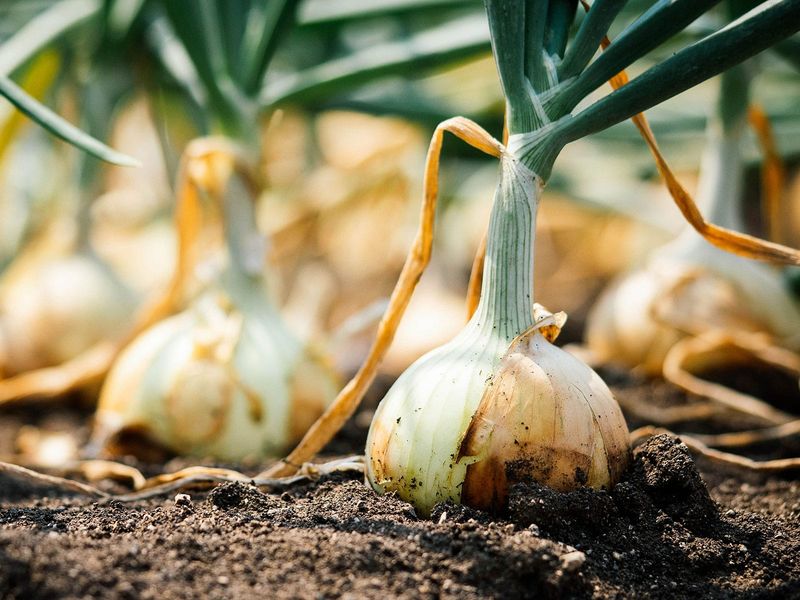
Growing onions specifically for long-term storage is a goal for many Michigan home gardeners who want to enjoy their harvest well into fall and winter.
Storage onions require careful attention during their final weeks in the ground, and knowing when to stop watering is a big part of getting them ready to last.
Unlike fresh-eating onions or green onions pulled early in the season, storage onions need time to develop thick, papery outer skins that protect them during months in a cool, dry location.
Those skins form properly only when the onion has had a chance to dry down in the ground and then cure after harvest.
Watering storage onions right up until the moment you pull them leaves the outer layers soft and damp, which shortens storage life considerably.
Michigan gardeners aiming for storage onions should plan to stop regular watering about one to two weeks before their target harvest date, assuming the soil already has reasonable moisture and dry weather is in the forecast.
After pulling the onions, curing them in a warm, well-ventilated spot out of direct rain for two to four weeks helps finish the process.
Garages, covered porches, and sheds work well for Michigan gardeners who need a sheltered curing space. Once the necks are fully dry and the skins are crackling and papery, the onions are ready to move into longer-term storage in a cool, dark location.