Where Squash Bugs Leave Their First Clues On Michigan Zucchini Before Plants Start Wilting
Squash bugs cause dramatic damage in Michigan vegetable gardens, but that drama builds from a beginning that most gardeners completely miss.
By the time zucchini plants start wilting and stems show the discoloration that signals serious squash bug feeding, the insects responsible have been present and reproducing on the plant for weeks.
Their first clues appear in specific, predictable locations that require deliberate checking to find.
The undersides of leaves near the base of the plant, the junction where stems meet the soil, and the shaded interior growth that never gets examined during routine garden walks all hide early squash bug activity.
Finding those first clues while the population is still small changes every outcome that follows.
1. Copper Colored Egg Clusters Are The First Clue
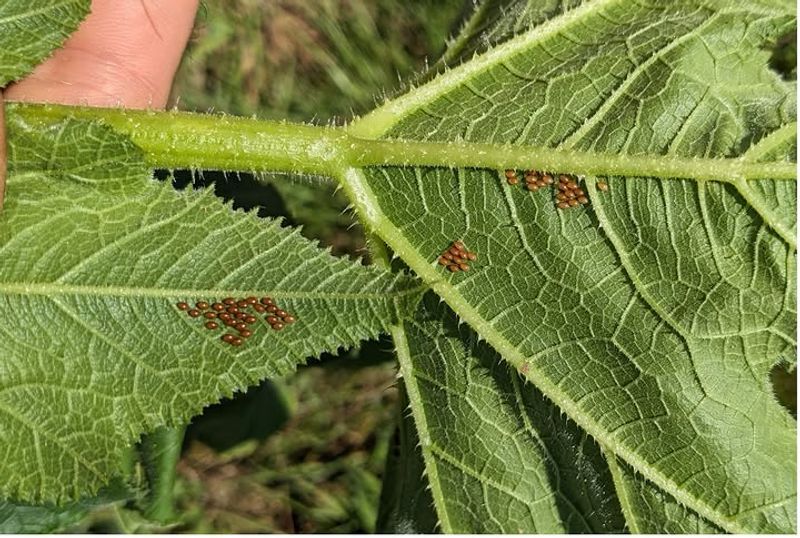
Spotting a group of tiny, shiny, copper-colored eggs on your zucchini plant is one of the most exciting and useful discoveries a Michigan gardener can make.
Not because it is good news exactly, but because it means you found the problem before it grew.
Squash bugs lay their eggs in neat, organized clusters, and those clusters are your first real clue that something is going on beneath the surface of your garden.
The eggs are small but surprisingly easy to see once you know what you are looking for. They have a distinct bronze or reddish-brown color that stands out against the green of the leaf.
A single cluster can hold anywhere from a dozen to around twenty eggs, and one female squash bug can lay multiple clusters across your plants throughout the season.
Finding eggs before they hatch is genuinely the best position to be in. Once nymphs emerge and start feeding, the damage builds faster and becomes harder to reverse.
Egg clusters give gardeners a clear, visible target that is much simpler to deal with than a moving population of nymphs or adults.
Checking your plants two or three times a week during late June through July in Michigan gives you the best shot at catching clusters early.
Look carefully at both the top and underside of leaves, because eggs can appear on either surface. Pay close attention to areas near the main stem and larger leaves.
A small hand lens or magnifying glass can help you spot clusters you might otherwise miss during a quick walk-through of the garden.
2. Leaf Undersides Hide The Earliest Signs
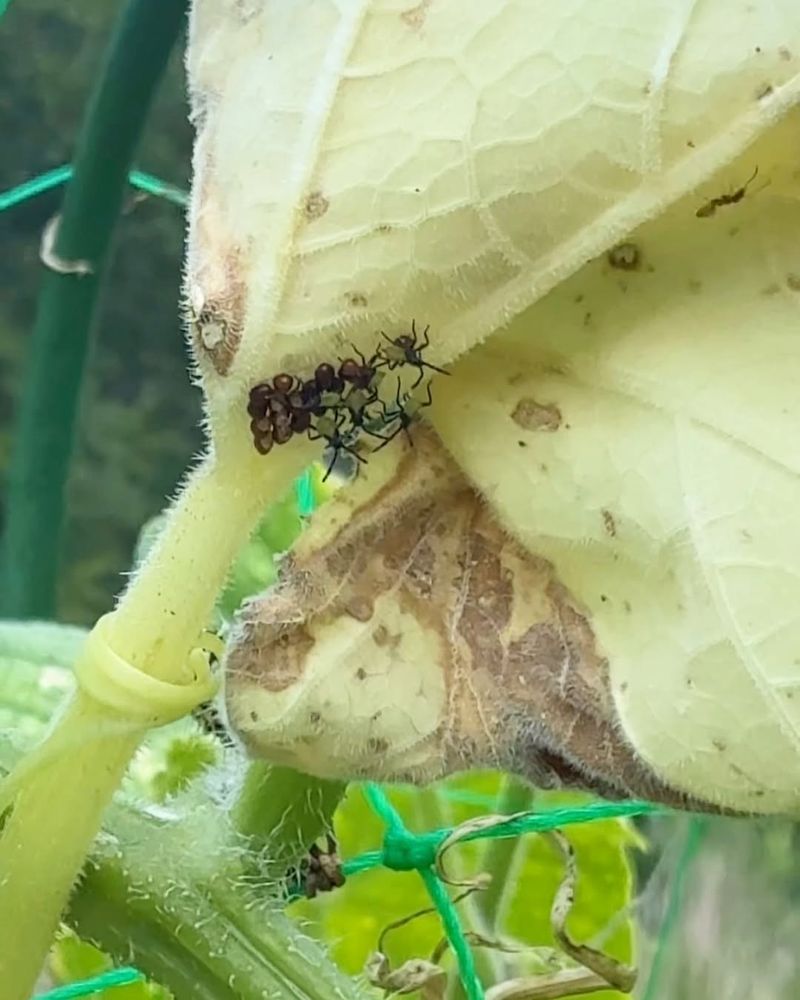
Most gardeners look at the top of their zucchini leaves and move on. That habit is exactly what squash bugs count on.
The underside of a leaf is one of the most protected and shaded spots on the entire plant, which makes it a favorite hiding place for squash bugs at every stage of their life cycle. If you only check what you can see from above, you are missing most of the story.
Flipping leaves gently and slowly is a habit worth building into every garden check. You may find egg clusters, small gray-green nymphs clustered together, or adult bugs pressed flat against the leaf surface.
Your Michigan Garden Changes Every Week. Your Plan Should Too.
Gardening in Michigan changes quickly throughout the season. Every Friday you’ll receive a simple weekly plan showing exactly what to plant, prune, fertilize, harvest, and protect so you never miss the right timing.
Adults are especially good at staying still when they sense movement, so a slow approach gives you a better chance of spotting them before they scatter or drop to the soil.
The undersides of larger, older leaves tend to attract more activity because they offer more shade and surface area. Younger leaves near the top of the plant may also have eggs, but the big broad leaves closer to the base are a reliable starting point.
Make a habit of checking at least five or six leaves per plant on every visit, rotating which ones you inspect so you cover the whole plant over time.
Michigan gardeners dealing with warm, humid summer days will find that squash bug activity increases significantly in July and August. During those peak weeks, leaf undersides become even more important to monitor.
A small flashlight can help you see into shaded areas where eggs or nymphs might be tucked away and easy to overlook.
3. Vein Junctions Are A Key Place To Inspect
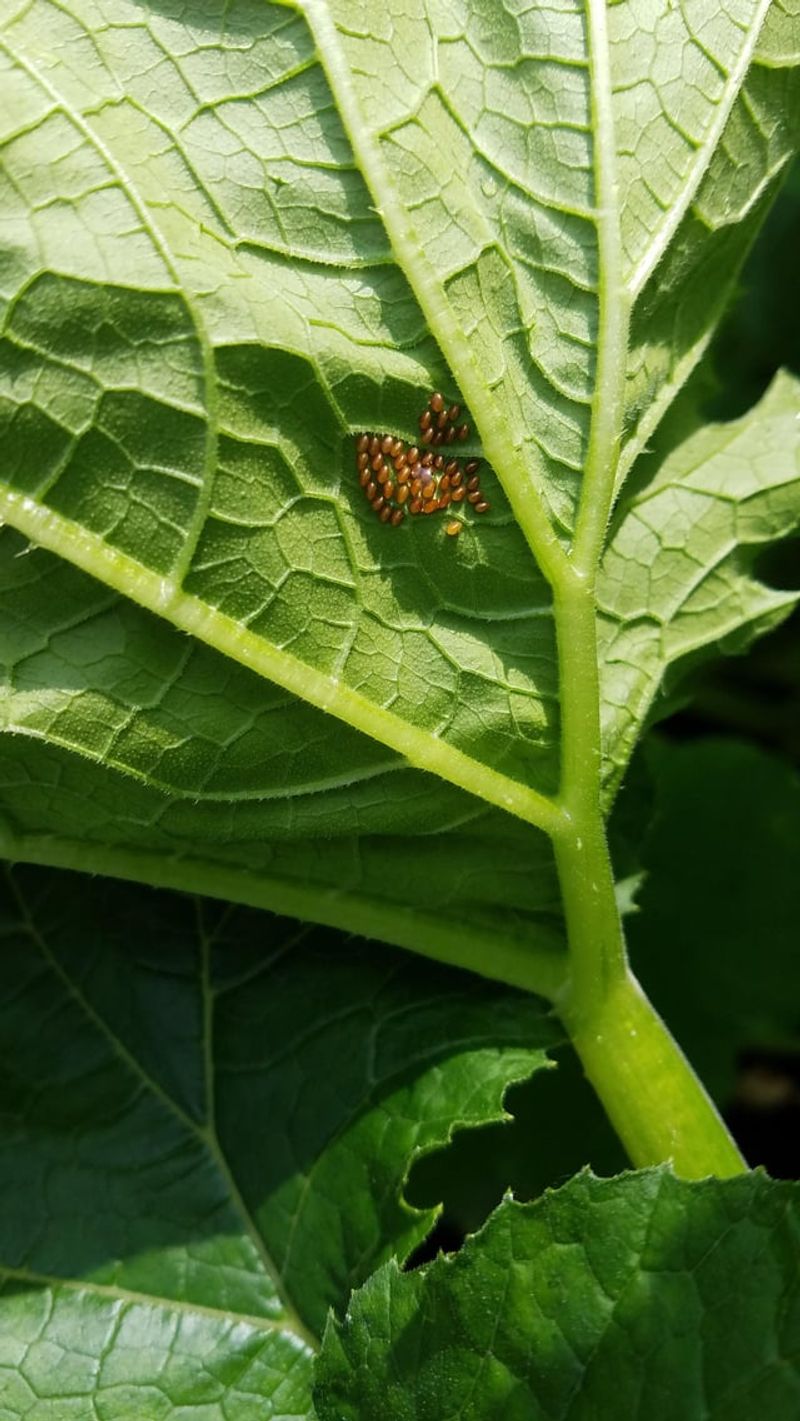
There is something almost clever about where squash bugs choose to place their eggs. They do not lay them randomly across the leaf surface.
Instead, they tend to tuck clusters right into the angled spaces where leaf veins meet, a spot that offers structure, grip, and just enough shelter to keep the eggs protected from wind and casual observation.
Understanding this habit helps you zero in on exactly where to look. Vein junctions form natural little pockets on the underside of a leaf.
The eggs fit snugly into these angles, which makes them harder to spot at a glance but very consistent in their placement.
Once you find one cluster in a vein junction, you will know exactly where to look on the next leaf. That predictability is actually helpful for gardeners who want to be efficient during their scouting rounds.
A magnifying glass makes a real difference when inspecting vein junctions. The eggs are only about one millimeter long, and in the shadows of leaf veins, they can blend in surprisingly well.
Good natural light or a small flashlight helps too. Morning scouting, when dew is still on the plants and bugs are less active, is a great time to check these tucked-away spots without disturbing the insects.
Michigan gardeners should pay special attention to larger leaves with prominent, branching veins because those provide more junction points and more egg-laying opportunities.
Once you train your eyes to follow the vein patterns, checking for eggs becomes a quick and focused task rather than a guessing game across the whole leaf surface.
4. Stems Can Hold Eggs Before Leaves Look Bad
Most people focus on leaves when they scout for squash bugs, and that makes sense because leaves are the most visible part of the plant. But stems are a surprisingly common egg-laying site that many gardeners overlook entirely.
Squash bugs can place egg clusters on the main stem, on the smaller leaf stems called petioles, and even near the crown of the plant where everything meets the soil. Skipping the stems means missing a real chunk of the picture.
The base of the plant is worth extra attention. That thick, rough section of stem near the soil line is shaded, protected, and rarely disturbed by wind or rain.
Squash bugs seem to recognize that, and they often lay eggs in that zone precisely because it is so undisturbed. Crouching down and looking carefully at the lowest few inches of the main stem is a simple step that can reveal a lot.
Leaf petioles, the short stems that connect each leaf to the main plant, are another overlooked location. These narrow stems have a slightly ridged texture that gives eggs a surface to grip.
Checking the underside and sides of each petiole only takes a few extra seconds per leaf, but it can catch clusters that you would otherwise completely miss during a standard inspection.
In Michigan, squash bug season typically ramps up in late June, which is when stem inspections become especially valuable.
At that point, the plant may look completely healthy from a distance, but a close look at the stems can reveal early egg activity.
Catching it there, before any feeding damage shows up on the leaves, keeps you in the strongest possible position for managing the season ahead.
5. Lower Leaves Often Show The First Discolored Spots
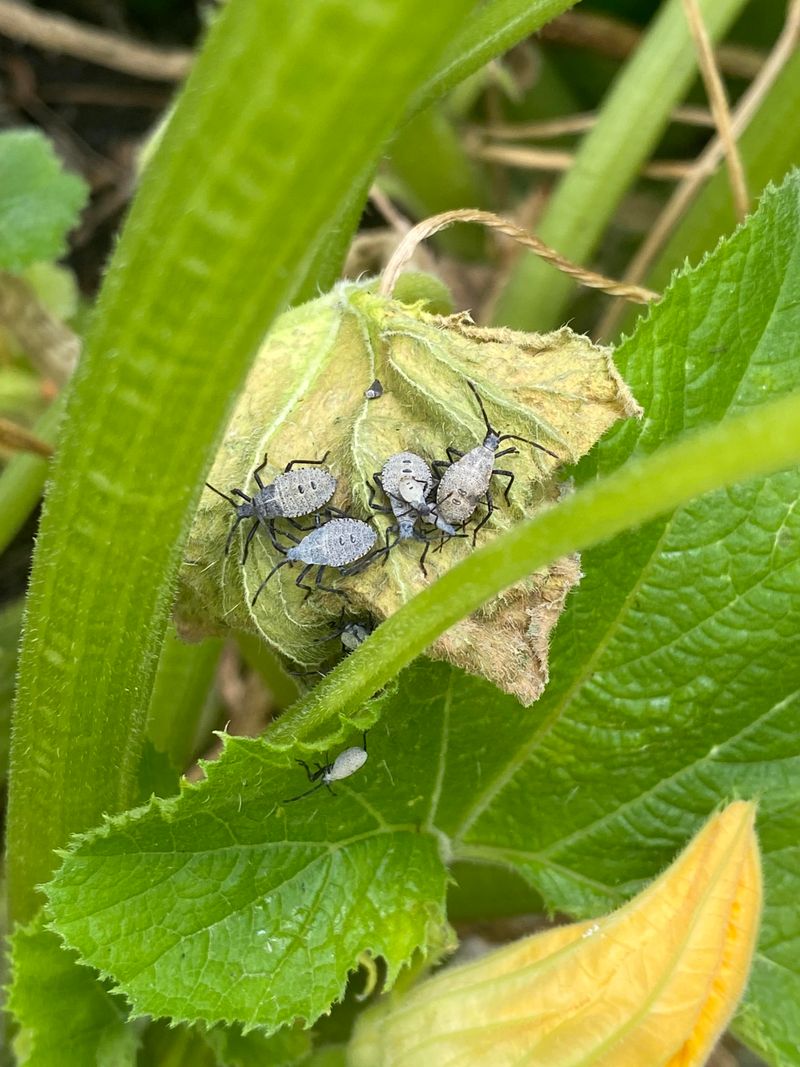
Before a zucchini plant starts to wilt, its lower leaves often send a quiet signal that something is wrong. Small yellowish or pale spots, sometimes with a slightly brittle texture, can appear on the leaf surface as a result of early squash bug feeding.
These spots are easy to dismiss as sun stress or a minor nutrient issue, but they deserve a closer look because they can be one of the first visible signs of bug activity.
Squash bugs feed by piercing plant tissue and drawing out sap. Each feeding puncture is tiny, but when bugs feed repeatedly in the same area, those punctures add up into visible patches of discoloration.
Lower leaves tend to show this damage first because they are closer to where adult bugs congregate near the base of the plant.
They are also more shaded, which makes them a comfortable feeding spot for insects trying to stay out of direct sun.
Checking lower leaves means getting low. That might mean kneeling in the garden bed or crouching close to the soil, which is not always the most comfortable position, but it is absolutely worth it.
Lower leaves also tend to stay damper longer after rain or watering, which attracts squash bugs and makes those leaves a hotspot for early activity throughout the season.
Michigan gardeners should not assume that discoloration on lower leaves is always a cosmetic issue. When you see those pale patches, flip the leaf over immediately and check for eggs or nymphs.
Early feeding signs paired with egg clusters nearby is a strong signal that squash bug pressure is building, and acting quickly at that stage makes a real difference for the rest of the season.
6. Tiny Nymphs Gather Near The Egg Site
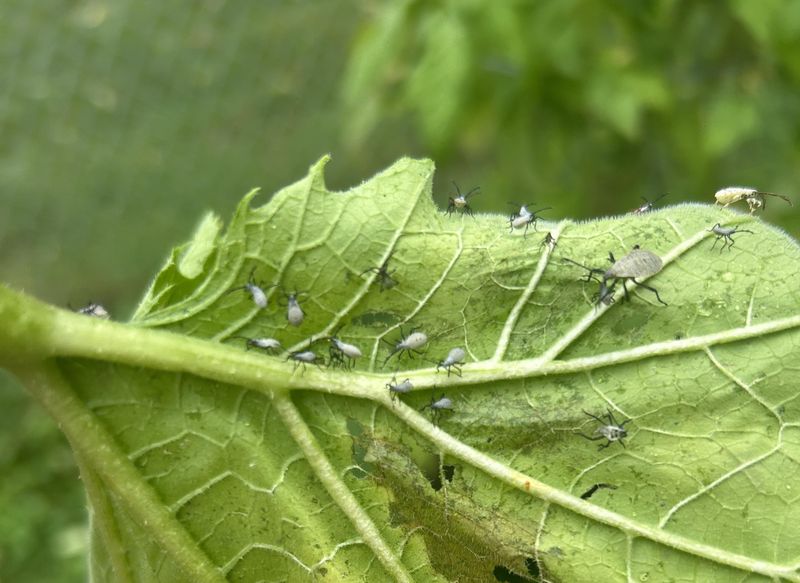
Right after squash bug eggs hatch, the nymphs do not scatter immediately. For the first day or two, they tend to cluster together near the same spot where the eggs were laid.
That behavior is actually a gift for observant gardeners because it means a small group of newly hatched nymphs is much easier to find and address than a spread-out population of older insects moving across multiple plants.
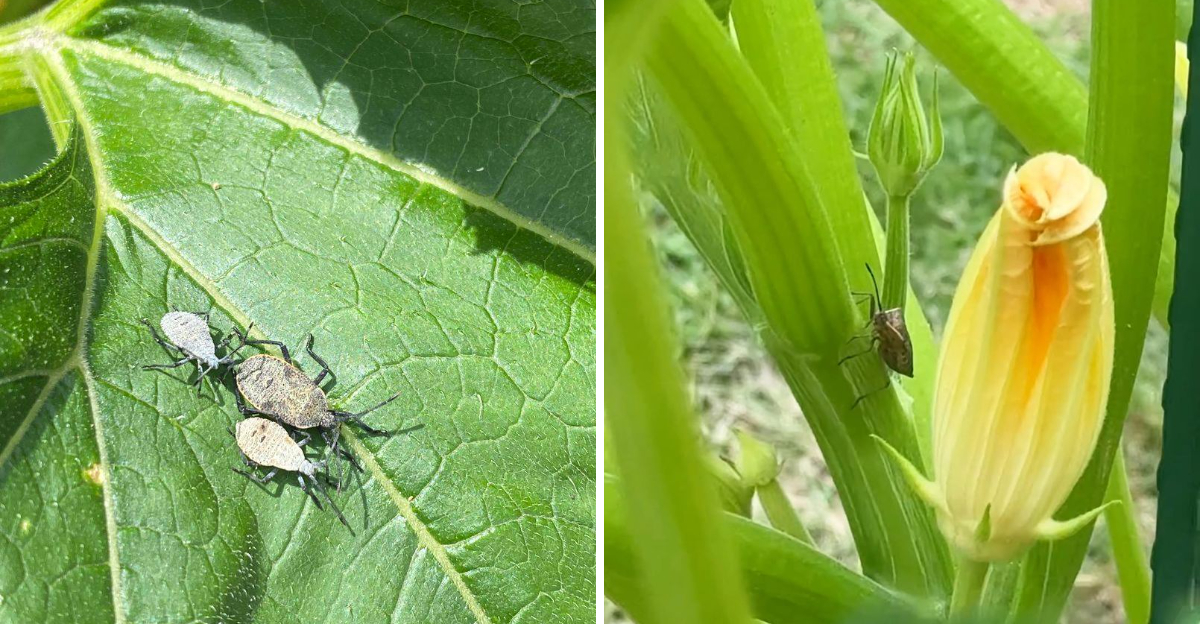
Young nymphs look quite different from adult squash bugs. They are tiny, often less than a quarter inch long, and their bodies have a greenish-gray color with darker legs.
They move slowly at first, which makes them easier to spot compared to the fast-moving adults. Their small size is the main challenge, because they can be easy to overlook if you are not looking closely and carefully at the leaf surface.
Knowing that nymphs gather near the egg site gives you a practical scouting strategy. When you find an empty or partially hatched egg cluster, do not just move on.
Stay in that area and examine the surrounding leaf surface, nearby stems, and the undersides of adjacent leaves.
The nymphs are almost certainly still in the immediate vicinity, feeding and growing before they eventually spread out across the plant.
In Michigan, nymph activity typically peaks in July, though timing can shift depending on how warm spring was and when adult bugs first appeared.
Checking plants multiple times per week during that window is the best way to catch nymphs while they are still concentrated in one spot.
Acting at the nymph stage, before they reach adulthood, is one of the most effective ways to keep squash bug populations from growing out of hand.
7. Adults May Slip Under Leaves When Disturbed
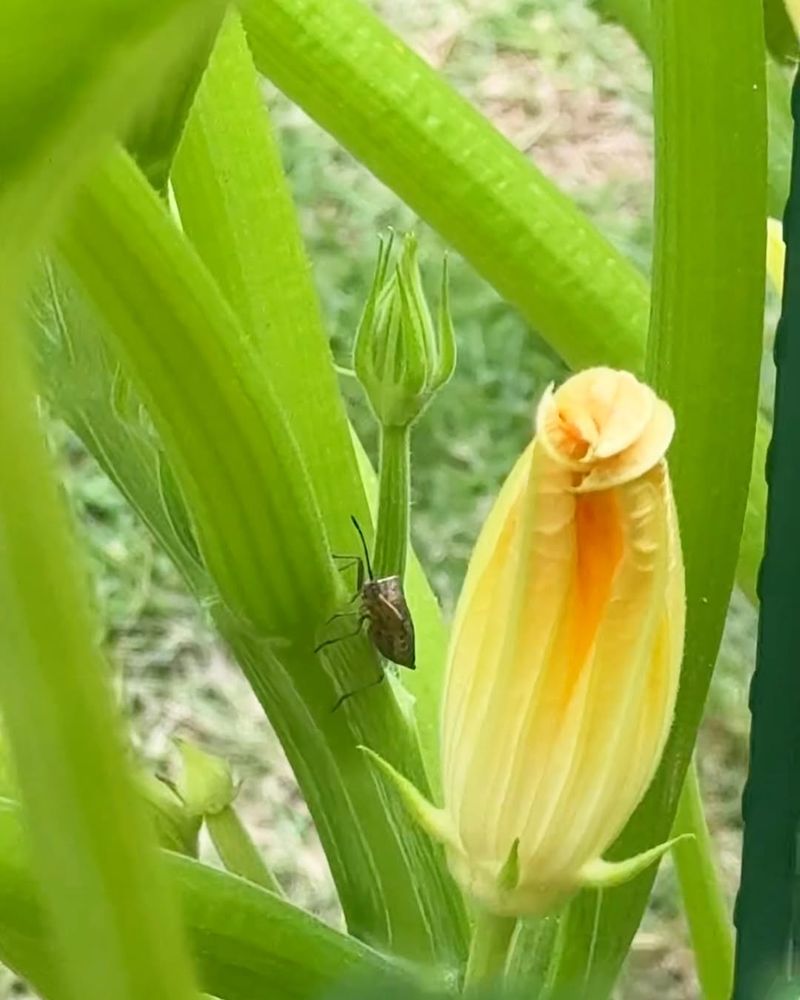
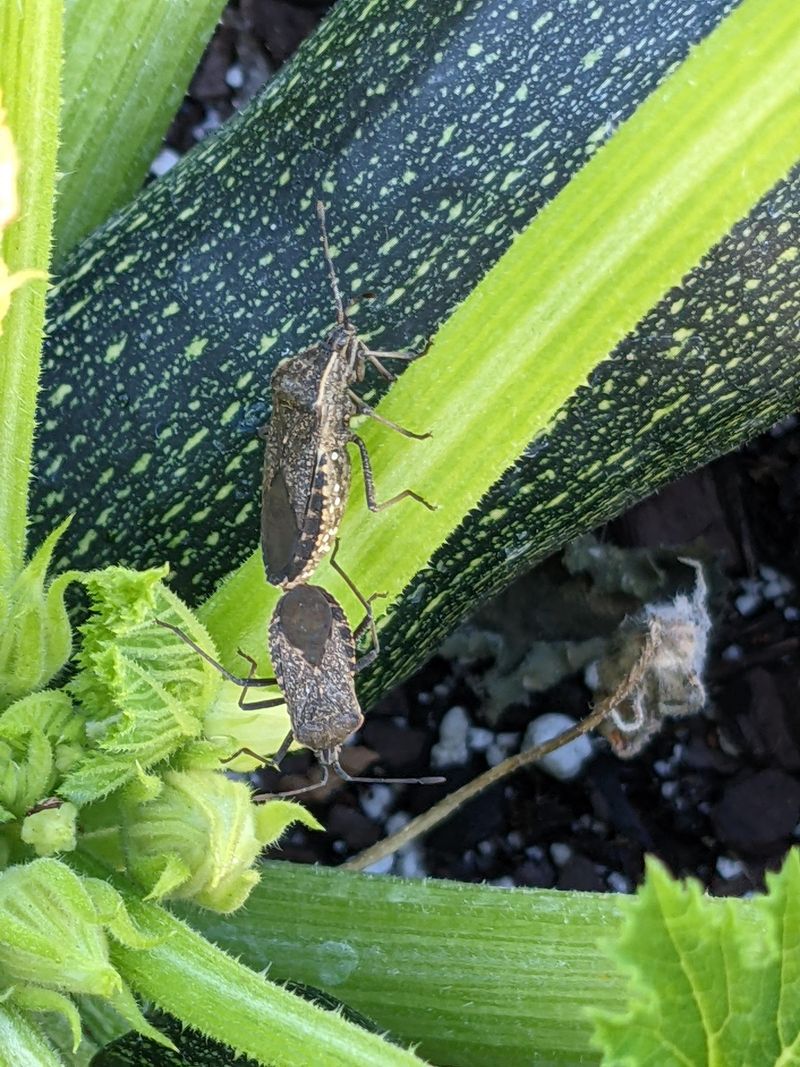
Adult squash bugs are surprisingly quick and surprisingly sneaky. The moment they sense vibration or movement near them, they flatten themselves against the leaf surface or drop to the soil and hide.
This behavior makes them genuinely frustrating to catch during a garden inspection, especially if you move through your plants quickly or disturb the leaves before you get a good look. Slow and steady is the only approach that works well.
Their coloring does not help either. Adult squash bugs are brown and gray with a slightly mottled pattern that blends well with the texture of zucchini stems and older leaves.
When they press flat against a stem or tuck under a leaf edge, they can look like just another rough patch of plant surface. This is not accidental.
Their natural camouflage has helped them survive and thrive in gardens across the Midwest for a very long time.
The soil line around the base of the plant is another hiding spot worth checking. When adults drop from leaves, they often slide under plant debris, mulch, or loose soil near the crown of the plant.
Pulling back any mulch or leaf litter around the base of your zucchini during a scouting session can reveal adults that have escaped from the leaves above. It adds an extra minute to each check, but it is worth the effort.
Michigan gardeners who scout in the early morning often have better luck spotting adults before the heat of the day makes insects more active and alert.
Cooler mornings slow the bugs down slightly, giving you a better window to observe them before they react to your presence.
Combining morning timing with slow, careful leaf-by-leaf inspection gives you the best overall chance of finding adults before they cause serious feeding damage to your plants.
8. Early Scouting Prevents Surprise Wilting
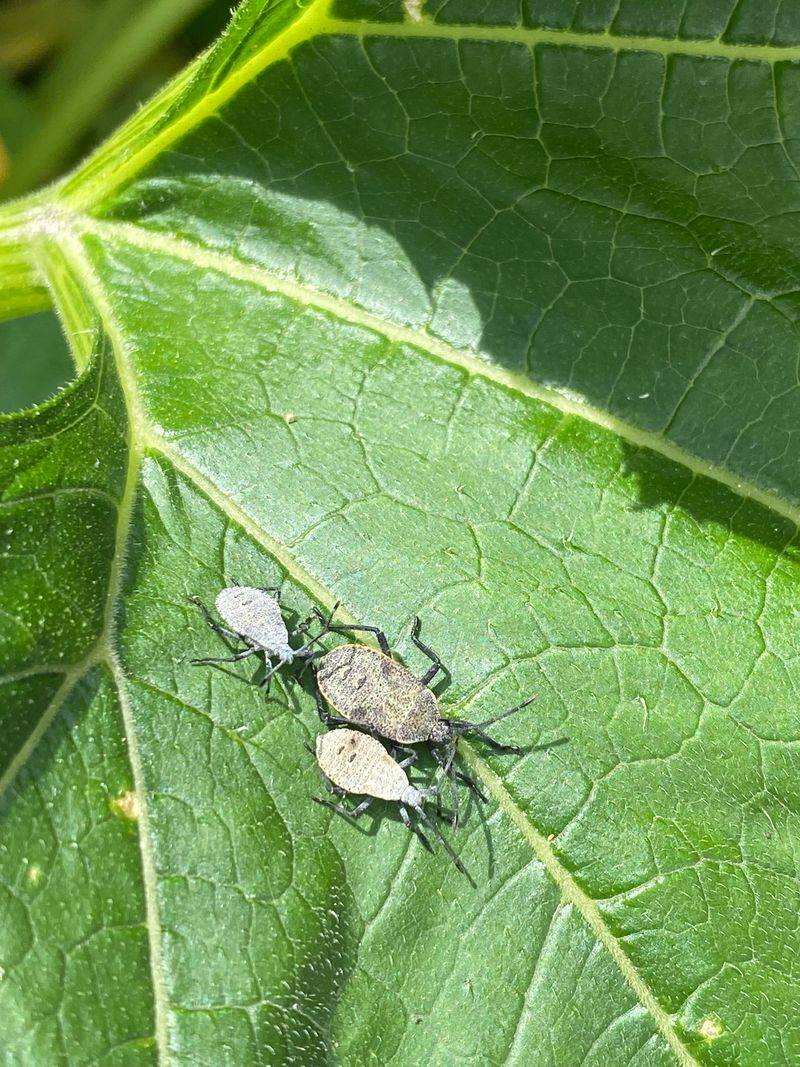
Wilting zucchini is a heartbreaking sight in any Michigan garden, especially when it seems to happen overnight. The truth is that squash bugs rarely cause wilting without leaving plenty of warning signs first.
Copper-colored egg clusters, hidden nymphs, discolored lower leaves, and adults tucked under stems are all clues that show up well before a plant reaches the point of visible stress.
The key is building a scouting routine that catches those clues early. Checking your plants two to three times per week during squash bug season, roughly late June through August in Michigan, gives you a reliable system for staying ahead of the problem.
Each check should cover leaf undersides, vein junctions, stems at the base, lower leaf surfaces, and the soil line around the crown.
Rotating which leaves you inspect on each visit ensures you do not keep checking the same spots while missing others.
Early scouting is also just more satisfying than reacting to damage after the fact. Finding an egg cluster before it hatches, or spotting a small group of nymphs before they spread, feels like a genuine win.
It puts you in control of what happens in your garden rather than chasing a problem that has already grown. That proactive mindset is what separates gardeners who consistently harvest well from those who struggle each season.
Michigan summers are warm enough to support multiple generations of squash bugs in a single season, so the scouting window matters a great deal.
Starting checks early in the season, even before you expect bugs to appear, builds the habit and sharpens your eye.
By the time squash bug pressure peaks, you will already know your plants well enough to notice the smallest change and respond before your zucchini ever shows a sign of stress.