What A Hawk Returning To Your North Carolina Backyard Again And Again Is Telling You
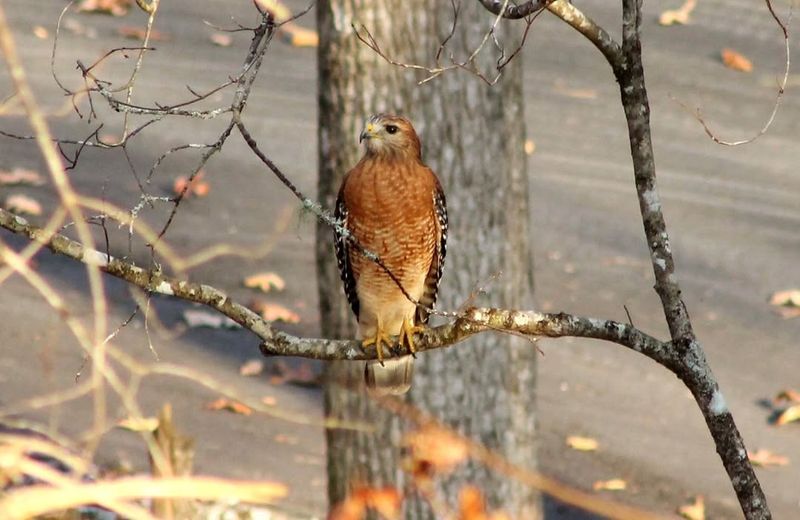
You glance out the kitchen window and there it is again, that same hawk sitting on the fence post like it owns the place. If you have spotted a hawk circling or perching near your North Carolina feeders more than once, you are not imagining things. That bird keeps coming back because your yard is offering it something useful, and figuring out what that is can change how you think about your whole backyard setup. The answer is simpler than you might expect, and it is worth knowing.
The Repeat Visitor Is Hunting Your Yard
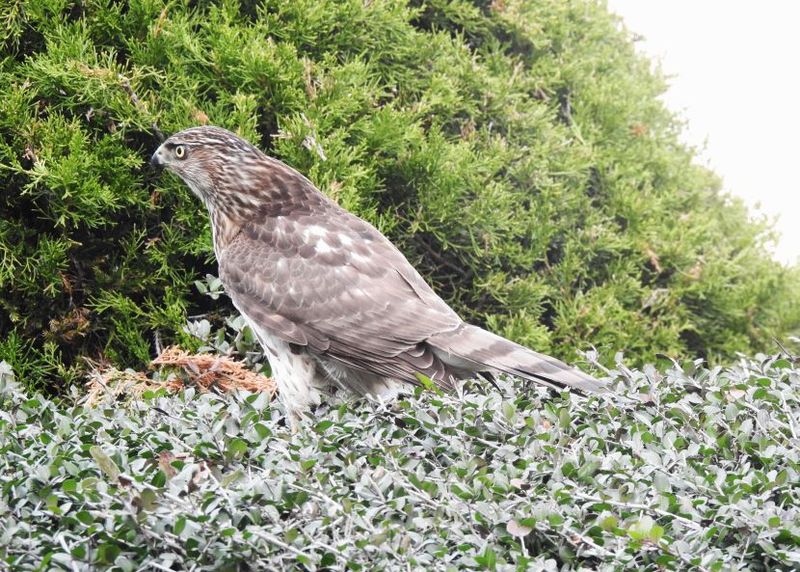
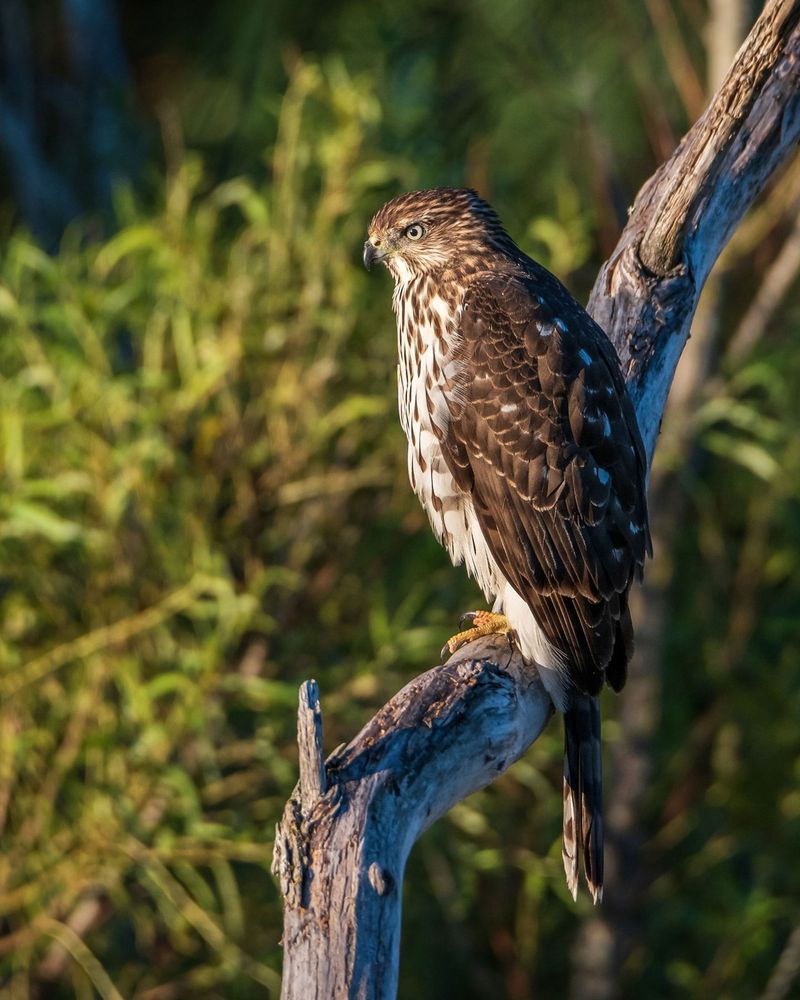
Most hawks that show up repeatedly at a backyard feeder area in North Carolina fall into one of two groups: Cooper’s Hawks and Sharp-shinned Hawks. Both belong to a family of bird-hunting specialists built for quick, agile flight through trees and shrubs. Spotting one on your fence or roofline is not a random event.
Telling the two apart is genuinely tricky, even for experienced birders. Cooper’s Hawks run roughly crow-sized, with noticeably thicker legs and a head that looks large and blocky compared to the body. Sharp-shinned Hawks are smaller, closer to a robin or jay in size, with thinner legs and a smaller, rounder head. Cornell Lab’s side-by-side comparison lays out these differences clearly, but even that guide admits that a single backyard sighting rarely gives you enough information to call it with confidence.
Size can fool you depending on the angle, the light, and whether the bird is fluffed up against a cool Piedmont morning.
What you can say with confidence is that whichever species keeps returning, it has decided your yard is worth the trip. These are not birds that wander aimlessly. Cornell’s raptor identification course describes accipiters as pursuit hunters that learn productive routes and return to them. A repeat visit means the hawk has found prey and hunting structure it can actually use, not that it is delivering a report card on your garden’s ecological standing.
So the more useful question is not “what is this hawk trying to tell me” but “what has my yard quietly been offering it.” FeederWatch research on both species shows that backyard appearances are driven by hunting opportunity, plain and simple.
Your Feeder Can Concentrate The Prey
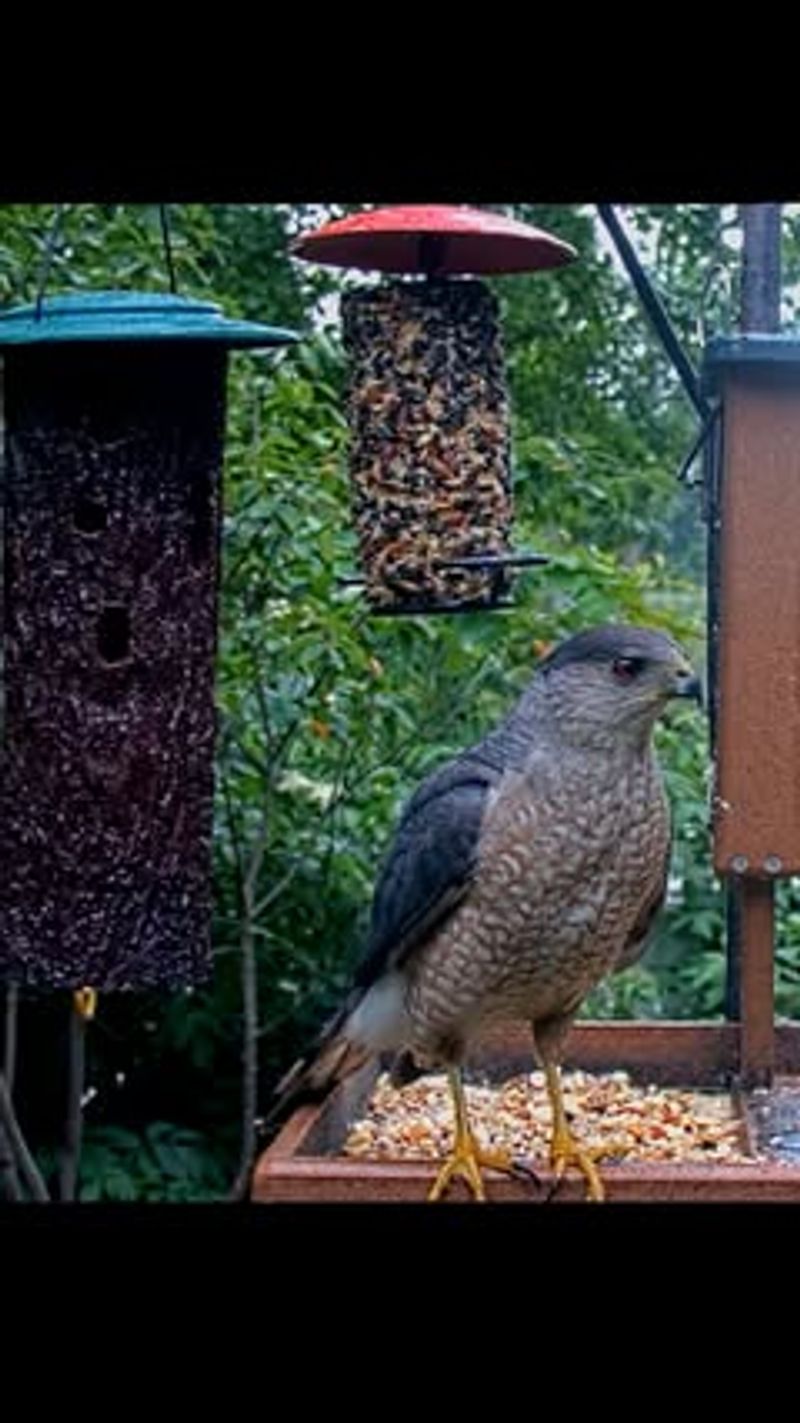
Birdseed does not feed a hawk. What it does is pull together a crowd of sparrows, finches, doves, and juncos, and that crowd is exactly what a Cooper’s or Sharp-shinned Hawk is shopping for. Think of your feeder as a diner that advertises free meals. The hawk is not reading the menu, it is watching who walks in the door.
Ground feeding makes the situation even more appealing. When seed spills or gets kicked out of a tube feeder, birds land beneath it and peck around in the open, which puts them in a more exposed position than perch feeders allow. Mourning doves, dark-eyed juncos, and white-throated sparrows all favor that low, open spot, and those are exactly the species that show up most often in FeederWatch predation records.
Your North Carolina Garden Changes Every Week. Your Plan Should Too.
Gardening in North Carolina changes quickly throughout the season. Every Friday you’ll receive a simple weekly plan showing exactly what to plant, prune, fertilize, harvest, and protect so you never miss the right timing.
A peer-reviewed study on urban Cooper’s Hawks found that after hawks established themselves in a neighborhood, long-term presence was most closely tied to prey abundance in that area. That is a qualified finding, not a simple formula, but it supports the idea that a yard with concentrated, reliable bird activity is more likely to hold a hawk’s attention over time than a yard that offers nothing.
The feeder is a contributing factor, not necessarily the whole cause. NC State Extension’s backyard bird habitat guidance notes that feeders create concentrated activity that can attract predators, which is why placement and management both matter. A feeder may be one piece of what draws a hawk back again and again, but it rarely tells the whole story on its own.
The Feeder May Not Be The Whole Explanation
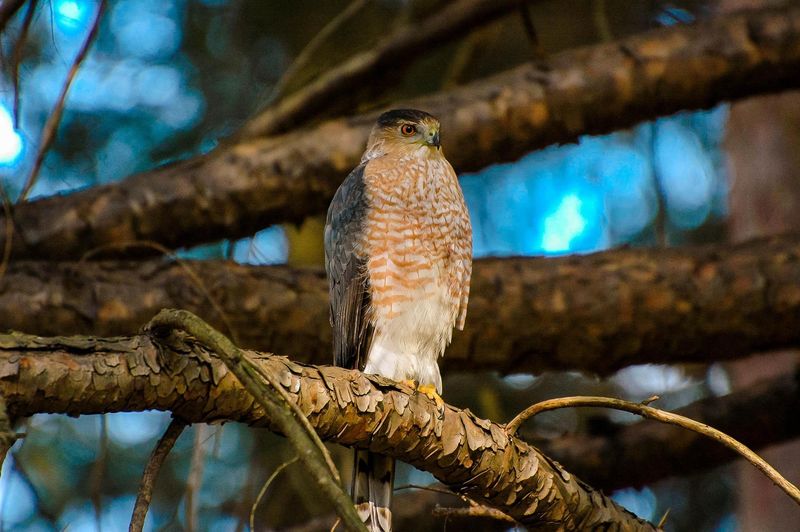
Before you blame the sunflower seeds, consider what else your yard and neighborhood are offering. Cooper’s Hawks are genuinely at home in suburban and urban settings across North Carolina, from leafy Piedmont neighborhoods to Sandhills communities with longleaf pine edges. Cornell Lab’s Cooper’s Hawk life history profile describes a species that hunts forests, parks, tree-lined streets, and quiet residential blocks, often targeting birds drawn by natural food sources, ornamental plantings, or whatever the neighboring yard happens to offer.
A hawk that keeps returning to your corner of the yard may be following a regular travel route between two wooded patches. It may have a nest within a half-mile and is working a familiar hunting loop. It may have found one particular fence post or oak branch that gives it a clean sightline over a stretch of lawn, and that perch is simply too good to abandon.
Cornell Lab’s reporting on increased hawk sightings points out that Cooper’s Hawk populations have actually grown in suburban areas over recent decades, so more of these birds are living year-round in neighborhoods that would not have held them a generation ago. Your yard may be inside a hawk’s established home territory without your feeder having anything to do with it.
The feeder connection can be real and strong, but it is not universal. Keeping that in mind helps you make smarter decisions about what, if anything, you want to change.
A Perch Does Not Prove A Capture
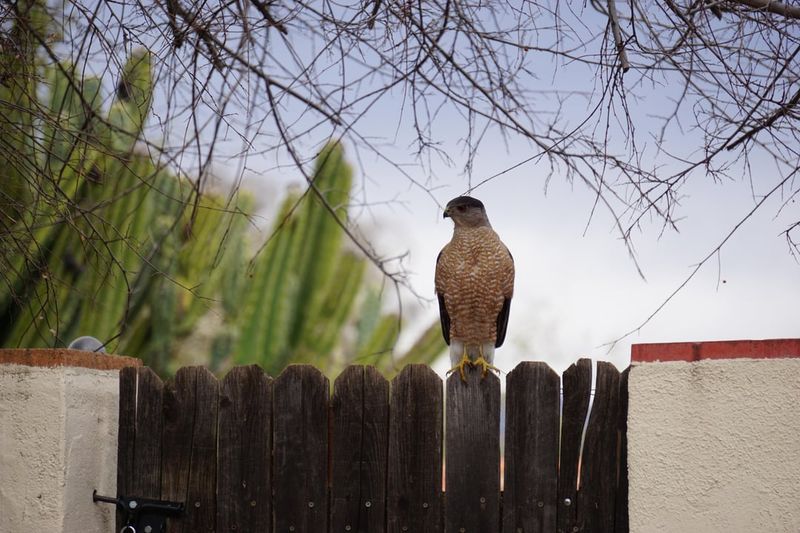
Watching a hawk land on your fence and stare at the feeder can feel alarming, but a perch is just a perch. The bird sitting there has not necessarily caught anything, and it may leave without making a single attack. Before you pull feeders or rearrange the yard, spend a few days actually watching what happens.
Do it from inside, through a window. Note whether the hawk launches and pursues a bird, whether it just sits and eventually flies off, or whether the songbirds scatter and return within a few minutes once the hawk moves on. Cornell Lab’s feeder-hawk guidance encourages exactly this kind of observation before taking action, because a hawk perching near feeders is not the same as a hawk actively and repeatedly attacking them.
Here is where it gets tricky. When a hawk does make a catch, you should not assume the captured bird was sick or weak. FeederWatch predation data show that both Cooper’s and Sharp-shinned Hawks take ordinary, healthy feeder birds, including house finches, American goldfinches, white-throated sparrows, and dark-eyed juncos. Cooper’s Hawks also take larger birds like mourning doves, European starlings, and common grackles.
Predation is a normal part of backyard ecology, but it does not mean every bird at your feeder is at immediate risk.
What your observation period tells you is whether the disturbance is frequent enough to justify a change. A hawk that visits twice a week and mostly perches is a different situation from one that attacks the feeder cluster every single morning.
Pause Feeding For One To Two Weeks
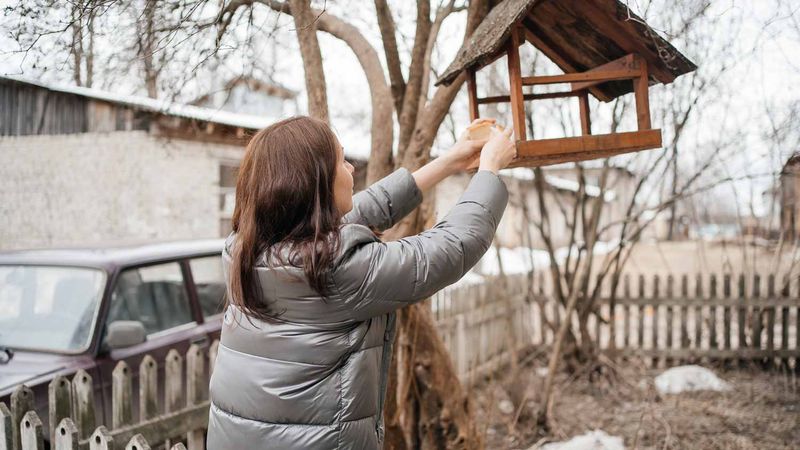
When hawk attacks become frequent and you want to give your feeder birds some relief, the clearest evidence-based move is to take the feeders down or empty them for roughly one to two weeks. Cornell Lab’s feeder-hawk advice recommends this pause specifically, and Audubon’s guidance aligns with the same timeframe. Two weeks is not an arbitrary number. It gives the concentrated prey population time to disperse and find food elsewhere, which removes the main reason the hawk keeps returning to that specific spot.
You are not starving the hawk by doing this. The bird will move its hunting effort to wherever prey is available, which is what hawks do naturally. Wild birds, including the songbirds you enjoy watching, are capable of finding food across a wider area than your backyard. A temporary pause at one feeding station does not cut them off from resources.
What the pause does not do is guarantee the hawk leaves your neighborhood for good. If the bird has a territory nearby, a nesting site within a few blocks, or a regular travel route through your yard, it may still pass through. The goal is to break up the concentrated hunting opportunity, not to evict a wild predator from its home range.
When you bring the feeders back, consider moving them to a slightly different position and cleaning up ground spill more carefully than before. Restarting with a cleaner, better-placed setup gives you a chance to reduce the concentration effect that drew repeated attacks in the first place.
Place Feeders Near Escape Cover
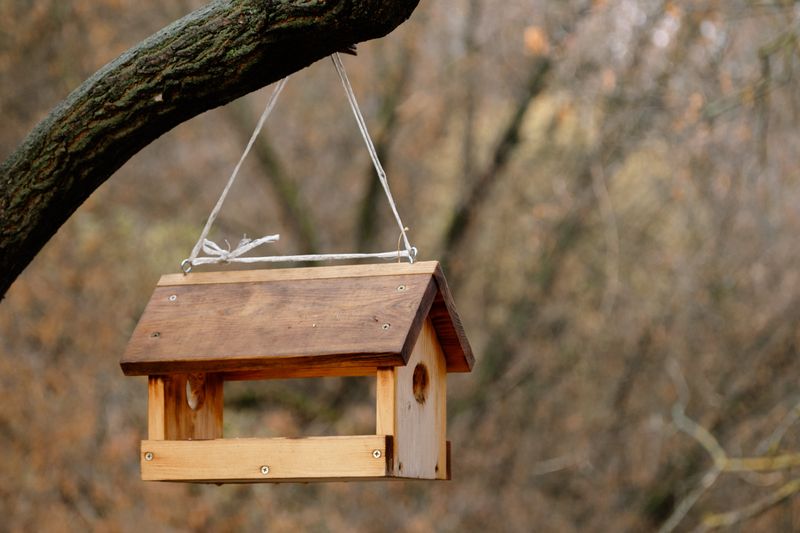
Where you hang or mount a feeder matters almost as much as whether you feed at all. A feeder sitting in the middle of an open lawn is essentially a buffet table with no exit. Birds that land there have nowhere to go quickly if a hawk comes in fast and low, which is exactly how Cooper’s and Sharp-shinned Hawks like to hunt.
NC State Extension’s backyard bird habitat guidance recommends placing feeders within 10 feet of brush piles or shrubby vegetation so smaller birds can reach cover before a hawk completes its strike. That 10-foot figure reflects how quickly a small bird needs to move when a predator commits to an attack run. The cover does not have to be elaborate. A dense native shrub, a stacked brush pile from last fall’s pruning, or even a thick clump of ornamental grasses can give birds a place to duck into.
Audubon’s backyard mishap guidance uses a broader estimate of 15 to 20 feet for nearby trees as a useful escape-cover range. Think of these two figures as a practical window rather than a precise rule. Somewhere between 10 and 20 feet of protective vegetation gives birds a fighting chance without requiring a complete yard redesign.
One caution worth keeping in mind: do not push feeders deep inside dense shrubs where a cat can crouch unseen and stalk birds at close range. The goal is quick cover with clear sightlines on approach, not a tangle that creates a different ambush problem. Balance visibility, quick escape routes, and the actual layout of your yard.
Reduce Spills And Window Collisions
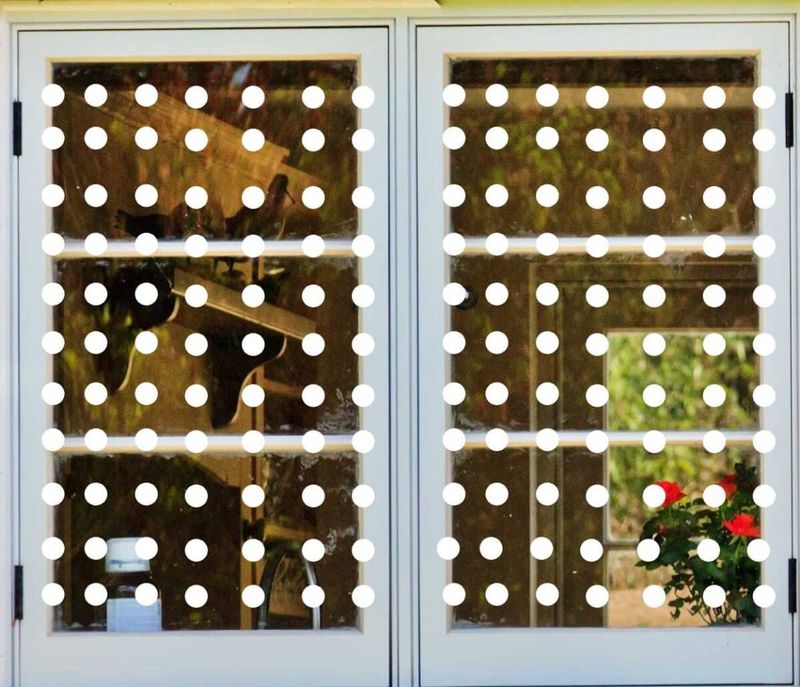
Concentrated bird activity around feeders creates two secondary risks that are easy to overlook: window strikes and disease buildup. Both get worse when a hawk shows up and flushes panicked birds in every direction.
A songbird flushed at full speed does not always see glass in time. Hawks pursuing prey can also collide with windows mid-chase. USGS guidance on window collisions recommends applying exterior patterns to glass spaced in a two-inch by two-inch grid, which makes the surface visible to approaching birds. Positioning feeders so that startled birds do not fly directly toward a large picture window or sliding door is equally important.
If your feeder line-of-sight points straight at a glass wall, moving the feeder even a few feet to change the angle can reduce strikes meaningfully.
Ground hygiene matters too, and it compounds quickly. Wet, decomposing seed beneath a feeder can harbor bacteria and mold that make birds sick, and a sick bird at a feeder is exactly the kind of easy target a hawk will notice. NC State Extension’s wildlife management guidance recommends raking up waste seed and hulls about once a week and cleaning feeders every two to three weeks. NC State’s backyard bird habitat page adds that feeders should be disinfected at least every two weeks, and more often if you notice birds that look sick or lethargic.
None of these steps are guarantees. A determined hawk will still hunt, and an unlucky bird can still strike glass. But cleaner feeders, better placement, and treated windows are layers of protection that genuinely reduce risk across the whole yard.
Leave The Protected Predator Alone
Native hawks in North Carolina are protected under the federal Migratory Bird Treaty Act, which prohibits killing, capturing, transporting, or otherwise harming them without federal authorization. That applies to every Cooper’s Hawk and Sharp-shinned Hawk that visits your yard, regardless of how often it shows up or how many feeder birds it disturbs.
Do not use traps, poison, weapons, or any improvised device aimed at injuring or removing the bird. Do not interfere with a nest, handle young hawks, or attempt to drive an adult away through physical harassment. Fake owls, reflective tape, and hawk silhouettes are not established as reliable solutions and are not worth the effort. Cornell Lab’s feeder-hawk guidance and Audubon’s explanation of hawk behavior both point to temporary feeder removal as the one evidence-backed action available to homeowners who want to reduce predation pressure.
Everything else is either ineffective or potentially illegal.
If you find a hawk that appears injured or entangled in your yard, do not attempt to handle it yourself. Contact the North Carolina Wildlife Resources Commission or a permitted wildlife rehabilitator in your area for guidance on what to do next.
The hawk returning to your yard is not sending a message about your garden’s perfection. It is telling you that prey is available and the hunting structure suits it. You have practical choices: observe the situation, pause or adjust your feeding setup, reduce ground spill, and protect your windows. Wild encounters do not come with guarantees, but a yard that understands its own food web is a yard that works a little better for everyone in it.