Plant This One Thing And Hummingbirds Will Claim Your North Carolina Yard Every Summer
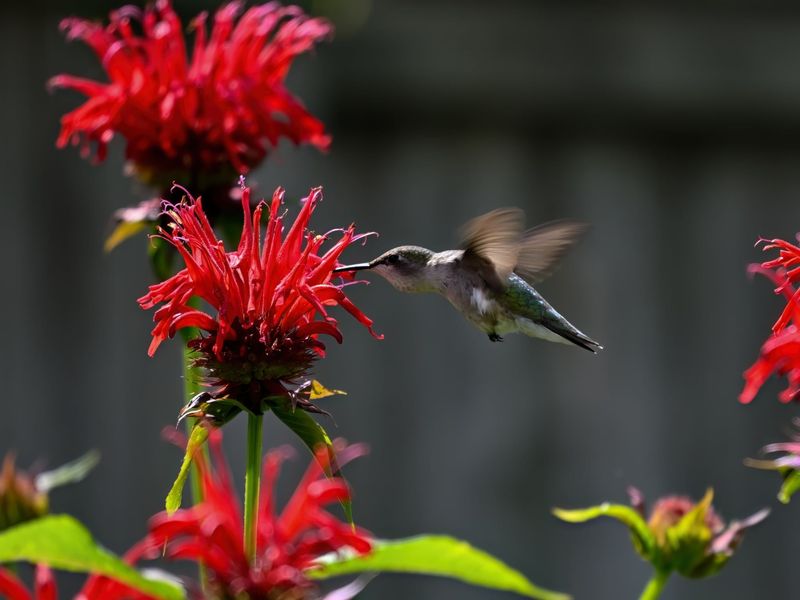
Plenty of North Carolina gardeners have watched a hummingbird zip past their yard and wondered what they did wrong. The answer is often not a feeder problem or a yard problem, it is a plant problem. Scarlet bee balm is one of the strongest single-plant choices for drawing summer hummingbird visits, and it grows well across much of the state. No plant can promise a yard full of birds every season, but this one gives you a genuinely good shot.
Scarlet Bee Balm Is a Strong Summer Choice
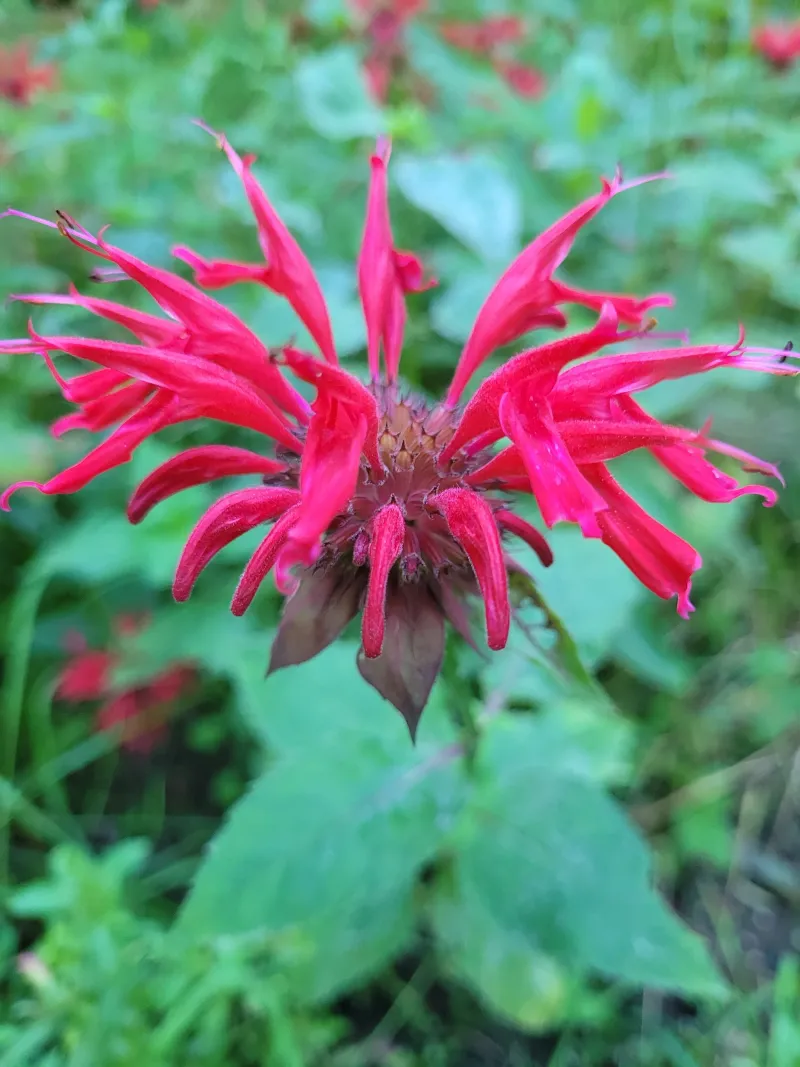
Scarlet bee balm, Monarda didyma, is the plant most worth putting in your North Carolina yard if summer hummingbird visits are what you are after. NC State Extension identifies it as native to North Carolina’s mountains and the Appalachians, summer-flowering, and genuinely attractive to hummingbirds, bees, and butterflies. That combination of traits is harder to find in one plant than you might think.
The flowers are tubular and bright red, which is exactly the shape and color that makes it easy for a passing hummingbird to spot a meal from a distance. The plant typically grows 2 to 4 feet tall and about 2 to 3 feet wide at maturity, so it fills a real visual gap in a summer border without overwhelming a smaller yard.
What it cannot do is guarantee anything. Hummingbirds are wild animals responding to dozens of cues at once, including migration timing, weather, insects, nearby shelter, and what else is blooming in the neighborhood. Scarlet bee balm adds a strong summer nectar source, and that matters, but the headline’s promise of birds “claiming” your yard every single summer is more of a hopeful wish than a horticultural fact. Plant it because it is a well-documented, regionally appropriate choice, not because it comes with a wildlife warranty.
If you live in the North Carolina mountains, this plant is especially at home. In the Piedmont, the Sandhills, or along the Coastal Plain, it can still perform well as a cultivated garden perennial when you give it the right conditions, which the next section covers in detail.
Attraction Does Not Mean Ownership
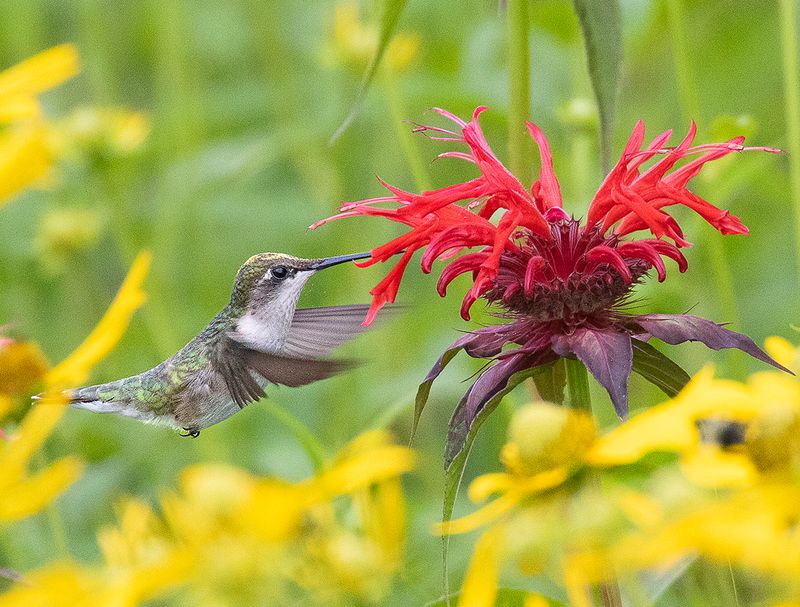
A hummingbird showing up at your yard and a hummingbird deciding to stay are two very different things. Ruby-throated Hummingbirds are the main breeding hummingbird in eastern North America, including North Carolina, and Cornell’s All About Birds notes that they are drawn to tubular flowers, particularly red or orange ones, because those shapes tend to hold the accessible nectar they need. That is the good news for bee balm gardeners.
Here is where it gets tricky. Color alone does not make a flower worth visiting. A red rose or a bright geranium looks appealing from the porch, but neither provides the nectar form that makes a hummingbird stop and feed. The flower has to actually deliver the goods, and bee balm does, while many popular red ornamentals do not.
As for repeat visits, USGS bird monitoring data shows that some hummingbirds do return to the same yards and gardens across seasons. That is genuinely encouraging. It means a reliable nectar garden can influence where birds spend time during the summer, even if it cannot lock them in.
Your North Carolina Garden Changes Every Week. Your Plan Should Too.
Gardening in North Carolina changes quickly throughout the season. Every Friday you’ll receive a simple weekly plan showing exactly what to plant, prune, fertilize, harvest, and protect so you never miss the right timing.
What changes their plans? Migration timing shifts year to year. A dry summer can cut bloom duration. A neighbor’s yard might suddenly offer better food or shelter.
Weather, predators, and competition all play a role. Planting bee balm makes your yard a more attractive stop on the route, and that is a real and worthwhile outcome, even if it falls short of the headline’s guarantee.
Give Bee Balm The Conditions It Needs
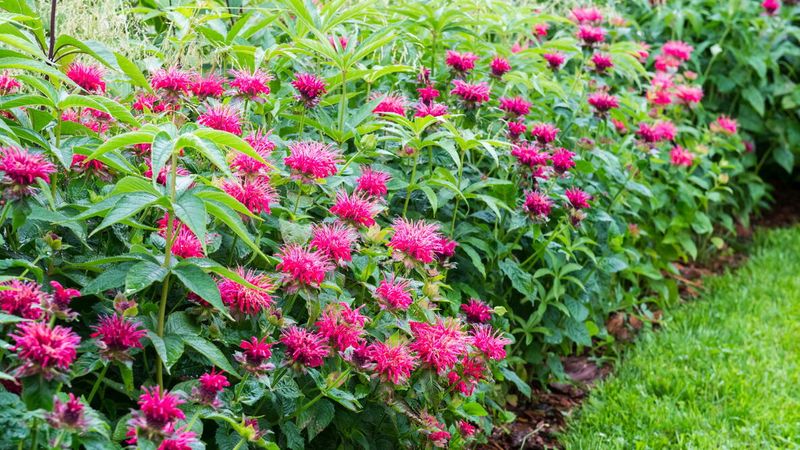
Many Piedmont gardeners have made the mistake of dropping a new perennial into whatever open ground was available and hoping for the best. Bee balm rewards a little more thought than that. It wants full sun or some shade, moist but well-drained soil, and enough room to breathe, roughly 2 to 3 feet between plants based on its documented mature width.
NC State’s plant profile confirms that scarlet bee balm spreads by underground stolons, which is the technical way of saying it will quietly expand its footprint over time. That is not a problem if you place it along a back fence or in a wide border where spreading is welcome. It becomes a problem if you tuck it next to a path or a tidy foundation planting you want to keep contained.
Keep the root zone evenly moist while the plant is getting established, especially through its first summer. After that, it handles normal moisture better, but it is not a drought-tolerant plant. In the Piedmont, that heavy red clay can stay wet after a storm and then crack dry within a week, so working organic matter into the bed before planting genuinely helps with drainage and moisture retention. Do not expect compost alone to fix a truly compacted or waterlogged spot, some drainage problems need a different solution entirely.
Along the Coastal Plain, sandy soil drains fast, which means watering more consistently during dry stretches matters more than it does in the mountains. The plant’s general need for evenly moist conditions applies across the state, but how often you water to get there will depend on your soil and your summer rainfall. Plan for that reality before you plant, and bee balm will reward you with a reliable flush of summer color.
Build A Better Hummingbird Site
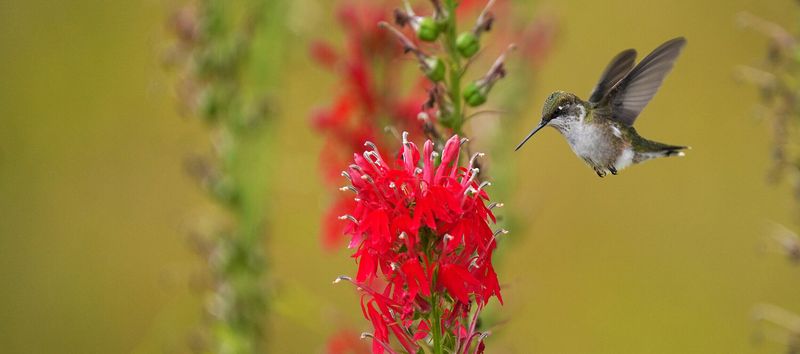
A single clump of bee balm in the middle of a bare lawn is better than nothing, but the surrounding yard does a lot of quiet work in making that plant more useful. NC State Extension recommends placing hummingbird plantings in protected spots near a fence or building, where the birds have some shelter from wind and a sense of cover. A site with nearby branches also matters, because hummingbirds perch constantly between feeding bouts and need a safe place to rest and watch for competitors.
Staggered bloom times are worth planning for, too. Bee balm carries the summer shift, but something blooming in spring and something else carrying into early fall gives visiting hummingbirds a reason to keep checking back. Native plants are the most reliable way to build that sequence, because they evolved alongside the birds and insects that depend on them.
Before you expand a hummingbird garden or add new beds, a soil test is a practical first step. NC State Extension offers testing through county offices, and knowing your soil’s pH and nutrient levels before you plant saves money and prevents the frustration of watching a new perennial struggle for no obvious reason. The test results will tell you specifically what your soil needs, which is more useful than guessing.
Keep regional conditions in mind without overpromising. Whether you are in the mountains, the Sandhills, or near the coast, the basics stay the same: suitable light, consistent moisture, decent drainage, and enough nearby habitat to make the yard feel like a place worth returning to rather than just a quick fuel stop.
Choose Alternatives For Different Garden Gaps
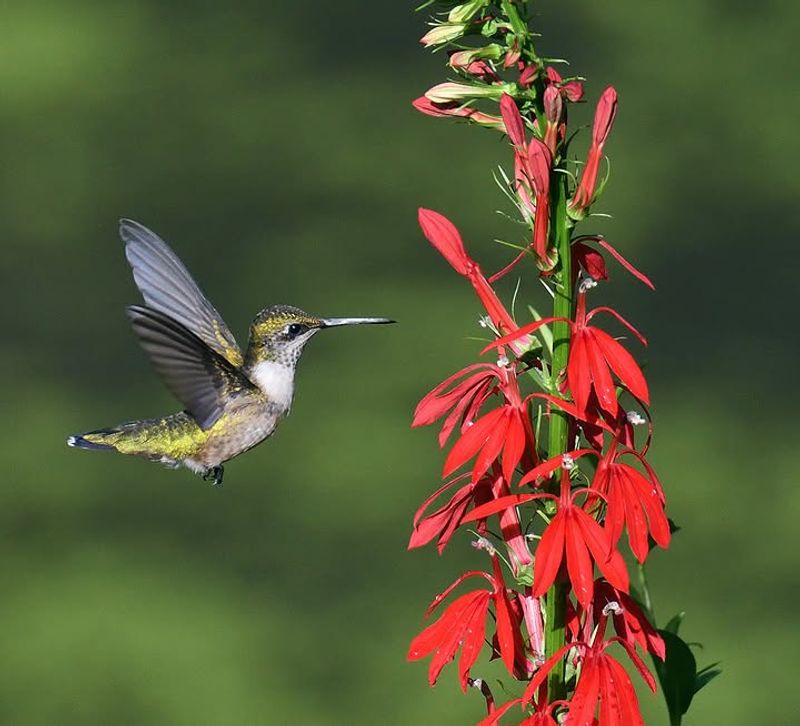
Scarlet bee balm is a strong starting point, but it does not fill every situation in a North Carolina yard. A few well-documented alternatives are worth knowing about, and each one comes with its own trade-offs. NC State Extension lists coral honeysuckle, cardinal flower, crossvine, trumpet vine, blue lobelia, jewelweed, and rose mallow among the plants that can attract hummingbirds in this state.
Coral honeysuckle, Lonicera sempervirens, is one of the most trellis-friendly options. It is native to North Carolina, produces tubular flowers that hummingbirds visit, tolerates coastal salt reasonably well, and can climb 10 to 20 feet on an arbor or fence. The catch is timing: NC State’s plant profile describes its main flowering period as mid-spring, which makes it a weaker choice if summer visits are the primary goal. It also carries a high flammability rating, so keep it away from the immediate area around your home if you live near dry woodland or open grass.
One more thing about honeysuckle: always verify the botanical name before you buy or transplant. Japanese honeysuckle, Lonicera japonica, is an invasive species in North Carolina and looks similar to the native. NC State’s weed guidance and its native landscaping resources both flag Lonicera japonica as a plant to avoid. The label matters.
Cardinal flower, Lobelia cardinalis, is worth considering for late-summer gaps. It blooms from July into October and is genuinely attractive to hummingbirds, but it needs rich, moist to wet soil that does not dry out. NC State classifies it as poisonous if eaten in large quantities, with medium poison severity. Gardeners should weigh that warning and avoid planting it where children or pets are likely to chew on the stems or leaves repeatedly.
Use Feeders As A Supplement
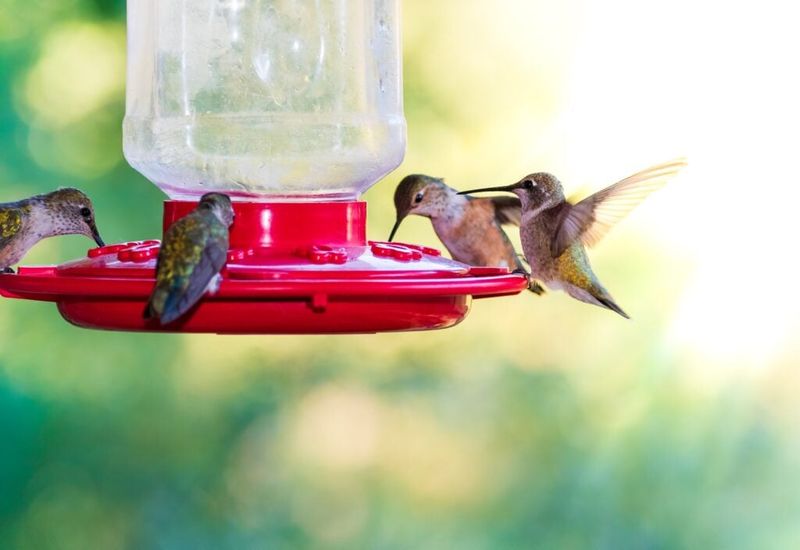
A feeder can be a useful addition to a yard that already has nectar plants, perches, shelter, and insects. What it cannot do is replace any of those things. NC State Extension and Audubon both frame feeders as supplemental, not foundational. Hummingbirds eat insects as well as nectar, and a feeder cannot provide the protein, shelter, or perching space that a real yard habitat can.
The mixture is simple and the recipe matters: 4 parts plain water to 1 part plain white granulated sugar, dissolved and cooled before filling. Do not use honey, which can promote dangerous fungal growth. Do not use artificial sweeteners, brown sugar, or fruit juice. Skip red dye entirely, the feeder ports provide enough visual color cue on their own, and Cornell’s hummingbird guidance does not support adding it.
Cleaning is where many people fall short. North Carolina summers are hot and humid, and nectar ferments or grows mold faster than most people expect. Audubon’s feeder FAQ advises cleaning every 2 to 3 days and more often during heat waves. The practical standard for a muggy Carolina summer is to inspect the feeder daily and clean it any time the nectar looks cloudy, smells off, or shows visible residue.
Hot water and vinegar work well for cleaning without leaving harmful residue behind.
One persistent myth is worth clearing up directly: leaving a feeder out through September does not trap hummingbirds or prevent them from migrating. Audubon’s migration guidance confirms that migration is driven by decreasing daylight and other biological cues, not by food availability. Keeping a clean feeder up through early October actually helps late migrants refuel without any risk of keeping resident birds from leaving on schedule.
Protect The Yard Hummingbirds Use
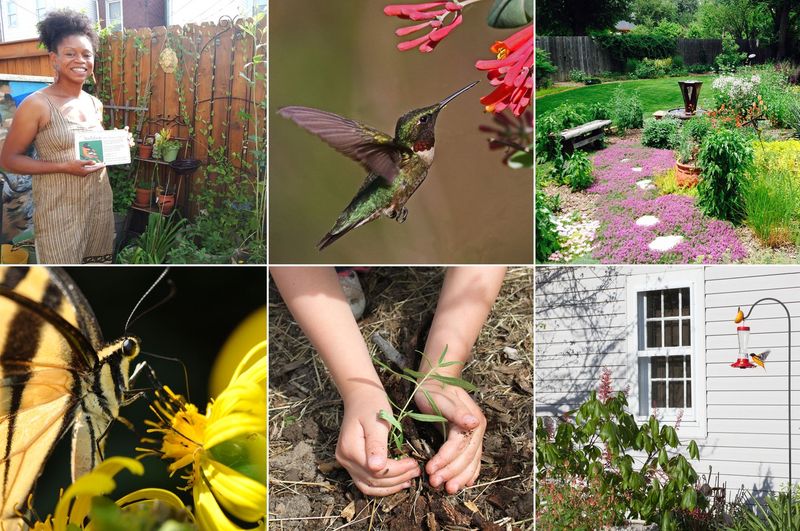
Hummingbirds do not just need flowers. They need insects, too, and that changes how you should think about pest control. Penn State Extension warns that pesticides reduce the insects available to hummingbirds and can harm the birds directly. A yard sprayed routinely for mosquitoes or Japanese beetles may look tidy but actually offers less to a visiting hummingbird than a yard with a few more bugs and a lot more life.
The EPA recommends using pesticides only when genuinely necessary, treating only the affected area, following the label carefully, and avoiding applications when pollinators are actively foraging. EPA guidance on reducing pesticide impacts to wildlife and its pollinator protection strategies both point toward minimizing routine use rather than eliminating all pest management. That is a practical middle ground most North Carolina homeowners can actually follow.
Beyond pest control, the broader habits that make a yard useful are familiar: native plants with staggered bloom times, perches and shelter near feeding areas, protected placement away from heavy foot traffic, and a yard that feels safe rather than exposed. NC State Extension’s hummingbird and butterfly guide pulls these threads together and is worth bookmarking for the full picture.
Scarlet bee balm can add a real and valuable summer nectar source to your North Carolina yard. Whether hummingbirds visit and how often they return depends on migration patterns, local weather, what else is blooming nearby, and the broader character of the habitat you offer. The plant does its part, the rest is the yard’s job, and that is actually a pretty good reason to keep improving it.