Why North Carolina Homeowners Should Know Where The Property Line Falls Before A Neighbor’s Tree Becomes A Problem
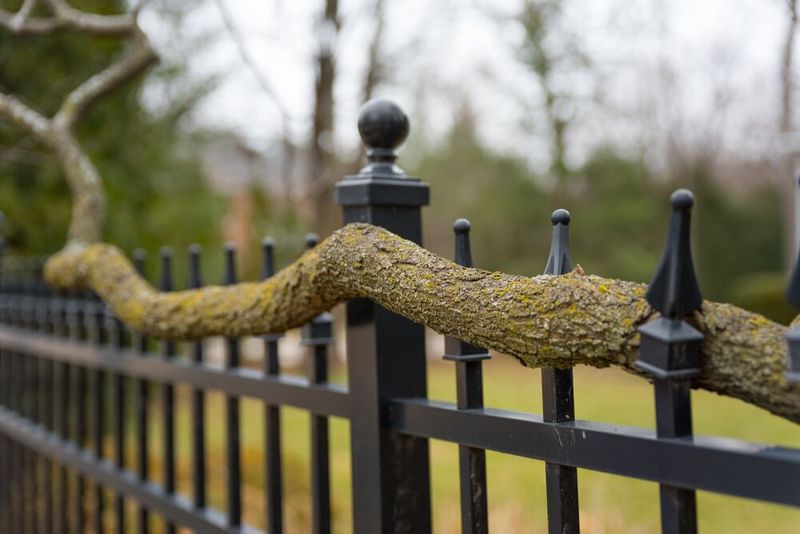
A big oak drops a limb onto your fence on a Tuesday morning, and suddenly you and your neighbor are both staring at the same pile of wood with very different ideas about who is responsible. Tree disputes are one of the most common reasons North Carolina neighbors stop waving at each other across the yard. Knowing where your property line actually falls before anything breaks, leans, or crosses over can change how the whole situation plays out. That one piece of information shapes who owns the tree, whether any planned work would cross onto someone else’s land, and who needs to be involved before the first chainsaw starts.
The Property Line Sets the First Question
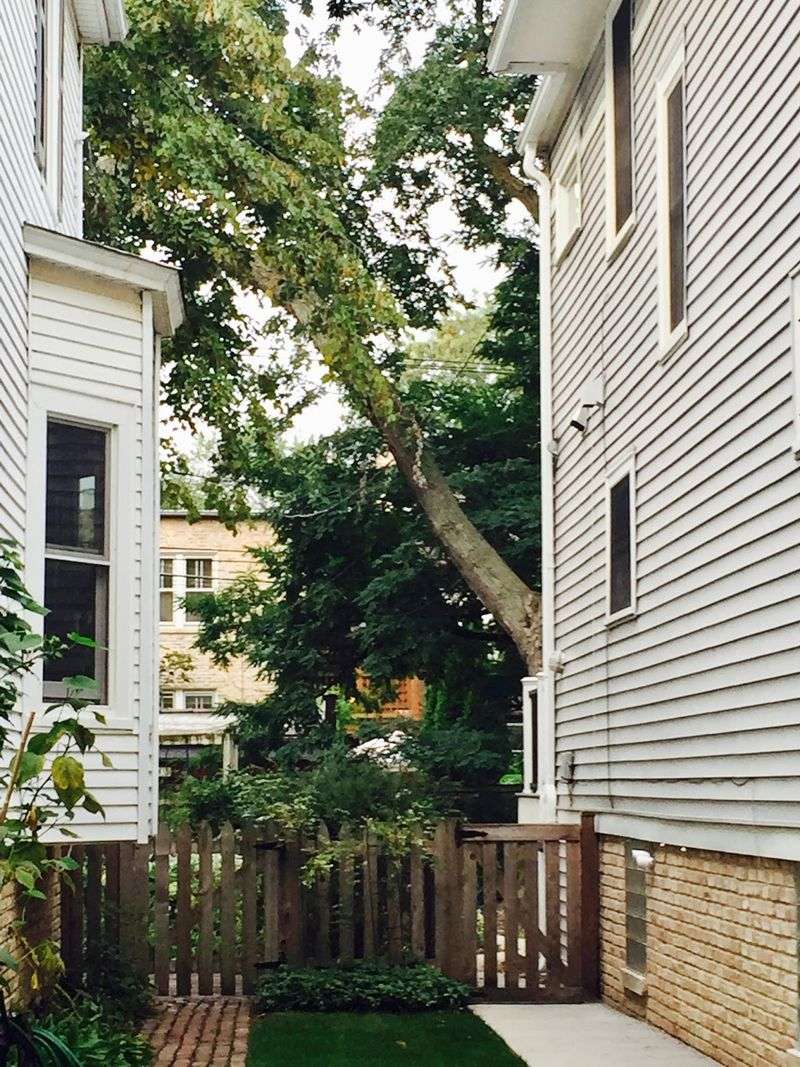
Picture this: you walk out back one morning and notice your neighbor’s sweetgum is leaning hard toward your storage shed, with two thick limbs already hanging over the roofline. Your first instinct might be to grab a saw or call a tree service. But before anyone touches that tree, the most useful question is not “whose tree is it?” but rather “where does the line actually fall?”
The property line is the starting point for almost every decision that follows. NC State Extension guidance on community tree responsibility makes clear that ownership, permission, and liability questions in a tree dispute are all connected to who owns what land and where the boundary sits. If the trunk is rooted entirely on your neighbor’s parcel, that neighbor is generally treated as the tree’s owner. If proposed pruning work would require stepping onto the neighbor’s yard or cutting into their tree, that changes who needs to give the green light.
A branch or root crossing the line does not automatically mean the tree owner must remove it, pay for cleanup, or give you unlimited cutting rights. Those are separate questions that depend on permission, negligence, foreseeability, and the specific facts on the ground. The line tells you who you are probably dealing with and whether your planned response would stay on your own property or require authorization from someone else.
Under N.C. Gen. Stat. § 1-539.1 and N.C. Gen.
Stat. § 14-128, unauthorized injury or removal of another person’s tree carries real legal and financial consequences. Knowing the line first keeps you from turning a manageable yard situation into a courtroom conversation.
A Fence or Map Cannot Settle It
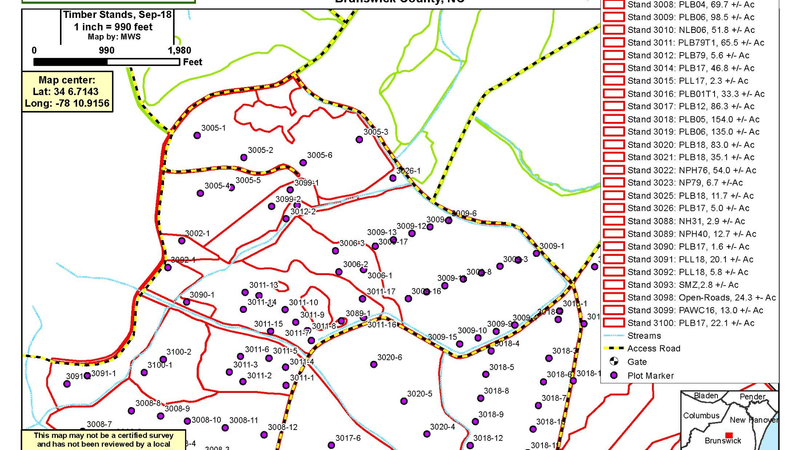
Most homeowners assume the fence tells the story. Someone put it there years ago, it has been sitting in the same spot through three different owners, and it looks permanent. The problem is that fences are often set back from the legal boundary, built slightly off-line for convenience, or placed based on a handshake agreement that has nothing to do with recorded documents.
County GIS parcel maps carry the same limitation. Buncombe County’s land records office advises property owners to use deeds and plats and to consult a licensed professional land surveyor when locating property lines or resolving a boundary dispute, because parcel maps are reference tools rather than legal proof. Henderson County’s GIS disclaimer makes the same point, and NC DEQ’s property mapping guidance reinforces that digital parcel outlines are not survey-grade representations of the actual legal boundary.
Your North Carolina Garden Changes Every Week. Your Plan Should Too.
Gardening in North Carolina changes quickly throughout the season. Every Friday you’ll receive a simple weekly plan showing exactly what to plant, prune, fertilize, harvest, and protect so you never miss the right timing.
The reliable starting point is your deed, the recorded plat for your subdivision or parcel, any prior survey you can locate, and any visible monuments or iron pins on the ground. The North Carolina Department of Administration’s real-estate records guidance points homeowners to the Register of Deeds as the right place to obtain recorded documents. Use the GIS map to orient yourself, but do not place a fence, authorize tree removal, or accuse a neighbor of trespass based only on what a digital parcel outline shows.
When the line remains genuinely uncertain, or when a dispute is already developing, hiring a North Carolina-licensed professional land surveyor is the appropriate step. NC State Extension’s guidance on maintaining forest property boundaries warns that a landowner who tries to reestablish a line independently and gets it wrong may become responsible for any resulting damages. A properly prepared survey plat under North Carolina’s surveying standards identifies surveyed lines, boundary sources, accuracy information, and the licensed surveyor’s seal, which is the kind of documentation that actually holds up when a dispute goes further than a backyard conversation.
The Trunk, Branches, and Roots Create Different Problems
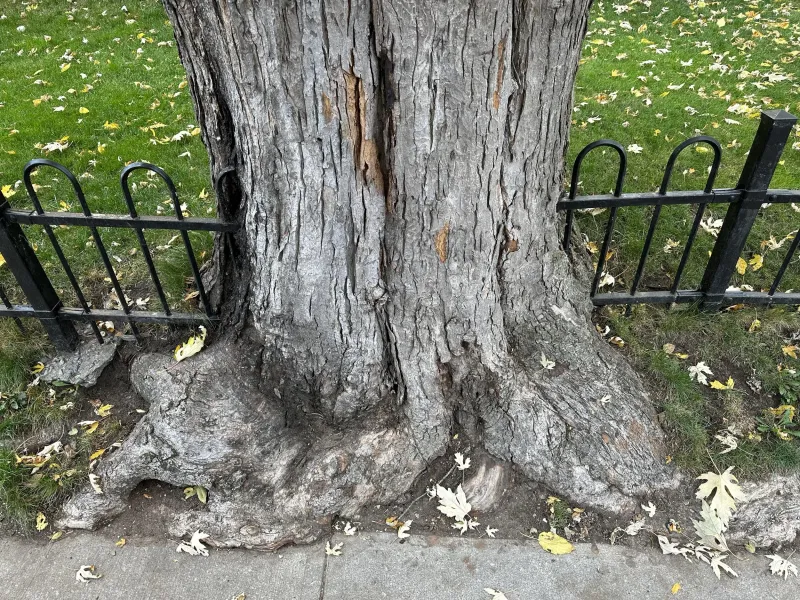
Homeowners often treat a tree dispute as one problem with one answer, but a trunk sitting near the line, branches hanging over a porch, and roots lifting a driveway are actually three separate situations that may call for three different responses.
A tree rooted entirely on one parcel is generally treated as that landowner’s tree for purposes of ownership and unauthorized cutting. NC State Extension’s citizen guide to community trees emphasizes permission, professional advice, local restrictions, and avoiding damage to a neighbor’s tree as the key considerations when any work is being considered. That framing applies whether the issue is an overhanging limb or a root pushing under a fence.
A trunk that straddles the boundary is a more complicated situation. A neighboring-state extension publication describes trees growing directly on a property line as potentially jointly owned, but that discussion reflects general background rather than a controlling North Carolina statute or settled North Carolina case law. The safer move is to treat any trunk-on-the-line situation as legally uncertain and get the boundary confirmed by a licensed surveyor before making decisions about the tree.
Roots deserve their own careful thought. Cutting a large anchoring root may weaken or destabilize a tree, and NC State Extension’s tree-fall liability guidance identifies cutting a major anchoring root as a fact that could affect foreseeability in a later dispute. That does not mean every root crossing the line is legally protected from disturbance, and ordinary root growth does not automatically create liability for a neighbor. It does mean that aggressive root cutting near a large tree carries real risk, and an arborist’s assessment before any major root work is a genuinely useful step.
The University of Georgia Cooperative Extension overview of tree ownership offers helpful general background on these distinctions, but North Carolina homeowners should rely on NC-specific guidance and legal counsel for decisions that could affect their own liability.
Permission Keeps Pruning From Becoming a Bigger Dispute
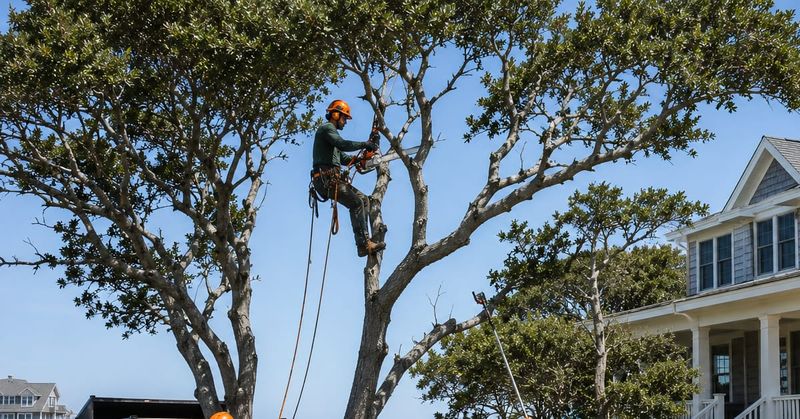
Clearing a branch that shades your vegetable garden sounds like a straightforward Saturday chore. Here is where it gets tricky: if that branch belongs to a tree rooted on your neighbor’s property, trimming it without permission can turn a simple yard task into an unauthorized act with legal consequences.
Two separate concerns come into play. Entering your neighbor’s land without permission may raise trespass concerns on its own. Separately, N.C. Gen.
Stat. § 14-128 classifies covered willful, unauthorized cutting, injury, destruction, or removal of another person’s vegetation as a Class 2 misdemeanor. And under N.C. Gen. Stat. § 1-539.1, a person who injures or removes another’s valuable tree without authorization may face liability for treble the tree’s value when the statute’s requirements apply.
These are not abstract possibilities for major commercial logging operations; they can apply to a neighbor who hires a crew to remove a limb from someone else’s tree without asking first.
The practical sequence that reduces this risk is straightforward. Talk to your neighbor before any work happens. Define the scope in writing: which limbs, who will do the work, when access to the property is permitted, and who is responsible for cleanup. Verbal agreements feel fine in the moment but leave both sides with different memories six months later.
For large limbs, structurally defective branches, climbing work, or cuts that could affect the tree’s stability, bring in a qualified arborist rather than treating the job as ordinary backyard maintenance. NC State Extension specifically cautions that removing trees on a neighbor’s property can create civil and criminal exposure, and that professional guidance and written permission are the appropriate safeguards before work begins. A signed agreement does not guarantee there will be no future disagreement, but it gives both parties a documented starting point if one does arise.
Tree-Fall Liability Turns on Foreseeability
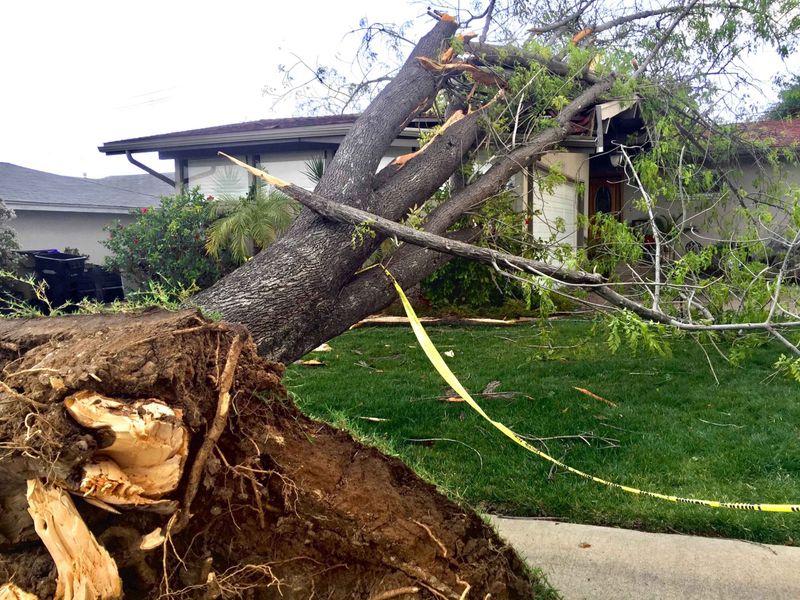
After a storm drops a neighbor’s pine across your carport, the instinct is to assume the neighbor is responsible and will pay. North Carolina law does not work that way automatically, and understanding the actual standard can save a lot of frustration when the insurance calls start.
NC State Extension’s guidance on tree-fall liability explains that North Carolina generally applies a negligence and foreseeability framework rather than automatic liability based only on where the trunk is rooted. The question is not simply “whose tree was it?” but whether the owner knew or should have known that the tree posed a danger and failed to act reasonably.
Visible decay, a pronounced lean toward a structure, dead limbs hanging over a roof, known root damage, or a hollow trunk are the kinds of facts that can help show a dangerous condition was foreseeable. A tree owner who receives a written notice about these conditions and does nothing is in a materially different position than one who had no reason to suspect a problem.
Contrast that with a healthy, well-maintained tree that fails during an unforeseeable storm event. A hurricane or a sudden severe squall along the Piedmont or coast can bring down trees that showed no prior warning signs. In those situations, the tree owner’s liability is much less clear, and the storm itself may be the primary cause of the damage rather than any failure by the owner.
This distinction matters for how you document a hazardous tree before a storm season arrives, how you communicate concern to a neighbor, and how you handle an insurance claim after a fall. The tree’s location relative to the property line is one piece of the picture, not the whole answer.
Document the Risk Before You Make a Move
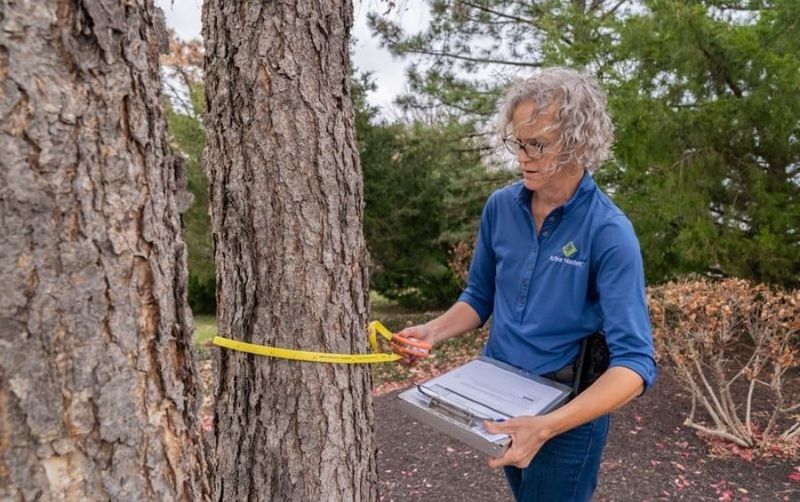
Before any conversation with a neighbor, before any phone call to a tree service, and well before any work begins, spend 20 minutes building a paper trail. What you document in the week before a problem escalates can matter a great deal if the situation ends up involving an insurer, an attorney, or a court.
Start with photographs. Walk the perimeter of the tree and capture the trunk from multiple angles, any visible lean, decay, cavities, cracks, dead limbs, and exposed or damaged roots. Photograph nearby structures, vehicles, fences, and the approximate location of the boundary. Keep in mind that photographs show what the tree looks like on a given day but do not prove where the legal line falls.
For that, you still need the deed, plat, and potentially a licensed surveyor.
NC State Extension’s guidance on forest property boundaries reinforces the value of dated, written records in any boundary-related situation. Apply that same habit to tree disputes: date your photos, keep copies of any letters or texts you send or receive, and note the date and substance of any verbal conversations in a written summary you keep for yourself.
If a tree appears to present a substantial hazard, getting an assessment from a qualified arborist adds credibility to your concerns and gives you something concrete to share with the neighbor. NC State Extension’s community tree guide supports involving professionals when large limbs, structural defects, or disputed ownership are part of the picture. Sharing an arborist report with a neighbor is a more productive opening than an accusatory letter, and it demonstrates that your concern is based on an actual assessment rather than a personal preference.
Good documentation supports safer decisions at every stage, but it does not replace a survey, a professional tree assessment, or legal advice when the facts are genuinely in dispute.
Storm Cleanup and Power Lines Need a Safer Plan
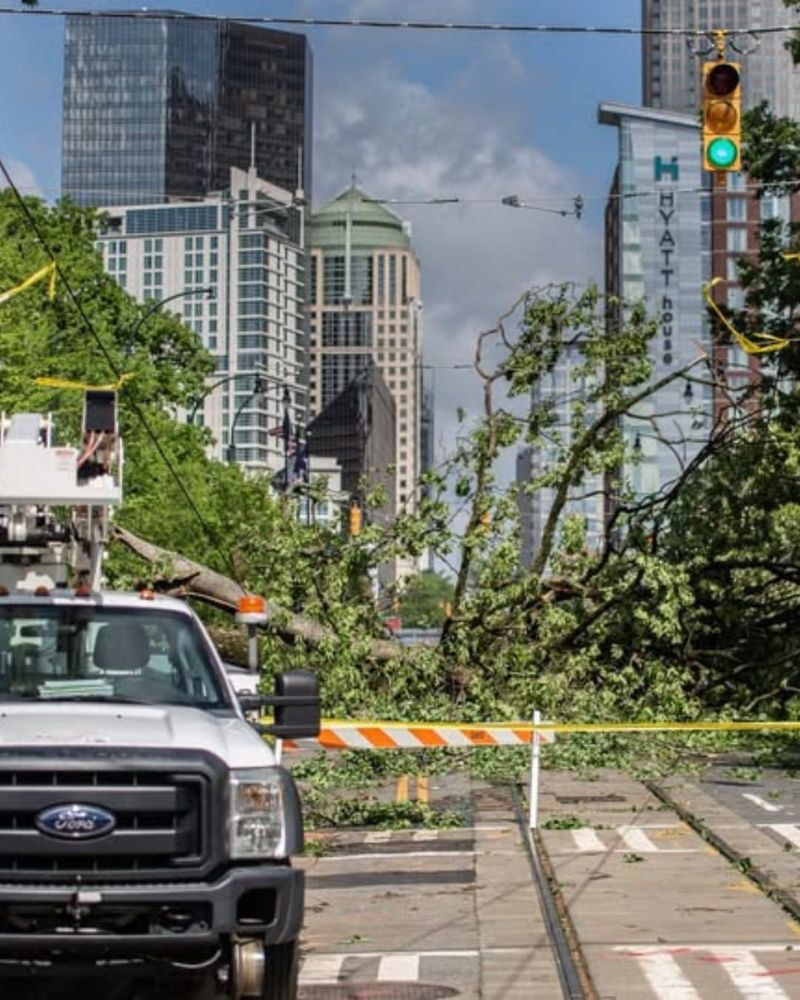
A tree comes down overnight during a coastal storm, and by morning you want it gone. That urgency is completely understandable, but the hours right after a tree falls are when homeowners are most likely to make a decision that creates a second problem on top of the first.
The first call after a significant fall should go to your homeowner’s insurance company, not the tree service. NC State Extension’s tree-fall liability resource notes that homeowners insurance may commonly cover structural damage and removal costs even when the fallen tree was rooted on an adjoining property, and that the insurer may later pursue a negligent tree owner in appropriate cases. Coverage depends on your specific policy, the type of damage, applicable exclusions, and the facts involved, so notify your insurer promptly and preserve photographic evidence before cleanup begins.
Storm damage does not automatically establish that the tree owner is liable for your losses. As covered earlier, liability generally turns on whether the owner knew about a dangerous condition and failed to act reasonably, not simply on where the tree was rooted.
Work near overhead electric lines is a separate and more urgent safety category. OSHA identifies line-clearance tree trimming as work performed within 10 feet of energized lines for systems up to 50 kilovolts, with greater required distances for higher voltages. This is not ordinary backyard pruning, and it is not a job for a homeowner with a chainsaw and a ladder. NC State Extension directs homeowners to contact the utility company and use trained professionals for any work involving overhead lines.
Call the utility first, stay well clear of downed lines, and let the professionals assess the scene before anyone else gets close.
Local Rules Can Change What the Line Allows
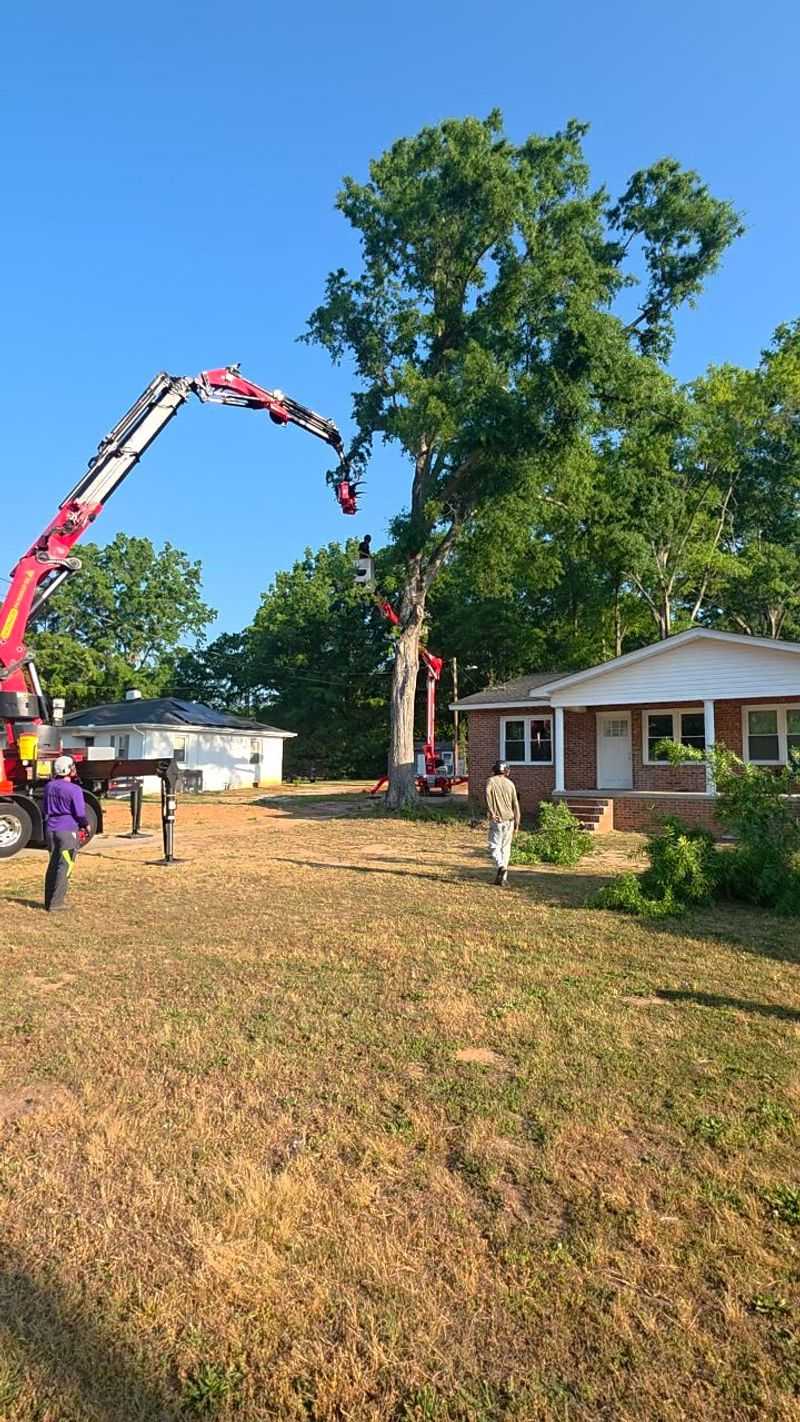
Confirming the property line is a necessary first step, but in many North Carolina communities it is not the last one. A verified boundary tells you where your land ends, but it does not tell you what local rules, private agreements, or environmental protections govern what you can do with a tree that sits near or on that line.
Cities and towns across the state may have tree ordinances that restrict removal, require permits, or protect certain species or sizes. Homeowners’ associations can add another layer of approval requirements on top of local code. Conservation easements, riparian-buffer requirements along creek corridors, historic-tree protections, and utility easements recorded against the property can all limit pruning or removal even when the tree is clearly on your own parcel. NC State Extension advises homeowners to check with local officials before proceeding with any significant tree work, and that check should happen before a crew shows up, not after.
Putting it all together, a practical sequence looks like this: verify the property line using your deed, recorded plat, and a licensed surveyor if needed; identify the tree’s owner and any visible hazard; communicate your concerns in writing; involve a surveyor or arborist when the facts are uncertain or the stakes are high; and check local ordinances, HOA rules, easements, and buffer requirements before any work begins.
A neighbor tree dispute that starts with a verified boundary, documented concerns, written communication, and the right professionals involved is a manageable situation. One that starts with a chainsaw and an assumption tends to end somewhere more expensive. Knowing where the line falls turns a tense yard standoff into a documented decision you can actually defend.