Why Japanese Beetles Keep Returning To The Same North Carolina Plants Every Summer
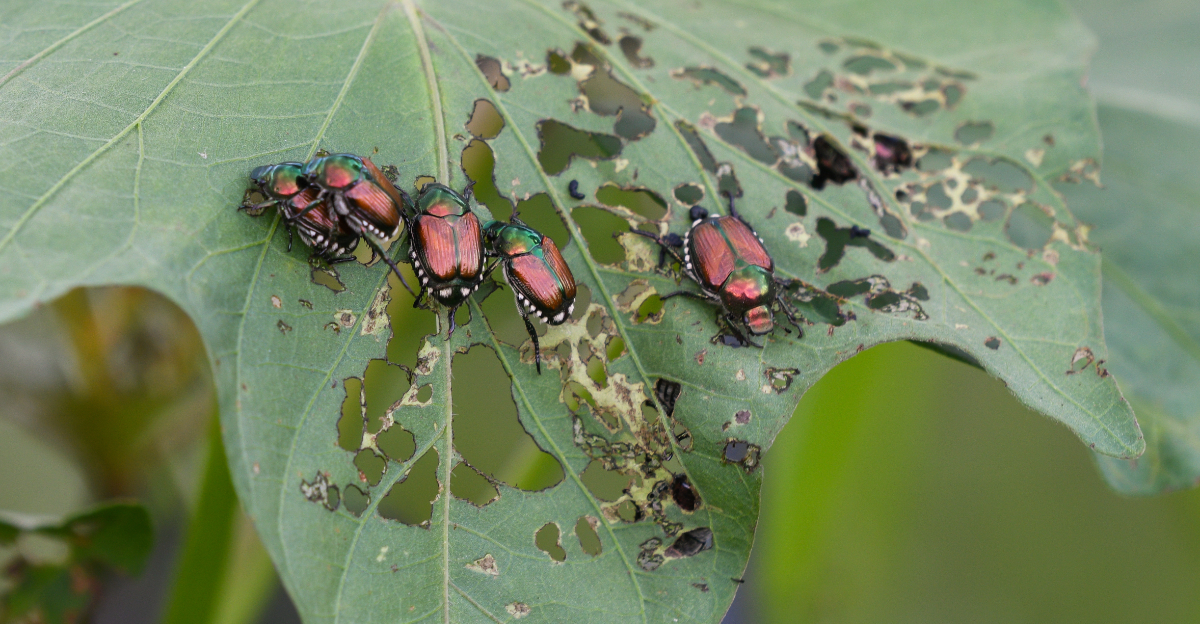
Japanese beetles are creatures of habit, and North Carolina gardeners often notice the same plants getting hit year after year without fail.
These pests are drawn to specific scent compounds released by roses, grapes, and certain ornamental trees, making those plants reliable targets each season.
Beetle grubs also tend to hatch in the same soil where adults previously fed, creating a repeating cycle right in your own yard. Once beetles find a strong food source, they release pheromones that attract even more beetles to the same spot.
Breaking this cycle often means treating soil for grubs in early fall before adults emerge the following summer. Removing severely damaged leaves can also reduce the scent signals drawing beetles back.
Rotating vulnerable plants to different areas sometimes helps disrupt their pattern. Understanding this repeat behavior makes prevention far more effective than reacting each summer.
1. The Same Plants Remain Preferred Food Sources
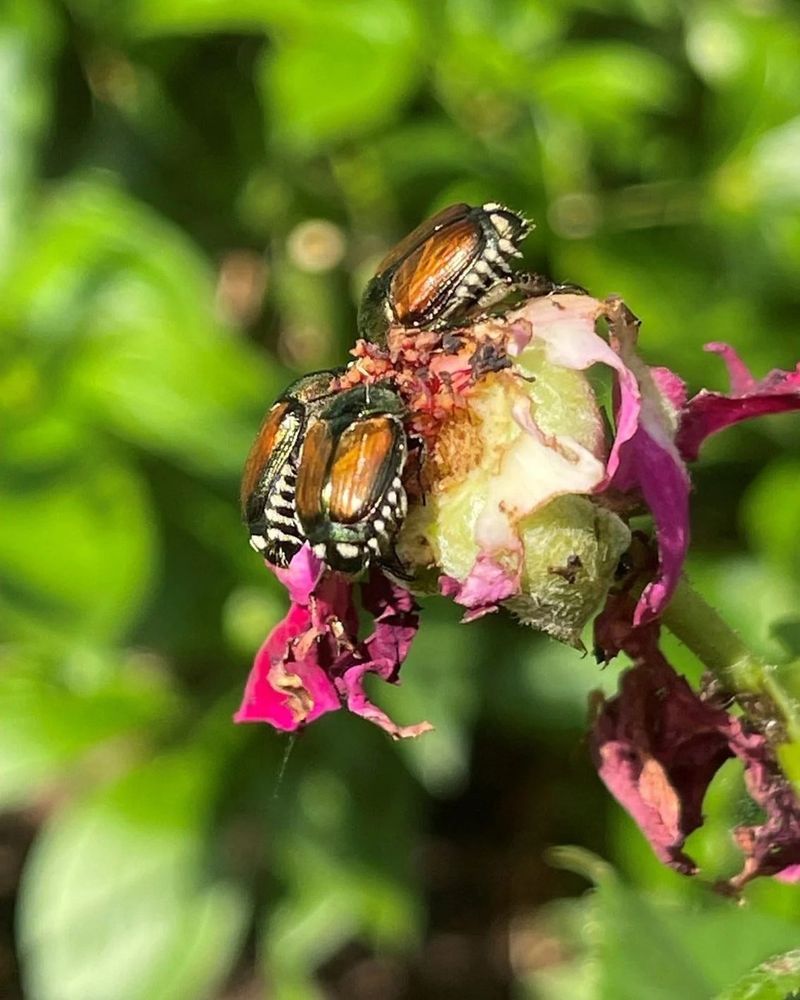
Japanese beetles are not picky in the way most people assume. With over 300 plant species on their menu, you might think your whole garden is equally at risk.
The truth is, beetles have clear favorites, and they return to those favorites summer after summer with almost stubborn consistency.
Roses, grapes, fruit trees like peaches and apples, blackberries, and raspberries top the list of most-preferred hosts in North Carolina gardens. These plants share certain leaf textures, scents, and chemical signals that beetles find especially appealing.
A rose bush that attracted heavy feeding last July will likely carry the same physical and chemical traits this July, making it just as attractive to a brand-new generation of beetles.
What makes this pattern so striking is that plants growing just a few feet away may go almost completely untouched. Beetles concentrate heavily on their favorites while neighboring plants stay nearly perfect.
This selective behavior is not random at all. Understanding plant preference helps gardeners focus their efforts where they matter most.
Protecting the plants beetles love, rather than treating the entire garden equally, saves time and resources.
Keep a simple journal noting which plants attracted the most beetles last season. That record becomes a valuable guide for where to start monitoring as soon as warm weather returns each year in North Carolina.
2. Early Feeding Makes The Plant More Attractive
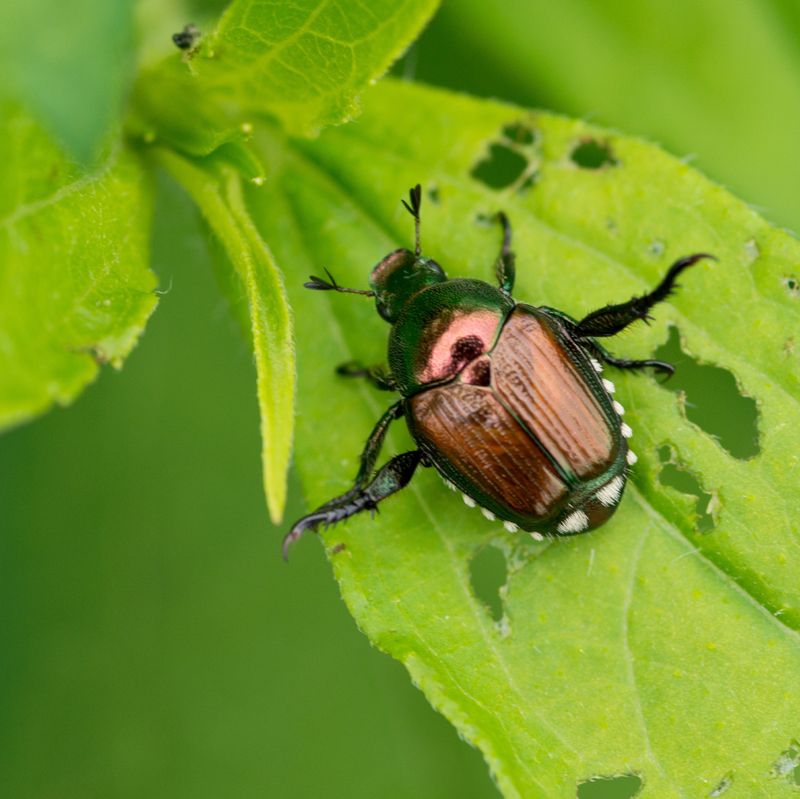
Here is something that surprises most gardeners: the first few beetles to arrive on a plant actually send out an invitation to others.
When Japanese beetles begin feeding, the damaged leaves release plant compounds into the air that act like a signal to nearby flying adults. A plant that has already been nibbled becomes more noticeable, not less.
What starts as two or three beetles can turn into a full gathering within just a day or two. The released plant odors combine with natural beetle pheromones to create a powerful attractant.
Before long, a single rose cane or grapevine cluster can be covered with dozens of feeding adults, all drawn in by the activity of the first arrivals.
This is exactly why early inspection matters so much during the North Carolina beetle season. Catching feeding activity when numbers are still small gives you a real advantage.
Your North Carolina Garden Changes Every Week. Your Plan Should Too.
Gardening in North Carolina changes quickly throughout the season. Every Friday you’ll receive a simple weekly plan showing exactly what to plant, prune, fertilize, harvest, and protect so you never miss the right timing.
Walking through your garden each morning during peak season, typically from late June through August, lets you spot trouble before it snowballs.
Physically removing beetles by hand is one of the most effective early-season strategies available. Knocking them into a bucket of soapy water during the cooler morning hours works well because beetles are slower and less likely to fly away.
Removing even a handful of early feeders can interrupt the attraction cycle before it builds into something much harder to manage. Consistent early attention is truly the most reliable tool a North Carolina gardener has against this pattern.
3. Japanese Beetles Naturally Feed In Groups
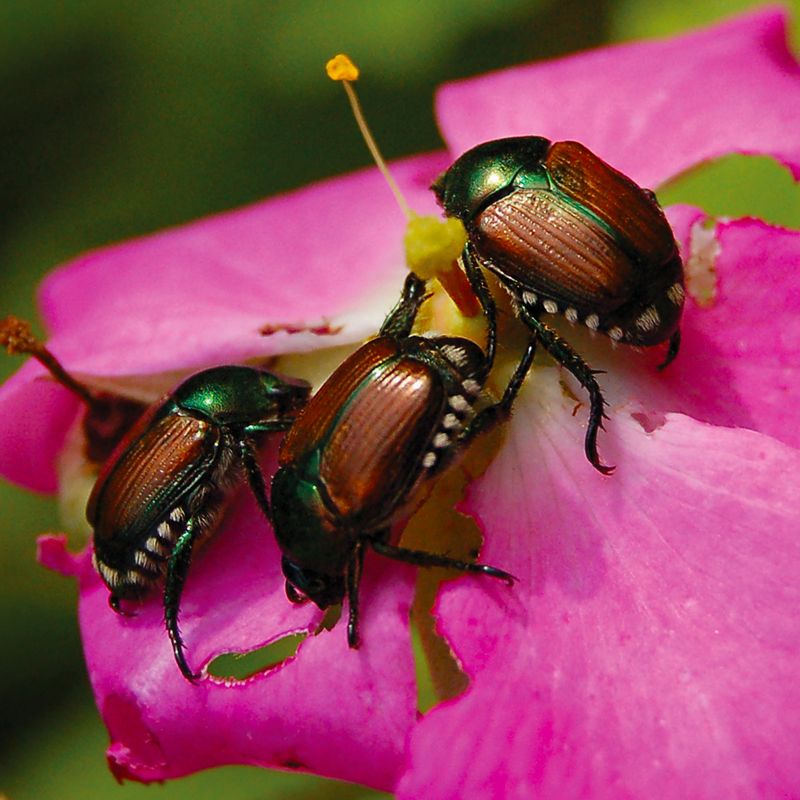
Few garden insects are as social as the Japanese beetle. Unlike many pests that spread out across a plant to feed individually, Japanese beetles actively prefer company.
This gregarious behavior is a core part of why certain plants in your garden take such a beating while others nearby look perfectly fine.
When beetles gather on a single rose, grapevine, or fruit tree, the collective feeding quickly skeletonizes leaves, leaving behind a brown, lacy appearance that is easy to recognize.
The damage can look severe because it is the result of many beetles working in the same spot rather than one insect working slowly over a large area. A single heavily infested branch can look stripped within just a couple of days.
This grouping tendency also explains why the same individual plants suffer year after year. The combination of preferred plant chemistry and group feeding reinforces the pattern each new season.
Once a plant becomes a gathering spot, it tends to stay one, because each summer’s fresh beetle population follows the same instincts as the last.
North Carolina gardeners benefit from keeping notes on exactly which plants hosted the largest groups in previous summers. Checking those specific plants first as the season begins gives you a head start.
Roses trained on sunny fences, grapevines near open lawn areas, and fruit trees at garden edges are common gathering spots worth watching closely. Early group disruption, before numbers grow large, makes the rest of the season much more manageable.
4. Warm Sunny Plants Receive More Activity
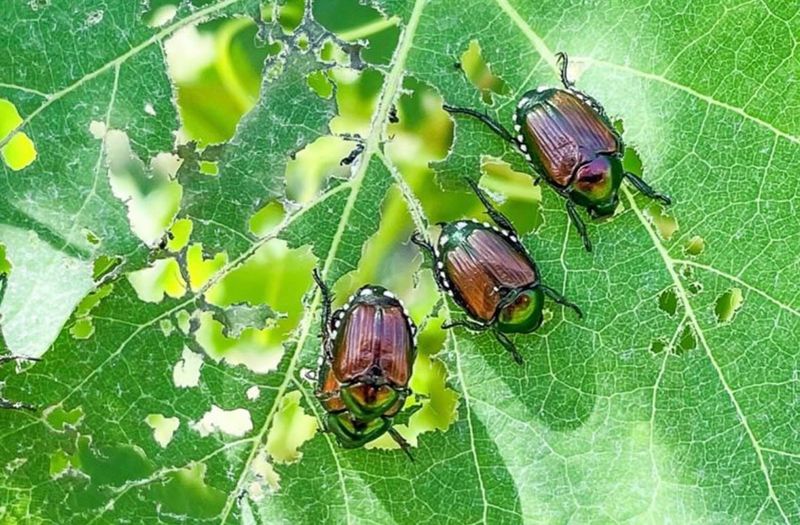
Sunshine plays a bigger role in Japanese beetle behavior than many gardeners realize. These insects are strongly drawn to warmth, and they become noticeably more active on bright, hot days.
Plants growing in full sun tend to attract more concentrated feeding than the same species tucked into a shadier corner of the yard.
In North Carolina summers, roses trained along a south-facing fence, grapevines climbing a sunny trellis, or peach trees standing in open lawn areas are exactly the kind of sun-drenched targets beetles prefer.
The warmth of the plant itself, combined with the open visibility of its flowers and foliage, makes it easier for flying adults to locate and land.
Beetles are most active between mid-morning and late afternoon when temperatures peak.
This does not mean you should try shading plants that genuinely need full sun to thrive. Most roses, grapes, and fruit trees require direct sunlight for healthy growth and good fruit production.
Shading them to deter beetles would create more problems than it solves, and the strategy rarely works well anyway.
A smarter approach is simply knowing which plants in your garden receive the most direct sun each day and making those your priority inspection spots from the start of beetle season.
Checking the sunniest, most exposed plants first each morning puts you ahead of the feeding cycle.
Awareness of sun exposure as a risk factor helps you allocate your time wisely and protect the plants that matter most to you throughout the summer.
5. The Upper Canopy Offers Fresh Feeding Areas
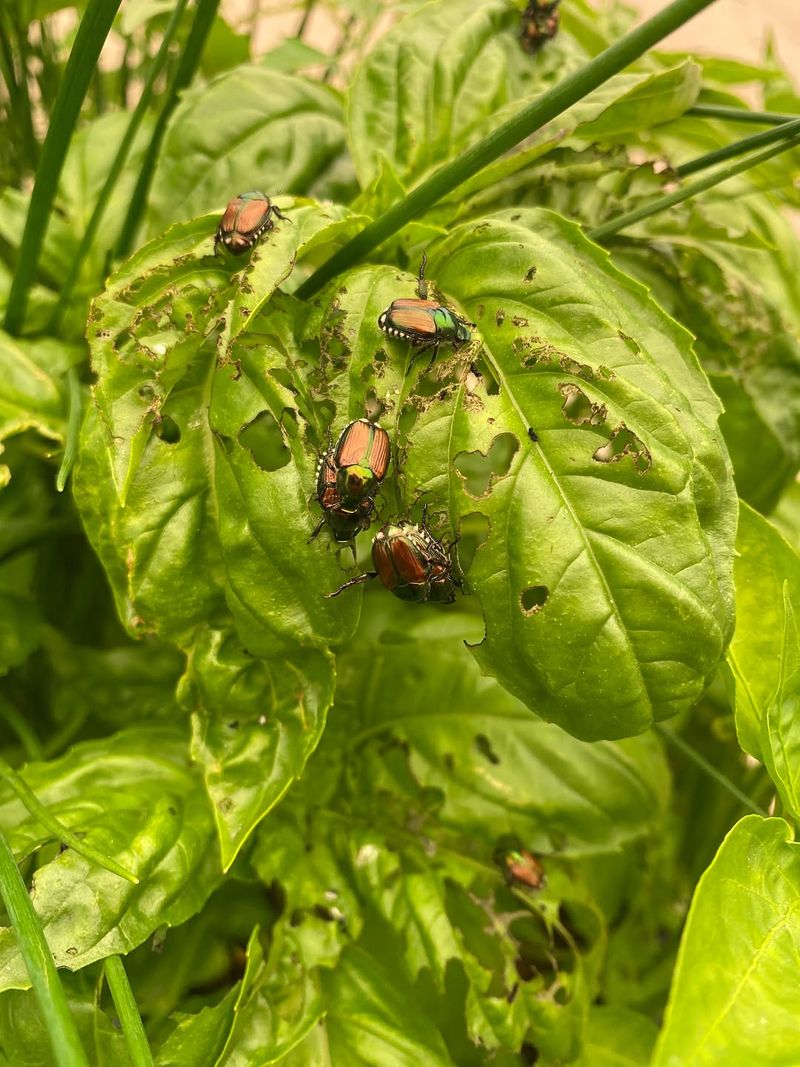
Take a close look at a beetle-damaged plant and you will usually notice something consistent: the worst damage starts at the top.
Japanese beetles tend to begin their feeding near the upper portions of a plant and work their way down over time.
This upward preference has a lot to do with sunlight, visibility, and the appeal of tender new growth.
Upper leaves, open flowers, and ripening fruit receive the strongest direct sunlight, making them both warmer and more visually prominent to flying adults scanning the garden from above.
For roses, this often means blooms and bud clusters take the first hit. On grapevines, the newest leaf growth at the shoot tips tends to show damage before lower, older leaves.
Fruit trees may show feeding concentrated around developing fruit clusters near the top of the canopy.
Gardeners sometimes miss the early signs of infestation because they look at the lower portions of a plant and find them intact. Healthy lower foliage can create a false sense of security while significant feeding is already underway overhead.
Getting into the habit of looking up at flowers, branch tips, and the sunny crown of your plants catches problems sooner.
Carrying a small bucket of soapy water during morning inspections and targeting the upper canopy first gives you the best chance of intercepting beetles before they work their way through the entire plant.
Starting high and working downward during each check mirrors the beetles’ own feeding pattern and keeps you one step ahead throughout the North Carolina beetle season.
6. Adults Can Fly In From Surrounding Areas
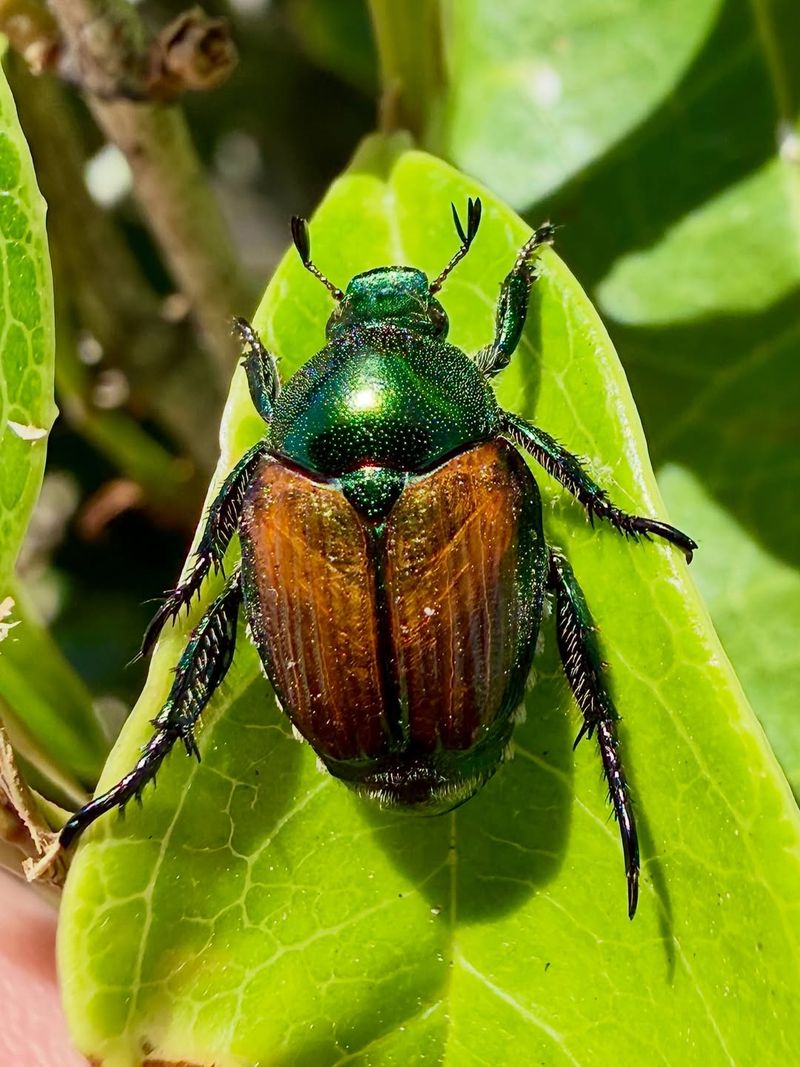
One of the most common surprises for North Carolina gardeners is finding heavy beetle activity in the garden even after treating the lawn for grubs.
The reason is straightforward: adult Japanese beetles are strong fliers, and they do not stay close to where they hatched.
They can travel significant distances in search of food, arriving in your garden from neighboring lawns, nearby parks, golf courses, pastures, and any other grassy area within range.
Research suggests adults can fly a mile or more when motivated by the search for feeding sites and mates. That means even a perfectly managed lawn does not create a protective barrier around your garden.
Beetles from properties you cannot control will still find their way to your roses and grapevines once the season begins. This is one of the most important things to understand about Japanese beetle management.
Focusing too heavily on grub control as a complete solution can leave gardeners feeling confused and discouraged when adults still appear.
Grub management has its place, but protecting your valued plants during the adult feeding season requires its own separate strategy.
Monitoring, physical removal, and targeted protective measures on your most vulnerable plants give you real results.
Think of your garden as part of a larger landscape rather than an isolated space. Beetles move freely across neighborhoods, following food signals and warmth.
Accepting that reality and shifting your focus toward active plant protection each summer, rather than hoping lawn treatment alone will solve the problem, puts you in a much stronger position as a gardener.
7. A New Adult Generation Appears Each Summer
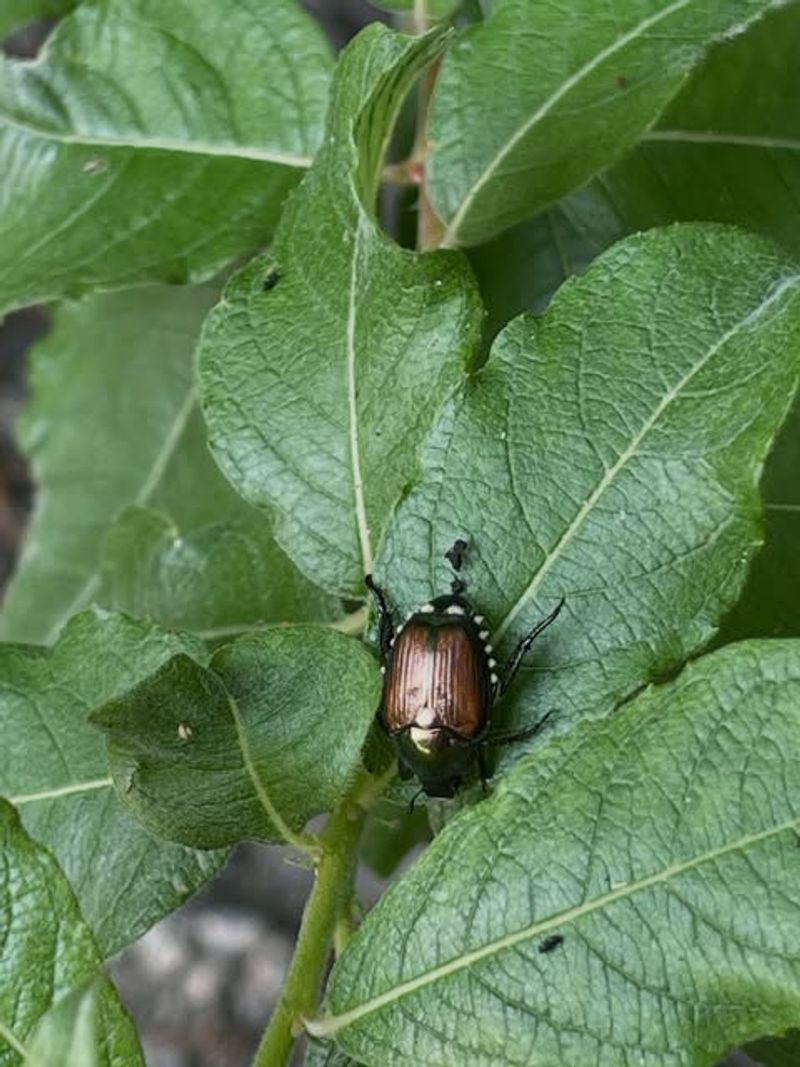
Something worth knowing: the beetles showing up on your roses this July are almost certainly not the same individuals you spotted last summer.
Japanese beetles complete one full generation per year in North Carolina, and the adults you see feeding are a brand-new group that emerged from the soil after spending most of their lives underground as grubs.
The life cycle follows a consistent annual pattern. Eggs are laid in lawns and grassy areas during summer, hatch into grubs, and spend the fall and winter feeding on grass roots beneath the soil surface.
As temperatures warm in late spring, grubs pupate and transform into adults ready to emerge. In North Carolina, adult activity can begin as early as May, with peak emergence and feeding typically occurring in July and continuing through August.
Because the same preferred plants carry the same attractive traits every single year, each new generation of adults finds them just as appealing as the previous one did.
The plants have not changed, the beetles’ instincts have not changed, and so the pattern repeats reliably.
This annual predictability is actually useful information for gardeners willing to prepare ahead of time.
Knowing that peak emergence commonly falls in July gives you a clear window to begin monitoring your most vulnerable plants.
Setting reminders, stocking up on protective supplies in late spring, and doing a pre-season check of your highest-risk plants each June puts you in a confident position before the first adults even appear.
Preparation built around the beetle’s own calendar makes a real difference.
8. Beetle Traps Can Draw More Adults Toward The Garden
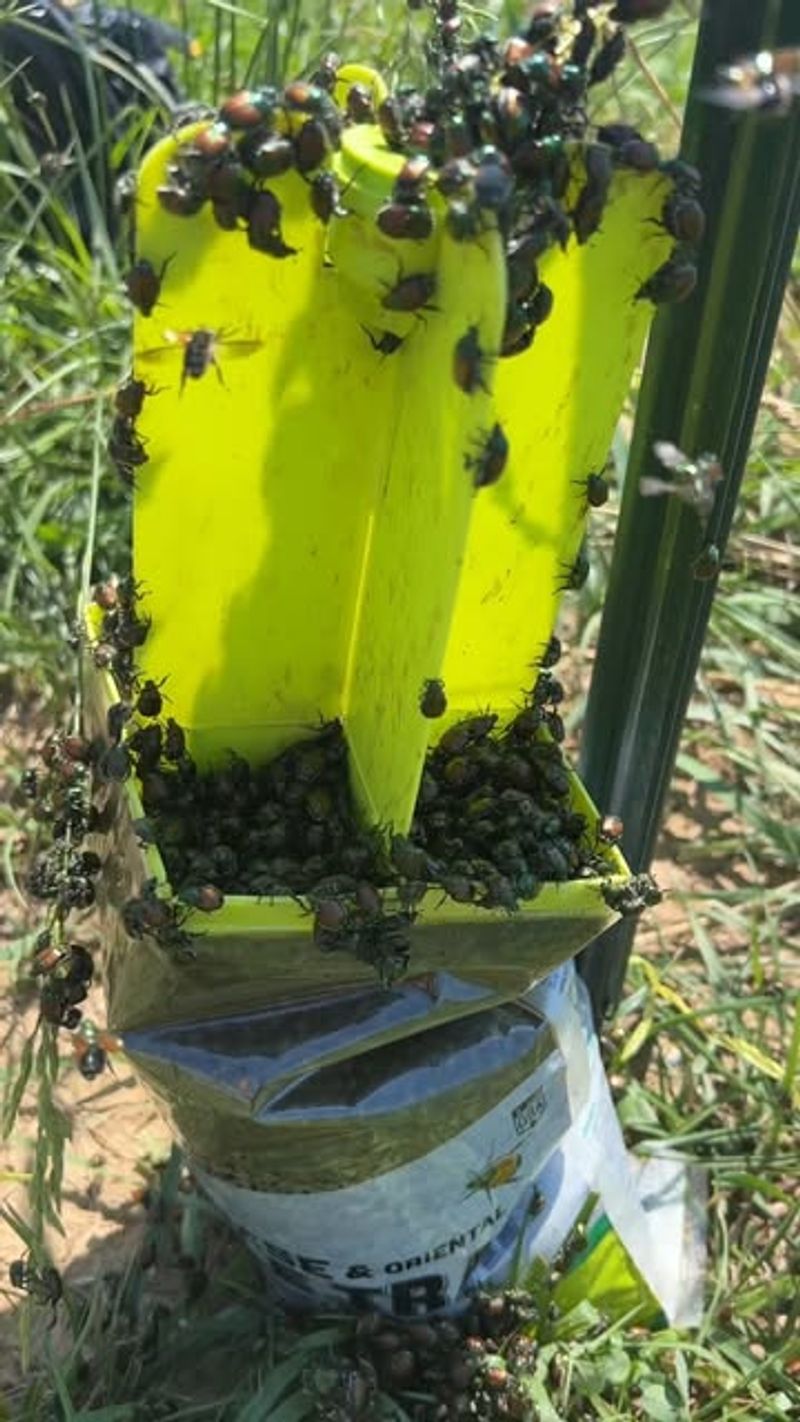
Beetle traps seem like an obvious solution at first glance. They are widely available, easy to set up, and the idea of capturing large numbers of beetles in a bag feels satisfying.
The problem is that research has consistently shown these traps may attract more beetles than they actually catch, and the ones that do not enter the trap end up feeding right next to it.
Commercial Japanese beetle traps use two powerful attractants: a floral lure that mimics the scent of favored flowering plants, and a synthetic pheromone that draws in adults looking to mate.
These signals are remarkably effective at pulling beetles in from a wide area. Unfortunately, that wide-range attraction works against you when the trap sits near your roses, grapevines, or fruit trees.
Studies from university extension programs have documented situations where gardens near traps experienced more feeding damage than gardens without traps nearby.
The trap draws a crowd from the surrounding area, and any beetle that misses the opening or fills the bag to capacity simply moves a few feet over to the nearest attractive plant.
Placing a trap right beside the plants you are trying to protect can make the problem noticeably worse.
If you want to use a trap, position it well away from your garden, ideally at least 30 feet from any plants you value.
Better yet, rely on regular morning inspections, physical removal, and guidance from your local North Carolina Cooperative Extension office for management strategies that actually reduce feeding on your most important plants.