The Overlooked Signs Jackrabbits Have Been Visiting Your Arizona Yard
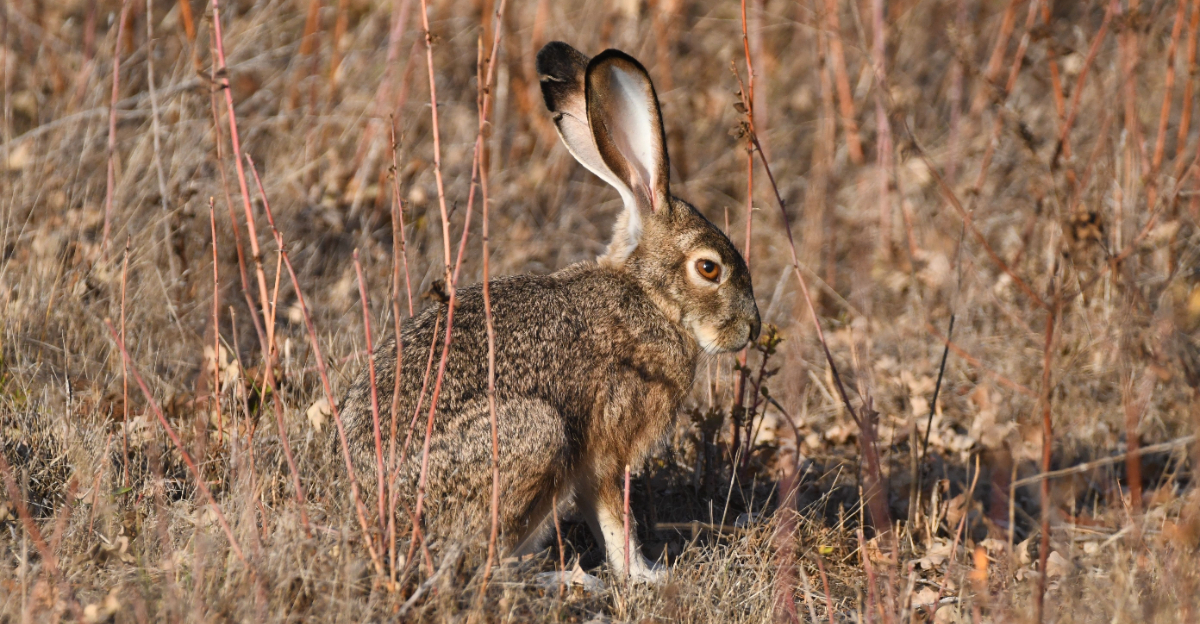
Many yard visitors leave obvious clues, but jackrabbits rarely make their presence easy to notice. Small changes often appear before you ever spot one nearby at dusk or dawn.
Paying attention now helps you catch those quiet signs sooner.
Do not blame insects or dry weather too quickly. Check chewed stems, fresh tracks, narrow paths, and clipped plants first.
Those overlooked clues usually reveal repeat visits before damage spreads farther.
Once you recognize the pattern, protecting favorite plants becomes much easier every single season ahead. Simple observations today can prevent bigger surprises later without changing every gardening habit completely alone.
Arizona landscapes support plenty of wildlife, and jackrabbits are part of that every year naturally.
Learning their habits makes every future visit easier to understand with confidence instead of guessing.
1. Overnight Damage On Flowers And Vegetables
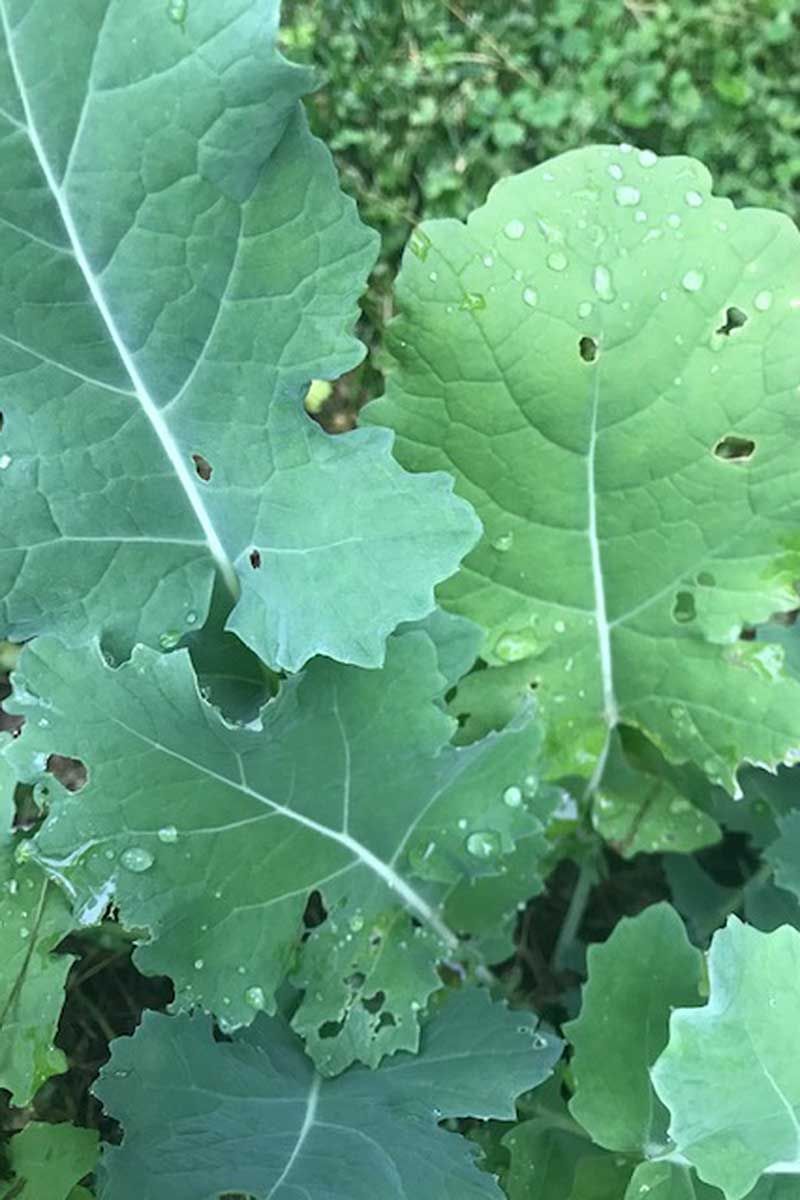
Your garden looked fine at sunset. By morning, half your marigolds are gone.
That kind of overnight destruction has jackrabbit written all over it.
Jackrabbits feed mostly at dusk and dawn. They target soft, leafy plants first.
Flowers like marigolds, petunias, and pansies are common favorites. Vegetables such as lettuce, beans, and young squash rarely go untouched when jackrabbits are nearby.
What makes the damage confusing is how clean it looks. Jackrabbits bite through stems with sharp precision.
You might think a gardening tool slipped, but no tool leaves a diagonal cut on a seedling at ground level.
Damage patterns also shift depending on the season. During dry summer months in the desert Southwest, jackrabbits push deeper into yards searching for moisture-rich plants.
Irrigated gardens become prime targets when wild food sources dry up.
Check the damage height carefully. Jackrabbits typically feed from ground level up to about two feet.
Anything chewed above that range likely points to a different animal. Noticing that detail early helps you narrow down the culprit fast.
Keep a simple garden journal and note which plants got hit and when. Over a week or two, patterns emerge.
2. Cleanly Clipped Stems And Seedlings
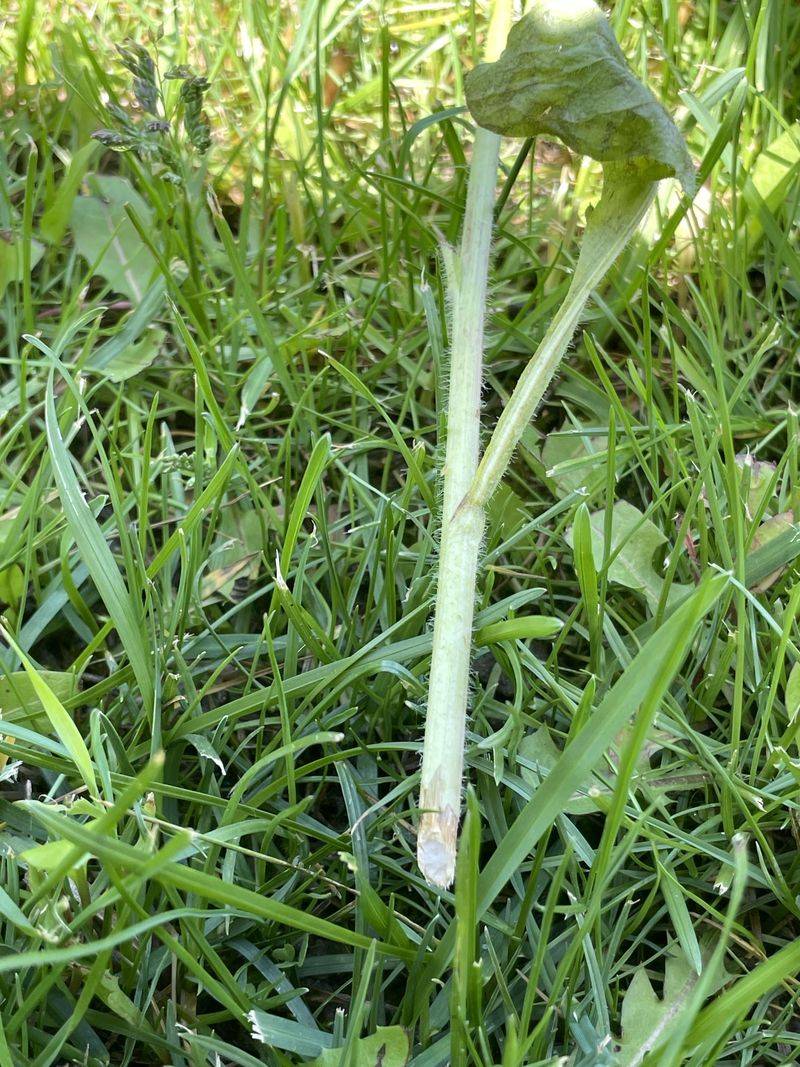
Sharp, angled cuts at the base of a seedling are a clear giveaway. Jackrabbits have strong incisors that slice through soft stems almost like scissors.
Rodents tend to gnaw and shred. Jackrabbits cut clean.
Young seedlings are especially vulnerable right after transplanting. A jackrabbit can work through an entire row of new starts in a single night.
You come out in the morning and find bare stubs poking out of the soil where your tomato starts used to be.
The cut angle matters. Jackrabbits usually leave a clean, diagonal slice.
Insects chew irregular holes. Deer tend to tear and pull rather than cut.
Recognizing that difference saves you from blaming the wrong animal and using the wrong solution.
Herbs also take a hit. Basil, parsley, and cilantro get clipped close to the soil surface.
Woody herbs like rosemary tend to survive better since the stems are tougher to cut through. Softer plants almost never escape unnoticed once jackrabbits discover them.
Check your seedlings right after planting. Catching the problem on day one means you can act before more plants get targeted.
Your Arizona Garden Changes Every Week. Your Plan Should Too.
Gardening in Arizona changes quickly throughout the season. Every Friday you’ll receive a simple weekly plan showing exactly what to plant, prune, fertilize, harvest, and protect so you never miss the right timing.
A quick walk around the garden bed each morning takes less than five minutes and gives you real-time information about what is happening overnight.
3. Jackrabbit Tracks In Soft Soil
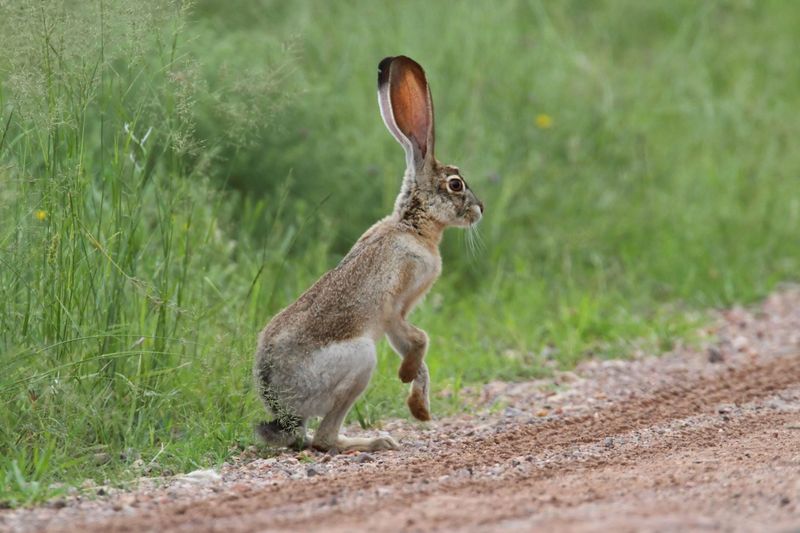
Tracks tell stories that plants cannot. Soft garden soil near a drip line or freshly watered bed holds impressions surprisingly well, and jackrabbit prints have a very recognizable shape worth learning.
A jackrabbit’s hind feet are noticeably long and narrow. Front prints are smaller and rounder.
When a jackrabbit moves at speed, the hind feet land ahead of the front feet, creating a scattered, bounding pattern. Slow movement leaves a more walking-style trail with consistent spacing.
Look for tracks near the edges of garden beds, along fence lines, and under low shrubs. Jackrabbits tend to follow the same paths repeatedly.
Once you spot a trail, you can predict entry and exit points, which helps when planning fencing or deterrents.
Early morning is the best time to check. Overnight dew softens the soil slightly, making impressions cleaner and easier to read.
Afternoon heat dries soil quickly, which can cause prints to crumble and lose detail before you notice them.
Comparing the track size helps confirm what you are dealing with. Cottontail rabbits leave smaller prints and tend to stay closer to dense cover.
Jackrabbit prints are larger, and their stride length is significantly longer due to their bigger build and faster movement style.
Photographing tracks with your phone gives you a useful reference.
4. Resting Spots Beneath Shrubs And Bushes
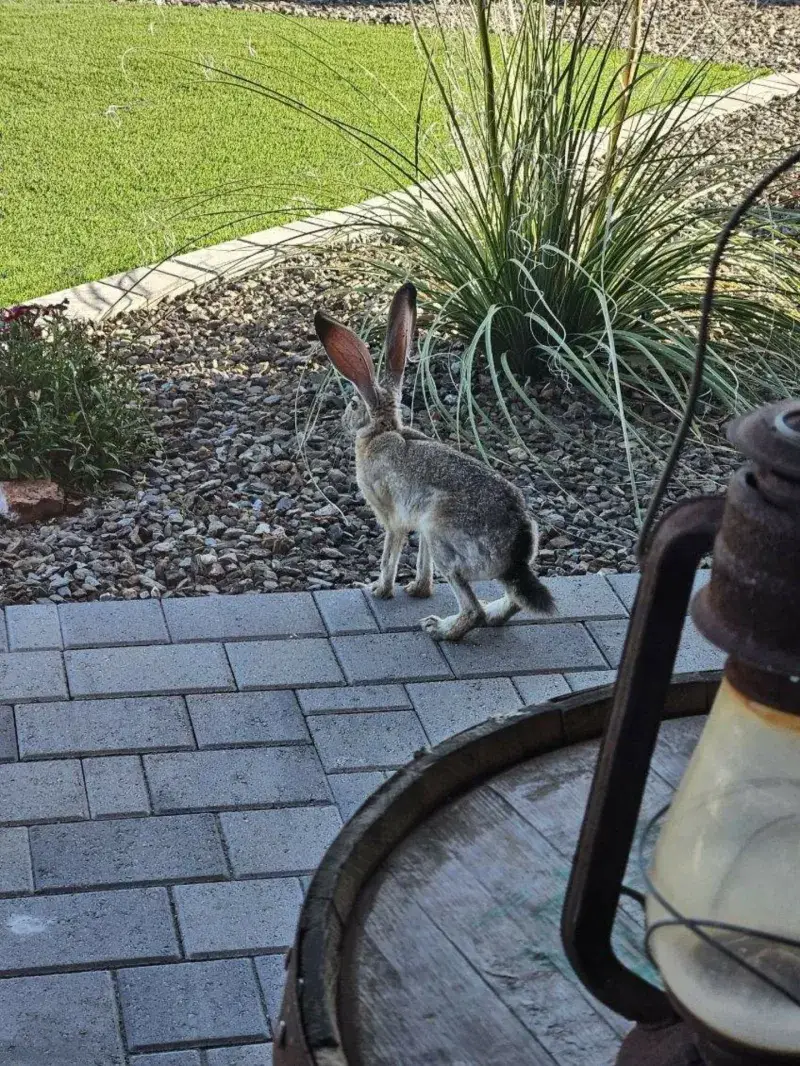
Jackrabbits do not build burrows. Instead, they scrape out shallow depressions in the soil and rest there during the hottest parts of the day.
Finding one of these spots in your yard means a jackrabbit is treating your property like home base.
Look for flattened areas of soil or gravel under dense shrubs. Native plants like brittlebush, desert marigold, and low-growing mesquite branches create ideal shelter.
Jackrabbits pick spots with good shade and a clear view of their surroundings so they can spot threats quickly.
These resting spots are called forms. A form usually measures about twelve to sixteen inches long and shows compressed soil or disturbed gravel.
You might also notice some fur caught on nearby branches or twigs, which is another confirmation sign.
Finding a form near your garden beds is a strong signal. It means a jackrabbit is not just passing through.
It has identified your yard as a safe enough space to rest, which usually means it is also feeding nearby on a regular basis.
Disturbing the form by raking or adding gravel may push the jackrabbit to find a different resting spot. Removing dense low cover near garden areas reduces the number of suitable locations available.
Fewer hiding spots generally mean fewer extended visits from resting jackrabbits.
5. Garden Fencing Built For Jackrabbits
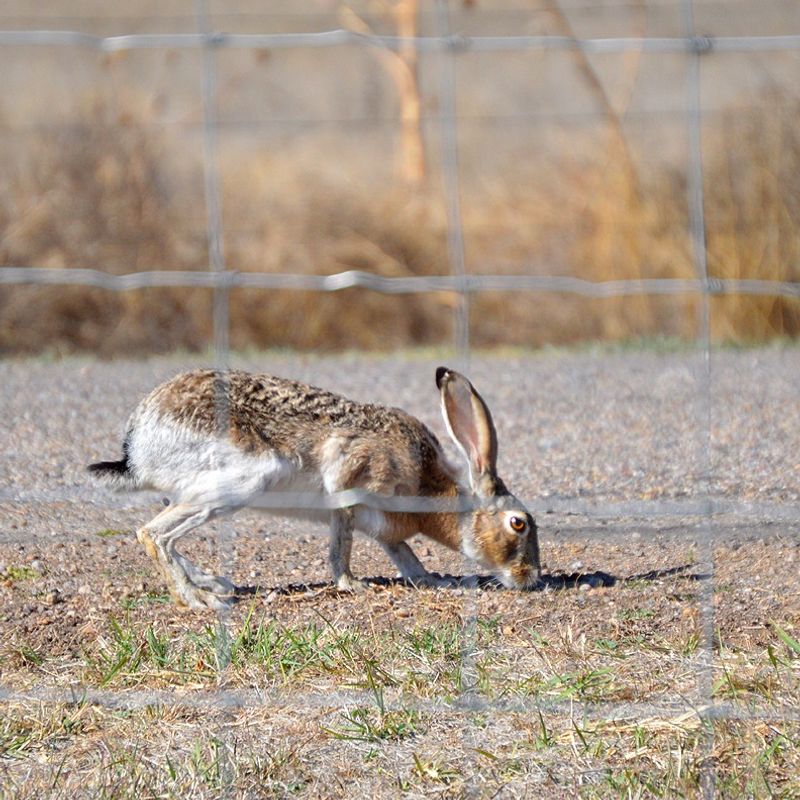
Standard decorative fencing does very little to stop a jackrabbit. A two-foot-tall garden border looks like nothing to an animal that can leap several feet in a single bound.
Jackrabbit-proof fencing requires specific height and material to actually work.
Hardware cloth with openings no larger than one inch works well. Chicken wire with larger gaps can still allow younger or smaller jackrabbits to squeeze through.
The fencing needs to stand at least two feet tall, though three feet offers better protection for raised beds and high-value plants.
Burying the bottom edge of the fencing matters just as much as the height. Jackrabbits will occasionally dig under loose or unanchored fencing.
Bending the bottom six inches outward and burying it a few inches underground helps block that option without requiring major construction work.
Lightweight fencing that bends easily or has loose sections creates gaps jackrabbits can exploit. Use sturdy stakes or T-posts spaced no more than four to five feet apart to keep the fencing taut and stable.
Corners and gate areas need extra attention since those spots tend to sag or shift over time.
Temporary fencing solutions work during peak growing seasons if permanent installation feels like too much effort. Pop-up wire enclosures are available at garden centers and can protect a small bed quickly.
6. Clearing Dense Cover And Brush
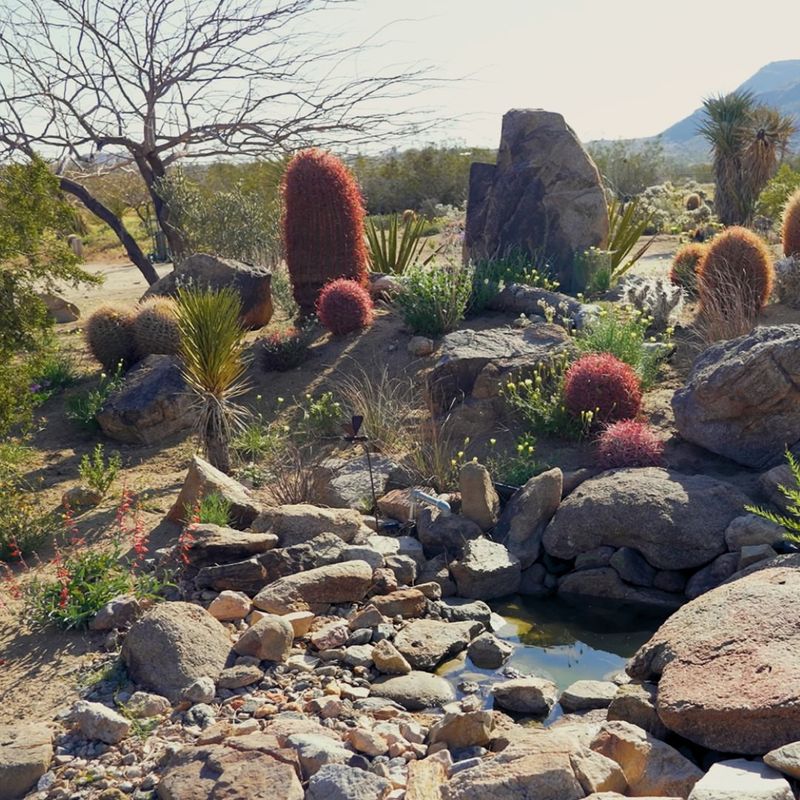
Jackrabbits love clutter. Overgrown brush piles, thick groundcover, and stacked debris near garden areas create exactly the kind of habitat they prefer.
Reducing that cover changes how attractive your yard looks to a passing jackrabbit.
Start by trimming low-hanging branches on shrubs near your garden beds. Jackrabbits use dense, low cover for shade and protection.
Raising the canopy of nearby plants removes that shelter without removing the plants entirely, which keeps your yard looking natural.
Wood piles, old pots, and unused garden equipment stacked against fences or walls create hiding spots. Reorganizing storage areas and keeping items off the ground removes potential resting and hiding locations.
Jackrabbits are less likely to linger in open, exposed spaces where they feel visible.
Native desert landscaping in the Southwest often includes plants that naturally provide jackrabbit cover. That does not mean removing all your native plants.
Selectively thinning dense patches near vegetable beds or flower borders creates a buffer zone that feels less inviting to wildlife looking for daytime shelter.
Gravel mulch around garden perimeters can also help. It is harder for jackrabbits to scrape out resting spots in deep gravel compared to loose soil or organic mulch.
Combining gravel with cleared brush makes your garden area significantly less comfortable for extended jackrabbit visits.
7. Protecting Young Plants With Wire Cages
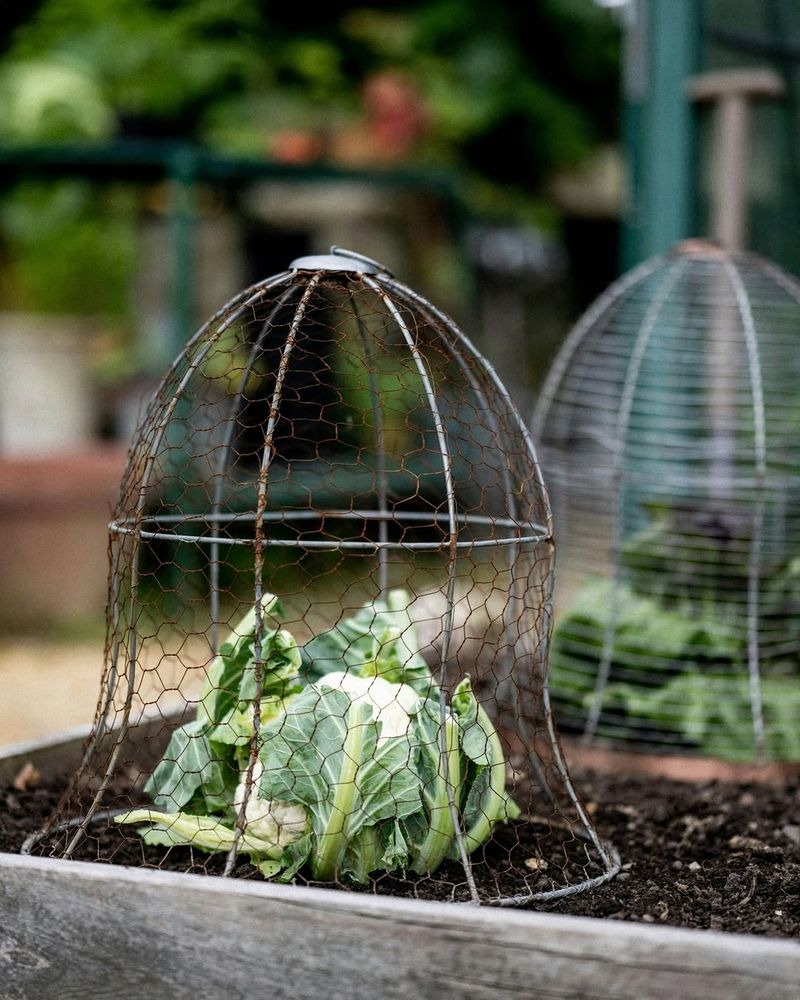
Wire cages are one of the most straightforward ways to protect individual plants.
Seedlings and young transplants face the highest risk, and a simple cage around each one can make a real difference before the plant matures enough to handle some browsing pressure.
Hardware cloth bent into a cylinder shape works well for most plants. A cage about twelve inches in diameter gives the plant room to grow while still keeping jackrabbits from reaching the leaves and stems.
Secure the bottom edge to the soil to prevent a determined jackrabbit from tipping the cage over.
Tomatoes, peppers, and young squash plants benefit most from individual cages during their first few weeks in the ground. Once plants reach a certain size and develop thicker, woodier stems, jackrabbits typically move on to easier targets.
Protecting the early stage is often enough to get plants through their most vulnerable window.
Pre-made wire cages sold for tomato support work double duty as jackrabbit barriers. They are easy to find at garden centers and hold up well through an entire growing season.
Just make sure the wire openings are small enough to block access, since some tomato cages have wider gaps that smaller jackrabbits can push through.
Labeling each cage with the plant name and planting date keeps your garden organized while protecting plants.
8. Scent Repellents For Jackrabbits
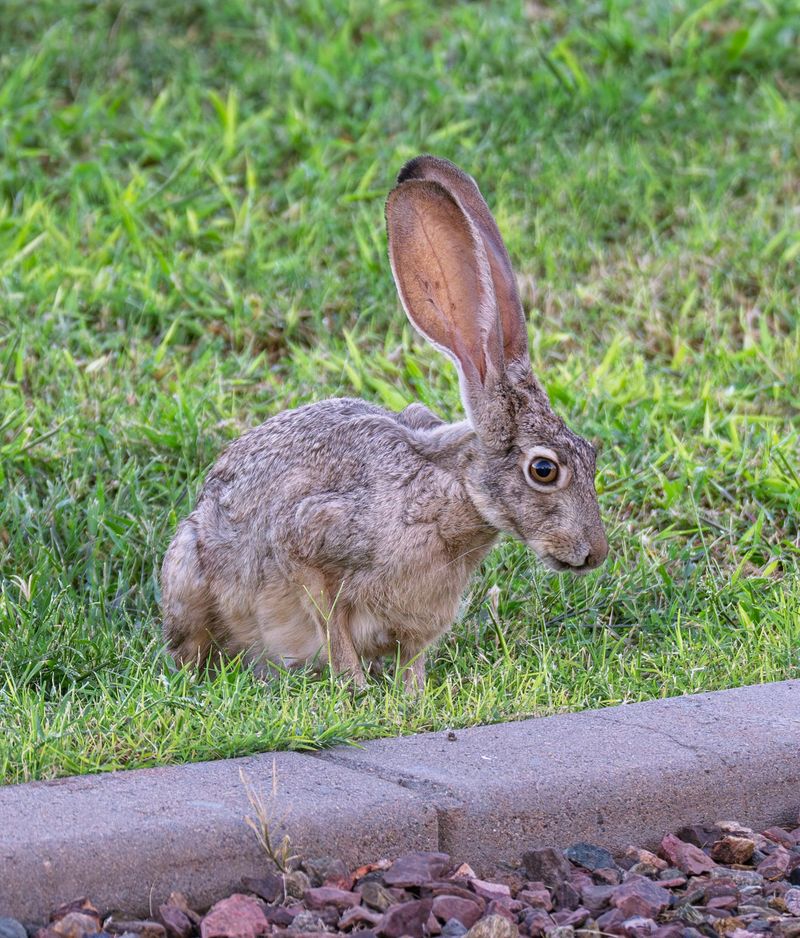
Smell is a powerful tool in a jackrabbit’s survival instincts. Certain scents trigger caution and avoidance, which makes scent-based repellents a practical option for yards where fencing is not ideal or fully installed yet.
Predator urine products, available at garden and hardware stores, can create the impression that a threat is nearby. Coyote urine is one commonly used option in the Southwest.
Results vary depending on how frequently you reapply and how bold the local jackrabbit population happens to be. Rain and irrigation wash away scent barriers and require regular reapplication to stay effective.
Garlic-based sprays applied directly to plant leaves and stems create an unpleasant feeding experience. Jackrabbits use scent to evaluate food before eating.
A strong garlic smell on a leaf can discourage initial tasting, though some jackrabbits learn to push past the deterrent if food options are limited during dry seasons.
Dried blood meal sprinkled around garden beds works as both a repellent and a mild fertilizer. It needs reapplication after rain or heavy watering.
Keep it away from areas where pets spend time, since the smell tends to attract dogs.
Rotating repellent types helps prevent jackrabbits from adapting. Using the same product in the same spot for weeks on end sometimes reduces its effectiveness.