What It Really Means When You See A Wild Turkey In Your Ohio Yard
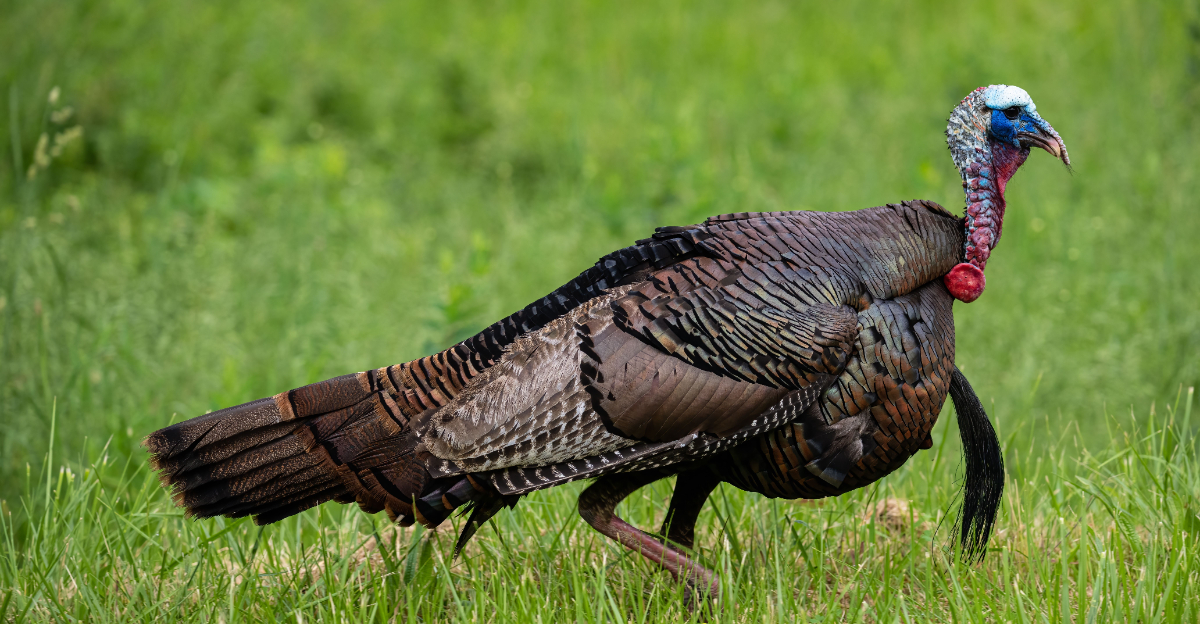
An Ohio yard visit from a wild turkey feels oddly official.
One minute, the lawn is quiet. The next, a big bird is strutting past the garden bed, pecking under the oak tree, or marching toward the bird feeder like it received a personal invitation.
It can look surprising.
It can also be a great sign.
Wild turkeys have become much more visible across Ohio, and a backyard appearance usually means your property offers something useful: food, shelter, acorns, insects, brushy cover, or a safe travel route between better habitat nearby.
That does not mean your yard has a problem.
It means the bird found a reason to stop.
So what is that turkey really telling you as it crosses the lawn like it pays property taxes?
Start by reading the clues around it. The food on the ground, the trees overhead, the cover near the fence, and even the bird feeder by the window can explain why this impressive visitor chose your yard today.
1. Your Yard Has Easy Food
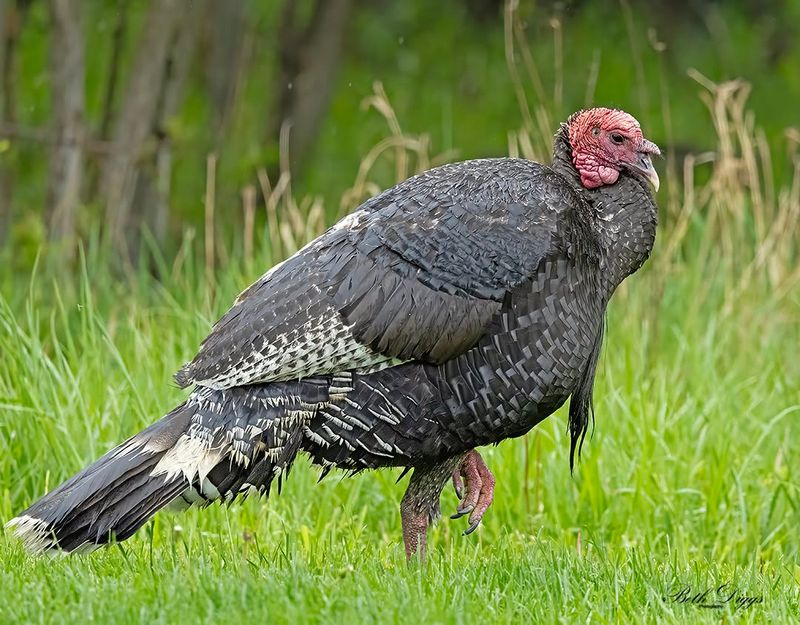
A turkey scratching through mulch is not wandering without purpose.
It found food.
Wild turkeys are practical eaters, and Ohio yards can accidentally offer a generous menu.
Fallen fruit, berries, acorns, beetles, grasshoppers, earthworms, seeds, tender greens, and insects hiding in leaf litter can all bring a turkey closer to the house.
Watch the feet.
Turkeys scratch the ground in a steady raking motion, flipping leaves, mulch, and loose soil to uncover snacks underneath. Those small disturbed patches near beds, shrubs, or trees often show where the bird has been working.
Fruit trees can become major attractions.
Crabapples, serviceberries, cherries, and other fallen fruit can turn a yard into a repeat stop. Vegetable beds may draw attention too, especially where insects are active or soft plant material sits within reach.
A turkey is not being rude.
It is following the easiest meal. Once it finds a reliable food source, it may add your yard to its daily route. One visit can turn into several, especially during seasons when natural food is abundant nearby.
Clean up fallen fruit to reduce repeat traffic.
Keep compost covered, skip food scraps in open piles, and rake high-traffic areas where scratching causes trouble.
The turkey is not judging your landscaping.
It is shopping the buffet. Your yard just happened to have good reviews.
2. Oak Trees May Be Calling
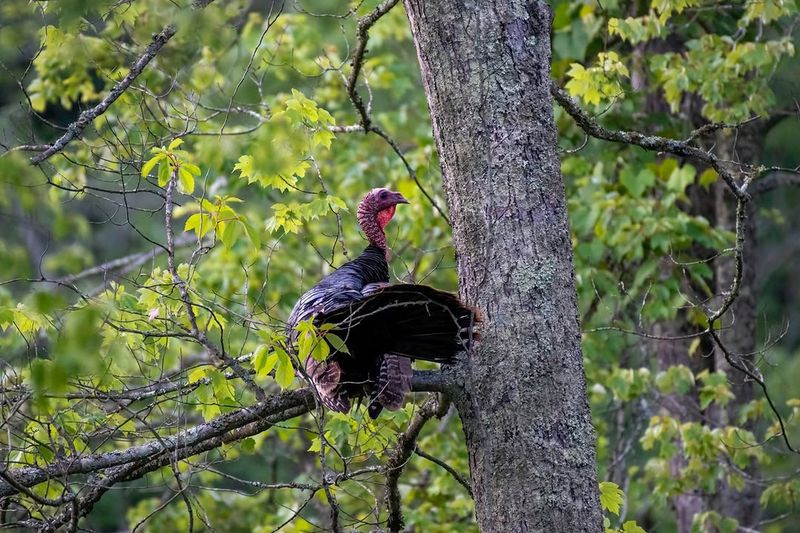
An oak tree can turn an Ohio yard into turkey territory.
Acorns are a favorite natural food, especially in late summer and fall. A mature oak dropping a heavy crop sends a strong signal to wildlife, and turkeys know exactly how to respond.
They may visit quietly at first.
A lone bird or small group might move slowly under the canopy, heads bobbing as they pick through leaves and grass. They often look calm and focused during acorn feeding, working the ground with surprising patience.
Ohio has plenty of oak species that support wildlife.
Red oaks, white oaks, pin oaks, and other mature hardwoods produce food that turkeys, squirrels, deer, blue jays, and many other animals use through the season. A yard with oaks sits near the center of a busy natural dining room.
Your Ohio Garden Changes Every Week. Your Plan Should Too.
Gardening in Ohio changes quickly throughout the season. Every Friday you’ll receive a simple weekly plan showing exactly what to plant, prune, fertilize, harvest, and protect so you never miss the right timing.
Wooded edges make visits even more likely.
A property that backs up to trees, ravines, parks, fields, or brushy corridors may fall along a regular turkey travel path. The oak tree may be the stop that convinces the bird to step fully into the lawn.
Rake only where needed.
Leaving some leaf litter beneath trees can help support insects and natural foraging, while keeping patios, paths, and driveways clear. That balance gives wildlife space without turning the whole yard into a woodland floor.
A turkey under an oak is not random.
It is following one of Ohio’s oldest food maps, written in acorns.
3. Insects Are Drawing Them In
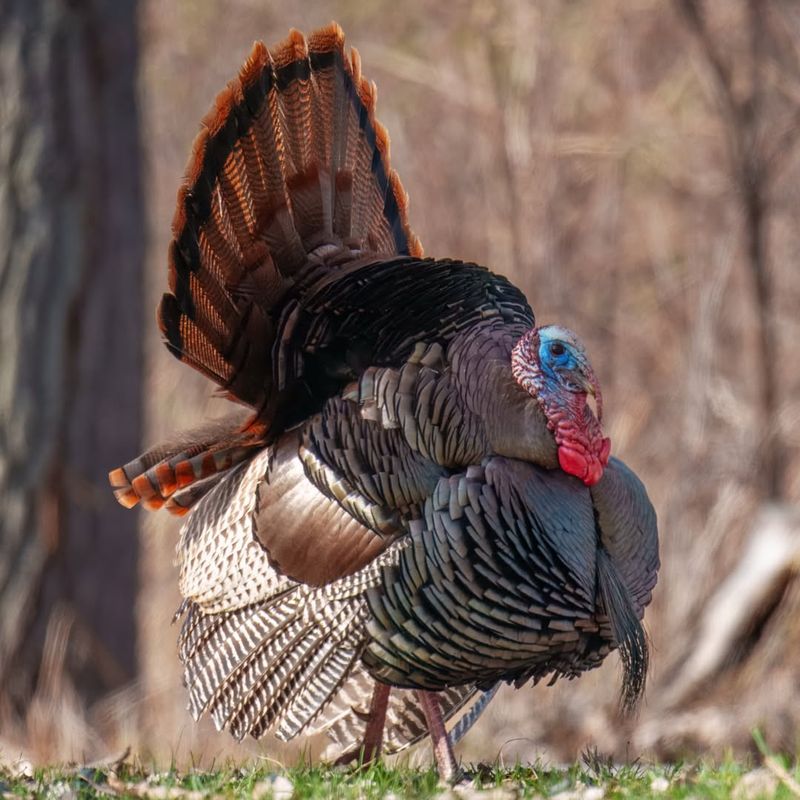
A turkey working through leaf litter is doing pest control with feathers.
Wild turkeys eat many insects, especially during spring and summer when bug activity rises. Beetles, grasshoppers, caterpillars, ants, grubs, and other small creatures can all become part of the menu.
That steady scratching is the clue.
The bird uses its feet to rake aside leaves and loose soil, then pecks at what moves underneath. Mulched beds, natural corners, garden edges, and lawns with active insect life can all attract attention.
Young turkeys depend heavily on insects.
Poults need protein-rich food as they grow, so a hen with young birds may spend a lot of time in areas where insects are easy to find. A yard with fewer broad sprays and more natural cover can become a useful feeding stop.
That can be a compliment to your yard.
Plenty of insects does not automatically mean something is wrong. It can mean your landscape supports a healthy food web. Turkeys, birds, spiders, predatory beetles, and other wildlife all depend on that hidden activity.
Avoid rushing to spray after a turkey visit.
The bird may be helping reduce pest numbers naturally. Watch where it feeds and what kind of damage, if any, is actually happening. A little scratching in leaf litter is usually harmless.
A turkey is not only passing through.
It may be cleaning up the snack aisle.
That is backyard wildlife with built-in bug patrol.
4. Brushy Cover Feels Safe
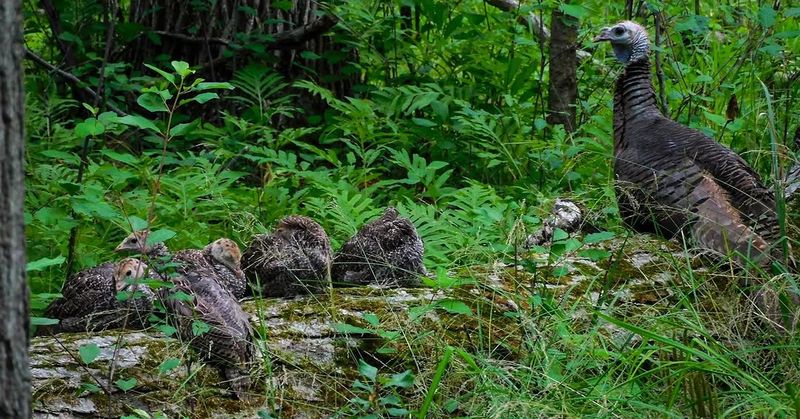
Turkeys may look bold, but they like an escape plan.
Before crossing open lawn, a wild turkey often pauses near shrubs, woods, tall grass, or a fence line. That cover gives it a place to retreat fast when something feels unsafe.
Ohio turkeys use edges constantly.
Wooded borders, hedgerows, brushy strips, and shrubby property lines help them move between feeding areas and roosting trees without spending too much time exposed.
A yard with a soft natural edge can become part of that travel route.
Open lawns are useful only when they sit near cover. A turkey may step out to feed, then drift back toward shrubs or trees. That back-and-forth movement shows the bird is balancing food with safety.
Roosting happens above ground.
Turkeys sleep in trees at night, often using tall hardwoods. During the day, they move mostly on foot, but they still prefer to stay close to places where they can hide or take flight when startled.
Native shrubs can support this kind of habitat.
Viburnum, elderberry, serviceberry, dogwood, and other layered plantings along property edges can help wildlife move safely while also supporting birds, insects, and seasonal berries.
A brief turkey visit may mean your yard connects to larger habitat.
That is something worth appreciating. The bird may not see your landscape as a destination. It may see it as a safe hallway with snacks.
Honestly, that is still pretty flattering.
5. Breeding Season Changes Behavior
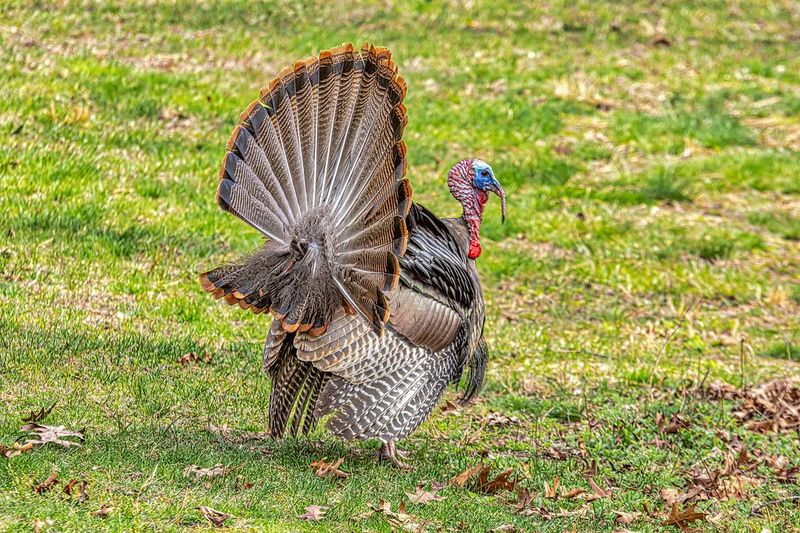
Spring makes turkeys more dramatic.
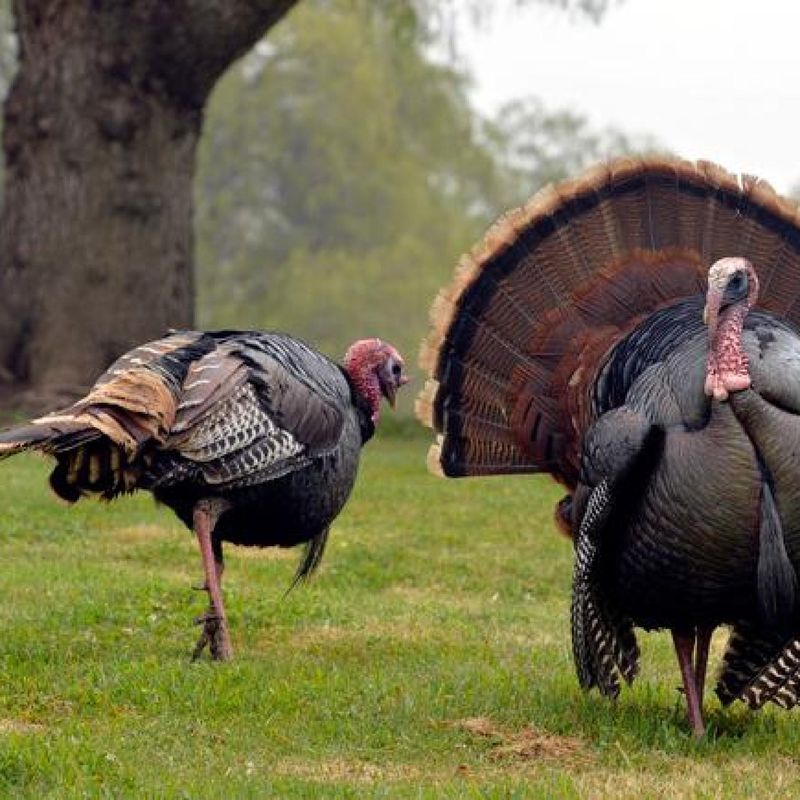
From March through May, male turkeys may strut, gobble, fan their tails, puff their feathers, and drag their wings as they move through open areas. A gobbler in full display looks like a feathered parade float with serious confidence.
That behavior is about breeding season.
The male is trying to impress hens and warn other males that he claims the area. A yard may become part of his display route, especially near woods, fields, or open edges where hens may pass through.
The noise can be startling.
Gobbling often happens early in the morning, and it carries well through quiet neighborhoods. The bird is not trying to wake the whole street, though it may succeed anyway.
Hens behave differently.
They tend to be quieter and more focused on feeding, moving through cover, and finding safe nesting areas. A hen lingering near tall grass, shrubs, or brushy edges in spring may be scouting a sheltered ground-level spot.
Give them space.
Breeding season can make birds seem more persistent or less cautious, especially males dealing with reflections or rivals. Watching from indoors or from a respectful distance keeps the situation calm.
The show will taper off naturally.
Strutting season does not last forever. For a few weeks, though, an Ohio yard can feel like the stage for one very serious feather performance.
Enjoy the spectacle. The turkey certainly is.
6. Birdseed May Be The Magnet
A bird feeder can invite more than cardinals.
Wild turkeys usually cannot reach hanging feeders, but they are excellent at cleaning up what falls below them. Millet, cracked corn, sunflower seed, and mixed birdseed all look useful to a turkey passing through.
Spilled seed creates a routine.
Once a turkey learns that breakfast appears under a feeder every morning, it may return often. A single visitor can become a small group, and the yard can quickly feel less like a birdwatching spot and more like a turkey cafeteria.
That can create problems.
Turkeys that connect people and homes with easy food may become bolder over time. They may linger near porches, driveways, feeders, and patios instead of moving naturally through the area.
The fix is simple.
Use feeders with catch trays to reduce spillage. Choose feeder styles that limit waste. Sweep or rake under feeding stations regularly. Move feeders away from areas where turkey visits cause trouble.
Avoid intentional feeding.
Turkeys do best when they forage naturally across a broad area. Feeding can encourage crowding, nuisance behavior, and dependence on yards.
Bird feeding can still continue.
It just needs cleaner setup and less seed on the ground. Cardinals and chickadees can keep their dining room without turning the lawn into a turkey brunch buffet.
A turkey at the feeder is not mysterious.
It followed the crumbs. Honestly, hard to blame it.
7. Reflections Can Stir Trouble
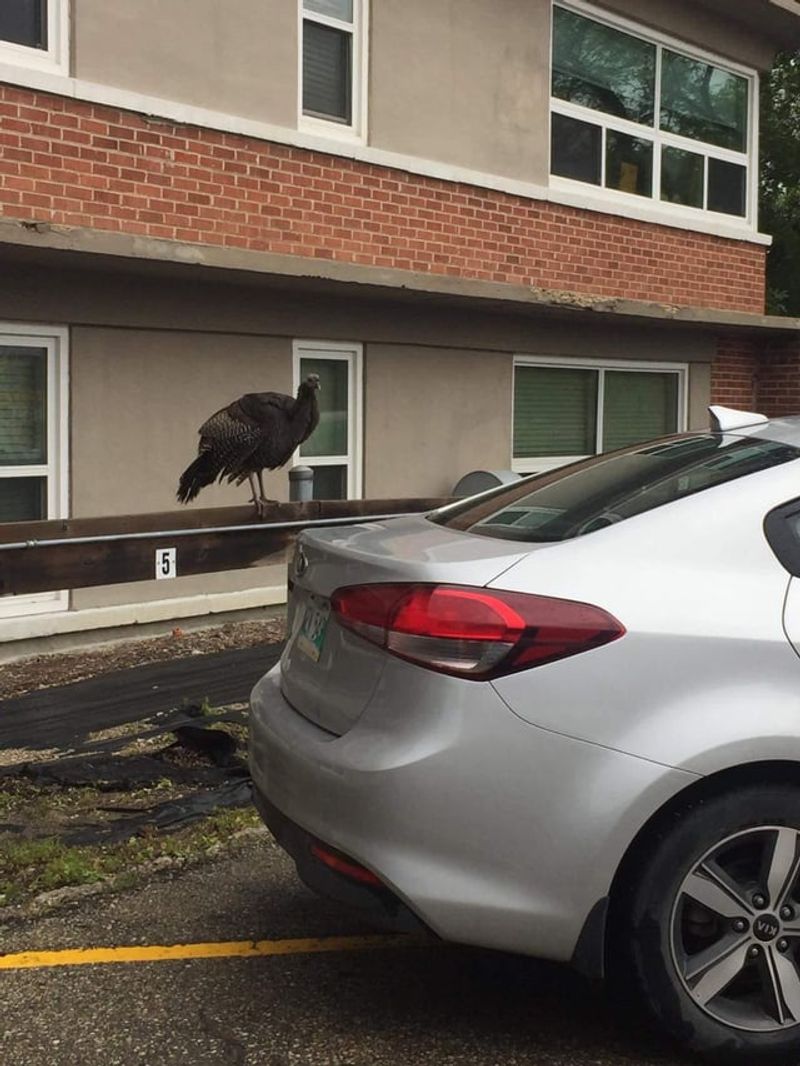
A turkey pecking at a car mirror is not admiring itself.
It thinks another turkey showed up.
Wild turkeys do not understand reflections. A shiny bumper, window, glass door, or side mirror can look like a rival bird. During breeding season, that misunderstanding can become surprisingly intense.
A male may strut at the reflection.
It may peck, circle, fan its tail, or return repeatedly to the same window or vehicle. The bird is not attacking your house personally. It is responding to what it believes is another turkey challenging its space.
Cars often take the blame.
Side mirrors are common targets because the reflection sits at turkey height. Shiny doors, low windows, and glass panels can cause similar reactions, especially in spring.
Block the reflection to stop the behavior.
Cover side mirrors with cloth or plastic bags while the bird is active in the area. Use temporary window film, decals, screens, or outdoor shade material on reflective glass near the ground.
Do not chase the bird.
That can make it more agitated and may create more confusion. Removing the visual trigger usually works better than trying to convince a turkey that the rival is imaginary.
The behavior often fades after breeding season.
Until then, a little mirror management can save paint, glass, and everyone’s patience.
The turkey is not trying to cause trouble. It just found the boldest opponent possible: itself.
8. Give Them Space To Move
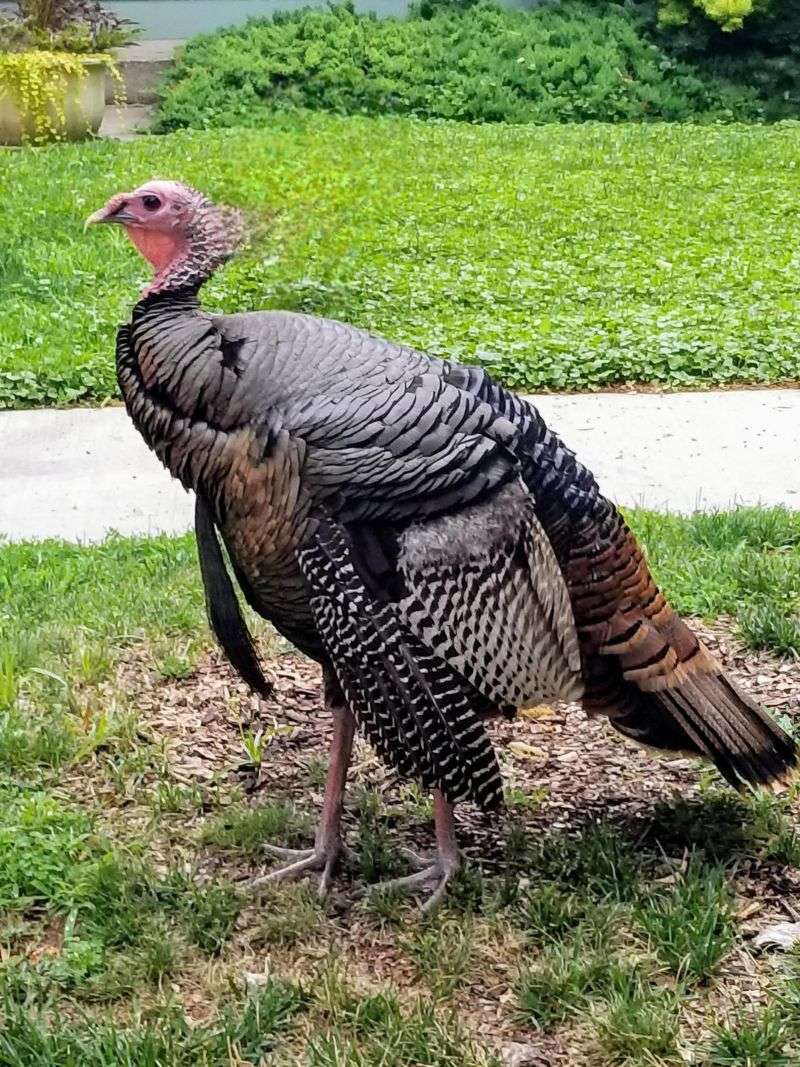
A wild turkey in the yard usually needs room, not rescue.
These birds are large, alert, and built to move through mixed habitat. Most visits are temporary. The turkey feeds, scans, scratches, walks, and eventually moves along when it feels ready.
Stay calm and watch from a distance.
Approaching, cornering, or chasing a turkey can stress the bird and create unnecessary drama. A calm yard gives it the easiest path out. Turkeys generally prefer avoiding close contact with people.
Keep pets controlled.
Dogs and cats can startle a turkey and cause it to bolt toward fences, roads, windows, or other hazards. Bring pets inside or keep them leashed until the bird leaves.
Teach children to observe quietly.
A turkey visit is a great backyard nature lesson. Point out the bird’s size, walk, feathers, scratching behavior, and alert posture. Curiosity is wonderful. Chasing is not.
Do not offer food.
Let the bird continue foraging naturally. Feeding may encourage repeat visits and bolder behavior around people.
A turkey passing through an Ohio yard is a sign of a living landscape.
It may mean nearby habitat is healthy, food is available, and your property sits along a wildlife route. That is something special to witness from a kitchen window.
Let the bird strut through with dignity.
After all, it clearly believes the yard tour was scheduled.