Why You Should Stop Planting Mint Directly In Your Ohio Garden Beds
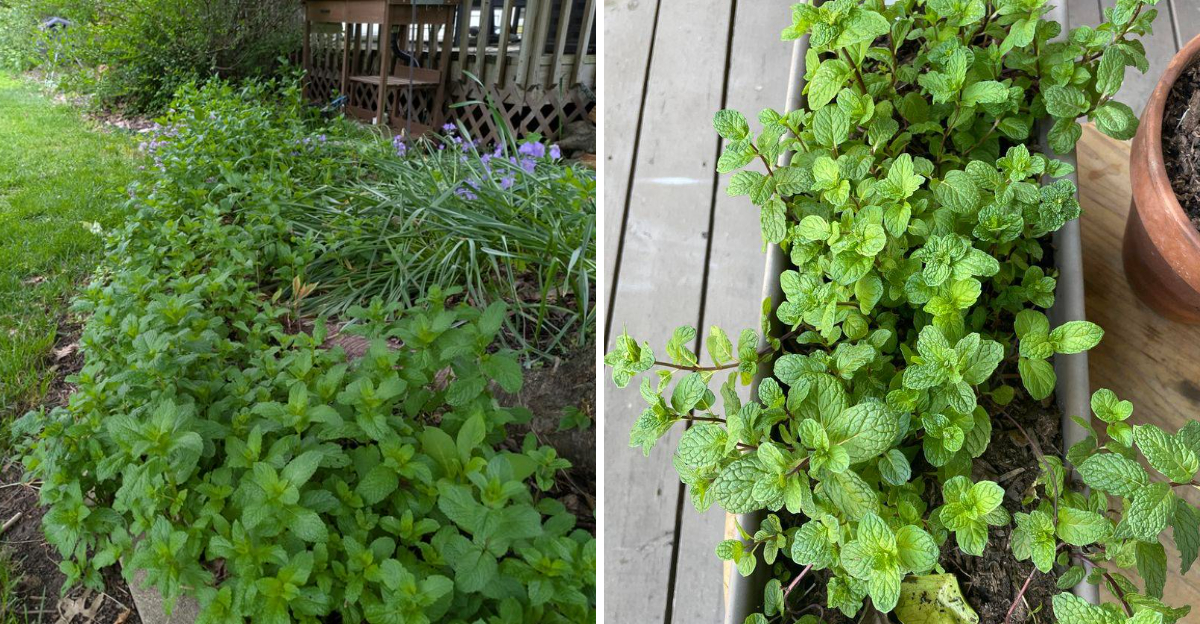
Three summers ago somebody planted one small mint start in an Ohio garden bed.
It looked completely harmless. A four-inch pot from the garden center, tucked in beside the basil, meant for iced tea.
That patch now covers a section of bed nobody assigned to it.
Here’s what nobody mentions at purchase. The part of mint you can see is not the part that matters.
Something is happening below the soil, spreading sideways under mulch and around root balls, then surfacing wherever it finds an opening.
Pulling the visible stems accomplishes very little, which explains why so many gardeners fight the same patch for years.
Rich improved garden soil makes it worse rather than better.
The plant is genuinely worth growing. It just needs boundaries, and one common workaround people try turns out not to provide them.
Curious what your mint is actually doing down there?
1. Mint Spreads Through Aggressive Underground Runners

Many Ohio gardeners first notice mint because it smells fresh and looks tidy.
What stays hidden is the real activity below the soil, where mint sends out strong underground stems called rhizomes that creep outward and surface in new places.
Mint is a vigorous spreader, and that characteristic matters considerably more than most people anticipate.
A single planting moves well beyond its starting point even when the top growth appears neatly clipped and controlled.
Seeds aren’t the primary reason mint becomes a problem in garden beds.
Rhizomes carry most of the responsibility, traveling under mulch, through small gaps, and across open soil before sending up fresh shoots a short distance away.
That mechanism explains why pulling a few stems rarely solves anything for long.
Rhizome pieces remaining in the ground let mint recover and continue moving through the bed.
Some mint varieties spread more aggressively than others, and peppermint has a particularly strong reputation for it.
Spearmint behaves somewhat less forcefully, though the difference is one of degree rather than kind.
Above-ground stems can root where they contact soil too, which adds a second spreading route.
For Ohio gardeners, the practical takeaway is straightforward. Treat mint as a plant that intends to travel.
Understanding that the spreading starts underground makes the container recommendation considerably easier to accept.
2. Garden Beds Give Roots Room To Roam
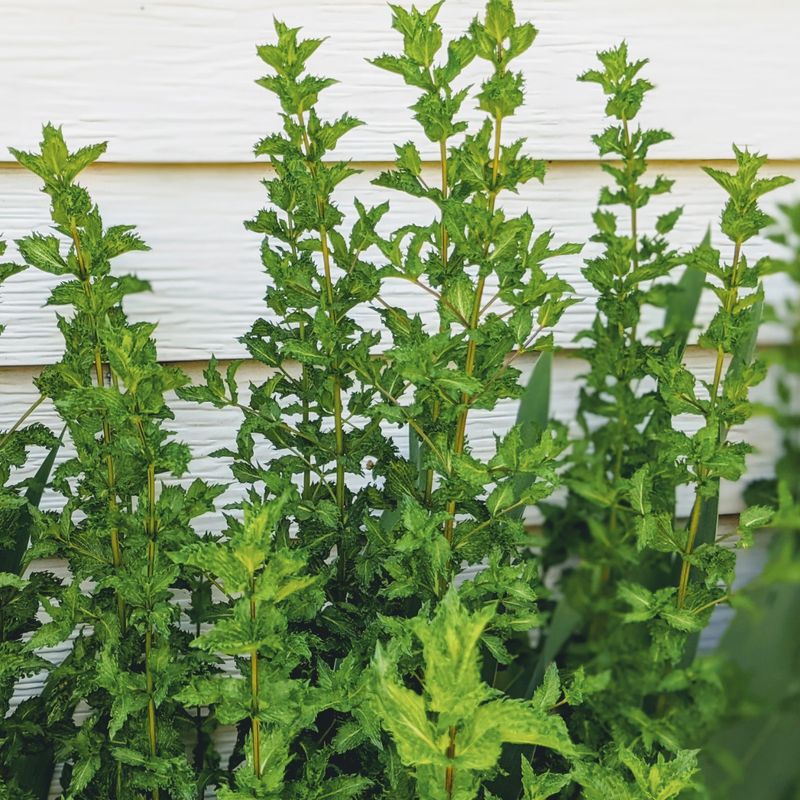
Rich garden soil feels like a gift to most plants, and mint treats it like an open road.
In Ohio beds, gardeners add compost, loosen compacted ground, and keep weeds down, which creates exactly the soft welcoming space rhizomes prefer.
Loose soil lets those runners travel with far less resistance.
Rather than fighting through hard clay or packed pathways, the plant moves easily through improved soil and claims territory nobody planned to give it.
That pattern appears constantly in raised beds and well-maintained in-ground plots.
Moisture, organic matter, and regular watering all help vegetables and flowers, and they help mint spread faster and root more deeply at the same time.
Ohio conditions add to the situation.
Spring rains and warm summers give mint a long growing season, so the plant gets plenty of opportunity to stretch outward while the bed receives careful attention.
Your Ohio Garden Changes Every Week. Your Plan Should Too.
Gardening in Ohio changes quickly throughout the season. Every Friday you’ll receive a simple weekly plan showing exactly what to plant, prune, fertilize, harvest, and protect so you never miss the right timing.
Even a small starter takes full advantage of those conditions.
One neat clump becomes a wandering patch because the bed itself makes travel easy. Mulch complicates things further, since rhizomes travel comfortably underneath it while staying invisible.
Irrigation and drip lines create moist corridors that mint follows readily.
Garden beds are built for growth, and mint responds enthusiastically. That enthusiasm is delightful in a pot and considerably less so in open soil.
3. Neighboring Plants Get Crowded Out Fast
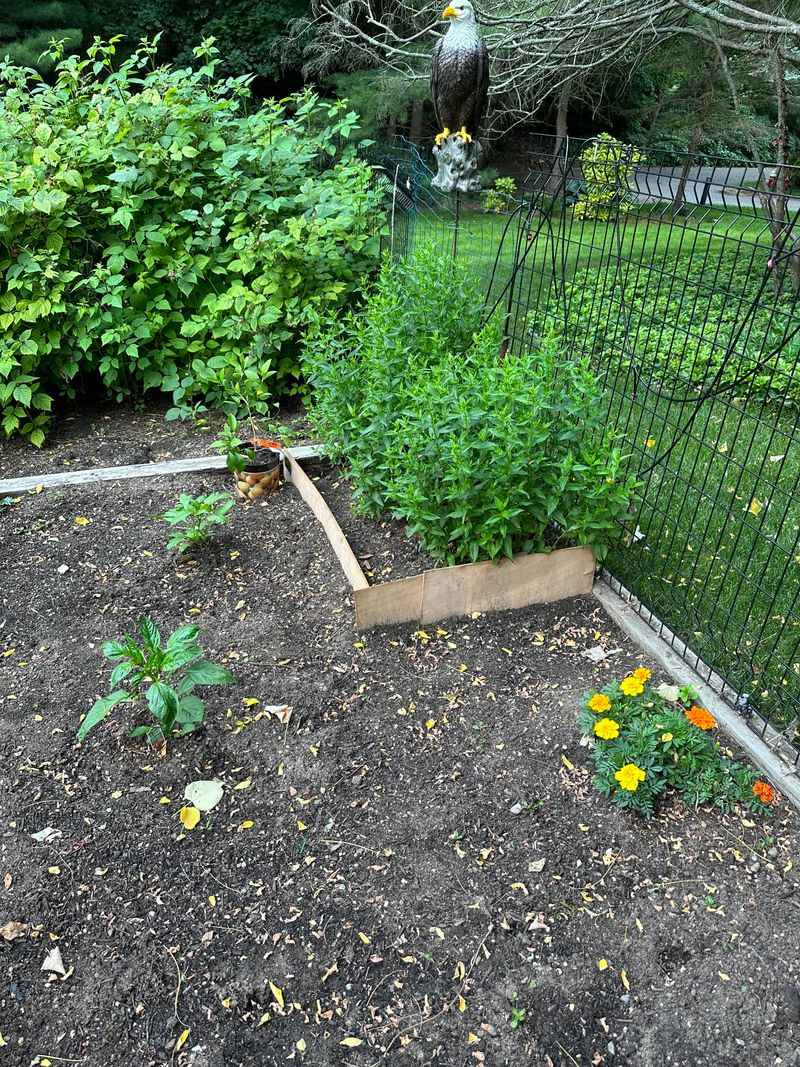
One week the bed looks balanced, and the next mint is leaning into everything around it.
That rapid change explains why gardeners regret giving it shared space with other herbs, flowers, or vegetables.
Mint grows thickly above ground while rhizomes expand below.
Nearby plants then compete for light, water, root space, and nutrients, and most cannot keep pace with such an assertive neighbor.
Small herbs typically struggle first.
Basil, thyme, parsley, and young perennials all disappear behind mint foliage or get surrounded by roots before the shift becomes obvious.
The trouble rarely looks dramatic at the start.
Mint fills gaps gradually, then works around crowns and stems until other plants become harder to weed, harder to harvest, and harder to keep healthy.
In Ohio gardens, where space often feels limited already, losing a section of bed to one herb is genuinely frustrating.
You cut mint back repeatedly while the plants you actually wanted receive less airflow and less room.
Slow-growing perennials suffer most, since they cannot outpace the encroachment.
Bulbs and shallow-rooted plants also lose ground quickly.
That crowding makes the bed look unkempt even with real effort behind it.
Planting mint directly in open ground often converts a mixed garden into a mint-first garden regardless of intent.
4. Containers Keep Growth Contained And Manageable
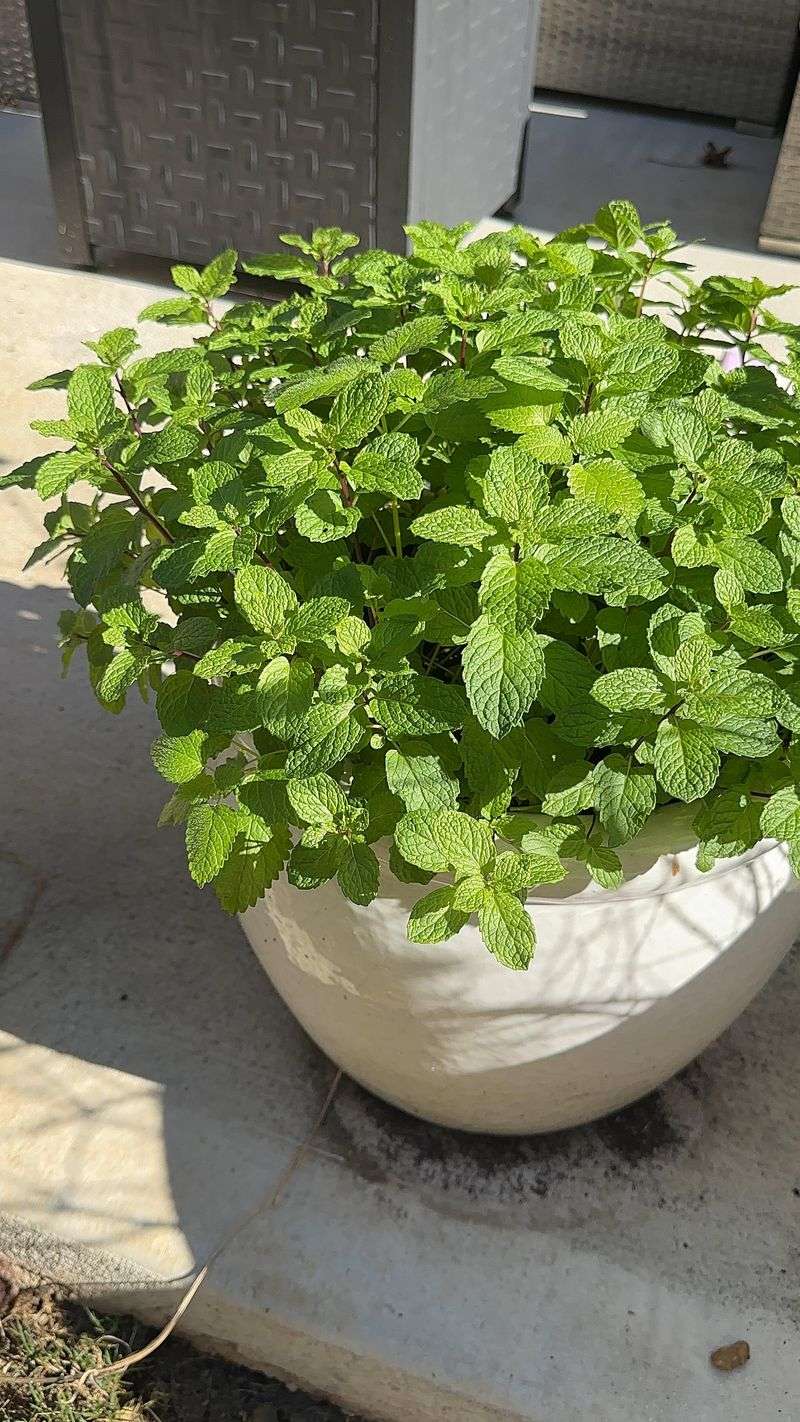
Here’s the encouraging part. Nobody has to give up growing mint in Ohio.
The plant simply needs a home with firm boundaries, and a solid-bottomed container is the most reliable option available.
Containers come recommended for mint specifically because containment matters more than trimming ever will.
With a closed bottom and intact sides, rhizomes have nowhere to reach your garden bed.
That single change makes care considerably easier.
Place the pot on a patio, deck, porch, or other hard surface, water as needed, and enjoy fresh leaves without wondering where runners have gone.
Harvesting improves too.
Instead of digging around nearby crops or cutting surprise shoots in several locations, you know exactly where the mint sits and can clip what you need in a minute.
Container size matters. A pot at least twelve inches across gives roots enough room to stay productive through a season.
Mint dries out faster in containers than in beds, so consistent watering becomes part of the arrangement.
Seasonal maintenance stays manageable as well.
An overfull plant can be divided, the potting mix refreshed, or the whole container relocated for convenience.
Mint still grows strongly and smells wonderful, and it no longer makes decisions about the rest of the garden.
5. Sunken Pots Still Let Roots Escape
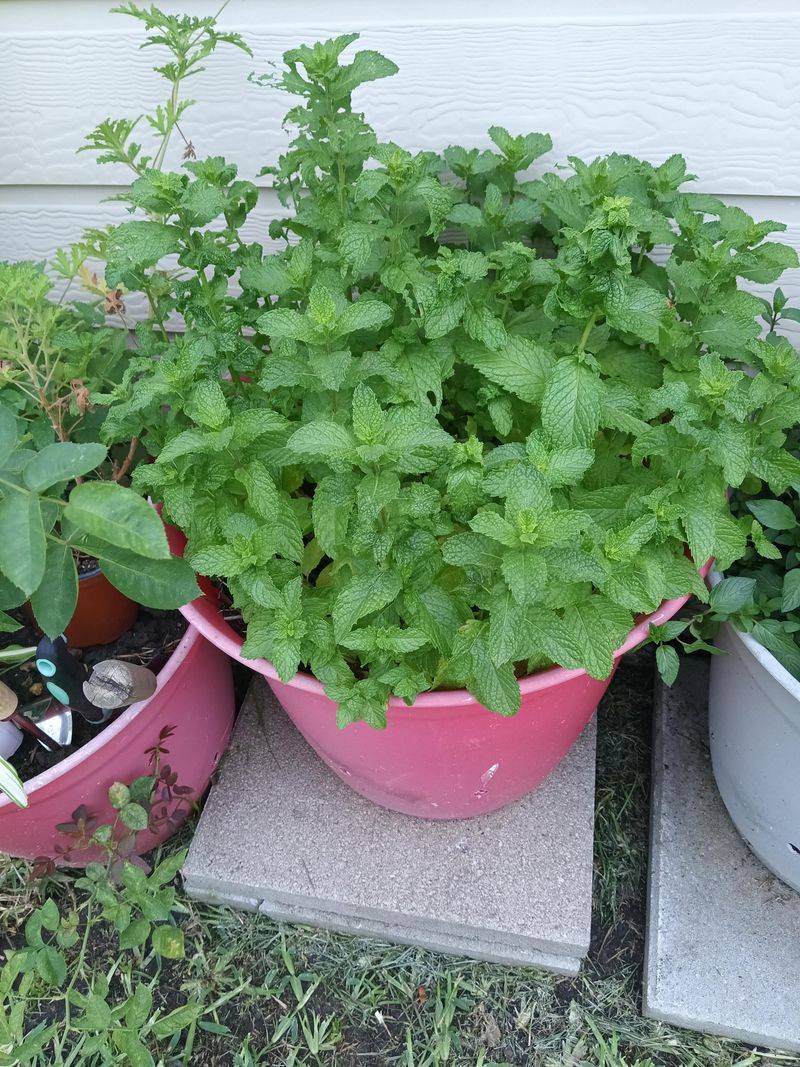
Burying a pot sounds clever, and plenty of gardeners try it with reasonable intentions.
The problem is that sinking a container into the ground doesn’t solve much when the bottom is open or roots can reach surrounding soil.
Mint spreads through rhizomes rather than only seeds, so any path into the bed becomes an escape route.
Drainage holes, cracked containers, and openings at the base all provide those runners an exit.
The rim creates its own issue over time.
Stems arch over the edge and root nearby, while dense growth makes it harder to notice the plant has already crossed its supposed boundary.
Ohio gardeners sometimes hear that a sunken pot functions as a barrier. It may slow mint for a season, and slowing isn’t stopping with a plant this persistent.
Rhizomes also grow upward and over a buried rim, particularly once the pot fills with roots. Soil accumulating around the edge accelerates that.
A solid-bottomed container above ground remains the dependable answer. It creates a complete separation between mint roots and the bed rather than relying on hope.
Some gardeners use bottomless pots with heavy plastic underneath, which works better than a plain sunken pot and still requires monitoring.
Skipping the half-measure saves a season of chasing escaped shoots.
6. Digging Out Established Mint Takes Years
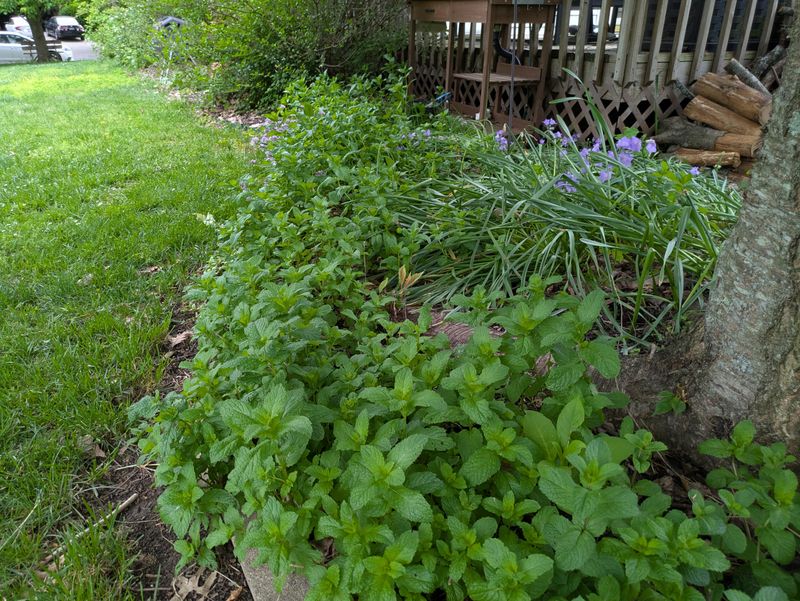
Ask anyone who has fought old mint in a garden bed and you’ll usually get a tired laugh first.
Removal sounds straightforward on paper, and once mint is established the job becomes a repeating chore lasting far longer than expected.
The reason sits underground.
Rhizomes branch, break, and leave fragments behind, and each remaining section can regrow when conditions allow.
Digging helps considerably, and it becomes a careful hunt rather than a single fix. You clear one patch, then find fresh shoots weeks later, sometimes several feet from where you worked.
Ohio soils complicate the task further.
Heavy clay, spring wetness, and roots tangled around perennials or vegetables all make removing every fragment difficult without disturbing plants you want to keep.
Cleanup typically stretches across seasons.
Repeated pulling, watching for regrowth, and lifting hidden runners gradually weakens the patch, though patience is required and quick success is unlikely.
Sheet mulching with cardboard and heavy mulch can help suppress a patch over a full season. Persistence matters more than technique. Removing top growth repeatedly starves the rhizomes eventually.
Planting mint directly in a bed creates future work for your future self.
A container seems less charming initially and beats spending years chasing mint through a once-orderly garden.
7. Contained Mint Still Gives You Plenty
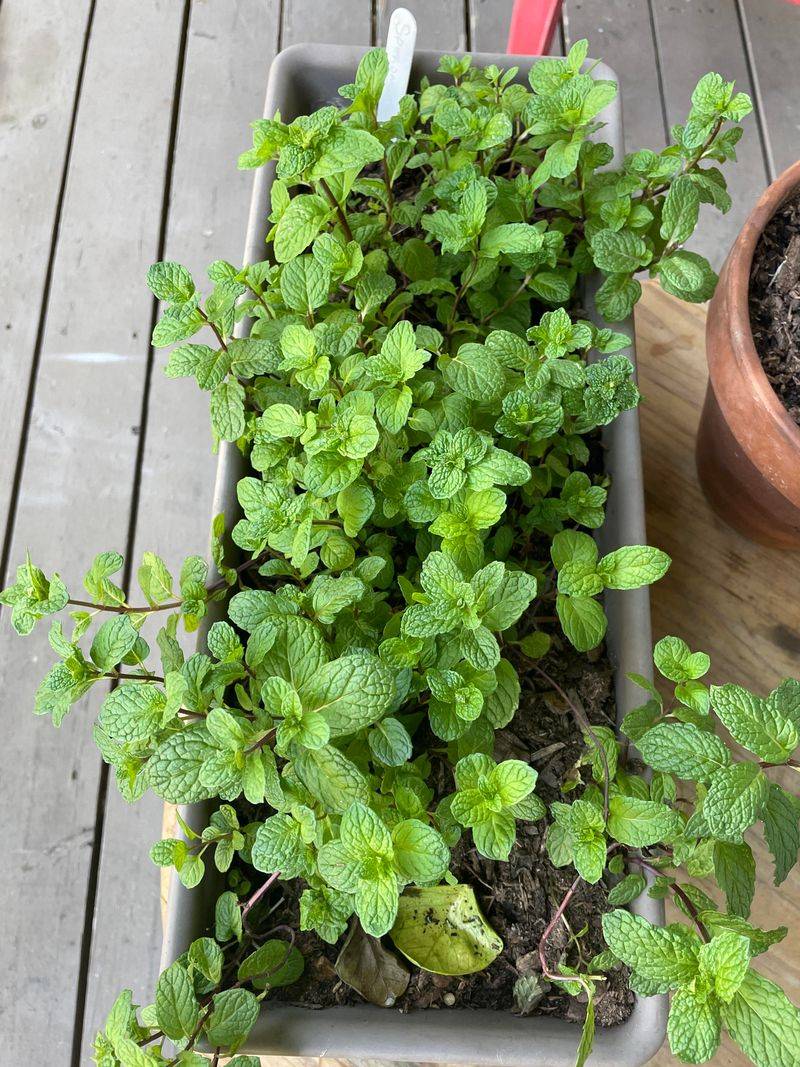
Some gardeners worry that keeping mint in a pot means settling for a weak little plant.
The opposite is generally true, since mint grows energetically enough that a well-watered container produces more leaves than most households use.
Consider how people actually use mint.
A handful for tea, a few sprigs for fruit salad, some leaves for lemonade, and a garnish for dessert require nowhere near half a garden bed.
In a container, the plant stays within reach and easy to harvest.
Set it near the kitchen door, on a patio, or beside a sitting area where brushing past releases that cool scent.
Regular harvesting actually keeps potted mint looking fuller.
Trimming encourages tender new growth, which happens to be the part most people prefer using in drinks and recipes.
Cutting back hard once or twice through summer produces a flush of fresh leaves.
Container growing offers Ohio gardeners real flexibility too.
Refresh the soil, divide crowded roots, protect the pot through harsh weather, or replace an aging plant without repairing an invaded bed.
Overwintering is straightforward as well, since mint is hardy in Ohio and pots can sit in a sheltered spot or get sunk in the garden for winter only.
The choice isn’t between abundance and control. It’s between a harvest that stays where you want it and one that tries to claim the whole space.
8. There Are Better Bed Companions Than Mint
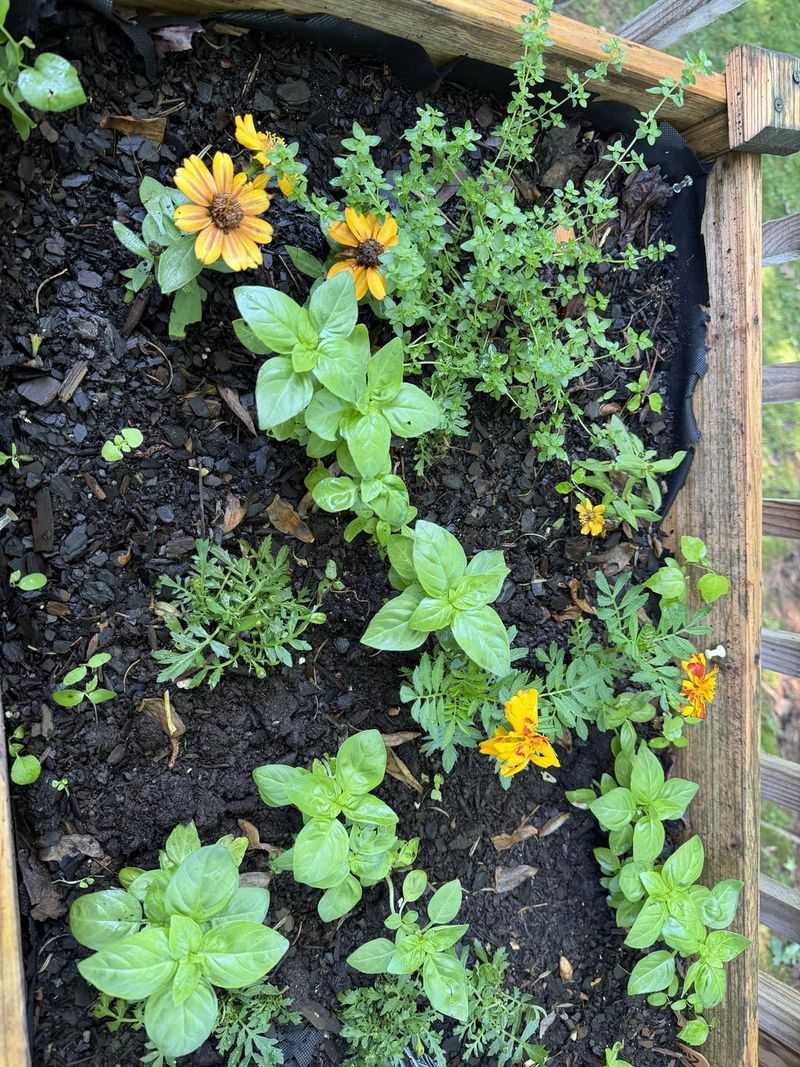
Wanting fresh herbs in the garden bed is entirely reasonable, and plenty of them behave.
Basil stays exactly where you plant it, since it grows as an annual with no spreading habit whatsoever.
Parsley works the same way, biennial rather than perennial, and it never wanders beyond its space.
Thyme spreads slowly by low creeping stems, which makes it useful along bed edges without becoming a problem.
Sage forms a woody clump that expands gradually rather than running underground.
Rosemary stays put entirely, though Ohio winters generally require growing it in a pot that comes inside.
Chives clump up over years and divide easily when they get crowded, which is manageable rather than invasive.
Oregano deserves a caution, since it belongs to the same family as mint and spreads by surface runners.
It behaves better than mint and still needs watching, particularly Greek oregano in rich soil.
Lemon balm belongs on the container list alongside mint, since it self-seeds prolifically and spreads by roots.
Anyone wanting mint flavor in the bed has options too. Mountain mint is a native alternative that spreads less aggressively and supports pollinators heavily.
The general test is simple. Herbs forming clumps stay manageable, while herbs traveling by runner or rhizome need a pot.