8 Things To Do To North Carolina Lantana Right Now For Blooms Straight Into October
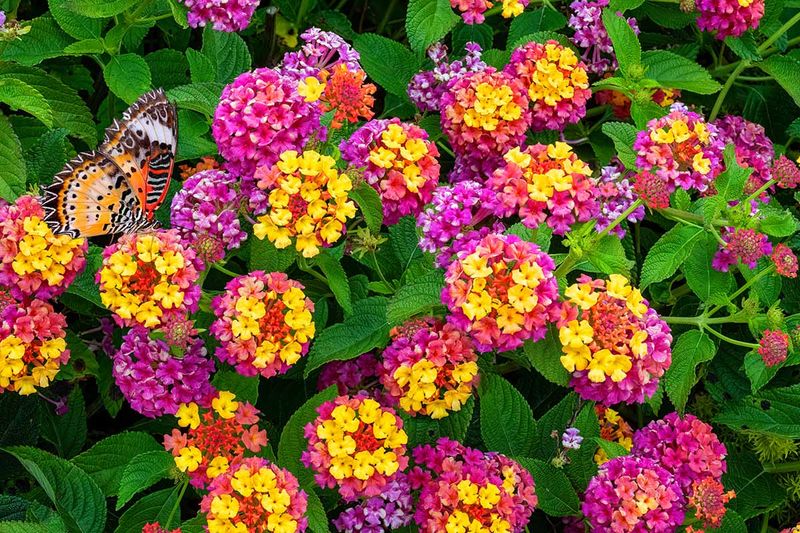
You step onto the porch on a sticky August evening, sweet tea sweating in your hand, and you notice your lantana has gone quiet. The clusters of orange and pink that fed the butterflies all June look tired and half spent. Here in North Carolina, that slowdown is not the end. With a few small moves right now, you can keep Lantana camara pushing color straight through October, right up to the first Piedmont frost.
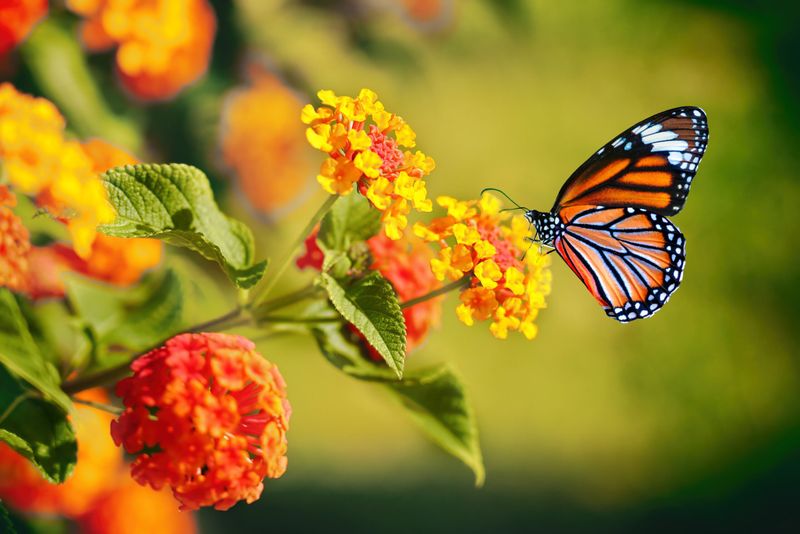
And those late blooms happen to arrive when fall monarchs are passing through, hungry for one more meal.
1. Deadhead the Spent Blooms Every Few Days
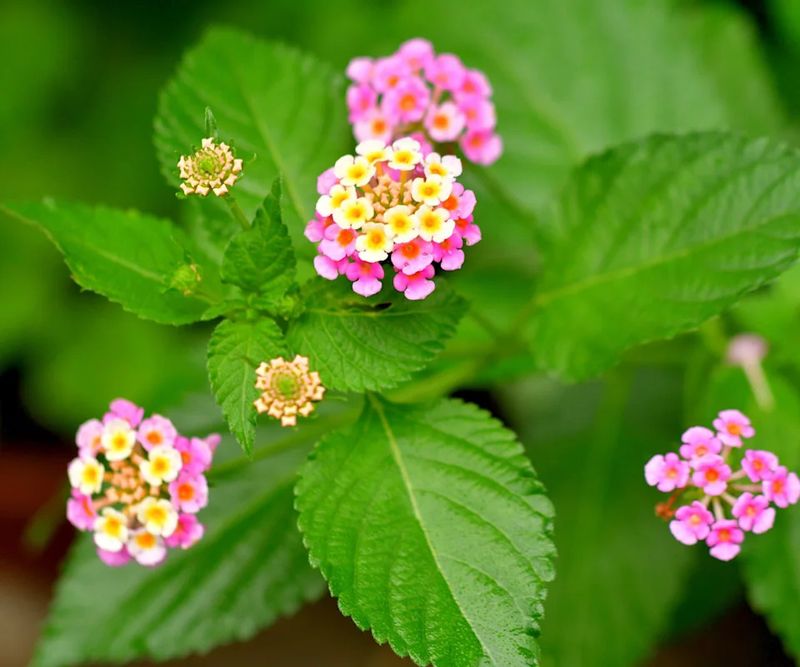
Walk past your lantana and you will spot little green and purple berries where the flowers used to be. That is the plant deciding its summer job is done. Once it sets seed, it eases off making new blooms, because from the plant’s point of view it already won.
You can talk it out of quitting. Pinch or snip off the faded clusters and those forming berries every three or four days, cutting just below the old flower head. It takes ten minutes with a cup of coffee in hand.
Removing the seed heads tricks the plant into blooming again to try one more time, a quiet tug of war you keep winning all season. Many Piedmont gardeners who skip this step wonder why their lantana stalls by mid August while the neighbor’s keeps going.
Deadheading is not a magic switch on its own. It is one layer that works best alongside the feeding and watering steps below. Keep at it and you will genuinely see fresh buds within a week.
2. Give It One Good Shearing In Early August
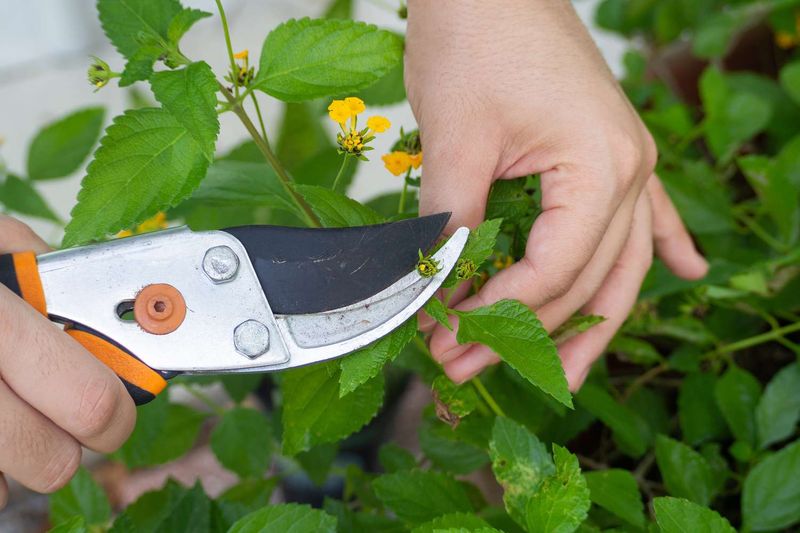
Sometimes deadheading is not enough because the whole plant has gone leggy, long bare stems flopping open with flowers only at the tips. A hard haircut fixes what pinching cannot.
Early August is the sweet spot in North Carolina. Grab clean shears and cut the entire plant back by about one third, roughly 4 to 6 inches off the top and sides. It feels brutal, like you are wrecking the thing.
But lantana loves it. Cutting into that growth wakes up buds all along the stems, so instead of a few tired tips you get a fuller mound covered in flowers. New color usually shows up in two to three weeks, right on time for September.
Do not shear later than the third week of August in the Piedmont, though. You want the plant to have plenty of warm weeks to rebound before the first frost lands, often around late October near the Triangle. A rushed cut too close to cold weather leaves it thin when you want it fullest.
3. Feed It Light But Feed It Often
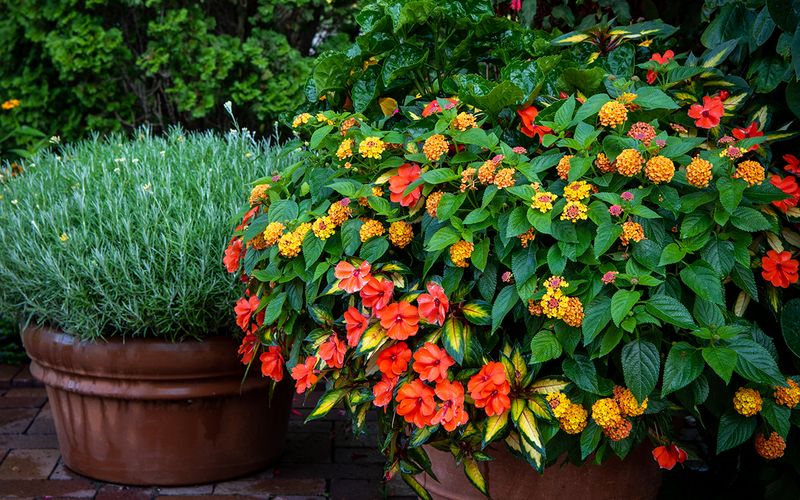
Lantana is a tough customer that actually blooms harder when you do not spoil it. Pile on rich fertilizer and you get a jungle of leaves and hardly any flowers, which is the opposite of the plan.
The move is small meals, not a feast. Feed with a balanced liquid fertilizer, something like a 10-10-10 diluted to half strength, once every three to four weeks through late summer. A light scattering of slow-release granules in early August works too.
Your North Carolina Garden Changes Every Week. Your Plan Should Too.
Gardening in North Carolina changes quickly throughout the season. Every Friday you’ll receive a simple weekly plan showing exactly what to plant, prune, fertilize, harvest, and protect so you never miss the right timing.
Our Piedmont red clay tends to hold nutrients but drains slow, so gentle feeding keeps the plant fed without drowning the roots. Sandy Coastal Plain soil is the flip side, it drains fast and leaches out, so those folks may need to feed a touch more often.
Skip anything heavy on nitrogen, the first number on the bag. Too much of it is a green leaf machine that forgets to flower. Feed light, feed steady, and your lantana rewards you with buds instead of a salad.
4. Water Deep, Then Let It Get Thirsty
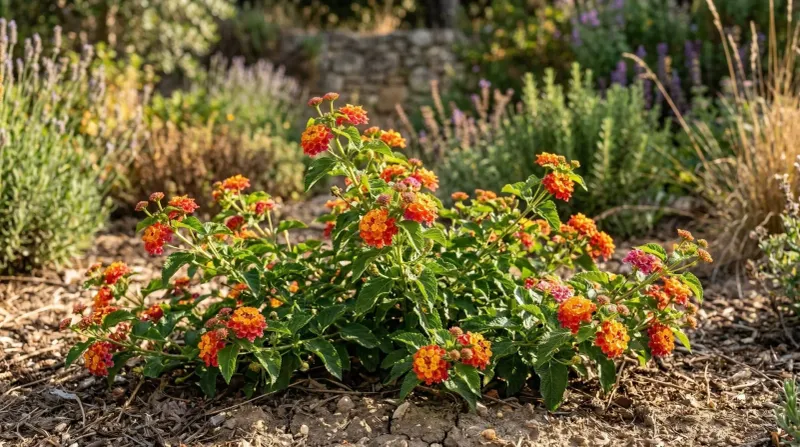
Here is where it gets tricky. Lantana is famously drought tough, so folks assume it never needs water and let it bake. Then blooms fizzle in a July dry spell and everyone blames the heat.
The plant does love dry feet, but a total drought still slows flowering. The trick is deep and rare, not shallow and constant. Soak the root zone with about 1 inch of water once a week when rain stays away, then let the top few inches of soil dry out before you water again.
Deep soaking sends roots down where summer heat cannot cook them. Frequent little sprinkles do the opposite, keeping roots shallow and lazy. And soggy soil invites root rot, the fast way to kill a plant that asks for so little.
Our muggy North Carolina summers bring afternoon storms that do a lot of this work for you. So skip the hose after a good downpour. Watch the plant, not the calendar, and you save on the water bill while the blooms keep coming.
5. Move Potted Lantana Into Full Sun

Count the hours of sun your lantana actually gets. If a tree leafed out this spring or the summer sun shifted lower, a spot that looked bright in April may now sit in shade half the day. Lantana in shade sulks and stops blooming, plain and simple.
Full sun is not a suggestion for this plant, it is the whole deal. Lantana wants a minimum of 6 hours of direct sun, and it is genuinely happiest with 8 or more. The more light, the more flowers, every time.
If yours lives in a pot, this is an easy win. Slide it to the sunniest corner of the deck or patio, the spot that stays bright from late morning on. Container plants also need water a bit more often since pots dry fast in our heat.
Got a lantana stuck in the ground in too much shade? Note the spot for a fall move once temperatures cool. For now, thinning a low branch overhead can buy your plant a couple more hours of the light it craves.
6. Check The Undersides For Lace Bugs
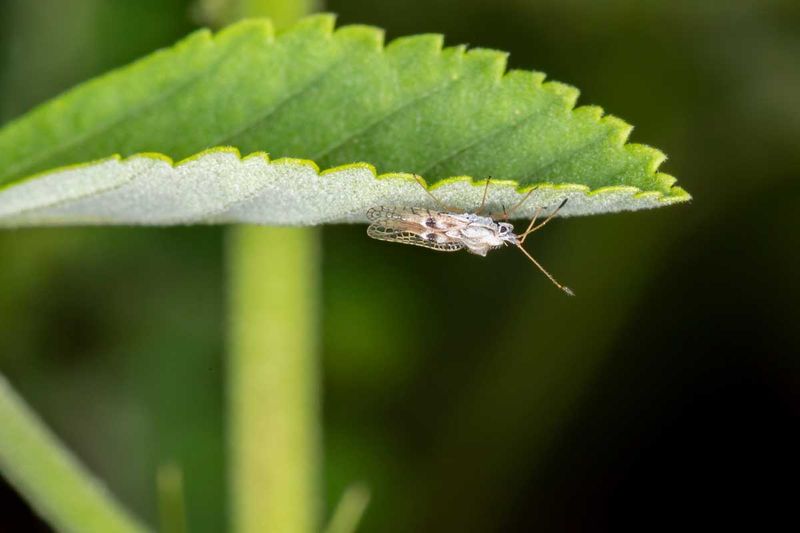
Your lantana looks faded and pale, like the color got washed out of the leaves, and you figure it is just the heat. Flip a leaf over. Lace bugs have a trick, they hide underneath and quietly drain the plant while you look at the top.
Tiny and clear-winged, these pests leave stippled yellow speckling on the upper leaf and a scatter of dark tarry specks below. NC State Extension notes lace bugs are one of the more common lantana troublemakers across the Southeast, and our long warm season lets them run several generations.
Knock them back before they steal your fall show. A strong blast of water from the hose to the leaf undersides, done every few days, dislodges a lot of them. For heavier numbers, insecticidal soap sprayed on the undersides, where they live, works better than anything hitting the top.
Spray in the early morning or evening, never in the blazing midday sun that can scorch wet leaves. Stay after it for a week or two. Healthy green leaves feed more blooms, and the butterflies notice.
7. Refresh Mulch To Hold Steady Moisture
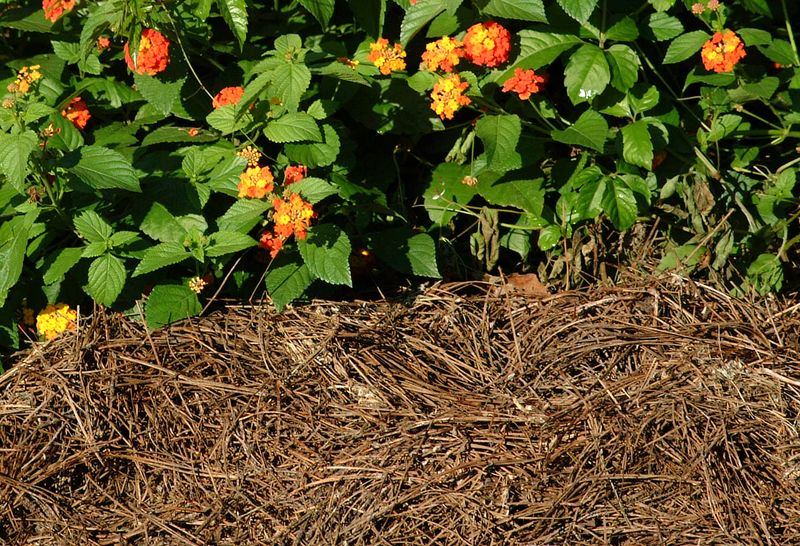
Bare soil around your lantana in August is a slow leak. Every hot afternoon it wicks moisture straight out of the ground, and the roots below feel every degree of that heat.
A fresh layer of mulch is cheap insurance. Spread 2 to 3 inches of pine bark, pine straw, or shredded hardwood over the root zone, but keep it pulled back an inch or two from the main stem so the base can breathe. Piled against the stem, mulch traps rot.
Mulch steadies the whole system. It holds moisture through dry spells, cools the root zone in our brutal Carolina heat, and smothers weeds that would otherwise steal water and food from your plant. That means fewer waterings and less fussing for you.
Pine straw is easy to find statewide and knits together well on a slope, handy in Piedmont clay beds that shed water. Come fall, that same mulch layer buffers the roots when the first surprise cold snap rolls through. Small chore, steady payoff.
8. Hold Off On Any Fall Pruning
By October the itch to tidy up hits hard. Everything else in the yard is winding down, so you reach for the shears to cut the lantana back for winter. Resist that urge, at least for now.
Pruning in fall does two things you do not want. It snips off the very blooms feeding late monarchs on their long trip south, and it pushes tender new growth right when a surprise cold snap can burn it. In North Carolina, first frost usually lands late October to November in the Piedmont, later down on the coast.
Leave your lantana standing. Those October flowers are a genuine lifeline for pollinators passing through, part of the same living yard that keeps pests in check and beneficial insects around. Let the plant ride out the season on its own terms.
Save the real cutback for late winter or early spring, after the hard freezes pass and before new growth starts. Until then, you sit on the porch, watch the butterflies work the last blooms, and feel pretty good about the yard you built.