What The Color Of Your Florida Palm Fronds Is Actually Telling You About The Soil
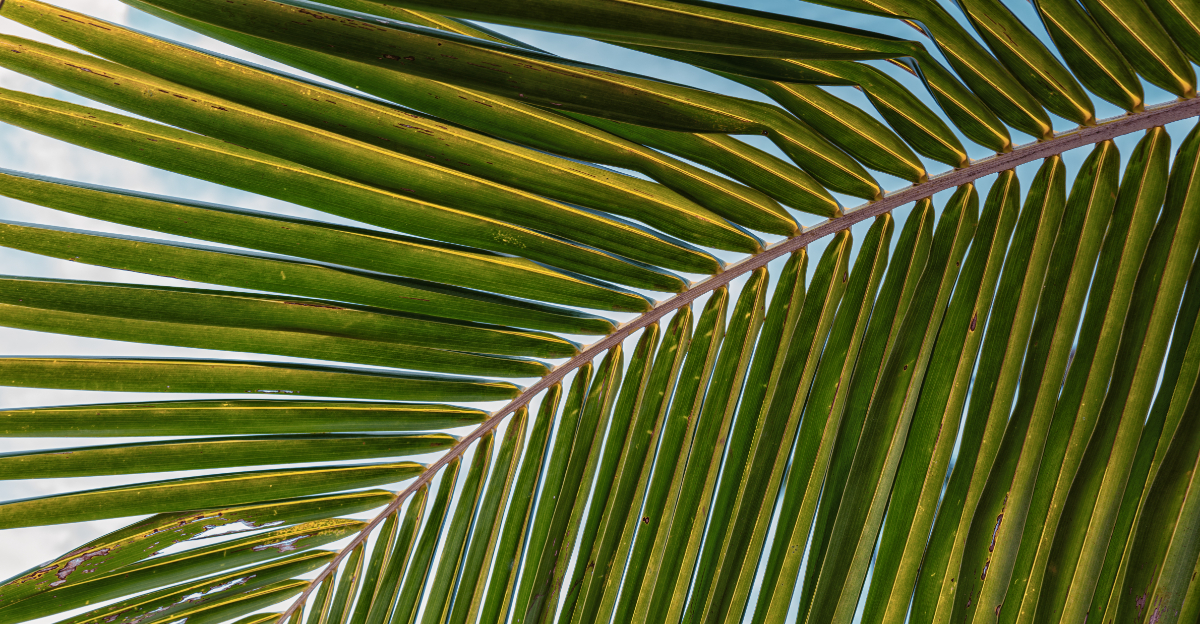
Palm fronds are not just changing color for decoration.
In Florida, they often work like warning flags. A yellow lower frond, pale new spear, orange speckling, or frizzled tip can point to what is happening in the soil long before the whole palm looks stressed.
That matters because Florida soil can be tricky.
Sandy ground drains fast, heavy rain leaches nutrients, alkaline soil can lock up key minerals, and poor drainage can keep roots from absorbing what is already there.
A palm may be planted in soil that has nutrients, yet still show deficiency symptoms because the roots cannot access them properly.
The color pattern is the clue.
Older fronds usually reveal one set of problems. New growth reveals another. The central spear tells you what is happening right now.
So what is your Florida palm really telling you through its frond color?
Start with where the color appears, how fast it spreads, and whether the newest growth still looks firm, green, and healthy.
1. Yellow Older Fronds Point To Potassium
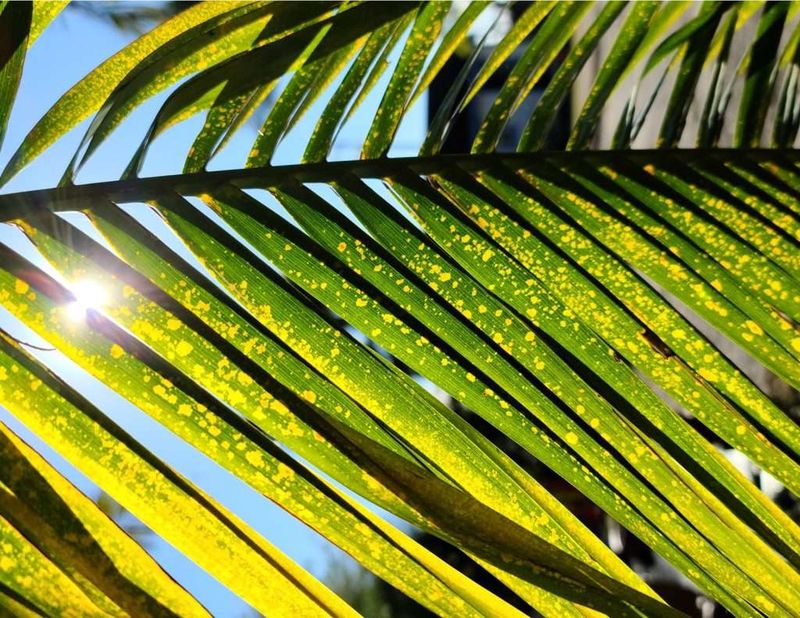
Yellowing lower fronds often point toward potassium trouble.
This usually starts on the oldest leaves first. The tips and edges may turn yellow, orange, bronze, or brown while newer fronds near the center still look greener.
That pattern matters.
Potassium deficiency tends to move upward over time because the palm shifts nutrients from older leaves into newer growth. The lower fronds show the shortage first.
Do not cut too soon.
A partly green frond is still helping the palm. Removing it early forces the tree to pull nutrients from the next set of leaves, which can make the deficiency look like it is climbing faster.
Wait until fronds are fully brown and dry.
That is the safer time to prune. Palms do not replace leaves the same way many shrubs do, so every working frond has value.
Use a palm-specific fertilizer.
Palms need a balanced formula that includes slow-release potassium and magnesium. Single-nutrient quick fixes can throw the plant further out of balance.
Look across the canopy.
One old yellow frond may be normal aging. Several older fronds showing the same yellow-orange edge pattern are a stronger clue.
Avoid overpruning.
A palm with too few leaves has fewer resources to recover.
Yellow lower fronds are not just ugly.
They may be telling you the soil is not supplying potassium in a way the palm can use.
2. Orange Speckles Need Attention
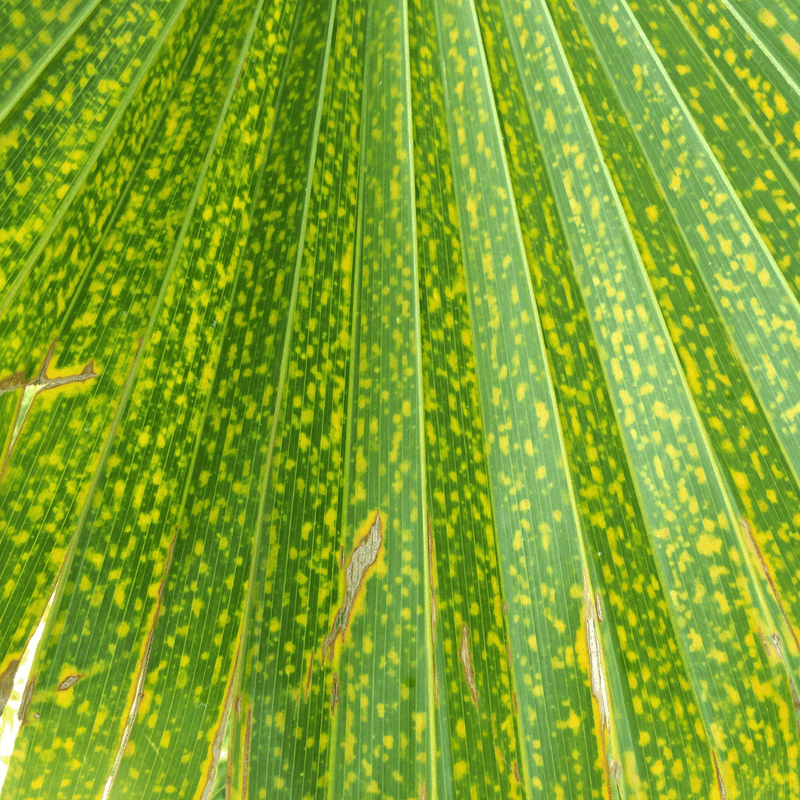
Tiny orange spots can be an early warning.
When older fronds show scattered orange, yellow, or bronze flecks, the palm may be showing the first stages of a nutrient issue. Potassium deficiency often creates this kind of speckled look before the whole frond declines.
The spots can look like pest damage. That is why it is worth slowing down before spraying anything. Speckles alone do not automatically mean insects or disease.
Check several fronds. A few marks on one old leaf may be normal wear. A repeating pattern across older leaves, especially one moving upward, deserves more attention.
Your Florida Garden Changes Every Week. Your Plan Should Too.
Gardening in Florida changes quickly throughout the season. Every Friday you’ll receive a simple weekly plan showing exactly what to plant, prune, fertilize, harvest, and protect so you never miss the right timing.
Look at the undersides too. Pests often leave webbing, residue, scale bumps, or visible insects. Nutritional speckling usually appears as color change in the leaf tissue itself.
Do not treat blindly. Fungicides and insecticides will not fix a soil nutrition problem. They can also add stress when the real issue is nutrient uptake.
Take clear photos. Capture the whole palm, the affected older fronds, and a close-up of the speckles. Comparing patterns helps avoid guessing.
Watch for progression. Orange flecks that deepen into yellowing, browning edges, or tip decline may confirm that the palm needs nutritional support.
Speckles are easy to dismiss. But on palms, small color changes can be the first sign that the soil needs help before the canopy looks much worse.
3. Pale New Growth Signals Iron Stress
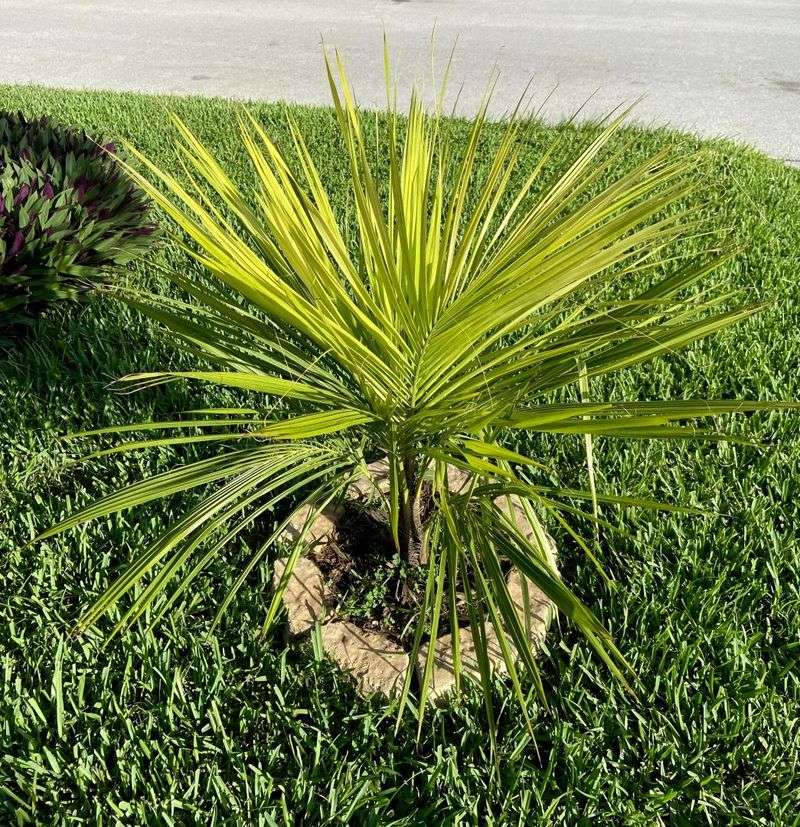
New fronds should not open washed out.
When the newest growth looks pale yellow, light green, or almost white, the issue may involve iron availability. This is different from yellowing that starts on older fronds.
New growth tells the current story.
Iron does not move easily inside the palm, so shortages show up in the youngest leaves first. The center of the canopy becomes the place to watch.
The soil may still contain iron.
Florida soils can hold nutrients that roots cannot access. High soil pH, compacted soil, and waterlogged roots can all make iron unavailable even when it is present.
Drainage matters.
Roots sitting in soggy soil lose oxygen, and stressed roots struggle to absorb nutrients properly. Pale new growth may be a root-zone problem as much as a nutrient problem.
Do not keep adding iron without checking why.
Iron sprays may green up leaves temporarily, but they will not solve poor drainage or high pH by themselves.
Test the soil pH.
A simple pH test can help explain why the palm is struggling to access nutrients. Alkaline soil often makes iron stress worse.
Look for firm new growth.
Pale but firm fronds suggest a different issue than soft, collapsing, or distorted new growth.
The newest leaves are the palm’s live report.
When they open pale, the soil chemistry and root conditions deserve a closer look.
4. Frizzled Tips Hint At Manganese
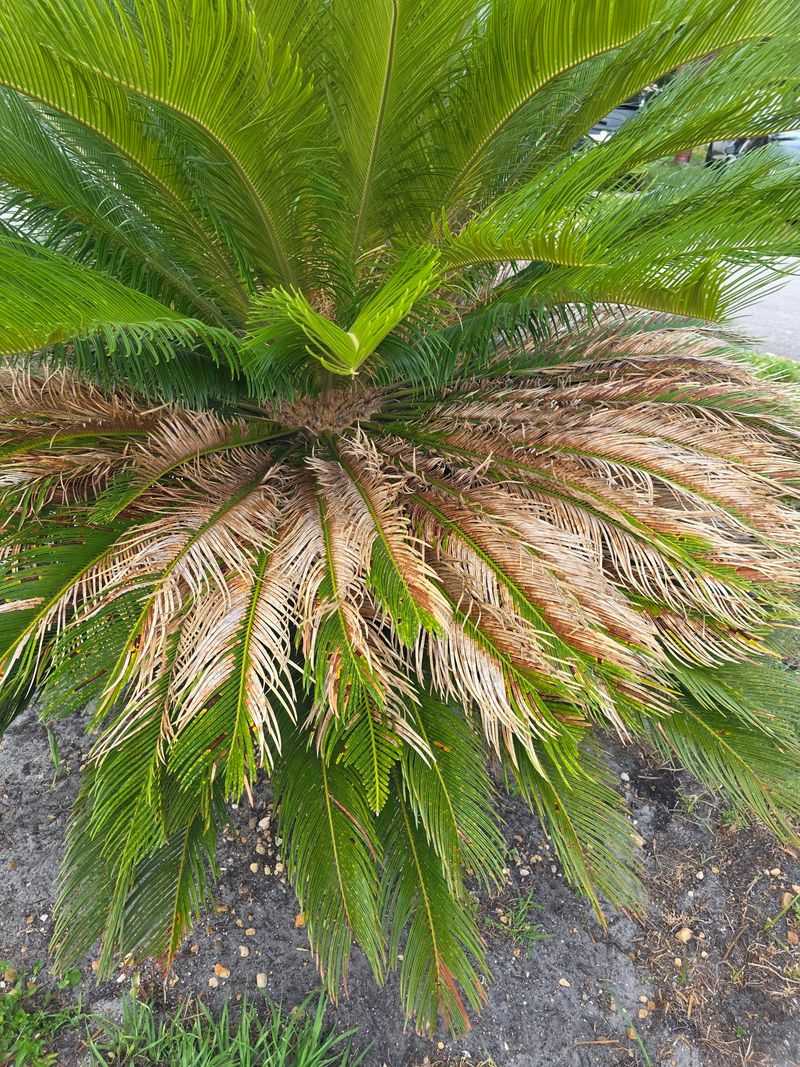
A shredded-looking new spear is more urgent.
When fresh growth emerges crinkled, weak, streaked, or frizzled at the tips, manganese deficiency may be involved. This symptom is often called frizzle top.
The newest growth is the key.
Manganese trouble usually appears in the spear and youngest fronds, not the lowest, oldest leaves. That separates it from many potassium or magnesium patterns.
The leaf may fail to open properly.
New fronds can look stunted, scorched-looking, pale in streaks, or ragged before they fully expand.
Do not confuse it with iron stress.
Both can affect new growth, but frizzle top has that distorted, frayed, weakened look. Pale color alone is not enough to diagnose manganese deficiency.
Florida soil conditions can trigger it.
Sandy soils, leaching rain, alkaline pH, and poor root function can all reduce manganese availability.
Act carefully but quickly.
Because the growing point is involved, this symptom deserves faster attention than a few yellow older fronds.
Use the right nutrient.
Manganese sulfate is commonly used when manganese deficiency is confirmed. Random fertilizer blends may not correct the issue.
A tissue test can save guesswork.
Frizzled new growth is serious enough that confirming the nutrient pattern is worth the effort.
A ragged spear is not just cosmetic.
It may be the palm telling you the newest growth is not getting what it needs to form correctly.
5. Broad Yellowing May Mean Magnesium
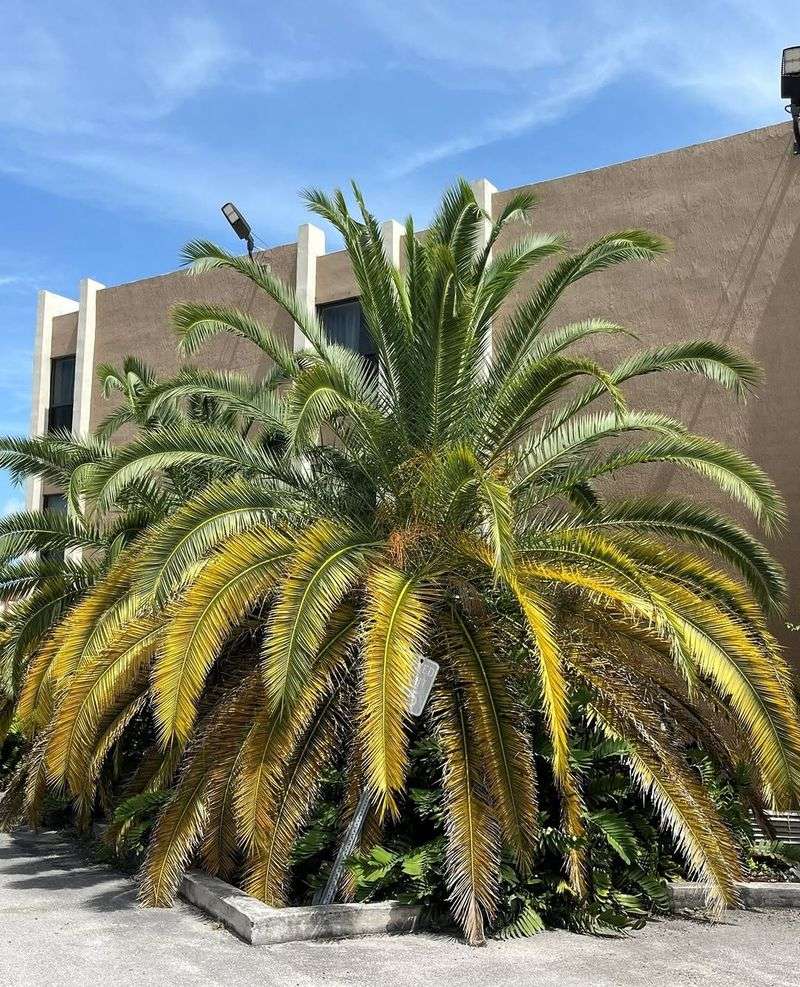
A yellow band with a green center is a useful clue.
Magnesium deficiency often shows up on older fronds as broad yellowing along the outer edges while the middle of the leaf stays greener. That green center stripe can help separate it from other problems.
The oldest fronds show it first.
Like potassium issues, magnesium shortage tends to appear lower in the canopy before newer growth shows much change.
Florida rain can leach magnesium.
Sandy soils lose nutrients quickly, especially after heavy rain or frequent irrigation. A palm may look fine for a while, then start showing color loss as reserves drop.
Magnesium supports chlorophyll.
Without enough available magnesium, fronds lose green color where the shortage hits hardest.
Balance matters.
Potassium and magnesium can compete in the root zone. Adding a lot of one without the other can worsen the imbalance.
Avoid single-nutrient guessing.
A palm fertilizer that includes both potassium and magnesium in a proper ratio is usually safer than chasing symptoms with separate products.
Check the whole canopy.
Magnesium deficiency has a pattern. One tired frond near the bottom is not enough evidence by itself.
Do not prune away the evidence too fast.
Those older fronds help show what the palm is lacking, and if they still hold green tissue, they are still feeding the tree.
Broad yellowing is a message.
The soil may not be holding or supplying magnesium steadily enough for the palm to stay green.
6. Green Spears Still Matter Most
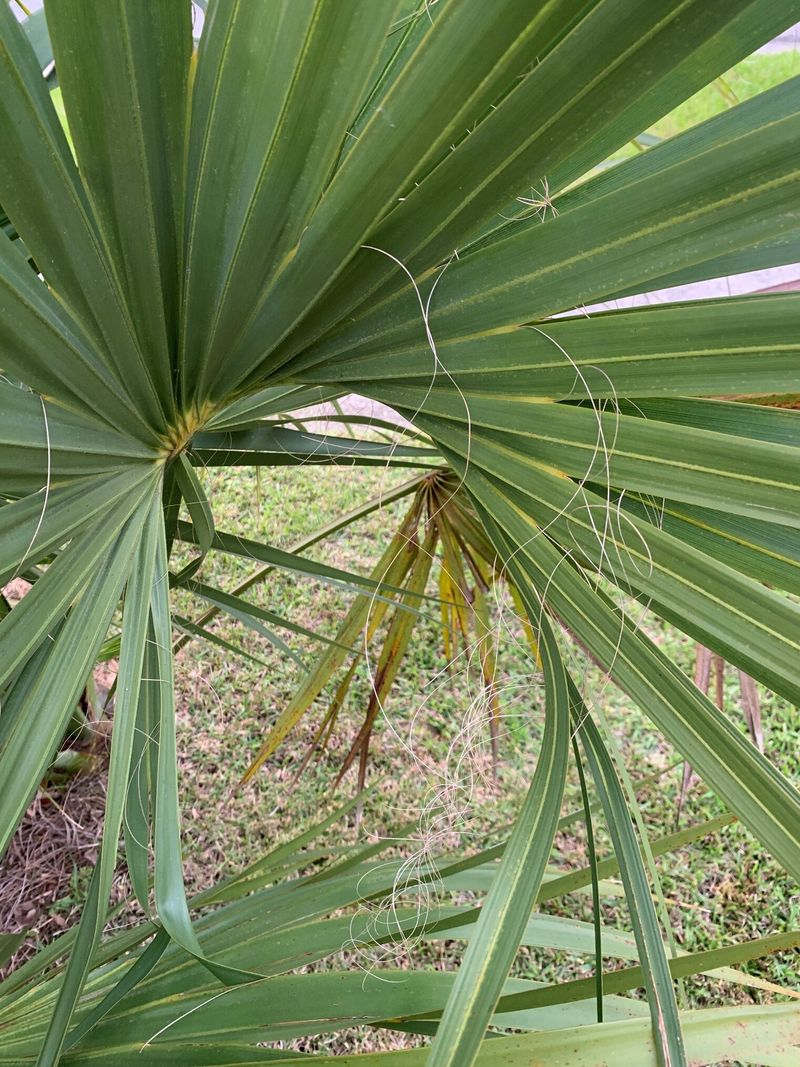
The central spear is the palm’s most important clue.
That upright new growth in the middle of the canopy shows what is happening now. Older fronds tell you about past stress, but the spear tells you whether the palm is still pushing healthy growth.
A firm green spear is reassuring.
Even when older fronds look yellow or spotted, a strong spear means the palm still has active growth and a chance to recover with better care.
Pale or distorted spears need attention.
That may point toward iron, manganese, drainage stress, or other root-zone problems affecting new tissue.
A soft spear is more concerning.
If the spear feels mushy, dark at the base, or pulls loose with gentle pressure, the issue may not be nutrition. Bud problems and rot can affect the growing point.
Fertilizer will not fix every spear problem.
A palm with a compromised growing point needs a different diagnosis than one with nutrient deficiency on older fronds.
Handle the spear area carefully.
Rough trimming, storm damage, and tool injury can open the way for trouble near the growing point.
Leave green fronds attached.
The palm uses them to support new growth. Cutting too much while the spear is trying to develop can weaken recovery.
Check the spear before panicking.
A green, firm center can mean the palm is stressed but still fighting well.
On a palm, the spear is the future.
Protect it first.
7. Poor Drainage Blocks Nutrient Uptake
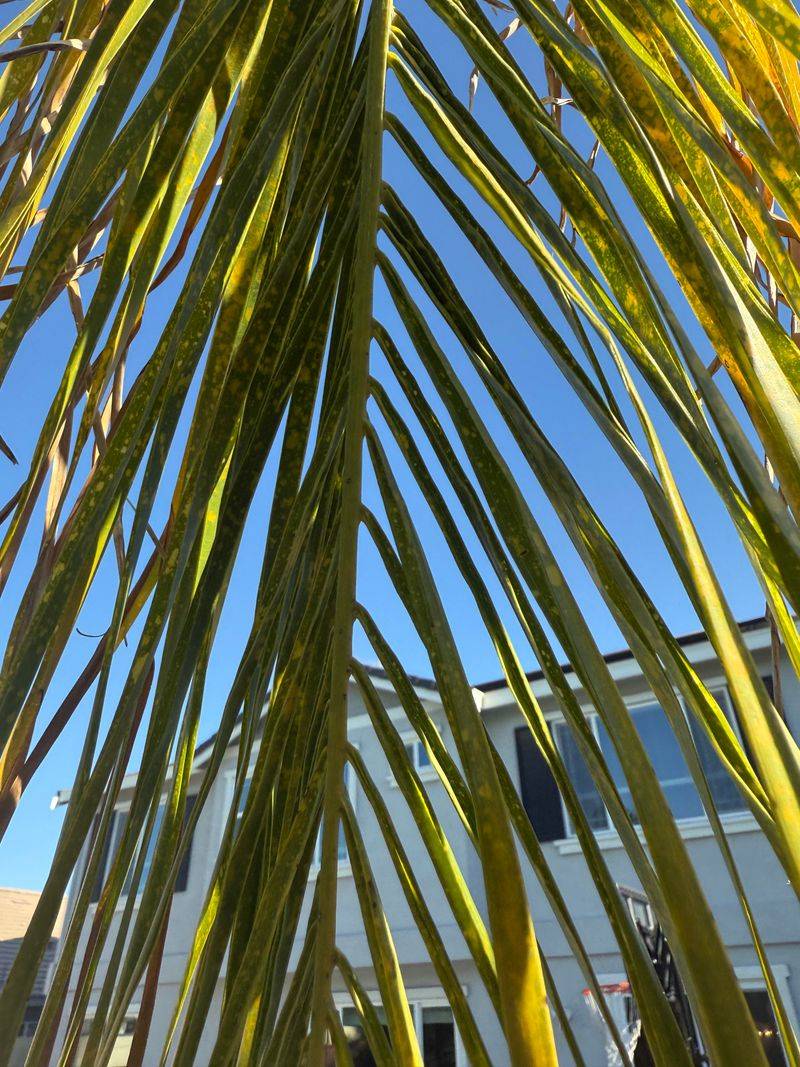
Wet soil can create fake-looking deficiencies.
A palm may show yellowing, pale growth, or weak fronds even when nutrients are present in the soil. The problem is that saturated roots cannot absorb them well.
Roots need oxygen.
When soil stays soggy, air spaces fill with water. Roots become stressed, and nutrient uptake slows.
Florida landscapes can hide drainage issues.
Compacted fill soil, low spots, clay layers beneath sand, overwatered lawns, and buried root flares can all keep the root zone too wet.
Over-irrigation is common.
Daily shallow sprinkler cycles may keep the top layer constantly damp while encouraging shallow roots and poor oxygen movement.
Check after rain.
Soil that stays wet around the palm base long after nearby areas have drained needs attention.
Look at planting depth.
A palm planted too deeply can hold moisture against the trunk and stress the roots from the start. The root flare should not be buried.
Adjust watering before adding fertilizer.
More nutrients will not solve roots that cannot function. Water management may need to change first.
Improve the root zone gently.
Redirect sprinklers, correct drainage where possible, and avoid piling mulch against the trunk.
Sometimes the soil has enough nutrients.
The roots just cannot breathe well enough to take them up.
8. Leaf Tests Beat Soil Guessing
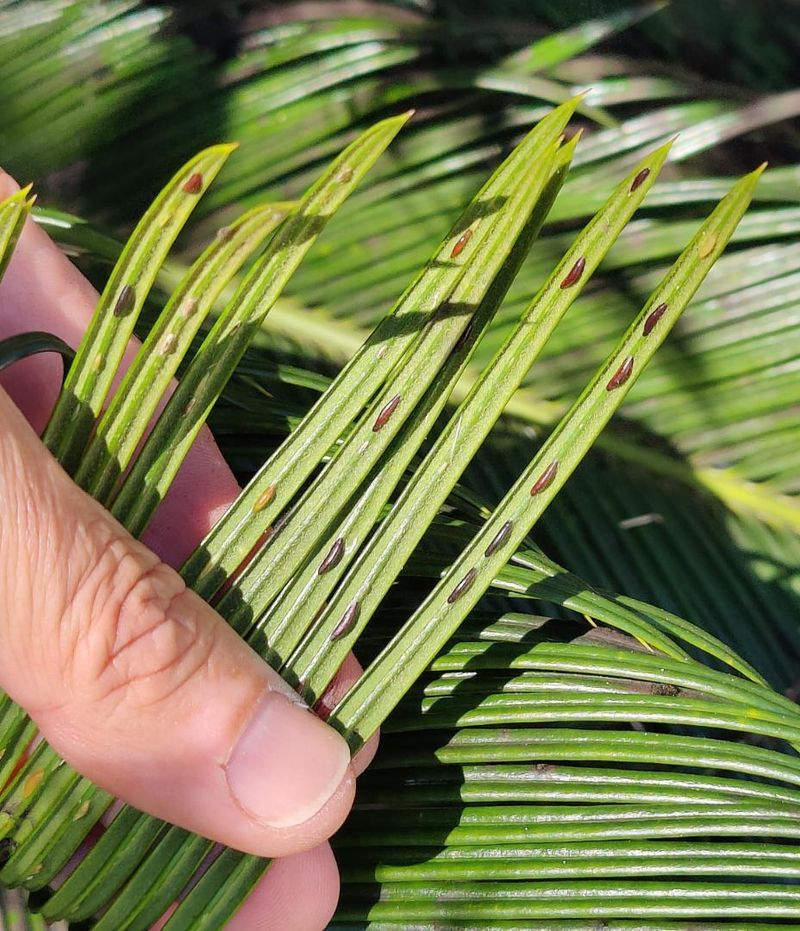
Soil tests only tell part of the story.
They show what is in the ground, not what the palm is actually absorbing. That difference matters with palms because pH, drainage, root health, and nutrient balance can all affect uptake.
Leaf tissue tests fill the gap.
A tissue test measures nutrients inside the palm’s leaves. That gives a clearer picture of what the tree has actually taken in.
Symptoms can overlap.
Potassium, magnesium, manganese, iron, drainage stress, and root problems can create confusing color patterns. Guessing based on color alone can lead to the wrong product.
Sampling must be done correctly.
The right frond position, clean tools, and proper handling all matter. A poor sample can give confusing results.
County extension offices can help.
They can explain how to collect a sample, where to send it, and how to interpret the results for Florida palms.
Testing can save money.
Buying multiple fertilizers or sprays without a diagnosis often costs more than finding out what the palm actually needs.
Use photos too.
Bring clear pictures of the whole palm, the affected fronds, the spear, the trunk base, and the surrounding soil or mulch.
Treat based on evidence.
Palm nutrition is all about pattern, balance, and uptake.
A leaf test turns the frond color from a mystery into a plan.