The Best Texas Evergreen Plants For Giving Cardinals Year-Round Shelter
Cardinals are one of the most beloved backyard birds in Texas, and unlike many species that pass through seasonally, cardinals are year round residents. They don’t migrate.
They stay, which means they need your yard to support them through every season, including winter, when shelter becomes just as important as food. Evergreen plants are the key to keeping cardinals comfortable year round.
While deciduous shrubs and trees drop their leaves and leave birds exposed through the cooler months, evergreens maintain dense cover through every season. For cardinals, that consistent shelter is not a luxury.
It’s something they actively seek out when choosing where to stay and where to nest. A Texas yard with the right evergreen plants holds cardinals more reliably and sees more of them through the year than one that leaves them exposed when the seasons change.
The good news is that Texas has some excellent native and well adapted evergreen options that cardinals genuinely love and that look great in the landscape year round.
1. Yaupon Holly (Ilex Vomitoria)
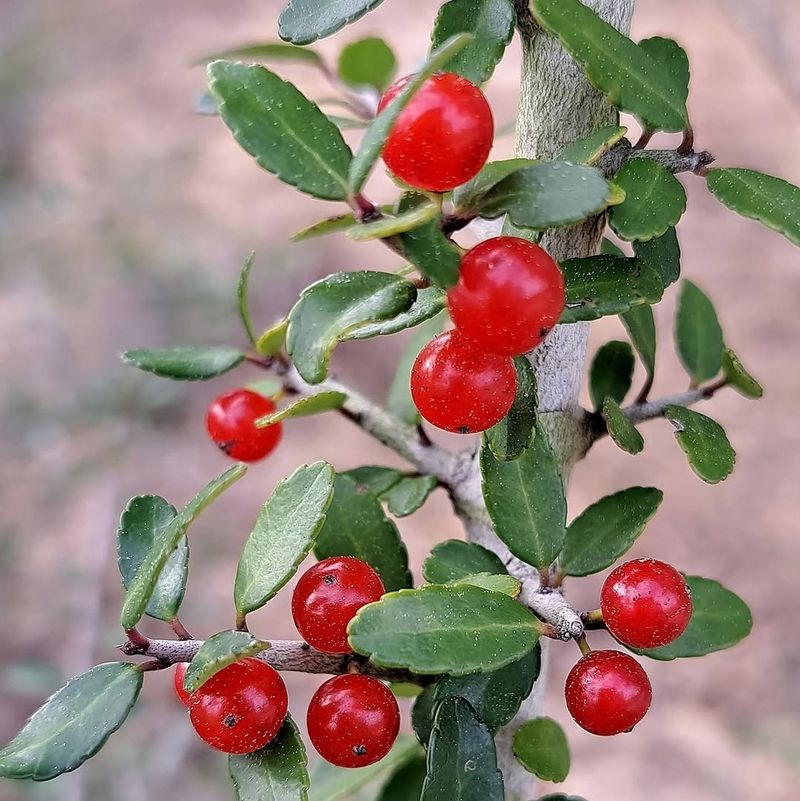
Few native Texas plants pack as much bird-friendly value into one compact shrub as yaupon holly.
This tough, adaptable evergreen grows in full sun or deep shade, which means it fits into almost any yard setup you can imagine. It handles sandy soil, clay soil, wet spots, and dry patches without much fuss at all.
What makes yaupon holly especially great for cardinals is its thick, branchy growth habit. The dense interior of the shrub gives birds a safe place to hide from hawks, cats, and other predators.
Cardinals also love to tuck their nests deep inside the branches where they feel protected and hidden from view.
Female yaupon holly plants produce clusters of small, bright red berries that cling to the branches well into winter. Cardinals and many other songbirds rely on these berries when other food sources become scarce during the colder months.
Planting both male and female plants together ensures you get a strong berry crop every season.
Yaupon holly is also one of the easiest native shrubs to maintain. It can be pruned into a neat hedge or left to grow naturally into a wild, sprawling thicket.
Either way, it keeps its deep green leaves all year long, making it a dependable shelter option no matter what time of year it is.
For Texas gardeners looking for a low-effort, high-reward evergreen that truly supports backyard wildlife, yaupon holly is an outstanding starting point that rarely disappoints.
2. Southern Wax Myrtle (Morella Cerifera)
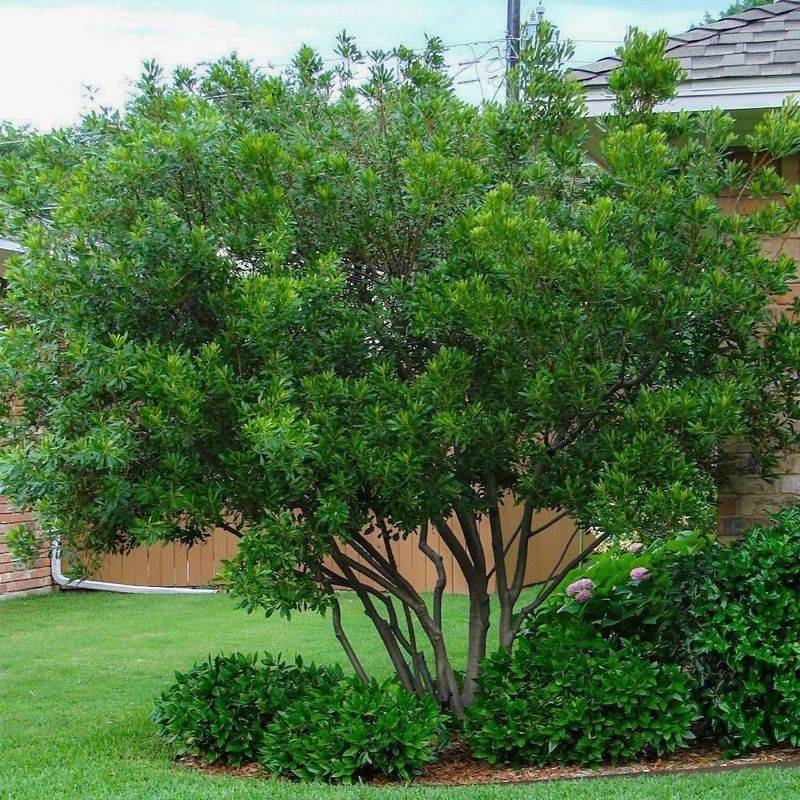
Walk past a southern wax myrtle on a warm afternoon and you might catch a faint, pleasant fragrance drifting from its leaves. This fast-growing evergreen shrub is one of the most wildlife-friendly plants you can add to a Texas yard, and cardinals absolutely love it.
Texas Parks and Wildlife specifically lists cardinals among the birds that eat its small, waxy berries during winter.
Wax myrtle naturally grows into a thick, multi-stemmed shrub or small tree that can reach heights of ten to fifteen feet. Its dense canopy creates excellent cover for roosting and nesting birds.
Your Texas Garden Changes Every Week. Your Plan Should Too.
Gardening in Texas changes quickly throughout the season. Every Friday you’ll receive a simple weekly plan showing exactly what to plant, prune, fertilize, harvest, and protect so you never miss the right timing.
Because the foliage stays full and green all year, cardinals can rely on it for shelter during every season, not just when other plants are leafed out.
This plant performs best in East Texas and along the Gulf Coast, where the soil tends to hold more moisture.
It tolerates wet conditions better than most evergreens, which makes it a smart choice for low-lying areas of the yard that collect rainwater after storms. It can also handle occasional drought once it gets established.
Planting wax myrtle along a fence line or property border creates a living privacy screen that doubles as prime bird habitat. You can trim it into a tidy hedge shape or let it grow freely for a more natural look.
Either way, the dense structure remains intact and keeps providing the kind of thick, reliable cover that cardinals need throughout the year. It is genuinely one of the strongest all-around choices for a bird-friendly Texas landscape.
3. Eastern Redcedar (Juniperus Virginiana)
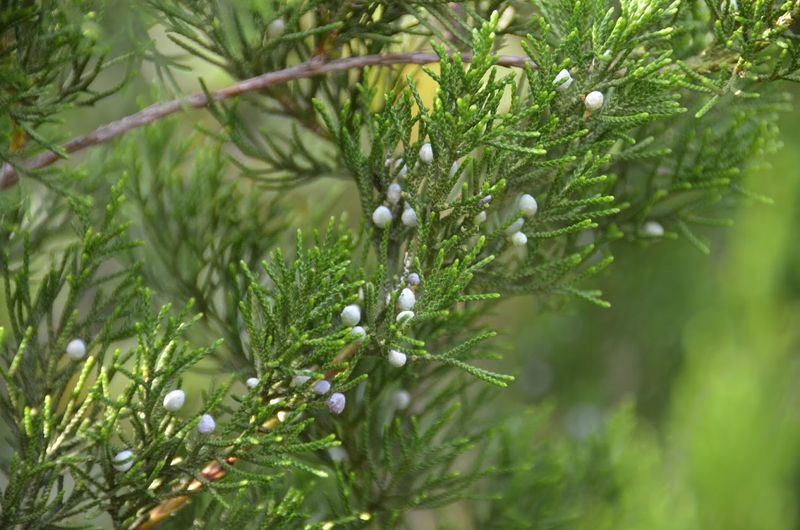
Eastern redcedar has a reputation as a rugged, no-nonsense tree, and that reputation is well earned.
This evergreen conifer grows across much of North, Central, and East Texas, and its thick, aromatic foliage creates one of the most wind-resistant shelters you can offer to backyard birds.
On cold winter nights, cardinals often roost deep inside redcedar branches where the dense needles block the wind and hold in warmth.
One of the most impressive things about this tree is how little attention it needs once it gets established. Eastern redcedar is highly drought tolerant and grows well in a wide range of soil types, including rocky, thin soils where other trees struggle.
It does need enough space to spread out, so plan for it to eventually reach twenty to forty feet tall with a broad, full canopy.
Female redcedar trees produce small, blue, berry-like cones that many bird species eat during winter. Cardinals, cedar waxwings, and bluebirds are among the most frequent visitors.
The berries often persist on the tree through the coldest months, providing a reliable food source exactly when birds need extra energy the most.
Beyond food and shelter, eastern redcedar offers cardinals secluded spots to escape predators quickly. The thick interior of the tree creates a maze of branches that smaller birds can navigate easily but larger threats cannot.
Planting a row of redcedars along the edge of a property creates a living windbreak that serves both the birds and your yard beautifully across every season of the year.
4. Ashe Juniper (Juniperus Ashei)
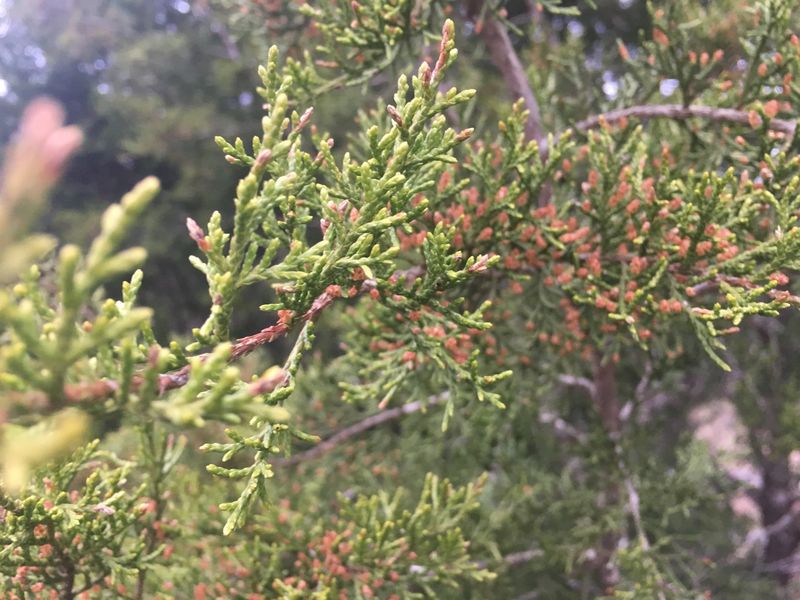
If you live in Central Texas or the Hill Country, Ashe juniper is practically part of the scenery. This rugged native evergreen thrives on dry, rocky limestone soils where most other plants would struggle to survive.
Its thick, layered branches form a dense evergreen canopy that gives cardinals reliable cover throughout every month of the year.
Ashe juniper produces small, round, blue berry-like cones that ripen in late fall and persist into winter. Cardinals and other songbirds eat these berries eagerly when food becomes harder to find in the colder months.
The combination of shelter and food in one plant makes Ashe juniper an especially efficient choice for anyone trying to attract and support resident cardinals on their property.
One thing worth knowing before you plant is that male Ashe junipers release large amounts of pollen during winter, typically from December through February. This pollen is highly allergenic and is responsible for what many Texans call cedar fever.
If allergies are a concern in your household, planting female trees only is a smart workaround since female plants produce the berries but release no pollen.
Give Ashe juniper plenty of room to grow because it can spread quite wide over time. It rarely needs watering once established and requires almost no fertilizer or special care.
For Hill Country and Central Texas gardeners, few plants offer such a strong combination of low maintenance and genuine wildlife value.
Cardinals will use it for shelter, nesting cover, and winter food, making it a triple-purpose plant that earns its place in any native Texas landscape.
5. Cenizo Or Texas Sage (Leucophyllum Frutescens)
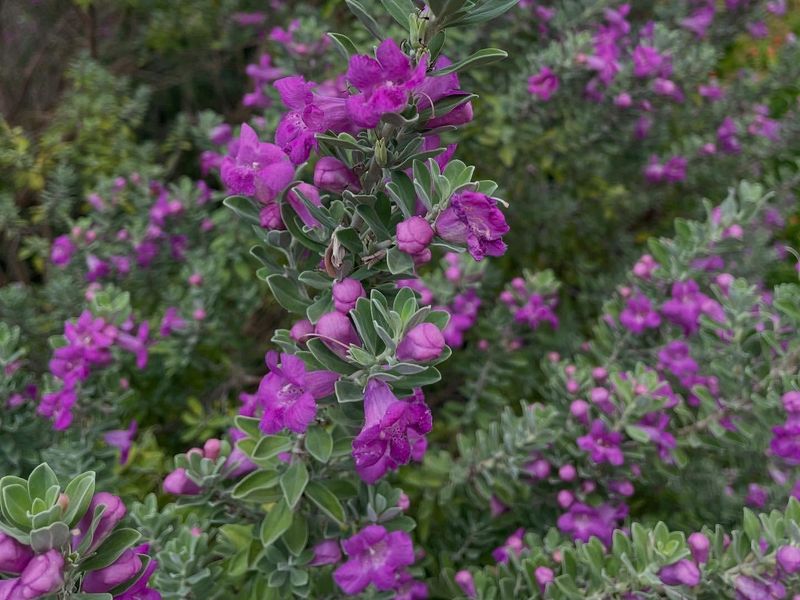
There is something almost magical about watching a cenizo shrub burst into purple blooms right after a rain shower.
This tough, silvery-leafed evergreen is one of the most recognizable native plants in South, Central, and West Texas, and it earns high marks as bird-friendly habitat.
Texas Parks and Wildlife identifies cenizo as useful cover and a safe nesting location for birds, including cardinals that nest in its sheltered interior.
Cenizo grows naturally in hot, dry conditions and handles drought with ease once established.
Its dense, rounded form stays full and leafy year-round, which is exactly what cardinals need when they are looking for a quick place to escape a predator or take shelter from harsh afternoon sun.
The thick branching structure makes it hard for larger animals to push through, giving nesting birds an extra layer of protection.
This shrub demands excellent drainage and truly shines in strong, direct sunlight. Planting it in a shaded spot or in soil that holds too much moisture will cause it to struggle.
In the right location, though, cenizo practically takes care of itself and can live for many years with very little intervention from the gardener.
Cenizo typically grows four to eight feet tall and wide, making it a great candidate for a mixed native hedge or a standalone specimen planting. Its silvery-green leaves give it a soft, elegant look that pairs beautifully with other native Texas plants.
For gardeners in hotter, drier parts of the state who want to support cardinals without spending a lot of time on plant care, cenizo is a genuinely rewarding choice.
6. Agarita (Mahonia Trifoliolata)
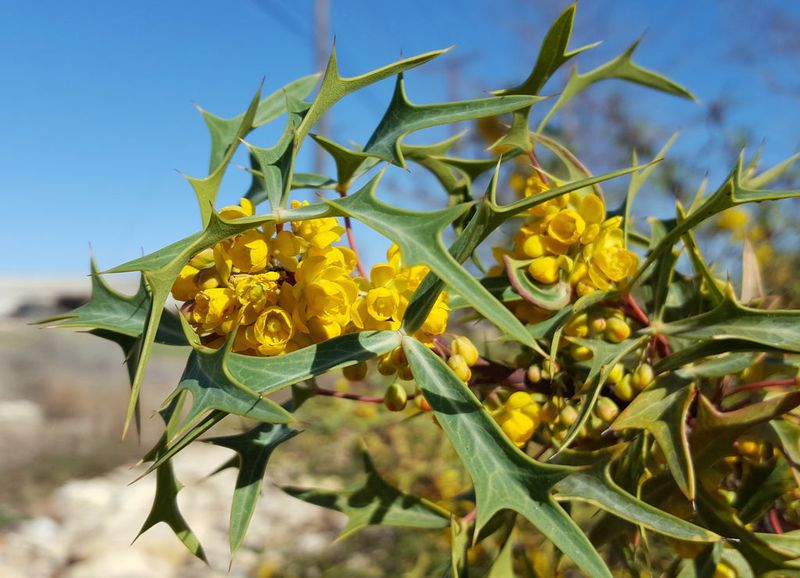
Agarita has a personality all its own. Its stiff, spiny, holly-like leaves create a fortress-like interior that most predators simply do not want to push through.
That thorny barrier is exactly what makes agarita such a valuable shelter plant for cardinals and other small songbirds. Once a bird slips inside the dense branches, it is in one of the safest spots a Texas yard can offer.
This native evergreen shrub grows naturally across Central and West Texas, where it thrives on rocky, well-drained soils and hot, sunny exposures. It typically reaches three to six feet tall and spreads out into a rounded, impenetrable mound over time.
Unlike some native shrubs that need occasional coaxing, agarita is genuinely self-sufficient and rarely needs watering or fertilizing once it settles into the landscape.
In late winter and early spring, agarita produces clusters of tiny yellow flowers that attract pollinators. By early summer, those flowers become small, round, bright red berries that cardinals, mockingbirds, and other songbirds eat enthusiastically.
The berries are also edible for people and are sometimes used to make jelly, which adds a fun bonus for gardeners who like to harvest from their landscape.
One important placement tip: keep agarita away from walkways, play areas, and spots where people brush past frequently. The leaf spines are sharp and can scratch skin easily.
Plant it along a back fence, in a naturalized area, or as part of a wildlife border where its protective qualities work in your favor. For cardinals, agarita is one of the most genuinely secure refuges a Texas yard can provide.
7. Dwarf Palmetto (Sabal Minor)
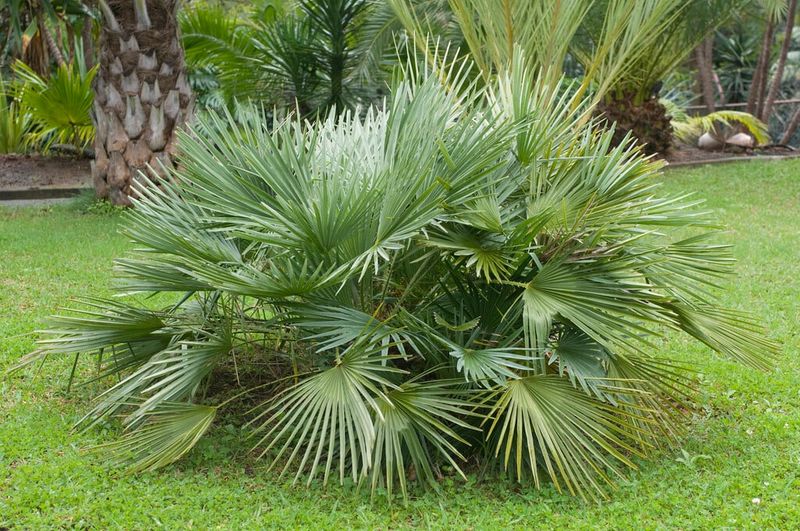
Most people do not think of palms when they picture cardinal habitat, but dwarf palmetto breaks that assumption in the best way possible.
This low-growing native palm hugs the ground with wide, fan-shaped leaves that create dense, layered cover right at the level where cardinals spend a lot of their time.
Cardinals are ground foragers by nature, and having thick evergreen cover close to the soil gives them a safe place to feed and retreat in a hurry.
Texas Parks and Wildlife describes dwarf palmetto as an evergreen that offers small birds cover, nesting space, and year-round protection.
Unlike taller palms that leave open space underneath, dwarf palmetto fills in low to the ground and creates a sheltered zone that feels secure for birds.
Its broad leaves overlap and create a layered canopy effect that blocks wind and provides shade even on the hottest summer days.
Dwarf palmetto performs best in shaded or partly shaded spots with moist, well-drained soil. It is most at home in eastern and southeastern Texas, where the climate is more humid and the soil tends to hold more moisture naturally.
It does not handle prolonged drought well, so consistent soil moisture is important for keeping it healthy and full.
Planting dwarf palmetto near a water feature, along a shaded fence line, or beneath a canopy of taller trees gives it the conditions it loves most. Its year-round evergreen structure means cardinals can count on it in January just as reliably as in July.
For East Texas gardens, it adds a striking tropical look while delivering real, practical value for resident wildlife every single day.