7 Native North Carolina Spreaders That Close The Gaps Along A Driveway Where Liriope Lets Weeds In
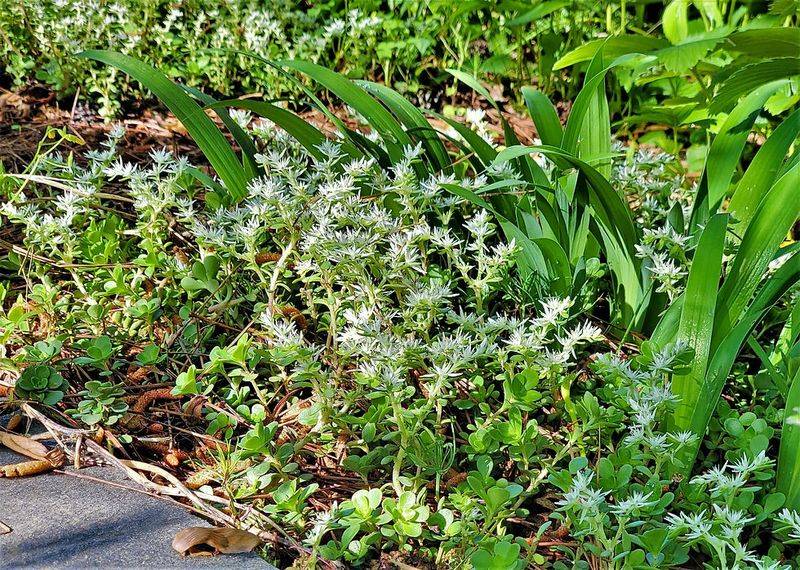
You back the car out on a Saturday morning and there it is again, a green ribbon of weeds crowding the seam between your driveway and the liriope you planted to stop exactly this. Liriope, what most folks call monkey grass, grows in tidy clumps, and clumps leave gaps. Weeds find those gaps every single time. The fix is not more mulch or another weekend on your knees, it is a plant that actually runs sideways and knits the edge shut.
Here are seven native North Carolina spreaders that fill the seam, feed a few pollinators, and leave the weeds nowhere to sneak in.
1. Green And Gold Weaves A Living Mat
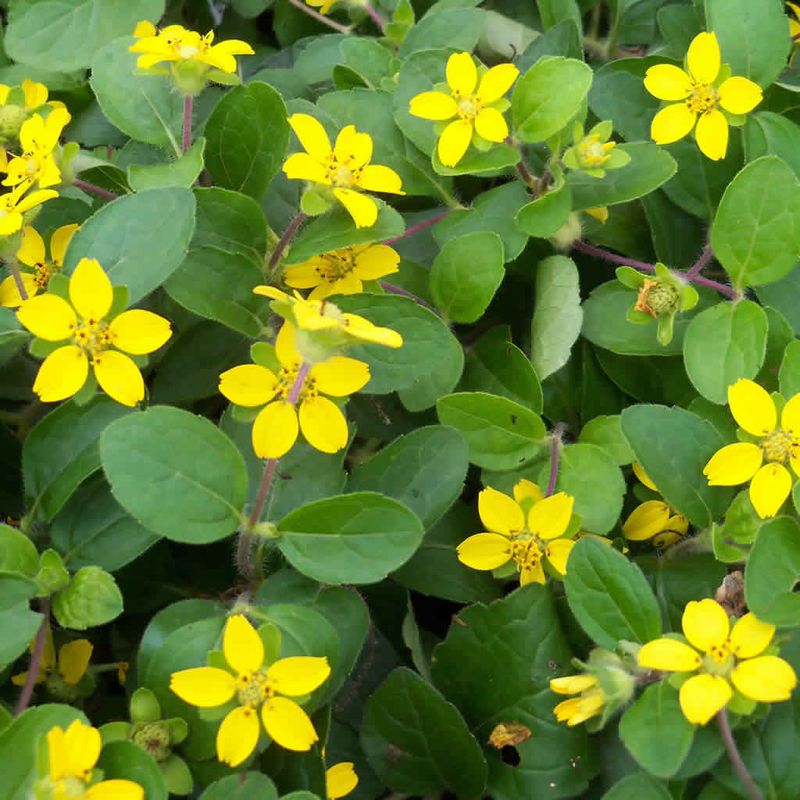
Picture the strip beside your driveway carpeted in low green with little yellow stars, and not a bare inch for crabgrass to claim. That is Green and Gold (Chrysogonum virginianum) doing what liriope never could.
Liriope sits in polite clumps. Green and gold spreads by runners that root as they travel, so it fills sideways instead of leaving those tell-tale gaps. Weeds need open soil and light to start, and a solid mat of foliage denies them both.
Plant it in spring about 12 inches apart along the driveway edge, and give it part shade to morning sun. In Piedmont red clay, loosen the top few inches and work in a little compost so the runners can grab hold. It stays low, roughly 4 to 8 inches tall, so it never flops onto the pavement.
You get bright yellow blooms from April into June, then scattered flowers through the muggy stretch of summer. NC State Extension lists it as a dependable native ground cover for shade, which is exactly the tricky spot most driveways offer.
Water it through the first summer, especially during those weeks with no afternoon storm. After that, it genuinely takes care of itself. And the payoff is a green edge you stop noticing, because there is nothing left to pull.
2. Creeping Phlox Locks The Seam With Color
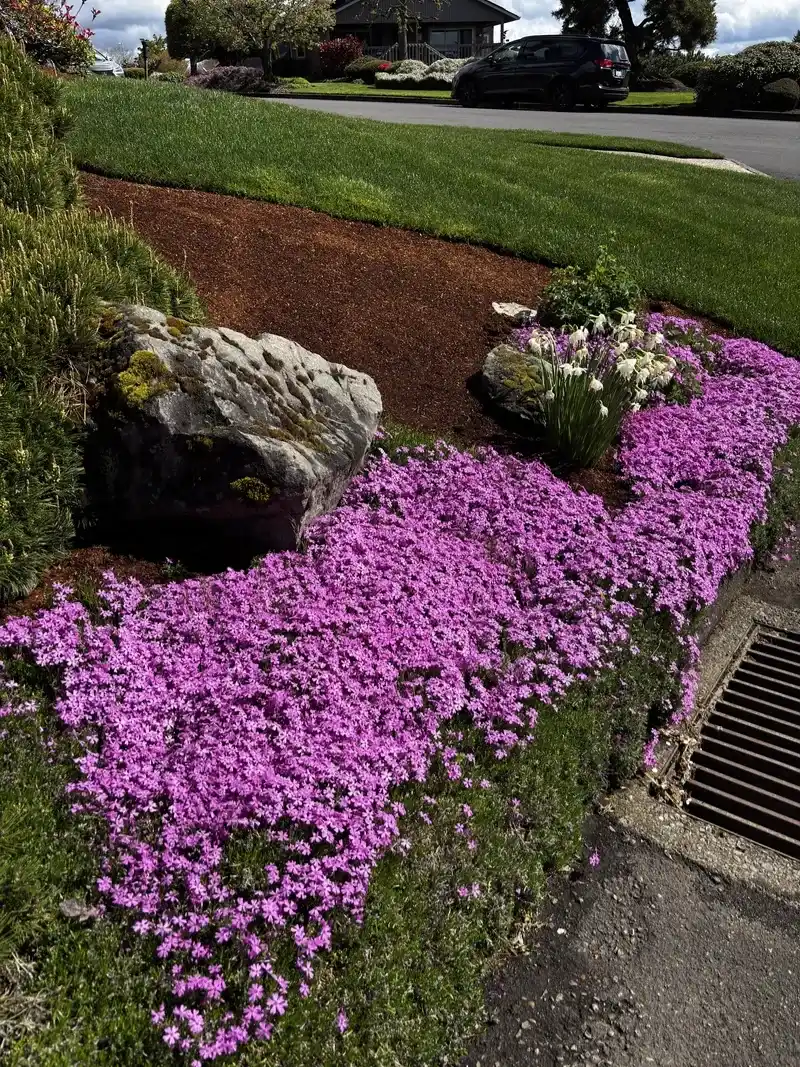
Come April in the Piedmont, a band of pink or lavender spills over a driveway edge and stops traffic in the best way. Creeping phlox (Phlox subulata) does that, and it does it while shutting weeds out.
Here is where it gets useful. This is not the tall garden phlox that gets mildew and leans. It hugs the ground in a dense evergreen mat, needle-fine leaves packed so tight that weed seedlings cannot find daylight.
Sun is the deal-breaker. Give it at least 6 hours of direct light, which makes it perfect for the west or south side of a driveway where liriope sulks anyway. Set plants 12 to 18 inches apart in spring or fall, and they knit together within a season or two.
Sandy Coastal Plain soil suits it fine, and it shrugs off the drought spells between summer storms. Just avoid soggy spots, wet feet rot the crown.
After the spring bloom fades, shear it back lightly with hedge shears to keep it thick. The mat stays green through winter, holding the edge against cool-season weeds too. And every spring it thanks you with a color you can see from the road.
Your North Carolina Garden Changes Every Week. Your Plan Should Too.
Gardening in North Carolina changes quickly throughout the season. Every Friday you’ll receive a simple weekly plan showing exactly what to plant, prune, fertilize, harvest, and protect so you never miss the right timing.
3. Wild Ginger Handles The Deep Shade Corner
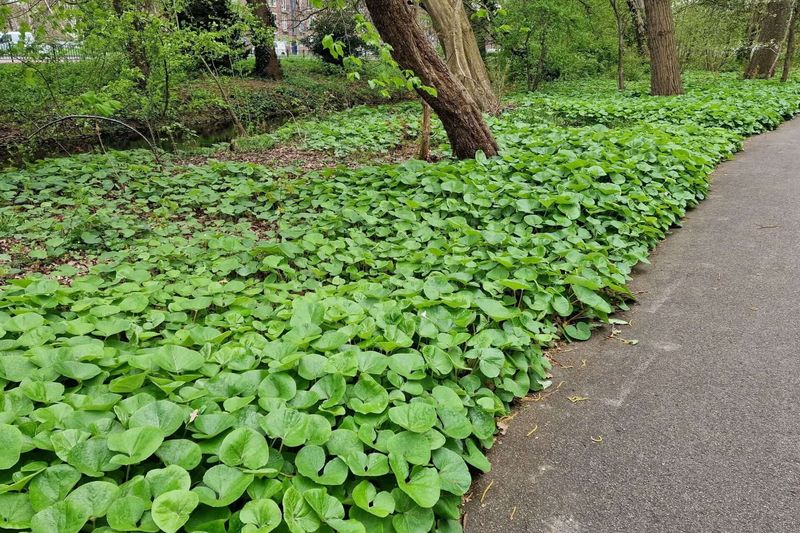
Every driveway has that one shady stretch under a dogwood or an oak where nothing looks happy. Wild ginger (Asarum canadense) actually wants that spot.
Most spreaders quit in full shade. This native runs by underground stems, sending up heart-shaped leaves that overlap into a lush, weed-blocking blanket. The leaves are broad, roughly 4 to 6 inches across, so they cover ground fast and shade out anything trying to sprout below.
Rich, moist soil is what it craves, so mix a couple inches of leaf compost into the planting strip. Space plants about 12 inches apart in early spring, and keep them watered the first season while the roots settle into North Carolina clay.
The flowers are a quiet secret. They hide down at soil level, small and maroon, pollinated by tiny ground insects rather than showy bees. You have to hunt for them, which is part of the charm.
It grows low, about 6 to 8 inches, and stays put without crawling onto the pavement. In the mountains and cooler Piedmont it thrives, holding that dim corner where liriope grows thin and lets chickweed march right in. Genuinely, this is the fix for the spot you had given up on.
4. Golden Ragwort Fills Fast And Fights Wet
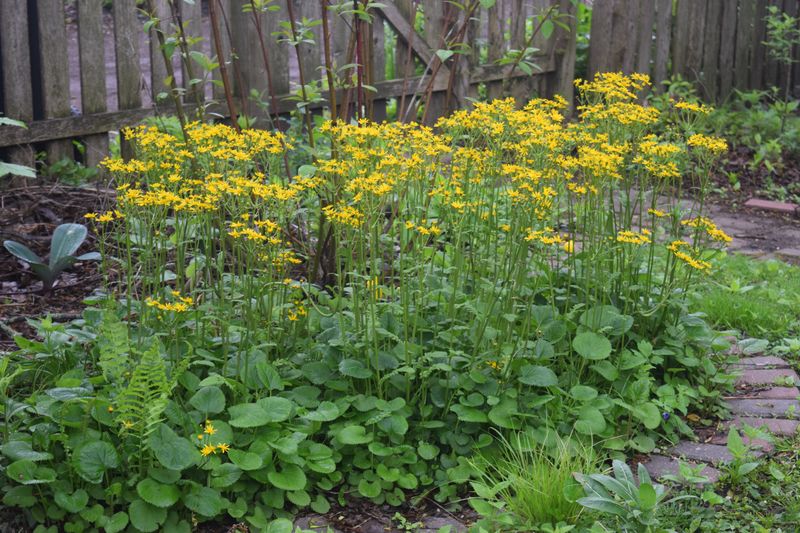
Got a low spot along the drive that stays damp after every afternoon storm? Liriope hates it, weeds love it, and golden ragwort (Packera aurea) settles the argument.
Its trick is speed. It spreads by both runners and self-sown seed, forming a groundhugging rosette of rounded green leaves that stays evergreen through mild NC winters. That basal mat sits tight against the soil year-round, so weeds never get their opening.
In spring it throws up stalks of cheerful yellow daisy-like flowers around 1 to 2 feet tall, then settles back down low after blooming. Early native bees work those flowers when little else is open.
Plant it 12 to 18 inches apart in spring or fall in part shade to sun. It tolerates the heavy, wet clay of the Piedmont better than almost anything on this list, and it laughs off the soggy weeks of hurricane season.
One honest note. It spreads with enthusiasm, so give it a defined strip and it will fill it, but keep an eye that it does not wander into a bed you want kept tidy. Edge it once a year and you are set. The reward is a damp corner that finally looks intentional instead of neglected.
5. Pennsylvania Sedge Mimics Grass Without Gaps
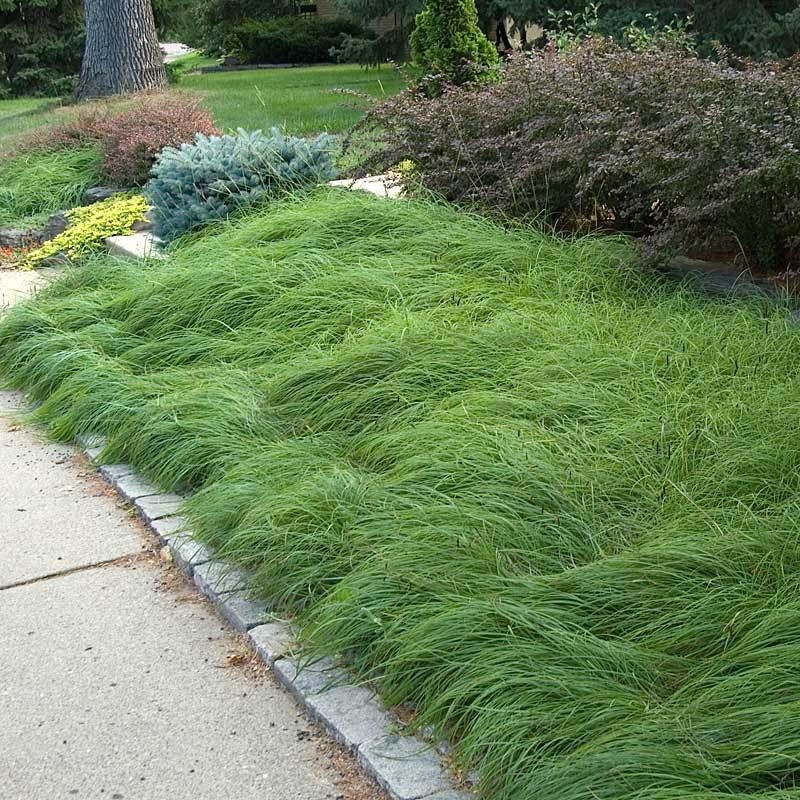
If you liked the grassy look of monkey grass but hated the gaps, Pennsylvania sedge (Carex pensylvanica) is the swap you have been wanting. It reads like a soft, fine lawn but behaves far better along an edge.
Unlike clumping liriope, this native sedge creeps by slender rhizomes, those underground runners that let it fill in and mend its own bare spots. The blades are thin and arch over into a flowing, ankle-high texture, roughly 8 inches tall, that softens hard driveway concrete.
Dry shade is its home turf, which is the exact condition under most yard trees where grass gives up. Set plugs 8 to 12 inches apart in spring, and within a season or two they merge into a seamless green run.
Once established it barely needs water, a real gift for the water bill during a dry Piedmont July. You can leave it unmowed for a meadowy look or trim it once in late winter for a neater edge.
NC State Extension points to native sedges as low-care alternatives to turf in tough shade. And there lies the win, a grassy border that never opens a door for the next crop of weeds.
6. Foamflower Frills The Edge And Blocks Seeds
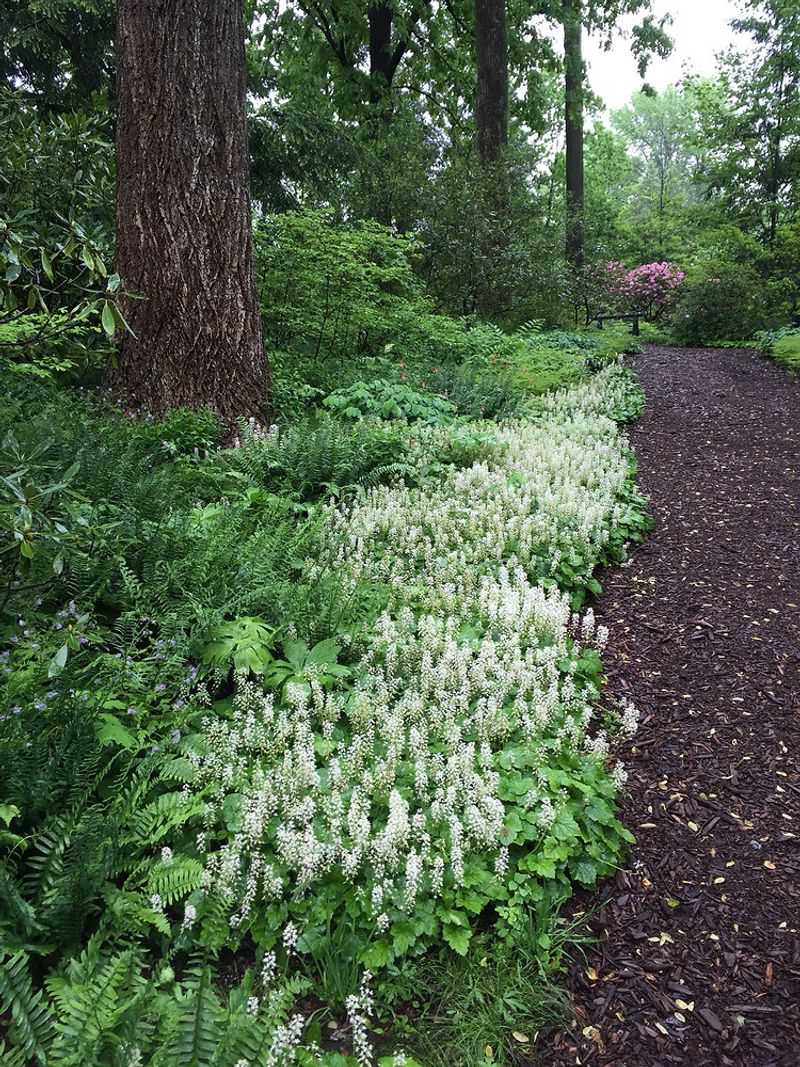
Some plants earn their keep on looks alone, then sneak in extra work. Foamflower (Tiarella cordifolia) sends up airy white spikes in spring like little puffs of sea foam, and all the while its leaves are quietly sealing the driveway seam.
The running kind spreads by stolons, above-ground stems that root down as they go, so it stitches together a full leafy layer rather than sitting in stubborn clumps. Those maple-shaped leaves overlap into a mat that keeps weed seeds from touching soil.
Shade and moisture make it sing, so it slots right into the same north-side strips where wild ginger and green and gold do well. Plant it 12 inches apart in spring, work compost into the clay first, and water through the first dry stretch.
It stays low, about 6 to 12 inches even in bloom, so it never crowds the pavement. In much of North Carolina the foliage lingers through winter, taking on reddish tints when a surprise cold snap rolls in.
Early bees and small pollinators visit those frothy flowers. So you close a weed gap, feed a few insects, and get a spring show, all from one tidy edge you no longer fight.
7. Barren Strawberry Stays Green Through Winter
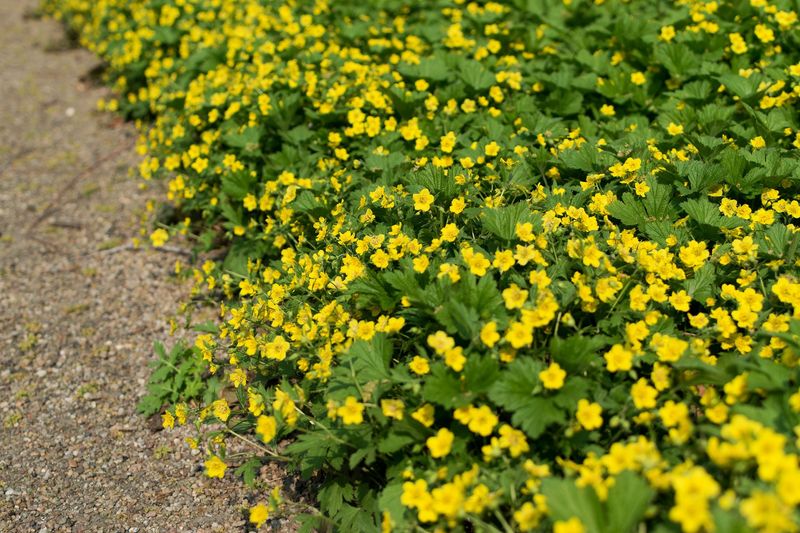
Winter is when the driveway edge usually looks its worst, with liriope gone tatty and cool-season weeds moving into the bare gaps. Barren strawberry (Waldsteinia fragarioides, sometimes sold as Geum fragarioides) holds the line right through the cold.
It looks like a wild strawberry, glossy three-part leaves and cheerful yellow flowers, but it gives you no fruit, just dense evergreen cover. Runners spread it into a low, tight carpet about 4 to 6 inches tall that leaves weeds no gap to exploit.
Yellow blooms open in spring, a bright ribbon along the pavement while the rest of the yard is still waking up. After flowering, the polished foliage carries the show, staying green through mild North Carolina winters and shrugging off a sudden February freeze.
Part shade to sun suits it, and it takes both Piedmont clay and sandier ground once established. Plant 12 inches apart in spring or early fall, water through the first season, then step back.
Foot traffic and reflected heat off the asphalt do not faze it much, which makes it a genuine workhorse for that hot, dry edge. And when your neighbor asks how your driveway line stays green all winter, you get to sound like you planned it. You did.