The Reason Ohio Tomato Skins Get Tough In Late Summer
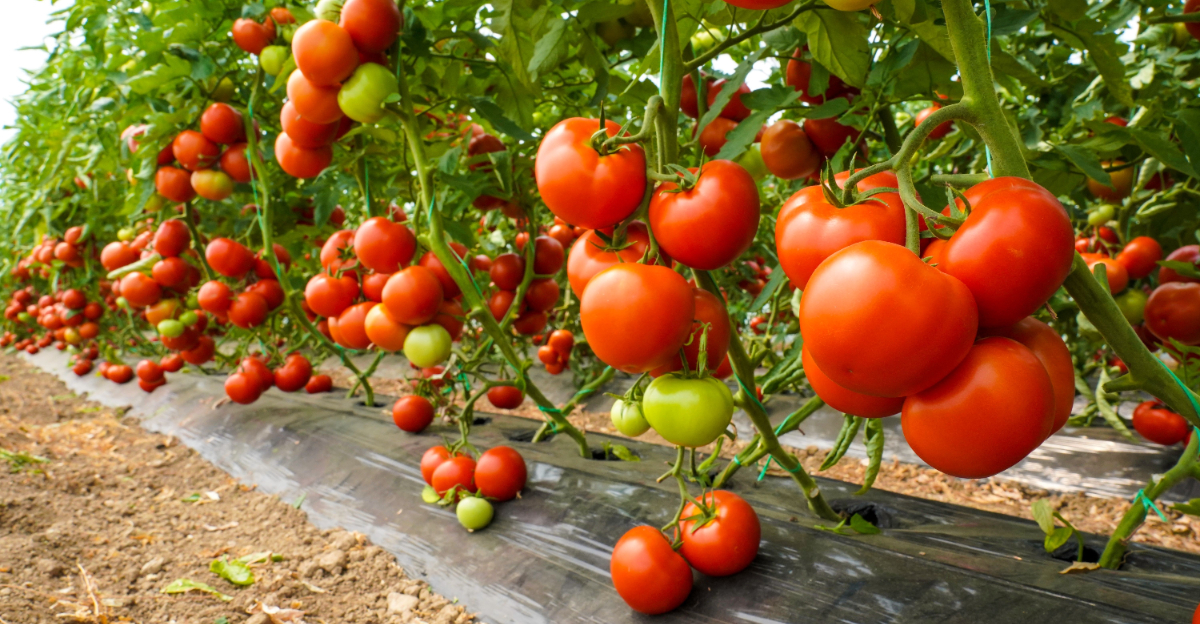
A perfect-looking tomato can still surprise you in the worst way.
The color looks rich, the fruit feels ripe, and the first slice promises everything an Ohio summer tomato should be. Then you take a bite, and the skin feels chewy, thick, and almost leathery.
That texture is not random.
Late-summer tomatoes deal with heat, dry spells, sudden rain, heavy dew, aging vines, and uneven root moisture all at once. Even healthy plants can produce fruit with tougher skins when the season starts pushing them harder.
The problem usually builds slowly.
A few hot weeks, skipped waterings, shallow roots, and the wrong variety can all show up later in the bite. By the time the tomato is ripe, the skin has already recorded the stress.
So why do Ohio tomato skins get tough in late summer?
The main reason is a mix of heat stress and moisture swings, but watering depth, mulch, harvest timing, indoor ripening, and variety choice all decide how noticeable that tough skin becomes.
1. Heat And Moisture Swings Are The Reason
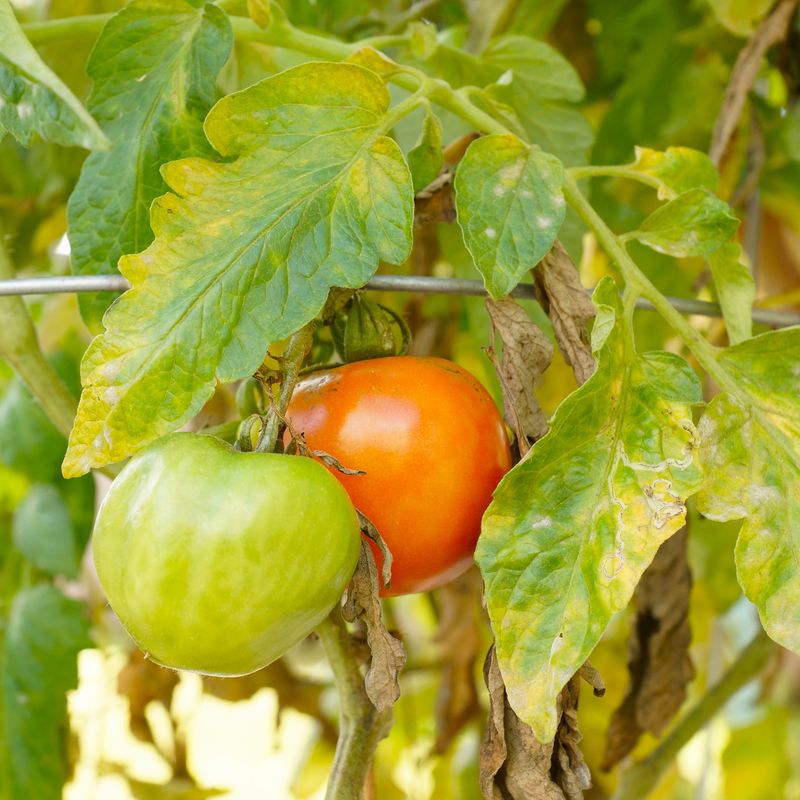
Tough tomato skin is rarely caused by just one thing.
In Ohio gardens, the problem often shows up in late July and August, when heat, humidity, dry spells, and sudden storms begin stacking stress on the plants. The fruit may still ripen, but the skin can become thicker and less tender.
Heat pushes the plant hard. When temperatures climb into the upper 80s and beyond, tomatoes start using energy to manage stress instead of growing fruit smoothly.
Moisture swings add more pressure. Dry soil followed by a heavy watering or thunderstorm can disrupt the steady development fruit needs.
The skin responds to stress. A tomato’s outer layer can become firmer as the plant tries to protect the fruit under difficult conditions.
Variety matters too. Some tomatoes naturally have thicker skins, and that trait becomes more noticeable when the plant is under stress.
Paste tomatoes often feel tougher. Many are bred to hold shape for cooking, sauce, and canning, so their skins may not feel as tender fresh.
Cherry tomatoes can vary. Some have delicate skins, while others split less because their skins are firmer.
Look at the full season. One tough tomato tells you less than weeks of weather, watering patterns, and variety behavior.
The skin is the clue.
It often shows that the plant dealt with heat and uneven moisture while the fruit was forming.
2. Dry Soil Changes Fruit Development
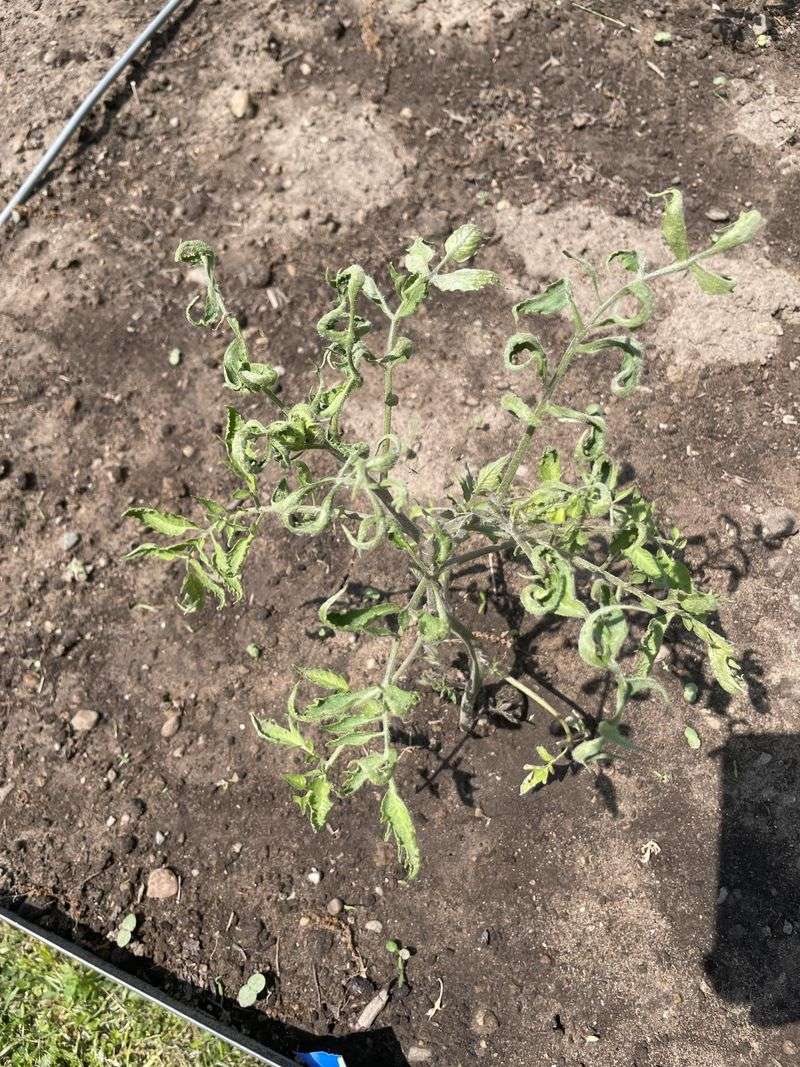
Dry soil can change the tomato long before harvest.
A plant may look mostly fine from a distance, but developing fruit needs steady water movement to grow well. When the root zone stays dry too long, fruit quality can suffer even before leaves show dramatic stress.
Surface soil can mislead you. The top layer dries fast in August sun, but the root zone several inches down is what matters most.
Check deeper. Push a finger, wooden dowel, or soil probe into the soil near the plant to see whether moisture is reaching the roots.
Your Ohio Garden Changes Every Week. Your Plan Should Too.
Gardening in Ohio changes quickly throughout the season. Every Friday you’ll receive a simple weekly plan showing exactly what to plant, prune, fertilize, harvest, and protect so you never miss the right timing.
Dry roots slow water movement. When the plant cannot move water steadily, fruit growth becomes less even.
Nutrient movement slows too. Calcium and other nutrients travel with water, so uneven moisture can affect fruit development in more than one way.
The skin may become denser. Fruit that develops through water stress can end up with a tougher outer layer by the time it ripens.
Soil type changes the risk. Sandy soil dries quickly, while clay soil may hold water but restrict roots when compacted.
Raised beds can dry faster. Their drainage is useful in spring, but they may need closer moisture checks during late-summer heat.
Container tomatoes are even more sensitive. Pots heat up, dry fast, and can swing from dry to wet in a single day.
Do not wait for wilting. By the time leaves droop badly, the fruit may already have experienced stress.
Dry soil sets the stage.
A tomato skin that feels tough in late summer may be telling the story of water the plant missed weeks earlier.
3. Sudden Soaking Adds More Stress
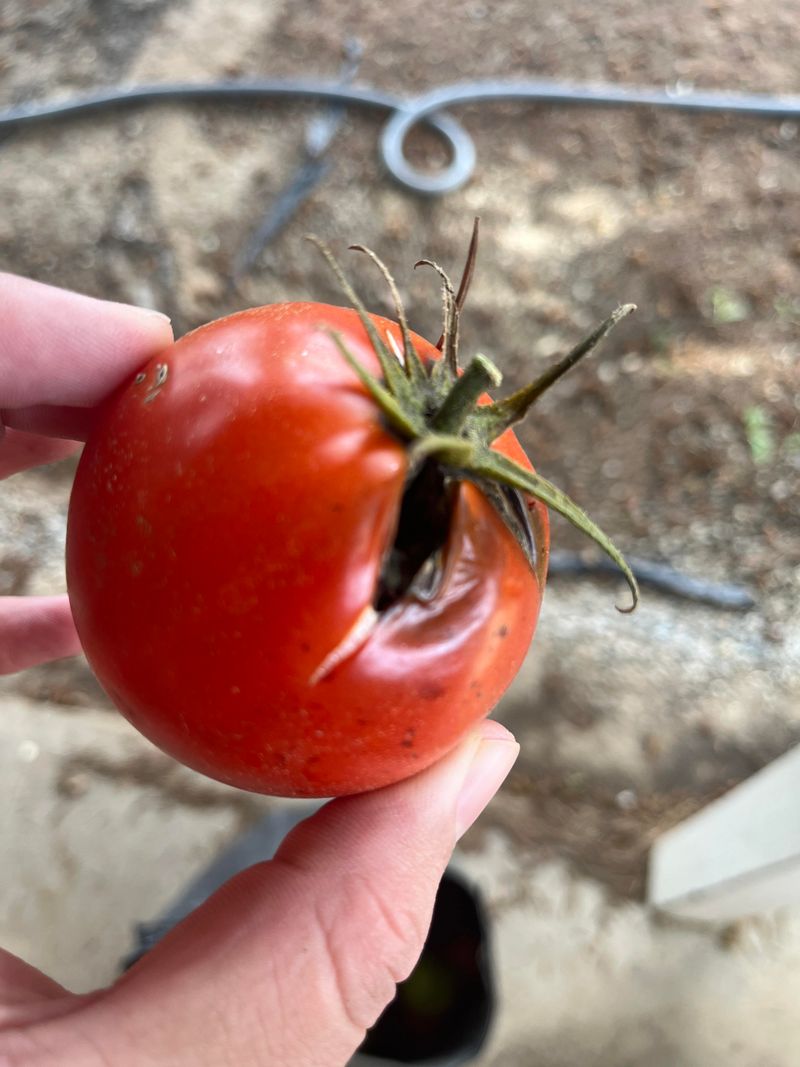
A big drink after a dry stretch can create a second problem.
It feels natural to rescue thirsty tomatoes with a long watering session, especially after a hot Ohio week. But fruit that developed under dry stress may not handle a sudden rush of moisture well.
Heavy rain can do the same thing. A thunderstorm after days of dry soil can push water into the plant quickly.
The inside expands fast. Tomato flesh may swell more quickly than the skin can stretch.
Cracking is the obvious sign. Split tomatoes are the dramatic version of uneven water.
Tough skin can show up without splitting. Even when the fruit stays closed, moisture stress can still affect texture.
Panic watering rarely fixes the past. One long soak cannot undo a week of dry roots.
It may add pressure instead. Dry-to-saturated soil swings are harder on fruit than steady moderate moisture.
Adjust before storms. When heavy rain is forecast, skip extra watering unless the soil is truly dry deep down.
Water gradually after drought. Bring the root zone back toward steady moisture instead of flooding it all at once.
Use mulch to soften the swing. Covered soil dries less dramatically and absorbs water more evenly.
The goal is not to keep tomatoes wet.
It is to keep them from bouncing between thirsty and overwhelmed.
4. Deep Watering Beats Daily Sips
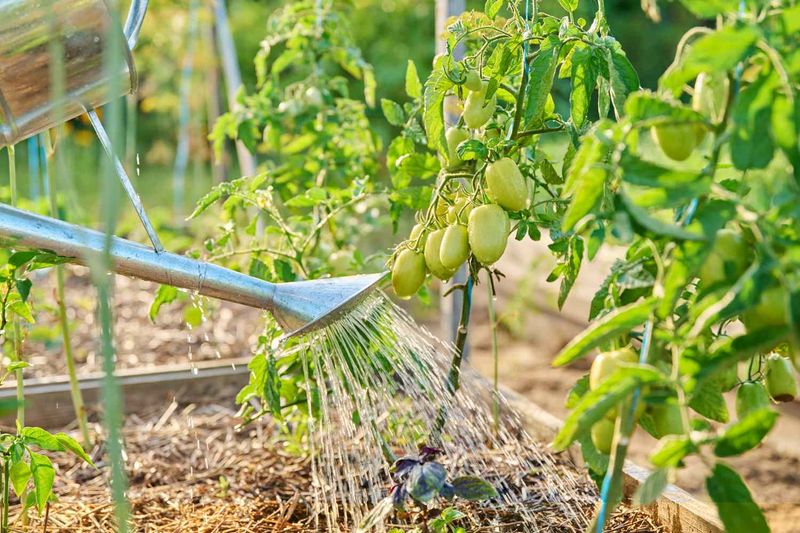
A quick sprinkle can train roots in the wrong direction.
Daily surface watering may look caring, but it often wets only the top inch or two of soil. Tomato roots then stay closer to the surface, where Ohio summer heat dries the ground quickly.
Deep watering reaches the real root zone. Established tomato plants need moisture several inches down, not just a damp surface.
Roots follow water. When moisture moves deeper, roots are encouraged to grow deeper too.
Deep roots handle heat better. They are less exposed to rapid drying, hot soil surfaces, and short dry spells.
Drip irrigation works well. A slow line at the base of the plant sends water into the soil without wetting foliage.
Soaker hoses are useful too. They deliver moisture gently across the row and reduce runoff.
Sprinklers are less ideal. Wet leaves in humid late summer can invite disease pressure, and much of the water may evaporate or land where roots cannot use it.
Check after watering. Dig a small test spot or push in a probe to see whether water reached the depth you intended.
Clay soil needs slower watering. Water applied too quickly may run off instead of soaking in.
Sandy soil needs closer timing. It may drain well but lose moisture faster between deep waterings.
Daily sips keep the plant dependent.
Deep watering builds steadier roots, steadier fruit, and a better chance at tender tomato skins.
5. Mulch Keeps Root Moisture Steadier
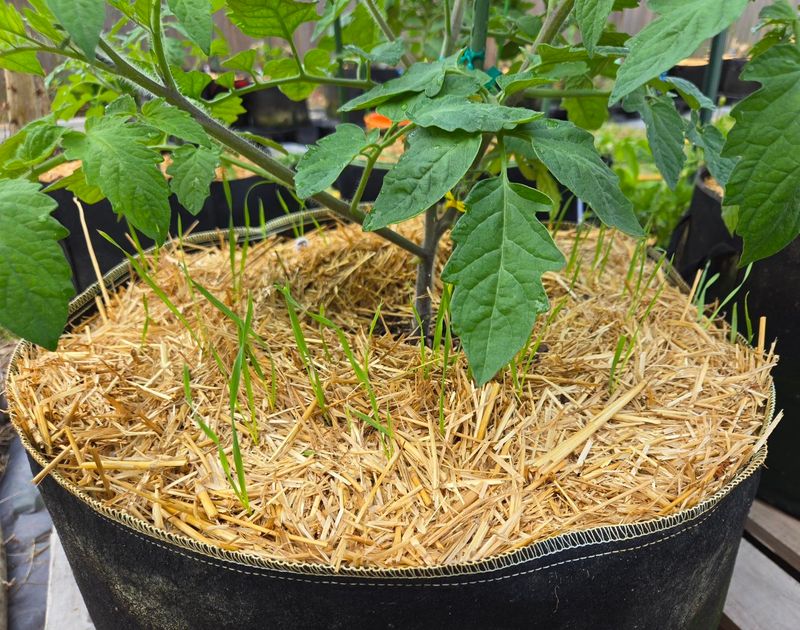
Mulch is one of the easiest fixes for late-summer tomato stress.
A clean layer around the base of the plant helps slow evaporation, reduce soil temperature swings, and keep moisture more even between waterings. That steadiness matters when fruit is sizing and ripening.
Straw works well. It is light, easy to spread, and keeps soil from splashing onto lower leaves.
Shredded leaves are useful too. They break down gradually and add organic matter while protecting the soil surface.
Untreated grass clippings can help in thin layers. Let them dry first and avoid thick mats that turn slimy.
Two to three inches is enough. A thin dusting will not do much, while a heavy mound can create new problems.
Keep mulch off the stem. Leave a small open ring so moisture does not sit directly against the plant base.
Spread it wide. The root zone extends beyond the stem, so cover the soil around the plant rather than making one tight collar.
Check moisture beneath it. Mulch can make the surface look protected even when deeper soil needs water.
Refresh as it settles. Late-summer rain and heat can compress the layer, so add a little more when bare soil appears.
Mulch also helps prevent cracking. More even soil moisture reduces the sudden changes that split fruit and toughen skins.
This is not a fancy trick.
It is a simple buffer between Ohio weather and the roots that decide fruit quality.
6. Harvest Fruit At First Color
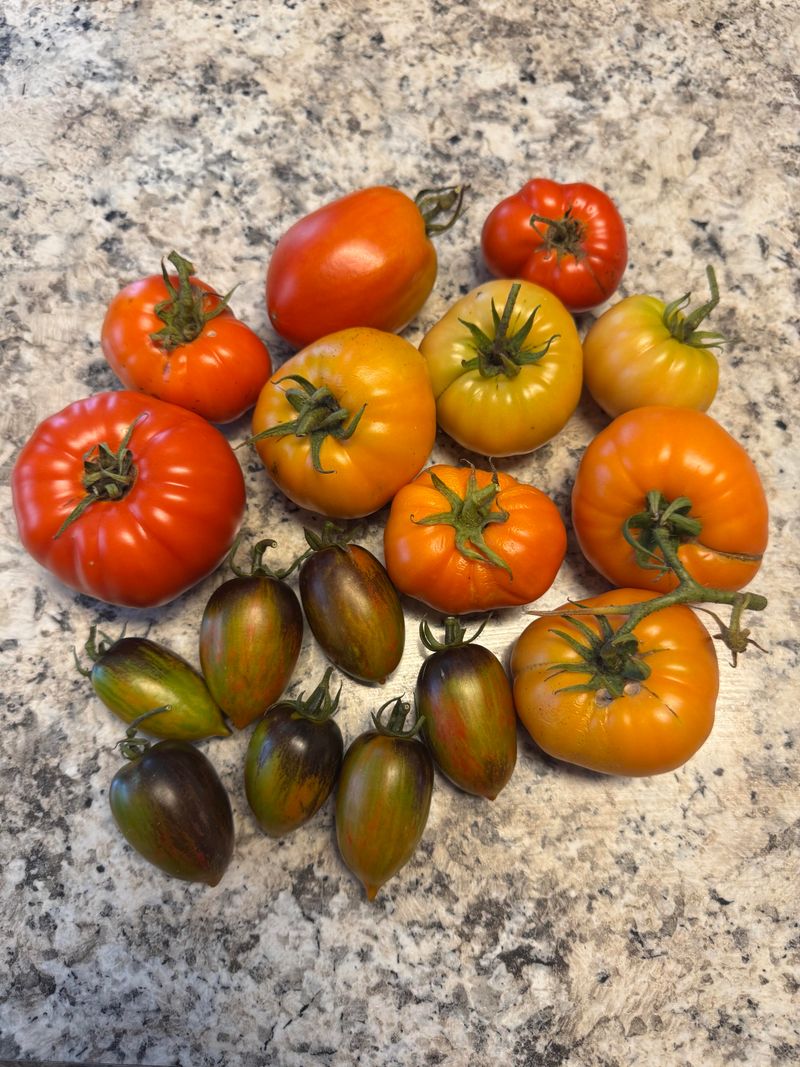
Leaving tomatoes on the vine too long can make skin problems worse.
During late summer, ripe fruit faces heat, sun, insects, birds, rain, and sudden moisture changes every day it stays outside. Harvesting a little earlier can protect quality without giving up flavor.
Look for first color. The breaker stage begins when the tomato shows its first blush of pink, red, yellow, or orange.
At that point, ripening has already begun. The fruit can continue developing color and flavor off the vine.
Earlier harvest reduces stress exposure. Once picked, the tomato no longer has to endure hot afternoons or heavy storms.
It also reduces cracking risk. Fruit close to ripe can split quickly after rain or deep watering.
Handle gently. A tomato picked early can still bruise, and damage under the skin can affect texture later.
Use shallow containers. Piling tomatoes in a deep bucket can crush the fruit at the bottom.
Keep stems from puncturing neighbors. Clip or twist carefully so sharp stem ends do not damage nearby fruit.
Sort by ripeness. Tomatoes at first blush can sit together, while nearly ripe fruit should be checked more often.
This habit feels strange at first.
But picking at first color can save more tomatoes from the late-summer conditions that make skins tougher and fruit more vulnerable.
7. Choose Varieties With Tender Skins
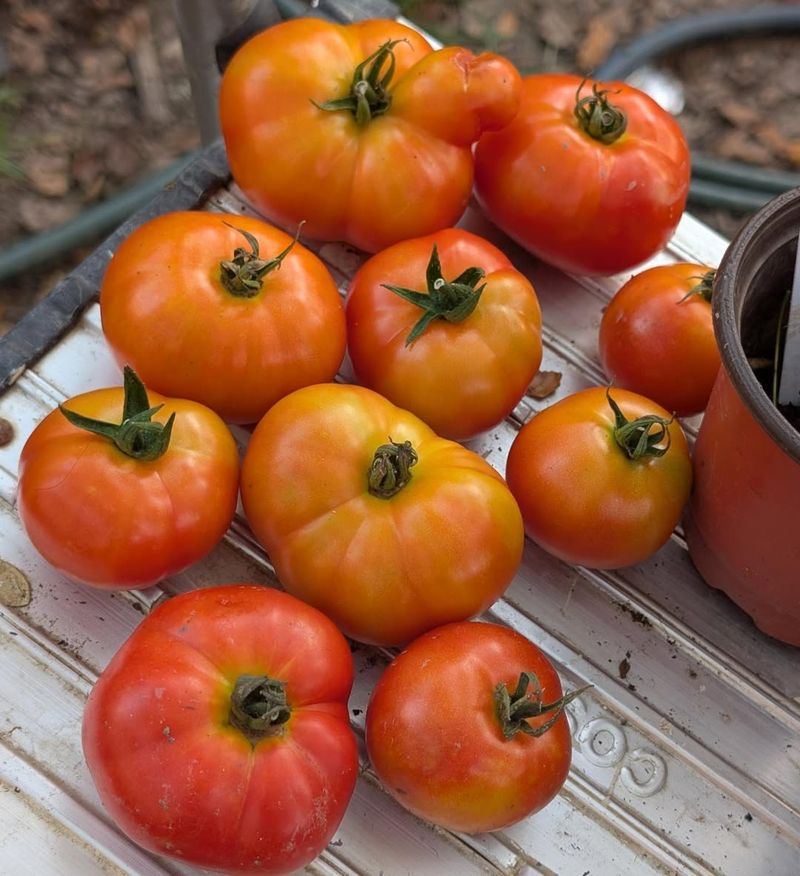
Some tomatoes are simply built with thicker skins.
That can be useful for shipping, canning, crack resistance, or disease tolerance, but it may not be what you want in a fresh slicer. Variety choice can make late-summer skin texture much better or much worse.
Read descriptions carefully. Seed catalogs often mention crack resistance, firmness, storage quality, or shipping ability, all of which can hint at tougher skins.
Fresh-eating varieties may feel softer. Many heirlooms and slicers are prized for tender texture, though they may split more easily.
Paste types often have firmer skins. That helps them hold up for sauce and processing but can feel chewy raw.
Cherry tomatoes differ widely. Some are tender and thin-skinned, while others are firmer to resist cracking.
Trial more than one type. Growing two or three varieties side by side shows which ones handle your specific garden best.
Keep notes. Write down variety names, planting dates, watering habits, weather problems, and skin texture at harvest.
Do not judge from one season alone. A stressful year can make even a good variety seem disappointing.
Ask local gardeners. Neighbors growing in similar soil and weather may know which varieties stay tender in your part of Ohio.
Balance tenderness with reliability. The thinnest skins may taste wonderful but split more easily after storms.
Variety is not the whole answer.
But choosing the right tomato gives your watering and mulching habits a much better chance to succeed.