The Native North Carolina Tree That Ripens Fruit In Fall When Almost Nobody Plants It
Somewhere in a North Carolina creek bottom or shaded woodland edge, a tree quietly loads up with fruit every fall that most homeowners have never tasted, let alone grown. That tree is the common pawpaw, Asimina triloba, a native of the eastern United States that has fed people and wildlife here long before grocery stores existed. It grows across the Mountains, Piedmont, and Coastal regions of this state, yet you almost never see it in a typical backyard. Two well-placed trees can give you custard-like fruit in late summer and fall while supporting some of the most recognizable wildlife in your neighborhood.
Meet North Carolina’s Overlooked Pawpaw
Walk along almost any creek bottom in the North Carolina Piedmont or mountains and you will eventually find it: a tree with leaves so large and tropical-looking that it seems out of place in a southern hardwood forest. That is the common pawpaw, Asimina triloba, and it has been growing here since long before anyone was keeping track. NC State’s Extension Gardener Plant Toolbox lists it as a native understory tree found across the Mountains, Piedmont, and Coastal regions of North Carolina, which means it is not some exotic import that needs coaxing to survive a muggy Piedmont summer or a mountain cold snap.
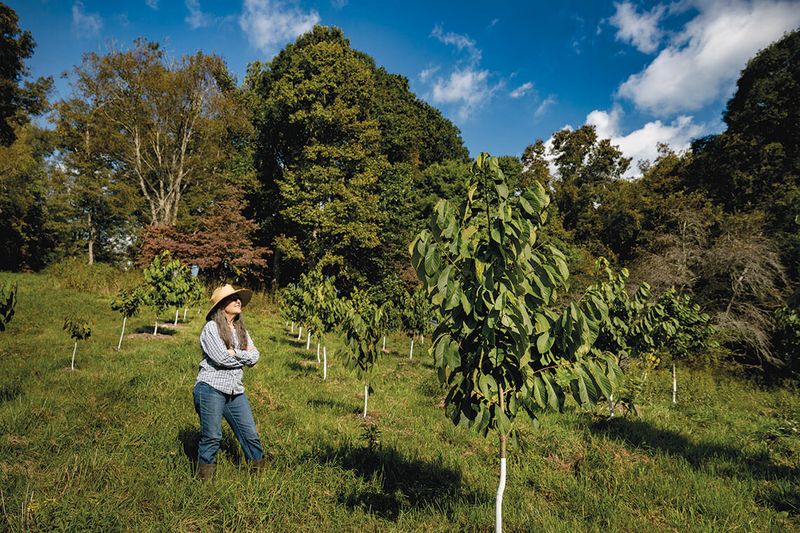
Mature trees typically reach roughly 15 to 30 feet in a landscape setting, with a spread that can match that height. They grow as a deciduous understory tree or large shrub, often forming loose colonies by sending up root suckers around the parent plant. That colony habit is part of why you see pawpaw clumps along riverbanks and ravine edges, quietly doing their thing while nobody pays much attention.
The fruit is where the story gets interesting. Pawpaw produces the largest edible fruit native to North America, a soft, custard-like prize that most people in this state have never tasted.
A USDA Forest Service report on nontimber forest products describes pawpaw as underutilized and largely absent from mainstream commercial markets, which explains why it stays off most homeowners’ radar. That low profile is not a reflection of the tree’s value, it is just an accident of agricultural history that you can quietly correct in your own backyard.One Tree Serves People and Wildlife
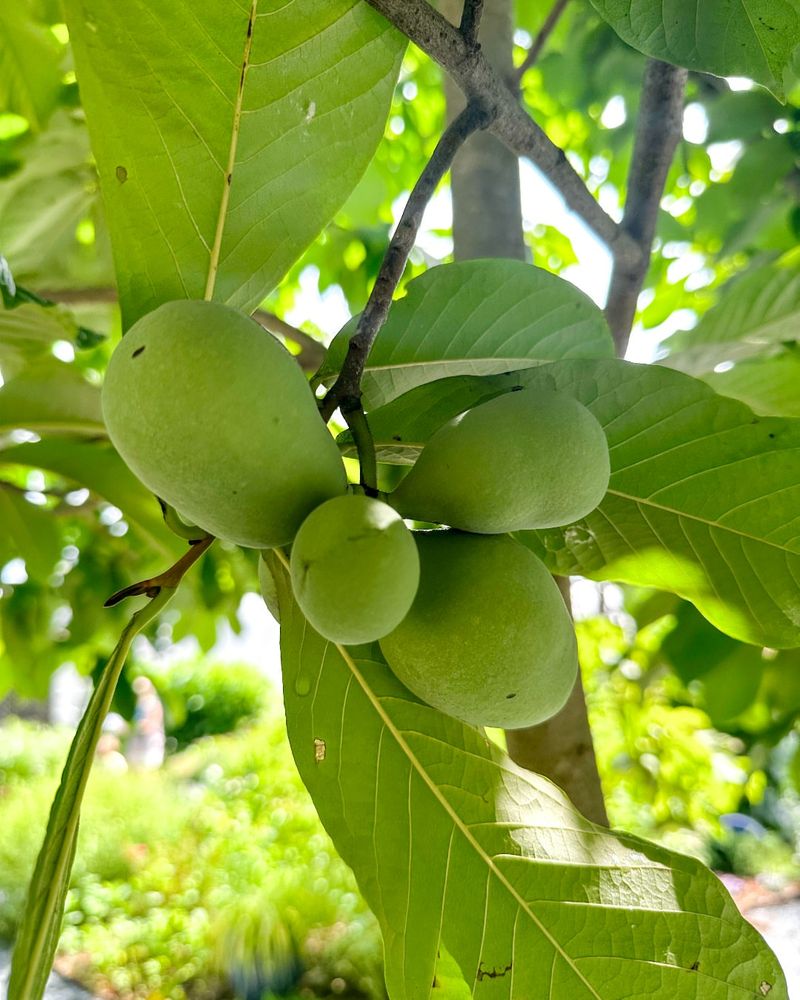
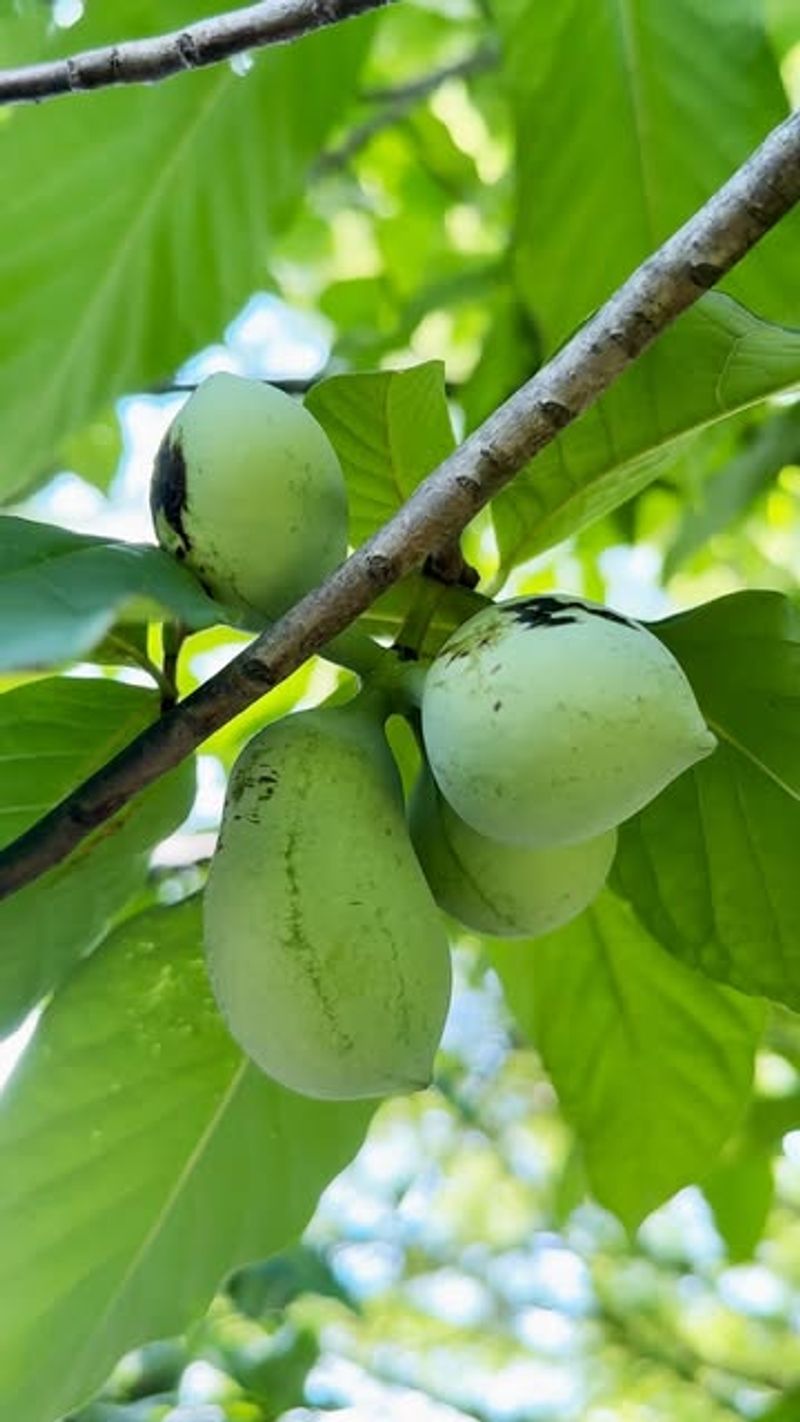
Pick up a ripe pawpaw and press it gently. The skin gives like a perfectly ripe avocado, and the flesh inside is thick, pale yellow, and almost spoonable. Flavor varies from tree to tree, but many people describe it as somewhere between banana, mango, and a hint of pineapple, rich enough that one or two fruits is a satisfying snack. The fruit typically runs 2.5 to 6 inches long, packed with large brown seeds and surrounded by that soft, tropical-tasting pulp.
You are not the only one who wants it. The U.S. Forest Service species review for Asimina triloba documents raccoons, opossums, squirrels, foxes, black bears, birds, and other forest animals as regular consumers of pawpaw fruit. If you back up to a wooded lot or live near a greenway, plan on sharing.
Your North Carolina Garden Changes Every Week. Your Plan Should Too.
Gardening in North Carolina changes quickly throughout the season. Every Friday you’ll receive a simple weekly plan showing exactly what to plant, prune, fertilize, harvest, and protect so you never miss the right timing.
Ripe fruit that drops to the ground disappears fast, and a patient raccoon will absolutely beat you to a low-hanging cluster if you wait too long.
The wildlife value does not stop at the fruit. Pawpaw leaves are the only food source for zebra swallowtail caterpillars, which makes the tree genuinely important to that butterfly’s survival in North Carolina. That said, NC State’s plant profile is clear that adult zebra swallowtails also need nectar plants to thrive. Pawpaw supports one critical life stage, but pairing it with milkweed, goldenrod, Joe Pye weed, or native asters gives butterflies and other pollinators what they need across the full season.
Think of pawpaw as one strong layer in a habitat planting, not the whole story.
Expect a Flexible Fall Harvest
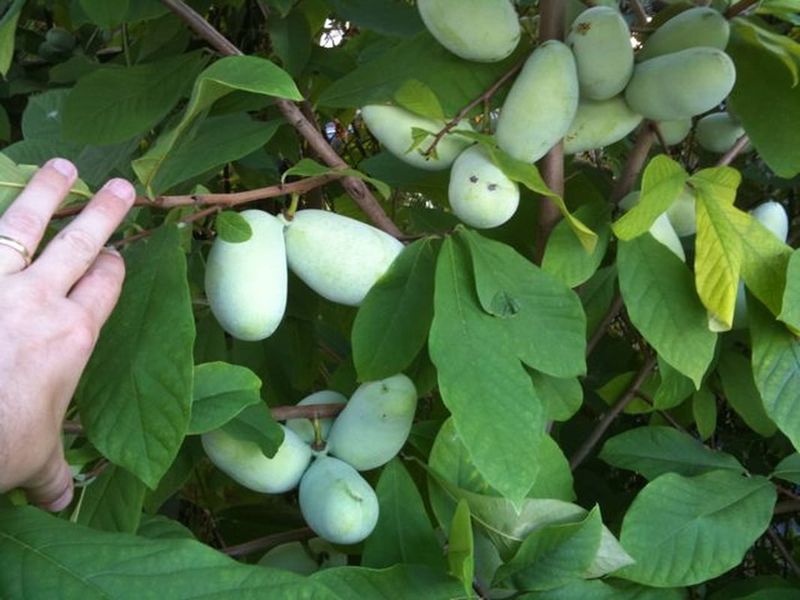
Here is where a lot of first-time growers get tripped up. You read that pawpaw ripens in September and October, so you check the tree on September 1st and find nothing but hard green fruit. That happens because the harvest window across North Carolina is genuinely variable, shaped by where you live, what variety you planted, and what the summer weather decided to do.
NC Cooperative Extension in Caldwell County gives a harvest range of late August through October depending on variety. Trees in the warmer Piedmont and lower elevations often begin ripening in late August or early September. Mountain trees at higher elevations tend to run later, and a cool, wet summer can push the whole timeline back by a week or two. Some named cultivars are also bred to ripen earlier or later than wild seedlings, so variety selection genuinely changes your calendar.
Coastal Plain and Sandhills sites add another layer of uncertainty. Pawpaw is native to moist, rich forest soils and stream corridors, and those sandy, drought-prone sites can stress trees during a hot August, which affects both fruit size and ripening consistency. A pawpaw growing in a moist Piedmont yard with good soil moisture is going to perform more reliably than one planted in fast-draining sand without supplemental water. The NC State Plant Toolbox also notes that some coastal sites may not provide adequate winter chilling for certain cultivars, so if you are on the coast, check cultivar chill-hour requirements before you buy.
The safest expectation for most North Carolina homeowners is fruit sometime from late August through September, with some varieties and favorable locations stretching into October.
Plant Two Trees for Reliable Fruit
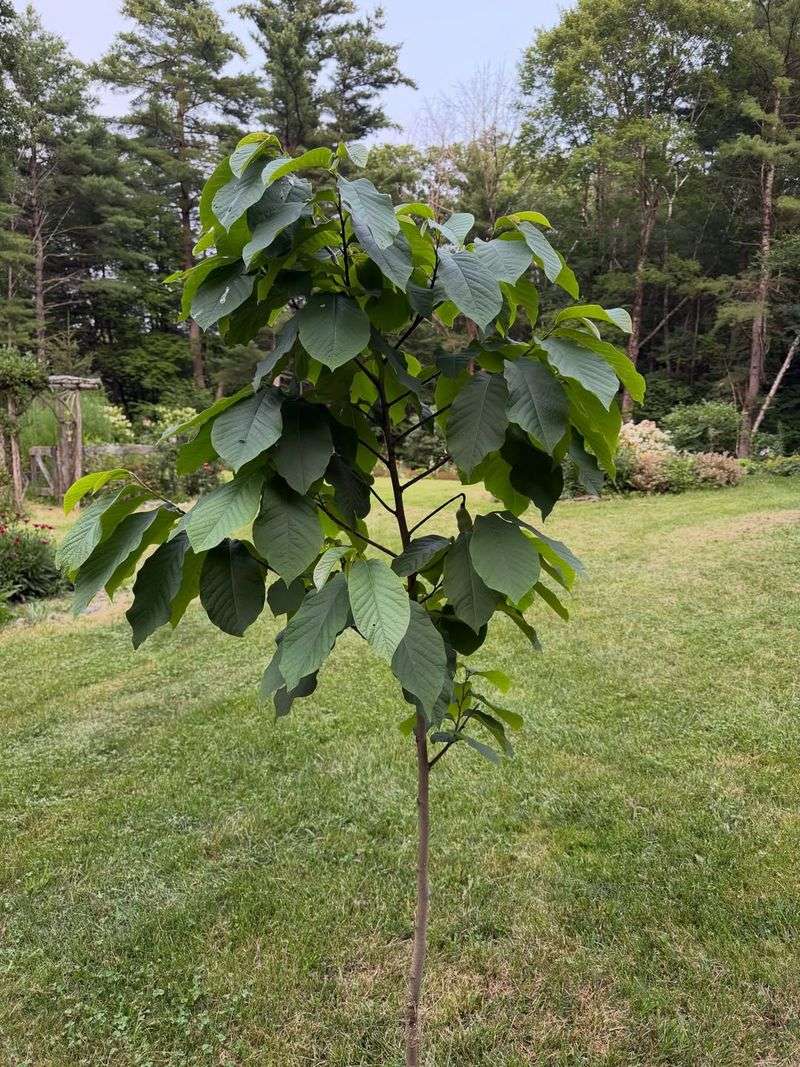
Many homeowners plant one pawpaw, wait three years, and get nothing. The tree looks healthy, puts out flowers each spring, and then drops them without setting fruit. The reason is straightforward: pawpaw flowers are generally self-incompatible, meaning pollen from the same tree will not reliably produce fruit. You need at least two genetically different trees or cultivars growing close enough for pollinators to move between them.
NC State Extension recommends a minimum spacing of about 10 feet for pawpaw in garden plantings, while the mature canopy can spread 15 to 30 feet wide. A practical starting point is to plant two compatible trees roughly 10 to 15 feet apart and give each room to eventually fill out. Two trees grown from the same seedling batch are not guaranteed to be genetically different, so buy named grafted cultivars from a reputable nursery if cross-pollination compatibility matters to you.
Timing to first fruit depends heavily on how the trees were grown. Penn State Extension notes that seed-grown pawpaw trees can take up to 10 years to fruit, while grafted trees may begin producing in roughly two to three years under good conditions. That is not a promise, it is a best-case range that assumes adequate sun, soil moisture, and a healthy establishment period.
The flowers themselves are small, maroon to purplish-brown, and appear in early spring, sometimes before the leaves fully emerge. NC State’s plant profile confirms that flies and beetles are the primary pollinators, drawn by the flowers’ strong odor. Honeybees largely ignore them. If you have two trees and still see poor fruit set after a couple of seasons, hand pollination is an option: collect pollen from one tree’s open flower with a small brush and transfer it to a flower on the other tree.
It takes about ten minutes and can make a real difference.
Choose Moist Soil and Enough Sun
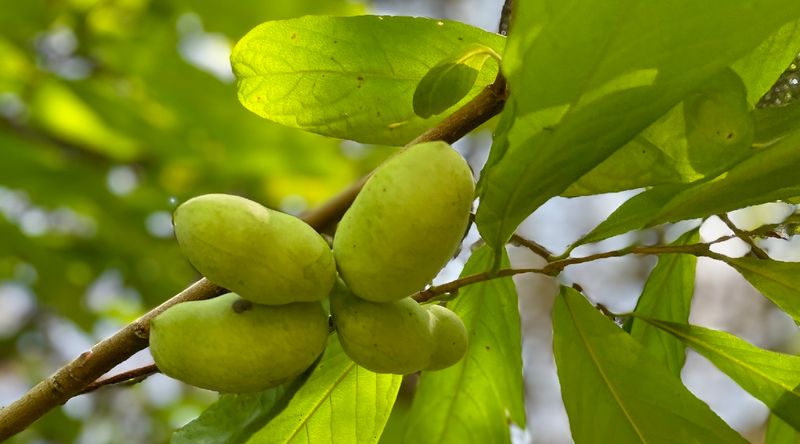
Pawpaw’s reputation as a shade-tolerant woodland tree is accurate, but it can mislead homeowners into planting in deep shade and then wondering why the fruit production is thin. The tree genuinely tolerates shade, which is why you find it growing under a canopy of oaks and tulip poplars along creek banks. Full sun, however, is where it produces the most fruit, and for a homeowner who wants an actual harvest, that distinction matters.
NC State’s Extension Gardener Plant Toolbox recommends full sun for best fruit production and describes the ideal soil as moisture-retentive and well-drained. A sheltered woodland edge that catches morning sun, a moist Piedmont yard with clay-loam soil, or a stream-adjacent site all fit that profile well. What you want to avoid is the opposite end of the spectrum: permanently saturated ground that stays waterlogged after heavy rain will stress the roots, and the Forest Service species review associates wild pawpaw with moist but not swampy conditions, typically floodplains and ravines that drain between rain events.
Low frost pockets are another site to skip. Pawpaw flowers open in early spring when late freezes are still possible across North Carolina’s mountains and Piedmont, and a single hard frost event can wipe out a year’s worth of blooms. A site with good air drainage, such as a gentle slope rather than a bowl-shaped low spot, gives those flowers a better chance of surviving an April cold snap.
For sandy Coastal Plain or Sandhills sites, the challenge is moisture. Pawpaw can grow there, but it will need more consistent supplemental watering during establishment and dry summers than a Piedmont tree planted in heavier soil. Allow room for a mature tree that may reach 15 to 30 feet tall and nearly as wide, and keep it at least that distance from foundations, driveways, and overhead utilities.
Low Spray Still Requires Real Care
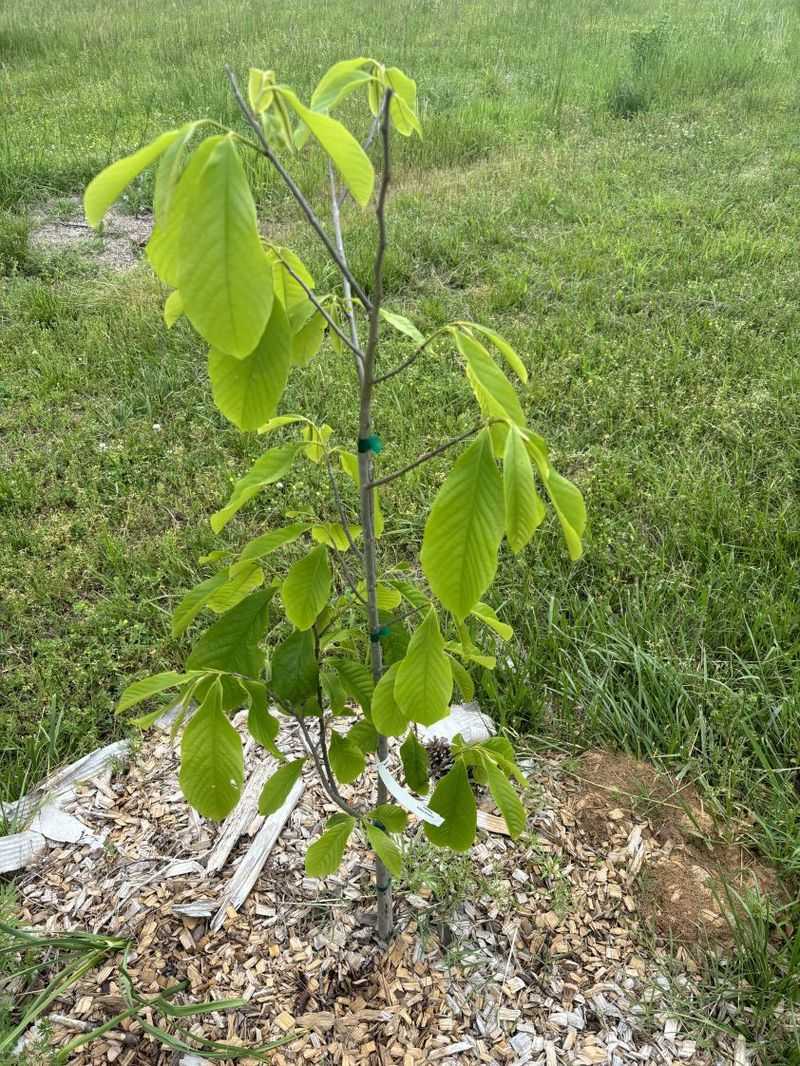
Pawpaw’s low-spray reputation is one of the things that draws homeowners to it, and that reputation is largely earned. Compared to a peach or apple tree, which can require multiple spray applications each season just to get edible fruit, a pawpaw in a good site asks for much less chemical intervention. But low-spray is not the same as no-care, and setting that expectation clearly upfront saves a lot of frustration later.
During establishment, the tree needs consistent water. NC State Extension recommends planting in native, unamended soil, watering thoroughly after planting, and applying roughly 3 to 5 inches of mulch while keeping mulch several inches back from the trunk. Young pawpaws in exposed Coastal Plain or Sandhills sites are especially vulnerable to drying out during their first two summers, and losing a grafted tree to drought stress after waiting two years for fruit is a painful setback.
The pest picture is relatively quiet, but not completely blank. NC State’s plant profile identifies the pawpaw peduncle borer, Talponia plummeriana, as a North Carolina pest that can destroy flowers by tunneling into the flower stalk. A year with heavy peduncle borer pressure can significantly reduce your fruit set, so it is worth learning what damaged flowers look like. Zebra swallowtail caterpillars will also feed on young leaves, though that damage is generally minor and is honestly a sign the habitat is working.
Root suckers need attention too. Left unchecked, a pawpaw will gradually spread into a thicket, which is fine in a naturalized area but a problem near a path or lawn edge. Pull or cut young suckers when they are small, before they establish their own root systems. A little seasonal observation goes a long way toward keeping the tree where you want it.
Harvest Pawpaws Before They Turn Fragile
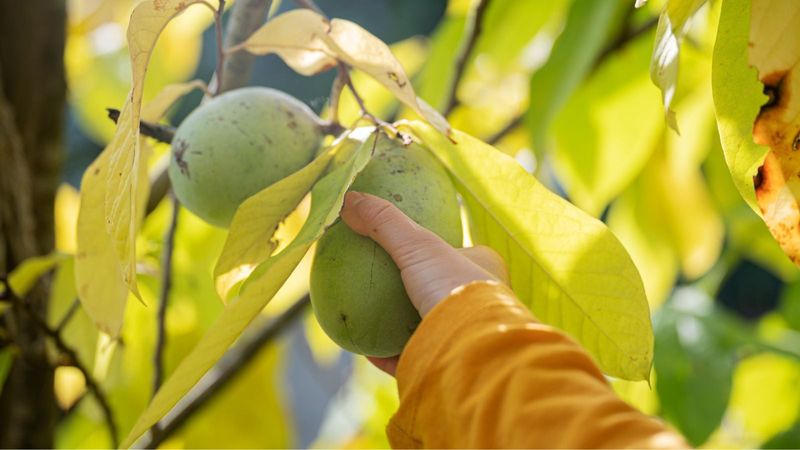
Timing the harvest is the skill that separates people who love pawpaws from people who say they tried one once and it was not good. Ripe pawpaw fruit is soft, fragrant, and highly perishable, and the window between perfectly ripe and overripe can be shorter than a long weekend.
Watch for the fruit to shift from firm, solid green toward a lighter yellow-green color. Press it gently with your thumb, the way you would check a peach or an avocado. A little give means it is close. A strong, sweet, fruity aroma rising from the fruit is the most reliable confirmation.
The NC State Extension Gardener Handbook on tree fruit and nuts notes that pawpaw can be picked when mature but still firm and allowed to finish ripening indoors at room temperature, which gives you a bit more flexibility than waiting for it to soften fully on the tree.
Once ripe, the fruit does not wait. Fully soft pawpaws may last only two to three days in the refrigerator before the quality drops sharply. Plan to eat them fresh, share them with neighbors, or freeze the pulp for smoothies and baked goods within a day or two of picking. The flavor is worth the planning: a good pawpaw tastes like a cross between banana and mango with a custardy texture that is unlike anything else growing in a North Carolina yard.
NC State’s plant profile notes low-severity poisonous characteristics and recommends caution for some people. Eat the pulp only, remove the skin and large seeds completely, and start with a small amount the first time you try it. Penn State Extension also suggests wearing gloves during harvest if you have sensitive skin, because contact dermatitis from the skin or sap has been reported in some people. The seeds and skin are not food, do not eat them.
Place the Tree Where Its Habits Fit
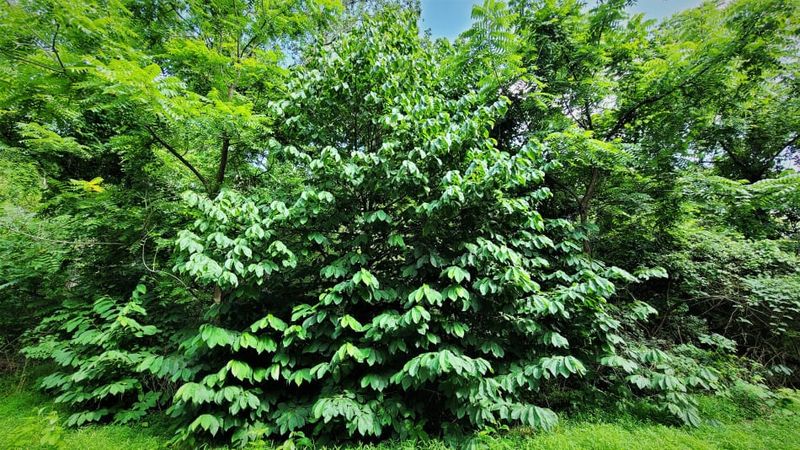
A pawpaw planted in the wrong spot does not stop being a pawpaw. It will still spread by root suckers, drop ripe fruit on whatever surface is below it, and attract every raccoon and opossum in a two-block radius when September arrives. Placement is not just a landscaping question, it is a practical one.
Keep the trees away from heavily used hard surfaces. The Forest Service species review confirms that pawpaw naturally spreads by suckering into thickets, and fallen fruit near a driveway, patio, or front walkway creates odor, attracts wildlife close to the house, and makes a slippery mess underfoot. The back edge of a yard, a woodland buffer strip, or a naturalized area near a fence line are all spots where the tree’s habits become assets instead of headaches. NC State’s plant profile suggests removing suckers while they are young if you want to keep the planting contained.
Where wildlife access is welcome, those same habits make pawpaw an unusually productive habitat planting. Fruit that falls in a naturalized area feeds foxes, opossums, and birds without any effort from you. The suckering habit gradually builds a layered shrub edge that provides cover as well as food. Penn State Extension notes that deer typically leave pawpaw alone, which is a genuine advantage in suburban North Carolina neighborhoods where deer pressure can be relentless on other plantings.
Pair pawpaw with native nectar plants like goldenrod, native asters, or Joe Pye weed nearby to give the zebra swallowtail adults and other pollinators what they need beyond the pawpaw itself. Two well-sited trees in good soil, with room to grow and a little seasonal attention, are a genuinely low-input native fruit planting. That is not a small thing in a yard that still has to function on a Tuesday afternoon.