The Fast-Moving Cucumber Disease Sweeping Through Delaware Gardens This Summer
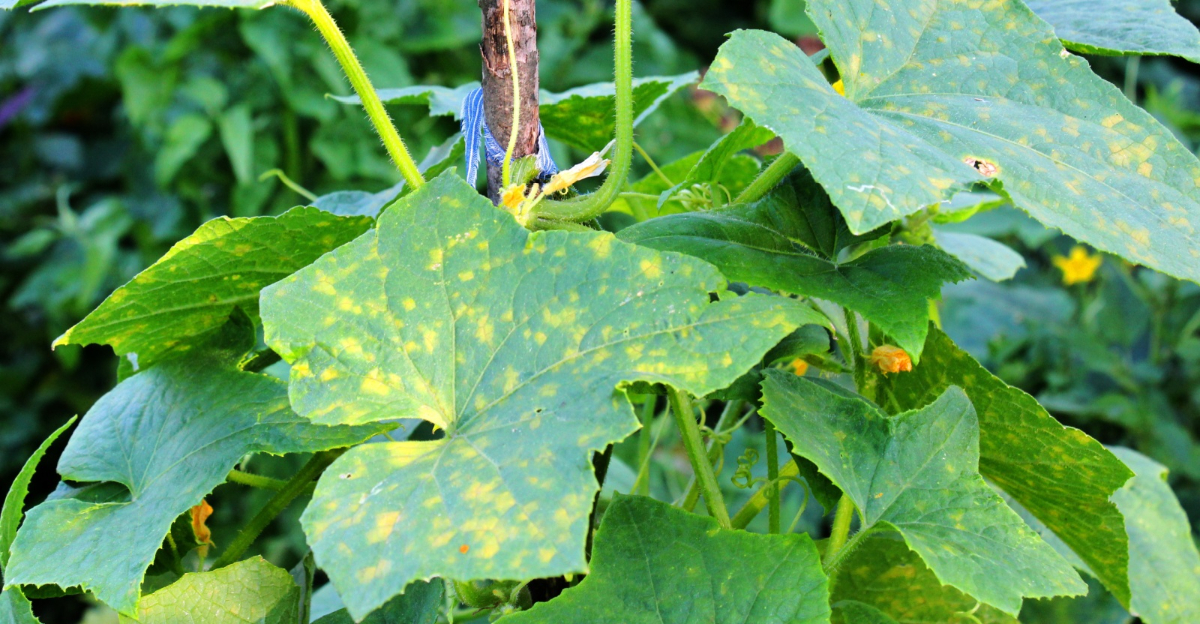
Your cucumber leaves are hiding something right now, and you have no idea yet. Monday’s healthy green can disappear completely by Friday afternoon. Yellow spots spread quickly across Delaware gardens without warning.
Something invisible moves faster than growers expect. Spores ride the wind currents and land silently on healthy leaves. Experienced farmers across Delaware are noticing changes overnight.
Papery, brittle foliage signals damage that has already begun. Squash, melons, and cucumbers all share this vulnerability.
Nothing about this pattern waits for you. Humidity accelerates the spread within just a few days.
Backyard gardeners face the same risk as commercial farms. Every leaf you lose weakens the whole plant. Delay gives this mystery more room to grow.
Recognizing symptoms early determines whether your harvest holds. Action taken now changes everything that follows. What you do in the next few days decides your entire harvest.
What Is Cucurbit Downy Mildew
Cucurbit downy mildew is not your average garden fungus. It behaves more like a hostile invader than a simple plant ailment.
It is caused by a water mold called Pseudoperonospora cubensis, and it spreads with alarming speed. Unlike common fungal issues, this organism thrives on constant movement and fresh hosts.
Most people mistake it for a nutrient problem at first glance. The yellow patches look like the plant just needs fertilizer or extra feeding.
Feeding it will not help at all, and may even worsen the situation. Time spent guessing is time the pathogen uses to spread further.
This pathogen targets plants in the cucurbit family specifically and relentlessly. That includes cucumbers, cantaloupe, squash, pumpkins, and watermelons across every backyard and field. Few garden diseases show this level of targeted precision and reach.
Cucumbers are the most vulnerable of the entire group. A healthy cucumber plant can show full disease symptoms in about a week after infection. That timeline leaves almost no room for delayed action or hesitation.
The mold does not live in your soil over winter like many other garden diseases. Instead, it travels on wind currents from infected crops miles away, sometimes crossing several states overnight.
Scientists track its movement across the country each season using a dedicated forecasting system. That system has already flagged significant activity moving steadily into the Mid-Atlantic region this summer.
Understanding what you are dealing with is the first step toward protecting your garden. Knowing the enemy makes every other strategy more effective, more precise, and far less stressful.
Why This Strain Is Spreading Fast In Delaware Gardens
Warm nights and humid air arrived early in Delaware this year. That combination created the perfect breeding ground for this aggressive pathogen.
Downy mildew thrives when temperatures sit between 59 and 77 degrees Fahrenheit overnight. Delaware summers hit that range almost every single night in June and July.
Morning dew on leaves adds another layer of danger. The mold needs moisture on leaf surfaces for just a few hours to successfully infect a plant.
A more aggressive strain of the pathogen was identified in the mid-2000s and caused significant crop losses in parts of the eastern United States.
Your Delaware Garden Changes Every Week. Your Plan Should Too.
Gardening in Delaware changes quickly throughout the season. Every Friday you’ll receive a simple weekly plan showing exactly what to plant, prune, fertilize, harvest, and protect so you never miss the right timing.
The current outbreak appears to share characteristics with that aggressive type. Some fungicide resistance has been documented in certain regions, which can reduce the reliability of products that once worked well.
Delaware sits in a corridor that catches spores blowing up from southern states. Once the mold establishes itself in one garden, nearby plots are almost immediately at risk.
Backyard gardeners often plant cucumbers close together, which speeds up the spread. Dense planting limits airflow and keeps leaves wet longer after rain or irrigation.
Local extension offices typically see an increase in gardener inquiries during active outbreak periods.
Early Warning Signs On Cucumber Leaves
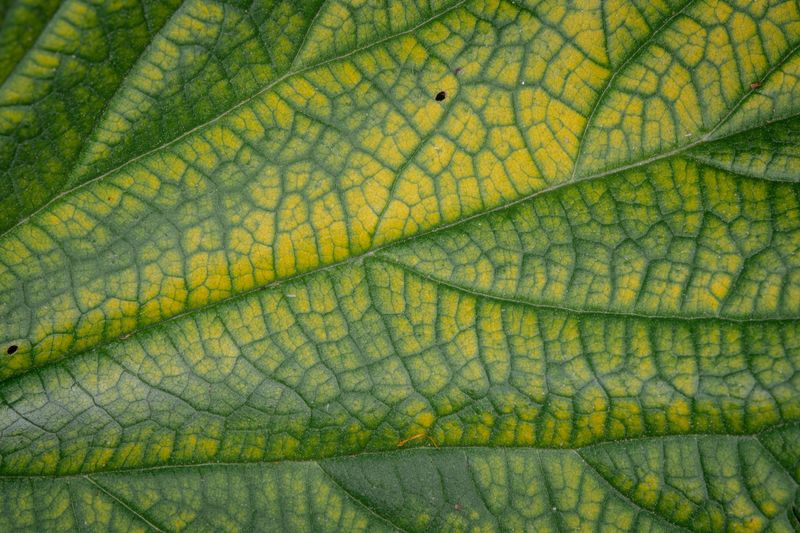
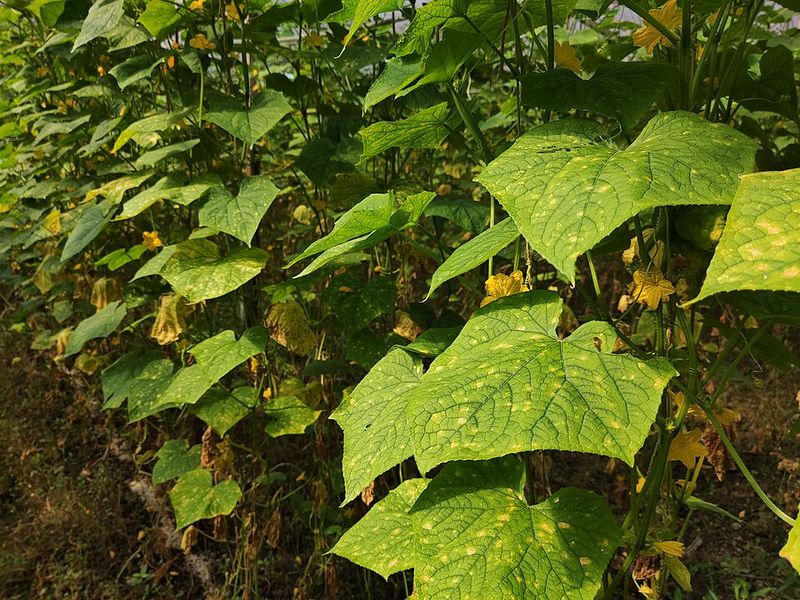
Catching this disease early can mean the difference between a full harvest and a total loss. The first signs appear on the upper surface of older, lower leaves.
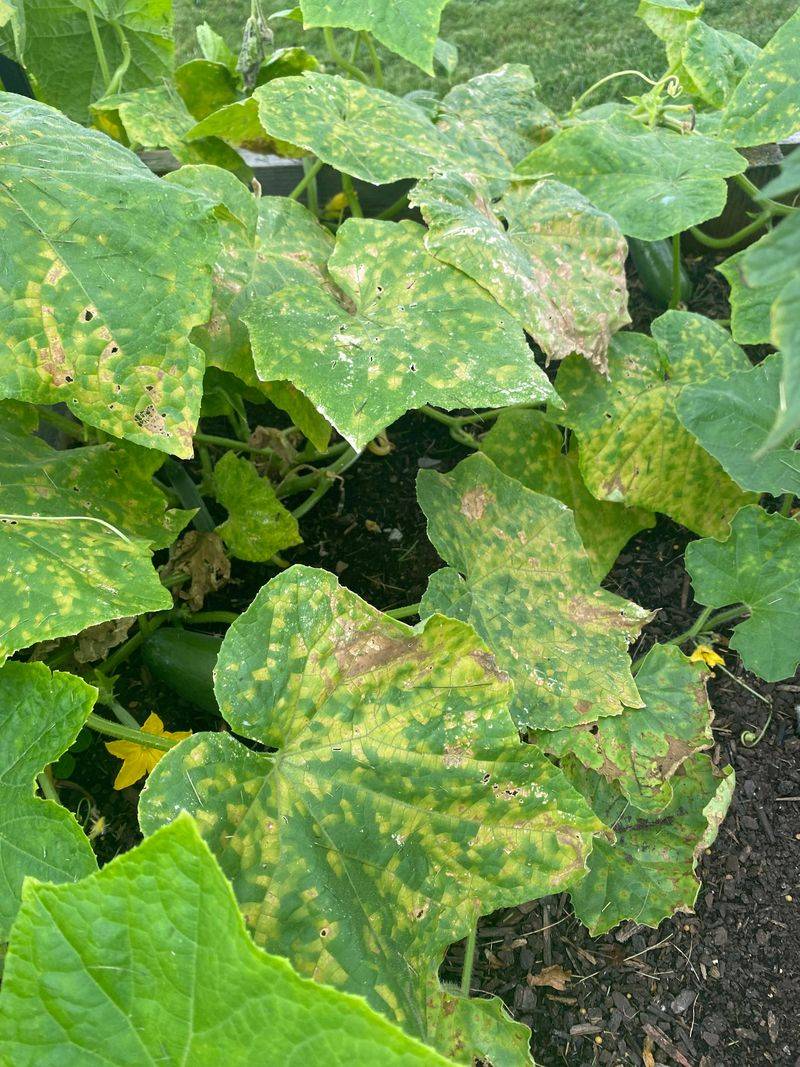
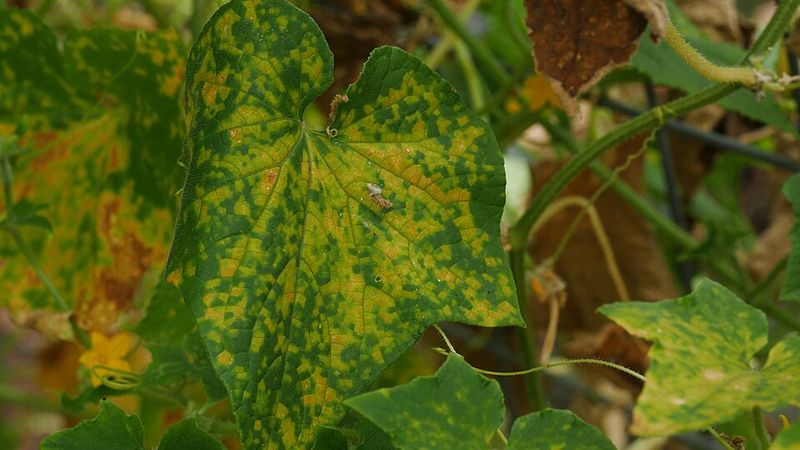
Look for pale yellow or lime-green spots that have angular edges. They look angular because the spots are blocked from spreading by the tiny veins running through the leaf.
Flip the leaf over and you will see something even more telling. A grayish or purplish fuzzy coating appears on the underside directly beneath those yellow spots.
That fuzzy coating is the actual spore mass of the mold. Each one of those tiny spores can float away and infect another plant nearby.
As the infection advances, the yellow spots turn brown and papery. Leaves begin to curl upward at the edges and eventually crumble when touched.
Severely infected plants stop producing fruit even before the leaves fully break down. The plant is putting all its remaining energy into survival rather than growing cucumbers.
Check your plants every two to three days during humid stretches. Morning is the best time to inspect because the underside fuzz is most visible when moisture is still present.
Do not confuse this with powdery mildew, which leaves a white coating on the top of the leaf. Downy mildew hides underneath and moves much faster through a garden.
How The Disease Spreads So Quickly
Speed is what makes cucurbit downy mildew so alarming to home gardeners. Under the right conditions, a single infected leaf can release an enormous number of spores overnight.
Wind carries those spores easily across fences, streets, and even county lines. No garden is truly isolated once the mold begins producing spores in the region.
Rain splashing off infected leaves also moves spores short distances within the same garden bed. Overhead watering systems do the same thing every time they run.
The spores do not need to travel far to cause damage. Landing on a wet leaf surface for just a few hours is enough to start a new infection cycle.
Temperatures between 59 and 77 degrees are ideal for spore germination. Delaware summers rarely stray outside that range for long, giving the mold nearly continuous opportunity to spread.
Infected transplants purchased from garden centers can introduce the pathogen directly into a previously clean garden. Always inspect transplants carefully before bringing them home and planting them.
Weeds in the cucurbit family, like wild cucumber, can also host the mold nearby. Removing those weeds reduces the number of potential infection sources around your garden.
Once you understand how relentlessly this disease moves, the urgency of early action becomes obvious. Waiting even a few days after spotting symptoms allows exponential spread through your entire planting.
Treatment Options For Active Infections

Good news exists even when your plants are already showing symptoms. Acting fast with the right products can slow the disease and protect healthy leaves still on the plant.
Conventional fungicides containing chlorothalonil or mancozeb have historically offered protective benefits when applied before infection takes hold.
Products containing cyazofamid or mandipropamid have shown strong results against the aggressive modern strain in various trials.
Always confirm current registration and effectiveness with your local extension office before applying, since recommendations can change by region and season.
Rotate between fungicide classes every application to prevent resistance from building up. Using the same active ingredient repeatedly is one of the fastest ways to make it stop working.
Organic growers have some options too, though they require more frequent application. Copper-based sprays applied every five to seven days can slow the spread when used consistently.
Neem oil is often recommended online, but research shows it has limited effectiveness against this specific pathogen. Copper is generally considered more effective for organic management of this disease.
Remove and bag any heavily infected leaves before spraying the rest of the plant. Leaving them on the plant keeps a massive source of spores right where they can do the most harm.
Spray coverage on the underside of leaves is absolutely critical. That is where spores germinate and where most standard spray applications miss entirely.
Preventing Downy Mildew Next Season

Prevention is a far easier path than scrambling to treat an active outbreak. Planning ahead now, while the current season is fresh in your memory, sets you up for success.
Start by selecting cucumber varieties bred for downy mildew tolerance. Check current university extension resistant-variety lists each season, since resistance ratings change as new strains emerge.
Resistant does not mean immune, but it does mean the plants can tolerate infection longer and continue producing fruit. That extra buffer of time can make an enormous difference in your harvest.
Trellising cucumbers improves airflow around every leaf on the plant. Better airflow means leaves dry faster after rain, and drier leaves are far harder for spores to infect successfully.
Switch from overhead sprinklers to drip irrigation at the base of your plants. Keeping water off the foliage removes one of the key conditions the mold needs to germinate.
Start a preventative fungicide spray program before symptoms appear, especially during warm and humid stretches. Waiting until you see yellow spots means the disease already has a head start on you.
Monitor a cucurbit downy mildew forecasting network, such as the ipmPIPE system, each spring. It tracks confirmed outbreaks across the country and can alert you when the disease is approaching your region.
Protecting your cucumber patch from cucurbit downy mildew next season starts with the decisions you make right now. A little preparation today keeps your garden thriving all summer long.