The Colorful Duck More Georgia Homeowners Are Spotting In Backyard Ponds
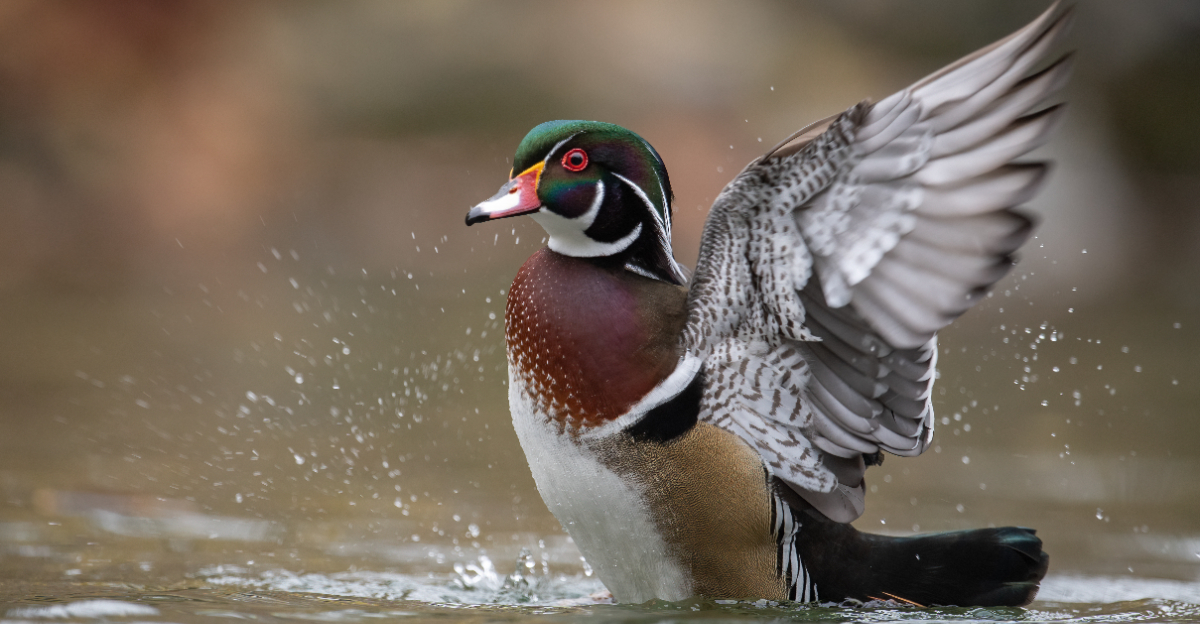
Bright flashes of color can turn an ordinary backyard pond into something worth watching.
One beautiful duck is showing up in more neighborhoods, surprising people who never expected to see it so close to home.
Backyard ponds offer calm water, food, and safe places to rest. Those simple features make them attractive stopping points during the warmer months.
Some sightings last only a few minutes, while others become a regular part of the day. Georgia has plenty of small ponds that provide exactly what this striking bird is looking for.
The next visitor to your pond might not be one you have seen before. Knowing what to watch for makes those colorful moments even more rewarding.
1. Wood Ducks Are The Ducks Homeowners Are Spotting
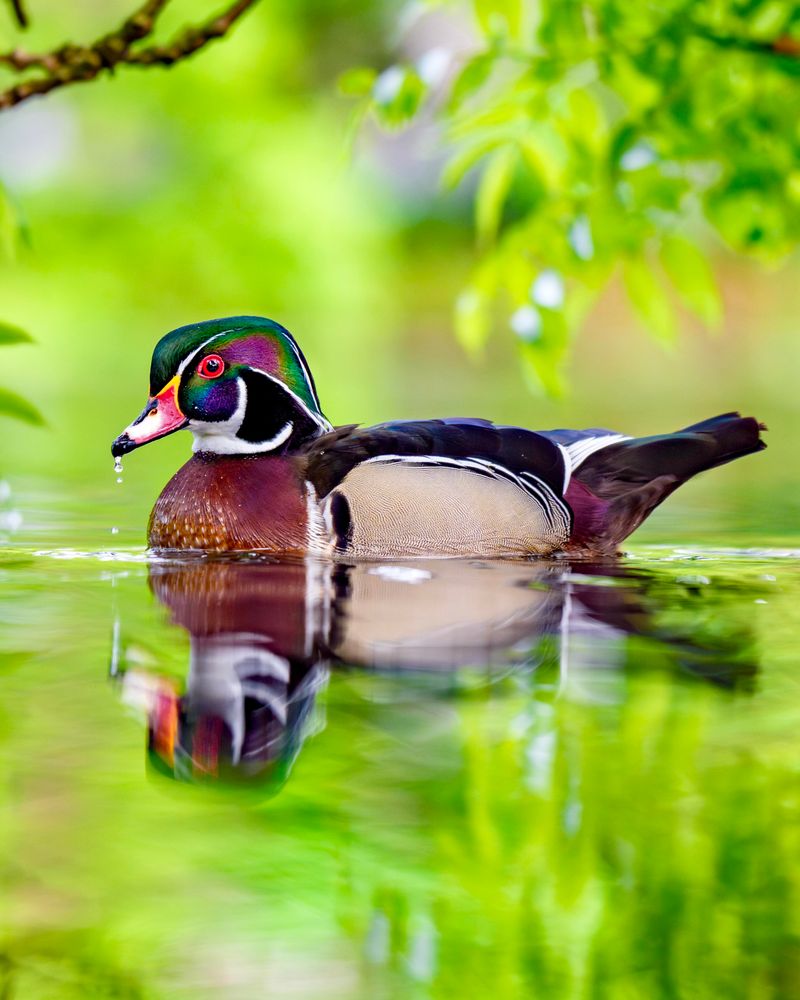
Nothing prepares you for seeing a Wood Duck up close. The male looks almost too colorful to be real, with a shimmering green and purple head, bold white stripes, and a chest of deep chestnut brown.
Female Wood Ducks are softer in color, with gray-brown feathers and a distinctive white eye ring that makes them easy to identify.
Wood Ducks belong to the perching duck family. Unlike most ducks, they have sharp claws that help them grip tree branches and wooden surfaces.
That ability makes them comfortable in wooded, shaded areas near water.
Backyard ponds in Georgia that sit near trees tend to attract them most. Shallow water with natural edges works better than concrete-lined ponds.
Ducks prefer spots where they can wade near the bank and access food without feeling exposed.
Spotting one in your yard is a genuine treat. Males are most colorful in fall and winter, when breeding plumage is at its peak.
By late summer, males molt into a duller look called eclipse plumage, which can make them harder to recognize.
Wood Ducks are not rare across the Southeast. Population numbers have recovered significantly since legal protections were strengthened decades ago.
Patient, quiet observation near a pond at dawn or dusk gives homeowners the best chance of a close sighting.
2. Quiet Backyard Ponds Attract Them All Summer
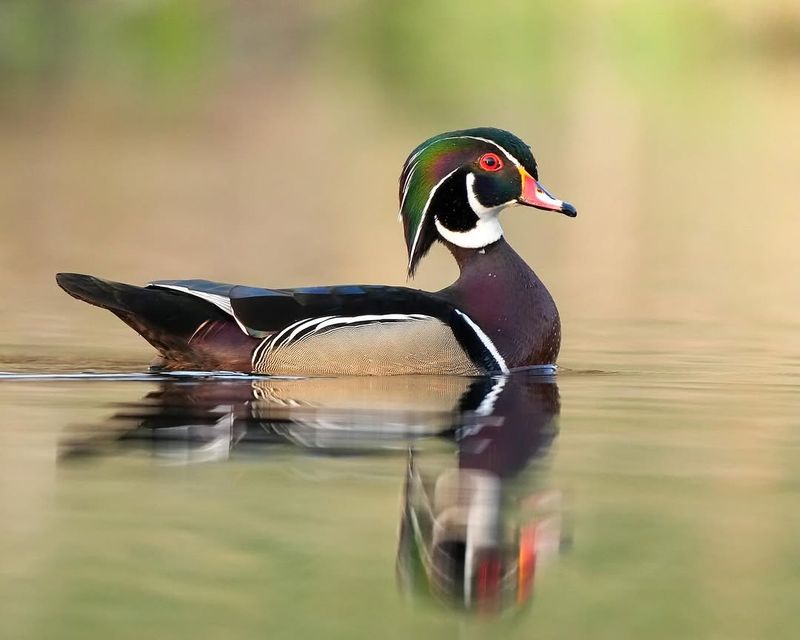
Wood Ducks do not need a large lake to feel at home. A modest backyard pond can pull them in, especially when the surrounding yard offers shade, native plants, and minimal foot traffic.
Calm water is a strong draw, particularly during the warmer months when broods are actively foraging.
Summer is a busy season for Wood Duck families. Hens lead ducklings to feeding areas shortly after the young leave the nest.
Shallow ponds with aquatic vegetation give ducklings accessible food and some cover from overhead threats.
Loud yards tend to push Wood Ducks away. Barking dogs, frequent lawn equipment, and heavy human activity near the water can discourage visits.
Yards that stay calm during early morning hours tend to see more consistent duck activity through summer.
Planting native shrubs near the water’s edge adds appeal. Plants like buttonbush and elderberry grow well near water in the Southeast and provide both food and shelter.
Your Georgia Garden Changes Every Week. Your Plan Should Too.
Gardening in Georgia changes quickly throughout the season. Every Friday you’ll receive a simple weekly plan showing exactly what to plant, prune, fertilize, harvest, and protect so you never miss the right timing.
They also help stabilize pond banks naturally.
Keeping the pond water clean and clear makes a difference too. Ducks avoid heavily algae-covered or murky water when cleaner options are nearby.
A simple pond aerator can improve water quality without major effort or expense. Small changes to the yard environment often produce noticeable results within a single season.
3. Hollow Trees Give Ducklings A Safe Start
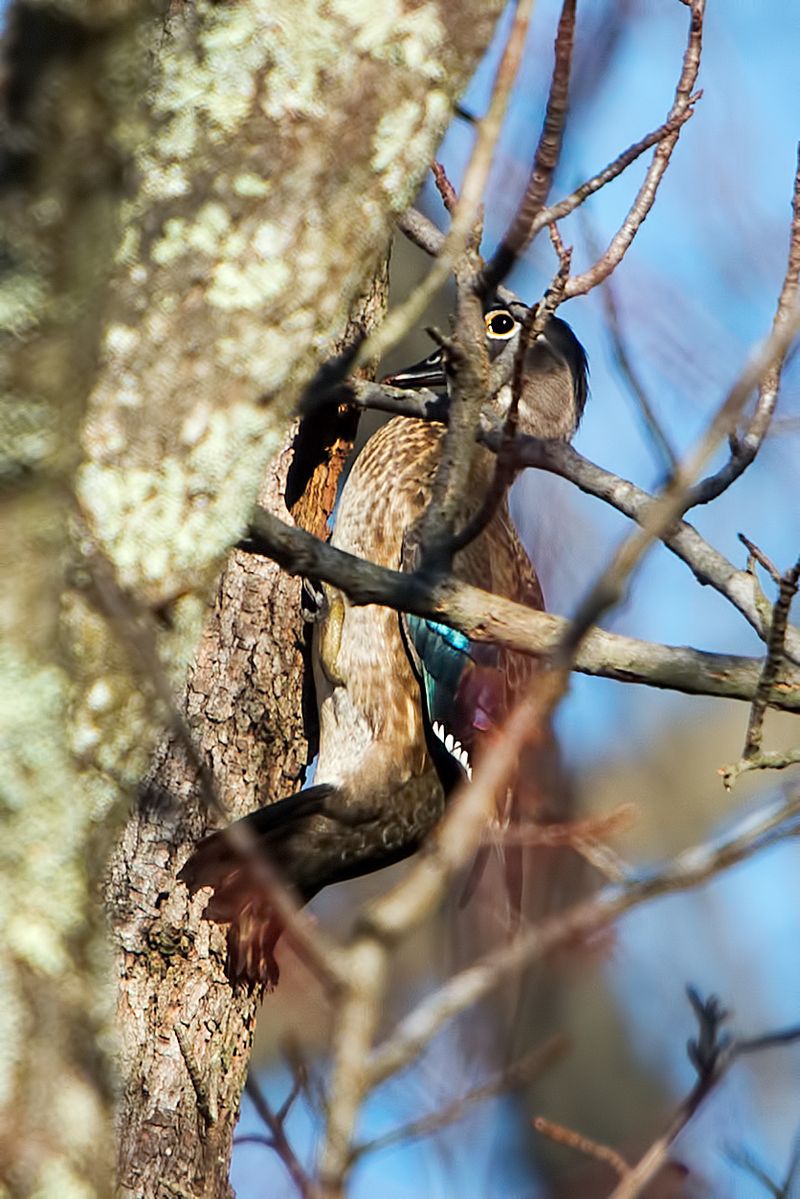
Wood Ducks nest in tree cavities, which makes them unusual among North American waterfowl. Hens seek out hollow spaces in mature trees, often choosing cavities left behind by large woodpeckers or natural decay.
Oak, cypress, and sycamore trees near water are common choices.
Cavity size matters. Hens look for openings wide enough to enter but not so large that predators can easily access the nest.
Natural cavities with a three-to-four inch entrance opening are often preferred, though this can vary.
Once a hen selects a cavity, she lines it with down feathers pulled from her own chest. Eggs are laid over several days, with clutch sizes typically ranging from eight to fifteen eggs.
Incubation lasts roughly a month before the eggs hatch.
Older trees with natural hollows are becoming less common in suburban Georgia yards as properties are cleared and landscaped. That loss of nesting habitat is one reason Wood Duck populations dropped sharply in the early twentieth century.
Protecting mature trees near water helps maintain natural nesting opportunities.
Yards that still have large, older trees near a pond offer real value to local Wood Duck populations. A single usable tree cavity can support a successful nest each season.
4. Acorns And Water Plants Supply Much Of Their Food
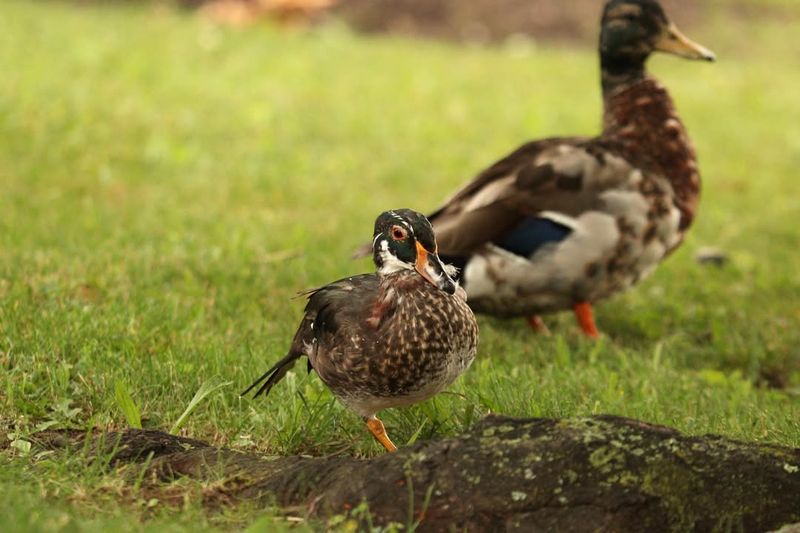
Wood Ducks are not picky eaters, but they do have clear favorites. Acorns rank at the top of their diet, especially in fall when oaks drop heavily.
Yards near oak trees often see increased Wood Duck activity from late September through November as the birds forage along the ground and in shallow water.
Water plants fill out their summer diet. Duckweed, pondweed, and seeds from emergent plants like smartweed are all regularly eaten.
Ducklings also consume aquatic insects and small invertebrates, which provide protein during their rapid early growth.
Wood Ducks do not typically feed from open water like diving ducks. They prefer to dabble near the surface or forage along muddy banks and leaf litter.
Shallow water between six inches and two feet deep suits their feeding style well.
Supplemental feeding is possible but should be approached carefully. Cracked corn placed near the water’s edge can attract Wood Ducks, but it may also attract unwanted animals.
Offering natural food sources through native plantings tends to be a more sustainable approach for most homeowners.
Buttonbush seeds, wild grapes, and berries from native shrubs all supplement the Wood Duck diet seasonally. Planting a mix of native species around a pond creates a more reliable and varied food supply.
5. Young Ducks Jump From Tree Cavities Within One Day
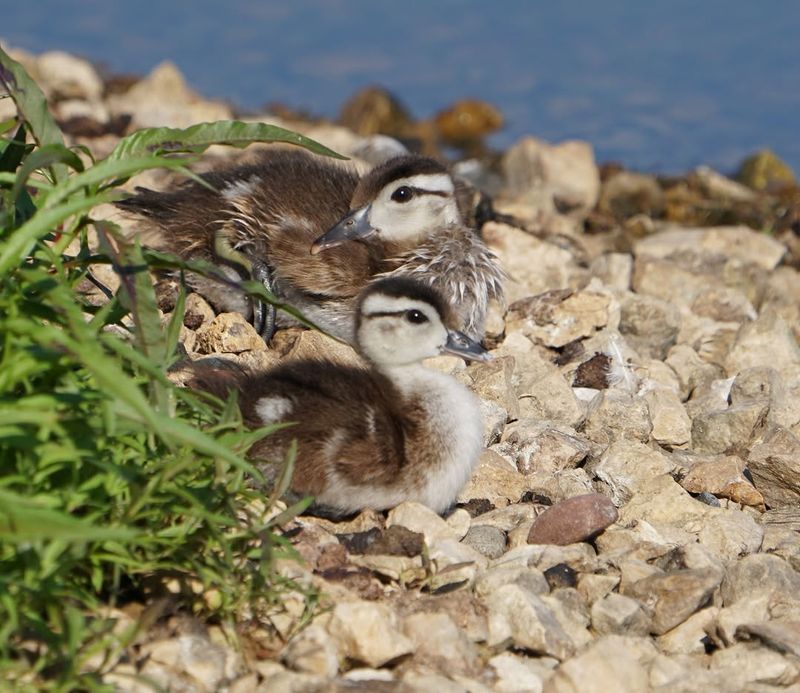
One of the most dramatic moments in backyard wildlife happens fast. Within hours of hatching, Wood Ducklings leap from their nest cavity, sometimes from heights of twenty feet or more.
Their tiny bodies are so light that the fall rarely causes injury. It is a sight that stuns most people who witness it.
The hen calls from below the tree to encourage the jump. Ducklings respond to her call and exit the cavity one by one.
Once on the ground, she leads them immediately toward water. That first journey can cover a surprising distance, sometimes a quarter mile or more.
Ducklings hatch with eyes open and a full coat of down. They are mobile within hours and can swim almost immediately after reaching water.
That fast start helps them avoid predators during their most exposed early hours.
Homeowners near Georgia wetlands and ponds sometimes spot a hen walking a line of ducklings across a yard or driveway. Watching from a distance is the best response.
Approaching too closely can cause the hen to scatter the brood in a dangerous direction.
That first-day jump is hardwired behavior. It happens regardless of nest height because ducklings are built to survive it.
Nest boxes placed higher than natural cavities still produce successful jumps in most cases.
6. Nest Boxes Increase Local Wood Duck Numbers
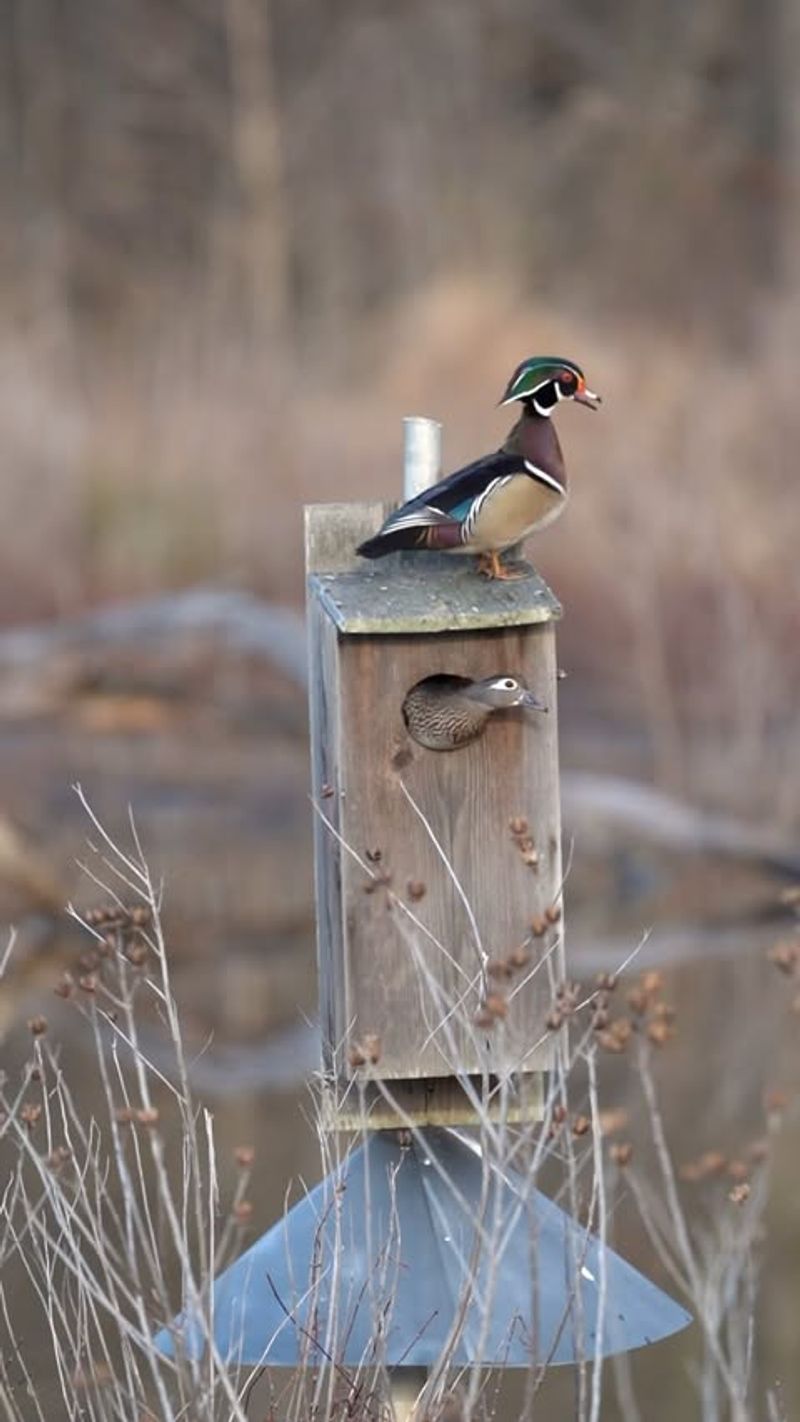
Putting up a nest box is one of the most direct ways to support Wood Ducks in your neighborhood.
Nest boxes mimic natural tree cavities and have helped Wood Duck populations recover across much of the eastern United States over the past several decades.
Results can show up within the first nesting season.
Placement matters more than most people expect. Boxes mounted on poles over water, or very close to a pond edge, tend to attract hens more reliably than boxes placed in trees.
A metal predator guard on the pole helps protect eggs and young from raccoons and other climbing animals.
Box dimensions and entrance size follow specific guidelines. An entrance hole of about three inches in diameter works well for most Wood Ducks.
Interior dimensions of roughly ten by ten inches with a depth of around two feet provide adequate nesting space. Cedar or untreated pine are common materials used for construction.
Adding a few inches of wood shavings to the bottom of the box gives the hen nesting material to work with. Boxes should be cleaned out each winter before the next nesting season begins.
Regular maintenance keeps boxes functional and reduces the chance of parasites building up inside.
Neighborhoods near Georgia wetlands that have installed multiple nest boxes have seen meaningful increases in local Wood Duck activity.
7. Limited Disturbance Encourages More Visits
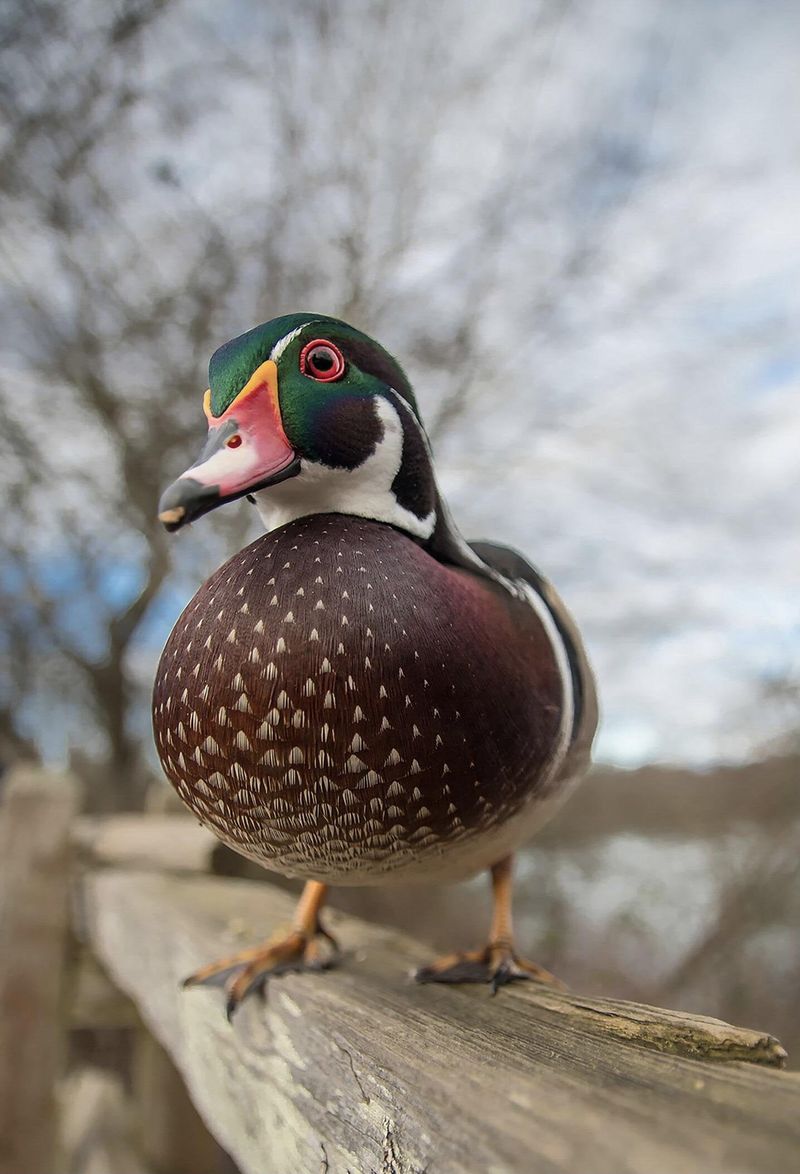
Wood Ducks are naturally cautious birds. Even a small amount of regular disturbance near a pond can push them toward quieter spots.
Yards where people and pets frequently approach the water tend to see fewer visits, especially during nesting and brooding seasons.
Early morning is peak activity time. Wood Ducks move most actively at dawn and just after, feeding and exploring before human activity picks up.
Watching from inside through a window or from a distance gives the best view without causing stress to the birds.
Keeping dogs away from the pond edge during spring and early summer makes a real difference. A hen with ducklings will abandon a feeding area quickly if a dog approaches.
Even a single bad experience can shift her route away from your yard for the rest of the season.
Mowing right up to the pond edge removes the natural buffer that ducks prefer. Leaving a strip of native grasses and low shrubs between the lawn and water creates a more welcoming transition zone.
That buffer also filters runoff and improves water quality over time.
Patience is honestly the most useful tool for attracting Wood Ducks. Consistent low-disturbance conditions over several seasons build familiarity.
Ducks that visit without being chased tend to return.