The Best Container Plants For Shaded Georgia Porches This Summer
Porches are meant to be relaxing places during the warmer months, but finding plants that actually enjoy those conditions can be tricky. Bright flowers often get all the attention, yet many shaded areas need something different.
Empty containers in a darker corner can leave the space feeling unfinished, even when everything else looks inviting.
Choosing plants for shade requires a little more thought than simply picking the prettiest option at the store. Light levels, humidity, and summer weather all affect how well a container will perform.
Some plants handle these conditions naturally and continue looking good with less struggle.
Georgia summers bring plenty of heat and moisture, making shaded porches a unique growing environment. The right container plants can add color, texture, and life without needing constant attention.
A few well-chosen additions can turn a quiet porch area into one of the most enjoyable spots around the home.
1. Coleus Keeps Colorful Foliage All Summer
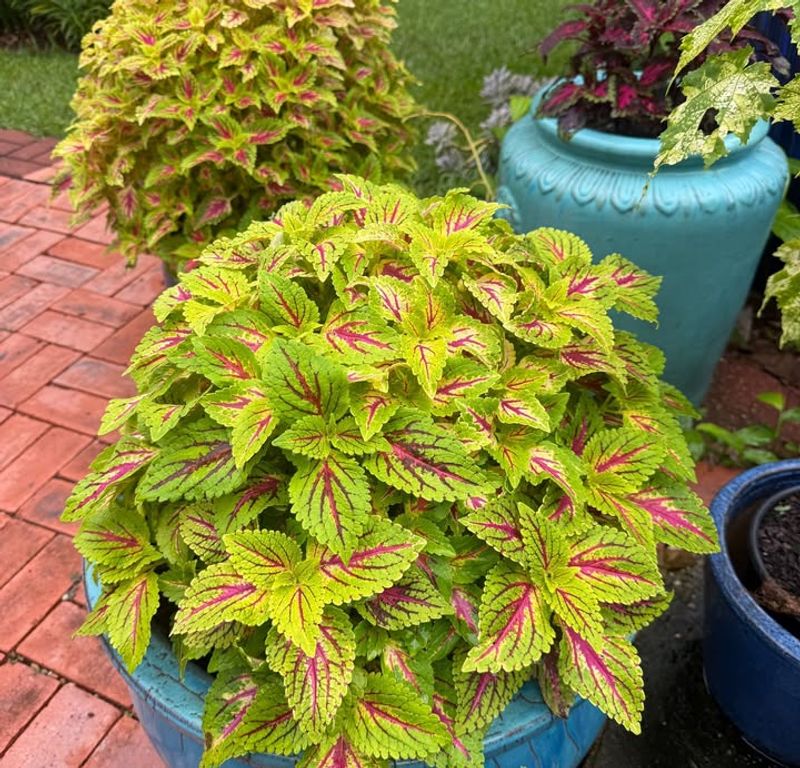
Few plants punch above their weight like coleus does in a shaded container. Bold, patterned leaves in red, lime, burgundy, and orange make it look like someone painted every leaf by hand.
No blooms needed when the foliage does all the talking.
Coleus handles Georgia’s muggy summers surprisingly well. It prefers indirect light and actually fades or gets leggy in full sun.
A north-facing or tree-shaded porch is genuinely where it performs best.
Water it when the top inch of soil feels dry. Overwatering is a bigger problem than underwatering with coleus.
Make sure your pot drains well so roots stay healthy through the wet season.
Pinch off any flower spikes as soon as they appear. Letting coleus bloom pulls energy away from leaf production.
Removing those spikes keeps the plant bushy, full, and loaded with color.
Pair coleus with white impatiens or chartreuse sweet potato vine for a sharp contrast. It works beautifully in mixed containers or solo in a bold pot.
Either way, it earns attention all season without much fuss.
Feed it with a balanced liquid fertilizer every two weeks. Coleus is a fast grower and benefits from regular nutrients.
With minimal effort, it stays lush and vibrant from June straight through September.
2. Caladium Loves Warm Shady Conditions
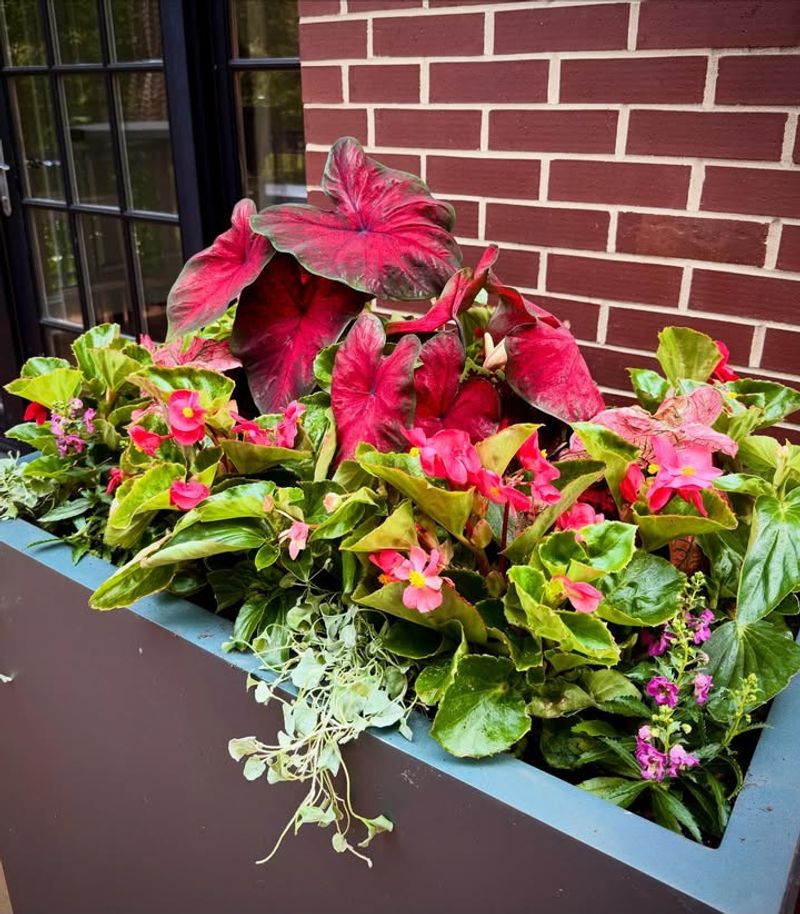
Caladiums were practically made for Southern summers. Large, paper-thin leaves in pink, white, red, and green create a tropical feel without needing a single ray of direct sun.
Few plants look this dramatic for this little effort.
Heat and humidity actually help caladiums thrive. Unlike many plants that struggle when temperatures stay high overnight, caladiums just keep pushing out new leaves.
Warm soil encourages faster, fuller growth all season.
Plant caladium bulbs with the bumpy side facing up, about two inches deep. Use a rich, well-draining potting mix and choose a container at least 10 inches wide.
Cramped roots slow down leaf production noticeably.
Keep the soil consistently moist but never soggy. Caladiums are sensitive to drought, and dry spells cause leaf edges to brown quickly.
A layer of mulch over the soil surface helps hold moisture between waterings.
Your Georgia Garden Changes Every Week. Your Plan Should Too.
Gardening in Georgia changes quickly throughout the season. Every Friday you’ll receive a simple weekly plan showing exactly what to plant, prune, fertilize, harvest, and protect so you never miss the right timing.
Avoid placing caladiums where afternoon sun can reach them, even briefly. Direct light scorches those delicate leaves fast.
Morning shade or dappled light under a tree is the ideal setup for a porch display.
Feed monthly with a slow-release granular fertilizer to support steady leaf growth. Caladiums are not heavy feeders, but consistent nutrients make a visible difference.
Expect the display to stay full and colorful well into early fall.
3. Impatiens Bloom Nonstop In Low Light
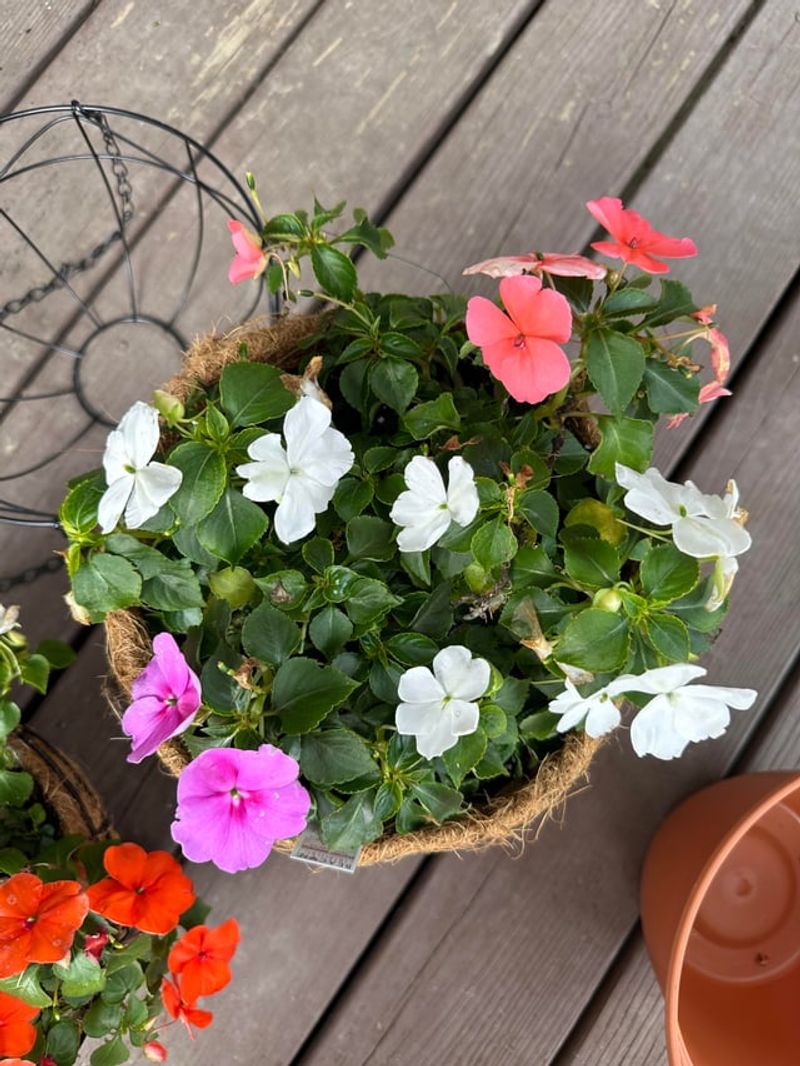
Impatiens are the underdogs of the shade garden, and they rarely get enough credit. While showier plants struggle in low light, impatiens just bloom and bloom without complaint.
A single pot can produce hundreds of flowers from spring through fall.
Standard impatiens prefer filtered shade and consistent moisture. They wilt quickly in dry soil, so check them daily during hot spells.
Morning is the best time to water so roots stay cool through the afternoon heat.
Choose a container at least 8 inches deep to give roots room to spread. Shallow pots dry out too fast in summer.
Add a slow-release fertilizer to the potting mix at planting time to reduce feeding chores later.
Colors range from soft white and coral to deep red and vivid orange. Mixing shades in one pot creates a full, layered look that holds up beautifully all summer.
Impatiens also pair well with ferns or caladiums in larger arrangements.
Watch for spider mites during dry stretches. A light spray of water on the undersides of leaves helps keep them away.
Keeping plants well-watered and not overcrowded reduces pest pressure significantly.
New Guinea impatiens tolerate slightly more light than standard varieties. Both types work well on covered porches.
Either choice delivers consistent color with very manageable care through even the longest, hottest summers.
4. Begonias Handle Humidity Better Than Many Annuals
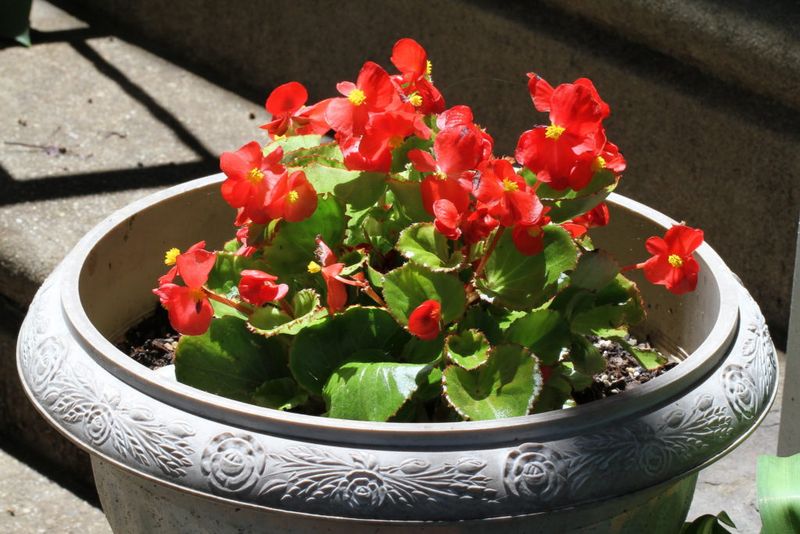
Humidity is the enemy of a lot of flowering plants, but begonias take it in stride. Thick, waxy leaves resist moisture-related problems that flatten other annuals by midsummer.
On a shaded porch with heavy air, begonias stay tidy and productive.
Wax begonias are the most common container choice. They stay compact, bloom continuously, and ask for very little.
Bronze-leafed varieties handle slightly more light, while green-leafed types prefer deeper shade.
Tuberous begonias produce larger, showier flowers but need a bit more attention. They prefer cooler temperatures and may slow down during peak summer heat.
Wax begonias are more reliable if your porch gets hot even without direct sun.
Water begonias when the top of the soil feels dry to the touch. Wet roots cause stem rot quickly, especially in warm, humid conditions.
Always use a pot with drainage holes and never let water pool in saucers.
Feed every two weeks with a bloom-boosting liquid fertilizer. Begonias respond well to regular feeding with noticeable increases in flower production.
Deadheading spent blooms is optional since most modern varieties drop old flowers on their own.
Mix begonias with trailing plants like sweet potato vine for a polished look. They also work beautifully as solo plantings in simple pots.
Either way, expect steady color with minimal intervention from June through early October.
5. Hostas Bring Bold Texture To Large Pots
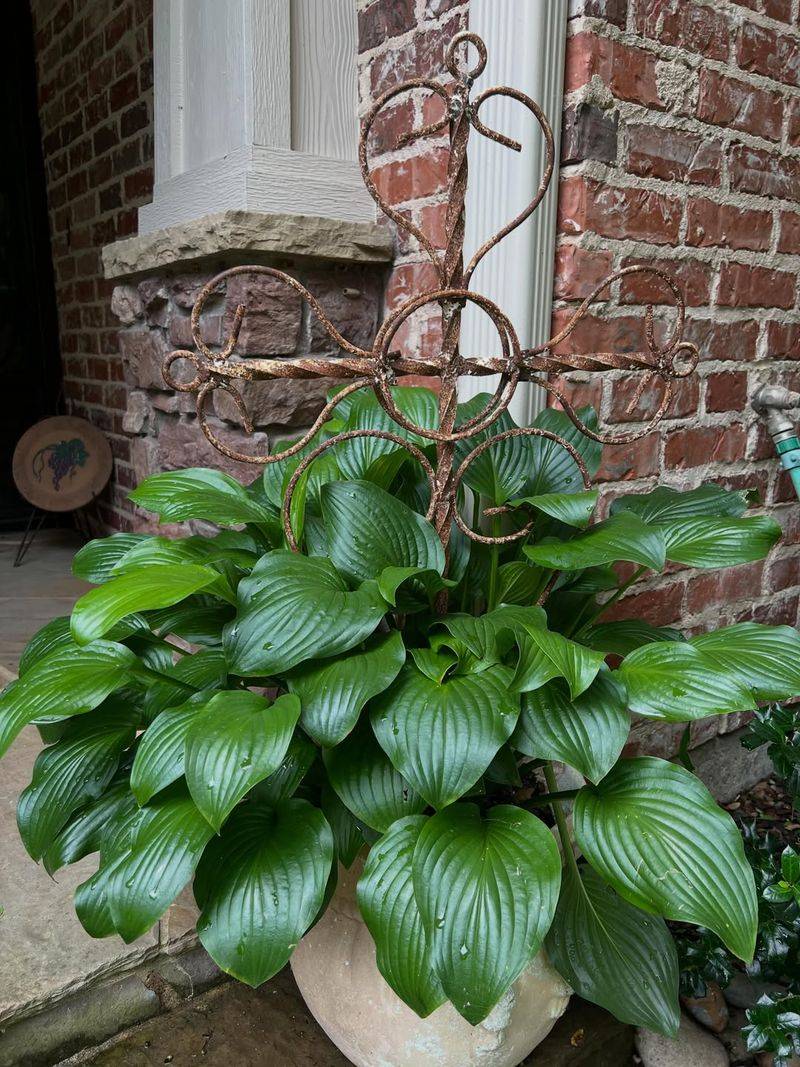
Hostas in containers are underused, and that is honestly a missed opportunity. Giant, ribbed leaves in blue-green, chartreuse, or variegated patterns create serious visual weight on a bare porch.
No flowers needed to make an impact.
Choose a large pot, at least 14 inches wide, to give hosta roots space to spread. Cramped containers stunt growth and reduce leaf size noticeably.
A wide, heavy pot also prevents tipping since hostas get top-heavy as they fill out.
Rich, moisture-retaining potting mix works best. Hostas do not like to dry out completely between waterings.
Adding perlite to the mix improves drainage while keeping enough moisture for steady growth.
Slug damage is the most common problem with hostas. Tiny holes in leaves are the first sign.
Iron phosphate-based slug bait is effective and safe to use around pets and wildlife.
Varieties like Sum and Substance, Halcyon, and June perform especially well in containers. Miniature hostas also work in smaller pots and look sharp on steps or railings.
Matching pot color to leaf color creates a polished, intentional display.
Feed monthly with a balanced granular fertilizer for the best leaf size and color. Hostas are slow to establish in the first season but reward patience.
By late summer, a well-fed hosta in a generous pot looks genuinely impressive on any covered porch.
6. Boston Fern Fills Empty Corners With Lush Greenery
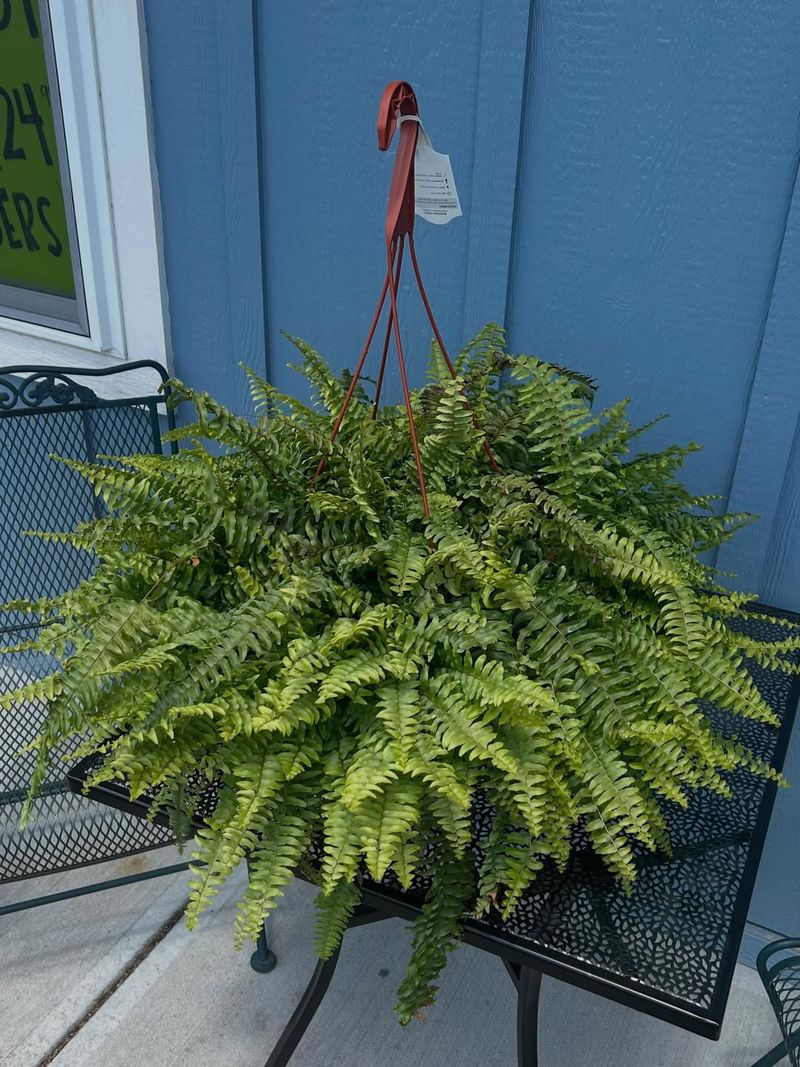
Walk onto almost any classic Southern porch and you will spot a Boston fern. Long, arching fronds that spill over pot edges create a lush, old-fashioned elegance that nothing else quite matches.
It is a look that never really goes out of style.
Boston ferns love humidity, and the Southeast has plenty of it. Dry indoor air actually stresses them more than outdoor summer conditions do.
A shaded porch with good air circulation is close to ideal for these plants.
Moisture is the biggest maintenance factor. Boston ferns need consistently damp soil and benefit from regular misting during dry stretches.
Letting the soil dry out completely causes fronds to yellow and drop quickly.
Hanging baskets are the most popular way to grow them on porches. Choose a basket large enough to support full root growth, at least 12 inches across.
Smaller baskets dry out too fast and require watering twice a day in peak heat.
Feed every three to four weeks with a diluted liquid fertilizer. Over-fertilizing causes tip burn on fronds, so keep it light.
A half-strength dose is usually enough to maintain deep green color all season.
Trim any brown or damaged fronds regularly to keep the plant looking full. New growth replaces old fronds quickly during warm months.
With steady moisture and occasional feeding, Boston ferns stay lush and beautiful from late spring through early fall.
7. Heuchera Brightens Containers With Colorful Leaves
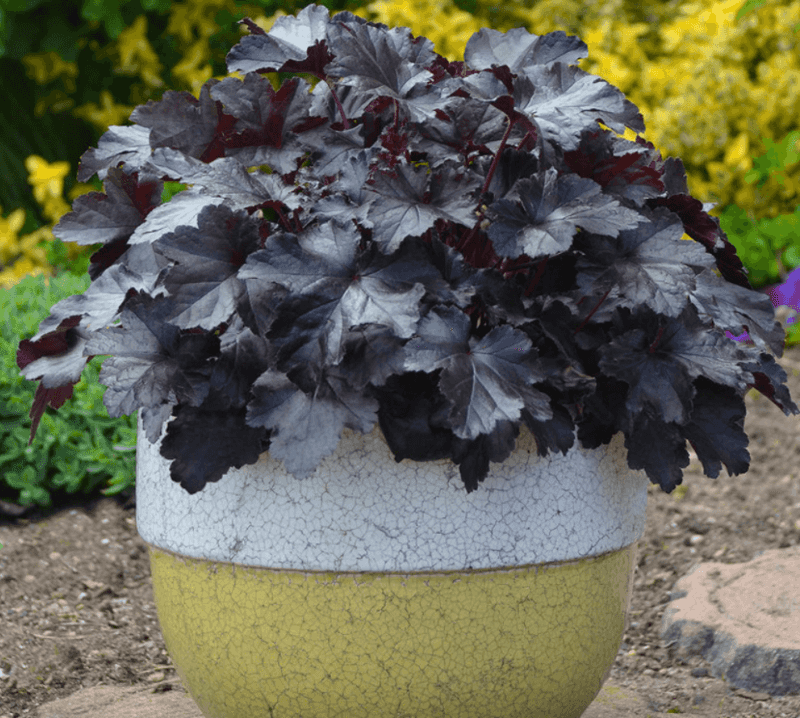
Heuchera, also called coral bells, brings a quiet kind of drama to shaded containers. Ruffled leaves in caramel, burgundy, silver, and lime green look almost metallic in low light.
Most people walk past them at the nursery without realizing what they are missing.
Unlike most flowering annuals, heuchera is prized for its foliage, not its blooms. Tall, wiry flower stalks do appear in late spring, but the leaves carry the show all summer.
That makes it a reliable choice when other plants fade in the heat.
Heuchera prefers partial to full shade and well-drained soil. It handles Georgia’s summer heat reasonably well in containers as long as roots stay cool.
Placing pots in corners with good airflow helps prevent heat stress during peak afternoons.
Water consistently but avoid soggy soil. Root rot is the most common issue, especially in heavy potting mixes.
A mix with added perlite or bark improves drainage and keeps roots healthier through the wet season.
Combine heuchera with impatiens or ferns for a layered, textured arrangement. The contrasting leaf shapes create a display that looks professionally designed.
It also holds its own in a simple solo pot with a clean, modern look.
Feed lightly once a month with a balanced fertilizer. Heuchera is not a heavy feeder, and too much nitrogen causes floppy growth.
Steady, minimal care keeps it compact and colorful through summer and into fall.
8. Torenia Flowers Through Heat And Humidity
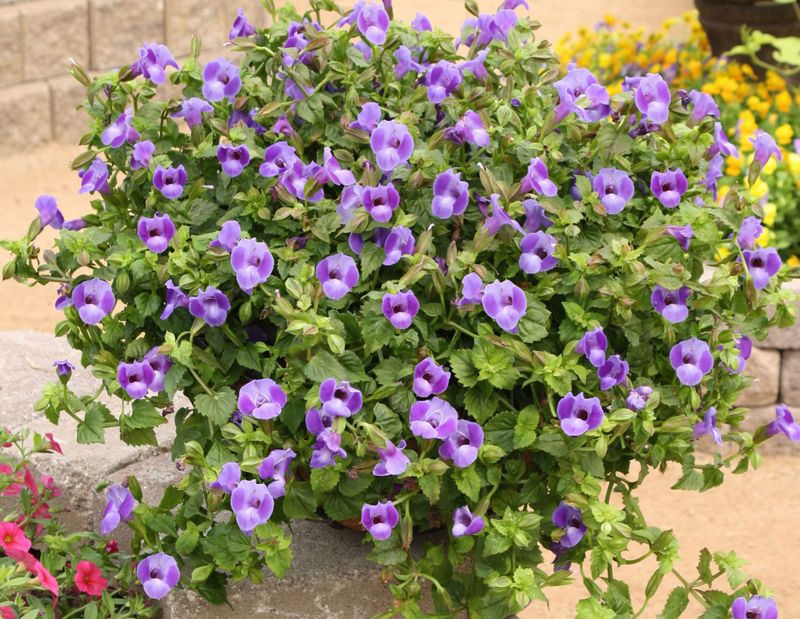
Torenia is the plant that makes experienced gardeners smile because they know something most beginners do not. It blooms steadily through heat and humidity without missing a beat.
Few annuals hold up this well in the deep South during the hottest weeks of summer.
Sometimes called wishbone flower, torenia produces small trumpet-shaped blooms in purple, pink, white, and bicolor combinations. The flowers have a cheerful, pansy-like face that adds personality to any container.
It blooms from late spring until the first cool snap arrives.
Shade is where torenia truly shines. Full sun causes blooms to fade and plants to stress quickly.
A porch with bright indirect light or dappled shade is genuinely the sweet spot for this plant.
Keep soil evenly moist throughout the growing season. Torenia does not recover well from severe wilting, so consistent watering matters.
Self-watering pots work especially well for this plant during dry summer weeks.
Plant torenia in a pot at least 8 inches deep with quality, well-draining potting mix. It works well as a trailing plant in mixed containers or as a solo planting in smaller pots.
Compact varieties stay tidy without much pinching or pruning.
Feed every two weeks with a balanced liquid fertilizer to keep blooms coming. Torenia responds quickly to regular feeding with denser growth and more flowers.
It is one of the most rewarding low-maintenance annuals for shaded summer porches anywhere in the region.