7 Native Michigan Perennials That Work Better Than Peonies For Long-Season Blooms
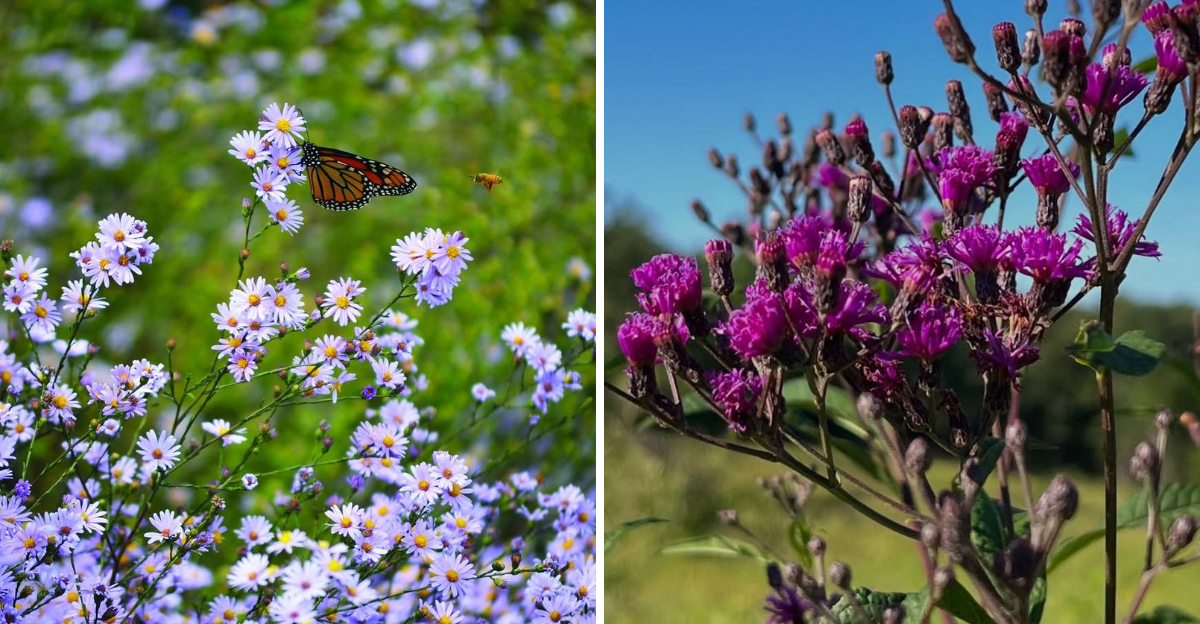
Peonies offer a beautiful but brief blooming window, making several native Michigan perennials a better choice for gardeners wanting color throughout the entire season.
Black eyed susan blooms reliably from midsummer through fall, offering far more extended color than peonies ever provide.
Purple coneflower follows a similar long blooming pattern while also attracting a wide range of pollinators.
Blazing star adds striking vertical color, blooming steadily through much of summer with minimal maintenance required.
Culver’s root offers unique white spikes that bloom for weeks, extending garden interest well beyond peonies’ short season.
New England aster picks up as summer transitions into fall, providing color right up until the first frost arrives.
Wild bergamot blooms for an extended stretch while also supporting bees and hummingbirds throughout the season.
Choosing any combination of these natives gives Michigan gardens continuous color and ecological value that peonies simply cannot match on their own.
1. Sand Coreopsis Blooms Through Much Of Summer
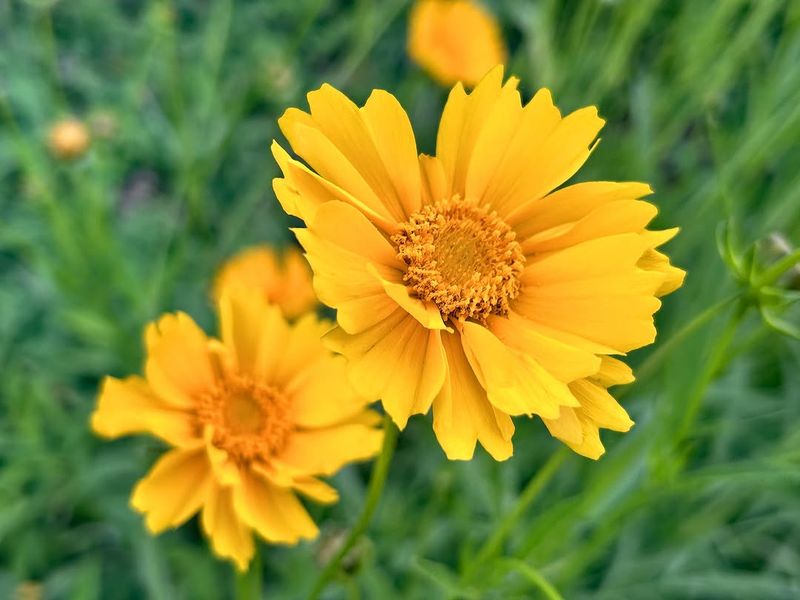
Few plants earn their place in a sunny Michigan border quite like Sand Coreopsis.
Coreopsis lanceolata produces cheerful, bright yellow daisy-like flowers that start opening in June and continue putting on a show well into July and August.
Michigan State University trials confirmed strong early-summer flowering followed by continued blossoms across the warmer months, making this compact native a serious upgrade over any plant that wraps up its display by late spring.
Growing roughly one to two feet tall, Sand Coreopsis fits comfortably at the front or middle of a perennial bed without crowding its neighbors.
It thrives in full sun and tolerates partial sun, preferring dry to moderately moist, well-drained soil.
Sandy or lean soils are perfectly fine, which actually gives this plant an edge in spots where richer garden soil might cause other perennials to flop or underperform. Managing spent flowers is straightforward and rewarding.
Removing some faded blooms can tidy up the plant and encourage additional flowering, while leaving a portion of the seed heads standing gives local birds an easy late-season food source.
Goldfinches are especially fond of those small seeds, so a few untouched stems can turn your border into a mini wildlife station.
Worth mentioning: bloom timing shifts with weather patterns, the specific location in your yard, and how established the plant is. Younger plants in their first season may flower less heavily than mature ones.
Give Sand Coreopsis a couple of growing seasons to settle in, and it will reward that patience with increasingly impressive summer-long color that most spring-only bloomers simply cannot match.
2. Wild Bergamot Provides A Long Summer Flowering Period
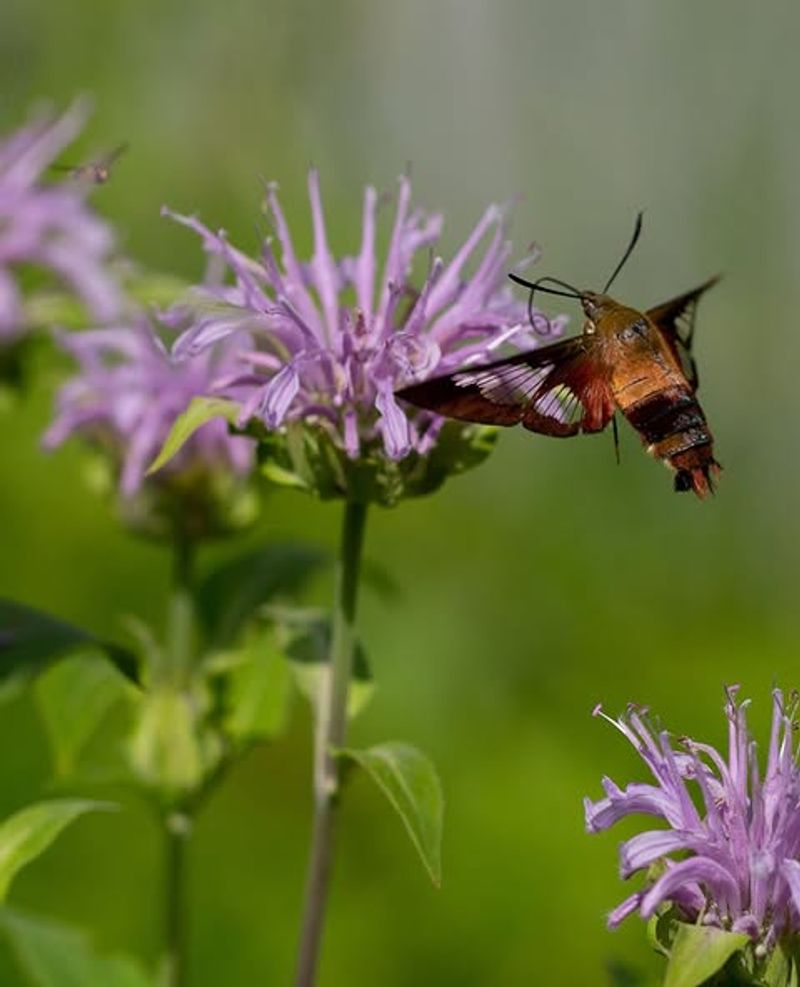
There is something almost magical about walking past Wild Bergamot on a warm Michigan afternoon.
Monarda fistulosa fills the air with a spicy, oregano-like fragrance while its lavender flower clusters attract bees, butterflies, and all sorts of beneficial insects across an extended summer window.
Unlike peonies, which wrap up their show in a matter of weeks, Wild Bergamot keeps producing fresh blooms over a much longer stretch of the season.
Your Michigan Garden Changes Every Week. Your Plan Should Too.
Gardening in Michigan changes quickly throughout the season. Every Friday you’ll receive a simple weekly plan showing exactly what to plant, prune, fertilize, harvest, and protect so you never miss the right timing.
The plant grows two to four feet tall on distinctive square stems, which is a classic feature of the mint family. Full sun produces the best flowering, though it handles partial shade without complaint.
Good soil drainage and decent air movement around the foliage help keep the plant healthy, and consistent moisture during dry spells supports steady blooming. Avoid planting it in low spots where water sits after rain.
Wild Bergamot spreads through underground rhizomes, so it gradually forms expanding patches over time.
That spreading habit can be a genuine asset in a naturalized area or a large pollinator garden, but gardeners with smaller beds should plan ahead.
Removing unwanted outer stems each spring keeps the colony at a manageable size without much effort.
Powdery mildew sometimes appears on the foliage later in the season, particularly in humid summers with poor air circulation.
Not every plant develops a serious problem, and the flowering is usually well underway before any mildew becomes visible.
Selecting a planting spot with good airflow and avoiding overhead watering in the evening reduces the chances of running into that issue at all.
3. Cup Plant Keeps Tall Borders Colorful In August
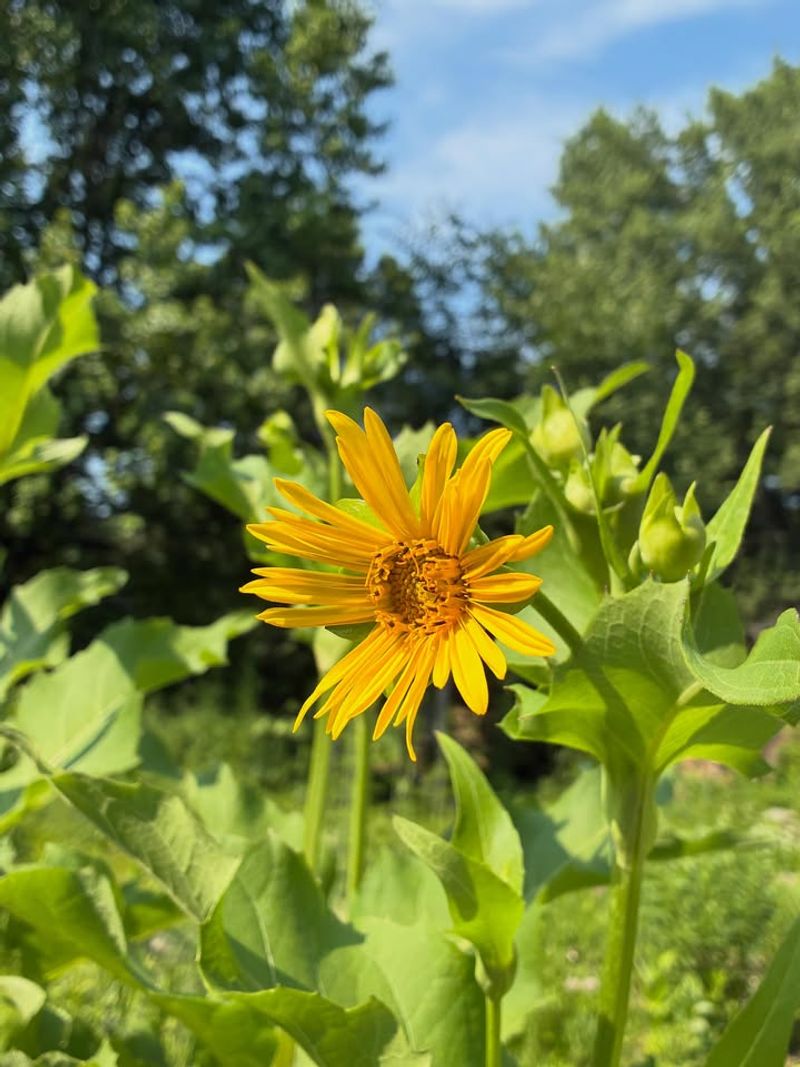
August is the month when many perennial gardens start looking tired, but Cup Plant has other ideas.
Silphium perfoliatum sends up large, bright yellow flowers on thick, sturdy stems right when most of the early-season excitement has faded.
Michigan State University observers noted its impressive August flowering display, and anyone who has seen a mature clump in full bloom understands why this plant earns so much attention from both gardeners and wildlife.
The leaves of Cup Plant do something genuinely fascinating: they fuse around the stem and create small cup-shaped reservoirs that collect rainwater.
Birds have been observed drinking from these tiny pools, and the habitat value of a single mature plant is surprisingly high.
Bees visit the flowers in large numbers throughout the bloom period, and the seed heads that follow attract goldfinches and other seed-eating birds well into autumn.
Mature plants reach anywhere from three to eight feet tall, so Cup Plant belongs at the back of a spacious border, in a broad pollinator garden, or in a naturalized area where it has room to stretch.
Full sun or partial sun and average to moist soil suit it well. It does not need rich or amended soil to perform.
One honest caution: Cup Plant spreads vigorously through both rhizomes and self-seeding, and it can become assertive in a small or formal bed fairly quickly.
Removing unwanted seedlings while they are young keeps things manageable.
For gardeners with space and a love of bold, tall, wildlife-friendly plants, though, Cup Plant is one of the most rewarding natives Michigan has to offer.
4. Ironweed Adds Rich Purple Flowers Throughout August
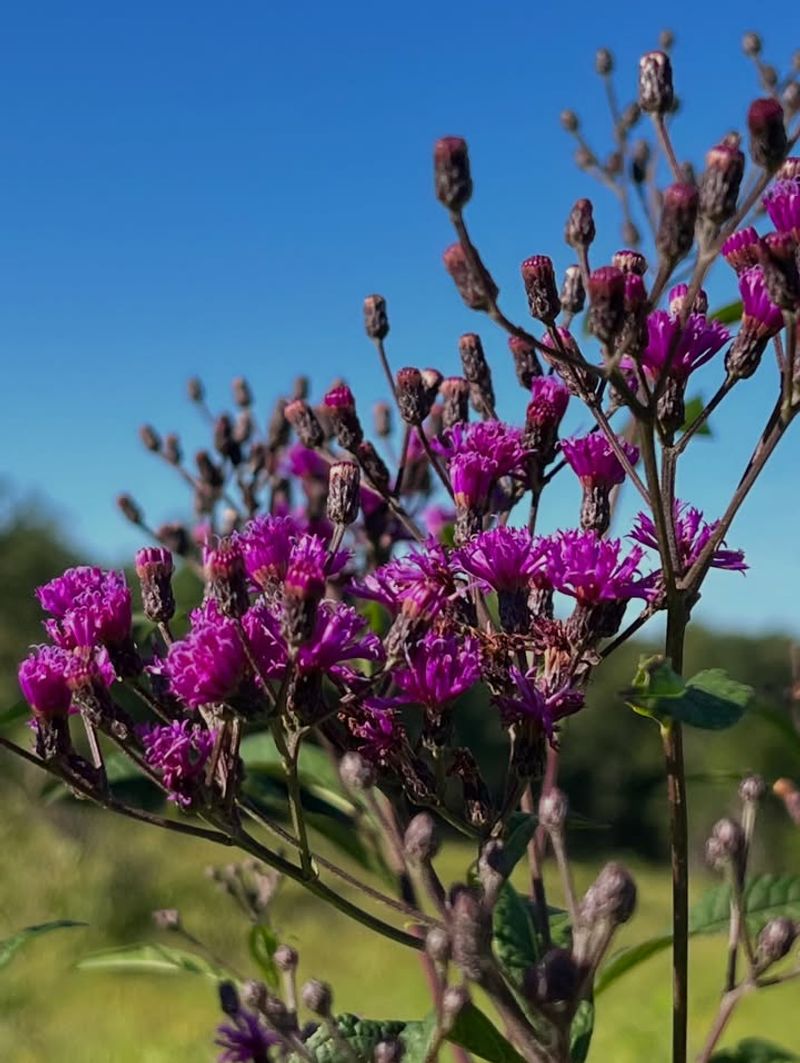
Bold, unapologetic purple is not something you see in every Michigan garden in August, which is exactly what makes Missouri Ironweed stand out.
Vernonia missurica produces vivid, rich purple flower clusters on upright stems throughout the month, creating a striking contrast against the yellows and whites that dominate most late-summer plantings.
Michigan State University tracked its flowering and confirmed a consistent August display that makes it a genuine star for late-season interest.
Growing three to six feet tall, Ironweed has a strong, upright presence that works beautifully near the back of a border or planted alongside sturdy ornamental grasses and other robust perennials.
It is native primarily to the Southern Lower Peninsula of Michigan, so gardeners in that part of the state are working right within its natural range.
Full sun or partial sun with average to moist soil keeps it performing at its best season after season. The pollinator value of this plant is genuinely impressive.
Sweat bees, leafcutter bees, carpenter bees, and bumblebees all visit the flowers actively, and the blooms provide a critical late-summer nectar source when other plants are winding down.
Monarch butterflies also stop by regularly, making Ironweed a smart addition to any garden focused on supporting wildlife.
Tall stems can occasionally need support in windy spots or in richer soils that encourage lush, heavy growth.
Alternatively, shortening selected stems by roughly one-third in early summer encourages branching and creates a slightly more compact, self-supporting plant by the time flowering begins.
Either approach works well, and the reward is a month of spectacular purple color at a time when most gardens desperately need it.
5. Common Boneset Extends White Flowers Into Late Summer
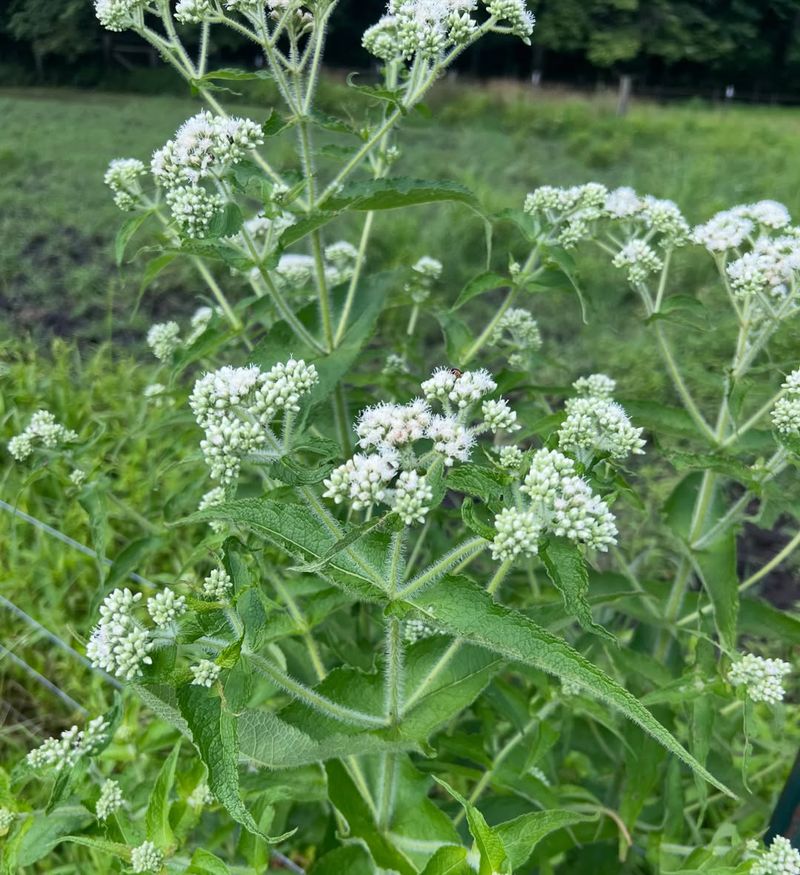
White flowers have a way of brightening up a garden bed even on overcast days, and Common Boneset delivers exactly that kind of quiet, reliable beauty from midsummer into early fall.
Eupatorium perfoliatum produces flat-topped clusters of small white blossoms on upright stems that reach three to five feet at maturity.
It is not a showy, theatrical plant in the way that some natives are, but it fills a genuinely useful role in extending the flowering season well past the peony window.
Common Boneset thrives in full sun or partial shade, and it genuinely prefers average to consistently moist soil.
That moisture preference makes it an excellent choice near rain gardens, low-lying areas of the yard, pond edges, and moist property borders where many other perennials would struggle.
Pairing it with other moisture-tolerant natives creates a cohesive, naturalistic planting that handles wet conditions gracefully. Pollinators find Common Boneset irresistible.
Wasps, flies, small native bees, and butterflies all visit the flowers regularly, and because it blooms during a period when competition from other nectar sources is decreasing, it plays a meaningful role in supporting late-season insect populations.
Leaving some stems standing after flowering provides structure through the autumn months and gives overwintering insects a place to shelter. Placement matters with this plant.
In a small, formal bed it can look a bit coarse or overpowering, so thoughtful grouping with other upright natives works better than using it as a solo specimen.
Water new plants consistently through their first season to help the root system establish.
After that, Common Boneset is remarkably self-sufficient and requires very little attention to perform year after year.
6. New England Aster Carries Color Into Fall
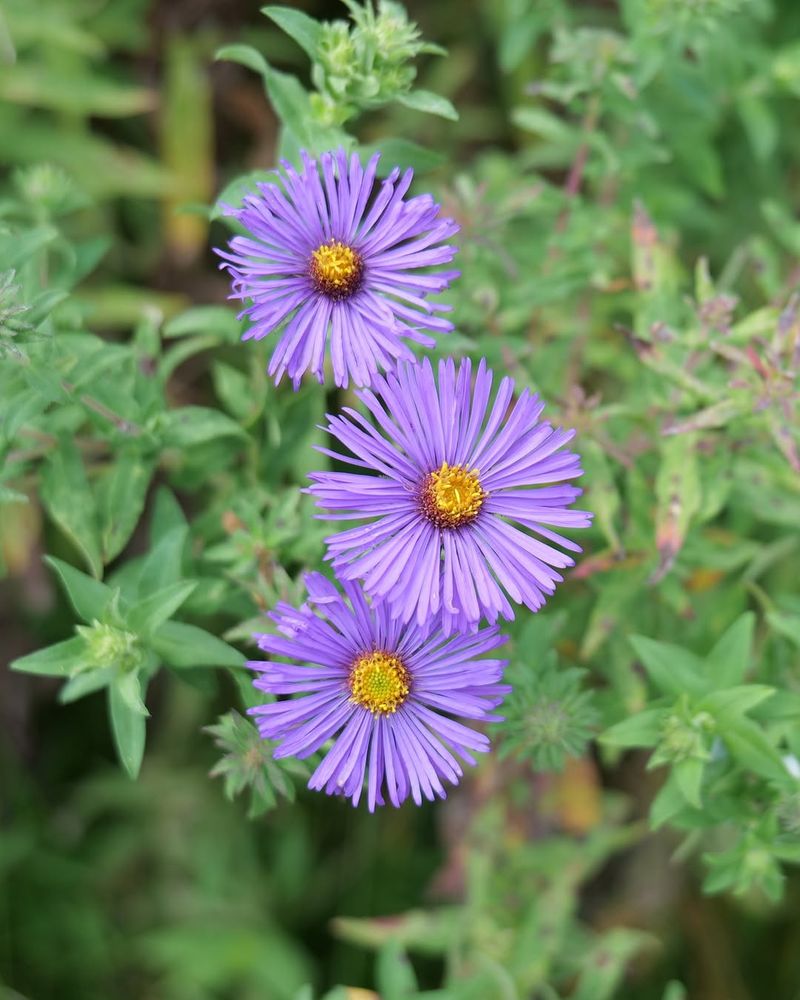
When September arrives and most of the garden starts looking exhausted, New England Aster shows up like it owns the place.
Symphyotrichum novae-angliae bursts into bloom with purple to pink daisy-shaped flowers that cover the plant in a way that feels almost extravagant for a native wildflower.
At a time when late-season pollinators are searching hard for nectar, these flowers become one of the most important resources in the entire Michigan garden landscape.
Plants typically reach three to six feet in height, which gives them a strong presence in the middle or back of a perennial border.
The lower stems can become bare as the season progresses, so pairing New England Aster with shorter plants in front creates a fuller, more polished look without any extra effort.
Full sun produces the best and most abundant flowering, though it tolerates partial sun reasonably well.
Adequate soil moisture through the growing season helps this aster stay healthy and flower generously.
It is not particularly demanding about soil type, but it performs noticeably better with consistent watering during dry summer stretches.
Mulching around the base helps retain moisture and keeps the root zone cooler during hot spells.
Gardeners who want a fuller, bushier plant have a simple trick available: shorten selected stems by about one-third in early summer, before flower buds form.
This encourages branching and results in a more compact, self-supporting plant by fall.
Avoid pruning after midsummer, though, because late cutting can delay or reduce flowering significantly.
Plant it right, give it a little early-season attention, and New England Aster will deliver a spectacular autumn finale every single year.
7. Smooth Blue Aster Provides Some Of The Latest Flowers
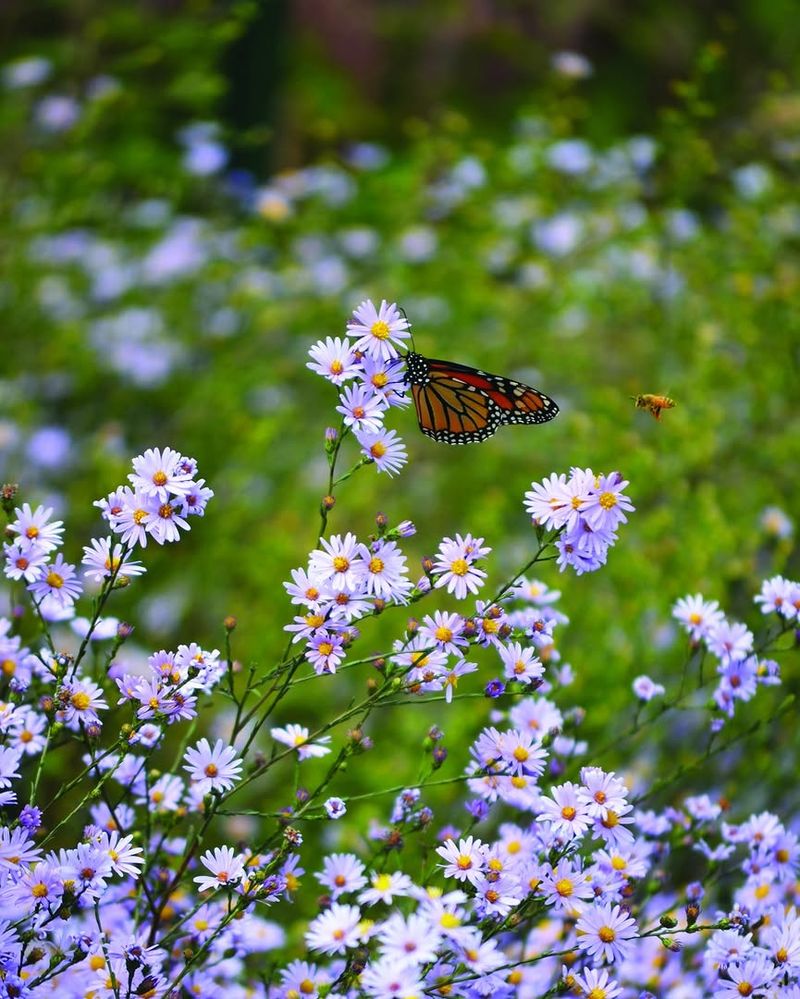
Most gardens have gone quiet by mid-September, but Smooth Blue Aster is just getting started.
Symphyotrichum laeve produces pale violet flowers from the middle of September into early October, and Michigan State University identified it as the latest-flowering native species in its trial plantings.
That timing alone makes it invaluable for gardeners who want to squeeze every last week of color out of the growing season before the first hard frost arrives.
The foliage is notably smooth and has a slight blue-green tint that looks attractive even before the flowers open.
Plants grow two to four feet tall and carry themselves with a clean, upright elegance that works well in both naturalistic plantings and more structured border designs.
Full sun is ideal, but Smooth Blue Aster adapts to partial shade without losing much of its flowering performance.
One of the most practical qualities of this plant is its flexibility with soil conditions.
It grows comfortably in dry to moderately moist soils, which means it suits a wider range of Michigan garden spots than many moisture-demanding natives.
Space plants about eighteen to twenty-four inches apart to allow for good air circulation, and water consistently through the first growing season while roots get established.
Planting Smooth Blue Aster alongside Sand Coreopsis, Wild Bergamot, Cup Plant, Ironweed, Common Boneset, and New England Aster creates a continuous flowering sequence that stretches from June all the way through early October.
That is an extraordinary seasonal range compared to the brief spring window that peonies offer.
Native pollinators flock to the late blooms, and the fluffy seed heads that follow provide textural interest and food for birds through the winter months ahead.