Georgia Native Plants That Thrive In August Heat And Survive Sudden Thunderstorms
One day the garden is dry and dusty. The next, a summer thunderstorm leaves everything soaked.
August weather can be tough on plants that are not built for those quick changes.
Native plants have an advantage. They are used to the local climate.
Heat does not slow them down as easily, and heavy rain is less likely to leave them struggling.
Many of the best choices for Georgia keep growing through both extremes. They ask for less attention while still adding color, texture, and life to the landscape.
If you want a yard that looks good with less effort, these native plants are some of the most reliable options to grow this time of year.
1. American Beautyberry Barely Notices August Heat
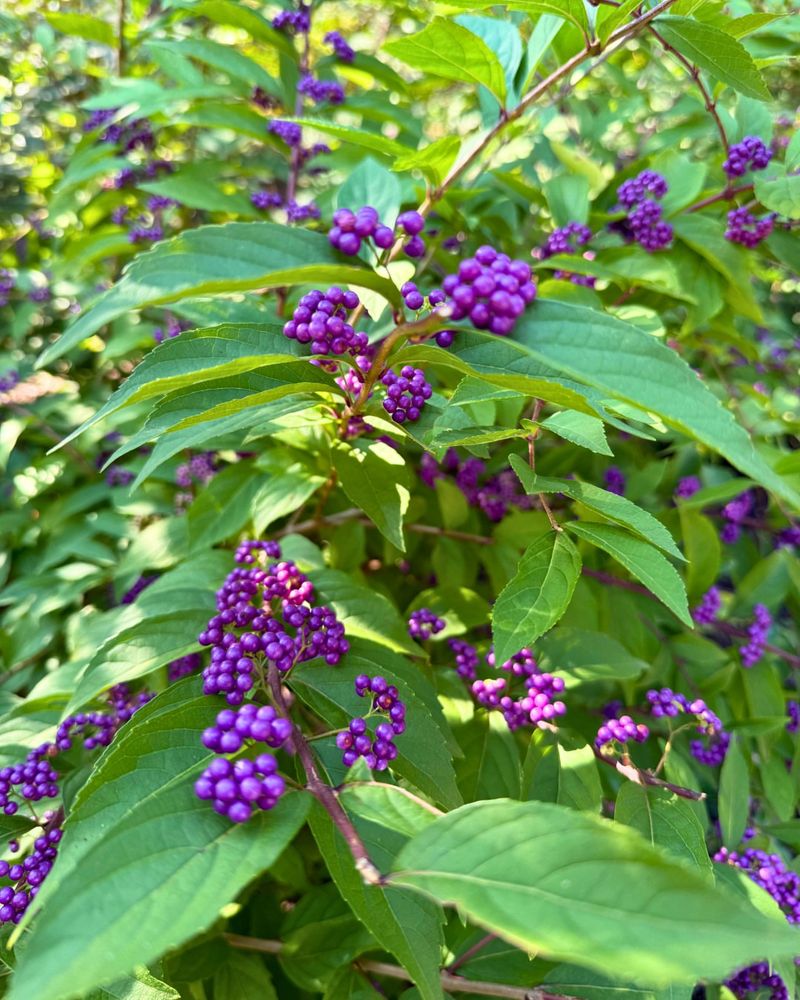
Walk past an American Beautyberry in August and those electric purple berries will stop you cold. Nothing else in the summer garden looks quite like it.
The berries cluster tight around the stems in a way that almost looks artificial, but it is completely real.
Callicarpa americana handles heat well because it is built for Southern summers. Its roots reach deep enough to find moisture even when the top inch of soil bakes dry.
A stretch of 95-degree days will slow it down slightly, but it bounces back fast once temperatures ease.
Thunderstorms are not a problem either. The arching branches flex in strong wind rather than snapping.
Heavy rain rolls off the broad leaves without causing rot or fungal issues, as long as the plant has decent drainage.
Beautyberry grows naturally in woodland edges and open forests across the Southeast, so part shade suits it well. Full sun works too, especially if the soil holds a bit of moisture.
In Georgia gardens, it tends to top out around six feet tall with a relaxed, arching shape.
Birds go after those berries in fall, so you get wildlife value on top of the visual impact. Pruning it hard in late winter keeps growth fresh and vigorous each season.
Low maintenance and genuinely tough, this shrub earns its spot every single year.
2. Black Eyed Susan Just Keeps On Blooming
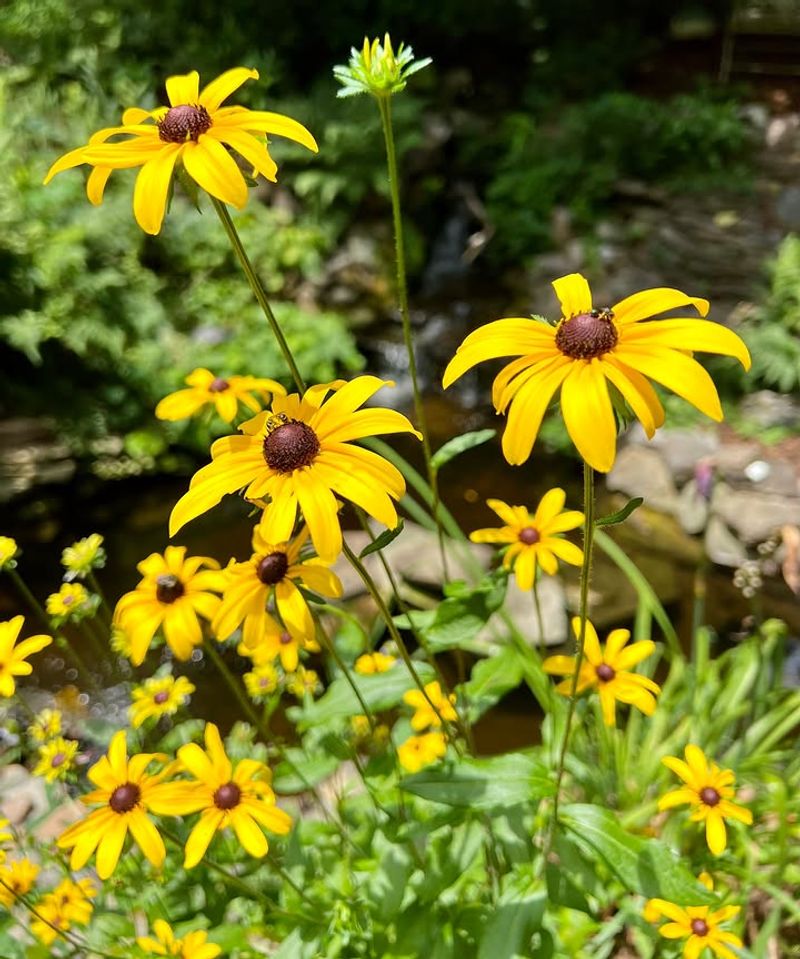
Some flowers flinch when August heat peaks. Black Eyed Susan acts like it does not even notice.
Rudbeckia hirta keeps pushing out fresh blooms even when the thermometer refuses to drop below 90.
Part of what makes it so reliable is its tap root. That deep root system pulls moisture from lower in the soil, giving the plant a buffer during dry spells between storms.
Leaves feel slightly rough and hairy, which actually helps reduce water loss in intense heat.
When a thunderstorm hits, the sturdy stems hold up surprisingly well. Shorter varieties stay nearly upright even in strong gusts.
Taller varieties may lean a bit but rarely fall over completely, especially if they have neighboring plants for support.
Black Eyed Susan thrives in full sun and tolerates poor, dry soil better than most flowering plants. Rich, overly amended soil can actually cause it to flop, so skip the extra fertilizer.
Your Georgia Garden Changes Every Week. Your Plan Should Too.
Gardening in Georgia changes quickly throughout the season. Every Friday you’ll receive a simple weekly plan showing exactly what to plant, prune, fertilize, harvest, and protect so you never miss the right timing.
Plant it in a spot that drains well and let it do its thing.
Goldfinches and other seed-eating birds love the seedheads once blooming slows. Leaving those heads standing through fall and winter adds food value and visual texture to the garden.
Deadheading spent flowers encourages more blooms, but it is not required. This plant is genuinely forgiving, which makes it a solid choice for gardeners at any skill level.
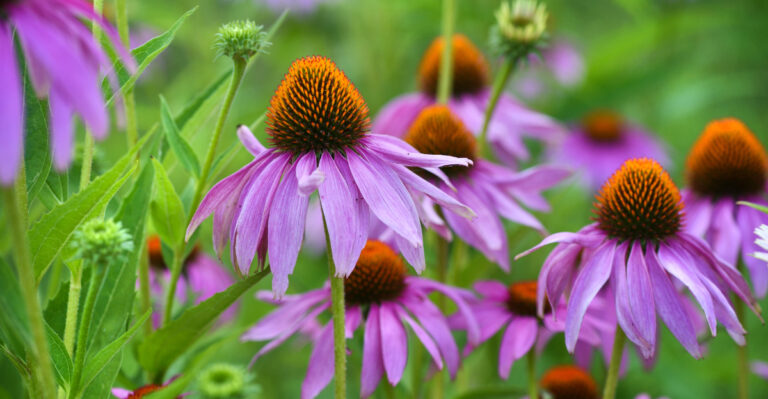
3. Purple Coneflower Shrugs Off Summer Downpours
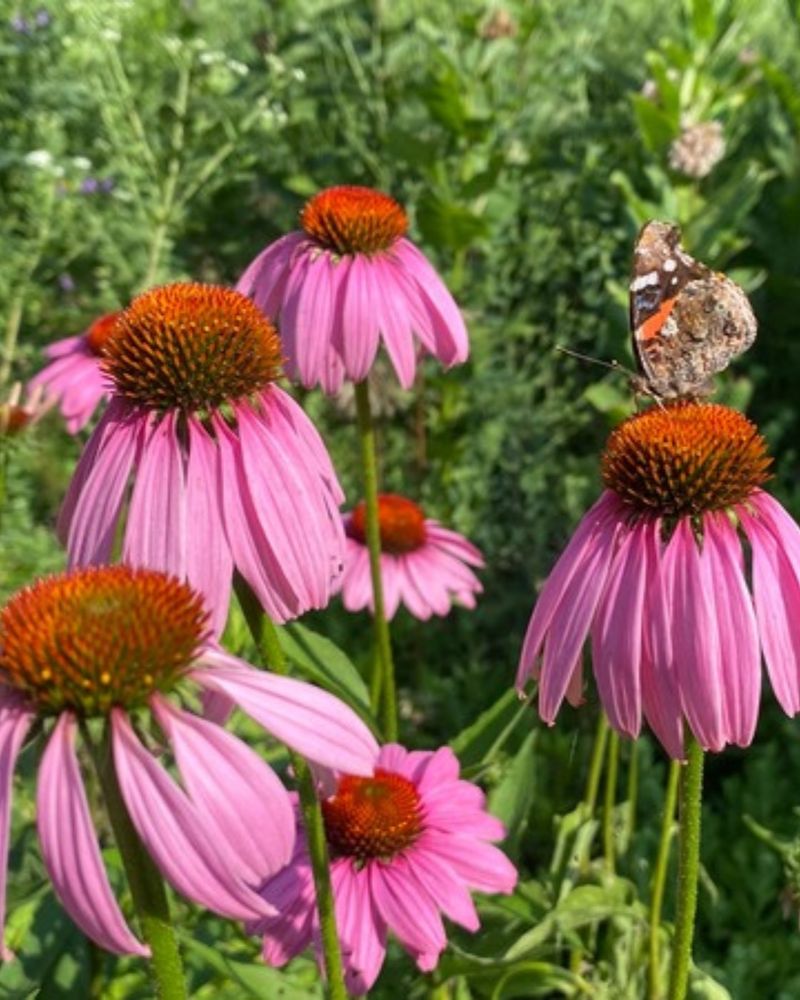
Purple Coneflower has a reputation for being tough, and August proves it. Echinacea purpurea blooms through heat waves, bounces back after downpours, and still looks presentable at the end of the month.
The cone-shaped center is not just decorative. It acts like a natural rain deflector, helping water shed away from the base of the petals.
Stems are stiff and fibrous, which means they resist flopping even after a heavy storm drops two inches of rain in thirty minutes.
Heat tolerance comes from the plant’s deep fibrous root system.
Once established, it rarely needs supplemental watering.
During the worst of summer, the foliage may look a little stressed, but the blooms keep coming as long as the roots stay intact.
Full sun is ideal, though it tolerates light afternoon shade in the hottest parts of the region. Well-drained soil is more important than soil richness.
Sandy or clay soils both work as long as water does not pool around the crown after storms.
Pollinators absolutely swarm this plant through August. Bumblebees, butterflies, and native bees all visit regularly.
Goldfinches show up once the seeds ripen in early fall. Leaving the seedheads standing feeds birds and allows self-seeding, which means more plants over time.
Purple Coneflower is a workhorse that rewards minimal care with maximum return across a long season.
4. Swamp Milkweed Thrives In Moist Soil
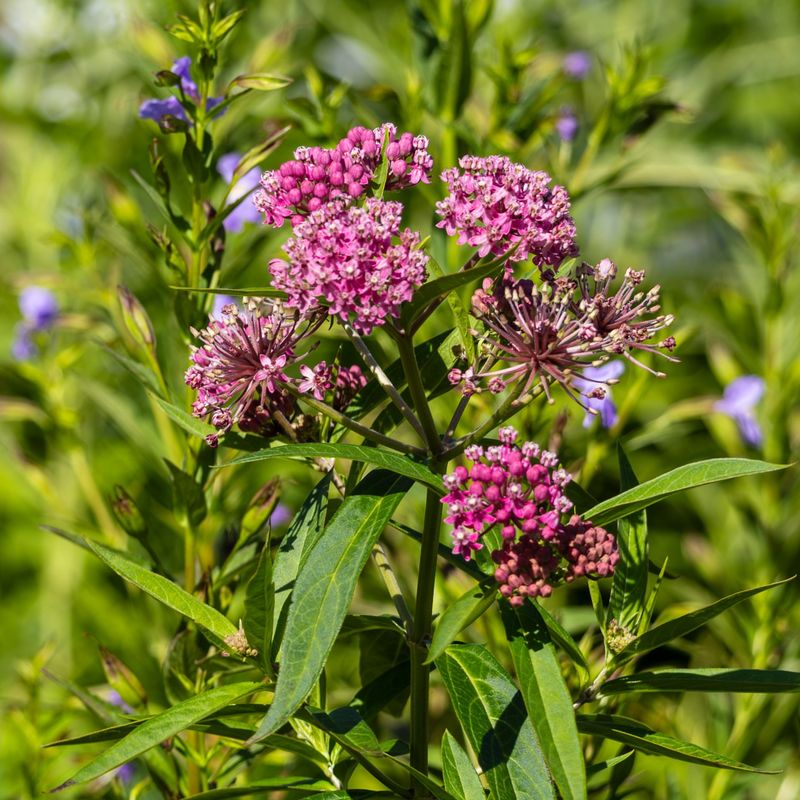
Most plants panic when water sits around their roots. Swamp Milkweed practically asks for it.
Asclepias incarnata is one of the few native plants that genuinely performs better in low, moist spots that other plants avoid.
August thunderstorms that flood a low corner of the yard are not a threat to this plant. Swamp Milkweed tolerates standing water for short periods, making it a smart pick for rain gardens, drainage swales, or any spot that stays damp after a storm.
Heat tolerance is solid too.
The plant handles full sun through the hottest part of summer without wilting, as long as moisture is available. In well-drained soil, it needs more consistent watering to stay healthy.
Pairing it with the right location makes a noticeable difference.
The pink flower clusters are genuinely attractive and bloom from midsummer into early fall. Monarch butterflies use it as a host plant, laying eggs on the leaves.
Other pollinators visit the blooms regularly, making it a high-value plant for wildlife in the garden.
Swamp Milkweed grows three to four feet tall in most conditions. It spreads slowly by seed and root offshoots, which makes it easy to manage.
Cutting it back after the first flush of blooms sometimes encourages a second round. If you have a wet corner that stays soggy, this plant turns a problem spot into something genuinely useful and beautiful.
5. Coral Honeysuckle Handles Summer Storms Well
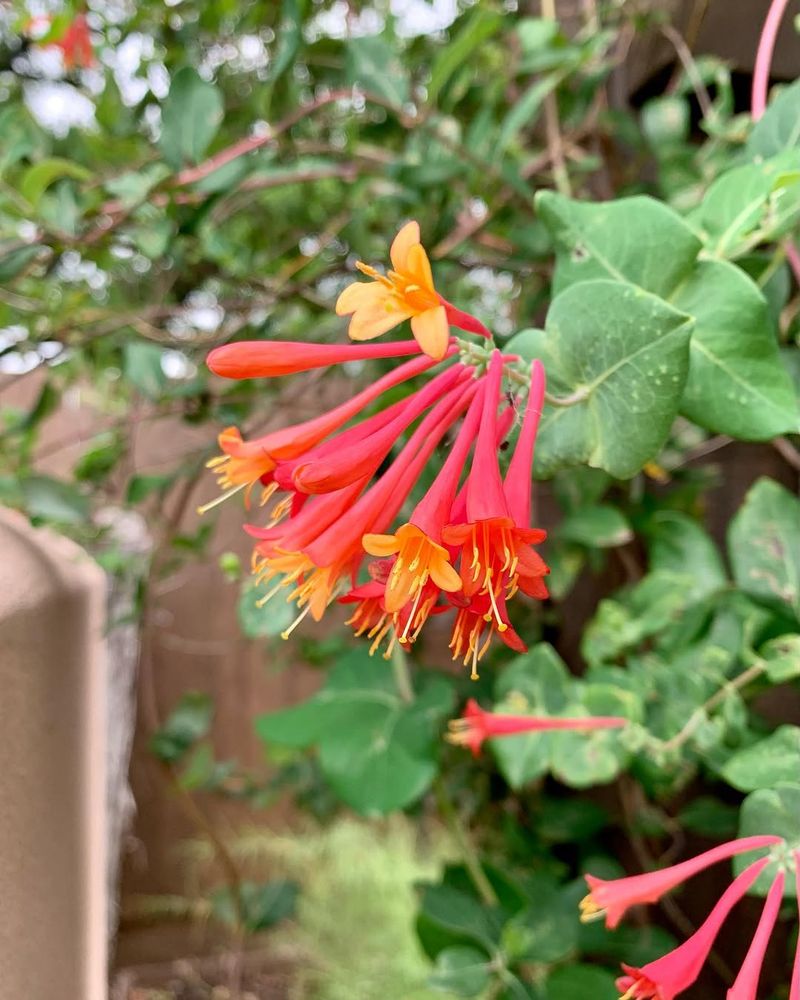
Vines can be tricky in storm season. Some get ripped from their supports or tangle into a mess after heavy wind.
Coral Honeysuckle is different. Lonicera sempervirens clings tight and recovers fast, even after rough summer weather.
Unlike the invasive Japanese Honeysuckle, this native species is well-behaved and manageable. It twines around supports without strangling them.
The stems are flexible enough to bend in wind without breaking, which matters a lot when summer storms roll through with gusts.
Heat is not an issue for this plant.
Coral Honeysuckle blooms heavily in spring, then continues producing scattered flowers through summer and into fall.
August heat slows the bloom rate slightly, but the foliage stays green and healthy without extra irrigation once the vine is established.
Hummingbirds are the main pollinators for this plant. The long tubular flowers are shaped specifically for hummingbird feeding, and you will often see them hovering around the vine on summer mornings.
Ruby-throated hummingbirds are especially common visitors in the Southeast during August migration.
Full sun to part shade both work well. Coral Honeysuckle grows on fences, trellises, arbors, or even up through shrubs.
It stays under about fifteen feet in most garden settings, making it manageable without constant pruning. Soil quality matters less than good drainage.
Plant it once, train it lightly, and it tends to take care of itself through even the roughest summer months.
6. Georgia Aster Saves Its Best Blooms For Late Summer
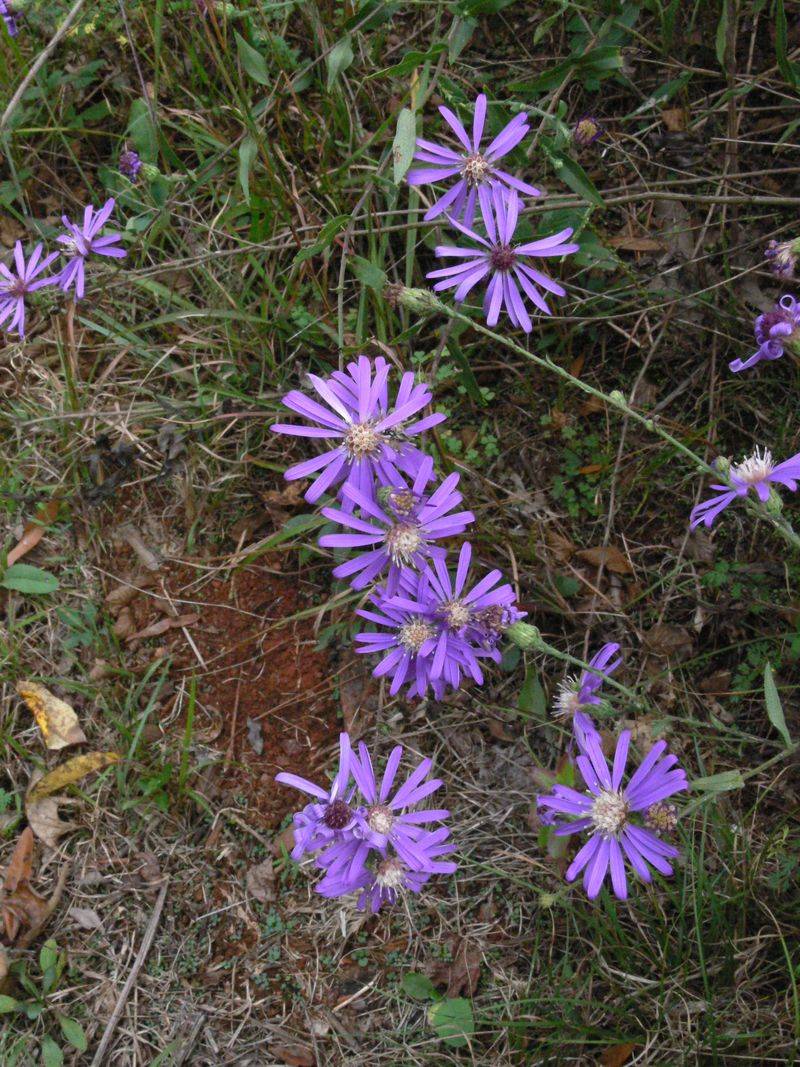
Most plants peak in spring and coast through the rest of the year. Georgia Aster flips that pattern entirely.
Symphyotrichum georgianum holds back through the early months and saves its best display for late summer and fall, exactly when other plants start fading.
August is when the buds start forming in earnest. By September, the plant is covered in purple, daisy-like flowers that attract a wide range of late-season pollinators.
Bees and butterflies that are fueling up before cooler weather arrive in large numbers.
Heat tolerance is strong. The plant grows naturally in open woodlands and rocky, well-drained soils across the Southeast, which means it is adapted to dry summer conditions.
It does not need rich soil or regular fertilizing. In fact, too much fertility can cause floppy, weak stems.
Thunderstorms pose little risk to established plants.
The stems are wiry but surprisingly resilient.
After a heavy rain, they may lean slightly but tend to straighten back up within a day or two. Staking is rarely necessary if the plant gets adequate sunlight.
Georgia Aster is considered a rare plant in some parts of its range, which makes growing it in home gardens a genuine conservation effort. It spreads slowly and stays relatively compact at two to three feet.
Full sun and good drainage are the two keys to success. Give it those conditions and it earns its place in the garden every August without question.
7. River Oats Stay Standing Through Strong Winds
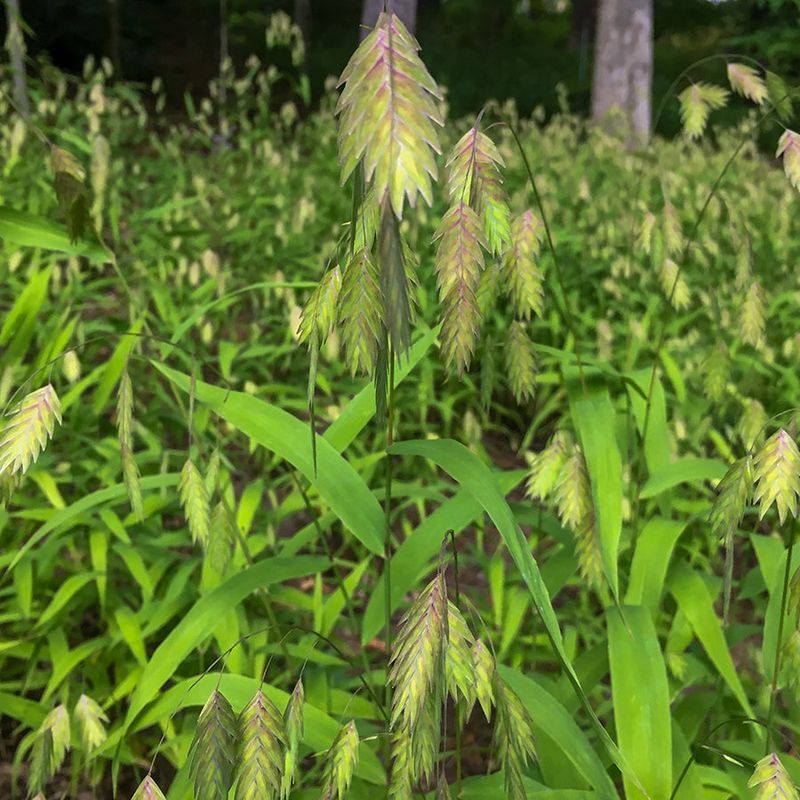
Wind is where most ornamental grasses show their weakness. Stems flatten, clumps lean sideways, and the whole thing looks like a mess for weeks.
River Oats handles wind differently. Chasmanthium latifolium sways hard and springs back almost completely upright once the storm passes.
The secret is in the stem structure.
River Oats has stiff, jointed culms that flex under pressure without snapping.
The flat, dangling seed heads actually catch wind beautifully, creating movement that looks intentional rather than storm-damaged.
Heat is handled well too, especially in shadier spots. Unlike many grasses that need full sun, River Oats prefers part shade to full shade.
That makes it one of the few grasses that works under trees, along shaded fences, or in woodland garden areas where other plants struggle.
Moisture needs are moderate. It tolerates both dry shade and moist spots near streams or drainage areas.
Established clumps rarely need supplemental watering through summer. In Georgia’s humid climate, natural rainfall is usually enough to keep it looking good.
The seed heads turn a coppery bronze color in fall and persist through winter, adding structure to the garden long after summer ends. Birds occasionally pick at the seeds, though this grass is more valued for its visual impact than wildlife feeding.
Dividing clumps every few years keeps growth vigorous. Plant it in shaded areas where other options feel limited and it consistently delivers.
8. Blue Mistflower Brings In More Late Season Pollinators
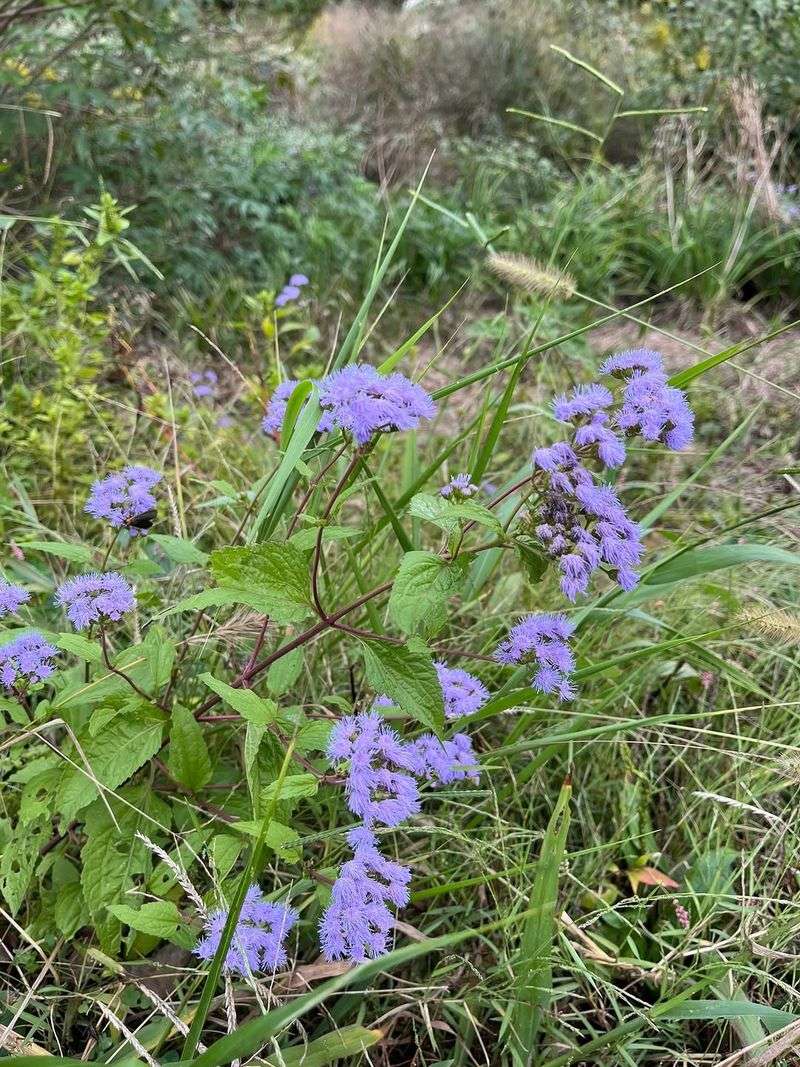
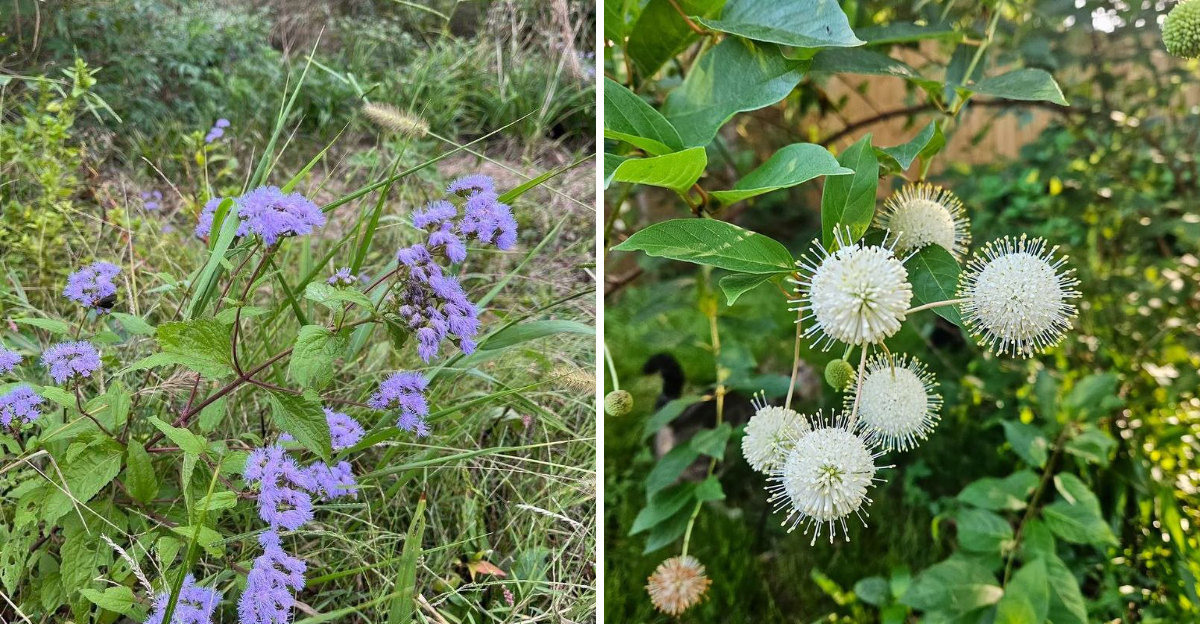
Late August can feel like a slow period for pollinators, but Blue Mistflower changes that fast. Conoclinium coelestinum bursts into bloom right when nectar sources start thinning out, drawing in butterflies, bees, and skippers in impressive numbers.
The fuzzy blue-purple flower clusters are hard to miss. They look a bit like a smaller version of Joe Pye Weed, and they carry that same late-season energy.
Blooming starts in August and continues well into October in most parts of the Southeast.
Heat tolerance is solid for a plant that looks this delicate. Blue Mistflower grows naturally in moist woodland edges and streambanks, so it handles humidity well.
It prefers some afternoon shade during the hottest weeks, which helps prevent leaf scorch in exposed spots.
Thunderstorms are not a major concern. Stems are relatively short, usually topping out around two feet, which keeps the plant below the worst of the wind.
After heavy rain, the clumps shake off excess water quickly without developing rot issues in well-drained soil.
Spreading by rhizomes, Blue Mistflower can form dense colonies over time. In a naturalistic garden or meadow setting, that spreading habit is a bonus.
In a more formal bed, edging it occasionally keeps it in check without much effort. Full sun to part shade both work.
Moist to average soil suits it best. Plant it near a seating area and watch the butterfly traffic pick up through the end of summer.
9. Buttonbush Feeds Pollinators And Songbirds
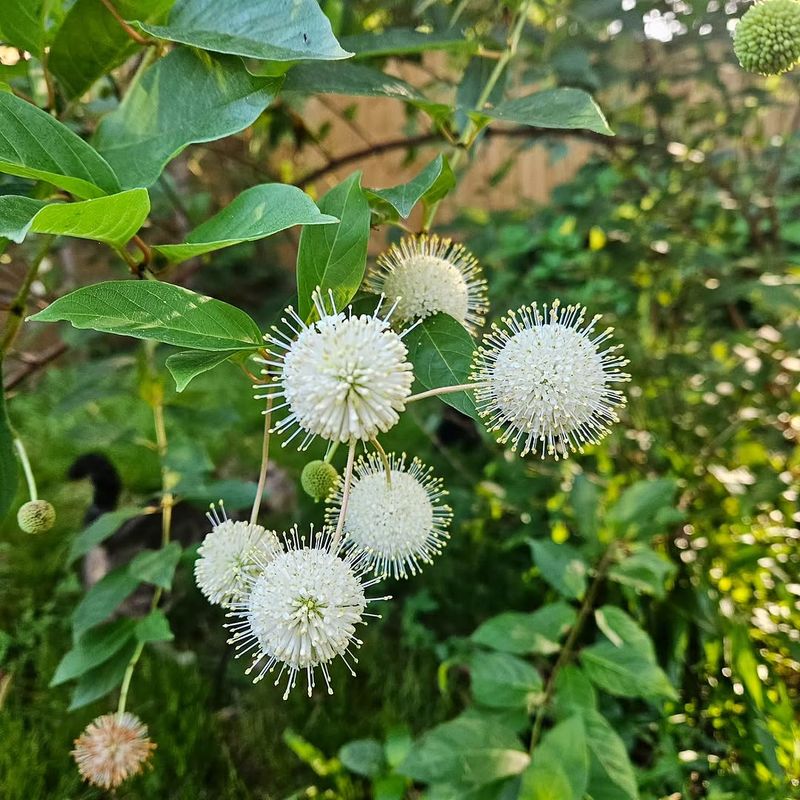
Few native shrubs pull double duty as effectively as Buttonbush. Cephalanthus occidentalis feeds pollinators through summer with its unusual spherical white flowers, then switches over to feeding waterfowl and songbirds once the seeds ripen in fall.
August is prime bloom time. Those round, pinecushion-like flower clusters show up from July through September and attract an impressive mix of visitors.
Bees, butterflies, and hummingbirds all show up regularly. The nectar is genuinely rich, which explains the consistent traffic.
Heat does not slow it down much.
Buttonbush grows naturally along riverbanks, pond edges, and in wet bottomlands across the Southeast, so it is built for hot, humid summers.
Full sun to part shade both suit it well depending on moisture availability.
Flooding is not a threat. In fact, Buttonbush tolerates extended flooding better than nearly any other native shrub.
Thunderstorms that leave standing water around its roots for days are not a problem. That flooding tolerance makes it ideal for wet spots, rain gardens, and shoreline plantings where other shrubs struggle.
Size varies, but most garden specimens reach six to twelve feet tall. Pruning in late winter shapes it without sacrificing next summer’s blooms.
Buttonbush works well as a screening shrub near water features or as an anchor plant in a wet native garden. If you have a soggy spot that needs a tough, wildlife-friendly shrub, this plant is worth serious consideration.