What North Carolina Gardeners Do Differently To Get Panicle Hydrangeas That Stop People In The Street
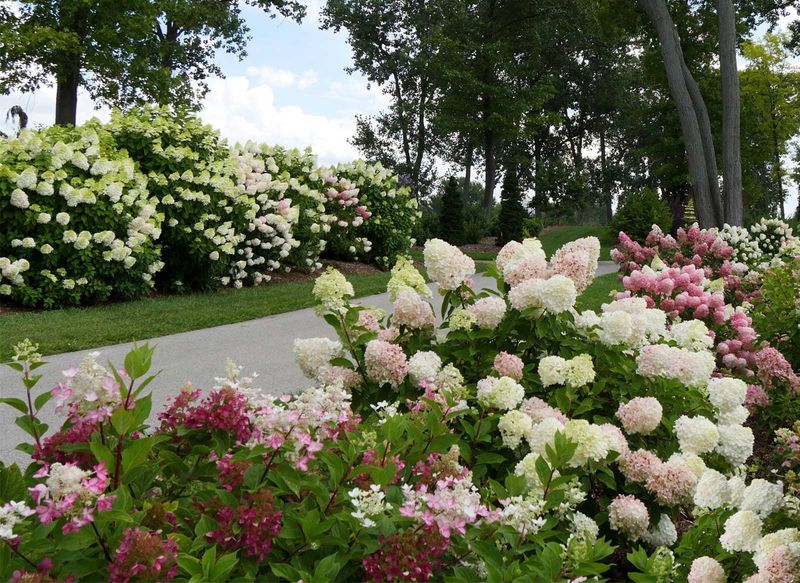
Panicle hydrangeas are the shrubs that make neighbors slow their cars down in late summer, staring at those big cone-shaped blooms turning from white to blush pink. Plenty of North Carolina homeowners want that look but wonder if there is some regional secret they are missing. There is not, and that is actually good news. A few well-timed, informed choices applied to your specific yard can make a real difference, and most of them happen before the growing season even starts.
The Difference Is Good Timing, Not a Secret
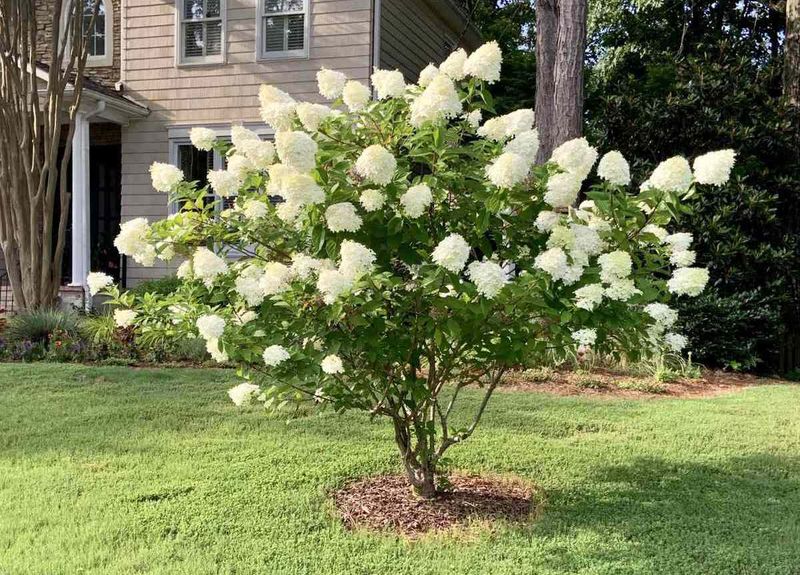
Panicle hydrangeas with full, upright flower heads are not the result of a secret technique passed around Piedmont neighborhood Facebook groups. The practices behind those showstopper shrubs come from standard horticultural guidance that extension services have published for years, applied carefully to whatever a specific North Carolina yard actually offers. Once you understand that, the whole thing gets a lot less mysterious.
The featured plant here is Hydrangea paniculata, a deciduous shrub that can reach roughly 8 to 15 feet depending on cultivar and conditions. NC State Extension’s Plant Toolbox describes it as more tolerant of full sun than many hydrangeas, which already sets it apart from the bigleaf types most people picture when they hear the word hydrangea. That sun tolerance, combined with the plant’s habit of blooming on new wood it grows each spring, opens up a simple and repeatable annual rhythm.
The decisions that matter most are choosing a cultivar that fits the space, giving the plant suitable light and drainage, keeping moisture steady with mulch, and pruning at the right moment in late winter or very early spring before active growth begins. These choices can reduce avoidable maintenance for established, well-sited plants, but they do not turn a newly planted shrub or a poorly drained spot into an effortless display. Newly planted panicle hydrangeas still need regular establishment watering, and drought, heavy rain, and compacted soil can still create problems in any North Carolina yard.
The article sections that follow walk through each of those decisions in plain language, with attention to the variation across North Carolina sites, from the red clay of the Piedmont to the sandy soils along the Coastal Plain.
Choose the Cultivar Before You Reach for Pruners
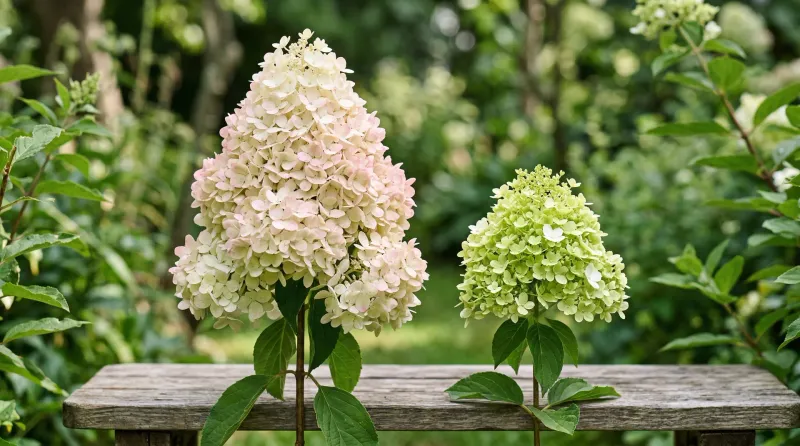
Most pruning problems with panicle hydrangeas start before the plant ever goes in the ground. Cultivar size varies enormously in this species, and a shrub that reaches 12 feet at maturity planted 3 feet from a porch railing is going to need repeated size-control cuts that a better cultivar choice would have made unnecessary.
NC State lists a range that runs from compact selections like ‘Little Lime’, which typically stays around 3 to 5 feet, up to large forms like ‘Limelight’ and ‘Pee Gee’ that can push well past 8 feet in favorable conditions. NC State’s profile for ‘Limelight’ specifically notes that it has stronger stems than most hydrangeas and can hold its large flower heads upright after heavy rain, which is a meaningful advantage in a state where summer thunderstorms can arrive almost daily in July and August. That documented stem strength is what makes ‘Limelight’ a useful reference point for homeowners who want flowers that stay put after a Piedmont downpour.
Your North Carolina Garden Changes Every Week. Your Plan Should Too.
Gardening in North Carolina changes quickly throughout the season. Every Friday you’ll receive a simple weekly plan showing exactly what to plant, prune, fertilize, harvest, and protect so you never miss the right timing.
Matching the mature size of the cultivar to the available space can reduce how often you need to pick up pruners for size control or structural correction. That said, no cultivar choice eliminates all pruning, and it will not guarantee upright flower heads through every storm. Check the mature height and spread listed for your specific selection before planting near a walkway, window, or property line. A few minutes with a tape measure now saves a lot of awkward cutting later, and it is genuinely one of the lowest-effort improvements available to any North Carolina gardener starting fresh with this plant.
Match Light and Drainage to the Site
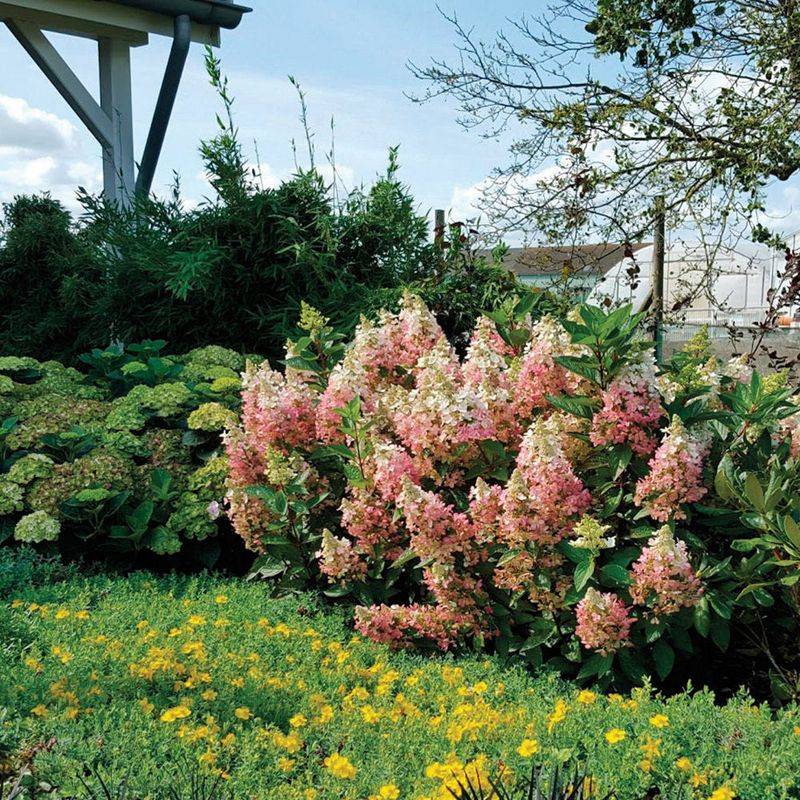
Panicle hydrangeas tolerate more sun than most of their hydrangea relatives, but that tolerance has a ceiling, and a plant sitting in full afternoon sun against a south-facing brick wall in the lower Piedmont is working harder than it needs to. Full sun to partial shade is the practical target, with afternoon protection worth considering wherever reflected heat, intense exposure, or unreliable moisture creates visible stress on the plant.
Morning sun and some shelter from the harshest late-afternoon light can help reduce drought stress, particularly in the Coastal Plain and the warmer parts of the Piedmont where summer temperatures regularly climb past 90 degrees Fahrenheit. NC State’s Woody Ornamentals handbook emphasizes that woody plants establish and perform better when siting decisions account for actual exposure, drainage, and root-zone conditions rather than a generic regional formula. That guidance applies directly here.
Drainage matters as much as light. Compacted Piedmont red clay and low-lying spots that hold water after rain can limit root health even when everything else looks right. Sandy Coastal Plain soil drains quickly and may need more consistent moisture management. Standing water after heavy rain is a sign the site needs attention before planting, because heavy rain does not solve a drainage problem, it just reveals one more clearly.
Give the plant enough room at planting for its mature spread. Crowding a panicle hydrangea against a fence or neighboring shrub reduces air circulation and can make the plant compete for light in ways that affect both form and flowering. Site selection is not exciting, but it is the foundation everything else builds on.
Prune in Late Winter Before Growth Starts
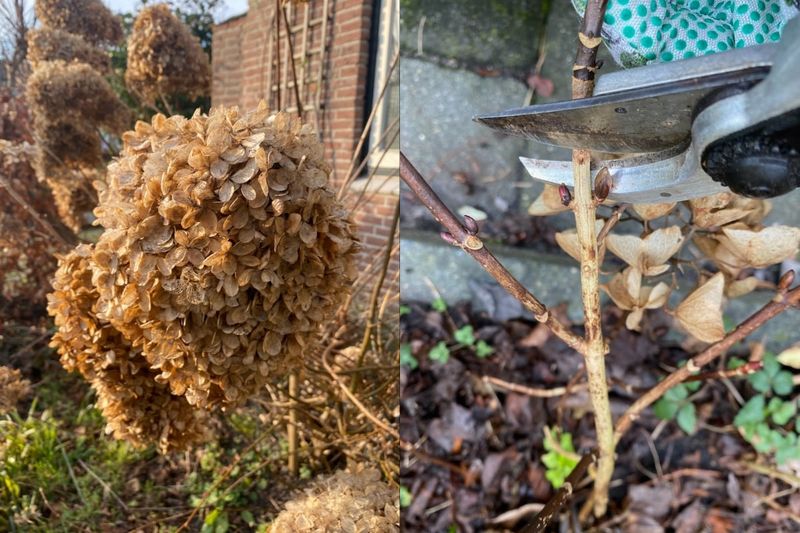
Timing is the single most important pruning decision for panicle hydrangeas, and it comes down to one biological fact: Hydrangea paniculata blooms on new wood, meaning it forms the current season’s flower-bearing growth after it wakes up in spring. Prune it before that growth starts and you are working with a clean slate. Wait until the new shoots are already extending and you have missed the clearest window.
University of Minnesota Extension’s guidance on pruning hydrangeas for best bloom recommends late winter or very early spring, before active growth begins, as the right window for new-wood bloomers. In most of North Carolina, that means late February into early March is a reasonable target, though mountain gardeners in zones 6a to 7a may work a week or two later depending on local conditions. Watch the plant more than the calendar.
Fall pruning is not necessary for panicle hydrangeas and does not improve the following season’s bloom. What fall pruning does remove is the dried flower heads, which many gardeners find attractive through winter and which provide some visual structure in an otherwise bare garden bed. If you want a tidier winter look, remove the old heads during the late-winter pruning window rather than cutting the whole shrub in autumn.
Illinois Extension’s pruning guide reinforces that new-wood bloomers like panicle hydrangeas are forgiving of late-winter cuts in a way that old-wood bloomers simply are not. Keeping that distinction clear makes the whole schedule easier to follow and protects the season’s flowers.
Use a Moderate Cut for Stronger Form

Knowing when to prune is half the job. Knowing how much to take off is the other half, and this is where a lot of homeowners either get overly cautious or go too far in the other direction.
NC State’s General Pruning Techniques publication distinguishes between removal cuts, reduction cuts, heading cuts, and rejuvenation cuts, each serving a different purpose. For most established panicle hydrangeas in a residential yard, the practical approach is to start by removing dead, damaged, crossing, or very weak stems entirely. Then shorten selected stems by cutting just above a healthy, substantial bud with clean, sharp tools. Ragged cuts from dull blades heal more slowly and invite problems.
Illinois Extension supports reducing new-wood bloomers by about one-third to one-half of the shrub’s total mass as a useful general range for homeowners who want stronger form without destabilizing the plant. That range is safer than cutting everything to the ground, which the species can tolerate but does not require. NC State’s guide to pruning specific plants confirms that panicle hydrangea tolerates severe pruning, but tolerance is not the same as a recommendation.
Hard pruning can push a plant to produce long, vigorous new shoots. Those shoots may carry larger flower heads, but larger heads filled with water after a summer thunderstorm can arch downward on stems that were not given time to thicken. UGA Extension care information notes that thinning to approximately 5 to 10 primary shoots can produce larger panicles, but that is an optional, cultivar-dependent shaping technique rather than a standard homeowner prescription. Moderate structural pruning, done consistently each late winter, tends to produce a well-proportioned shrub with manageable blooms year after year.
Use Mulch and Moisture to Steady Summer Growth
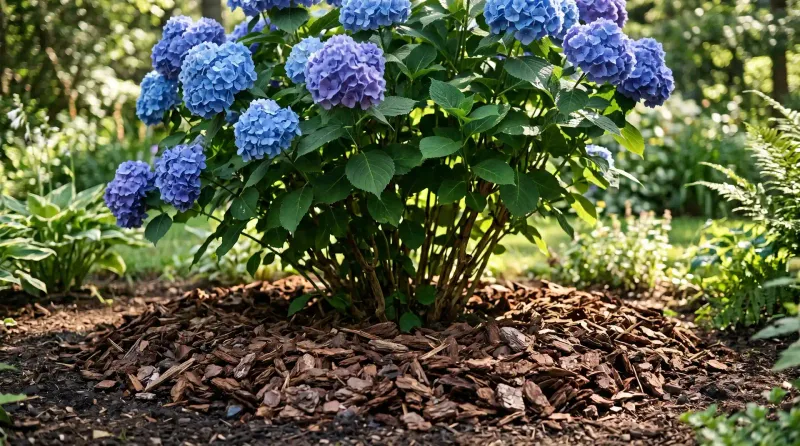
Panicle hydrangeas are shallow-rooted, which means the top few inches of soil around them matter a lot more than most people realize. When that zone dries out quickly in a Piedmont July heat wave, or stays soggy after a heavy coastal rain, the plant feels it fast.
NC State’s profile for ‘Limelight’ recommends a 2- to 3-inch mulch layer across the root zone to help regulate moisture and temperature. Keep the mulch from touching the main stems or the crown of the plant, because piled mulch against the base can hold moisture against the bark and create conditions for rot or pest problems over time. Spread it out over the root zone instead, which is typically a wider area than most gardeners initially mulch.
For established plants, the goal is an evenly moist but not waterlogged root zone. NC State’s Woody Ornamentals handbook advises deep, infrequent watering for established woody plants, which encourages roots to grow deeper rather than staying near the surface. Automatic daily watering is not the answer, and saturated soil can reduce the oxygen available to roots and contribute to long-term root problems. Check the soil a few inches down before watering rather than following a fixed schedule.
Mulch reduces moisture swings between rain events, but it cannot fix standing water or compensate for poor drainage. A site that puddles after every storm needs a drainage solution, not more mulch. For newly planted shrubs, consistent establishment watering over the first growing season matters more than almost any other single step.
Skip Fertilizer Shortcuts
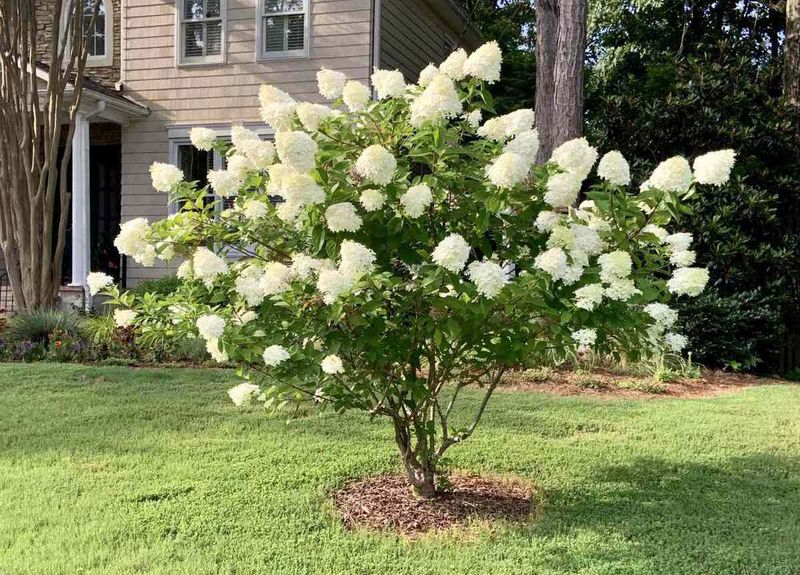
More fertilizer does not mean more flowers. For panicle hydrangeas, it often means the opposite: leafy, soft growth that needs more pruning, stems that are weaker than they should be, and a plant that is working harder than necessary without producing a better display.
NC State’s Soils and Plant Nutrients handbook recommends basing fertilizer decisions on soil type, rainfall, plant age, current growth, desired growth, and actual soil-test results rather than a routine feeding schedule. Excess nitrogen in particular can encourage the kind of lush, fast-growing foliage that looks healthy at first glance but actually reduces the plant’s structural integrity. The NC Department of Agriculture and Consumer Services offers soil testing that is free or low-cost for many North Carolina homeowners, and that test is genuinely the most reliable starting point before adding anything to the soil.
Phosphorus-heavy fertilizer marketed as a bloom booster is not a reliable strategy for panicle hydrangeas, and lime is not a tool for changing their flower color. Panicle hydrangea cultivars change color as their flowers mature, going from white or cream to pink or burgundy depending on the cultivar and seasonal conditions. NC State’s ‘Limelight’ profile states clearly that soil pH does not affect bloom color in that cultivar. Soil pH color advice mainly applies to some bigleaf hydrangeas, not to panicle types.
Restraint with fertilizer is not about neglecting the plant. It is about avoiding unnecessary work and weak growth that creates more problems than it solves.
Let the Cultivar Set Expectations After Rain
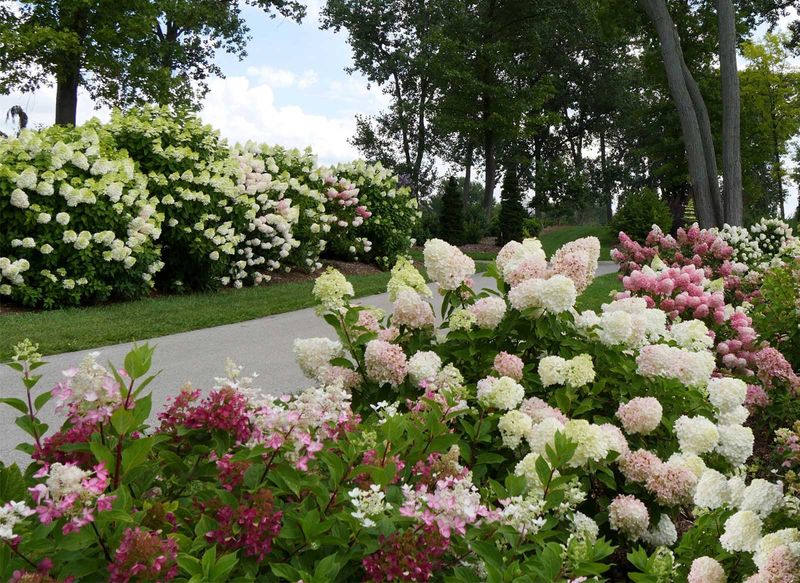
Flower-head size and stem strength are two separate things, and conflating them is where a lot of post-storm disappointment comes from. Some panicle hydrangea cultivars naturally produce heavy panicles that begin to nod as they mature. Add a few inches of rain from a summer thunderstorm and even a reasonably strong stem can bow under the extra weight of a saturated bloom cluster.
NC State specifically describes ‘Limelight’ as having stronger stems than most hydrangeas and holding large flower heads after heavy rain. That is a documented cultivar characteristic, not a promise that extends to every panicle hydrangea on the market. Other cultivars, particularly those with especially large or numerous florets, may arch noticeably under the same conditions, and that arching is often a natural cultivar trait rather than evidence of a care mistake.
NC State’s general panicle hydrangea profile notes that large flower heads, poor light, excess nitrogen, drought, and heavy rain can all contribute to leaning or reduced flowering. So when a shrub bends after a storm, the first question worth asking is whether the cultivar was the right fit for the spot, not whether the pruning was aggressive enough last February.
UGA Extension care information reinforces that a compact or strong-stemmed cultivar often produces a better street-facing display than an aggressively pruned plant with oversized blooms. Prioritizing a suitable cultivar, moderate structural pruning, appropriate light, and steady moisture gives the plant its best realistic chance of holding its shape through a North Carolina summer.
Check the Species Before Copying the Schedule
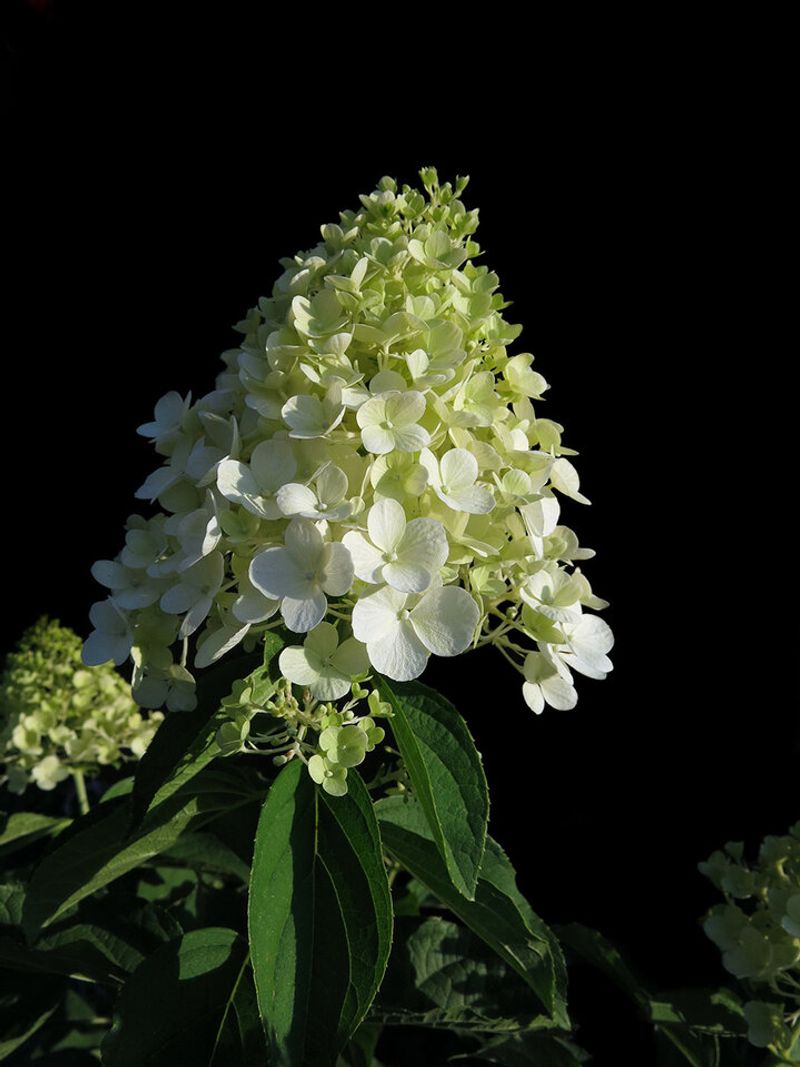
The late-winter pruning schedule described in this article applies to panicle hydrangeas. Copying it onto a different hydrangea species in your yard can cost you an entire season of flowers, and that is a frustrating mistake to make twice.
Penn State Extension’s guide on when to prune which hydrangea species makes the distinction clear. Hydrangea macrophylla, the familiar bigleaf hydrangea with round blue or pink flower clusters, generally blooms on old wood. That means the flower buds for next summer are already set on this year’s stems by late summer or early fall. Pruning in fall, winter, or early spring removes those buds and the flowers that would have come from them.
Some reblooming bigleaf cultivars do produce flowers on both old and new wood, but that does not make the species interchangeable with panicle types.
Oakleaf hydrangea, Hydrangea quercifolia, follows a different schedule as well. It generally blooms on old wood and should be pruned immediately after flowering if pruning is needed, not in late winter. Oakleaf hydrangea is also a North Carolina native, which makes it a meaningful choice for gardeners focused on supporting local wildlife and pollinators alongside ornamental goals.
Before picking up pruners in February, confirm which hydrangea you are standing in front of. Panicle hydrangea has narrow, pointed leaves and cone-shaped flower clusters. Once you have confirmed the species, the new-wood flowering habit makes late winter the appropriate starting point for your annual pruning rhythm, and the rest of the guidance in this article falls into place naturally.
Apply the Standard Advice to Your North Carolina Yard
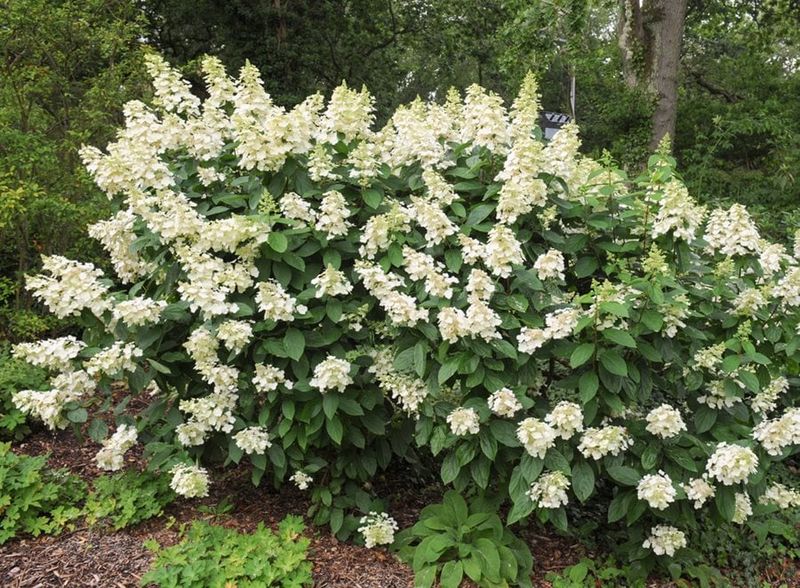
Pull the practical thread through the whole season and it forms a repeatable loop. Choose a cultivar whose mature size fits the space. Give it suitable light and drainage from the start. Prune before spring growth begins, removing dead and weak stems first and reducing the remaining framework by roughly one-third to one-half.
Spread 2 to 3 inches of mulch across the root zone without touching the stems. Check soil moisture during establishment and during extended dry stretches rather than watering on a fixed daily schedule.
NC State’s panicle hydrangea profile and the Woody Ornamentals handbook both reinforce that North Carolina conditions vary enough by site that no single statewide formula works for every yard. Mountain gardeners in zones 6a to 7a deal with late freezes and shorter seasons. Coastal Plain gardeners manage sandy soil that drains fast and dries quickly. Piedmont homeowners often start with compacted red clay that needs genuine drainage attention before a new shrub goes in.
Responding to your actual site, soil, and weather matters more than following a rigid schedule.
One thing worth saying plainly: panicle hydrangea is not native to North Carolina. Extension sources identify its native range as parts of China, Japan, and nearby regions. It is a valued cultivated ornamental, but if habitat for pollinators or local wildlife is the primary goal, native plants like oakleaf hydrangea, Joe Pye weed, or goldenrod are worth including in the same yard.
The title promised a difference, and there genuinely is one: gardeners who see the best results are not working harder, they are making a handful of well-informed choices at the moments that actually count.