The Meaning Behind Seeing A Cardinal In Your North Carolina Yard Through Every Season
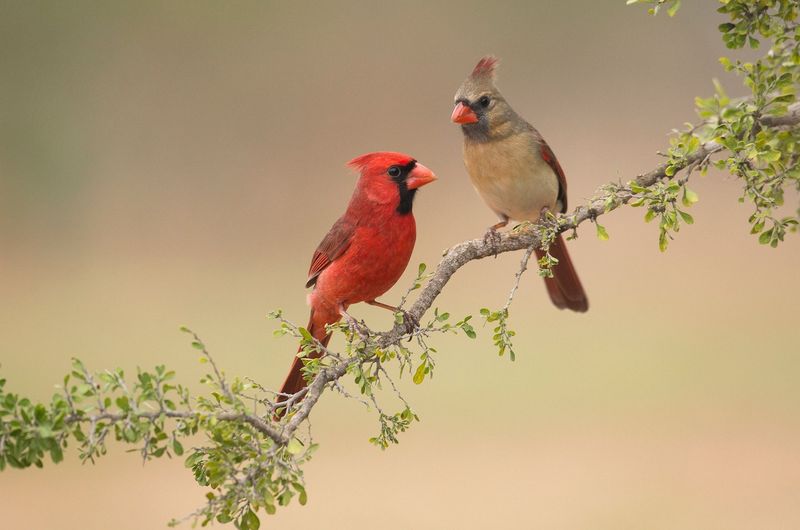
You drag your patio chair into the shade one morning, coffee in hand, and a flash of red lands three feet away on the fence post. That cardinal just sits there, looking at you like it owns the place. North Carolina homeowners see this happen in January, in May, in the thick heat of August, and wonder the same thing: what does it mean? The answer turns out to be part natural history, part personal story, and genuinely worth knowing.
A Cardinal Visit May Reflect Local Resources
Walk back inside and think about what that cardinal actually found outside your door. Repeated sightings may indicate that your yard offers something useful, whether that is seeds, ripe fruit, insects, clean water, dense shrubs for shelter, safe perches, or access to a local territory. Cornell Lab life-history records show that cardinals use backyards, hedgerows, forest edges, and marshy thickets wherever dense shrubs and food sources overlap.
That said, the ornithological sources do not establish exactly why a particular bird keeps showing up at your fence versus your neighbor’s. A cardinal may be passing through your yard on the way to a territory centered two blocks over. Several different cardinals may be using the same spot on different mornings, especially in fall and winter when the birds sometimes move around in loose groups. Seeing a red bird regularly does not guarantee that the same individual is returning each time.
One thing worth keeping in mind: a cardinal’s presence does not tell you that your whole yard or local ecosystem is thriving. NC State Extension guidance on urban bird habitat is careful to note that a single species reflects available resources, not the full picture of yard health. The honest reading is that your yard is offering something a cardinal can use, and that is already a good thing.
North Carolina Keeps Cardinals Close All Year
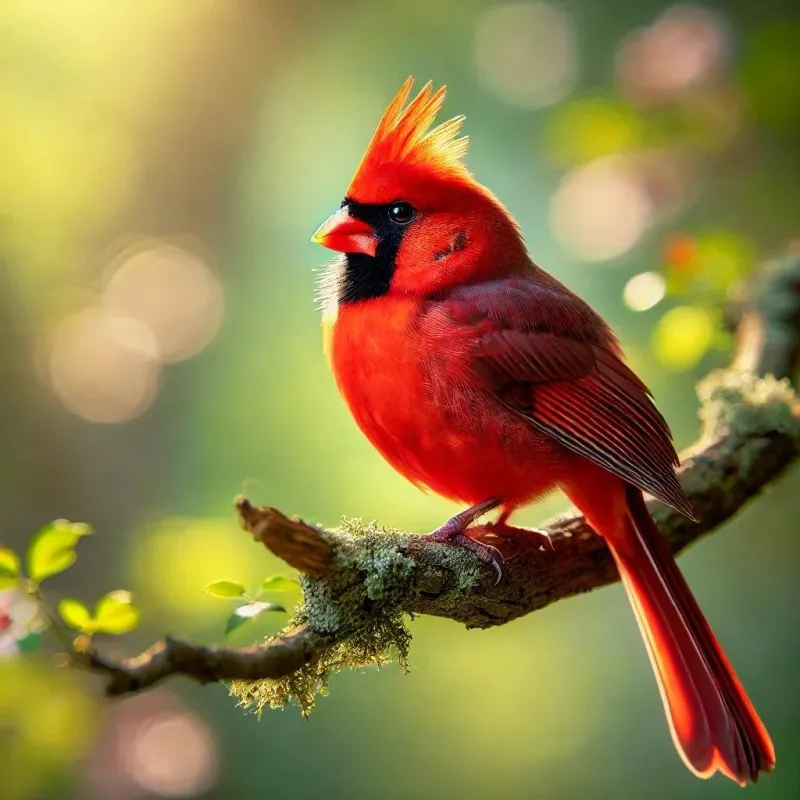
Here is the first thing that surprises most people: you do not need a special reason to see a cardinal in your yard in February or in the middle of a humid July afternoon in the Piedmont. NCpedia notes that the Northern Cardinal became North Carolina’s state bird in 1943, and it has been a year-round presence in the state ever since. These birds do not migrate. They stay put.
Staying in North Carolina is not the same as using your yard in exactly the same way all twelve months. A cardinal that nested in your back holly in May may spend December foraging along a brushy creek edge a quarter mile away. The bird is still in the area, just responding to where food and cover are most available at that moment. The Cornell Lab overview of the Northern Cardinal describes the species as a permanent resident across its range, which covers all of North Carolina from the mountains to the Coastal Plain.
Repeated sightings through every season are normal for this reason, not remarkable. And because several cardinals may share a local territory or gather near reliable food sources, seeing a red bird at your feeder on Monday and again on Thursday does not prove it is the same individual. It may be, or it may be a different bird entirely. The yard is simply part of a larger cardinal landscape that your property happens to sit inside.
Your North Carolina Garden Changes Every Week. Your Plan Should Too.
Gardening in North Carolina changes quickly throughout the season. Every Friday you’ll receive a simple weekly plan showing exactly what to plant, prune, fertilize, harvest, and protect so you never miss the right timing.
Spring And Winter Bring Different Cardinal Behavior
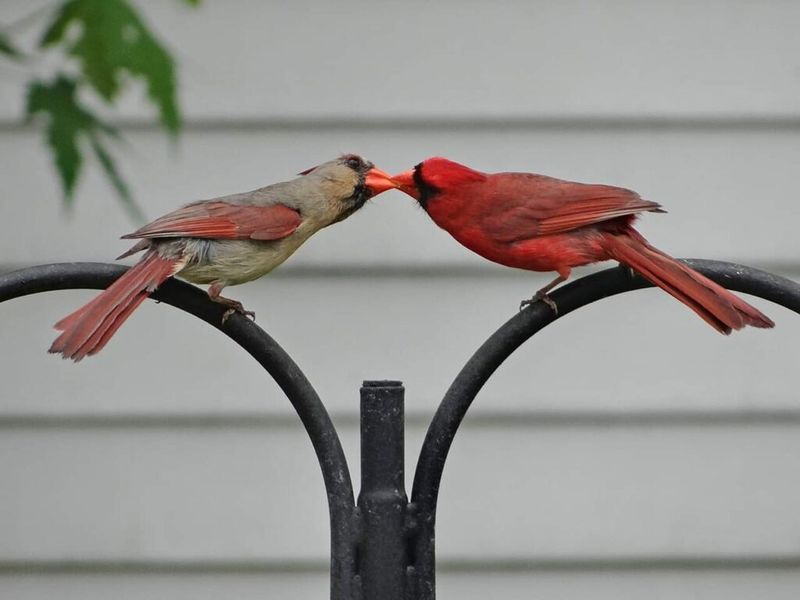
Spring is when cardinals get loud, territorial, and occasionally baffling. Starting in late winter and running through early summer, male cardinals defend territory aggressively. Cornell Lab life-history data describes pairs that may raise two or more broods in a single season, with typical clutches of 2 to 5 eggs, an incubation period of 11 to 13 days, and nestlings that leave the nest roughly 7 to 13 days after hatching. That is a lot of activity compressed into a few months.
During this stretch, you may also see both the male and female feeding fledglings on or near the ground. The young birds look scruffier than adults and may seem helpless, but a fully feathered fledgling hopping around your yard is usually doing exactly what it should be doing. Courtship feeding, where the male brings seeds to the female, is another spring sight worth watching for.
Come fall and into winter, the mood shifts. The Cornell Lab overview notes that cardinals may form larger, looser groups outside the breeding season, moving together toward persistent fruit, seeds, and sheltered vegetation. A holly loaded with red berries or a stand of wax myrtle along a Coastal Plain yard edge can draw several birds at once. These are plausible seasonal explanations for what you observe, not guaranteed scripts.
Any given sighting may fit the seasonal pattern or may simply be a bird that found something to eat.
Build Habitat Instead Of Relying On Seed
Seed in a feeder gets a cardinal to your yard for a few minutes. Plants keep cardinals, insects, and dozens of other species coming back across every season. NC State Extension songbird guidance points to a mix of fruiting shrubs, native trees, vines, and ground-level foraging areas as the foundation of genuine bird habitat, not just a supplementary food source.
For North Carolina yards, researched options include dogwood (Cornus florida), American holly (Ilex opaca), wax myrtle (Morella cerifera), blackberry (Rubus spp.), elderberry (Sambucus canadensis), wild grape (Vitis spp.), oak (Quercus spp.), and wild cherry (Prunus serotina). These plants provide seeds, fruit, and the insects that cardinal nestlings depend on almost entirely in their first weeks. Plant diversity matters more than any single species, because different plants peak at different times and support different insects.
Match your choices to your region. Wax myrtle is well suited to the Coastal Plain and Sandhills, while mountain yards may favor native viburnums and serviceberry alongside oak. Piedmont gardeners working with red clay can lean on dogwood and wild cherry, both of which handle that soil well. NC State Extension’s urban habitat guide also recommends leaving some leaf litter and less-manicured corners intact for ground foraging.
A tidy yard stripped to bare mulch gives a cardinal fewer reasons to stay. No single plant guarantees a visit, but a layered, regionally adapted planting gives cardinals more of what they genuinely need.
Personal Meaning Does Not Become Scientific Proof
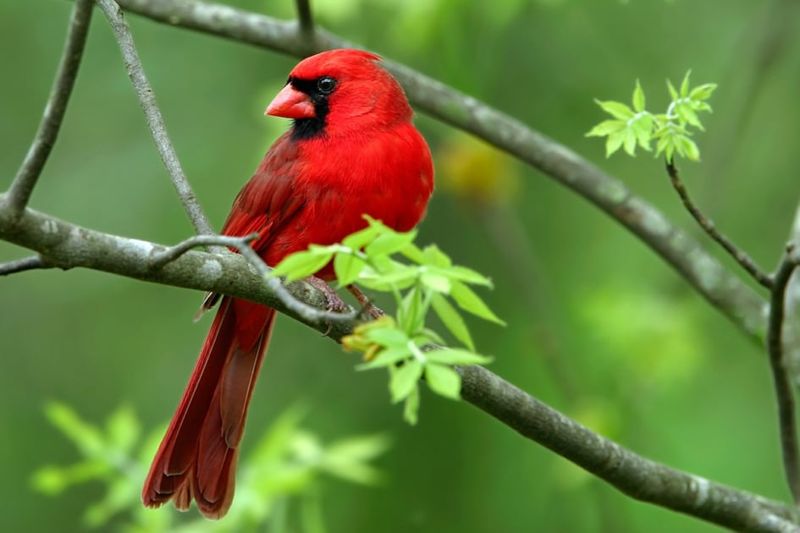
Some readers are going to scroll past the habitat section and land right here, because the real question was never about plant lists. Many people see a cardinal and feel something, a sense of presence, a memory of someone they loved, a moment that feels too pointed to be accidental. Those feelings are real, and they deserve a straight answer.
Personal, cultural, and memorial interpretations of cardinal sightings do exist. Some people hold beliefs connecting cardinal visits to remembrance of a loved one, a feeling of protection, or a sense of hope or vitality arriving at a difficult moment. Those meanings belong to personal belief, individual experience, and cultural tradition. They are not established by the ornithological sources that describe how cardinals actually behave.
The Cornell Lab’s life-history records and the Audubon field guide entry cover residence patterns, diet, nesting biology, and territorial behavior. They do not establish that cardinals carry messages from deceased loved ones, that the direction a cardinal faces communicates anything specific, or that a cardinal sighting predicts a future event. That is a precise boundary, not a dismissal. The cited ornithological sources simply do not address those questions, because bird science does not study them.
What you can hold onto is this: a cardinal can be an ordinary bird responding to local conditions and a personally meaningful sight at exactly the same moment. One does not cancel the other. The meaning you bring to the window is yours to keep.
Window Attacks And Bald Heads Have Natural Explanations
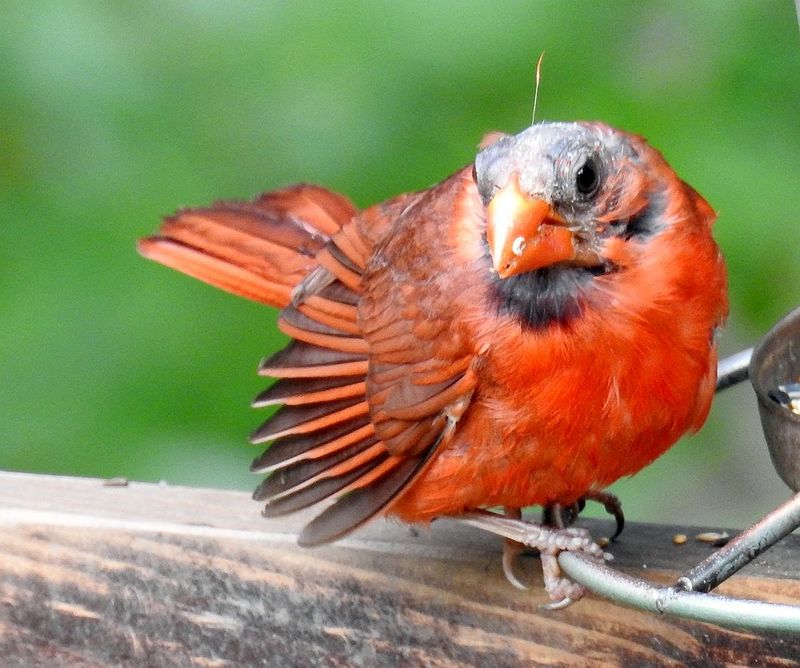
Two cardinal behaviors reliably alarm North Carolina homeowners every single year. The first is a cardinal throwing itself at a window, a mirror, or the side of a shiny truck parked in the driveway. The second is a cardinal showing up at the feeder looking like it lost a fight with a lawnmower, bald-headed and rough.
The window attack is almost always territorial aggression aimed at a reflection. Cornell Lab’s Northern Cardinal overview explains that in spring and early summer, both males and females actively defend territory and will attack their own reflection as if it were a rival bird. The cardinal is not trying to get inside your house. It is trying to drive off an intruder that happens to look exactly like itself.
The behavior usually tapers off once nesting is underway and the hormonal drive to defend territory settles down.
The bald head is a different story, and usually a less alarming one. Cornell Lab’s article on bald feeder birds notes that cardinals can lose head feathers all at once during molt, particularly in late summer, producing a temporarily bald look that grows back within a few weeks. This is not automatically a sign of disease.
The line between normal and worrying is clearer than it might seem. NC State Extension wildlife guidance advises contacting a licensed wildlife rehabilitator if you observe visible injury, weakness, bleeding, labored breathing, or prolonged abnormal behavior. A cardinal that looks scruffy but is eating and moving normally is very likely fine.
Support Cardinals Without Creating New Hazards
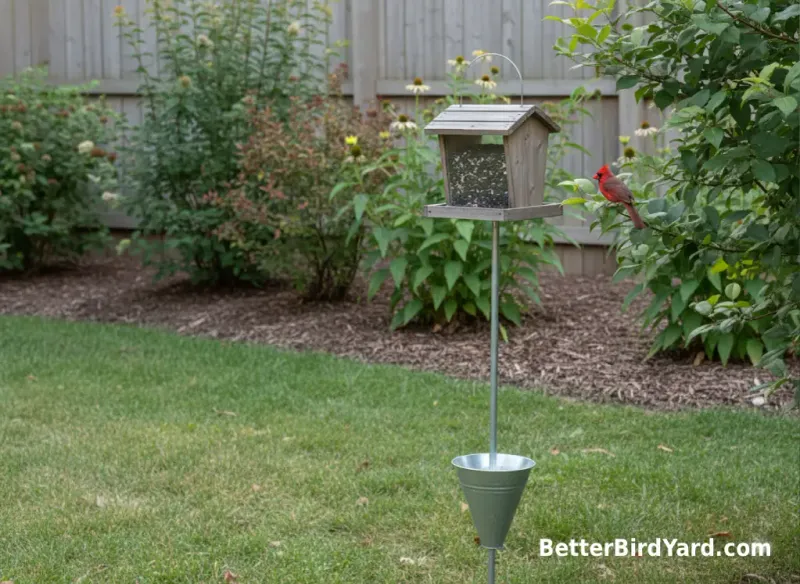
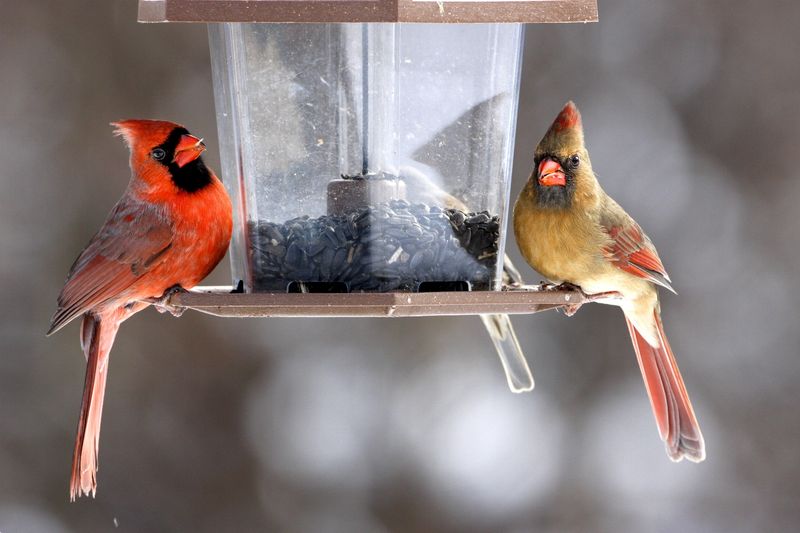
Feeders feel like a straightforward gift to the birds outside, and they can be, but they come with a short list of things worth getting right. Black oil sunflower seed is a practical starting point for cardinals. NC State Extension’s urban bird habitat guide recommends placing feeders within 10 feet of shrubby or evergreen cover so birds have quick escape routes, mounting them 4 to 6 feet above the ground, and adding a squirrel baffle. Avoid spots where a cat can crouch and wait, because outdoor cats are a genuine hazard to birds feeding close to the ground.
Keep feeding modest. Excess seed piles up, attracts rodents, and creates the kind of crowding that spreads disease between birds. Clean your feeder every 2 to 3 weeks as a baseline, and more often when it stays damp or visibly dirty. CDC guidance on Salmonella outbreaks linked to wild songbirds recommends cleaning at least monthly and doing it outside, away from food-preparation areas.
If you see sick or dead birds near the feeder, stop filling it temporarily and follow guidance from your state wildlife agency before resuming.
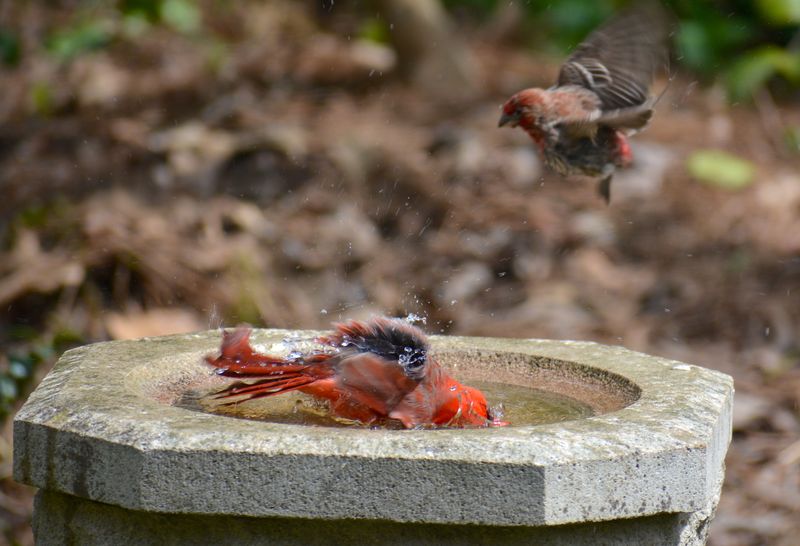
Water matters as much as seed. A shallow birdbath, roughly 2 to 3 inches deep with a rough surface for footing and a basin about 24 to 36 inches across, serves cardinals well. Clean it weekly. Research on human salmonellosis linked to wild songbirds underscores that stagnant, dirty water near feeders raises disease risk for birds and people alike.
Windows are the last piece. Cornell Lab feeder placement guidance advises positioning feeders either within 3 feet of a window or more than 30 feet away. At 3 feet or less, a bird that startles cannot build up enough speed to injure itself. Beyond 30 feet, the collision risk also drops sharply.
U.S. Fish and Wildlife Service collision data shows that glass strikes kill large numbers of birds annually. Exterior screens, dense visual patterns applied to the outside of the glass, or properly spaced bird-safe window products work better than decorative decals placed on the inside surface.
Notice The Bird And Keep The Meaning Personal
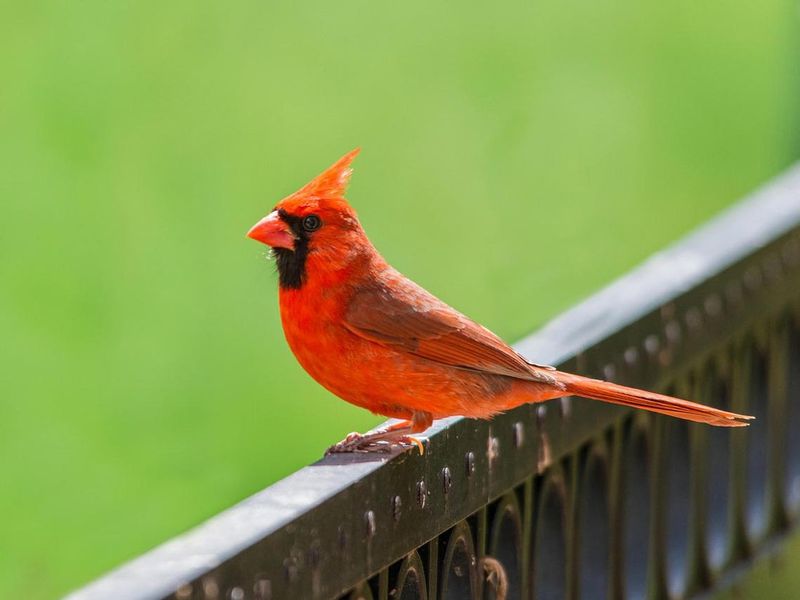
A cardinal on your fence post is doing two things at once. It is a nonmigratory bird, Cardinalis cardinalis, responding to whatever your yard is offering on that particular morning, whether that is a holly full of berries, a feeder with fresh seed, or a shrubby corner that overlaps with a local territory. Cornell Lab’s cardinal profile makes clear that this is a species built for year-round residency, not seasonal spectacle.
At the same time, that same bird can carry genuine personal weight. Grief, hope, a sense of someone still close, these are real experiences, and a cardinal landing at the right moment can feel like more than coincidence. Keeping that meaning personal does not make it smaller. It keeps it honest.
The practical side is simple enough. Watch what season it is and what the bird seems to be doing. NC State Extension’s habitat guidance gives you a clear path forward: plant native cover suited to your part of North Carolina, keep water clean, feed modestly and maintain your equipment, reduce window and cat hazards, and let the symbolic layer of the experience remain yours to interpret. A cardinal is a neighbor.
Treat it like one, and it will likely keep showing up.