Skip Annual Impatiens In Shady North Carolina Beds And Plant This Native That Comes Back Every Year
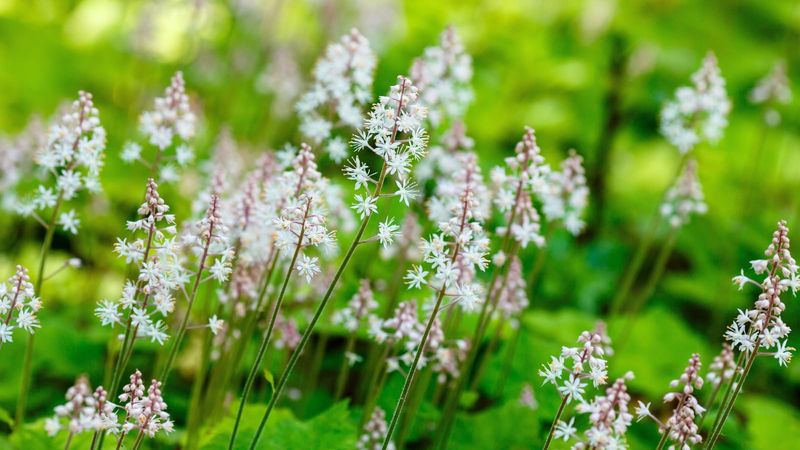
Every spring, the same shady bed calls for a fresh flat of impatiens, and every November, cold weather ends the show for good. That cycle costs real money and real effort, year after year, across North Carolina yards from the mountains to the coast. Foamflower, Tiarella cordifolia, is a native perennial that can return on its own in suitable moist, shady beds and gradually spread without a trip to the garden center each May. Fair warning up front: foamflower is a durable groundcover with lovely spring flowers, not a one-for-one stand-in for impatiens’ summer-long color burst.
A Lasting Native Option For Suitable Shade
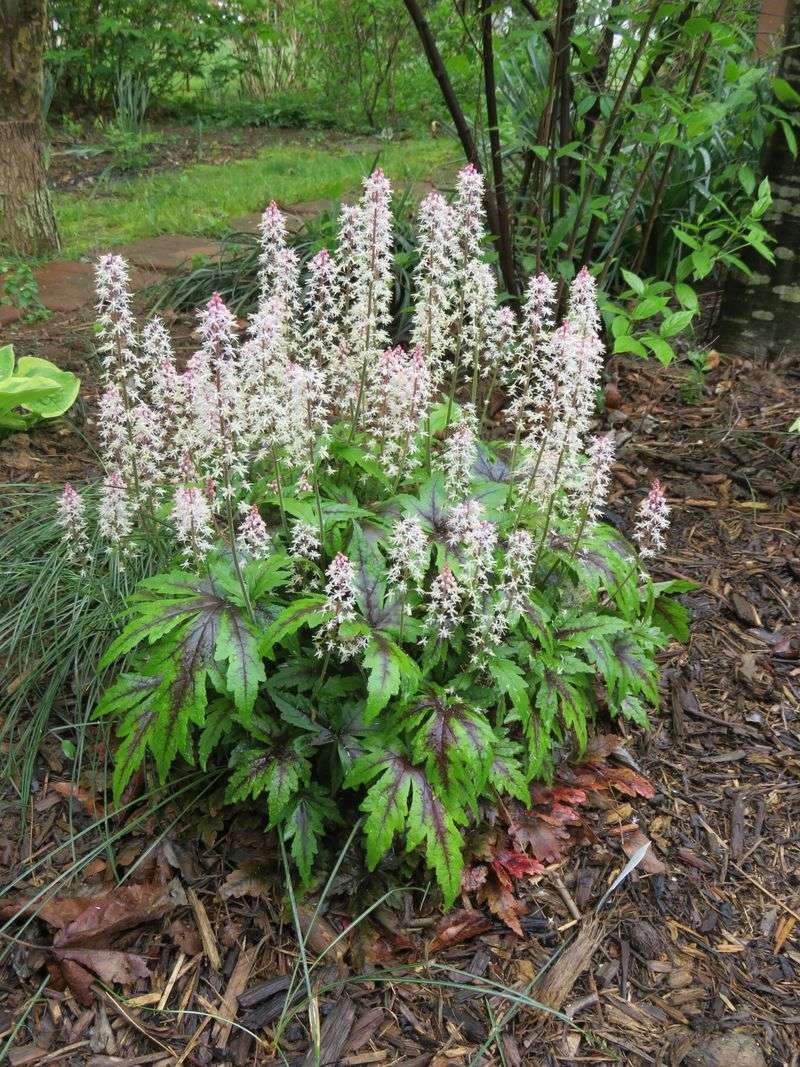
Foamflower, Tiarella cordifolia, is a North Carolina native herbaceous perennial that grows naturally on moist forest floors, in shaded coves, and along well-drained bottomlands. NC State Extension’s Plant Toolbox lists it as suitable for the Mountains, Piedmont, and Coastal Plain, with a mature height of roughly 5 to 12 inches and a spread of about 12 to 18 inches. That low, spreading habit makes it a genuine candidate for the front of a shady border or as a mass planting under trees where you have been replanting impatiens.
The plant can return for years and move gradually through short stolons, the aboveground stems that root into new plantlets nearby. That is genuinely different from a tropical annual that needs to be replaced after cold weather arrives. But persistence and spread depend on whether the site actually matches what foamflower needs, and not every shady North Carolina bed will qualify.
So treat this as a realistic option for the right spot, not a guaranteed fix for every problem bed. If your shady area has moist, humus-rich soil and stays reasonably cool, foamflower can settle in and hold that ground without asking you to shop for replacements each spring. The key word in all of this is suitable, and the sections ahead will help you figure out whether your bed actually fits that description before you spend a dollar.
Why Impatiens Usually Return To The Shopping List
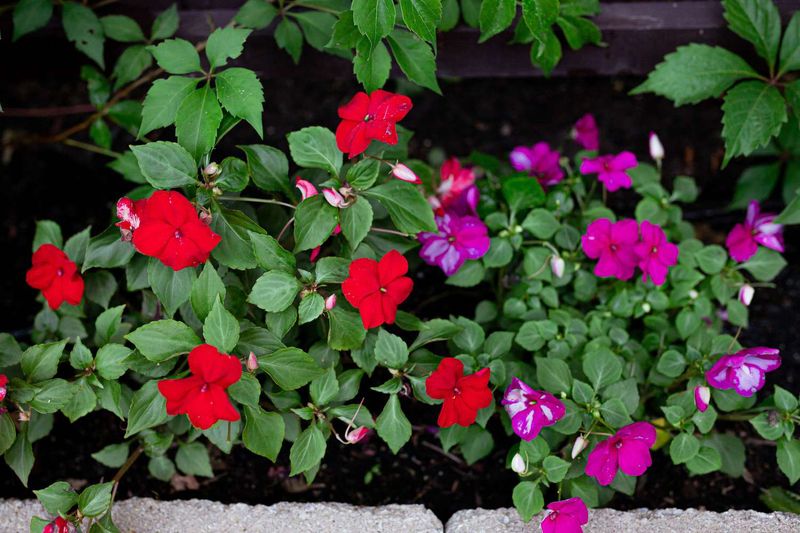
Standard bedding impatiens, Impatiens walleriana, come from tropical East Africa, and that origin tells you almost everything about why they keep showing up on your shopping list. The NC State Plant Toolbox lists them as hardy only in USDA Zones 10 and 11, which means virtually no part of North Carolina qualifies. From the Blue Ridge to the Outer Banks, they are grown as annuals, started fresh each season and removed or lost to cold weather before the next one begins.
The cold damage itself can vary. A hard freeze hits differently than a light frost, and a plant tucked against a warm brick wall or left in a container on a covered porch may hang on longer than one planted directly in an open bed. Still, none of that changes the fundamental situation: impatiens are not dependable overwintering perennials anywhere in North Carolina, and counting on them to return is a bet that rarely pays off.
Many Piedmont gardeners recognize the pattern well. You buy a flat in early May, enjoy the color through summer, and by late October the plants are either blackened by frost or looking ragged from the season’s heat and humidity. Come spring, the bed is bare again and the cycle restarts. That is a common enough experience that it barely feels like a problem anymore, just a routine.
Your North Carolina Garden Changes Every Week. Your Plan Should Too.
Gardening in North Carolina changes quickly throughout the season. Every Friday you’ll receive a simple weekly plan showing exactly what to plant, prune, fertilize, harvest, and protect so you never miss the right timing.
The real question is whether there is a better-suited plant that could hold that same shady ground without asking you to start over every year.
Foamflower Does Not Recreate The Summer Display
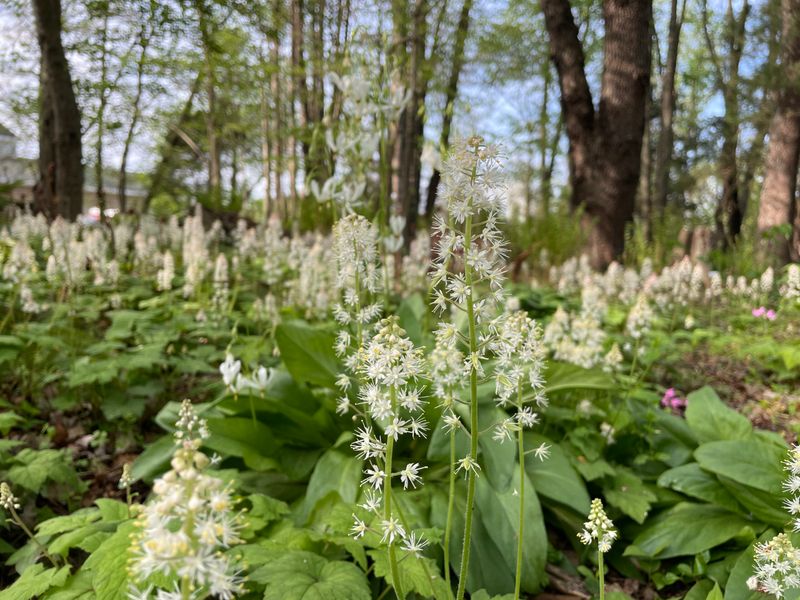
Before you dig a single hole, this point needs to be clear: foamflower and impatiens do not look alike in a bed, and they do not perform alike through the growing season. Impatiens typically flower from late spring until cold weather arrives, delivering months of dense color in pink, red, white, peach, and coral. Foamflower’s main bloom period in North Carolina runs roughly from April through June, and the flowers themselves are small, white to pinkish, and carried on upright stalks that rise above the foliage like little bottle brushes.
That spring display is genuinely attractive, especially in a woodland setting where the light filters through the canopy and catches those delicate flower spikes. NC State’s description of the plant notes that foamflower is also valued for its foliage, which can stay attractive well after flowering ends. The lobed, heart-shaped leaves often develop interesting markings and hold their color through the season, giving the bed structure even when no flowers are present.
But if you are picturing a lush carpet of summer blooms to replace what impatiens were doing from June through October, foamflower will not deliver that on its own. It solves a different problem: a perennial groundcover that holds the bed, suppresses weeds over time, and offers spring interest year after year. Gardeners who want color beyond June will need to add companion plants, and the final section of this article covers some good native options for doing exactly that.
Check Moisture Before You Buy

The single most important thing you can do before buying foamflower is to spend a few minutes checking the moisture in your shady bed, not just after a rain, but during a dry stretch in July or August. Foamflower prefers moist, humus-rich, neutral to slightly acidic soil, and
NC State specifically describes it as intolerant of drought. A bed that dries out hard between summer thunderstorms is a risky site, no matter how much shade it gets.Certain site conditions can make foamflower struggle even when they are not universal regional problems. Compacted soil that sheds water rather than absorbing it, sandy ground that drains too quickly to stay moist, and beds packed with shallow tree roots that pull moisture away from new plantings are all real possibilities in North Carolina yards. Some Piedmont beds sit over dense red clay that stays wet in winter but bakes in August, and some Coastal Plain beds drain so fast that moisture disappears within a day of rain. Neither of those is a guaranteed outcome for your yard, but both are worth ruling out before you invest in several plants.
Deep shade under a mature oak or pine can also mean heavy root competition close to the surface, which makes establishment harder even if the light level looks right. NC State’s native plants guidance is clear that soil conditions, drainage, and moisture all affect how a native planting performs, regardless of regional suitability. A north-facing bed with rich, consistently moist soil and dappled light is a strong candidate. A dry, root-choked spot under a thirsty tree may need a different plant entirely, or significant soil improvement before foamflower has a fair chance.
Plan A Gradual Groundcover, Not A One-Season Fill
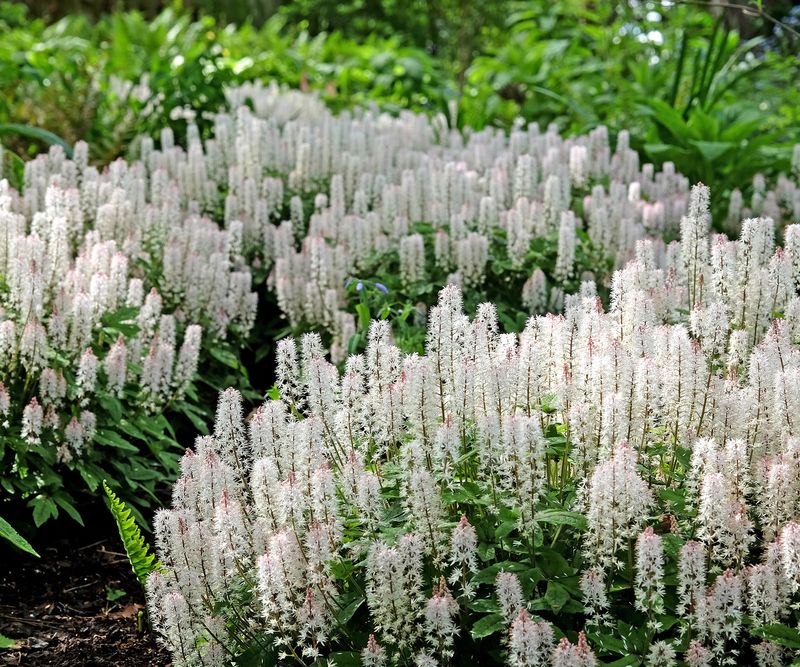
Foamflower is a small plant by design. NC State’s mature dimensions put it at roughly 5 to 12 inches tall and 12 to 18 inches wide, which means a single plant covers a modest patch of ground. If you use those mature widths as a rough guide, spacing plants about 12 to 18 inches apart is a reasonable starting estimate for planning purposes, but treat that as a tentative number, not a universal prescription. Cultivar size, your soil richness, how quickly you want coverage, and how much maintenance you are willing to do later can all shift the ideal spacing for your specific bed.
NC State advises planting foamflower at the correct depth, with the crown at or just above the soil surface, and mulching lightly to retain moisture without burying the plant. Getting that depth right matters more than most gardeners expect, because planting too deep can rot the crown and end the whole experiment before it starts.
Once planted, consistent watering during establishment is not optional. New plants need steady moisture, especially during the Piedmont’s hot July afternoons, the Sandhills’ dry stretches, and the Coastal Plain’s sandy soil that drains quickly after summer storms. There is no single correct number of gallons per week that works for every yard, but the goal is to keep the soil moist, not waterlogged and not bone-dry, until the plant roots in and shows new growth. The stolon-based spread that eventually fills gaps between plants happens slowly, over multiple seasons, so the picture you are planting toward is a gradual one.
Patience here actually pays off.
Expand A Successful Planting Carefully
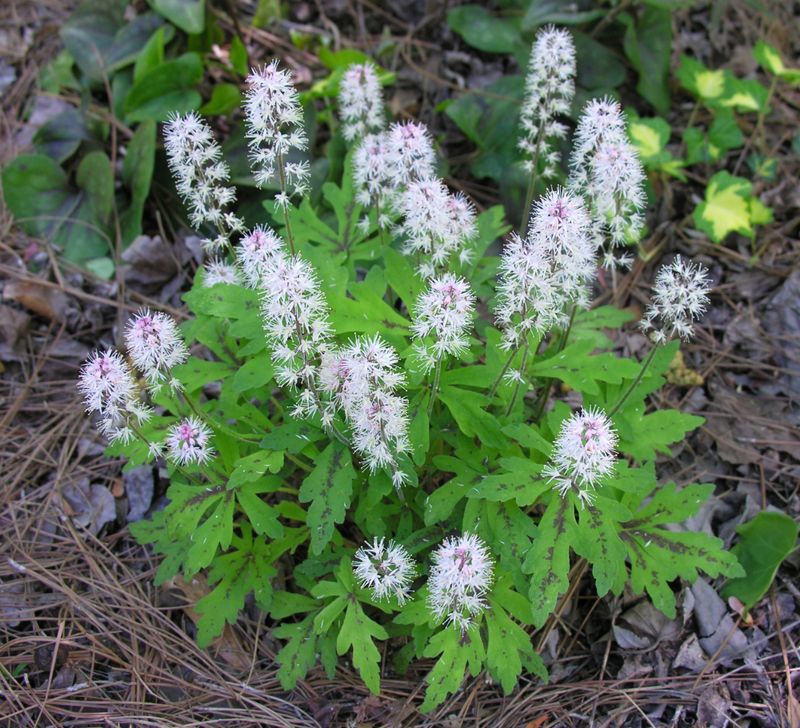
Once foamflower settles in and starts producing stolons, those short horizontal stems will root into new plantlets at the tips. That is the plant’s natural way of slowly expanding its footprint, and it is one of the things that makes it genuinely lower-maintenance over time compared to replanting annuals. But NC State advises letting stolon-produced plantlets develop for at least two growing seasons before you separate them from the parent plant. Pulling them off too early means you are working with roots that have not yet established themselves, and those young plants are far more vulnerable to drought and heat stress.
Division is the other way to multiply a successful planting. Once a clump has been in the ground for a few years and grown large enough to divide, you can carefully split it in early spring or fall, replant the divisions at the correct depth, and water them in well. This is a practical way to fill more of the bed over time without spending money on additional nursery plants.
On the subject of sourcing: buy nursery-propagated plants from the start, and avoid collecting foamflower from the wild. The North Carolina Native Plant Society maintains a directory of NC nurseries that sell nursery-propagated native plants, and that is the responsible place to start. Wild populations are part of the forest ecosystem, and removing them damages something that took years to establish. A nursery-grown plant also arrives with a root system adapted to container life, which tends to make establishment easier than a transplanted wild specimen.
Build Summer Interest Around The Foliage
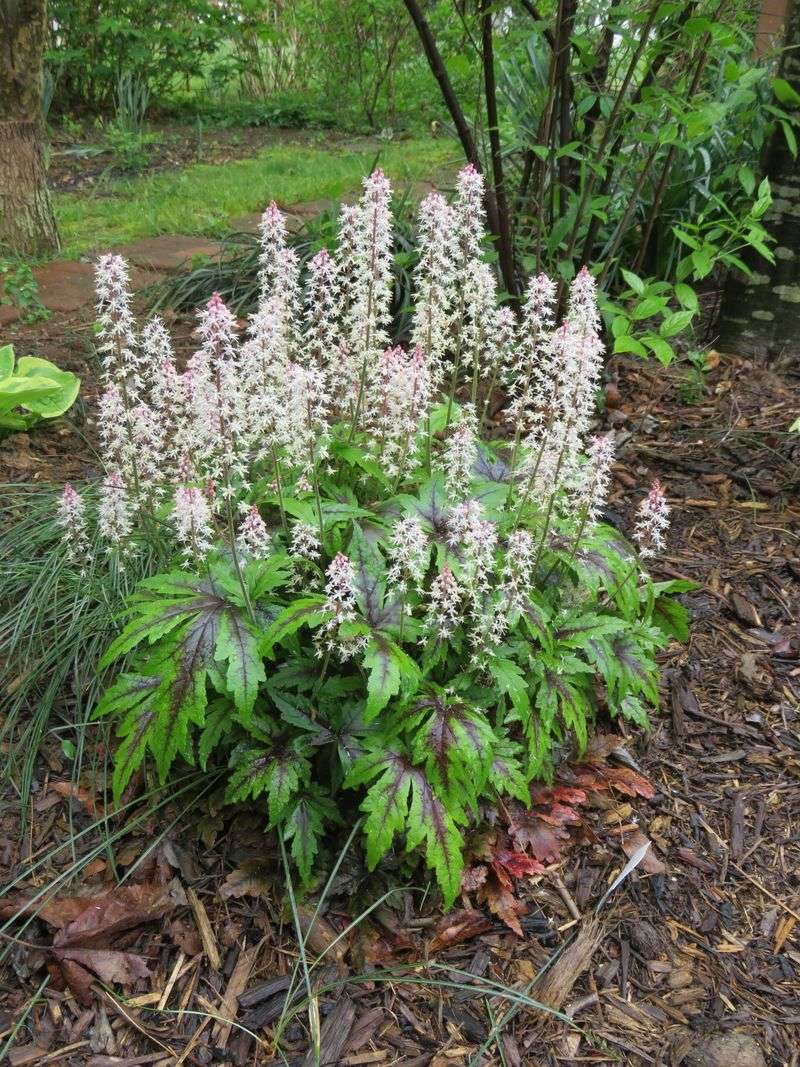
Foamflower’s foliage carries the bed through summer, and that is actually a stronger asset than it sounds. The lobed, patterned leaves stay attractive through the heat, hold the soil, and give the planting structure even when nothing is blooming. But if you want genuine summer color in a shady North Carolina bed, one species will not cover that job alone, and asking foamflower to do what impatiens did is the wrong framing. NC State’s landscape design guidance recommends combining shade-tolerant perennials in mass plantings for more dependable year-round structure.
Some native companions worth considering: Indian pink, Spigelia marilandica, adds red and yellow tubular flowers in late spring and early summer. White wood aster, Eurybia divaricata, blooms in late summer and fall when most of the shade garden has gone quiet. Green-and-gold, Chrysogonum virginianum, offers cheerful yellow flowers over a long season. Christmas fern, Polystichum acrostichoides, holds its deep green fronds through winter and gives the bed year-round bones.
NC State’s native plants handbook supports mixing these species for broader seasonal coverage than any single plant provides.
Lower maintenance is a realistic expectation for a well-established foamflower planting, but it does not mean no maintenance. Foamflower still needs site-appropriate watering during drought, occasional weed control while the planting fills in, light cleanup after winter, and possibly division every few years to keep clumps vigorous. Actual savings on plant purchases depend on how many plants you buy, how well they establish, and how much supplemental care the site requires. The honest version of lower maintenance is fewer trips to the garden center, not zero work in the garden.
Matching the right plant to the right moisture and shade is what makes that trade worthwhile in the first place.