What It Really Means When Red-Tailed Hawks Start Circling Your Oregon Property
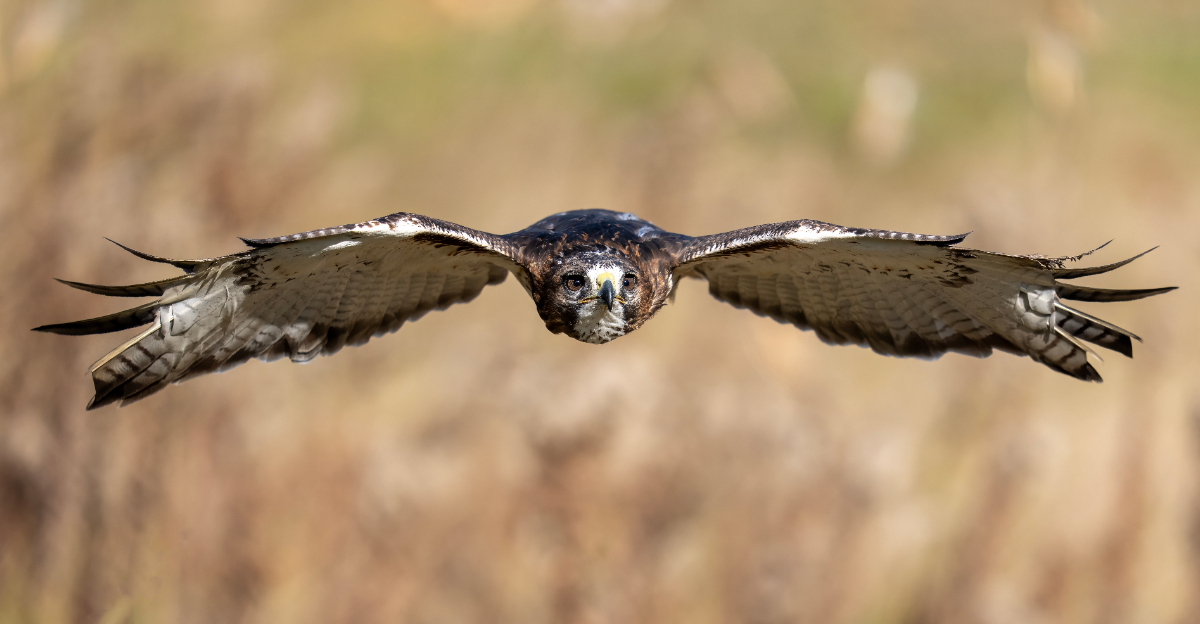
Seeing red-tailed hawks circling above your Oregon property can feel dramatic, especially when several passes happen over the same patch of land.
It may look like they are watching your pets, scouting your yard, or signaling that something unusual is nearby.
In most cases, though, their looping flight has more to do with air currents, hunting opportunities, and the open space below.
Fields, pastures, roadsides, and large yards can attract attention because movement is easier to spot there.
Their presence may also reveal changes in local prey activity that homeowners have not noticed yet. The key is paying attention to when they appear, how low they fly, and what seems to hold their interest.
Before assuming the worst, take a closer look at the landscape beneath them. Those broad circles can tell you more about what is happening around your property than you might expect.
Your Yard May Be Serving A Rodent Buffet
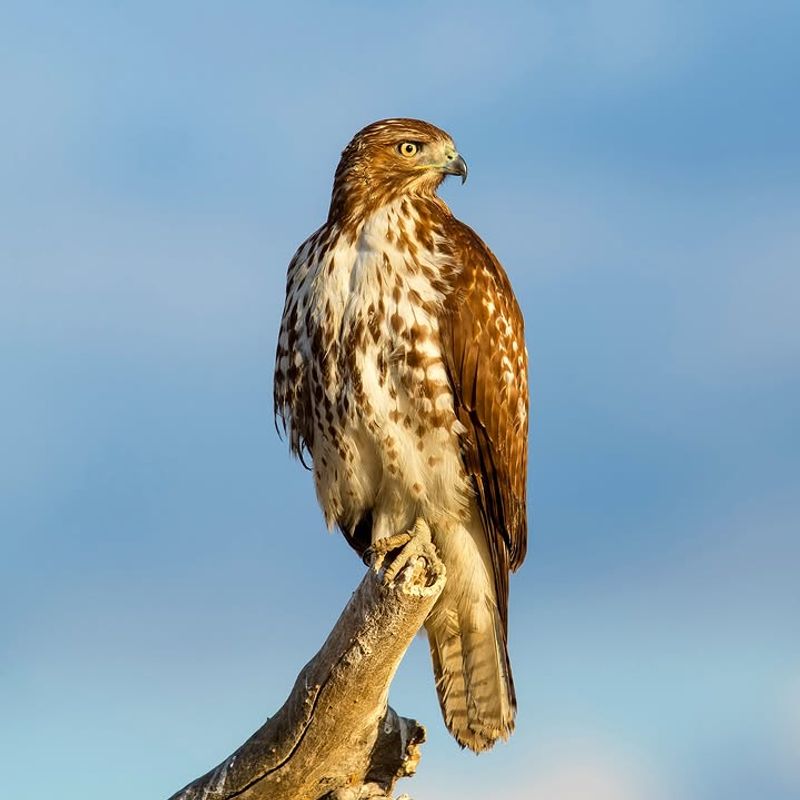
Most people never think about how many small animals are living just beneath the surface of their Oregon yard. But a red-tailed hawk sees your property very differently.
To this bird, a well-kept yard full of shrubs, bird feeders, and compost piles can look like an all-you-can-eat meal.
Red-tailed hawks love to hunt rodents. Mice, voles, pocket gophers, and ground squirrels are their favorite targets.
If your yard has any of these creatures, and most yards do, a hawk will notice quickly. These birds have incredibly sharp eyesight and can spot a mouse moving through the grass from hundreds of feet in the air.
Bird feeders are a big draw. Seeds that fall to the ground attract mice and sparrows, which then attract hawks.
Compost bins, wood piles, and overgrown garden edges can also shelter rodent populations without you even realizing it.
You are not doing anything wrong by having a yard that attracts wildlife. It just means your outdoor space is thriving with life.
The hawk is simply following the food chain right to your front lawn.
If you want fewer hawks visiting, reducing rodent-friendly hiding spots is the most natural approach. But many gardeners and homeowners actually welcome the hawks.
They offer free, chemical-free pest control that no spray bottle can match. Think of them as nature’s own exterminator showing up right on schedule.
Those Wide Circles Are Part Of The Hunt
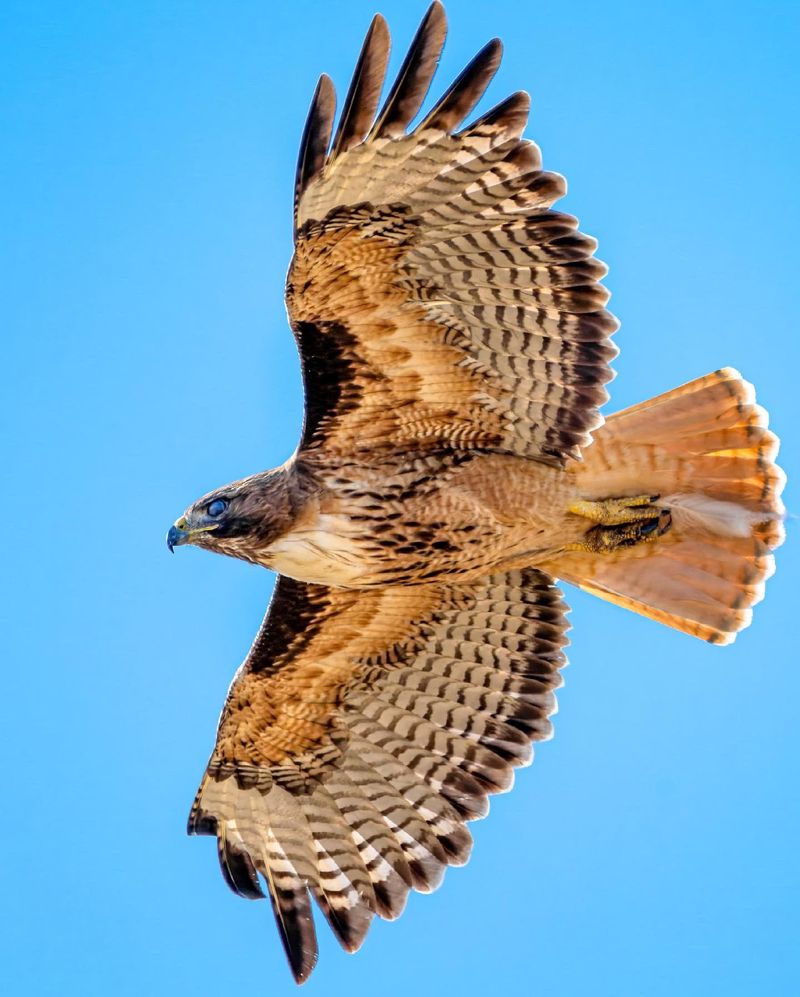
Watching a hawk circle overhead looks almost peaceful, like the bird is just enjoying the view. But make no mistake, those slow, wide loops are a very deliberate hunting strategy.
Every circle brings the hawk closer to its next meal. Red-tailed hawks are what scientists call “soaring hunters.” They use rising columns of warm air, called thermals, to stay aloft without burning much energy.
While they glide, their eyes are locked on the ground below, scanning for any sign of movement.
The circling pattern lets them cover a wide area quickly. A hawk might pass over the same patch of grass several times before it spots something worth chasing.
Once it does, the attack is fast and precise. The bird tucks its wings and drops like a stone before snatching its prey with powerful talons.
Your Oregon Garden Changes Every Week. Your Plan Should Too.
Gardening in Oregon changes quickly throughout the season. Every Friday you’ll receive a simple weekly plan showing exactly what to plant, prune, fertilize, harvest, and protect so you never miss the right timing.
Seeing a hawk circle your property repeatedly means it has found something interesting below. Maybe it spotted a mouse darting between garden beds.
Maybe it saw a vole tunnel opening near your fence line. Either way, the bird is locked in and focused.
Circles also help hawks keep track of competing birds. If two hawks are circling the same area, they are likely communicating territory boundaries through flight patterns.
So those graceful loops in the sky are actually packed with purpose, strategy, and survival instinct all rolled into one beautiful aerial display.
Open Fields Make Your Property Easy To Scan
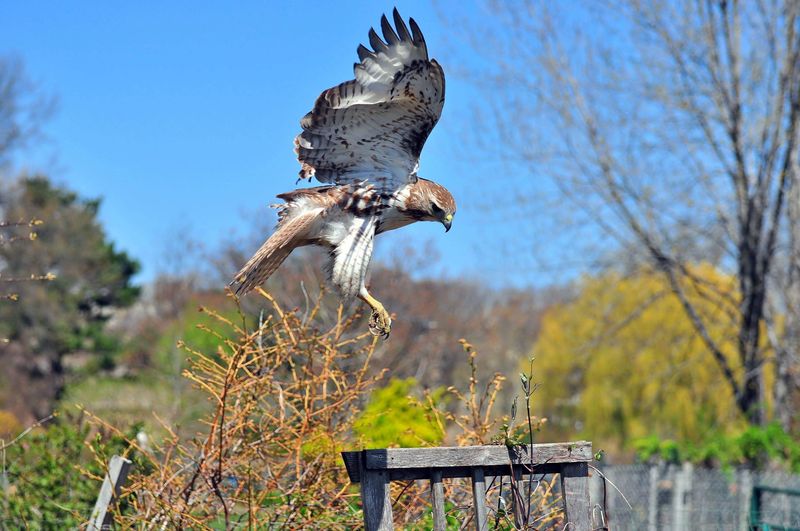
Hawks are not fans of thick forests or dense shrubs when it comes to hunting. They prefer open spaces where they can see clearly from above.
If your property has a large lawn, a pasture, a meadow, or even a wide gravel driveway, you are offering exactly the kind of terrain a red-tailed hawk loves.
Open land gives hawks an unobstructed view of the ground. There is nowhere for prey to hide when the grass is short or the field is bare.
A hawk can spot a mouse from over 100 feet up, and open land makes that job even easier.
Properties near farmland, open lots, or cleared hillsides are especially attractive to these birds. The Pacific Northwest has plenty of agricultural land and wide valleys that red-tailed hawks have called home for generations.
Suburban yards that back up to open spaces are prime hunting territory.
The size of your yard matters too. Larger, more open properties tend to attract hawks more often than small, heavily landscaped lots.
But even a modest open lawn can be enough to catch a hawk’s attention if rodents are present.
This is not a problem. Open land that supports a hawk means it also supports a healthy food web.
Rodents, insects, and small birds all thrive in open spaces, and hawks help keep those populations in balance. A circling hawk is often a sign that your land is ecologically alive and well.
Fence Posts Give Hawks The Perfect Lookout
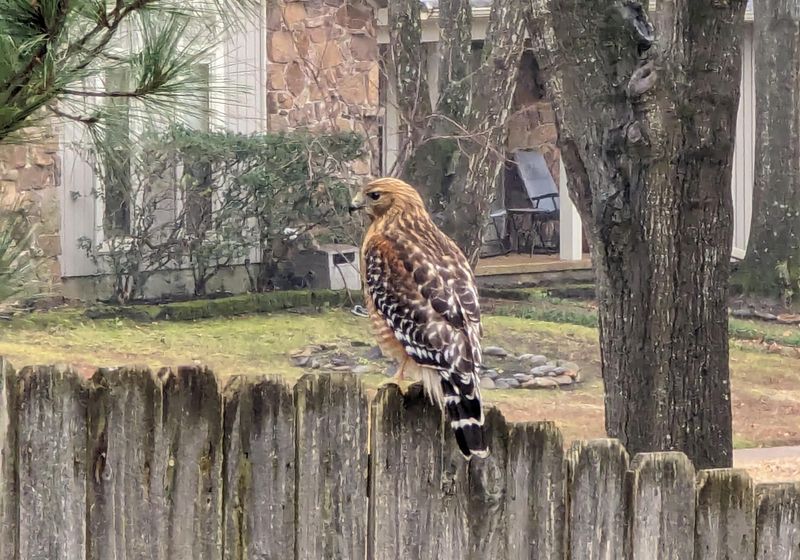
You might have noticed a red-tailed hawk sitting very still on top of your fence post, utility pole, or garden stake. That is not a coincidence.
Hawks are strategic perchers, and they choose their spots with great care.
A fence post gives a hawk height, stability, and a clear line of sight in all directions. From just a few feet off the ground, a hawk can scan a surprisingly large area.
It sits and waits, sometimes for many minutes, watching for the slightest movement in the grass below.
This hunting style is called “perch hunting” or “sit and wait” predation. It is incredibly efficient.
The hawk uses almost no energy while it watches, then launches a fast, targeted strike the moment prey is spotted. Fence lines that run along the edges of open yards or fields are especially popular perching spots.
If hawks keep returning to the same fence post on your property, that spot likely offers a great view of a productive hunting zone.
Maybe there is a gopher mound nearby, or a patch of tall grass where mice like to hide. The hawk has figured this out through careful observation.
Wooden posts, old metal T-posts, and even decorative garden obelisks can all serve as hawk perches. Some homeowners enjoy placing a simple wooden perch pole in their yard on purpose to invite hawks in.
It is a low-effort way to welcome a natural pest manager to your outdoor space.
Freshly Mowed Grass Can Bring Them Closer
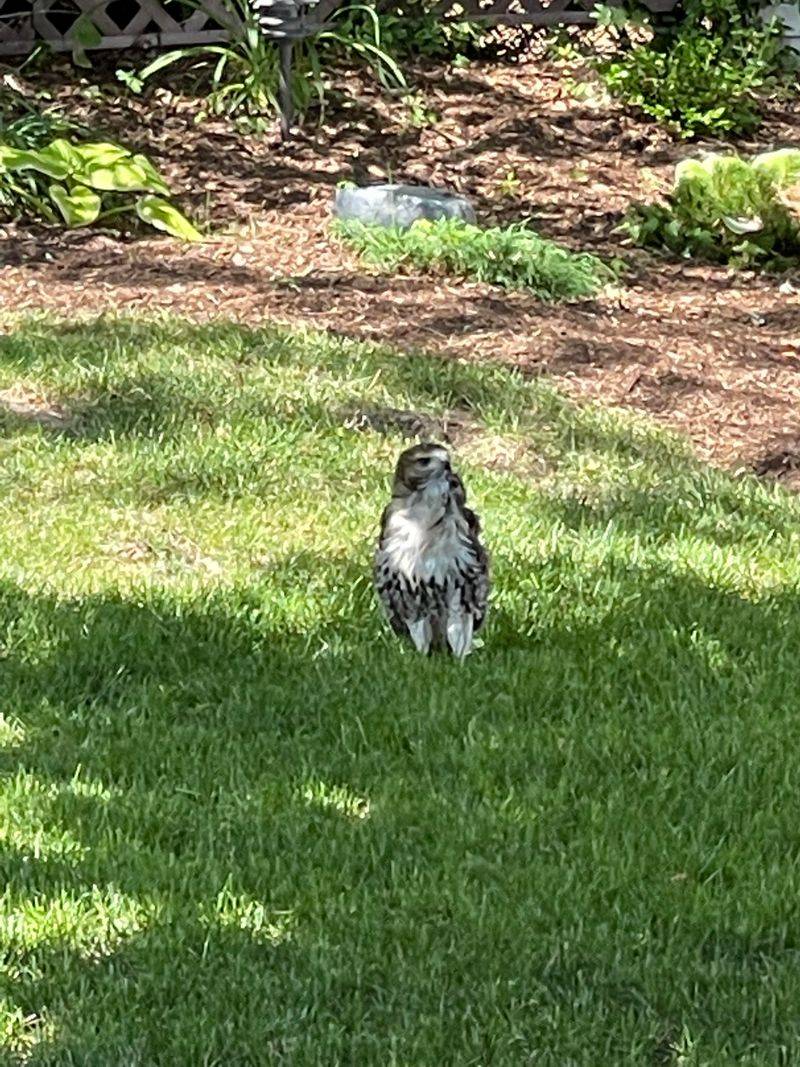
There is something almost magical about mowing your lawn and then watching a hawk swoop in minutes later. It happens more often than most people realize, and there is a very good scientific reason for it.
When grass is tall, small animals like mice and voles have cover. They can move around without being seen from above.
But the moment that grass gets cut short, all of that cover disappears. Suddenly, every rodent in your yard is exposed and vulnerable.
Hawks know this. They have learned to associate the sound and sight of lawnmowers with an easy meal.
Some hawks will actually follow mowers across a field, swooping in to catch the panicked animals that scatter as the blades pass. Farmers and groundskeepers across the Pacific Northwest have reported this behavior for years.
Even after you have finished mowing and gone back inside, the hawk may continue to work your freshly cut lawn.
Short grass stays attractive to hawks for several days until the rodent population settles back into new hiding spots or the grass grows tall again.
So if you mow your lawn and a red-tailed hawk shows up shortly after, you can feel good about it. You accidentally created ideal hunting conditions, and the hawk is taking full advantage.
It is a small reminder that even everyday chores like yard work can ripple through the local food web in surprising and fascinating ways.
Circling Does Not Always Mean A Nest Is Nearby
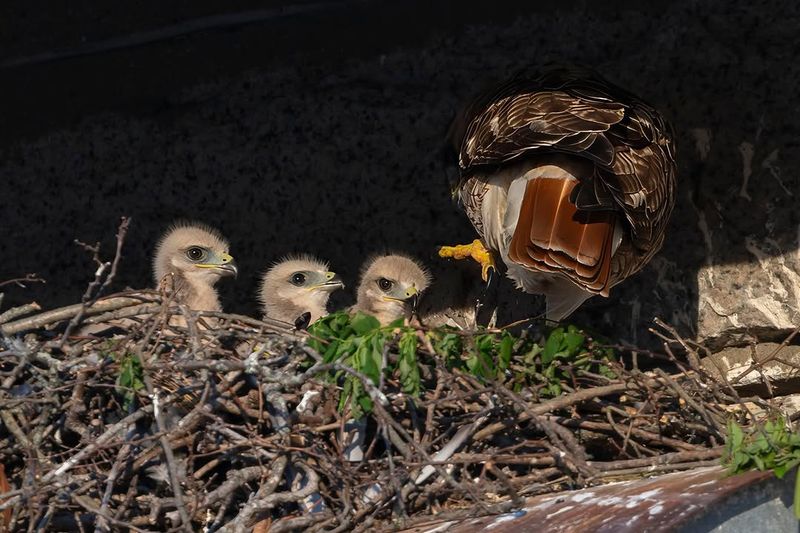
A lot of people assume that if a hawk keeps circling their property, there must be a nest somewhere close by. That is a very understandable guess, but it is not always true.
Circling behavior is mostly about hunting and territory, not nesting.
Red-tailed hawks do nest in tall trees, cliffs, and even on large utility structures. They tend to build their nests at the edges of forests near open land, which gives them easy access to hunting grounds.
But just because a hawk circles your yard does not mean it has set up a home in your trees.
Hawks have large hunting territories that can span several miles. A bird that circles your yard today might have its nest half a mile away in a completely different neighborhood.
It visits your property because the hunting is good, not because it lives there.
Nesting season in the Pacific Northwest typically runs from late winter through early summer. During this time, you might notice more hawk activity as parents hunt extra food to feed their chicks.
But even outside of nesting season, hawks circle and hunt actively.
If you want to know whether a hawk has a nest nearby, look for large stick structures in the tops of tall trees, especially Douglas firs, oaks, or cottonwoods. You might also hear a distinctive raspy call that sounds a lot like the classic movie sound effect for a bald eagle.
That sound almost always means a red-tailed hawk is close.
Warm Air May Be Doing Most Of The Work
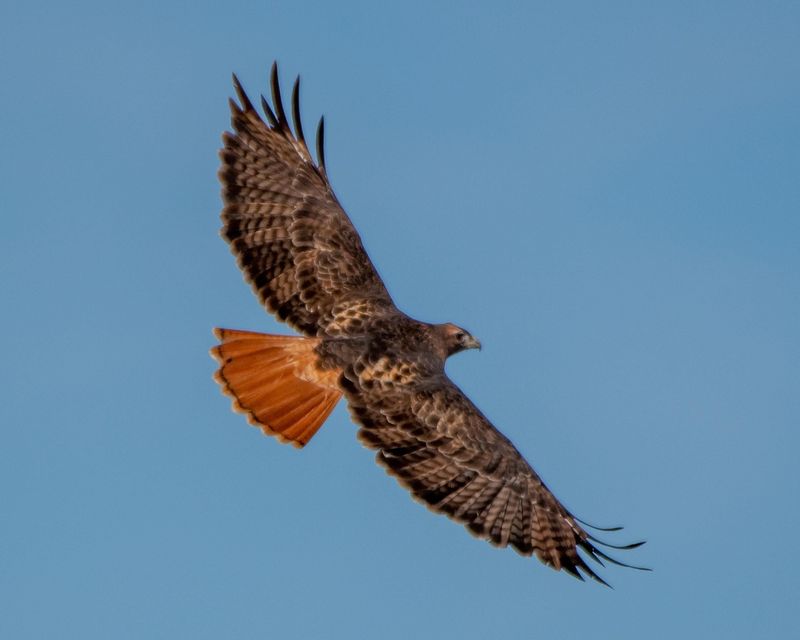
Sometimes a hawk is not really hunting at all. It might just be riding the air.
Thermal currents, which are columns of warm air that rise from sun-heated ground, are like invisible elevators for large birds. Hawks use them constantly to gain altitude without flapping their wings.
On warm, sunny days, thermals are strongest over dark surfaces like asphalt roads, bare soil, and rooftops. Hawks will position themselves over these areas and simply let the rising air carry them upward.
Once they reach a comfortable height, they glide outward and look for the next thermal to ride.
This is why you often see hawks circling on clear, calm afternoons rather than on cloudy or windy days. The conditions have to be right for thermals to form.
When they do, hawks take full advantage, sometimes soaring for hours with barely a wingbeat.
Your property might sit in an area where thermals form reliably. Maybe you have a large dark driveway, a metal roof, or an open south-facing slope that heats up quickly in the afternoon sun.
Without even knowing it, your land may be generating the perfect launch pad for a soaring hawk.
Watching a hawk ride a thermal is one of nature’s most relaxing sights. The bird looks completely effortless, like it has all the time in the world.
In a way, it does. Thermal soaring costs almost no energy, which means the hawk can afford to be patient and thorough in its search for food below.
One Hawk Can Cover More Ground Than You Think
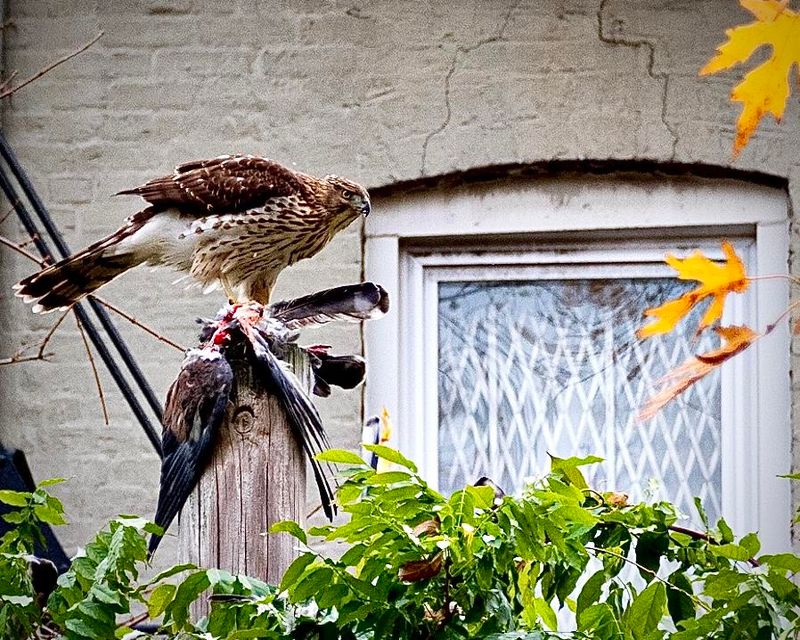
People often think of a red-tailed hawk as a backyard visitor, but these birds operate on a much larger scale than most of us realize. A single adult hawk can have a home range of anywhere from one to several square miles.
That means the hawk circling your yard is probably covering a large chunk of your neighborhood every single day.
Red-tailed hawks are not territorial in the way that songbirds are. They do not fiercely guard every inch of their range.
Instead, they move through their territory in a regular patrol pattern, checking their favorite hunting spots in rotation. Your yard might be just one stop on a long daily route.
This is why you might see the same hawk several days in a row, then not see it for a week. It is not gone for good.
It is just working through other parts of its territory before looping back around to your property.
Pairs of hawks often share a territory and hunt it together during nesting season. You might notice two birds circling together or taking turns perching on nearby posts.
This cooperative behavior helps them raise their young more successfully by covering more ground and catching more prey.
The wide-ranging nature of these birds also means that a single hawk provides pest control benefits across an entire neighborhood, not just one yard.
Every mouse it catches somewhere else is one fewer mouse that might eventually wander into your garden beds or garage.
Their Visits Could Be Good News For Your Garden
Oregon gardeners spend a lot of time and energy trying to protect their plants from pests. Gophers tunnel under beds and eat roots.
Voles chew through bulbs and bark. Mice raid seed trays and compost bins. All of these animals can do serious damage to a carefully tended garden.
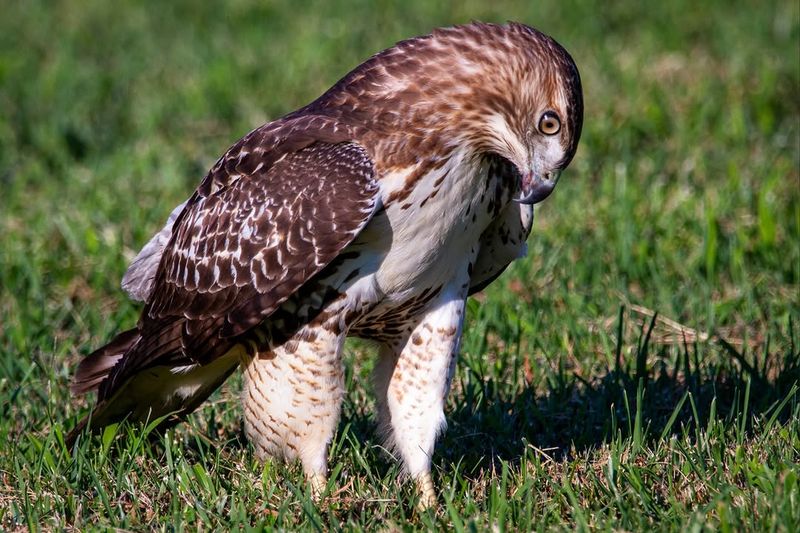
A red-tailed hawk is one of the most effective natural solutions to all of these problems. Studies have shown that a single hawk can catch hundreds of small rodents over the course of a year.
That is hundreds of fewer pests tunneling through your raised beds or raiding your vegetable patch.
Unlike traps or chemical deterrents, a hawk does not require any maintenance, cost, or cleanup. It shows up, does the work, and moves on.
The only thing it asks for in return is a safe, undisturbed space to hunt. That is a pretty fair trade for most gardeners.
Encouraging hawks to visit your garden is easier than you might think. Reducing clutter, keeping grass trimmed near beds, and adding a simple perch pole are all small steps that can make your property more hawk-friendly.
Avoiding rodenticide is especially important, because poisoned rodents can harm or even be fatal to hawks that eat them.
Welcoming these birds into your garden space is a smart, eco-friendly choice. They are part of a balanced ecosystem that keeps plant-eating pests in check naturally.
A hawk overhead is not a threat to your garden. It is one of its best protectors.