Why Hummingbirds Vanish From North Carolina Yards In Early September, And The One Feeder Move That Keeps Them Longer
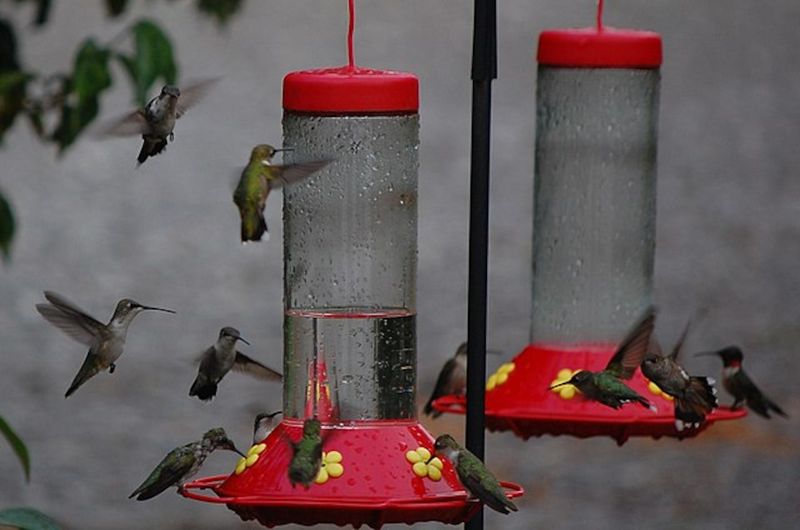
Your feeder was buzzing with ruby-throated hummingbirds all summer, and then one morning in late August or early September, the action slows to almost nothing. Most North Carolina yards see this happen every year, and it catches people off guard even when they have been feeding hummingbirds for a decade. The quiet is not a sign that something went wrong with your feeder or your yard. Understanding what is actually happening, and making one practical change, can keep reliable fuel available for the birds still moving through.
The Useful Feeder Move: Get It Out Of The Afternoon Sun
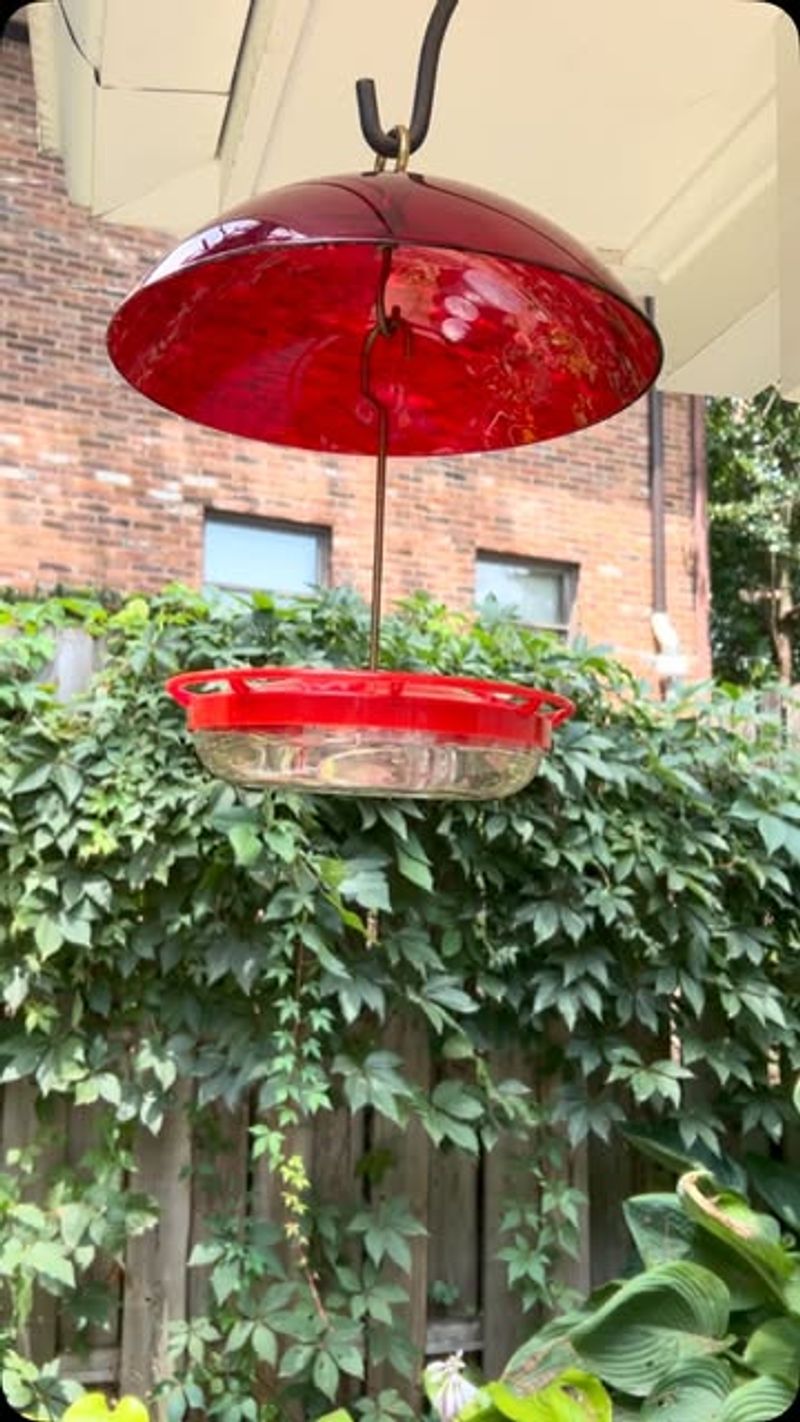
Afternoon sun in a North Carolina August is punishing, and your hummingbird feeder takes the full force of it. When a feeder sits in direct sun for several hours, the nectar inside heats up quickly, which speeds fermentation and can cause bottle-style feeders to drip as the air inside expands. Moving the feeder to a spot that gets morning light but stays mostly shaded from about noon onward is the single most useful physical change you can make this time of year.
The practical payoff is fresher nectar, longer. Cornell Lab guidance on feeding hummingbirds notes that heat accelerates spoilage, making shade a key factor in keeping nectar safe between changes. A shaded feeder in the muggy Carolina late-summer heat simply stays usable for a longer stretch of the day, which matters when a southbound bird drops into your yard at 4 p.m. looking for a quick calorie stop.
Choose a spot with some wind protection too, since a feeder swinging in a stiff breeze loses nectar and can be harder for a small bird to use. Nearby shrubs or a porch overhang work well. NC State Extension in Lee County recommends placing feeders where birds have a clear approach and a nearby perch to rest between visits.
Here is the honest part: moving the feeder to shade preserves the food quality, but it does not make a migrating hummingbird stay in your yard longer or change its departure schedule. What it does is keep a reliable fuel stop available for any bird that does pass through. That is a genuinely worthwhile goal on its own, even without a bigger promise attached.
A September Decline Usually Signals Southbound Migration
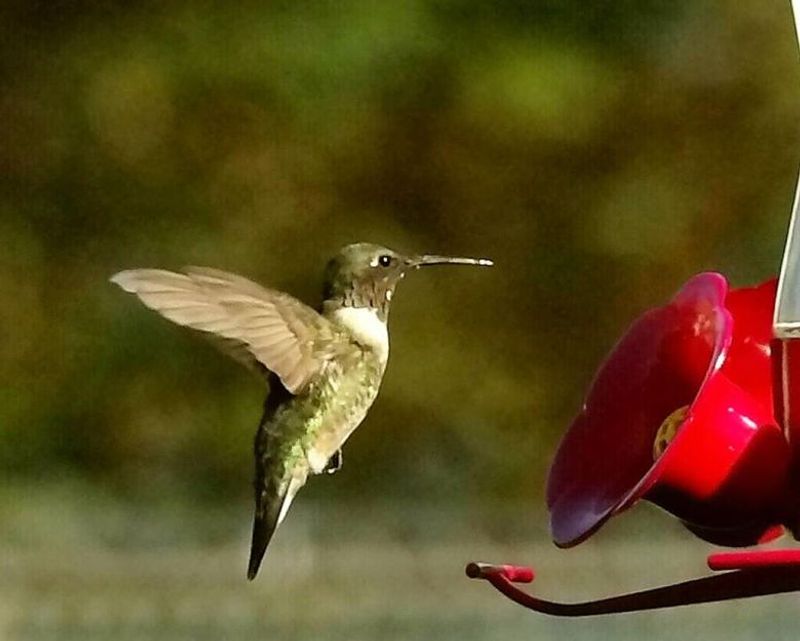
You check the feeder on a Saturday morning and count one visitor where there used to be six. The nectar is fresh, the feeder is clean, and nothing obvious has changed. What actually changed is the calendar. Ruby-throated hummingbirds (Archilochus colubris) are the only hummingbird species that regularly breeds in North Carolina, and many of them begin moving south in late August, with migration continuing through September and into early October.
NC State Extension in Transylvania County tracks the seasonal rhythm of ruby-throats and confirms that fall departure is a normal, predictable event tied to the birds’ internal schedule, not to yard conditions. Most North Carolina ruby-throats have left by about mid-October, though the exact timing shifts depending on where you live and what the weather is doing.
Your North Carolina Garden Changes Every Week. Your Plan Should Too.
Gardening in North Carolina changes quickly throughout the season. Every Friday you’ll receive a simple weekly plan showing exactly what to plant, prune, fertilize, harvest, and protect so you never miss the right timing.
The mountains can see earlier declines than the Piedmont or Coastal Plain, and a stretch of cold, rainy weather can push birds through faster than a warm, settled week. Males generally leave before females and juveniles, so a yard that hosted a territorial male all summer may go quiet while a female or a young bird is still making occasional stops nearby. NC State Extension’s urban habitat guide notes this variation and cautions against reading a quiet feeder as evidence that something is wrong.
The useful diagnostic question is whether the feeder is clean, full of fresh nectar, and accessible. If those boxes are checked and traffic is still low, the birds have simply begun moving. A decline in late August or September is a seasonal signal, not a problem to solve.
A Feeder Supports Migration; It Does Not Control It
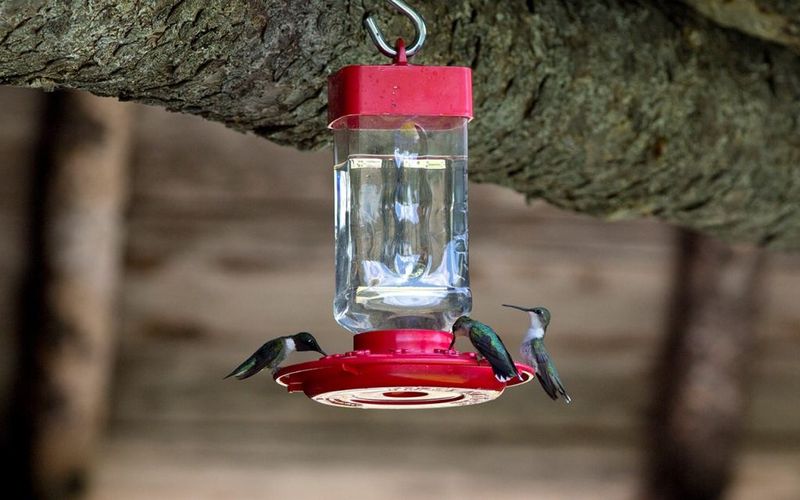
Many North Carolina homeowners quietly wonder whether taking down the feeder too soon chased the hummingbirds away, or whether leaving it up longer would have kept them. The short answer is that a feeder does not decide when a hummingbird migrates. Cornell Lab of Ornithology addresses this directly, explaining that migration is driven by changing day length, internal biological timing, weather patterns, food conditions, body fat reserves, age, and sex, not by whether a feeder is present or absent.
Research published in The Auk, a peer-reviewed ornithology journal, supports the understanding that migratory departure in hummingbirds is governed by photoperiod and internal cues rather than local food availability. In plain terms, the bird is running on a biological clock that shortening days help set. Your feeder is a gas station on the route, not the route itself.
Males typically leave first, often in late July or August, before females and juveniles begin moving in September. So the bold, territorial bird that dominated your feeder all summer may be gone while quieter individuals are still fueling up nearby. NC State Extension notes this difference in departure timing between adult males and other age and sex classes.
What a well-maintained feeder actually does is give a bird in active migration a reliable calorie source during a stopover. That is genuinely useful. A hummingbird crossing the Piedmont or the Sandhills on its way to Central America benefits from finding clean, fresh nectar. The feeder supports the journey, but the journey was already underway before the bird arrived at your yard.
Keep Nectar Fresh In Late-Summer Heat
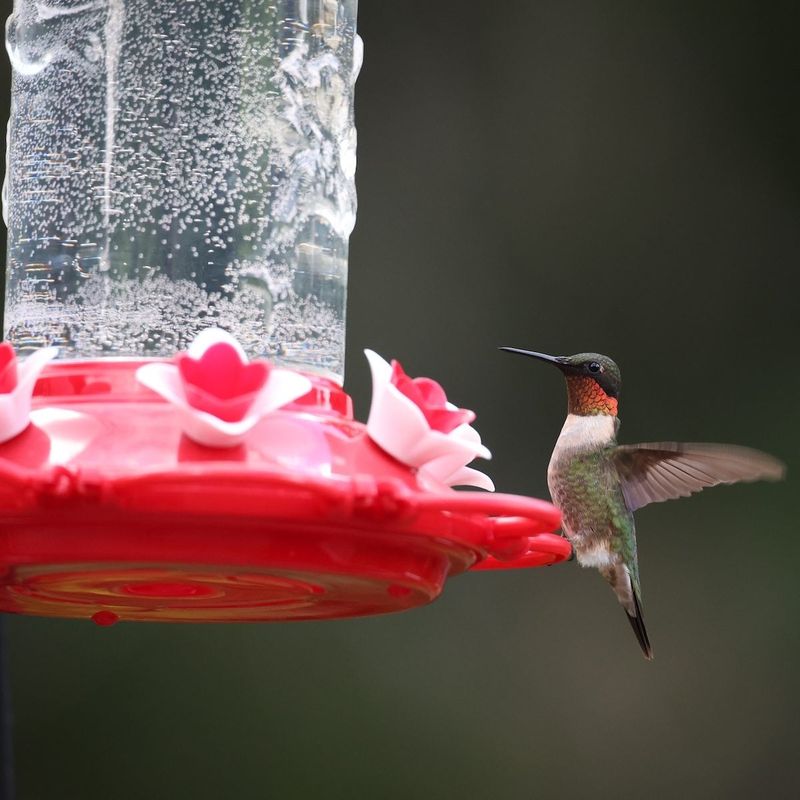
North Carolina in August and early September is hot and muggy, and nectar does not last long in those conditions. The recipe is simple and fixed: four parts water to one part plain white granulated sugar. A practical small batch is 1 cup of water mixed with 1/4 cup of sugar. Stir until the sugar dissolves completely.
That is the whole formula, and nothing else belongs in the feeder: no honey, no brown sugar, no artificial sweeteners, no fruit juice, and no red food coloring.
Cornell Lab’s hummingbird feeding guidance explains why the additives matter. Honey can support harmful microbial growth. Red dye is unnecessary because the feeder itself attracts birds, and the dye may be harmful. White granulated sugar at a 4-to-1 ratio most closely matches the sugar concentration of natural flower nectar.
During a hot Carolina stretch, inspect the feeder every single day. Nectar that looks cloudy, has changed color, or smells fermented needs to come out immediately, and the feeder needs a thorough cleaning before fresh nectar goes back in. NC State Extension in Lee County recommends making smaller batches during warm weather so you are replacing nectar before it spoils rather than after.
Clean the feeder thoroughly at least once a week by taking it completely apart and scrubbing every port and seam. If you see any dark spots or slippery film inside, clean it more often. Audubon’s hummingbird yard guide recommends hot water and a bottle brush, with a dilute vinegar rinse when needed, and thorough rinsing before refilling. None of this changes when birds migrate, but it absolutely changes whether a passing bird will drink from your feeder or skip it.
Choose Cover Without Creating New Hazards
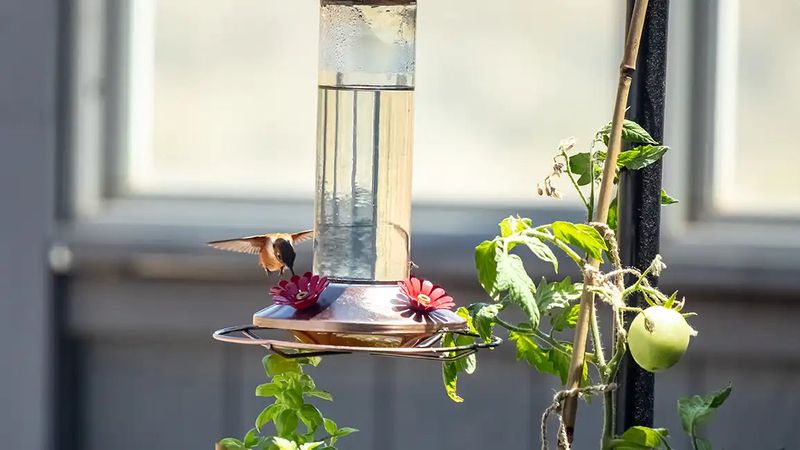
Moving the feeder into shade means choosing a new spot, and not every shaded location is a good one. The goal is afternoon shade, wind protection, and nearby cover where a bird can rest between visits. A small ornamental shrub or a low tree branch within a few feet gives hummingbirds a perch and a sense of security. What you want to avoid is tucking the feeder deep inside a dense shrub where a cat can crouch unseen and wait.
Cornell Lab’s feeder placement guidance and NC State Extension’s urban habitat guide both flag dense vegetation as a risk for exactly this reason. Keeping cats indoors is the most direct fix.
Ants and bees are a common problem at this time of year, and they can take over a feeder quickly. An ant moat, which is a small water-filled cup that sits above the feeder and blocks ants from climbing down, is the cleanest solution. For bees and wasps, avoid feeders with yellow parts since yellow mimics flowers and draws them in. Keeping nectar fresh and cleaning up any drips also reduces insect interest.
Cornell Lab notes that bee guards over feeder ports can help without harming the birds.
Windows are worth thinking about carefully. The hazardous zone for bird collisions is the 3-to-30-foot range from glass, where a bird has enough distance to build speed but not enough to correct course. Place a feeder directly on a window surface or within 3 feet of it, or move it more than 30 feet away. Audubon’s collision guidance and USGS window-strike information both support this placement rule.
No position is automatically safe, but those two zones carry the lowest risk.
Keep Feeding After The Last Sighting
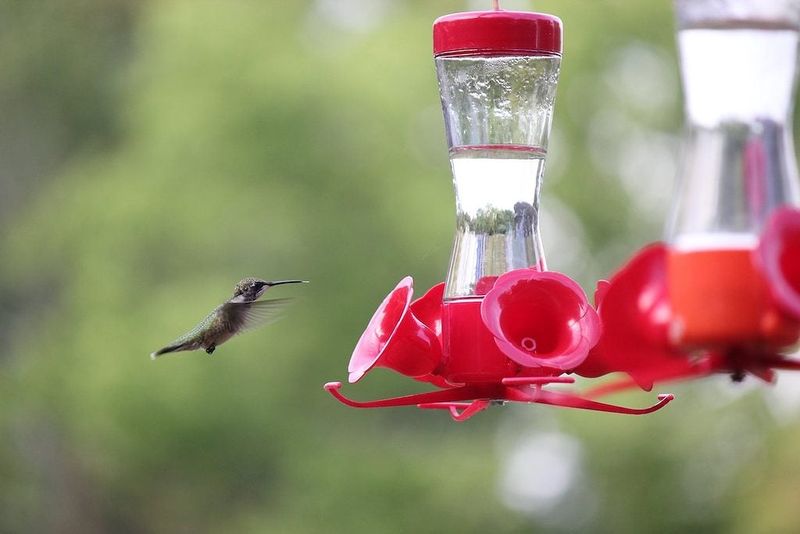
The temptation after a week of no hummingbird activity is to pull the feeder down and call the season over. Resist that. The better rule is to leave the feeder up and stocked with fresh nectar for at least two weeks after the last hummingbird you actually see. Audubon recommends this two-week buffer specifically because late migrants, birds traveling from breeding grounds farther north, can still be moving through your yard after the local birds have gone.
Cornell Lab confirms that leaving feeders up does not trap birds or delay migration, so there is no downside to keeping one available. A bird that needs fuel and finds a clean, working feeder in your yard benefits from it. A bird that was already migrating does not change its plans because a feeder is present.
North Carolina also gets occasional western visitors in fall, including Rufous Hummingbirds, which look different from ruby-throats and can appear well into November along the coast or in the Piedmont. NC State Extension notes that unusual species do turn up, and Cornell Lab encourages careful identification of late-season visitors . If a late-fall hummingbird does not look like the ruby-throats you know, photograph it from multiple angles and report it through eBird or a local birding group rather than guessing. That record could be genuinely useful to researchers tracking western hummingbird movements in the Southeast.
Build The Habitat A Feeder Cannot Provide
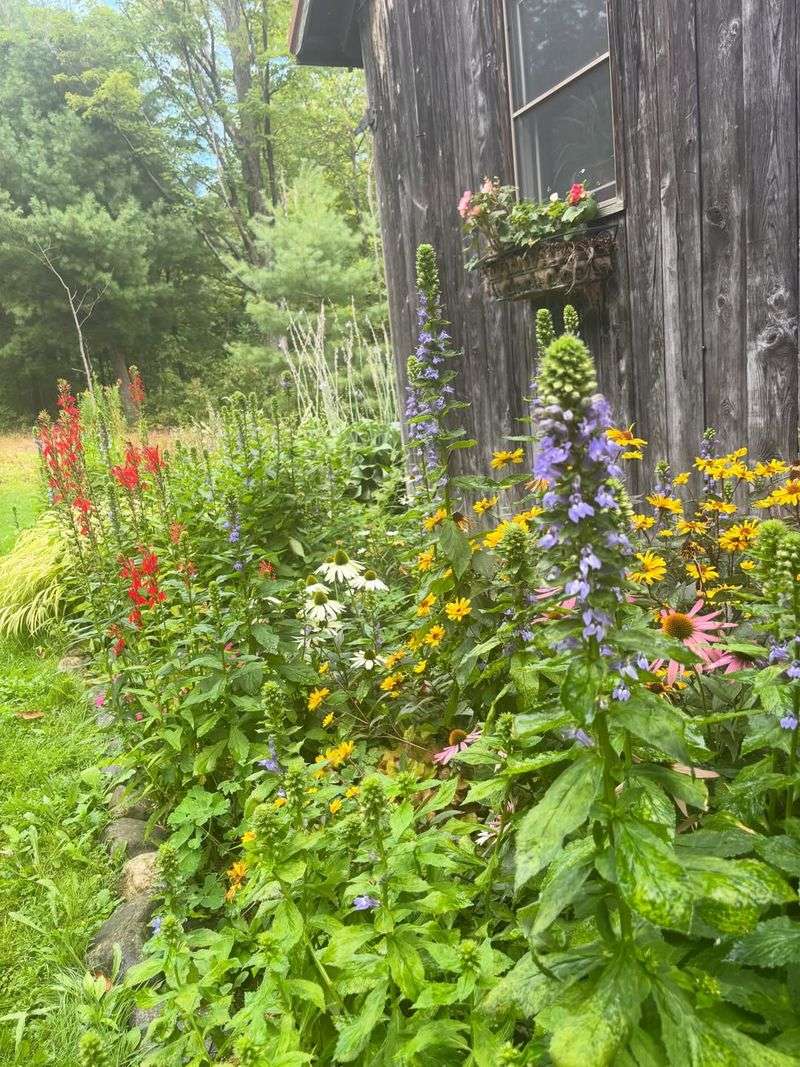
A feeder full of fresh nectar is a real contribution to a migrating hummingbird’s day, but it covers only part of what the bird needs. Ruby-throated hummingbirds eat small insects and spiders as their primary protein source, and no sugar-water feeder replaces that. NC State Extension’s backyard habitat guide is direct on this point: a feeder supplements the diet but does not substitute for flowers, insect prey, shelter, and safe perches.
Several native plants bloom in late summer and fall in North Carolina and can extend the natural nectar supply right through migration season. Cardinal flower (Lobelia cardinalis) is one of the best, with tall spikes of red blooms that hummingbirds seek out reliably. NC State Extension’s plant profile for cardinal flower confirms its value for pollinators and its adaptability to moist spots in both the Piedmont and Coastal Plain. Jewelweed (Impatiens capensis), which NC State Extension profiles as a native annual for moist or shaded sites, is another late-summer standout.
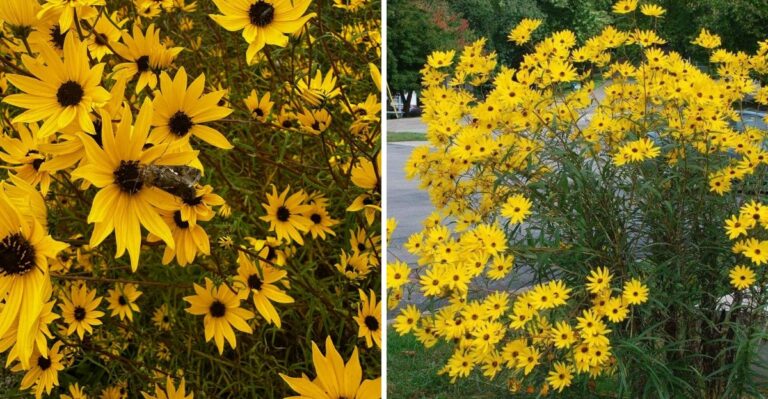
Trumpet vine, red morning glory, swamp sunflower, blue lobelia, and goldenrod round out the fall palette, though bloom timing shifts with location and weather.
NC State Extension’s guide to hummingbirds and butterflies and Audubon’s yard guide both recommend avoiding pesticides near feeders and flowering plants, since hummingbirds eat the very insects that pesticides target. Skip the spray and let the yard stay messy enough to support a small food web. A yard that offers nectar, insects, water, visible perches, and shelter is doing real work for migrating birds, and that work continues even after the feeder goes quiet for the season.