What Black Spots On Michigan Tomato Stems Mean Before The Fruit Starts Failing
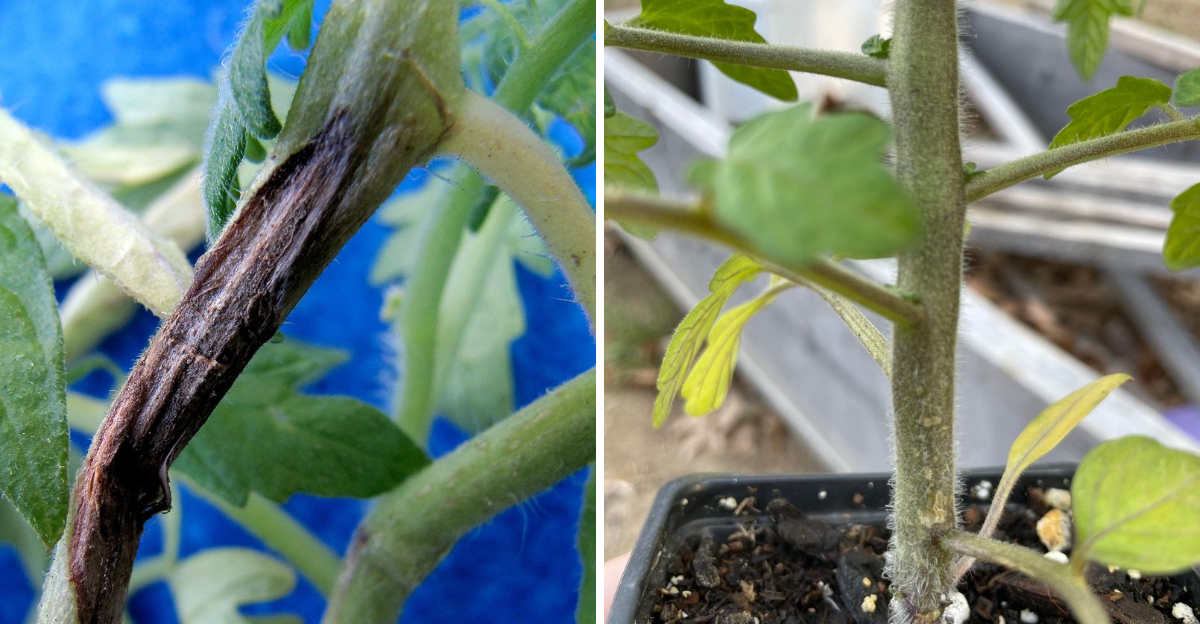
A black mark on a tomato stem can turn a calm Michigan garden check into instant suspicion.
Yesterday, the plant looked normal. Today, one stem has a dark patch, another has a streak, and a leaf above it suddenly looks tired.
That is where panic can make the problem harder.
Dark stem marks do not all mean the same thing. Some point to a fast disease. Others follow wounds, crowded foliage, wet weather, or problems that began much lower on the plant.
Michigan summer weather makes the puzzle trickier.
Warm afternoons, humid nights, heavy dew, cool spells, and rain can create several symptoms at once. One clue rarely tells the whole story.
So what should you notice before the fruit develops trouble?
Start with speed, location, texture, and the condition of nearby leaves. Those four details can narrow the possibilities quickly.
Your tomato may offer an early clue. The useful part comes from the clue you choose first, before one suspicious spot steals the whole summer season right from you.
1. Treat Fast Spreading Lesions As Urgent
A spot that changes fast deserves the first look.
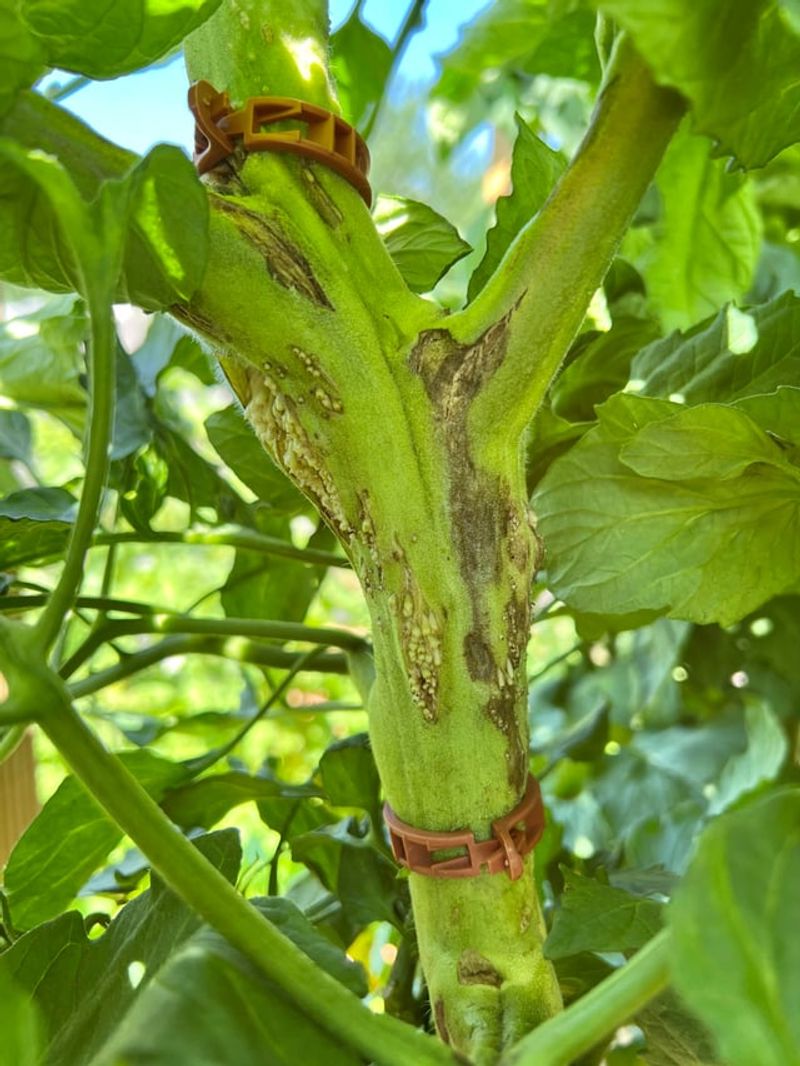
Speed tells you more than color. A brown, black, or purple mark can come from several causes, but a lesion that grows from one day to the next points to a more urgent problem.
Check the surface closely.
A soft, greasy, or water-soaked edge deserves attention. So does tissue that seems to sink or collapse around the mark. Leaves above that area may suddenly wilt even though the soil still holds moisture.
That combination matters because the stem may no longer move water normally past the damaged section.
Keep your hands off nearby healthy plants for the moment. Wash your hands after contact, and clean pruners, stakes, or clips before they touch another tomato. Some pathogens can hitch a ride on tools and fingers with almost rude efficiency.
Remove loose plant debris from the soil and place suspect material in a bag rather than leave it beside the row.
Do not grab the first spray on the shelf.
Take a clear photo beside a ruler and note the date. Check the same spot the next morning. That tiny record gives you something far more useful than memory.
A fast lesion is the garden version of a message marked urgent. Read the details first, then decide what deserves your next move.
2. Check For Late Blight Above The Damage
Cool nights and wet mornings can turn a Michigan tomato patch into excellent late blight territory.
The disease can move at remarkable speed under favorable weather, so the upper part of the plant deserves a careful look after a dark stem lesion appears.
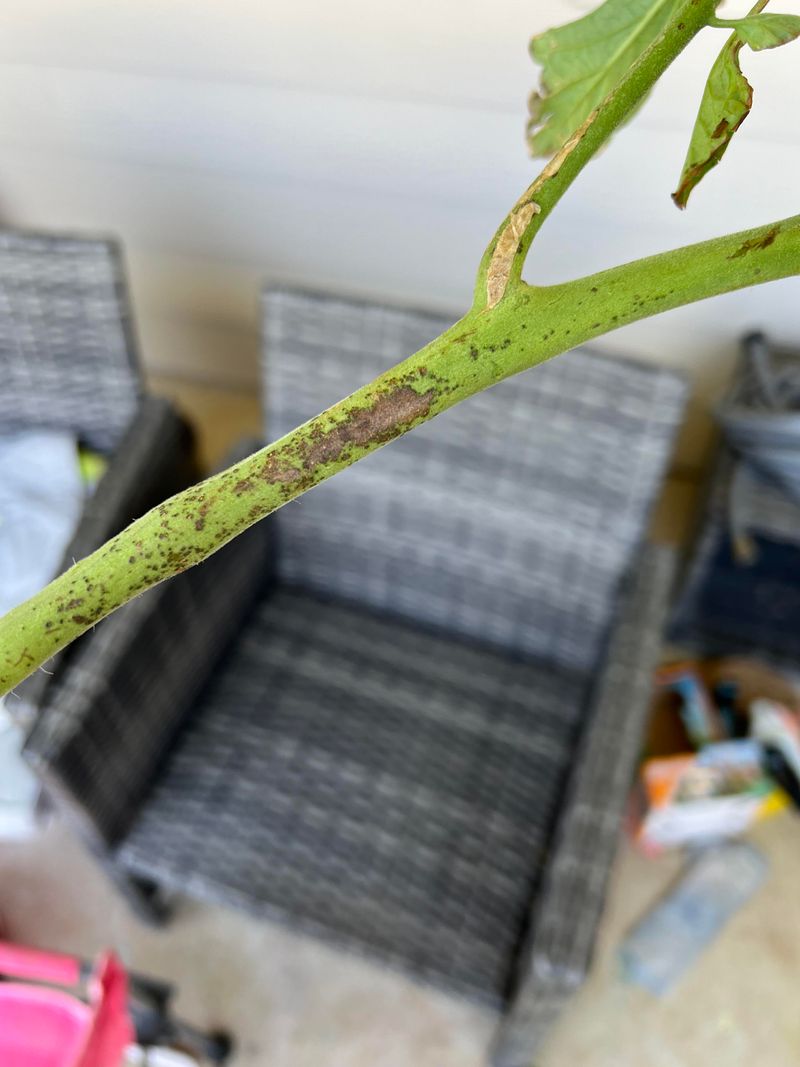
Late blight lesions often look dark brown to nearly black. Their edges may appear greasy or water-soaked rather than dry and sharply outlined.
Early morning gives you another clue.
Humid conditions can produce a faint white fuzz near the edge of a lesion. Dew makes that detail easier to spot before the sun dries the plant.
Your Michigan Garden Changes Every Week. Your Plan Should Too.
Gardening in Michigan changes quickly throughout the season. Every Friday you’ll receive a simple weekly plan showing exactly what to plant, prune, fertilize, harvest, and protect so you never miss the right timing.
Now check the leaves above the mark. Large, irregular brown patches with oily borders can support the same suspicion.
Location matters too.
Late blight often appears on upper stems and fresh growth before lower portions become obvious. That pattern helps separate it from diseases that usually begin close to the soil.
Fruit may later develop firm brown patches with a rough surface, but a delay until fruit symptoms appear gives the problem more time than it deserves.
Avoid a confident home diagnosis from color alone. Several tomato problems can imitate one another.
Use current regional disease alerts and diagnostic support before major action. A confirmed answer can save healthy plants from unnecessary treatment.
Late blight rarely sends a polite invitation. It tends to arrive with urgency, wet weather, and very little respect for your weekend plans.
3. Look For Early Blight Near Lower Stems
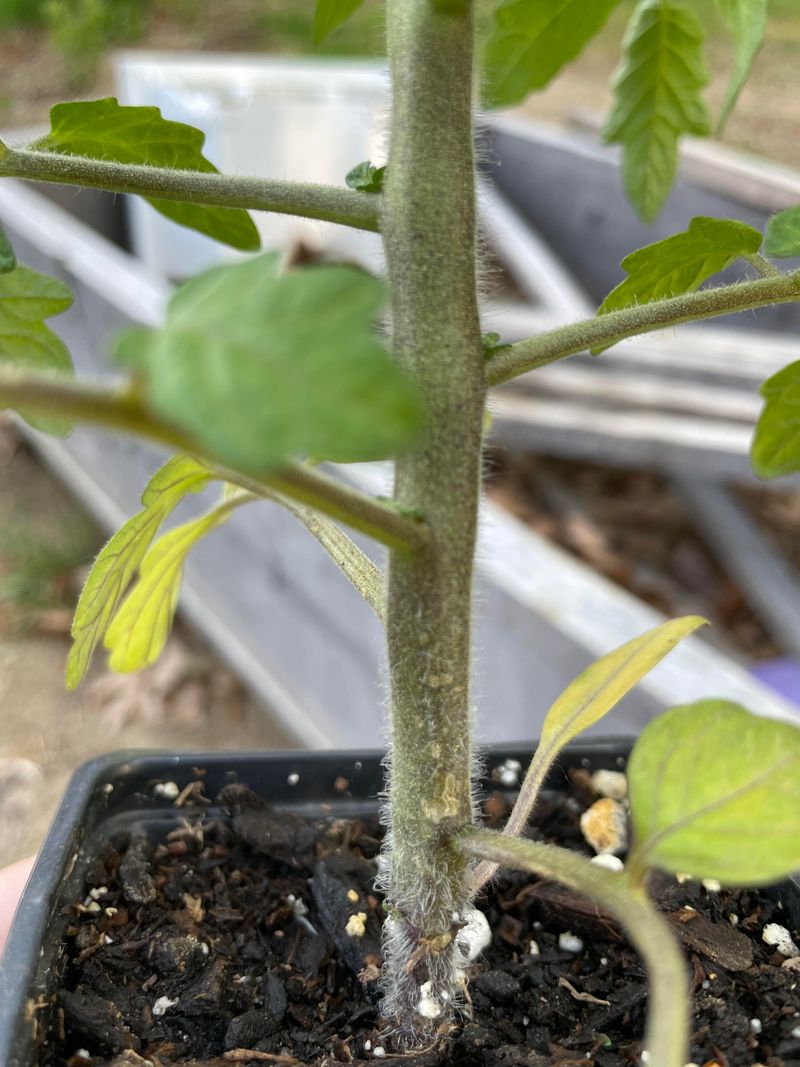
The lowest leaves often tell the story first.
Early blight, caused by Alternaria solani, commonly starts near the soil where rain or irrigation can splash spores onto older foliage. That low-first pattern gives you one of the easiest clues in a crowded tomato row.
Look for dark leaf spots with rings inside them.
Those circles can resemble a tiny target. Yellow tissue often forms around the mark, which makes the pattern easier to see once you know where to look.
Stem symptoms can show up near the soil line too.
Young transplants may develop dark collar-like lesions. Older plants can show longer dark marks along lower stems, especially where dense foliage traps moisture and blocks air.
This disease usually moves more slowly than late blight. That gives you a little more room for practical cleanup.
Remove badly affected lower leaves and take them out of the garden area. Do not leave them beneath the plant, where spores can stay close to the next splash of rain.
A layer of straw or wood chips can also help. Mulch creates a barrier between the soil surface and lower leaves.
Open a crowded canopy with a few careful cuts so leaves dry faster after rain.
The useful clue is the direction of the problem. Early blight tends to climb from below. Your tomato leaves a trail of clues, just far less appealing than breadcrumbs.
4. Do Not Assume Every Spot Is Septoria
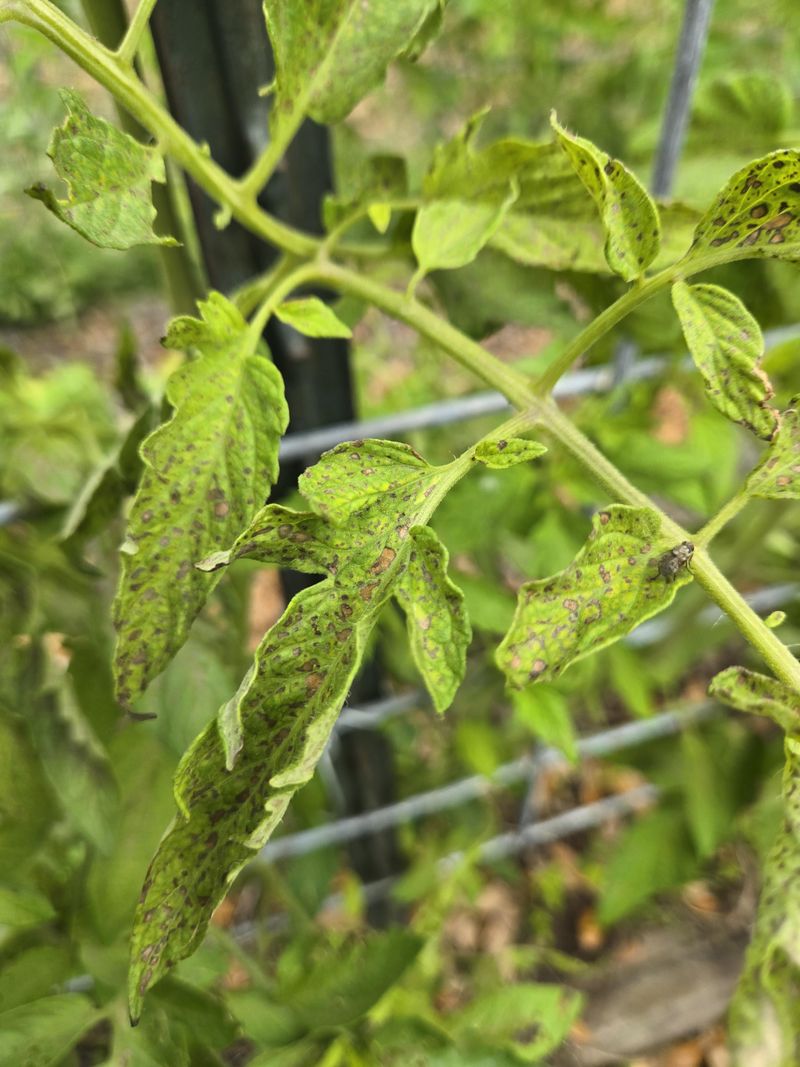
One popular diagnosis gets blamed far too often.
Septoria leaf spot earns plenty of attention in Michigan tomato gardens, but a black stem streak does not automatically belong in that category.
Start with the leaves.
Septoria usually creates small, round spots with pale gray or whitish centers and darker brown or purple borders. Tiny dark specks can appear inside those pale centers. Those dots are reproductive structures known as pycnidia.
The pattern often begins low on the plant and works upward.
That can make Septoria look similar to early blight at first glance, but the spot shape tells a different story. Early blight tends to show larger target-like rings. Septoria spots stay smaller and often have those pale centers.
Stem lesions are where the assumption starts to wobble.
Large dark streaks or sunken black patches on stems are not the classic Septoria clue. Another problem may be responsible, even when Septoria also appears on nearby leaves.
Mixed infections can happen in the same plant.
That means one label may not explain every symptom from top to bottom. Compare the stem mark with leaf spots, wilt patterns, fruit changes, and recent weather before you settle on a cause.
Garden forums love a quick verdict. Tomato diseases prefer plot twists.
Treat the plant like a collection of clues, not a single photograph, and Septoria becomes much easier to place in the right part of the story.
5. Watch For Bacterial Canker Streaking
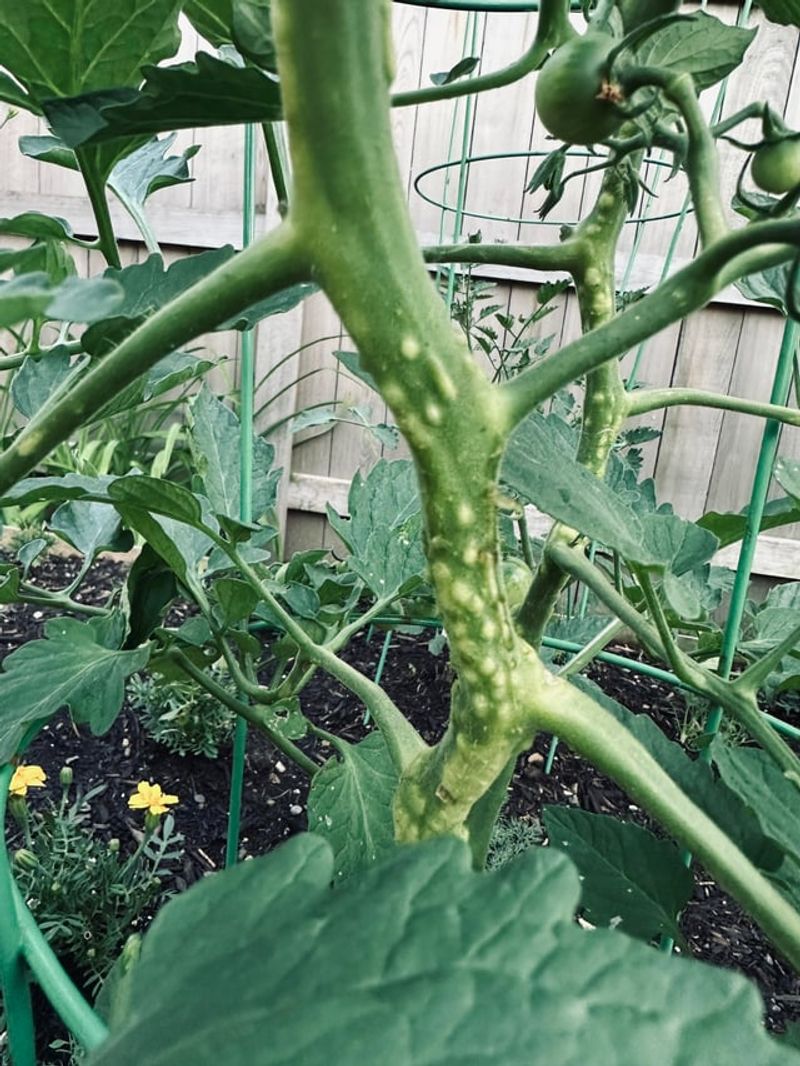
A plant that wilts on one side deserves a closer inspection.
That uneven pattern can point toward bacterial canker, a disease associated with the bacterium Clavibacter michiganensis. Early symptoms may look oddly lopsided, with one side of the plant in trouble while the other side still seems fairly normal.
Check the stem next.
External marks can include brown streaks, cracks, or darker sections along the surface. A careful lengthwise cut through a badly affected stem may reveal brown discoloration inside the vascular tissue.
That internal streak is an important clue.
Fruit can add another piece later. Small spots with pale halos and darker centers are often called bird’s-eye spots. Not every affected plant develops them, so their absence does not settle the diagnosis.
The source may trace back to infected seed or transplants. Tools, hands, stakes, and other supports can also move bacteria between plants.
That makes garden hygiene especially useful.
Clean pruners between plants. Avoid work in the tomato patch while leaves and stems stay wet. Moist surfaces make transfer much easier.
Do not make a major decision from one streak alone. Several stem problems can produce brown tissue or cracks.
Diagnostic confirmation can separate bacterial canker from fungal disease or simple injury.
The lopsided wilt is the clue that should make your eyebrows go up. Tomatoes usually prefer drama in the fruit bowl, not down one side of the plant.
6. Check Fuzzy Growth For Gray Mold
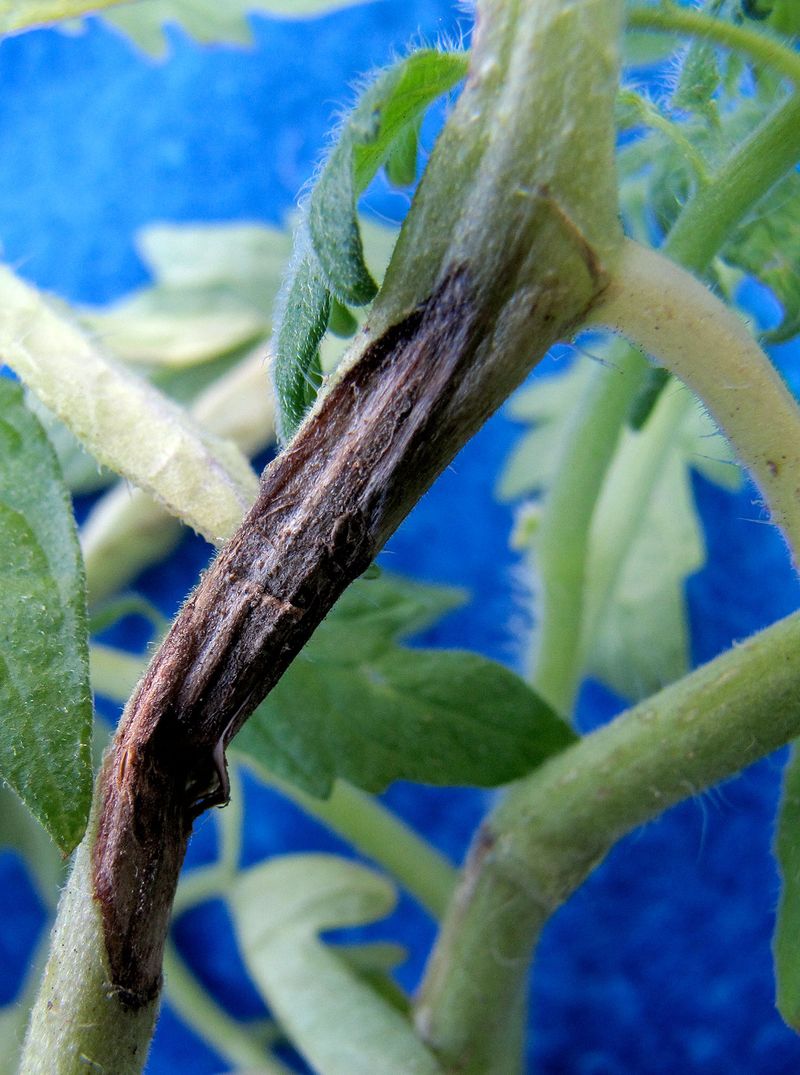
A fuzzy patch changes the investigation.
Gray mold, caused by Botrytis cinerea, often produces a dusty gray-brown coat on stems, leaves, or old flower tissue. That texture can make it easier to recognize than a plain dark lesion.
Botrytis likes weak spots.
Cuts from shears, broken stems, old petals, tie damage, and other weak spots can give the fungus a place to settle. Dense foliage also helps because moisture stays close to plant surfaces for long periods.
Michigan weather can cooperate with the problem.
Cooler summer nights, heavy dew, and humid stretches create the damp conditions Botrytis prefers. A crowded cage can make that tiny climate even wetter.
Check old flower parts and wounded stems first.
A lesion near a recent cut or broken branch can develop fuzzy spores after a cool, damp night. That does not mean every gray patch is Botrytis, but the texture plus the wound gives you a stronger clue.
Handle suspect tissue carefully.
Touch can release spores from a fuzzy patch and move them toward nearby plants. Place removed material straight into a bag rather than toss or shake it over the bed.
A few selective cuts can improve airflow through a dense canopy. Keep healthy foliage where possible and focus on crowded interior stems.
Gray mold often appears where the plant already had a bad day. Your job is to stop one small wound before it becomes the neighborhood party spot.
7. Inspect Wounds For Secondary Infection
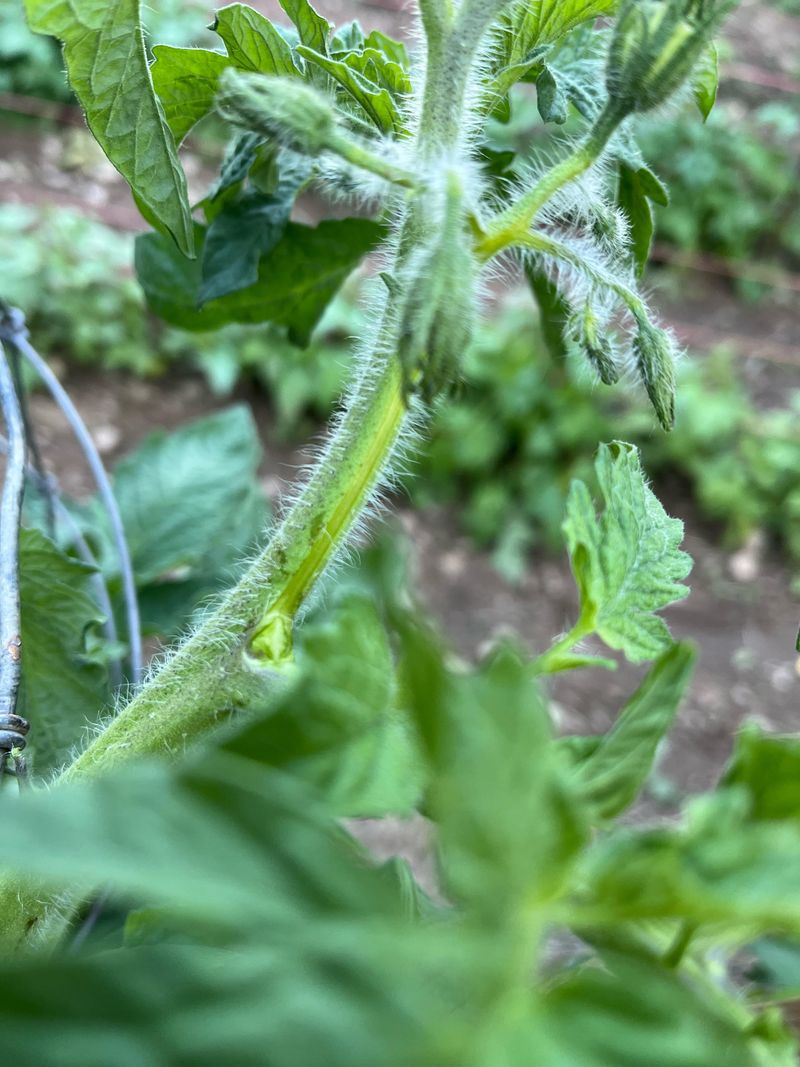
Sometimes the scary black mark starts with something completely ordinary.
A tight cord, cage wire, hail strike, insect bite, snapped branch, or rough cut from shears can bruise tomato tissue. The damaged area may darken as the stem reacts and seals the wound.
Context becomes your best clue.
Look for a tie directly across the mark. Check for wire pressure, a branch rub, or a recent cut at the exact location.
A neat dark patch centered on obvious physical damage can point toward injury rather than a disease that started on its own.
Then watch the border.
Simple wound discoloration often stays fairly local. A mark that expands, sinks, softens, or develops fuzz deserves another look because a secondary infection may have entered the damaged tissue.
That second stage matters.
Fungi and bacteria can use wounds as convenient entry points. A minor scrape can become a larger problem after several wet days.
Fix the source first.
Replace narrow cord or twist ties with wider, softer material. Loosen supports as stems thicken. Check cage contact points and give branches enough room to move without constant friction.
Clean pruners before another cut.
A dark mark does not always announce a major disease. Sometimes your tomato simply lost an argument with its support system.
Keep the spot under watch for a few days. Stable borders tell a very different story from a mark that continues to claim new territory.