How Oregon Gardeners Keep Geraniums Blooming Through Dry Late Summer
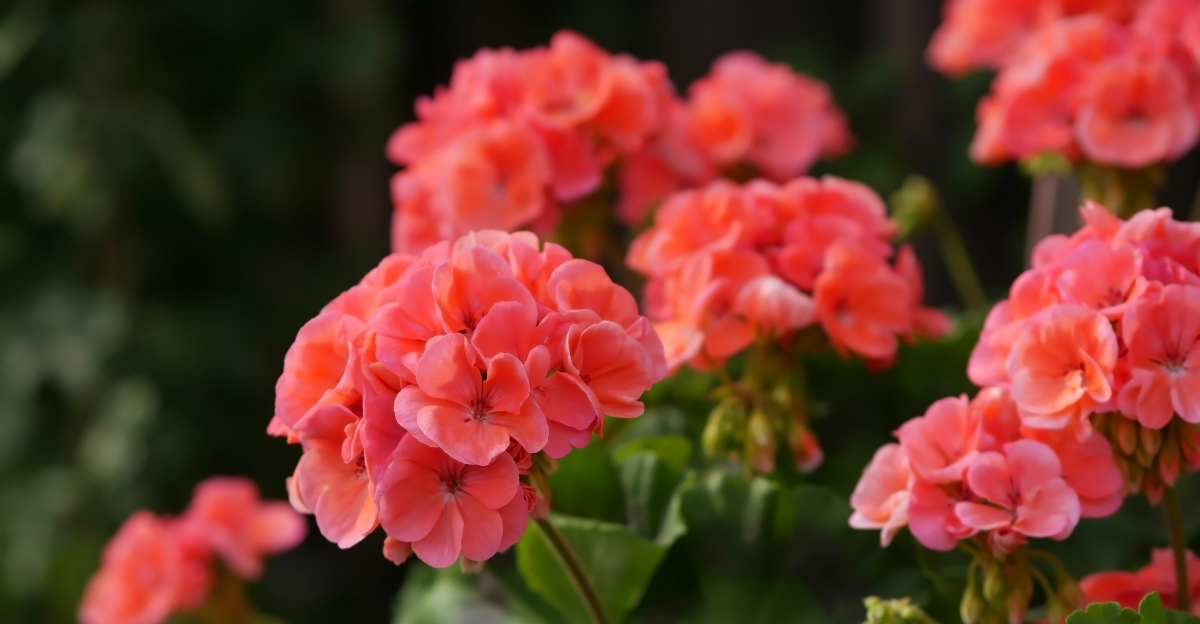
Geraniums can lose their momentum fast once Oregon settles into the driest stretch of summer.
Flowers fade sooner, new buds slow down, and plants that looked full in June may start putting more energy into simply coping with heat.
Keeping them blooming takes a little more than routine watering. Spent flowers need to come off promptly, roots need consistent moisture without staying soggy, and tired plants often benefit from a small nutritional boost rather than a heavy feeding.
Container-grown geraniums can struggle even more because their soil dries much faster than garden beds.
The goal is to keep the plant growing steadily without pushing soft, weak growth during hot weather.
A few timely adjustments can extend the show well into late summer, giving those familiar blooms a second wind when many other patio plants are already winding down.
1. Watering Deep Instead Of Giving Tiny Daily Sips
A lot of people make the mistake of giving their geraniums just a little water every single day. That kind of light watering only wets the top inch of soil.
The roots never get what they really need.
Deep watering means letting water soak down several inches into the soil. When water reaches deeper levels, roots follow it down.
Deeper roots are stronger and more able to handle dry spells without struggling.
To water deeply, slow things down and let the water run for a longer time in one spot. A slow, steady stream works much better than a quick splash.
You want the water to soak in rather than run off the surface.
In raised beds or in-ground planting areas, try using a soaker hose. It delivers water right at soil level and lets it move downward slowly.
This method wastes less water and gets more to the roots where it counts.
Container geraniums need deep watering too. Pour water in slowly until it drains out of the bottom holes.
That tells you the whole root zone got a good drink.
Gardeners here often water in the morning. Morning watering gives roots time to absorb moisture before the afternoon heat arrives.
It also keeps the leaves dry, which helps prevent fungal problems during warm, humid stretches of late summer.
2. Letting The Soil Dry Slightly Between Drinks
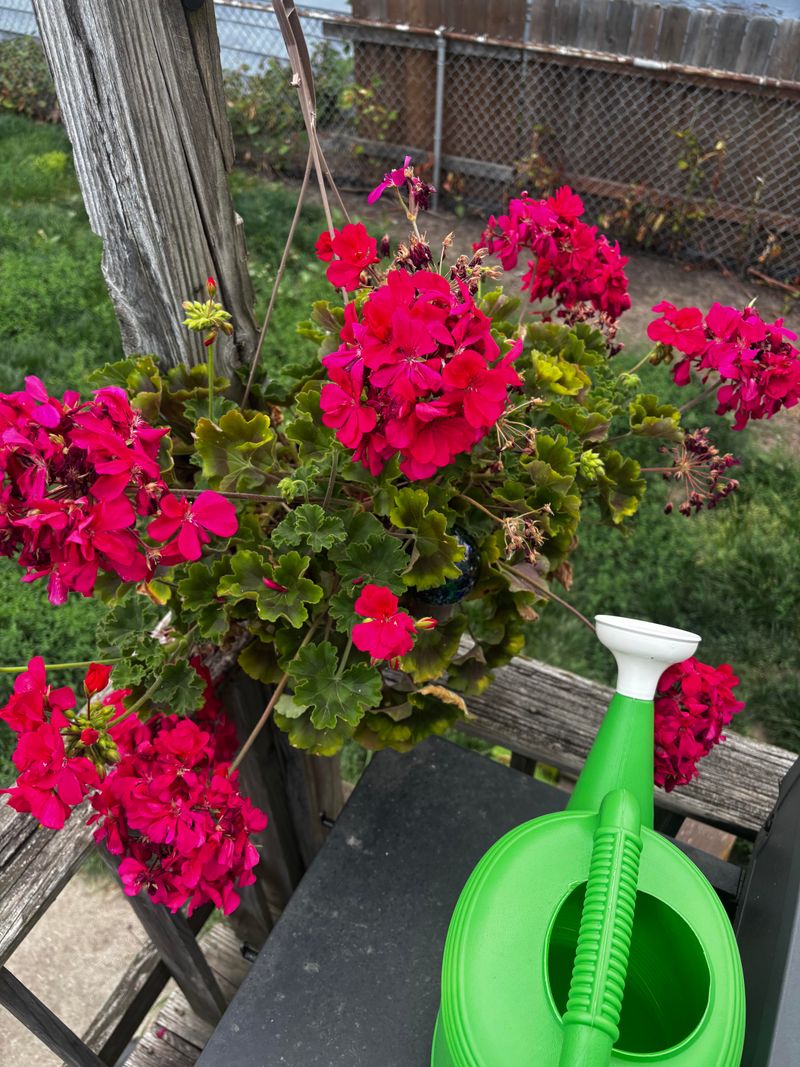
Geraniums are not fans of soggy soil. They actually do better when the soil gets a chance to dry out just a little between waterings.
Wet roots for too long can lead to rot and droopy, sad-looking plants.
The trick is finding the right balance. You do not want bone-dry soil, but you also do not want mud.
Slightly dry on the surface with moisture still deeper down is the sweet spot most experienced growers aim for.
A simple way to check is to stick your finger about an inch into the soil. If it still feels damp, wait another day.
If it feels dry at that depth, it is time to water again.
This approach works especially well during late summer when temperatures are high. The heat can make soil feel dry on top while still being moist underneath.
Your Oregon Garden Changes Every Week. Your Plan Should Too.
Gardening in Oregon changes quickly throughout the season. Every Friday you’ll receive a simple weekly plan showing exactly what to plant, prune, fertilize, harvest, and protect so you never miss the right timing.
Checking with your finger keeps you from overwatering by accident.
For container plants, pick up the pot if you can. A dry pot feels noticeably lighter than a wet one.
Over time, you get a feel for how heavy your pots should be before watering.
Letting soil breathe between waterings also encourages roots to spread out and search for moisture. That makes the plant more resilient overall.
Gardeners in drier parts of Oregon swear by this method for keeping geraniums healthy all season long.
3. Feeding Lightly Without Pushing Too Much Leaf Growth
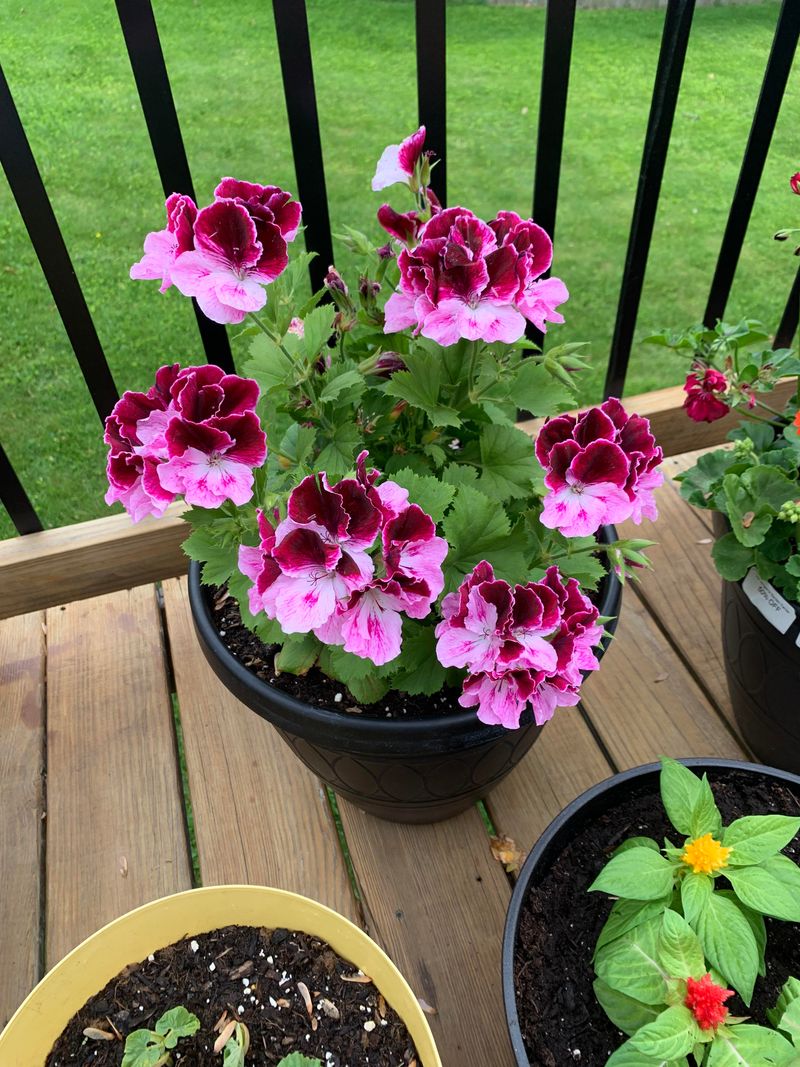
Feeding geraniums sounds simple, but too much fertilizer can actually work against you during late summer. High-nitrogen fertilizers push plants to grow lots of leaves and stems.
That sounds good, but it often comes at the expense of flowers.
What you really want during the dry season is more blooms and less leafy growth. A fertilizer with lower nitrogen and higher phosphorus encourages flowering.
Look for labels that show a middle or last number higher than the first, like 5-10-10.
Apply fertilizer lightly and less often than the package might suggest. Every three to four weeks is usually enough during the hot months.
Feeding too frequently stresses plants when they are already working hard to cope with heat and low rainfall.
Liquid fertilizers are a popular choice because they absorb quickly and give plants a gentle, even boost. Mix them at half the recommended strength during summer.
This lighter dose keeps plants nourished without overwhelming them.
Slow-release granular fertilizers are another solid option. You work them into the top layer of soil, and they feed plants gradually over several weeks.
This steady approach suits geraniums well during unpredictable late-summer conditions.
Many gardeners in Oregon skip fertilizing altogether during the very hottest weeks and resume once temperatures cool slightly in early fall. That break gives plants a chance to rest and reset before the next round of blooming begins.
4. Giving Pots A Break From Brutal Afternoon Sun
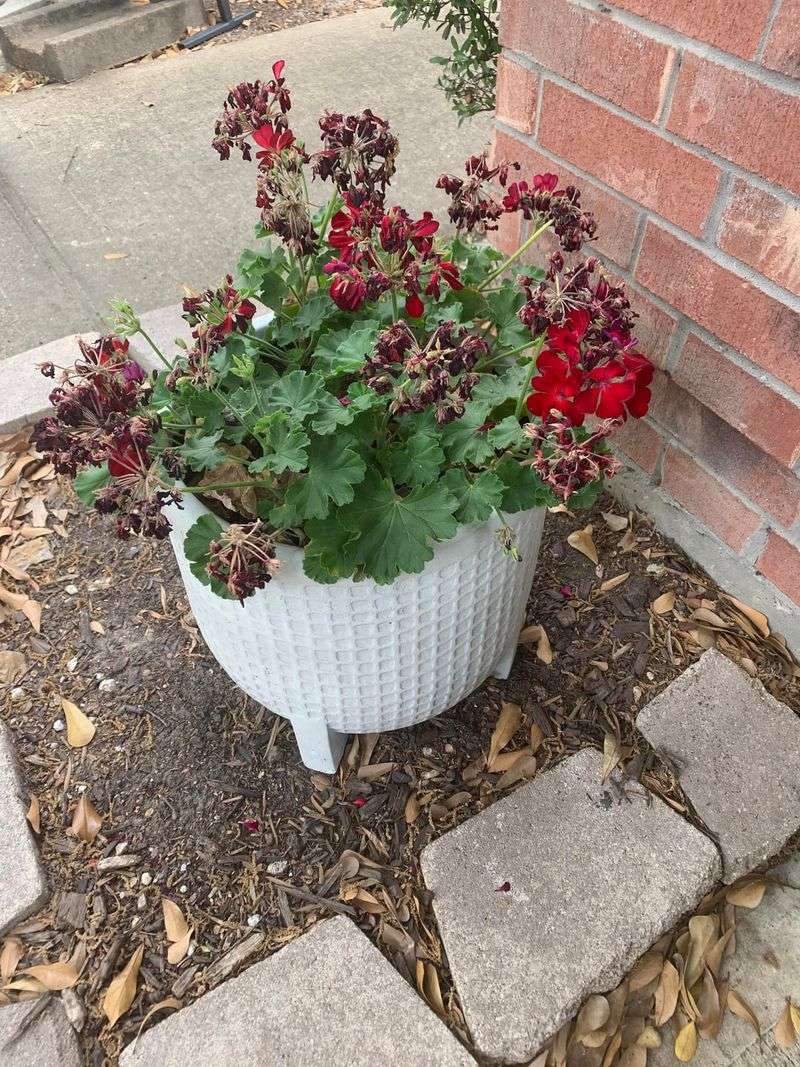
Full sun sounds like a dream for flowering plants, but afternoon sun in late summer can be punishing. Temperatures in this region can push well above 90 degrees on certain days.
Container geraniums sitting in direct afternoon heat can overheat fast.
Moving pots to a spot with afternoon shade makes a real difference. Morning sun is gentler and still gives plants the light they need to bloom well.
After noon, shade from a fence, tree, or covered porch protects them from the most intense rays.
West-facing walls and patios are especially tricky. They absorb heat all day and radiate it back in the afternoon.
Pots near these surfaces can get much hotter than the air temperature suggests, which stresses roots and causes flowers to fade quickly.
If moving pots is not possible, try using a shade cloth. These lightweight fabric covers block a percentage of sunlight without cutting off airflow.
A 30 to 40 percent shade cloth works well for geraniums during peak summer heat.
Another easy fix is grouping pots together. Clustered containers shade each other slightly and create a slightly cooler microclimate around the root zones.
It is a small change that adds up over a long, hot week.
Gardeners who pay attention to sun patterns during July and August often find that a simple afternoon shade solution is the single biggest factor in keeping their geraniums blooming strong through the end of the season.
5. Snipping Leggy Stems To Wake Up Fresh Blooms
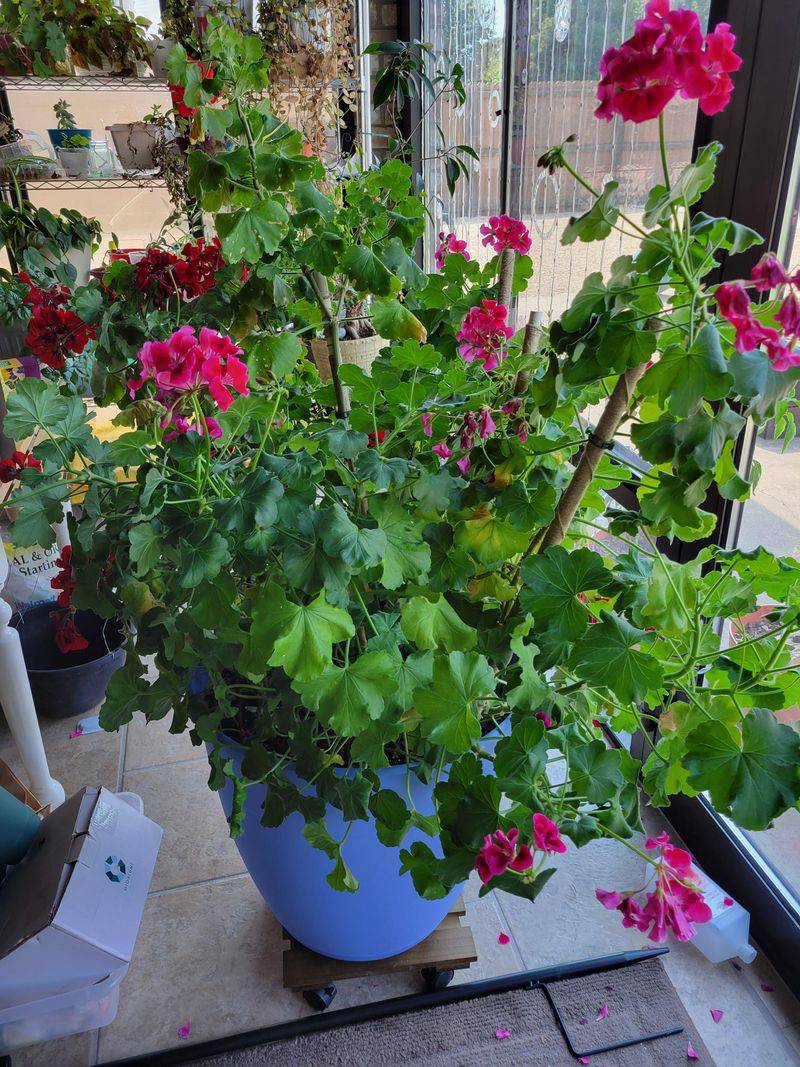
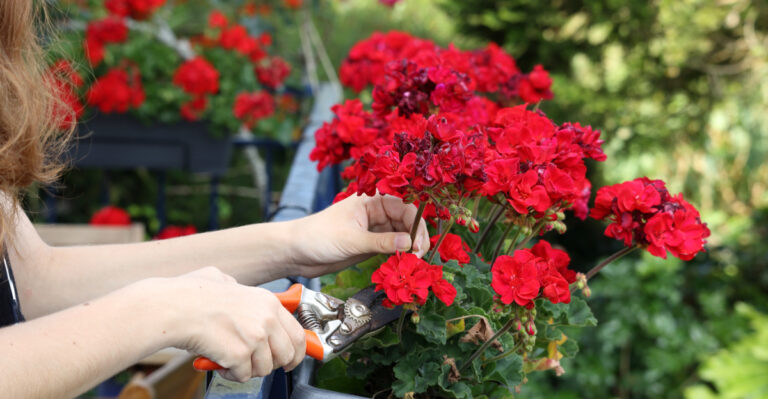
When geraniums start looking stretched out and scraggly by midsummer, that is your cue to grab the scissors.
Long, bare stems with just a few leaves at the top mean the plant is putting energy in the wrong direction. A good trim fixes that fast.
Snipping back leggy stems encourages the plant to push out new side shoots. Those fresh shoots are where the next round of blooms will come from.
Without trimming, plants can stay stuck in a tired, stretched-out state for weeks.
Cut stems back by about one-third of their length. Make cuts just above a leaf node, which is the small bump where a leaf meets the stem.
New growth almost always sprouts right from that point within a week or two.
Do not be afraid to trim more than you think you should. Geraniums bounce back quickly after a hard cut.
Many experienced growers are surprised by how fast a trimmed plant fills back in with fresh, compact growth.
At the same time, remove any spent flower heads. Old blooms left on the plant signal that seed production is the next job.
Removing them tells the plant to keep making new flowers instead.
This combination of stem trimming and deadheading is one of the most reliable ways to restart blooming during a dry late-summer slump.
Doing it every few weeks keeps plants producing color right up until the first fall rains arrive.
6. Keeping Roots Cool With A Little Extra Shade
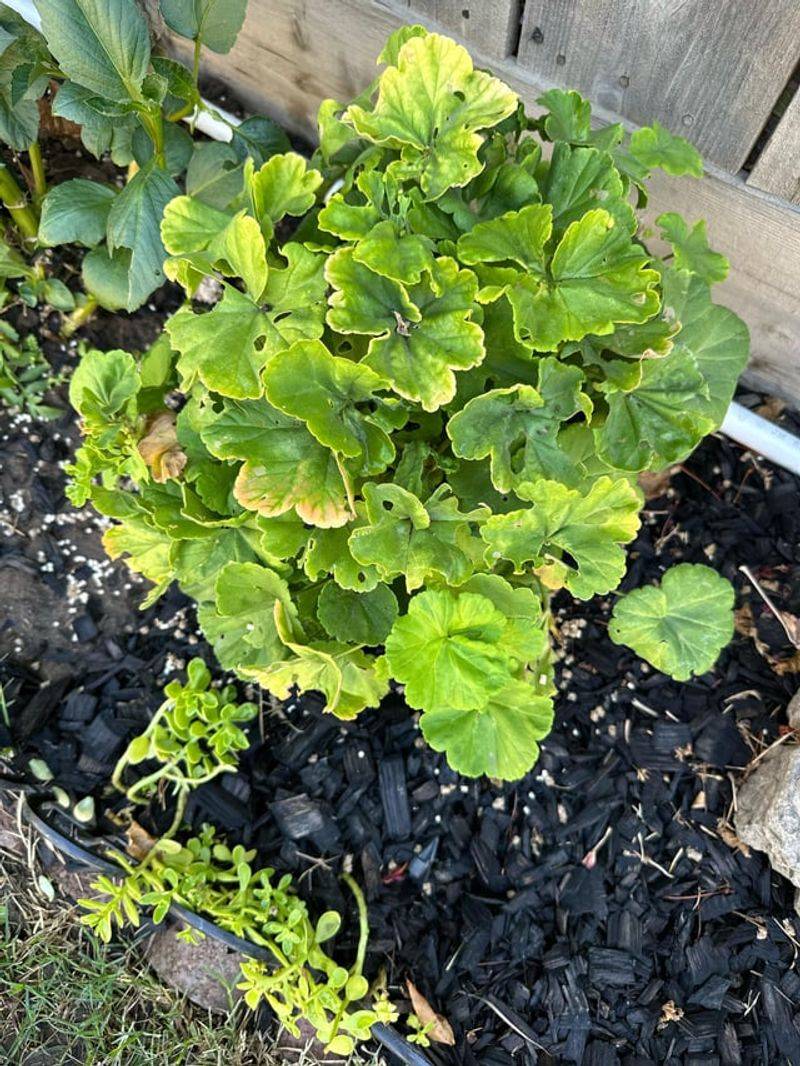
Hot roots are unhappy roots. When soil temperatures climb during a dry August stretch, geraniums can stop blooming and start looking wilted even when the top of the plant seems fine.
Keeping the root zone cool is a game-changer.
Mulch is one of the easiest tools for this job. A layer of wood chips, straw, or shredded bark spread around the base of the plant insulates the soil from direct sun.
It also slows evaporation, which means less frequent watering on your end.
Apply mulch about two to three inches thick. Keep it pulled back slightly from the main stem so moisture does not collect right against it.
Too much contact between mulch and stem can encourage rot in warm, humid conditions.
Planting lower-growing companion plants around geraniums also helps shade the soil naturally. Ground covers and short annuals act as a living mulch.
They block sunlight from hitting bare soil directly and reduce heat buildup around the roots.
For container geraniums, try placing pots inside a larger decorative container. The air gap between the two containers acts as insulation.
This simple trick keeps root temperatures noticeably lower on hot afternoons.
Some gardeners in warmer parts of Oregon also use light-colored pots. Dark containers absorb heat and transfer it directly to the soil.
White or cream-colored pots reflect sunlight and stay cooler, which benefits the root system throughout the hottest weeks of late summer.
7. Checking Containers Before They Dry Out Completely
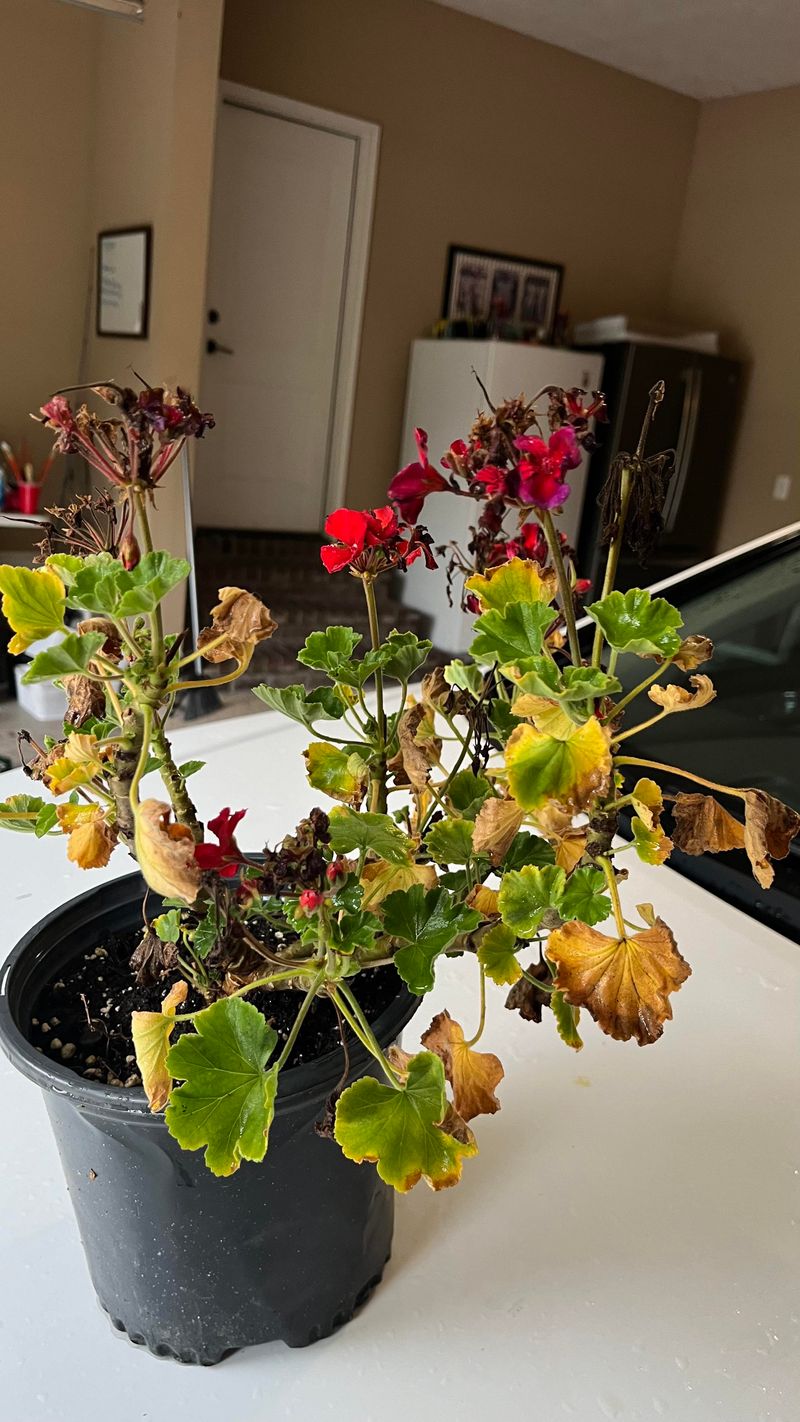
Container geraniums can go from moist to bone dry surprisingly fast during a hot spell. Unlike in-ground plants, pots have a limited amount of soil to hold water.
When that runs out, the plant feels it right away.
Checking your containers daily during the hottest weeks is a smart habit. You do not always have to water, but you do want to know where things stand.
A quick check takes only a few seconds and can prevent a lot of stress on your plants.
Feel the soil with your finger or lift the pot to judge its weight. A pot that feels very light is almost certainly dry all the way through.
At that point, water right away and water slowly so the soil can absorb it fully.
Terra cotta pots dry out faster than plastic or glazed ceramic ones. If you use terra cotta, you may need to check twice a day during a heat wave.
The porous walls let moisture escape quickly, which is great for airflow but tough during dry spells.
Self-watering containers are worth considering if checking pots daily feels like too much. They have a built-in reservoir at the bottom that plants draw from as needed.
Many gardeners here use them on decks and patios during summer with great results.
Catching a container before it dries out completely keeps your geraniums from going through cycles of stress and recovery. Consistent moisture, even if light, supports steady blooming far better than irregular watering patterns do.
8. Removing Yellow Leaves Before Plants Get Stressed
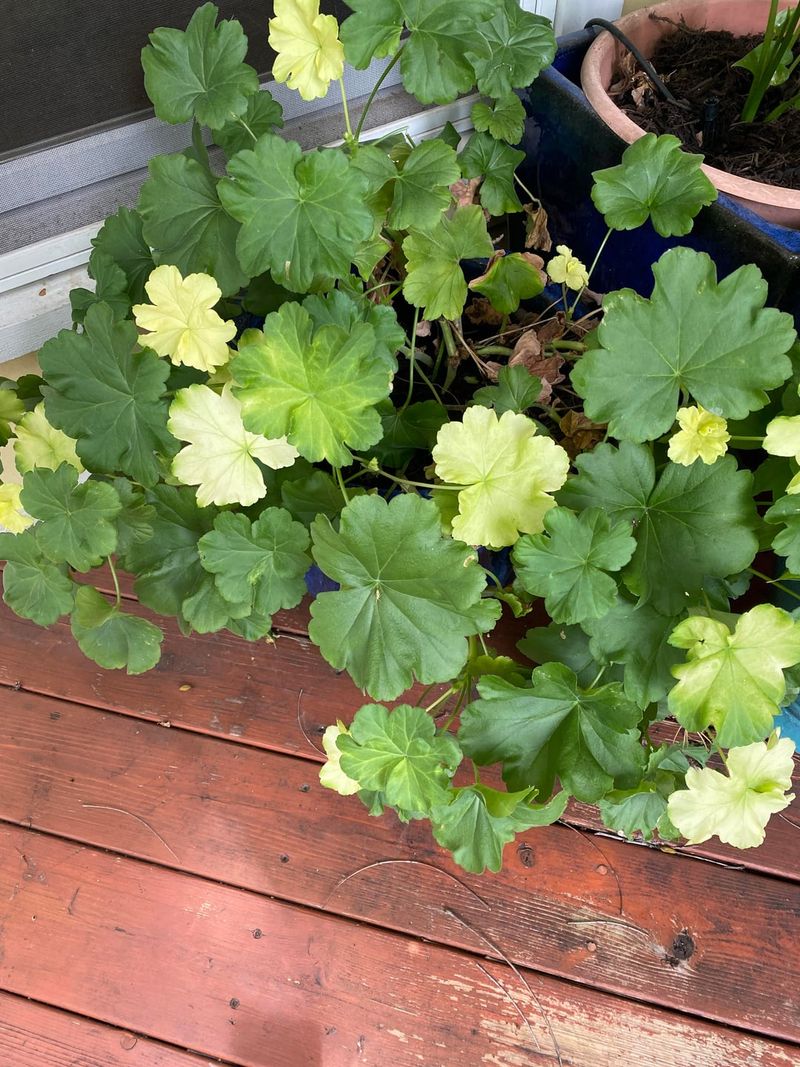
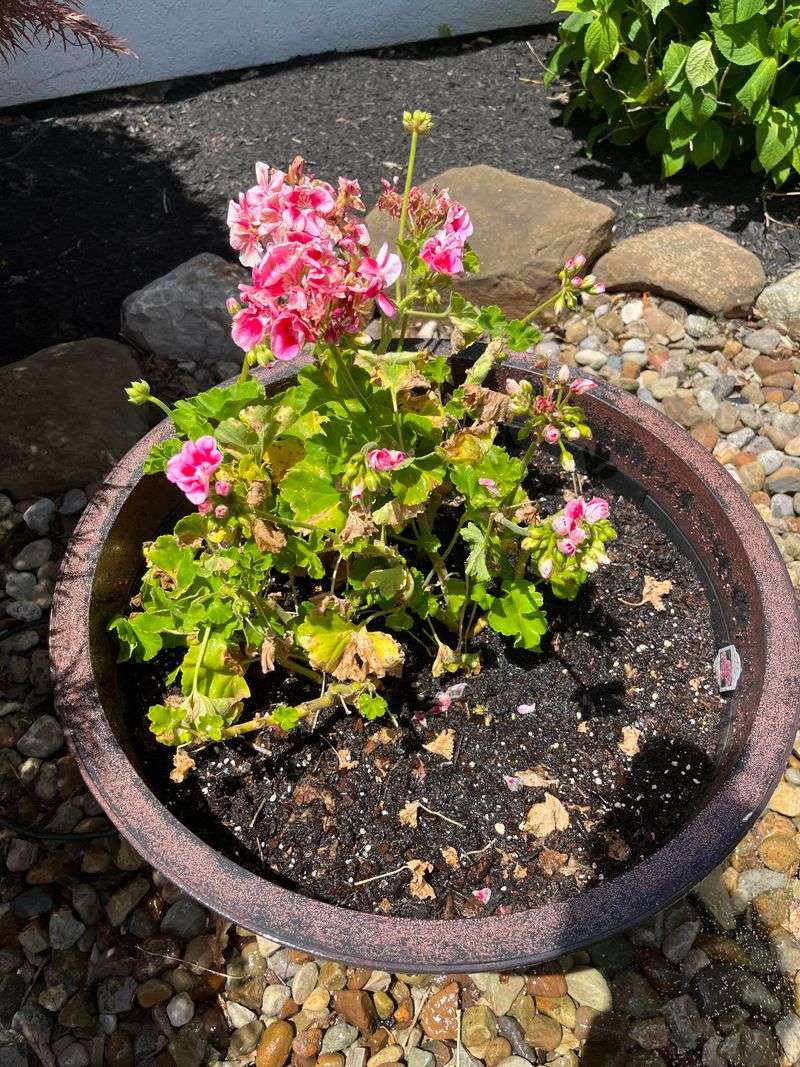
Yellow leaves on a geranium are not just an eyesore. They are actually a signal that something needs attention.
Spotting and removing them early keeps small problems from turning into bigger ones later in the season.
Lower leaves tend to yellow first, especially when they are crowded, getting too much shade, or sitting in soil that stayed wet too long.
Pulling them off as soon as they appear keeps the plant looking tidy and stops any fungal issues from spreading upward.
Use your fingers or small scissors to remove yellow leaves cleanly. Tearing them off roughly can damage the stem.
A clean removal point heals faster and reduces the chance of pests or disease finding an entry point.
Sometimes yellowing happens because the plant is simply shedding older leaves to focus energy on new growth. That is completely normal.
The key is watching for patterns: if yellowing spreads quickly or affects many leaves at once, that points to a watering or nutrient issue worth addressing.
After removing yellow leaves, take a look at what is left. Is the plant getting enough light?
Is the soil staying too wet? Often, a little detective work right after a cleanup session reveals what the plant actually needs.
Keeping plants free of damaged and yellowing foliage also improves airflow around the stems.
Good airflow reduces the chances of powdery mildew and other fungal problems that tend to show up during the warm, sometimes humid evenings of late summer in this state.
9. Skipping Heavy Fertilizer During The Hottest Weeks
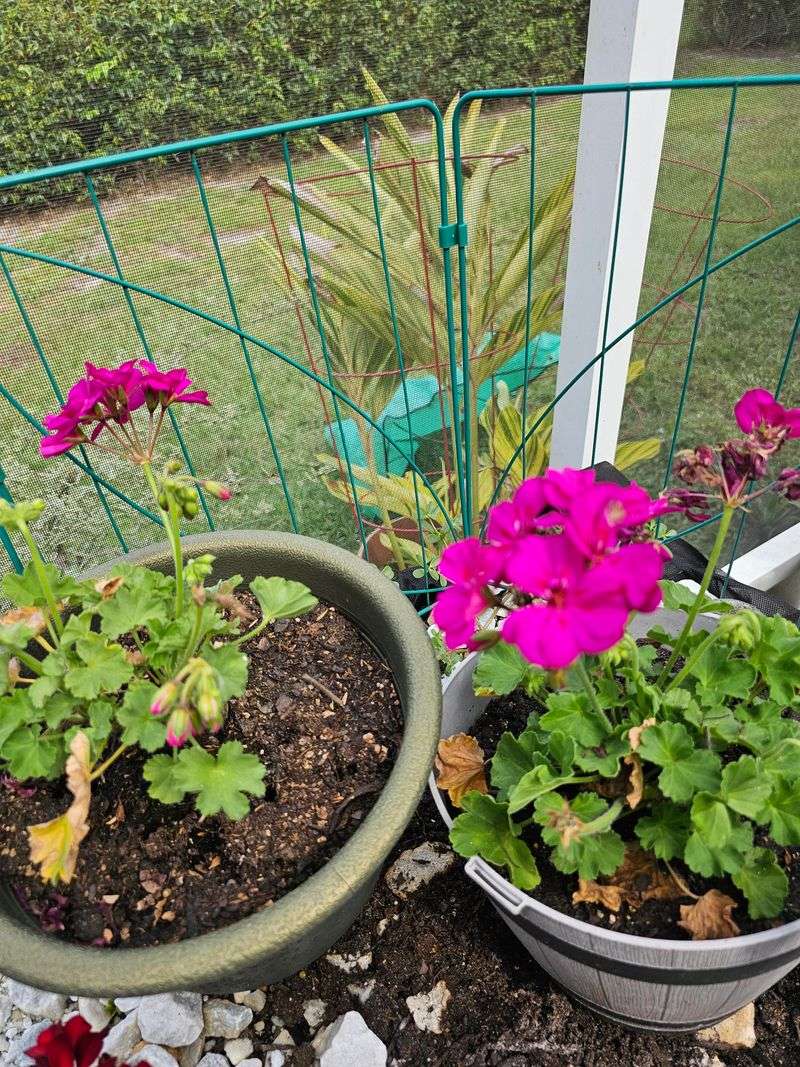
There is a common temptation to feed plants more when they look stressed. With geraniums during a heat wave, that instinct can backfire in a hurry.
Heavy fertilizer during extreme heat can actually damage roots and slow down blooming.
When temperatures are at their peak, plants slow down. They are not actively growing fast, and they cannot process large amounts of nutrients efficiently.
Fertilizer salts can build up in the soil and pull moisture away from roots, making things worse.
The best approach is to hold off on heavy feeding when daytime temperatures consistently hit the upper 80s or above. Wait for a cooler stretch before giving plants a full feeding.
Even a few days of milder weather makes a difference in how well they absorb nutrients.
If you feel like you need to do something during a heat wave, a very diluted liquid fertilizer is the safest option. Mix it at one-quarter of the normal strength.
That small amount gives a gentle nudge without putting extra stress on already-taxed roots.
Watering well before and after any fertilizer application also helps. Moist soil buffers the effect of fertilizer salts and helps nutrients move evenly through the root zone.
Never fertilize dry soil, especially during hot weather.
Experienced growers often say that doing less during the hottest weeks is the secret to better blooms in early fall. Letting plants rest and recover sets them up for a strong second wave of color once the heat breaks.