This Native Georgia Shrub Is Replacing Nandina In More Yards This Year
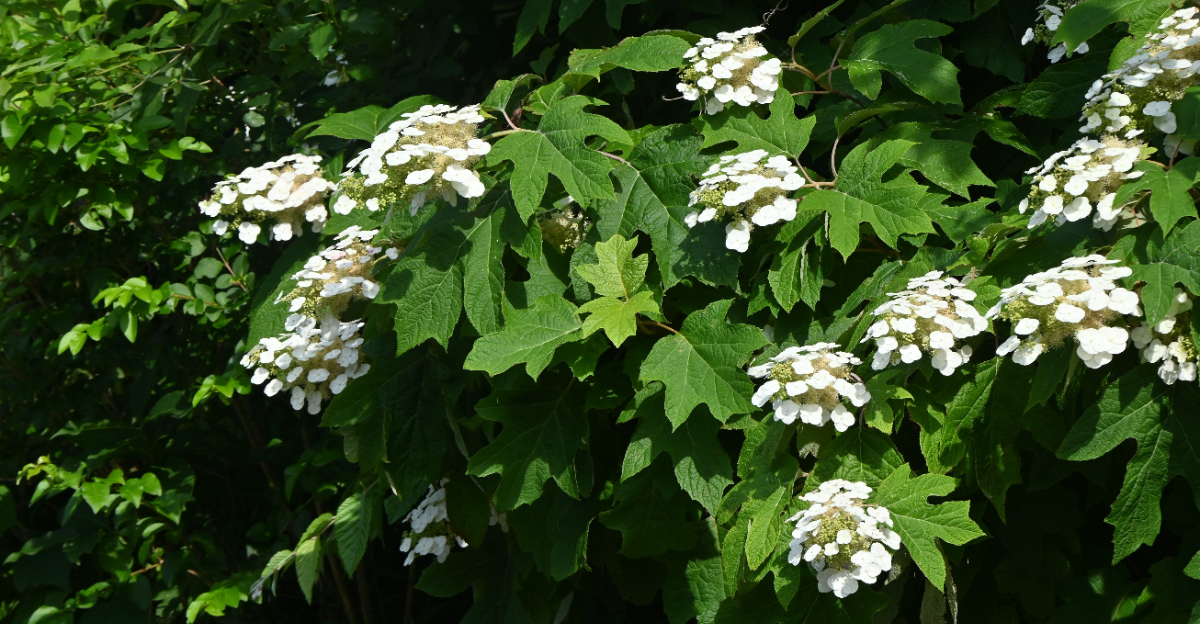
If nandina has been your default choice for filling an empty spot, there is a native shrub worth considering instead. You may like what it brings to the yard.
This alternative offers plenty of character without feeling like a compromise. Its foliage, flowers, and seasonal changes can keep the planting interesting beyond summer.
For Georgia gardeners, choosing native plants can also create more useful space for local wildlife. That gives this shrub an advantage that goes beyond appearance.
Give it the right location, and it can become a strong feature rather than background greenery. You will want to consider its mature size before planting.
There is another reason gardeners may prefer it over nandina.
Replacing a familiar landscape favorite can feel like a big move, but this shrub makes the switch surprisingly easy to consider.
1. Oakleaf Hydrangea Makes A Strong Native Nandina Alternative
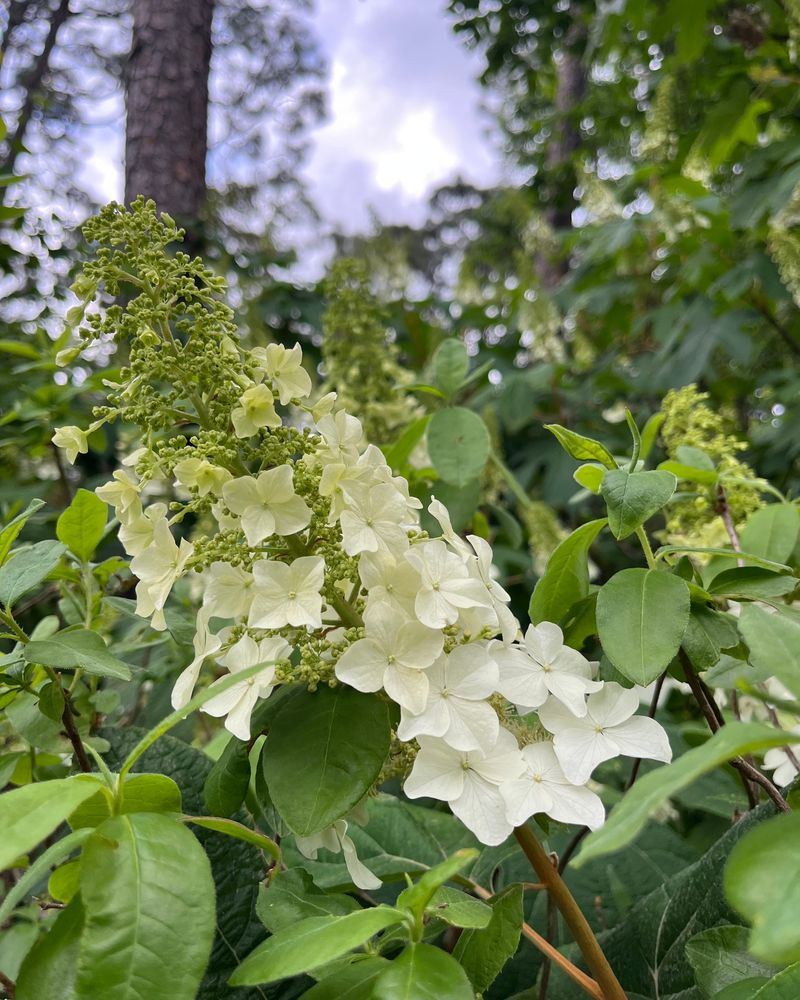
Pulling out nandina feels like a big decision, but oakleaf hydrangea makes the swap feel worthwhile fast. Native to the southeastern United States, this shrub fits right into Georgia landscapes without needing much coaxing.
Nandina spreads through bird droppings and can crowd out native plants over time.
Oakleaf hydrangea stays put. It spreads slowly through natural root growth and does not threaten surrounding plants or wild areas.
Mature plants can reach six to eight feet tall and wide, depending on conditions. That size gives your yard real presence without aggressive spreading.
Pollinators love the blooms. Birds use the dense branching for shelter.
Replacing nandina with oakleaf hydrangea actually adds ecological value to your yard rather than removing it.
Local native plant nurseries across the state have noticed a real uptick in oakleaf hydrangea sales over the past couple of years. Gardeners are asking for it by name now, which was not always the case.
Getting started is straightforward. Plant it in a spot with decent drainage, give it some room to spread, and water it regularly through the first growing season.
After that, it tends to settle in well on its own with minimal intervention from you.
2. Large Leaves Fill Garden Beds With Dense Foliage
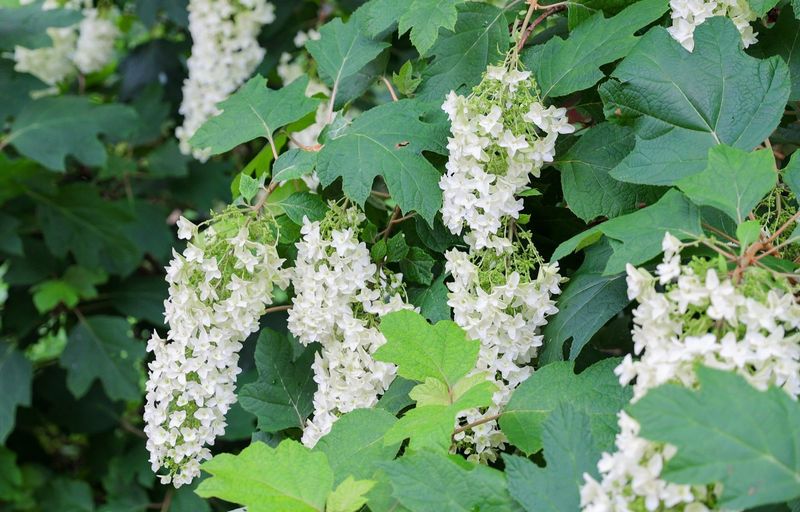
Few shrubs match oakleaf hydrangea when it comes to bold, statement-making foliage. The leaves can grow up to a foot long, with deep lobes that give them a distinctive oak-like shape.
That size alone makes a difference in garden beds. One plant can anchor an entire planting area and give it a lush, layered look that smaller shrubs simply cannot pull off.
Nandina has fine, feathery leaves that look delicate but offer little visual weight. Oakleaf hydrangea goes the opposite direction with broad, textured leaves that hold attention from a distance.
Dense foliage also means better weed suppression beneath the canopy.
Less open soil means fewer weeds finding their way through, which cuts down on maintenance over the growing season.
The leaves stay green and full from spring through late summer.
As temperatures drop in fall, they shift into deep reds and burgundies that look genuinely striking against dry grass or mulched beds.
Your Georgia Garden Changes Every Week. Your Plan Should Too.
Gardening in Georgia changes quickly throughout the season. Every Friday you’ll receive a simple weekly plan showing exactly what to plant, prune, fertilize, harvest, and protect so you never miss the right timing.
Gardeners who want year-round visual interest without planting multiple species often lean on oakleaf hydrangea for exactly this reason.
One shrub carries a lot of the visual load across multiple seasons, and the foliage is a big part of why that works so well in practice.
3. White Flower Clusters Add Color In Early Summer
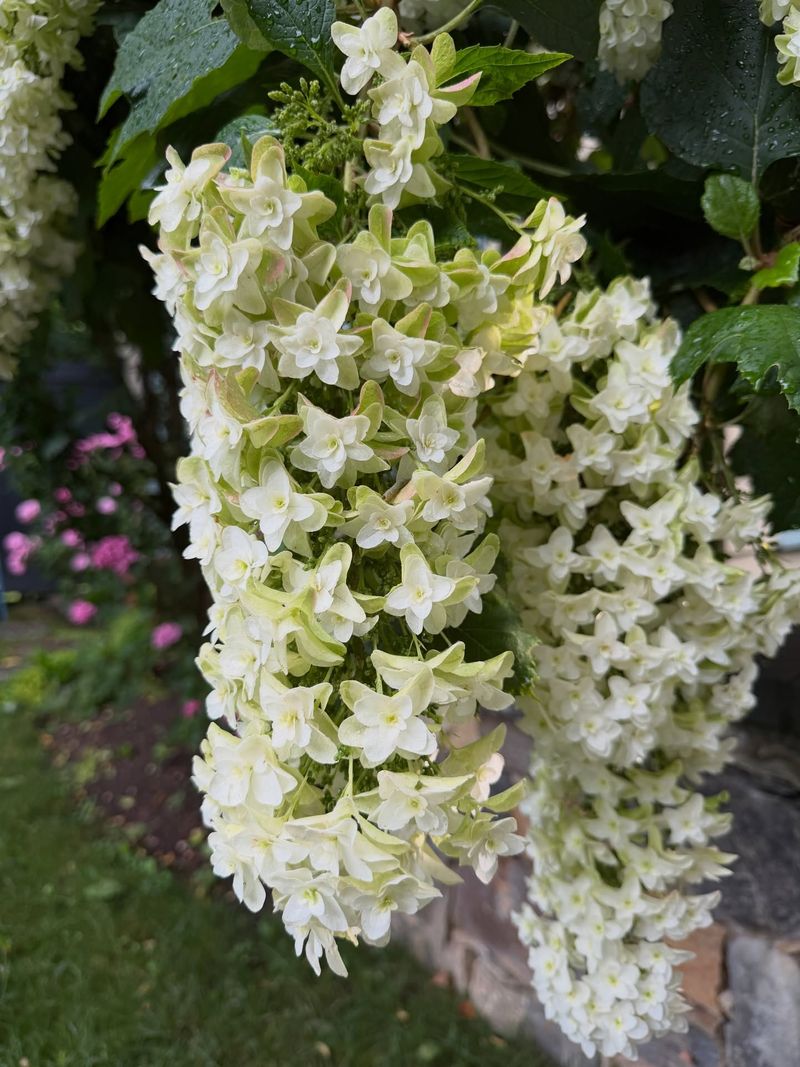
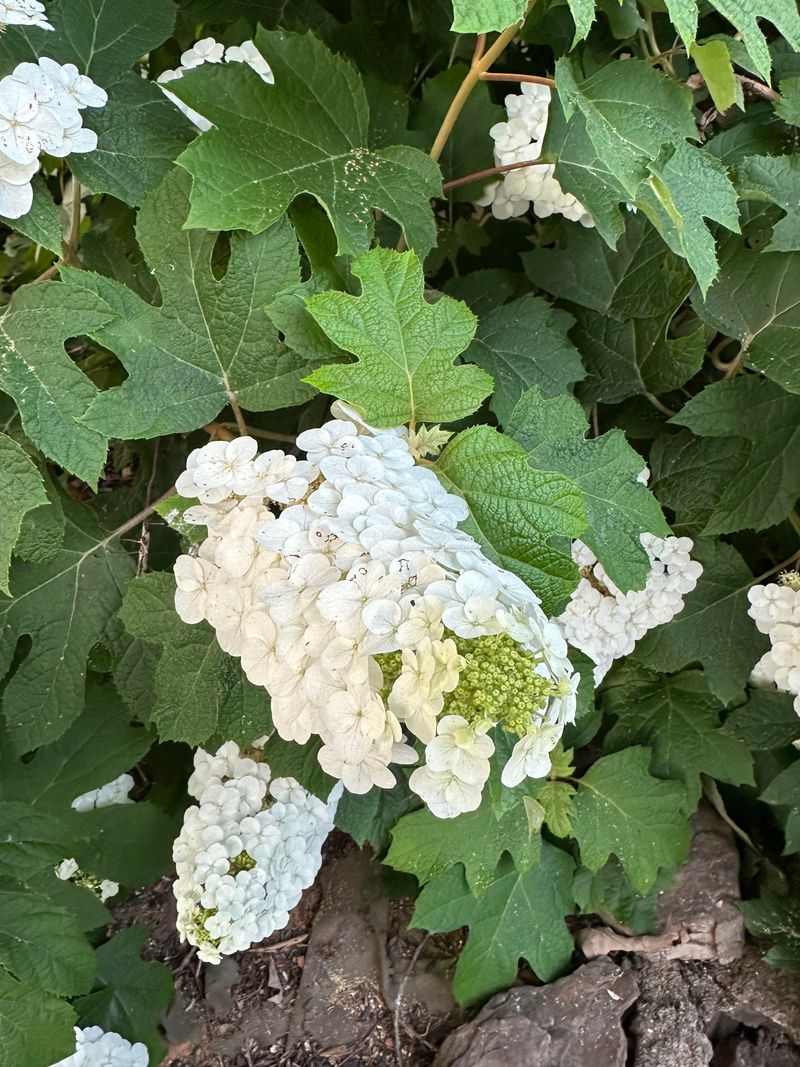
Those big white blooms are hard to miss. Oakleaf hydrangea produces cone-shaped flower clusters, called panicles, that can stretch eight to twelve inches long in good growing conditions.
Blooming typically kicks off in late spring and runs into early summer across much of the South. The timing lines up well with the gap between spring bulbs fading and summer perennials hitting their stride.
Fresh blooms open white and stay that way for several weeks. As summer progresses, they gradually shift to a soft pinkish tan before drying into papery, buff-colored clusters that hold their shape through fall and winter.
That extended visual interest sets it apart from many other flowering shrubs that bloom for two weeks and go quiet for the rest of the year. Oakleaf hydrangea earns its space across a much longer stretch of the calendar.
Bees and other pollinators visit the blooms regularly during peak flowering.
That alone makes it a smarter choice for gardeners trying to support local insect populations without adding a lot of extra plants.
Cutting a few stems for indoor arrangements is easy and does not hurt the plant.
The dried flower heads work especially well in late-season bouquets, and they hold up for weeks without any special treatment or preservation needed.
4. Fall Leaves Turn Rich Shades Of Red And Purple
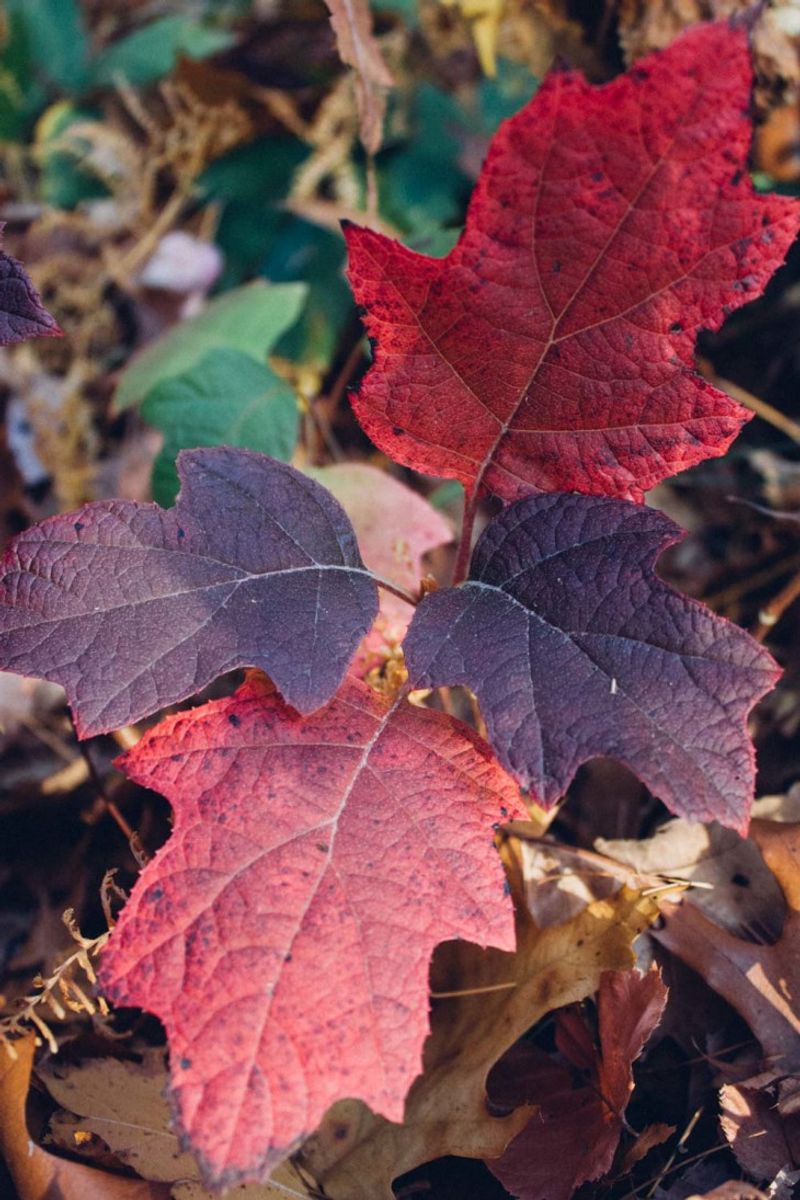
Most flowering shrubs go out quietly in fall. Oakleaf hydrangea does not.
The foliage shifts into some of the richest reds, burgundies, and purples you will see in a home landscape.
Fall color in the South can be unpredictable. Many trees and shrubs do not deliver much color at all before leaves drop.
Oakleaf hydrangea tends to be a reliable performer even when other plants fall flat.
Color intensity varies depending on sun exposure and soil conditions. Plants in more sun often show stronger red tones.
Those in shadier spots may lean more toward wine and purple, which can look equally impressive.
Nandina does turn red in fall, but it holds its berries through winter, which birds spread widely. Oakleaf hydrangea offers comparable fall color without that invasive risk attached to it.
Leaves eventually drop as temperatures fall further, but the dried flower clusters and peeling bark keep the shrub visually interesting even without foliage. That multi-season performance is a real advantage in Southern gardens.
Pairing oakleaf hydrangea with ornamental grasses or late-blooming perennials can extend the fall display even further.
The contrast between the bold hydrangea foliage and fine grass textures creates a layered look that holds up well into early winter across Georgia and neighboring states.
5. Morning Sun And Afternoon Shade Suit It Well
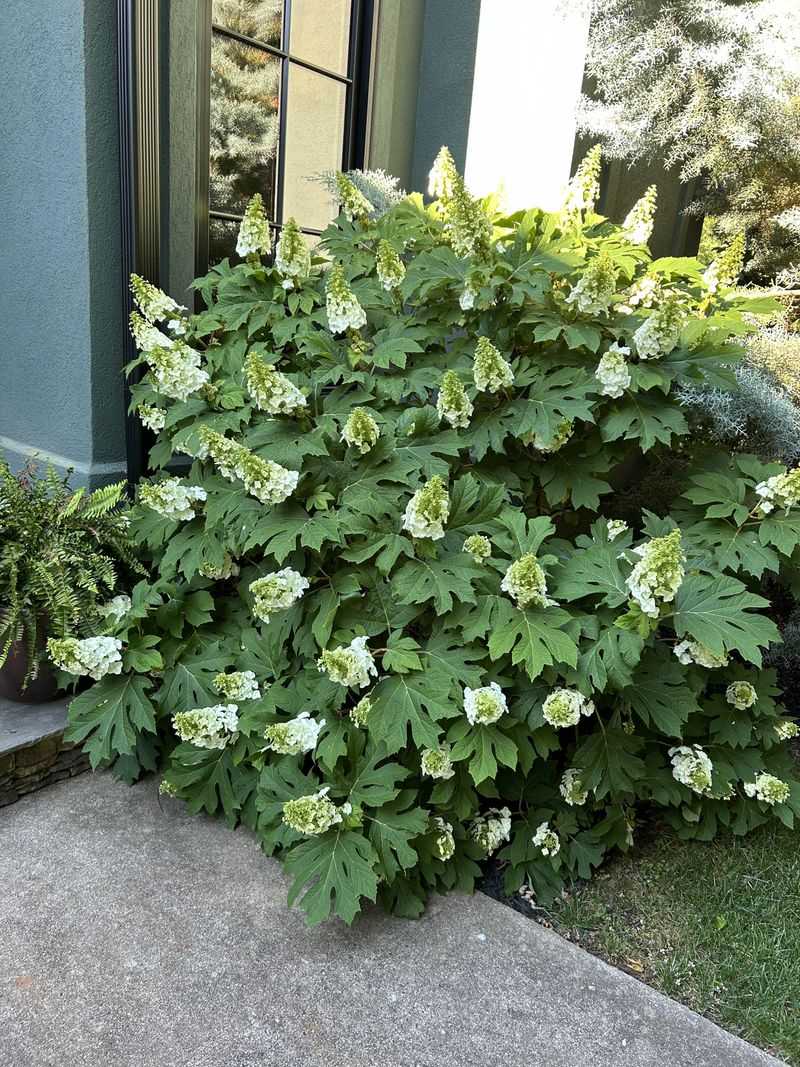
Placement matters more than most gardeners expect with oakleaf hydrangea. Getting the light balance right makes a noticeable difference in how well the plant settles in and performs over time.
Morning sun with afternoon shade is often described as the sweet spot.
That pattern gives the plant enough light to bloom well while protecting the large leaves from intense afternoon heat, which can cause wilting in peak summer.
Full shade is possible, but bloom production tends to suffer. Plants in deep shade often grow well foliage-wise but produce fewer and smaller flower clusters than those with better light access through the morning hours.
Full sun can work in some situations, especially with consistent moisture. Without regular watering, though, leaves may show stress during the hottest weeks of summer, particularly in warmer parts of Georgia.
Planting on the east or north side of a structure often creates ideal conditions naturally. A fence, wall, or tree canopy that blocks western afternoon sun can do a lot of the work for you without any extra effort.
Scouting your yard at different times of day before planting is worth the time. A spot that looks bright in the morning may be fully shaded by two in the afternoon, which is actually closer to ideal than it might seem at first glance.
6. Well-Drained Soil Supports Healthy Root Growth
Roots need room to breathe. Oakleaf hydrangea handles a range of soil types reasonably well, but standing water or consistently soggy ground can cause serious root problems over time.
Well-drained soil is the baseline requirement. Sandy loam, amended clay, or naturally loose soil all work well.
Heavy, compacted clay without amendment tends to hold water too long and can stress the root system, especially in the first year.
Amending clay soil with compost before planting improves drainage and adds organic matter that roots can work through more easily. Even a few inches of compost mixed into the planting hole makes a real difference.
Mulching around the base helps regulate moisture and soil temperature. Two to three inches of organic mulch works well.
Keep it a few inches away from the main stem to avoid creating conditions that invite rot or pest problems.
Established plants develop deeper, more resilient root systems that handle dry spells and wet periods better than newly planted ones. Getting through the first growing season with consistent watering is the key transition point.
Slightly acidic soil, somewhere in the 5.0 to 6.5 pH range, tends to suit oakleaf hydrangea well. A basic soil test can tell you where your yard stands and whether any adjustments would help before you get the plant in the ground.
7. Peeling Bark Adds Interest During The Cooler Months
Winter can leave most shrubs looking plain and forgettable. Oakleaf hydrangea is different.
Once the leaves drop, the bark becomes the focal point, and it genuinely earns attention.
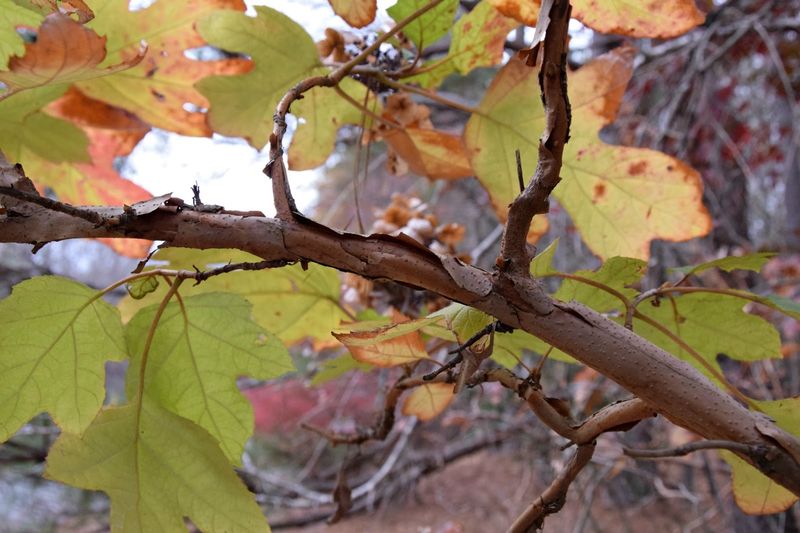
Mature stems develop a peeling, cinnamon-brown bark with a layered, papery texture. Strips curl away from the stem naturally, revealing lighter wood underneath.
Up close, the effect is almost artistic.
Few native shrubs offer this kind of structural interest in the colder months. Most yards rely on evergreens or bare stems to carry winter visuals.
Oakleaf hydrangea offers something in between, texture without foliage.
Dried flower clusters often remain on the plant well into winter, adding soft, buff-colored shapes above the peeling stems. That combination of texture and form keeps the shrub from disappearing visually even after frost arrives.
Gardeners across the Southeast have started valuing winter interest more as they rethink traditional yard designs. A plant that looks good in January as well as June is worth more in a small yard than one that shines for only a few weeks.
Pruning is best saved for late winter or early spring before new growth emerges. Cutting back too early in fall can remove next season’s flower buds, which form on old wood.
Patience through the winter months pays off with better blooms come spring across most growing conditions.