This August Mistake Is Weakening Indiana Rosemary Plants Before Fall
Something quietly shifts in your rosemary before you ever notice. Indiana heat hides a threat most gardeners overlook completely. Lush green growth often conceals tension building underneath.
Humidity traps moisture near the base. Neglect now means fragile branches once temperatures drop suddenly. Pruning sounds simple, yet exact timing changes everything.
Wait too long and stems toughen past saving. Act too early and fresh growth weakens instead.
Gardeners across Indiana face a narrow window each year. Cutting back encourages fresh, resilient growth before frost hits.
Airflow improves once congested stems get thinned properly. Roots strengthen when energy stops feeding excess foliage. Fall arrives fast, and unprepared plants falter silently.
Every year you assume your rosemary looks perfectly fine. Yet something unseen keeps building beneath the surface constantly. Timing quietly matters more than most homeowners ever realize.
Confidence in your garden can silently turn into complacency. You cannot afford to skip what comes next.
Why August Is A Critical Month For Rosemary
August is a demanding month for rosemary. The plant has been pushing out new growth all summer long, soaking up Indiana’s heat and humidity.
By mid-August, rosemary enters a transitional phase. Growth starts to slow as days get shorter and nights cool down.
This window between summer peak and fall slowdown is golden. What you do right now shapes how the plant survives the coming months.
Rosemary is originally from the dry, breezy coasts of the Mediterranean. Indiana’s muggy summers are already a stretch for this herb.
When summer growth goes unchecked, the plant becomes too top-heavy. Energy gets spread thin instead of going to the roots and core stems.
Roots need strength to handle cold ground, especially for rosemary left in place through winter. A plant that spent August growing wild above ground often has weaker roots below it.
August is also when fungal issues love to sneak in. Dense, unpruned foliage traps moisture and creates the perfect environment for problems.
August is one of the most important windows for care before fall. After this month, the plant shifts into a holding pattern until spring.
Gardeners who prune in August often report stronger rosemary the following spring. Those who wait often wonder why their plants look tired and thin.
The good news is that fixing this does not take long. A short amount of focused attention in August can make a meaningful difference for your rosemary.
The Common Mistake Homeowners Make With Rosemary In August
Most homeowners look at their rosemary in August and see success. The plant looks full, green, and alive, so they leave it alone.
Skipping pruning back the summer growth is the single most common mistake Indiana rosemary growers make. It feels harmless, but it is not.
When summer growth is left untrimmed, woody stems take over. The plant starts looking like a tangled shrub instead of a productive herb.
Woody stems do not produce the soft, flavorful growth that makes rosemary worth growing. They just take up space and block airflow.
Your Indiana Garden Changes Every Week. Your Plan Should Too.
Gardening in Indiana changes quickly throughout the season. Every Friday you’ll receive a simple weekly plan showing exactly what to plant, prune, fertilize, harvest, and protect so you never miss the right timing.
Many gardeners also worry about cutting too much. They hold back out of fear and end up doing nothing at all.
That hesitation is understandable, but waiting too long can do more harm than a moderate trim. Rosemary actually responds well to moderate pruning at the right time.
Another part of the mistake is timing. Some people prune in late September, which often doesn’t leave enough time for new growth to harden off before Indiana’s first frost.
August pruning gives the plant just enough time to bounce back. New growth can harden off before temperatures drop significantly.
Some homeowners also skip pruning because they are not sure how. Without clear guidance, doing nothing feels safer than doing something wrong.
But the truth is that rosemary is forgiving when you prune with purpose. Learning the basics of this August task can save a plant that might otherwise struggle all winter long.
Why Skipping Pruning Weakens The Plant Before Fall

Skipping pruning sends the wrong message to your rosemary. The plant keeps pushing energy into long, leggy stems that serve no real purpose.
Those long stems are fragile. When fall winds pick up in Indiana, they can snap or bend under pressure.
A plant with too much top growth also has trouble balancing its energy. In most of Indiana’s growing zones, rosemary has limited cold hardiness.
Strong roots and proper care improve its chances of making it through winter outdoors, though many gardeners choose to bring potted rosemary indoors for the colder months.
Rosemary needs strong roots to handle cold conditions. Weak roots in fall can reduce the plant’s chances of survival, especially given rosemary’s limited cold hardiness in Indiana’s climate.
Unpruned plants also get crowded in the middle. That crowding blocks sunlight from reaching the inner stems, causing stem decline you might not notice until it is too late.
Stem decline in the center of a rosemary plant is a red flag. It usually means the plant is struggling to sustain all its growth at once.
Skipping the August trim also means more old, unproductive stems going into fall. Old stems don’t protect the plant; they just weigh it down.
Moisture clings to dense, untrimmed foliage. In Indiana’s humid August air, that trapped moisture becomes a breeding ground for fungal disease.
The weakening happens slowly, which is why it is so easy to miss. By the time you notice the damage, the season has already shifted.
Pruning in August is not about making the plant look pretty. It is about giving rosemary a fighting chance before the cold months arrive.
Signs Your Rosemary Needs Attention Right Now
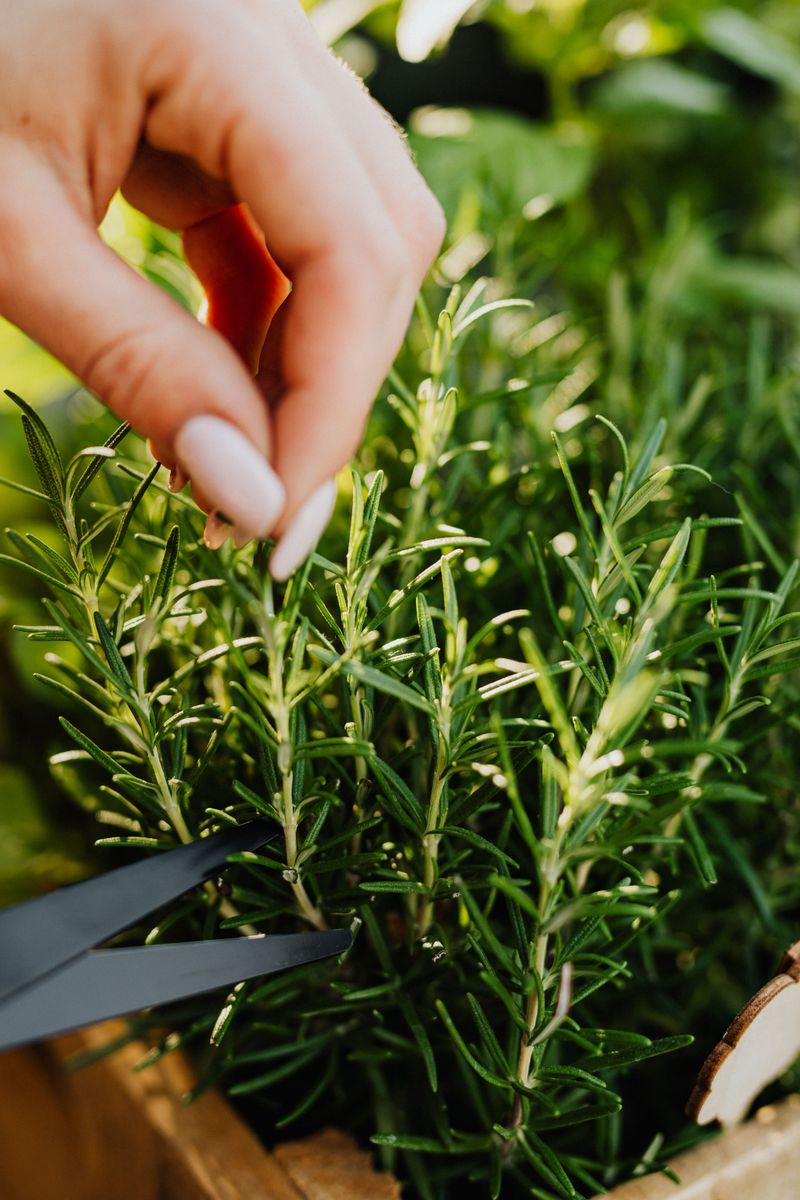
Your rosemary shows clear signs when it needs attention in August. A few clear signs tell you the plant is overdue for a trim.
The first sign is long, floppy stems that droop toward the ground. Healthy rosemary holds its shape; tired rosemary leans and sprawls.
Look at the lower part of the plant next. If you see bare, woody stems with no green foliage, that is a warning signal.
Bare lower stems mean the plant is struggling to support itself from the bottom up. Growth has moved outward and upward, leaving the base exposed.
Another sign is yellowing leaves tucked inside the plant. Poor airflow causes inner leaves to yellow and drop before their time.
Check for a musty or damp smell near the base of the plant. That scent can signal moisture buildup from dense, unpruned growth.
If your rosemary smells more like mildew than pine and lemon, this may indicate a moisture problem worth addressing. Good rosemary should have a clean, sharp fragrance even in summer.
Watch for stems that look gray or silver instead of green. That color shift often means those stems have stopped growing and are beginning to decline.
Pinching a stem tip and finding it brittle rather than flexible is another clue. Flexible stems mean the plant is still active and healthy.
Catching these signs in August gives you time to respond. A few cuts now can redirect the plant’s energy and set it up for a much stronger fall season.
How To Properly Prune Rosemary In August
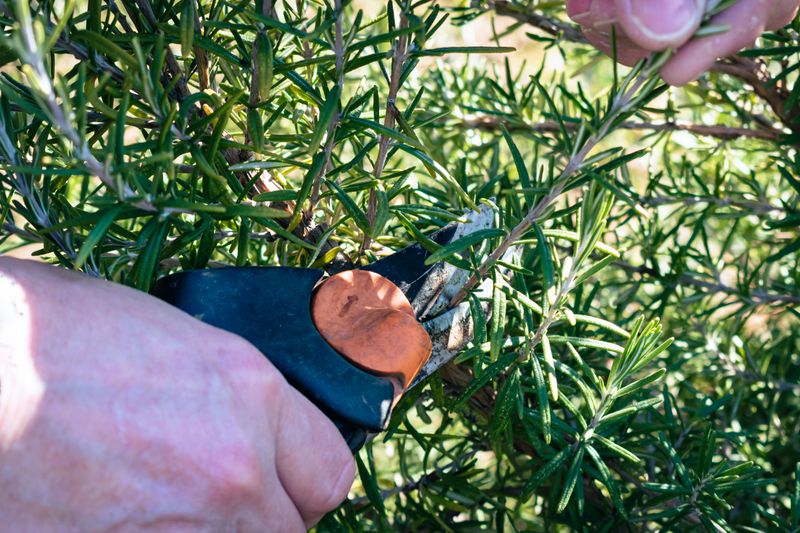
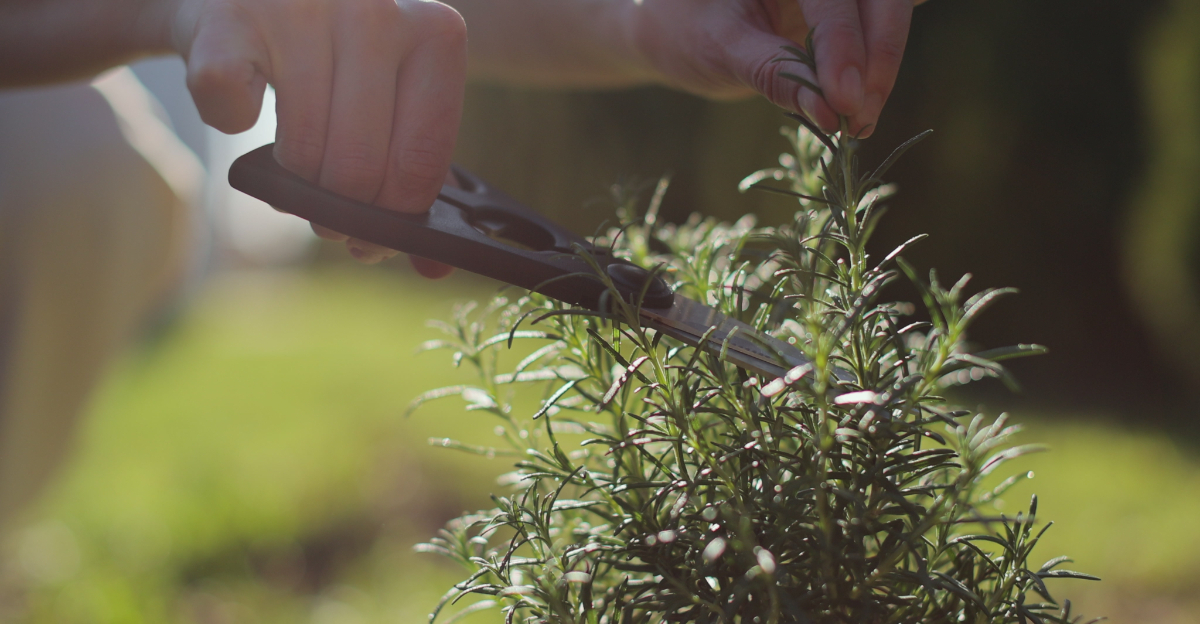
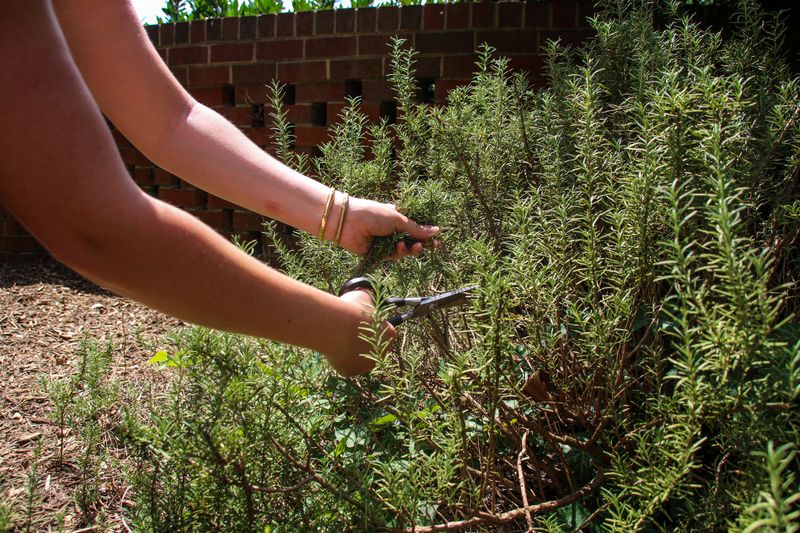
Grab a clean, sharp pair of pruning shears before you start. Dull or dirty blades can damage stems and introduce disease to the plant.
Wipe your shears with rubbing alcohol before cutting. This simple step protects your rosemary from spreading any hidden pathogens between cuts.
Start by removing any clearly dried or gray stems first. Cutting away dried wood opens up the plant and gives you a clearer picture of what is left.
Next, trim back the longest, most overgrown stems by about one-third. Never cut more than one-third of the plant at one time in August.
Cutting too aggressively can shock rosemary and stall its recovery. One-third is the safe zone that encourages regrowth without overwhelming the plant.
Focus your cuts just above a set of healthy leaves. That spot, called a leaf node, is where new growth will sprout after you cut.
Avoid cutting into the thick, woody base of the stems. Woody sections rarely produce new growth and cutting into them can cause lasting damage.
Work your way around the plant evenly. Pruning only one side creates an unbalanced shape and uneven energy distribution through the stems.
Step back every few minutes to check your progress. It is easier to take more off than to wish you had stopped sooner.
Once you are done, give the plant a light watering. Hydration after pruning helps rosemary recover faster and begin pushing out healthy new growth right away.
Preparing Rosemary For A Strong Fall And Winter Season
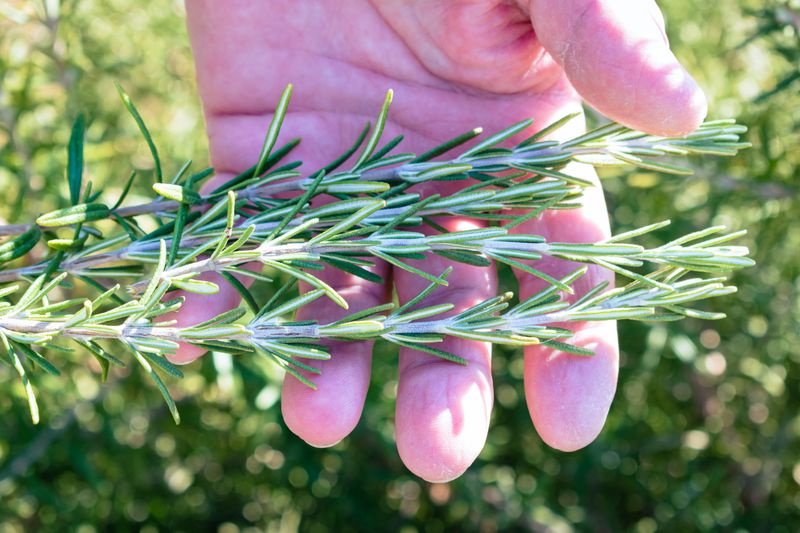
Pruning is just the first step in preparing rosemary for what comes next. After trimming, the plant needs a little extra support to finish the season strong.
Check the soil around the base of the plant after you prune. Rosemary prefers well-draining soil, and compacted ground can hold too much water heading into fall.
Loosen the top inch of soil gently with a hand fork. Better drainage means fewer root problems when autumn rains arrive in Indiana.
Add a thin layer of mulch around the base of the plant. Mulch helps regulate soil temperature as nights begin to cool down in September.
Keep the mulch a few inches away from the main stem. Mulch piled against the stem traps moisture and can cause rot at the base.
Fertilizing in August should be light or skipped entirely. Heavy feeding pushes tender new growth that cannot harden off before the first frost hits.
A diluted liquid fertilizer with low nitrogen is acceptable if the plant looks pale. Otherwise, let the plant slow down naturally as the season shifts.
Water deeply but less frequently as August transitions into September. Rosemary prefers dry conditions and overwatering in fall is a fast track to root trouble.
Move potted rosemary to a spot with slightly less direct afternoon sun. Reducing heat stress in late summer helps the plant ease into its fall rhythm.
A rosemary plant that gets proper August attention has a better chance of coming back full and fragrant the following spring, supporting years of healthy growth under the right conditions.