The Native Florida Shrub Mockingbirds Won’t Nest Without
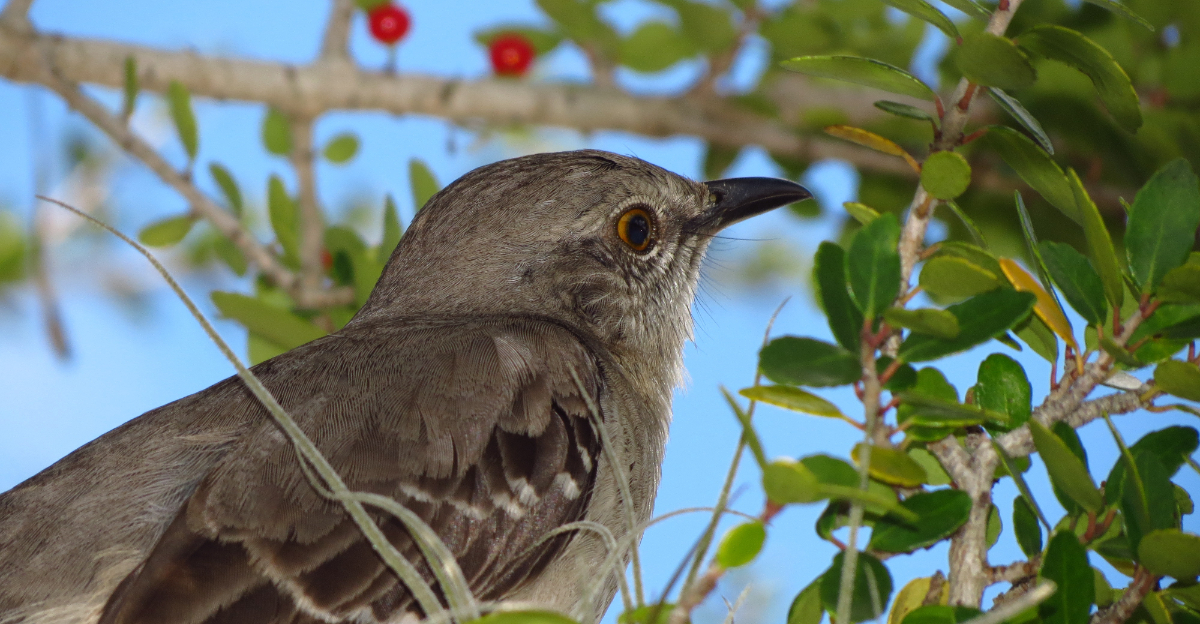
Mockingbirds are not easy to keep. They visit plenty of Florida yards.
They nest in far fewer. The difference almost always comes down to one thing.
The right shrub. Dense enough to conceal a nest.
Structured enough to anchor one through Florida storm season. Productive enough to keep a territorial bird fed without ranging far from what it is defending.
One native shrub checks every box on that list. Yards with it tend to have resident mockingbirds.
Yards without it tend to have flyovers. That gap matters.
A resident mockingbird changes the entire activity level of a yard in ways that a feeder never replicates and a visiting bird never delivers. The shrub is native, available, and doing something no ornamental replacement comes close to matching.
Most Florida yards are missing it entirely.
1. Yaupon Holly Builds The Dense Cover Mockingbirds Look For
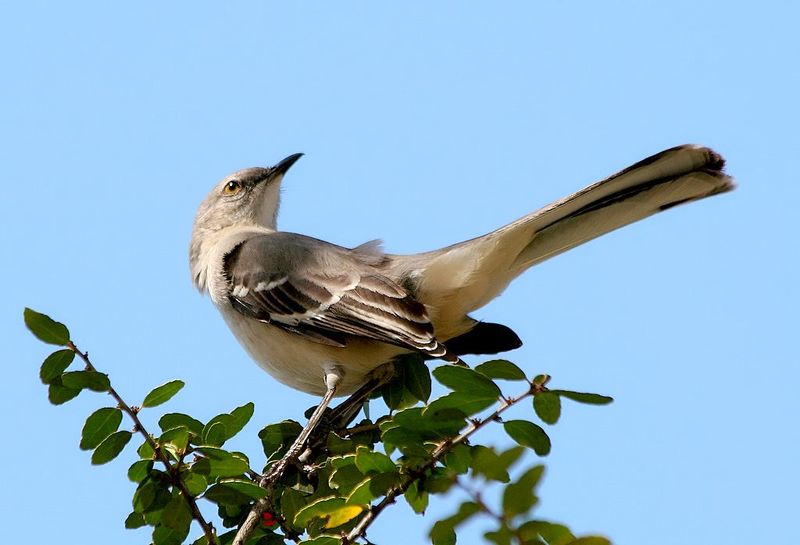
Mockingbirds are not picky about a single plant species, but they are very particular about structure. They commonly choose dense shrubs or small trees where foliage starts low and builds upward into a solid mass of cover.
Yaupon holly delivers that layered structure naturally, without much help from the Florida gardener.
The plant’s small, oval, evergreen leaves stay on the branches all year. That persistent foliage creates a green wall that resists casual inspection from outside.
The branching starts close to the ground on unpruned specimens and fans outward into a shape that suits birds looking for a sheltered building site.
Northern mockingbirds typically place nests somewhere between three and ten feet off the ground. Standard yaupon forms, which can reach ten to twenty feet at maturity, put useful nesting height well within that range.
Very low cultivars bred to stay under three feet may not reach the height birds prefer for typical nesting activity.
A practical takeaway for homeowners: choose a standard or upright yaupon form if nesting cover is your primary goal. Check the mature height listed on the plant tag before you buy.
Give the shrub room to reach its natural size rather than crowding it against a fence. This lets it develop the full branching structure that makes it genuinely useful to nesting birds.
2. Tight Branching Gives A Nest More Places To Disappear
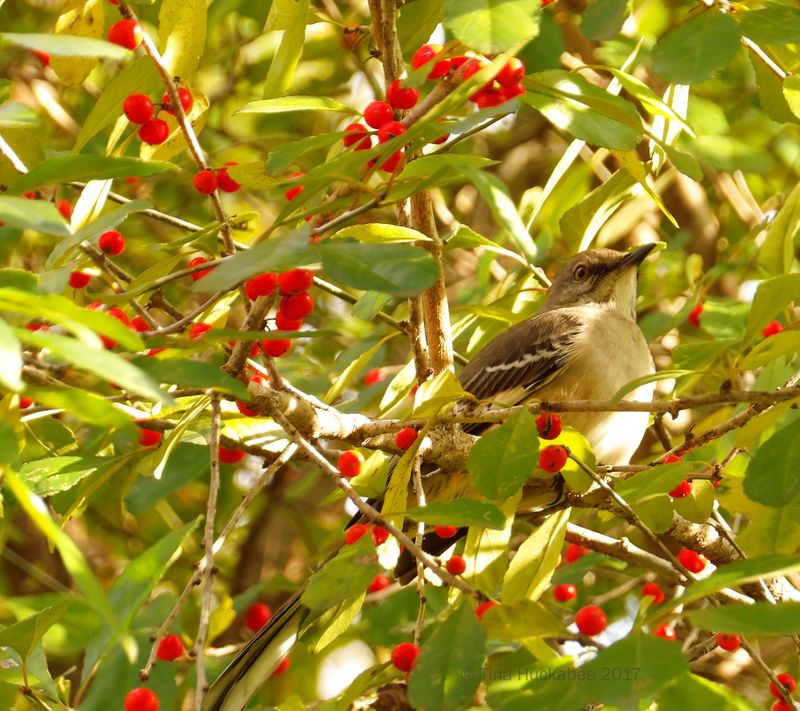
There is something almost architectural about the way yaupon holly grows from the inside out. Its branching pattern creates a web of crossing stems that can make a nest nearly invisible to a passing observer.
That physical maze of wood is what gives the shrub real value as a nesting site, not just the foliage on the outside.
A mature yaupon allowed to grow naturally can spread eight to twelve feet across, depending on the cultivar and growing conditions. That interior space becomes a sheltered chamber once the canopy fills in.
A heavily clipped hedge, by contrast, tends to push new growth to the outer shell, leaving the inside bare and open.
Mockingbirds may also use other dense Florida shrubs with similar branching, including wax myrtle, hawthorn, or wild plum. Yaupon is one strong option, not the only one.
Your Florida Garden Changes Every Week. Your Plan Should Too.
Gardening in Florida changes quickly throughout the season. Every Friday you’ll receive a simple weekly plan showing exactly what to plant, prune, fertilize, harvest, and protect so you never miss the right timing.
What matters most is that the interior of the chosen shrub stays full enough to tuck a nest out of easy view.
The homeowner takeaway here is simple: allow at least part of your yaupon to grow with minimal shaping.
A shrub that keeps its natural branching from the base upward offers far more interior structure than one that has been repeatedly trimmed into a tight ball or wall.
Nesting cover lives in the middle of the plant, not on its surface.
3. Evergreen Leaves Keep The Interior Hidden Year-Round
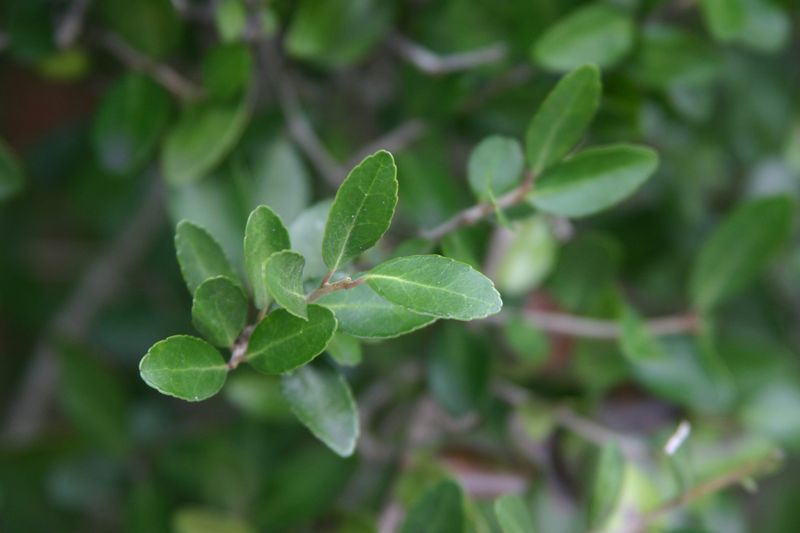
One of the most useful things about yaupon holly is that it never goes bare in Florida. Deciduous shrubs drop their leaves in fall, opening up the interior to wind and watching eyes.
Yaupon keeps its small, leathery leaves through winter, through dry spells, and through the heat of a long summer.
That persistent foliage means the shrub provides cover in every season, not just during spring nesting. Birds sheltering from cold winds or afternoon rain have a place to go even in January.
That year-round usefulness sets yaupon apart from many flowering shrubs that look great in spring but thin out considerably by late summer.
Canopy density does respond to light. A yaupon growing in full sun typically develops a thicker, tighter canopy than one planted in deep shade.
If bird cover is your goal, a sunny or partly sunny spot will usually produce better interior density than a shaded corner of the yard.
Keep in mind that year-round cover is not the same as year-round nesting. Mockingbirds nest seasonally, primarily from spring through midsummer in most parts of their range.
The shrub’s evergreen habit simply means the physical structure is available whenever birds need it. That reliability across seasons is a practical reason to include yaupon in a yard designed with wildlife in mind, even on sites where full sun is limited.
4. Female Shrubs Add Red Berries To The Same Backyard Refuge
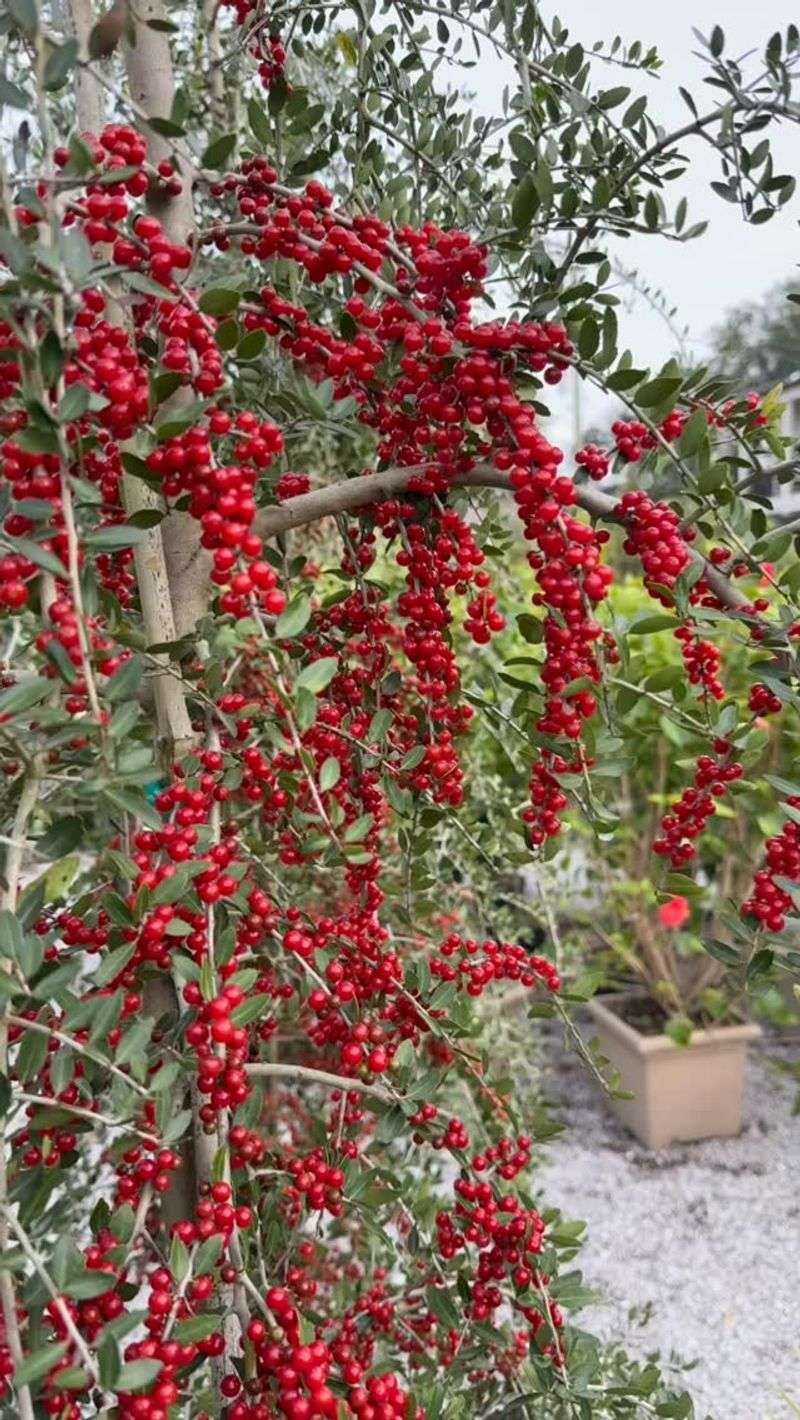
Yaupon holly is dioecious, which means male and female flowers grow on separate plants. Only the female plant produces fruit, and only when a male plant grows nearby to supply pollen.
Planting a single female without a male pollinator in the area may result in little or no fruit set.
When pollination does occur, female yaupons produce clusters of small, round, red berries that ripen in fall and often persist into winter. Mockingbirds are documented consumers of yaupon fruit, along with cedar waxwings, American robins, and several other species.
The berries add a food source to the same plant that already provides nesting structure.
Fruit production is a bonus, not a requirement for nesting. A mockingbird may nest in a yaupon and never eat a single berry from that plant.
The cover and the food are separate benefits that happen to come from the same shrub, which makes it an efficient choice for a small yard.
A practical note for shoppers: nursery plants are sometimes sold without sex labels. Ask specifically for a named female cultivar if berry production is a priority.
Also avoid assuming that heavy fruiting is guaranteed every year. Drought, late frost, or low pollinator activity can all reduce fruit set in any given season.
Planting at least one male nearby gives female plants the best chance to produce a reliable crop of berries for visiting birds.
5. Dwarf Yaupon Changes The Nesting Equation Completely
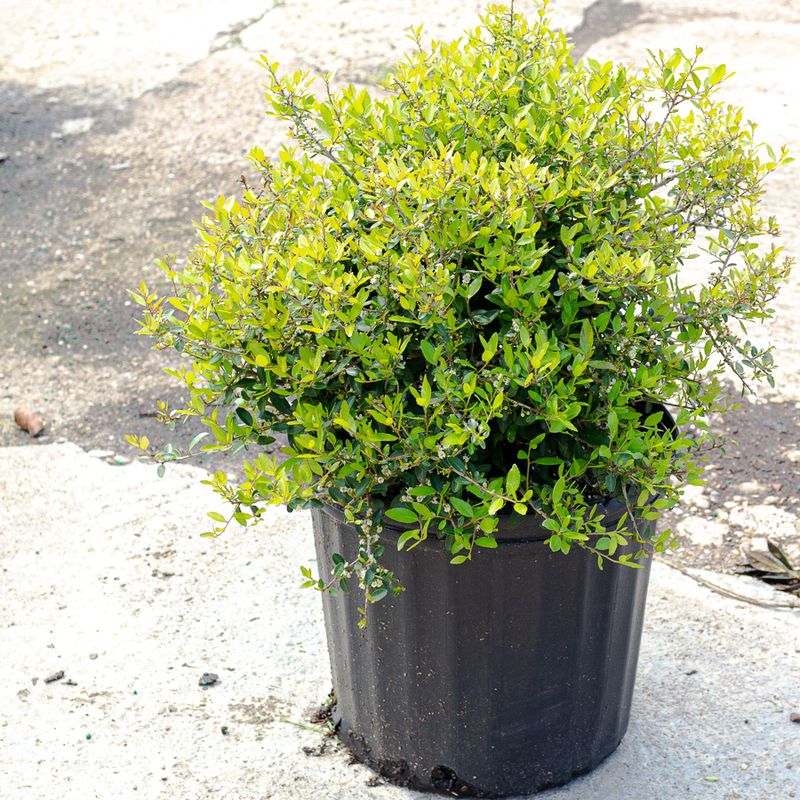
Walk through any Florida garden center and you will find yaupon holly in a wide range of sizes. Cultivars like ‘Nana’ and ‘Schillings Dwarf’ are bred to stay compact, often topping out between two and three feet tall.
Those low mounds are popular for foundation plantings and low borders, and they look tidy year-round.
The problem for nesting birds is simple math. Northern mockingbirds typically build nests between three and ten feet off the ground.
A shrub that maxes out at two and a half feet cannot offer that height, no matter how dense its foliage becomes.
Dwarf forms may still provide some ground-level cover for smaller birds or shelter for insects, but they are not well suited for mockingbird nesting.
Standard and upright forms, such as ‘Will Fleming’ or straight-species yaupon, reach heights that put useful nesting structure well within the range birds prefer.
Those taller forms also develop more interior volume as they mature, giving nesting birds more options for placing a nest out of view.
Before buying any yaupon, check the mature height listed on the plant tag or in the nursery catalog. That one step can save you from planting a shrub that looks right but never grows tall enough to be useful for nesting cover.
Dwarf cultivars have real landscape value, just not necessarily for the nesting goals you may have in mind.
6. Heavy Shearing Can Strip Away The Structure Birds Use
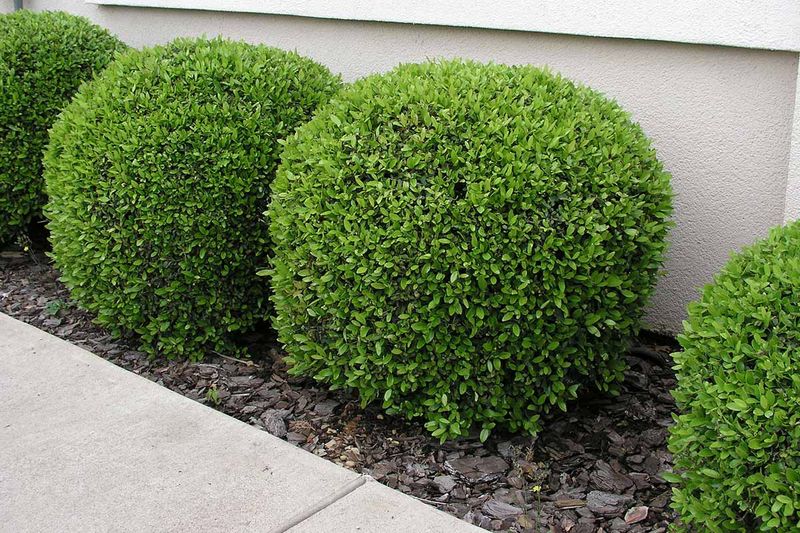
Shearing a yaupon holly into a tight geometric shape is one of the most common ways homeowners unintentionally reduce its value for nesting birds. Repeated hard cuts push new growth to the outer surface of the shrub, forming a dense shell.
The interior, meanwhile, loses the crossing branches and layered twigs that give a nest somewhere to anchor and hide.
A heavily clipped hedge can still look lush from the outside. From a bird’s perspective, though, the interior may be too open and exposed to serve as a useful nesting site.
The shrub ends up functioning more like a wall than a habitat feature.
Selective pruning is a reasonable middle ground for homeowners who need a tidy appearance. Removing specific crossing or wayward branches, rather than shearing the entire surface, keeps the plant looking managed while preserving interior structure.
Thinning cuts made inside the canopy actually improve air circulation without stripping away the branching that birds rely on.
One important caution: if you spot an active nest inside a yaupon, stop all pruning work near that plant immediately. Mockingbirds and their nests are protected under the Migratory Bird Treaty Act.
Consult current guidance from the U.S. Fish and Wildlife Service or your local wildlife authority before doing any work around an occupied nest.
Waiting until the nest is empty is the safest and legally sound approach for any homeowner.
7. A Fuller Shrub Offers More Than Food Alone
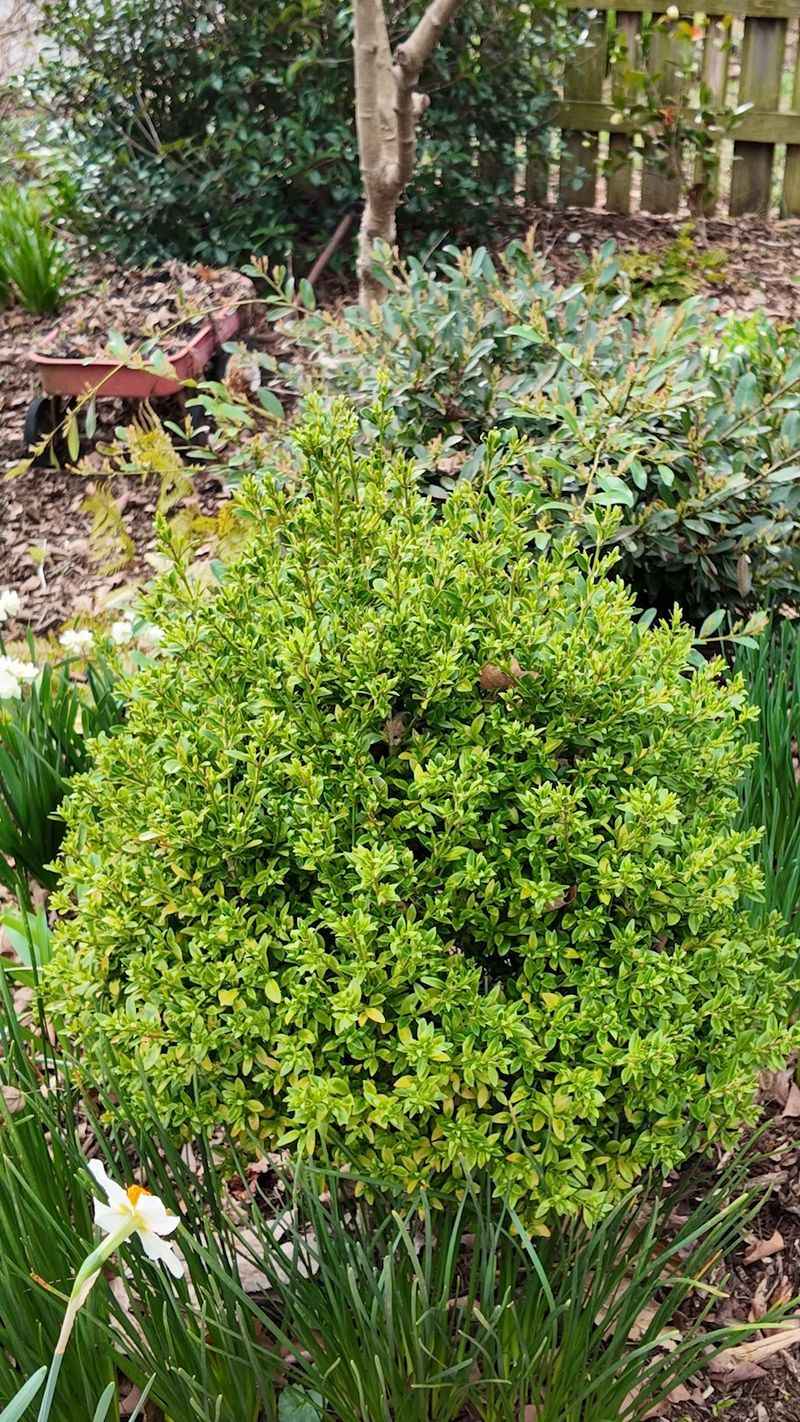
Berries get most of the attention when people talk about planting for birds. But a mature, unpruned yaupon holly offers something that a bag of birdseed never can: physical habitat.
The shrub’s layered branches create shelter from rain, wind, and midday heat, giving birds a place to simply exist between foraging trips.
Insects are part of that story too. The dense canopy and rough bark of a mature yaupon can harbor caterpillars, beetles, and other small invertebrates.
Mockingbirds eat a varied diet that includes insects, especially during the nesting season when protein-rich food supports fast-growing nestlings. A shrub that hosts insect life adds to its value in ways that fruit alone cannot.
Male yaupon plants deserve mention here. They produce no fruit, but they grow with the same dense evergreen structure as females.
A male yaupon still provides nesting cover, shelter, and insect habitat. Planting only for berries and skipping male plants misses a significant part of what makes the species useful in a wildlife-friendly yard.
The practical takeaway is to think of yaupon as a habitat system rather than a single-purpose food plant. Cover, structure, insects, and fruit all contribute to its overall value.
A shrub allowed to mature fully, with minimal shearing and plenty of sun, delivers the most complete set of benefits. That fuller plant serves birds across more seasons and in more ways than a trimmed specimen ever will.
8. The Rest Of The Yard Decides Whether Mockingbirds Stay
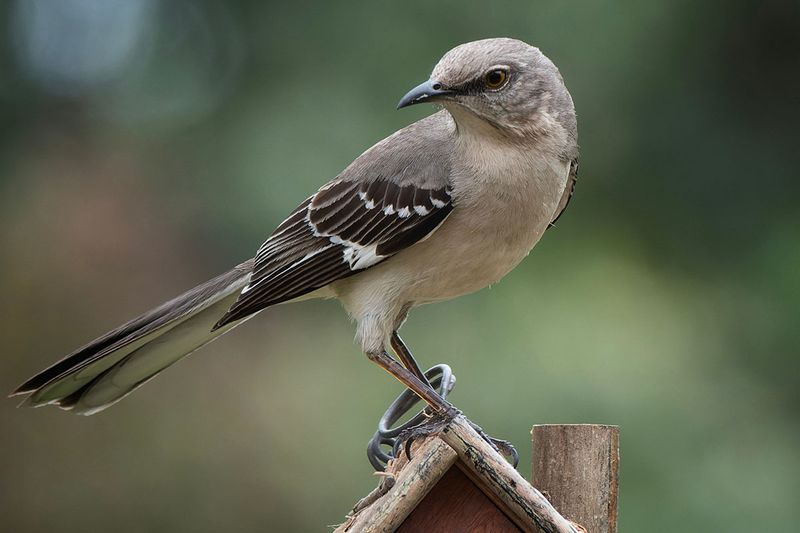
Planting a single yaupon holly is a good start, but one shrub cannot create complete nesting habitat on its own. Mockingbirds are territorial birds that patrol a defined area and need several things to be present before they settle in for a full nesting season.
The shrub handles cover, but the rest of the yard has to do its part.
Open ground matters more than most people expect. Mockingbirds forage on lawns and bare soil, hunting insects and small invertebrates with quick runs and sudden stops.
A yard that is entirely covered by mulch beds or dense groundcover gives these birds fewer places to hunt. A mix of open turf and shrubby plantings tends to suit them well.
Water access, reduced pesticide use, and lower disturbance levels all support a yard that birds return to season after season. Pesticides reduce the insect populations that nesting birds depend on for feeding young.
Foot traffic and free-roaming pets near active shrubs can discourage nesting even when the plant structure looks ideal.
Adding a second Florida native shrub near the yaupon, such as wax myrtle or native hawthorn, gives birds more options and a larger connected habitat patch. No single planting guarantees that mockingbirds will nest in your yard.
What yaupon does is improve the odds by checking several habitat boxes at once. A thoughtfully planned yard, with the shrub as one piece, gives birds a real reason to stay.