7 Native Michigan Shrubs That Outperform Spirea For Season-Long Color
Spirea offers a brief burst of spring color, but several native Michigan shrubs provide far more extended interest throughout the entire growing season. Ninebark delivers spring blooms followed by attractive seed clusters and striking fall foliage color.
Red twig dogwood brings dramatic winter interest through its bright stems, extending color well beyond spirea’s short blooming window.
Summersweet offers fragrant, late summer blooms precisely when many other shrubs have already finished flowering.
Sweetspire provides both spring blooms and exceptional fall color that spirea’s foliage cannot replicate. Chokeberry combines spring flowers with vibrant fall leaves and persistent berries that last into winter.
Virginia sweetspire adds arching branches covered in fragrant blooms, followed by rich burgundy fall color. Buttonbush rounds out the list, offering unique flower clusters through summer that attract pollinators consistently.
Choosing any of these natives gives Michigan landscapes color and interest across multiple seasons rather than just one.
1. Ninebark Brings Flowers And Colorful Foliage
Few shrubs can match ninebark when it comes to packing multiple seasons of interest into one plant.
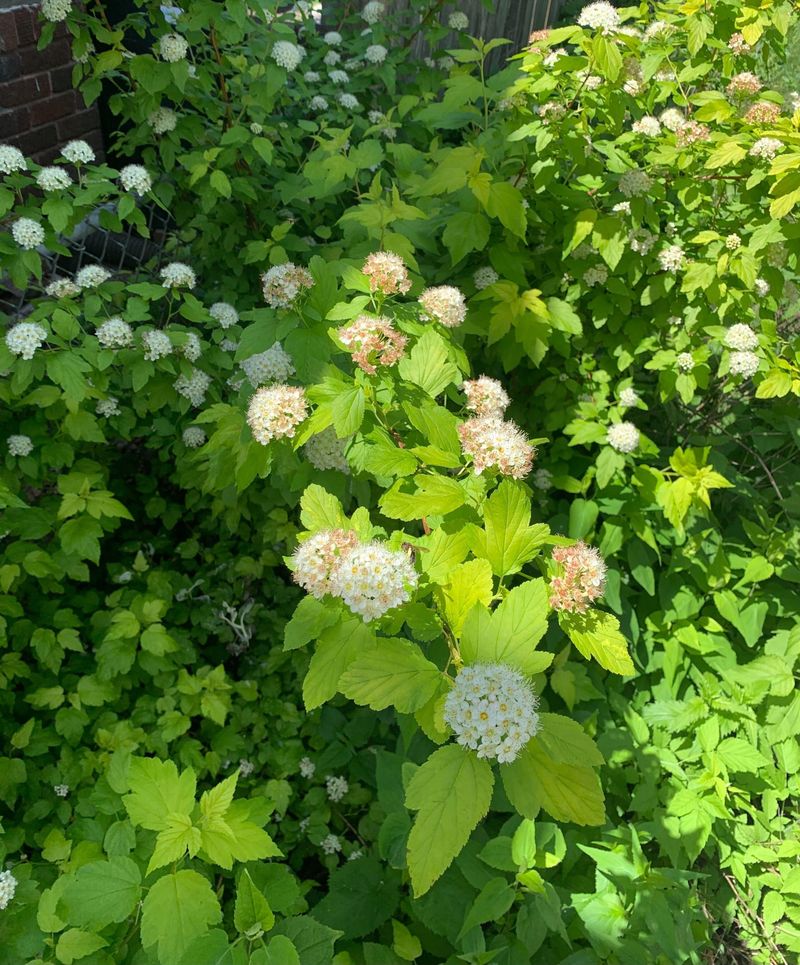
Native to Michigan and much of the eastern United States, ninebark (Physocarpus opulifolius) earns its place in the landscape with clusters of white or soft pink flowers that appear in late spring.
Those blooms are showy enough to compete with any spirea, but ninebark does not stop there.
After the flowers fade, the plant shifts into its real strength: the foliage. Depending on the variety, leaves range from lime green to deep burgundy to rich copper tones, holding that color all season long.
Varieties like “Diablo” and “Summer Wine” offer purple-red leaves that look stunning against a green lawn or a fence line. The foliage alone makes it worth growing, even without a single bloom.
Come fall, small reddish seed clusters add another layer of visual interest. Birds enjoy picking through those clusters too, which gives your yard a little extra wildlife activity.
Ninebark also has peeling bark that reveals layers of warm brown underneath, giving it a textural quality that stands out even in winter.
Growing ninebark is straightforward. It tolerates a range of soil types, handles both sun and partial shade, and stays relatively low-maintenance once established.
Most varieties grow between five and ten feet tall, so you can use it as a privacy screen, a foundation planting, or a natural garden backdrop.
For gardeners who want a plant that works hard all year, ninebark is one of the best choices available in Michigan.
2. Black Chokeberry Adds Flowers And Dark Fruit
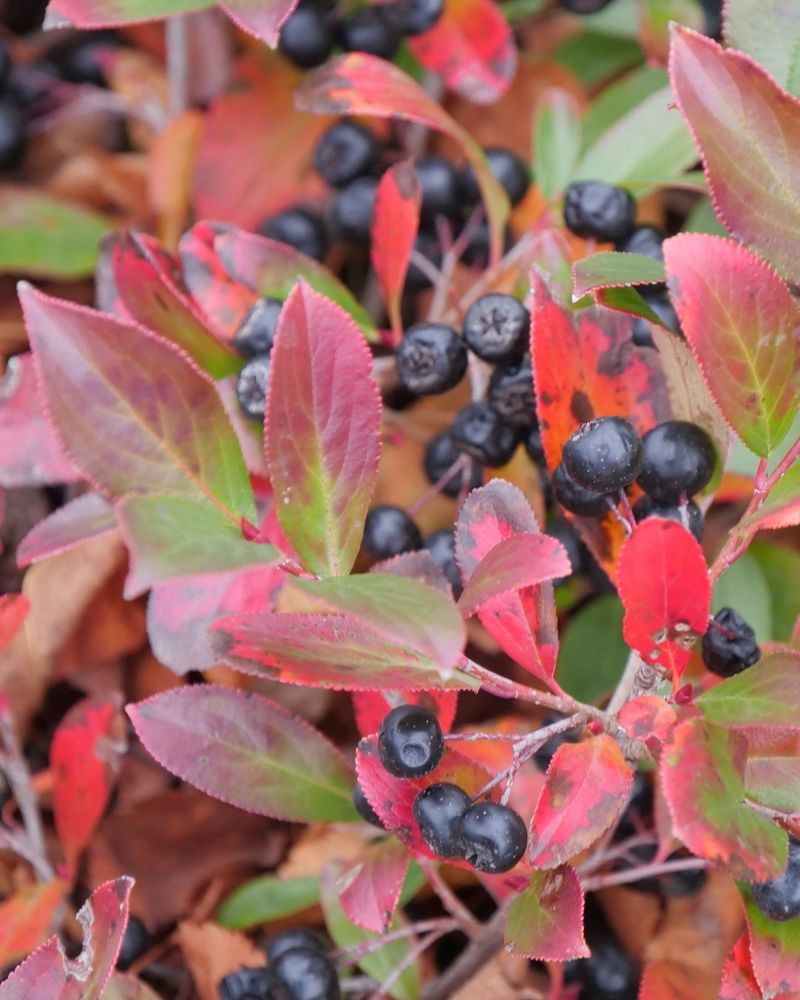
Black chokeberry (Aronia melanocarpa) is the kind of plant that rewards you in waves. Spring kicks things off with clusters of small white flowers that cover the branches and attract pollinators.
The blooms are delicate but plentiful, creating a frothy, eye-catching display that holds its own next to any ornamental shrub in the garden.
Once the flowers finish, the real show begins. Glossy, dark purple-black berries develop through summer and ripen by late summer into early fall.
Those berries cling to the branches in dense clusters, creating bold contrast against the green foliage. Birds absolutely love them, so expect some feathered visitors as the season winds down.
Your Michigan Garden Changes Every Week. Your Plan Should Too.
Gardening in Michigan changes quickly throughout the season. Every Friday you’ll receive a simple weekly plan showing exactly what to plant, prune, fertilize, harvest, and protect so you never miss the right timing.
If you want to enjoy the berries yourself, they are edible and packed with antioxidants, often used in jams, juices, and baked goods.
Fall brings yet another transformation. The foliage turns a brilliant red-orange that rivals many of the showiest maples in the neighborhood.
Few shrubs offer this kind of three-season performance in such a compact package. Black chokeberry typically grows between three and six feet tall, making it easy to fit into most yard sizes.
Plant it in full sun for the best berry production and most vibrant fall color, though it tolerates partial shade reasonably well.
It also handles wet soils better than most shrubs, which makes it a great option for low spots in the yard where other plants struggle.
For Michigan gardeners who want a native shrub that earns its keep from April through November, black chokeberry is a genuinely exciting pick.
3. Northern Bush Honeysuckle Keeps The Color Going
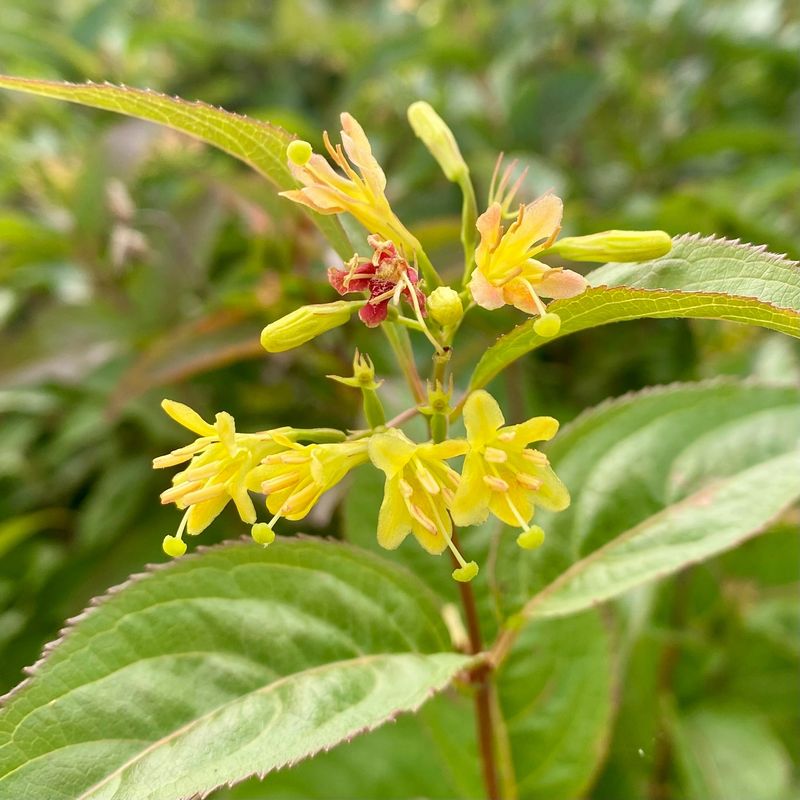
Northern bush honeysuckle (Diervilla lonicera) is one of those plants that quietly outperforms its reputation.
It is not the flashiest shrub on the block, but once you see it in action across an entire growing season, you start to appreciate everything it brings to the table.
This compact native grows wild across Michigan and the Great Lakes region, thriving in conditions where other shrubs would struggle.
Bright yellow tubular flowers open in midsummer, filling a gap when many spring bloomers have already finished and fall plants have not yet kicked in. That timing alone makes it valuable.
The blooms attract native bees and hummingbirds, adding movement and energy to the garden at the height of summer. Foliage starts out green, then develops attractive reddish or bronze tones as the season progresses into fall.
One of the best things about northern bush honeysuckle is its size. Most plants stay between two and four feet tall, which fits beautifully into smaller yards, urban gardens, or mixed border plantings where a large shrub would overwhelm the space.
It also spreads gradually by suckering, making it a solid choice for naturalizing a slope or filling in a difficult area where nothing else seems to grow well.
Full sun to partial shade works fine, and it handles dry, rocky, or sandy soils without complaint. This is the plant for gardeners who want reliable color and wildlife value in a tidy, manageable package.
Northern bush honeysuckle proves that native plants do not have to be large or dramatic to make a real difference in the landscape.
4. Fragrant Sumac Shines With Foliage Color
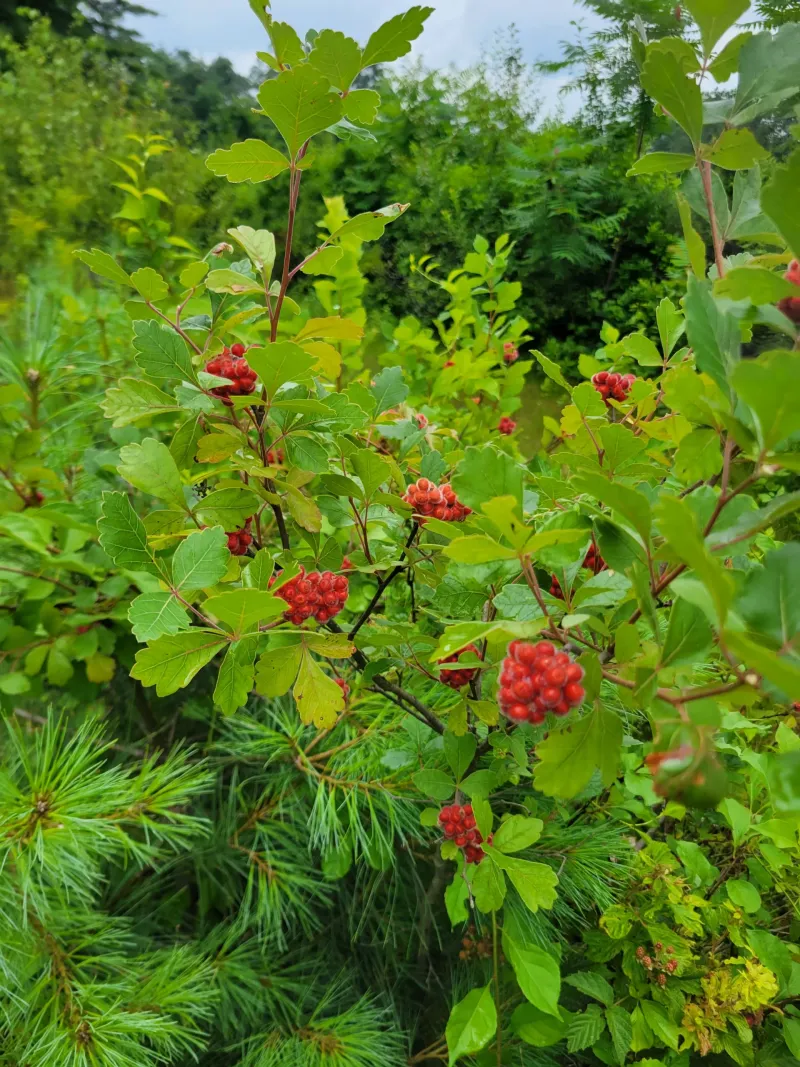
There is a moment every fall when fragrant sumac (Rhus aromatica) stops people in their tracks. The foliage shifts into shades of orange, red, and burgundy that look almost too vivid to be real.
For a shrub that spends most of spring and summer looking quietly pleasant, that fall transformation is a genuine showstopper. It is one of the best reasons to include it in any Michigan landscape.
Before fall arrives, fragrant sumac offers small yellow flowers in early spring, often appearing before the leaves fully open. Those blooms are subtle but important for early pollinators looking for food after a long winter.
Small red fuzzy berries follow later in the season, providing food for birds and adding a pop of color through late summer.
The leaves also release a pleasant citrusy fragrance when brushed, which adds a sensory bonus that most shrubs simply cannot offer.
Compact varieties like “Gro-Low” stay under three feet tall and spread outward, making them excellent ground cover for slopes, banks, or open areas where erosion is a concern.
Taller types can reach six feet and work well as informal hedges or naturalized plantings. Either way, the plant is tough and adaptable, thriving in dry, sandy, or rocky soils where many other plants would give up.
Full sun produces the most intense fall color, though fragrant sumac handles partial shade without much fuss.
For gardeners who want a native shrub that earns attention across multiple seasons without demanding constant care, this one consistently delivers more than expected.
5. Red Osier Dogwood Adds Color Beyond Summer
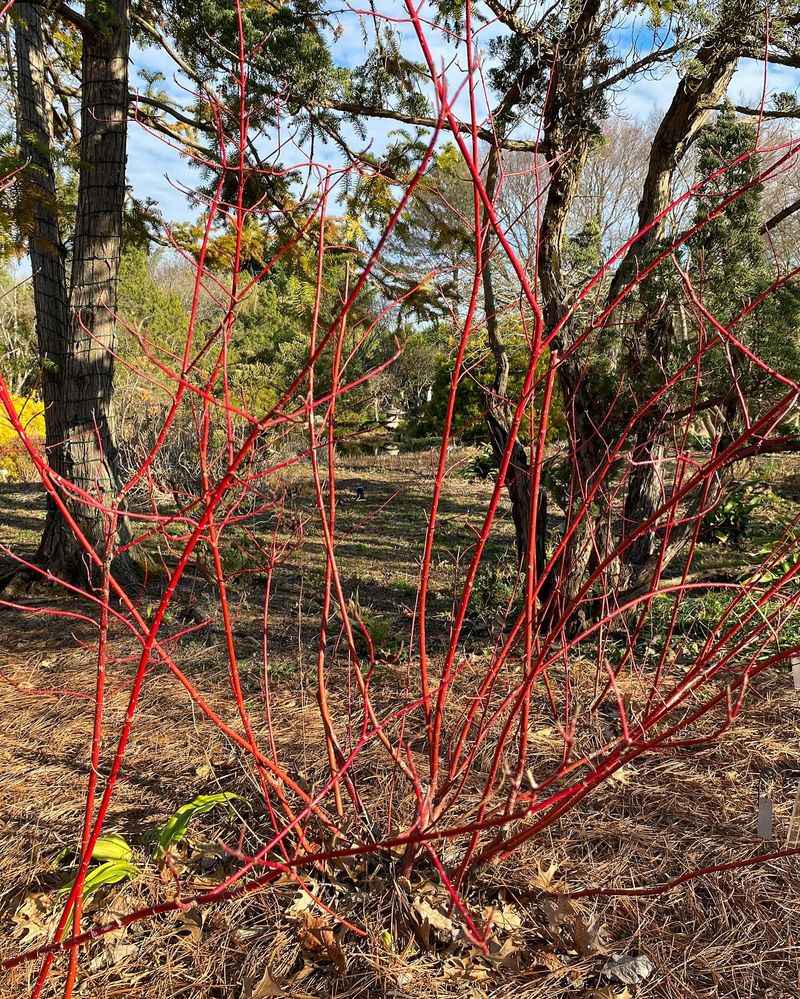
Most shrubs pack up their visual interest by October, but red osier dogwood (Cornus sericea) is just getting started.
While other plants are fading into brown and gray, this Michigan native is ramping up one of its most dramatic features: vivid red stems that glow against snow, dormant grass, and bare winter landscapes.
It is genuinely one of the most striking plants you can grow for cold-season color.
The growing season has plenty to offer too. Clusters of small white flowers appear in late spring, attracting bees and butterflies.
White berries follow in late summer, and birds move through quickly to snap them up. The foliage turns attractive shades of red and purple in fall before dropping to reveal those brilliant stems in full glory.
Few shrubs deliver this kind of four-season rotation in such a reliable package.
Red osier dogwood typically grows six to nine feet tall and spreads over time through suckering, making it excellent for naturalizing a large area or stabilizing a streambank or wet slope.
It genuinely loves moist soils and performs beautifully along pond edges, rain gardens, and low spots in the yard where standing water can be a problem.
That tolerance for wet conditions makes it valuable in landscapes where other shrubs simply cannot survive.
For the most intense stem color, plant it in full sun. Cutting a third of the oldest stems back to the ground every couple of years encourages fresh young growth, which produces the brightest red color.
Red osier dogwood proves that the most rewarding plants are the ones that work hard even when the rest of the garden has gone quiet.
6. American Elderberry Adds Flowers And Berries
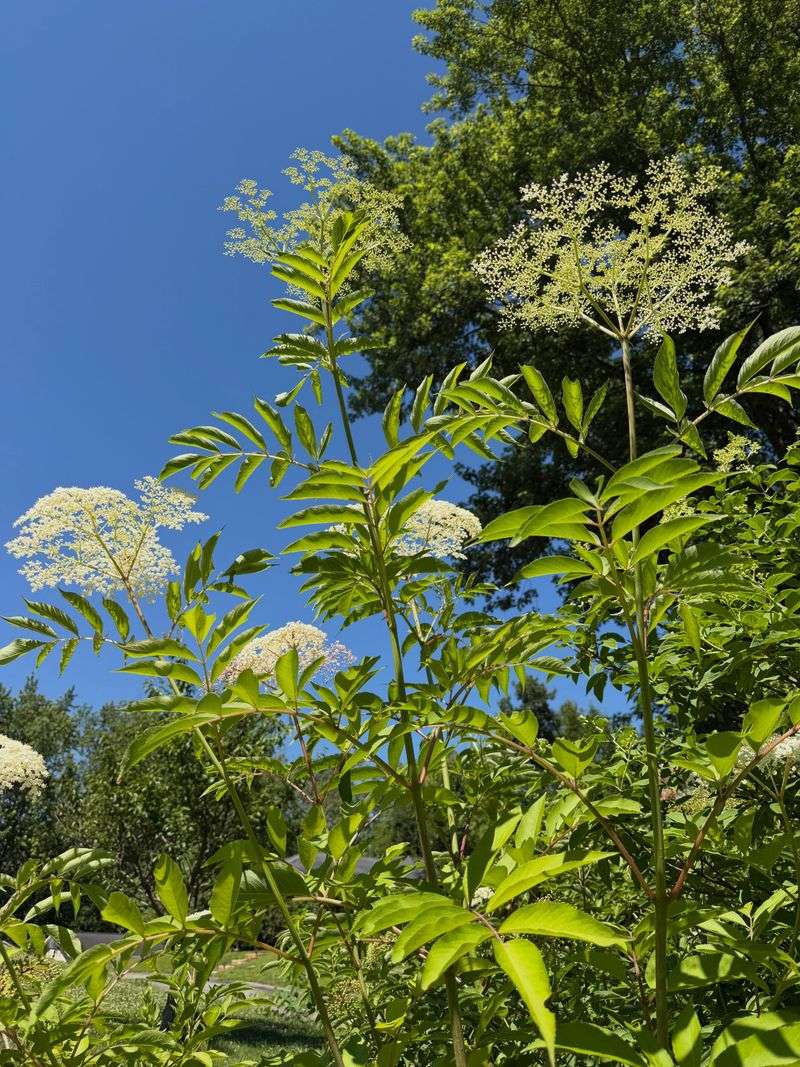
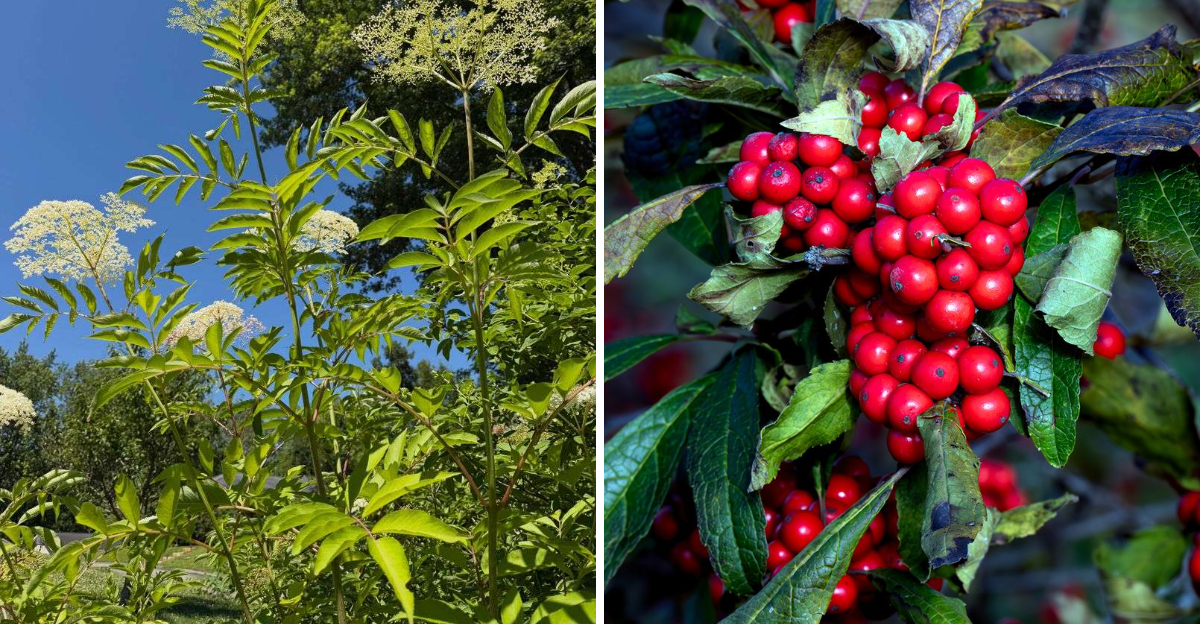
American elderberry (Sambucus canadensis) is one of those plants that feels almost too generous. It gives you enormous, flat-topped clusters of creamy white flowers in early summer that perfume the air and attract a wide range of pollinators.
The flower clusters can stretch up to a foot across, creating a bold, lush display that is hard to overlook from across the yard.
By late summer, those flowers give way to drooping clusters of deep purple-black berries that are loaded with color and wildlife value.
Birds arrive in flocks to feast on them, making elderberry one of the best shrubs you can plant for supporting local bird populations.
If you want to get in on the harvest yourself, elderberries are widely used in syrups, jams, and herbal remedies, and they have a long history of use in American home gardens and kitchens.
Elderberry grows fast and can reach eight to twelve feet tall in good conditions, so it works well as a back-of-border planting, a naturalized hedge, or a screen along a property line.
It tolerates wet soils better than almost any other shrub, making it a great fit for low areas near ponds, streams, or drainage swales. Pruning it back hard every few years keeps it productive and manageable.
Plant elderberry in full sun for the heaviest flower and berry production. Two or more plants grouped together will improve pollination and berry yield significantly.
For gardeners who love a plant that buzzes with life from June through September, American elderberry brings an energy to the landscape that few other native shrubs can match.
7. Winterberry Carries Color Into Winter
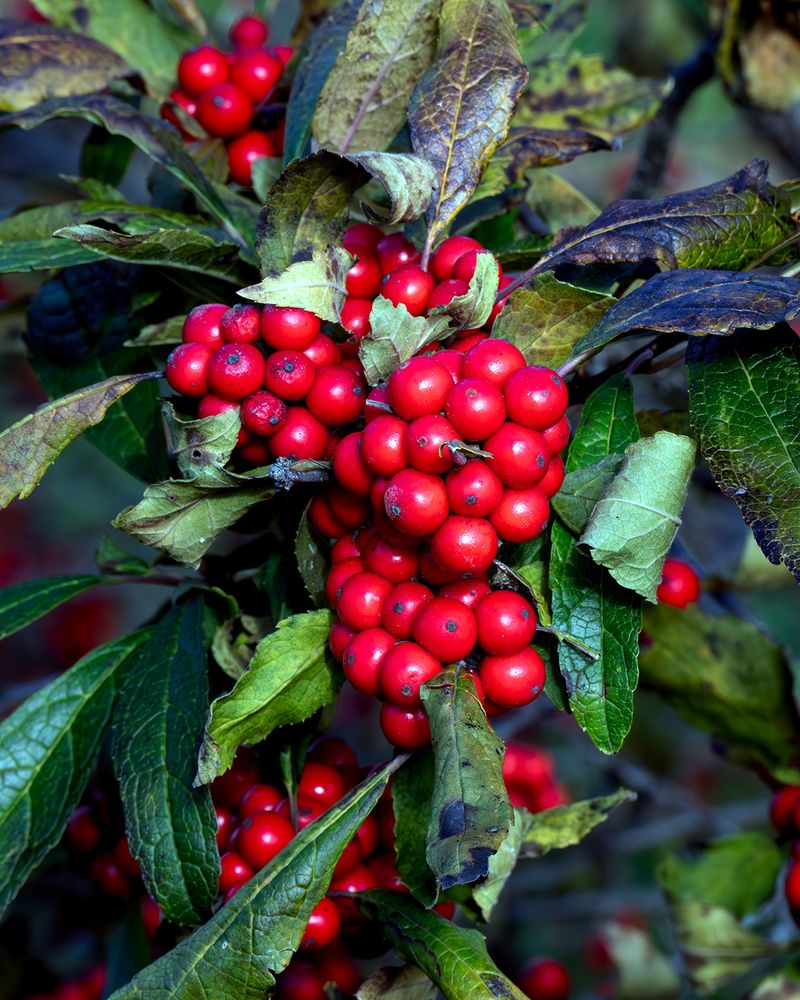
Winterberry (Ilex verticillata) puts on one of the most spectacular displays of any shrub growing in Michigan, and it does it at a time when almost everything else has gone quiet.
Once the leaves drop in fall, the branches are left absolutely loaded with clusters of brilliant red berries that hold on well into winter.
Against snow or a gray sky, the effect is stunning and almost festive.
Here is something worth knowing before you plant: winterberry is dioecious, which means individual plants are either male or female. Female plants produce the berries, but they need a male plant nearby to provide pollen.
Without a compatible male, female plants will flower but produce no berries at all. Plant one male for every five or six female plants, and make sure they bloom at the same time.
Varieties like “Jim Dandy” and “Southern Gentleman” work well as pollinators for popular female varieties like “Winter Red” and “Winter Gold.”
Winterberry thrives in moist to wet soils and is one of the few shrubs that actually prefers those conditions. Rain gardens, pond edges, and low-lying areas of the yard are perfect spots.
It grows naturally along Michigan stream banks and in wetland edges, so it is well adapted to the state’s climate and soil conditions.
Birds love the berries too, particularly robins, cedar waxwings, and bluebirds that rely on persistent fruit through the colder months. Full sun produces the heaviest berry crop, though partial shade works acceptably.
For a native shrub that turns a quiet winter yard into something genuinely beautiful, winterberry is hard to beat.