Hummingbirds Don’t Leave A Florida Yard For Good – Here’s What Brings Them Back
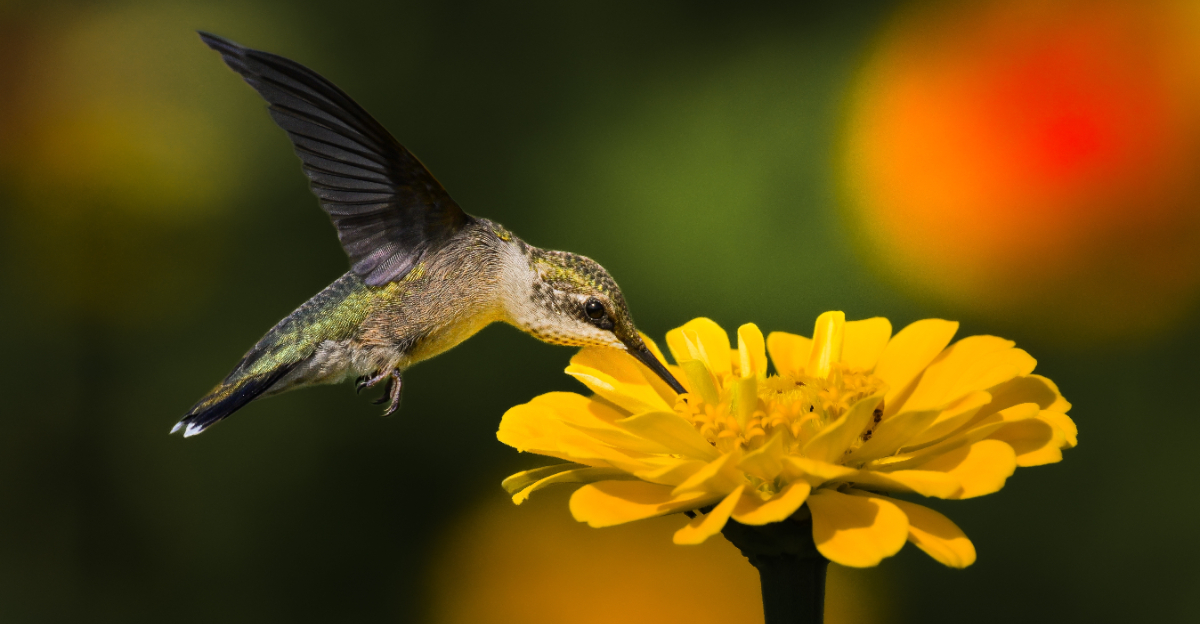
A hummingbird that stops visiting a Florida yard did not make a permanent decision. It made a conditional one.
The conditions changed, the yard stopped meeting a standard it used to meet, and the bird adjusted its route accordingly. That route is adjustable in the other direction.
Hummingbirds are creatures of habit and memory. A yard they visited before is a yard they remember.
What it needs to offer to earn that visit back is specific, and it is almost never about the feeder. Feeders attract hummingbirds.
Plants keep them. The Florida yards that hold hummingbird attention through the season and pull returning visitors back year after year are built around what the bird is actually looking for rather than what is easiest to hang from a shepherd’s hook.
What brought them in before is still available. The yard just stopped providing it.
Figuring out what that is changes everything.
1. A Broken Nectar Calendar Is Often Why The Yard Goes Quiet
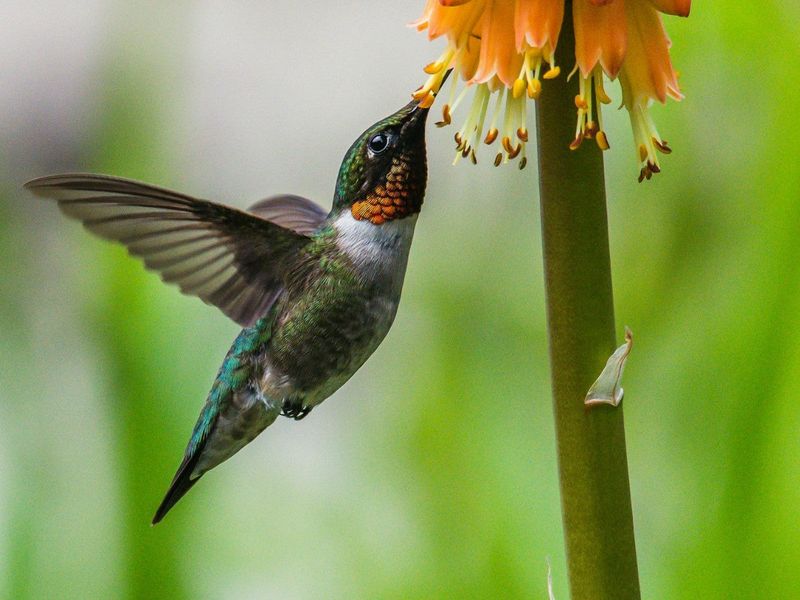
Mapping a yard’s bloom calendar can be surprisingly eye-opening. Many Florida gardens produce a strong flush of flowers in spring, then hit a quiet stretch where very little nectar is available.
Ruby-throated Hummingbirds are constantly scouting for productive feeding areas, and a yard with nothing blooming simply offers less reason to stop.
Seasonal gaps in flowering are one of the most common reasons visits slow down. A plant that dazzled in March may be completely spent by June, leaving a real food shortage right when summer activity picks up.
Weather, drought stress, or an unusually warm winter can all shift bloom timing in ways that create unexpected gaps.
Migration timing also plays a role. Spring migrants move through between late March and early May, while fall movement tends to peak from August through October.
A yard with no nectar during those windows may simply get bypassed. Territorial behavior, nesting activity, and flowering happening in nearby areas can redirect traffic too, so a nectar gap is not always the only explanation.
The most useful thing a homeowner can do right now is pull out a notebook and write down which plants actually bloom each month. That simple exercise often reveals a predictable dead zone in the calendar.
Filling that gap with a well-chosen plant is far more effective than guessing why the feeder suddenly went quiet.
2. Coral Honeysuckle Gives Spring Arrivals A Reason To Stop
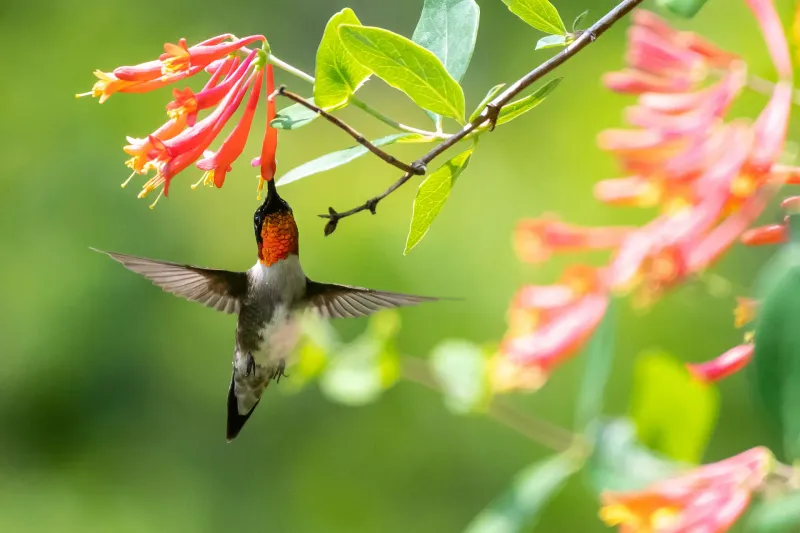
Few Florida native vines greet spring migrants with as much color as coral honeysuckle. Lonicera sempervirens produces clusters of slender, tubular flowers in shades of coral-red and orange-yellow.
That tube shape is practically built for a hummingbird’s bill. The vine is native across much of the eastern United States and performs reliably across most of the state.
Flowering typically begins in late winter or early spring and can continue in waves through summer with enough sun. Full sun to partial shade suits it well, and a mature vine can reach 10 to 20 feet with proper support.
A sturdy trellis, fence, or arbor gives it the structure it needs to climb without sprawling over nearby plants.
Your Florida Garden Changes Every Week. Your Plan Should Too.
Gardening in Florida changes quickly throughout the season. Every Friday you’ll receive a simple weekly plan showing exactly what to plant, prune, fertilize, harvest, and protect so you never miss the right timing.
One important distinction worth making: coral honeysuckle is not the same plant as Japanese honeysuckle, which is an invasive species that outcompetes native vegetation. Always check the botanical name, Lonicera sempervirens, before purchasing.
Nurseries sometimes stock both, and the labels can look similar at a glance.
Giving the vine enough sunlight is the single biggest factor in flower production. Plants grown in too much shade bloom poorly and attract far less wildlife.
One well-placed vine on a sunny fence will not guarantee visits. However, it can put the yard on the map for early-season migrants looking for a reliable fuel stop.
3. Firebush Keeps The Nectar Window Open Through Summer
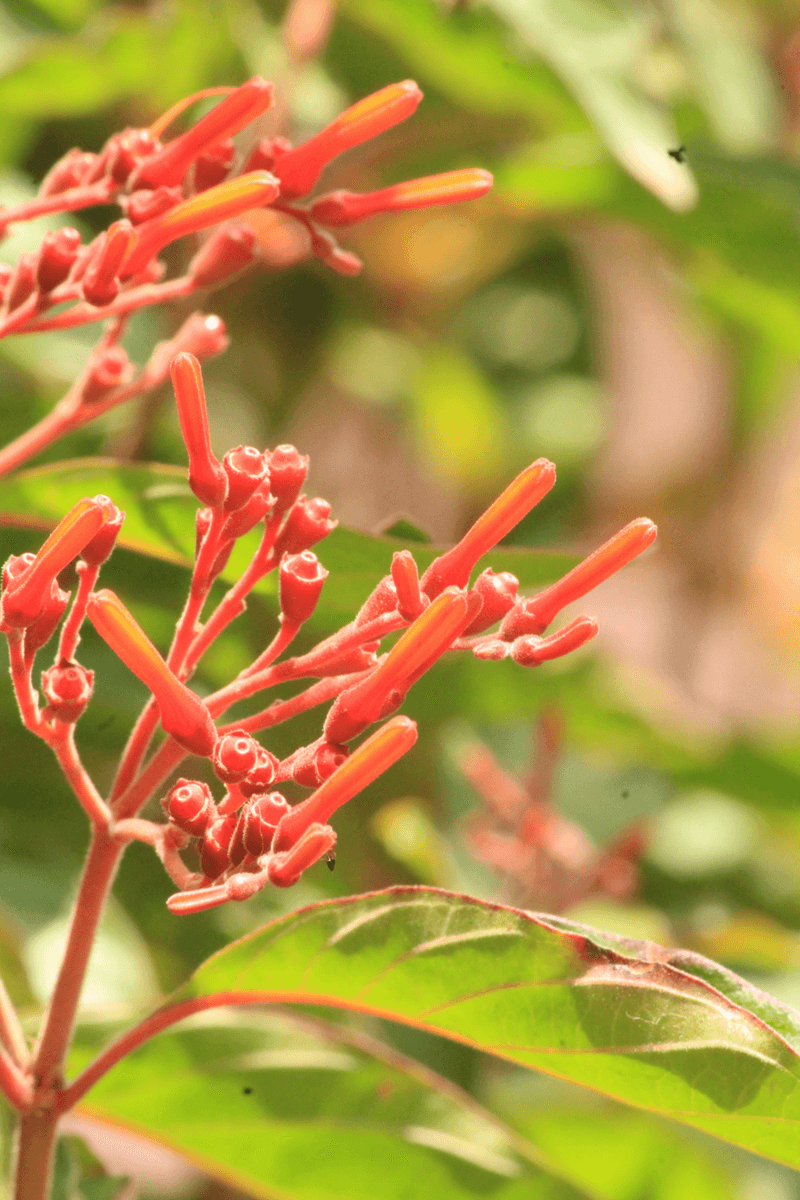
By midsummer, many spring-blooming plants have finished their show, and that is exactly when native firebush steps in. Hamelia patens, the true Florida native species, produces clusters of tubular orange-red flowers repeatedly through the warm months.
That repeated flowering makes it one of the most useful warm-season shrubs a homeowner can plant for wildlife support.
Native firebush is worth distinguishing from nonnative cultivars sold under similar names. Some compact or dwarf varieties are hybrids that produce fewer flowers and offer less wildlife value.
When shopping, look specifically for Hamelia patens and ask whether the plant is the straight native species rather than a cultivar.
In terms of growing conditions, firebush thrives in full sun and handles heat and periodic drought fairly well once established. A mature shrub can reach six to ten feet tall and wide in warmer parts of the state.
In areas that experience occasional frost, plants may lose their leaves or get cut back, but they typically resprout from the roots when temperatures rise again.
Firebush is not equally cold hardy statewide, so gardeners in northern parts of the state should expect more withering than those gardening farther south. Despite that limitation, the shrub fills a critical role in summer when other nectar sources are winding down.
Pairing it with earlier-blooming plants creates a more continuous food supply across the warmer half of the year.
4. Overlapping Blooms Prevent The Midseason Food Gap
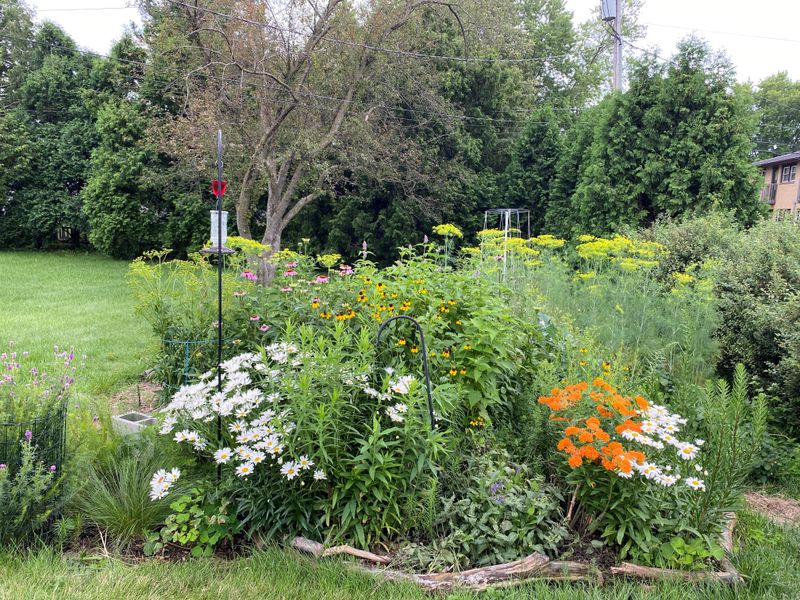
Relying on a single favorite plant is a little like depending on one grocery store that closes for weeks at a time. When that one plant finishes blooming, the yard has nothing left to offer.
A smarter approach involves choosing several species with different bloom periods so that at least one strong nectar source is always open for business.
Mixing plant types adds real flexibility. Vines like coral honeysuckle tend to peak in spring.
Perennials such as native salvias can bridge spring into summer. Shrubs like firebush carry the yard through the hottest months.
Annual flowers, including Salvia coccinea, or scarlet sage, can fill in gaps wherever the perennial layer slows down.
Flower shape and nectar quality matter more than color alone. Many Florida gardeners assume red is all that counts, but hummingbirds regularly visit orange, pink, and purple tubular flowers when nectar is present.
Choosing plants based on verified nectar value and bloom timing is more productive than simply grabbing whatever has red blooms at the nursery.
A simple planning strategy is to draw a twelve-month chart and write in each plant’s expected bloom window. Aim for at least one reliable source in every month the yard could realistically host a visiting or resident bird.
That chart does not need to be complicated. Even a rough sketch on a piece of paper can reveal obvious gaps and point toward the right plant to add next season.
5. Clean Feeders Carry The Yard Between Flower Flushes
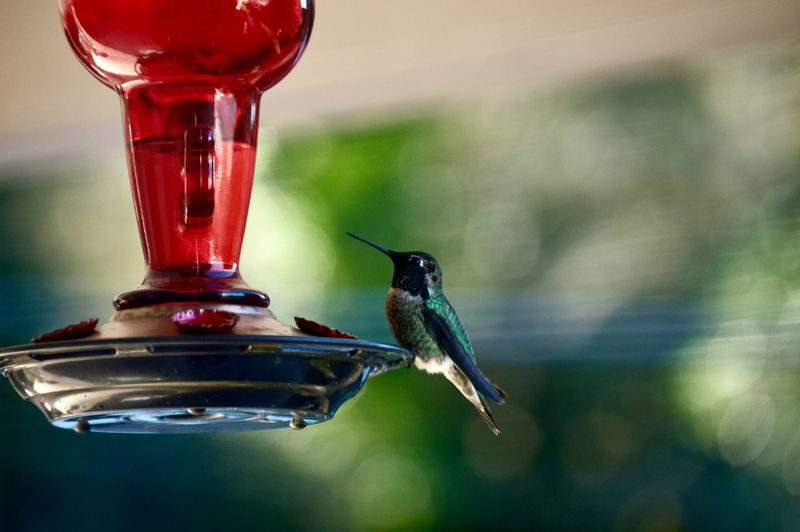
Flowers do not bloom on a perfect schedule, and that is exactly where a well-maintained feeder earns its place.
A clean feeder stocked with fresh nectar can bridge the gap when plants are between bloom cycles, giving any passing bird a reason to pause and refuel before moving on.
The recipe recommended by ornithologists is straightforward: four parts water to one part plain white granulated sugar. Boil briefly to dissolve the sugar, then cool it completely before filling the feeder.
No red dye, no honey, no artificial sweeteners, and no other additives. Those extras offer no nutritional benefit and some can cause harm.
Hot weather is the biggest challenge for feeder maintenance. Nectar can ferment or grow mold within two to three days when temperatures climb into the upper 80s and 90s.
Cloudy nectar, black spots inside the feeder, or a sour smell are all signs that a cleaning is overdue. Rinsing with hot water and scrubbing every port and reservoir thoroughly keeps the feeder safe and appealing.
Placement matters too. A feeder hung in a spot that is easy to see from a window is far more likely to get cleaned on schedule than one tucked in a corner that rarely gets checked.
Feeders work best as a supplement to real habitat rather than a replacement for flowers and insects. They fill a practical role without trying to do the entire job alone.
6. Several Feeding Spots Stop One Bird From Owning The Whole Yard
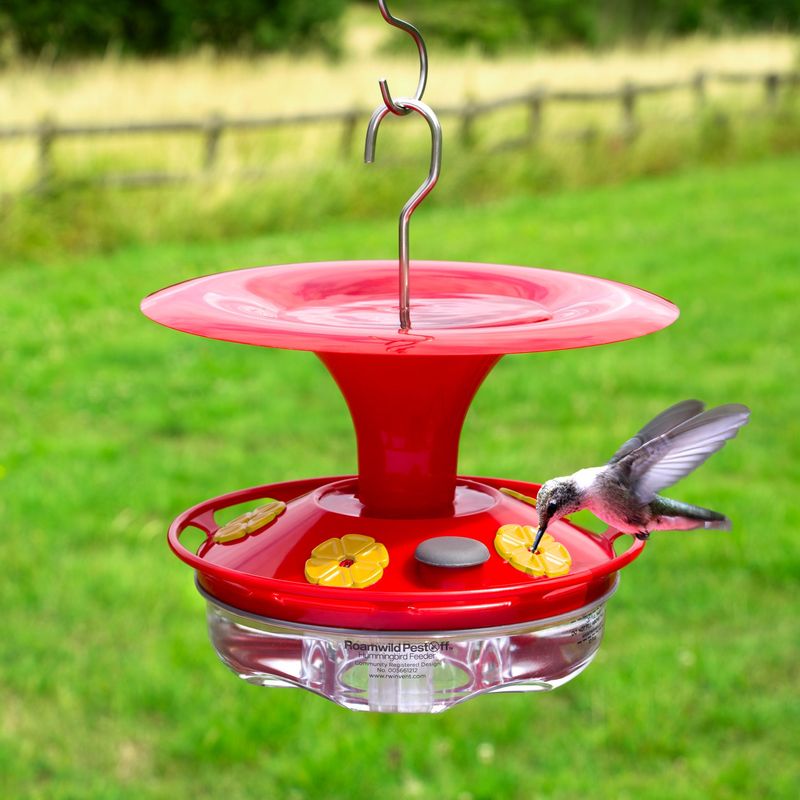
Anyone who has watched a single hummingbird chase every other bird away from a feeder knows how effective these tiny creatures can be at defending a food source.
A dominant individual will perch nearby, launch fast aerial chases, and make an entire yard look nearly empty even when other birds are trying to visit regularly.
Spreading feeders across different areas of the yard can reduce that monopoly. When feeders are placed out of sight of one another, a single bird has a harder time watching all of them at once.
Visual barriers like shrubs, fences, or the corner of a house work well for breaking the line of sight between stations.
Adding more feeders does not eliminate territorial behavior entirely. Some individuals are simply more aggressive than others, and no arrangement will completely stop chasing.
But distributing food across several locations tends to give subordinate birds more opportunities to feed without constant interruption.
The practical result is a yard that looks more active. Instead of one bird monopolizing everything, multiple individuals may rotate through different stations throughout the day.
That increased movement is often what homeowners notice first after rearranging their setup. Spacing and visual barriers do not need to be perfectly calculated.
Keep feeders separated and partially screened from each other. That simple arrangement can make a meaningful difference in how many birds get a chance to use the yard.
7. Less Spraying Leaves More Natural Food Around The Flowers
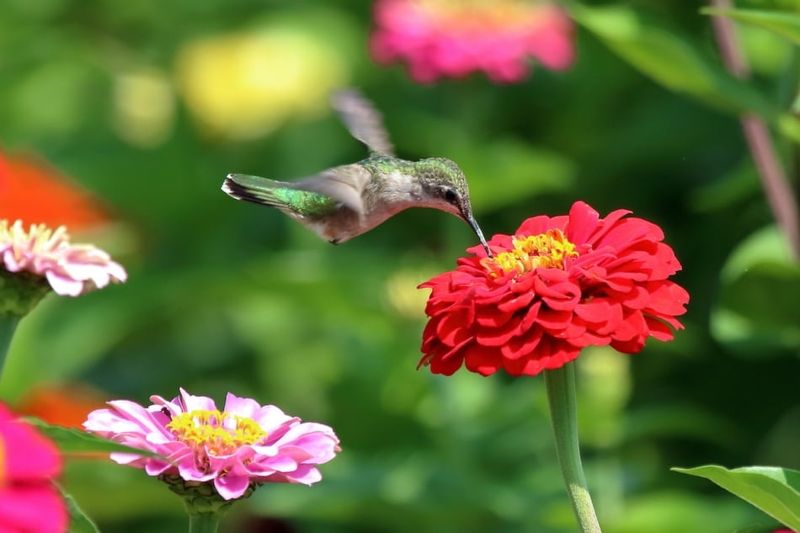
Nectar gets most of the attention, but insects are a critical part of a hummingbird’s diet. Small flies, gnats, aphids, spiders, and other tiny invertebrates provide the protein and fat that nectar simply cannot supply.
Without enough insect prey, a yard full of flowers and feeders is still missing a key piece of the puzzle.
Broad-spectrum insecticides applied routinely across a yard can significantly reduce the small insect populations that hummingbirds depend on. Even products that break down relatively quickly can disrupt prey availability for hours or days after application.
That matters most during active feeding periods. Integrated pest management offers a more balanced approach.
Target specific pest problems with the least disruptive method available, such as physical removal, targeted sprays, or biological controls. This helps manage real issues without wiping out beneficial and neutral insect life that supports wildlife.
Serious infestations sometimes require treatment, and that is a reasonable call to make. The goal is not to tolerate every pest without response but to avoid routine broad-spectrum applications that eliminate far more than the intended target.
A yard where small insects are present around flowers and foliage offers hummingbirds a more complete food environment. Sugar water from a feeder fuels flight, but insect protein supports everything from feather condition to the energy demands of migration.
Reducing unnecessary spraying is one of the simplest ways to make a yard genuinely more useful.
8. A Reliable Feeding Route Puts Your Yard Back On Their Radar
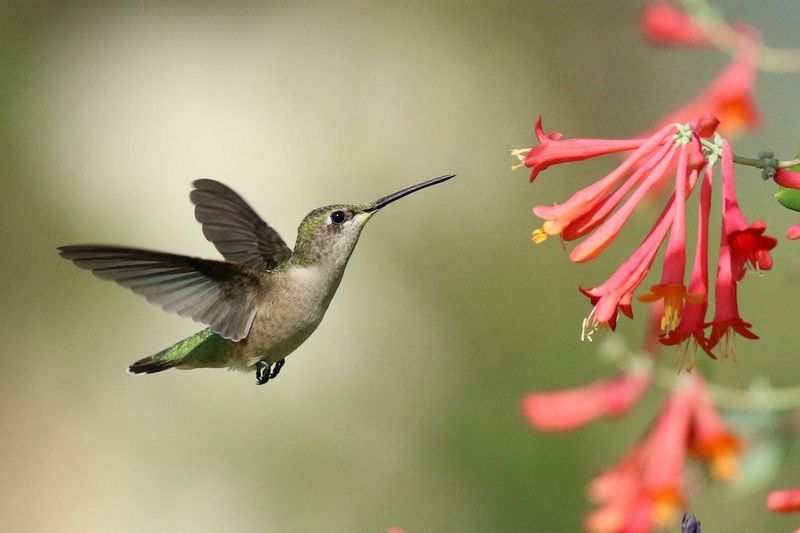
Hummingbirds do not move through landscapes randomly. They follow routes shaped by where food, cover, and safe perches reliably show up.
A yard that consistently offers those resources becomes part of a productive feeding circuit. Passing migrants and birds setting up temporary territories nearby may visit it regularly.
Pulling all the habitat pieces together matters more than perfecting any single one. Several elements help a yard function well across multiple seasons.
These include blooming plants, a clean feeder with fresh nectar, sheltering shrubs, exposed perches, and reduced pesticide pressure. No single element does the job alone.
Water can also play a small supporting role. Some hummingbirds use very shallow, gently moving water for bathing, though they are less dependent on traditional birdbaths than many other species.
A mister or dripper set up near flowering plants may attract brief visits, based on general wildlife habitat guidance.
Hummingbird activity follows available resources, not homeowner loyalty. A specific individual may or may not pass through again.
Without scientific banding data, there is no way to know whether a returning visitor is the same bird seen in a previous season. A yard offering consistent nectar, insects, and shelter gives hummingbirds moving through the area a practical reason to stop.
Those resources can also encourage them to rest and return.